
Welcome to this fascinating exploration of an exceptional heritage, shaped by millennia of exchanges between civilizations. This country, a true geographical crossroads, has witnessed the influences of Persian, Indian, Central Asian, and Chinese cultures.
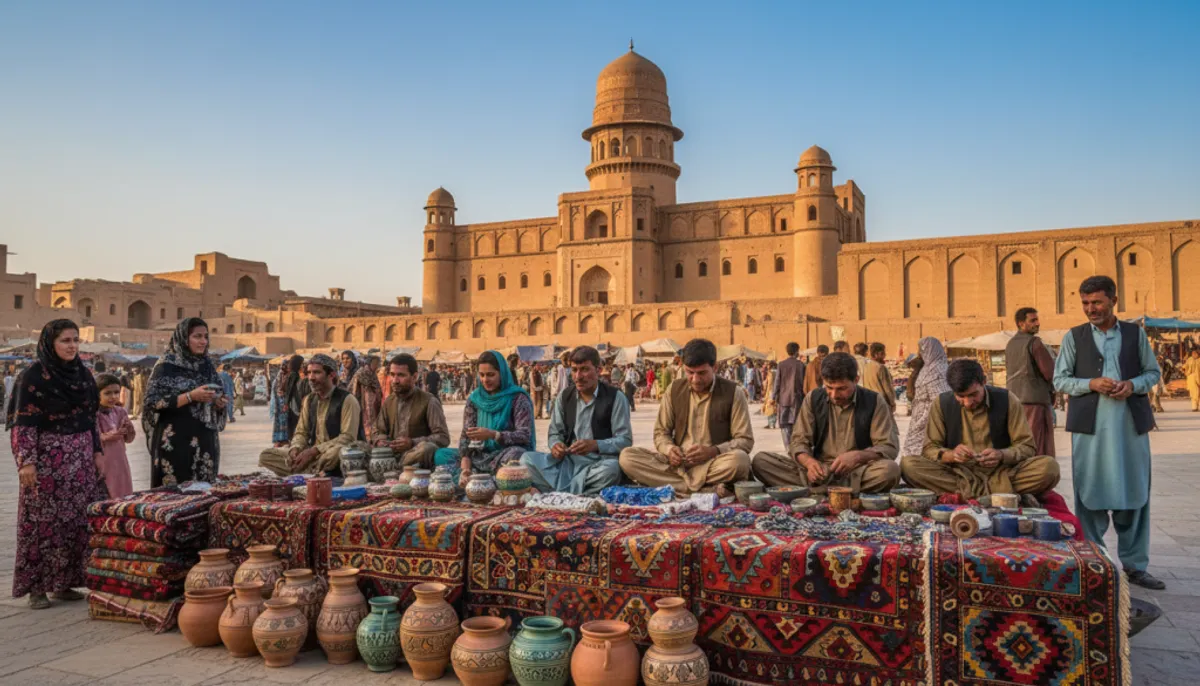
Its complex history reveals a land of contrasts and resilience. Despite upheavals, ancestral traditions continue to define national identity with remarkable strength.
Understanding this cultural wealth is more relevant than ever. In a context where heritage is threatened, it remains a bearer of hope and reconstruction.
We will address here the major periods of brilliance, from prehistoric origins to contemporary issues. Our approach favors a panoramic and accessible view.
Discover how art, customs, and traditions testify to an extraordinary capacity to survive successive trials. An invitation to travel through time and space.
Key Points to Remember
- A millennia-old heritage shaped by various civilizational influences
- A strategic geographical position at the crossroads of several worlds
- Ancestral traditions that endure despite historical challenges
- The current importance of preserving this rich cultural heritage
- A panoramic approach to discover the multiple facets
- Remarkable resilience in the face of successive upheavals
- An invitation to explore traditional art and customs
Introduction to Afghan Heritage – An Overview
Let us explore together the geographical and social foundations of this unique society. This mountainous region has shaped a remarkable national identity.
Historical and Geographical Context of Afghanistan
Afghanistan is characterized by its impressive relief dominated by the Hindu Kush. These mountains rise to over 7000 meters in altitude.
The country occupies an exceptional strategic position. It forms a true crossroads between several cultural worlds.
| Ethnic Group | Main Region | Cultural Characteristics |
|---|---|---|
| Pashtuns | South and East | Strong tribal tradition |
| Tajiks | North-West | Persian heritage |
| Uzbeks | North | Central Asian influences |
| Hazaras | Center | Mongolian origins |
The Rich Traditions and Customs of the Past
The Afghans hold a deep respect for their elders. This fundamental value structures social relationships.
Bernard Dupaigne highlights this particularity: “The Afghan people show exceptional regard for their history and their ancestors.”
These traditions persist despite modern upheavals. They constitute a precious intangible heritage for Central Asia.
The Historical Roots of Afghan Culture
Let us dive into the depths of time to discover the foundations of this society. The ancient history reveals the brilliant civilizations that have marked this region, including the rich history of ghana.
Prehistoric Influences and the Bronze Age
The site of Ak Kupruk shows evidence of goat domestication as early as the 8th millennium. These discoveries testify to the first human settlements.
The Bronze Age sees the emergence of the Margiana-Bactrian complex. This civilization takes advantage of the rich copper resources available.
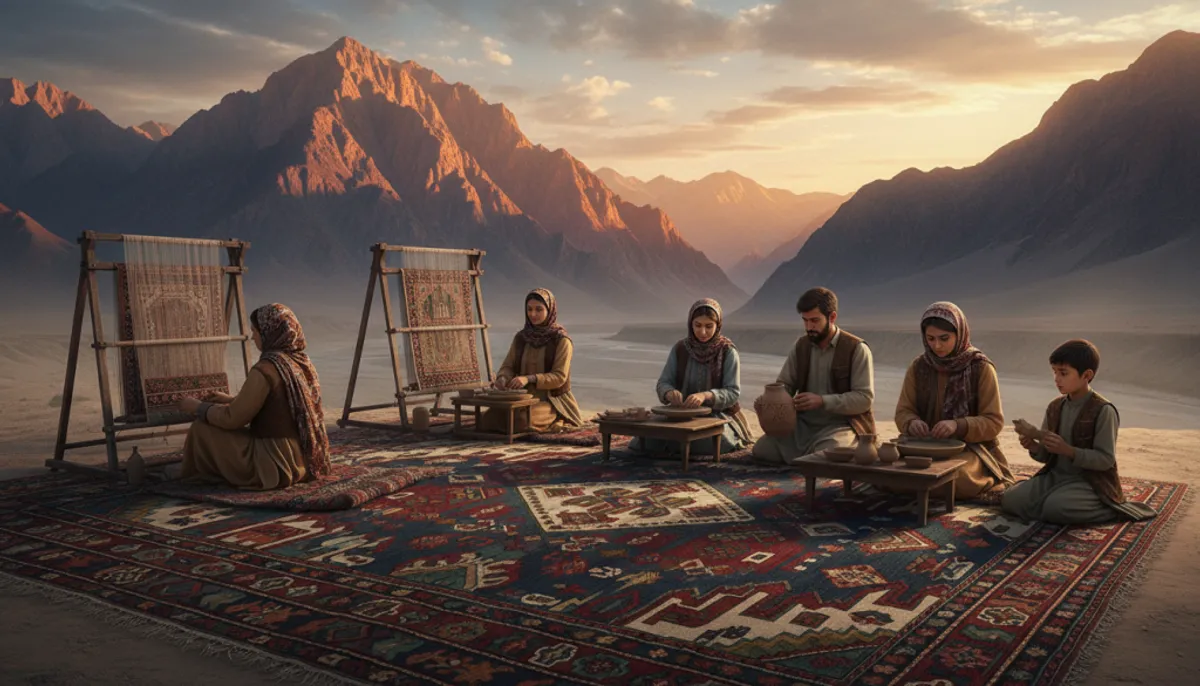
The trade of lapis lazuli attracts settlers from the Indus Valley. They settle in Shortugaï to exploit this precious stone.
The Greco-Bactrian and Kushan Legacies
Alexander the Great conquers the region between 330 and 327 BC. He founds cities like Ai Khanoum, introducing Greek influence.
The Greco-Bactrian kingdoms administer the north for nearly 150 years. They create a unique synthesis between local and Hellenistic traditions.
The Kushan Empire establishes a vast kingdom by the end of the 1st century BC. King Kanishka exchanges ambassadors with Rome and China.
This period lays the foundation for regional art and heritage. Humans develop techniques that will have a lasting influence on Asian art.
Cultural Confluences and Exchanges in Central Asia
Exchanges in Central Asia take on a new dimension under the growing influence of Islam. This transformation marks an important chapter in regional history.
After the conquest of Iran, Islamic armies enter from the north. They undertake the conversion of local populations.
The Influence of Islam and the Golden Age of the Ghaznavids
Very quickly, desires for independence emerge in the face of distant power centers. Local governors assert their autonomy.
By the end of the 10th century, the Ghaznavids establish a vast sultanate. This dynasty of Turkish origin flourishes from Ghazni to India.
Their cultural patronage leads to a flourishing period. They support the poet Firdousi and his major work, the Shahnameh.
| Dynasty | Period | Major Contribution |
|---|---|---|
| Ghaznavids | Late 10th – 12th century | Remarkable architecture and literary patronage |
| Ghurids | 12th – early 13th century | Minaret of Jam, masterpiece of Islamic art |
| Pre-Mongol Period | Until 1220 | Exceptional cultural synthesis |
The Mongol invasion of 1220 destroys a significant part of this heritage. Genghis Khan brutally ends this brilliant era.
Shamanic traditions persist with their hybrid representations of man-animal. This therianthropy symbolizes the spiritual connection with natural forces.
Impact of Cultural Destruction and Contemporary Challenges
Recent cultural destructions have profoundly marked the heritage landscape. These events testify to the current challenges for preservation.
Significant Events: Buddhas of Bamiyan and Heritage Restoration
In March 2001, the Taliban destroyed the two gigantic statues of Buddhas in the Bamiyan valley. This act shocked the international community.
These Vairocana buddhas held exceptional spiritual significance. One was covered with thousands of gold leaves symbolizing enlightenment.
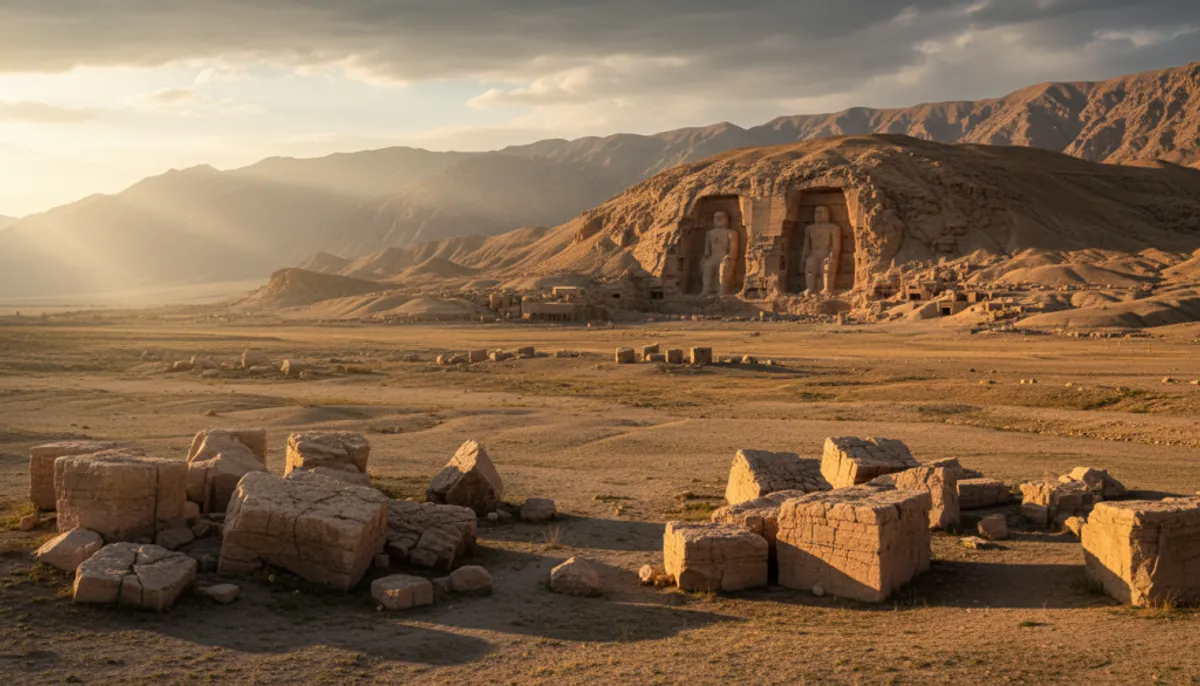
A unique ritual involved replacing removable faces at solstices and equinoxes. This ancestral practice united different communities in the valley.
During their first reign (1996-2001), the Taliban had already destroyed many pieces of the national museum. Wooden statues from Kafiristan were among the damaged works.
| Event | Date | Heritage Impact |
|---|---|---|
| Destruction of the Buddhas | March 2001 | Irreversible loss of millennia-old monuments |
| Return of the Taliban | Six months ago | Change to a more discreet approach |
| Restoration Efforts | Recent years | Partial reconstruction of damaged works |
Since their return to power a few months ago, the Taliban have adopted a different strategy. They are now seeking international recognition.
Despite this apparent moderation in recent months, cultural cleansing continues. The country still faces serious preservation challenges.
Restoration efforts led by international institutions are bearing fruit. However, the threat persists after twenty years of conflict.
Afghan Culture at the Heart of a Living Heritage
The Afghan national identity draws its strength from a millennia-old heritage, including sites like the palace of culture paris. This country of multiple ethnicities maintains remarkable unity in the face of neighboring nations.
National Identity and Unity Through the Ages
The Afghans share a common pride that transcends their differences. This cohesion is rooted in an exceptional cultural heritage.
The seal of Mohenjo Daro illustrates these ancient exchanges. Discovered in the Indus valley, it bears witness to early connections between civilizations.
Renewal and Valorization of a Rich Cultural Heritage
The Greco-Buddhist art represents a major innovation born in this territory. This unique synthesis combines Hellenistic aesthetics and Buddhist spirituality.
At several points in its history, the Afghan people have built bridges between different worlds. These encounters have enriched the global heritage.
| Cultural Contribution | Region of Origin | Historical Impact |
|---|---|---|
| Anthropomorphic representation of Buddha | Bactria and Gandhara | Revolution in Buddhist art |
| Philosophy of the master of animals | Oxus civilization | Foundation of Shaivism |
| Greco-Buddhist art | Mathura | Unique cultural synthesis |
This living cultural heritage, including elements of romanian folklore, constitutes a valuable resource for the future. It allows for the reconstruction of an inclusive identity that respects all components of the nation.
Conclusion
At the end of this journey through the centuries, Afghanistan reveals itself as a land of exception. This country has been a major crossroads between the civilizations of Central Asia, Iran, India, and China for millennia.
The Afghan culture has been built over the years through constant exchanges. Each people has left its mark on archaeological sites and in the collective imagination.
Unfortunately, this rich heritage is facing serious threats. The Taliban and extremist groups seek to erase this diversity in favor of a singular vision of power.
Yet, the Afghan people show remarkable resilience. Despite the destructions in the Bamiyan valley, traditions are passed down from chief to chief.
Let us hope that once peace returns, this country will regain its historical vocation. The Afghan people will then be able to reconnect with their role as a bridge between civilizations.
FAQ
What makes Afghan cultural heritage so unique?
The country is located at a true crossroads of civilizations in Central Asia. This position has allowed a blend of Persian, Greek, Indian, and Buddhist influences. This rich history, along with german history and traditions, has created a unique legacy, visible in its art, architecture, and traditions.
What is the most significant event related to the destruction of Afghan heritage?
The destruction of the Bamiyan Buddhas in 2001 by the Taliban shocked the entire world. These giant statues, carved into the cliff of the Bamiyan valley, dated back to the 6th century. This act highlighted the terrible challenges for the preservation of historical sites.
How does Afghanistan preserve its heritage today?
Despite the challenges, efforts continue. Afghan and international archaeologists work to restore damaged sites. Museums, such as the National Museum of Kabul, protect invaluable objects. The transmission of oral and artisanal traditions also remains a form of living preservation. Additionally, it is important to understand the fnac conditions for cultural vouchers that can support these initiatives.
What role has Islam played in the cultural development of the region?
The arrival of Islam marked an important turning point. Under dynasties like the Ghaznavids, it merged with local traditions. This gave rise to a golden age for science, literature, and art, making cities like Ghazni and Herat renowned intellectual centers.
Does ethnic diversity influence Afghan culture?
Absolutely. The country is a mosaic of groups such as Pashtuns, Tajiks, Hazaras, and Uzbeks. Each contributes with its own languages, costumes, and customs. This diversity forges a complex and dynamic national identity, united by a shared history.