Welcome to a fascinating universe where ancient traditions meet vibrant modernity. This unique fusion creates a cultural mosaic that captivates millions of people around the world.
The Korean culture has been built on centuries of history. It has been influenced by its neighbors, such as China, while preserving a deeply distinct identity.
A pillar of this identity is the language. Its alphabet, Hangeul, was invented in 1443 to democratize writing. It is a symbol of innovation and accessibility.
The country has nearly 48 million inhabitants sharing remarkable homogeneity. This cohesion forges a strong sense of belonging in South Korea.
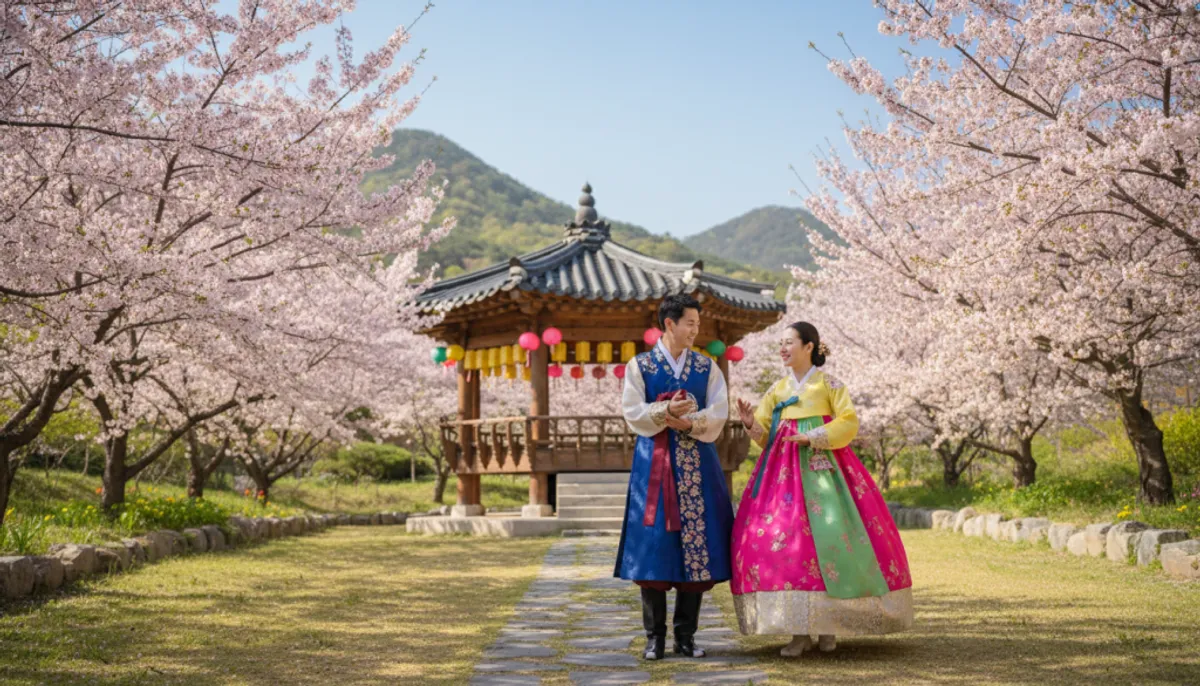
Despite the upheavals of its history, the peninsula has managed to preserve its heritage. Today, South Korea transforms its traditions into contemporary assets, shining on the international stage.
Key Points to Remember
- South Korea presents a unique culture, blending ancestral traditions and dynamic modernity.
- Its history has been marked by external influences while maintaining a strong and distinct identity.
- Hangeul, the Korean alphabet created in the 15th century, is a central element of national identity.
- The society is remarkably homogeneous, fostering deep social cohesion.
- The country has succeeded in preserving and evolving its cultural heritage despite historical challenges.
- This dynamic culture is now exported and fascinates a global audience.
Discovering South Korean Culture
Discover a universe where ancestral values guide an ultra-connected society. This unique balance defines Korean culture today.
This complex mosaic intertwines history, art, and gastronomy over several millennia. The world watches its spectacular transformation.
In the last century, the country transitioned from an agricultural nation to a technological powerhouse. This rapid transformation is impressive.
The local language, of Altaic family, is a cornerstone of identity. It conveys a precious heritage to each generation.
Confucian principles structure relationships and hierarchical respect. Education and family hold a central place.
The inhabitants have managed to preserve their heritage while innovating. This synthesis attracts increasing international attention.
Daily life reflects this adapted wisdom. Collective harmony and hard work are national virtues.
A Historical Heritage and Its Influences
The roots of the Korean nation plunge deeply into a legendary and tumultuous past. Its unique history has been shaped by founding myths and major global events.
Historical Milestones and Significant Events
The legend of the god-king Tan-gun, founding the kingdom of Choson in 2333 BC, marks the origins. Centuries of dynasties followed.
The 20th century brought upheavals. The Japanese occupation (1905-1945) was particularly painful.
The March 1st Independence Movement of 1919 is a strong symbol of this. The subsequent world war sealed the fate of the peninsula.
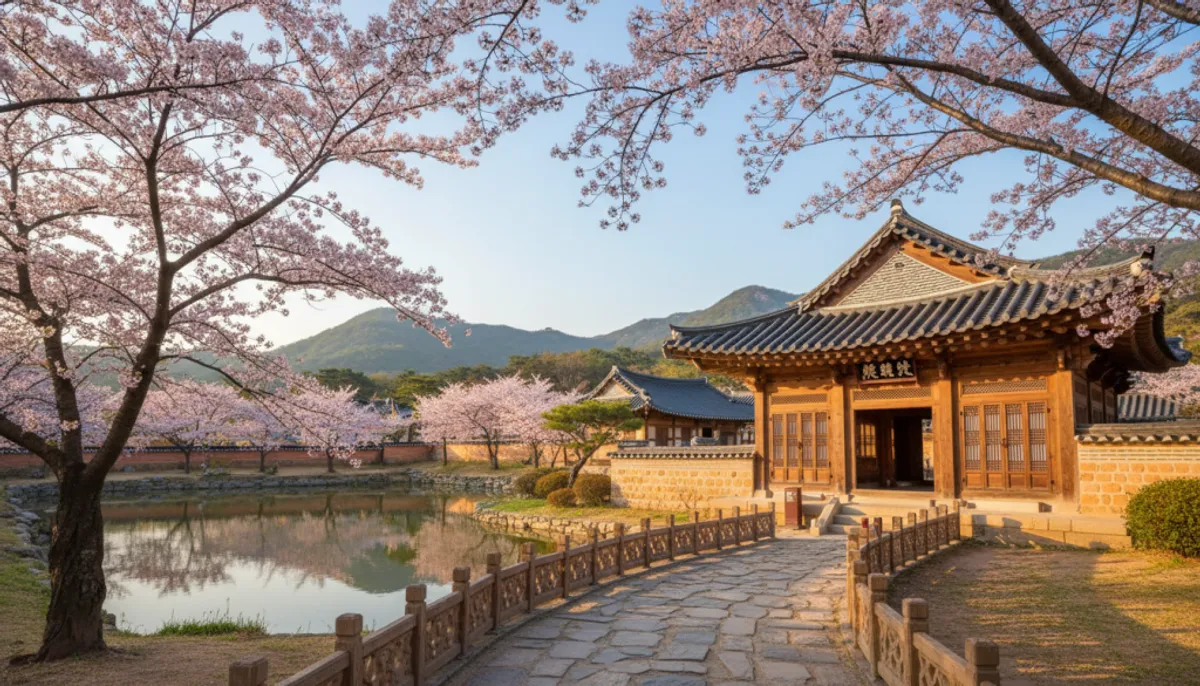
After 1945, the division between North Korea and the South became a tragic reality. The Korean War (1950-1953) then devastated the region.
It established the demilitarized zone at the 38th parallel. The Republic of South Korea then embarked on a spectacular economic ascent.
The 1980s saw the transition to democracy. This political metamorphosis crowned exceptional national resilience.
The Chinese, Japanese, and Buddhist Influences
Korean history shows deep external imprints. Chinese influence, through Confucianism and Buddhism, has structured philosophy and society.
The Japanese occupation, on the other hand, reinforced a fierce desire for independence. These contradictory forces forged a distinct and robust identity.
Beliefs, Spirituality, and Ancestral Rituals
The soul of the Korean nation expresses itself through a fascinating religious syncretism. Three systems of thought, shamanism, Buddhism, and Confucianism, permeate its spiritual heritage.
Buddhism, Confucianism, and Their Impacts
Buddhism arrived in the 4th century. Today, about 22.8% of the population practices it. Its magnificent temples, like Bulguksa, are world treasures.
Confucianism, though informal, touches 56.9% of the inhabitants. It instills respect for elders and a strict family ethic. This philosophy structures social relationships.
Shamanic Practices and Divination
Shamanic practices remain rooted in daily life. Shamans, or mudang, serve as intermediaries with spirits. They conduct rituals for ancestors.
The Saju divination is very popular. Linked to Chinese astrology, it is consulted in cafes or via apps. It guides important decisions.
This harmonious coexistence of beliefs defines a unique tradition. Ancestral shamanism dialogues with established Buddhism and Confucian norms.
Traditions, Customs, and Daily Life
Living in South Korea means participating in a calendar rich with traditional festivals and precise social codes. These elements define the rhythm of life and strengthen community ties.
Traditional Festivals and Iconic Holidays
The year is punctuated by major celebrations. Seolnal, the Lunar New Year, sees the roads crowded. Families travel to honor their ancestors.
August 15th is a doubly symbolic day. It marks the Liberation of 1945 and the foundation of the Republic. It is a moment of national pride.
In autumn, Chuseok is the harvest festival. For three days, meals and ancestral games are shared. It is the most important of family traditions.
| Festival | Date | Meaning |
|---|---|---|
| Seolnal (Lunar New Year) | January-February | Tribute to ancestors, family reunion. |
| Children's Day (Eorininal) | May 5th | Celebration of children, family outings. |
| Independence Day (Kwangbokjeol) | August 15th | Liberation and national foundation. |
| Chuseok (Harvest Festival) | September-October | Thanksgiving, honoring ancestors. |
Social Practices, Etiquette, and Daily Rituals
Respect guides interactions. Bowing, or jeol, is proportional to the age of the person. This gesture reflects social hierarchy.
The exchange of business cards is an essential professional tradition. Another common practice is to remove shoes before entering someone's home. These customs show respect for spaces.
These customs forge a cohesive social fabric. Every holiday and every gesture reinforce belonging to society. Koreans thus perpetuate a precious heritage.
Korean Cuisine and Table Arts
Around a low table, the traditional meal becomes a moment of sharing and discovery. People sit on a lacquered paper floor, facing numerous small metal bowls.
Must-Try Dishes and Kimchi
Kimchi is the emblem of this cuisine. Its annual preparation, gimjang, brings families together in autumn. The pots are then buried in the garden.
Other famous dishes enrich each meal. Bulgogi (marinated beef) and bibimbap (rice with vegetables) are tasty examples. Soups (guk) and side dishes (banchan) complete the experience.
Traditional Beverages and the Art of Dining
Alcohol like makgeolli often accompanies meals. Its consumption dates back to the Silla period. It strengthens social bonds.
Korean tea (cha) is equally refined. Introduced in the 7th century, it is hand-dried. It is now recognized as one of the best in the world.
This cuisine of South Korea harmoniously blends traditions and modernity. It offers a brilliant example of balanced gastronomy.
Modernity and Hallyu: The Influence of Pop Culture
The 21st century has seen the emergence of an unexpected cultural force from the Korean peninsula. This wave, named Hallyu, has propelled South Korea to the forefront of the global stage.
The Rise of K-pop and Dramas
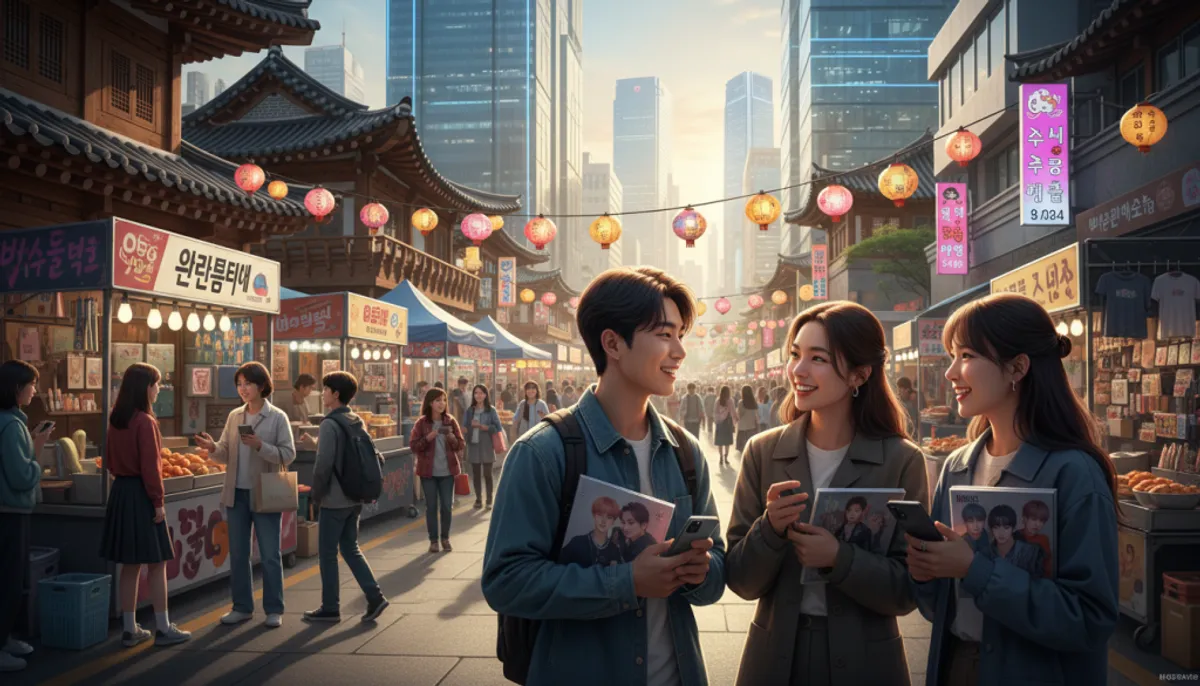
K-pop music, with groups like BTS, defines this modernity. Its perfect choreography and sophisticated music videos captivate a generation.
Film and dramas are not left behind. Directors like Park Chan-wook have revolutionized cinema. Their bold films win international awards.
The Global Impact of the Cultural Wave
This cultural globalization is a formidable soft power. It stimulates language learning and attracts tourists from all over the world.
The phenomenon goes beyond pop. The classical scene shines with conductor Chung Myung-whun. E-sports, where Gosu players are stars, also dominate.
A pioneer in the 1990s, artist Seo Tai-ji paved the way. His influence was comparable to that of Michael Jackson.
Arts, Crafts, and Cultural Heritage
Beyond contemporary pop culture, the country retains an ancestral artistic treasure of exceptional richness. This heritage expresses itself in clothing, objects, and narratives.
The Hanbok and Traditional Costumes
The hanbok embodies timeless elegance. Its bright colors and flowing cut are inspired by the Choson dynasty (1392-1910).
Women wear it during weddings or Chuseok. Its long skirt and short jacket symbolize distinctive grace.
Pottery, Craftsmanship, and Visual Arts
Ceramics showcase millennia of craftsmanship. Celadon and white porcelain from Joseon are examples of technical mastery.
Literature spans centuries. Ancient tales coexist with award-winning novels by Yi Mun-yol.
Women writers bring a unique voice. Han Kang and Shin Kyung-sook explore roles with remarkable depth.
Poetry, cherished since the time of Chong Ch’ol, captures emotions. Visual arts shine with figures like Sin Sa-im-dang.
The work of lacquered wood and weaving follows an aesthetic philosophy. Influenced by Buddhism, it prioritizes natural harmony.
This framework guides Koreans in creation. It forges an artistic identity that is both simple and refined.
Conclusion
In conclusion, the Republic of South Korea illustrates a remarkable success. This country has managed to preserve its millennial identity while becoming a global cultural power.
Tradition and modernity coexist harmoniously here. Ancestral values structure daily life. Contemporary creativity captivates an international audience.
Resilience in the face of historical challenges inspires many nations. The Hallyu phenomenon has transformed global perceptions.
The future looks promising with a new generation of artists. They draw from their heritage to create works that speak to all.
Thus, Korean culture demonstrates how an identity can become an influential soft power. It enriches the cultural diversity of our time.
FAQ
What defines the cultural identity of South Korea today?
The country's identity is a fascinating blend of deep respect for its history and traditions, such as Confucianism, and dynamic modernity. This unique synthesis is evident in everything from social practices to global pop music.
How has history shaped modern South Korean society?
Events like the Korean War and rapid industrialization have forged a spirit of resilience and a rigorous work ethic. The social framework remains influenced by the past while aspiring for significant innovation.
Are Buddhism and shamanism still practiced?
Absolutely. Buddhism remains an important spirituality with many temples. Shamanism, an ancestral tradition involving rituals to connect with spirits, also persists, especially for practices like divination.
What is the role of family and respect in daily life?
Family is the central pillar of society. Respect for elders, inherited from Confucianism, guides social customs, language, and decisions, which is crucial for local etiquette.
Is kimchi really served at every meal?
It is very common! This fermented side dish is a staple of the national cuisine. Its preparation, *kimjang*, is even a UNESCO heritage. It symbolizes sharing and the seasons.
How have K-pop and dramas conquered the world?
Thanks to the Hallyu wave, a creative strategy blending catchy music, captivating stories, and quality cinema. Groups like BTS have propelled this pop culture to global power.
Is the hanbok still worn outside of holidays?
Yes, although it is mainly worn for traditional holidays like Seollal (Lunar New Year) or weddings. Many Koreans own one, and designers reinterpret it for modern life.
Where can one discover traditional crafts like pottery?
The city of Jeonju is renowned for its craftsmanship. You can see master potters working using ancient methods. These visual arts, like classical literature, preserve valuable know-how.