Welcome to the heart of an exceptional heritage, where millennia-old traditions embrace a profound Buddhist spirituality. Myanmar, formerly known as Burma, reveals a cultural mosaic of incomparable richness.
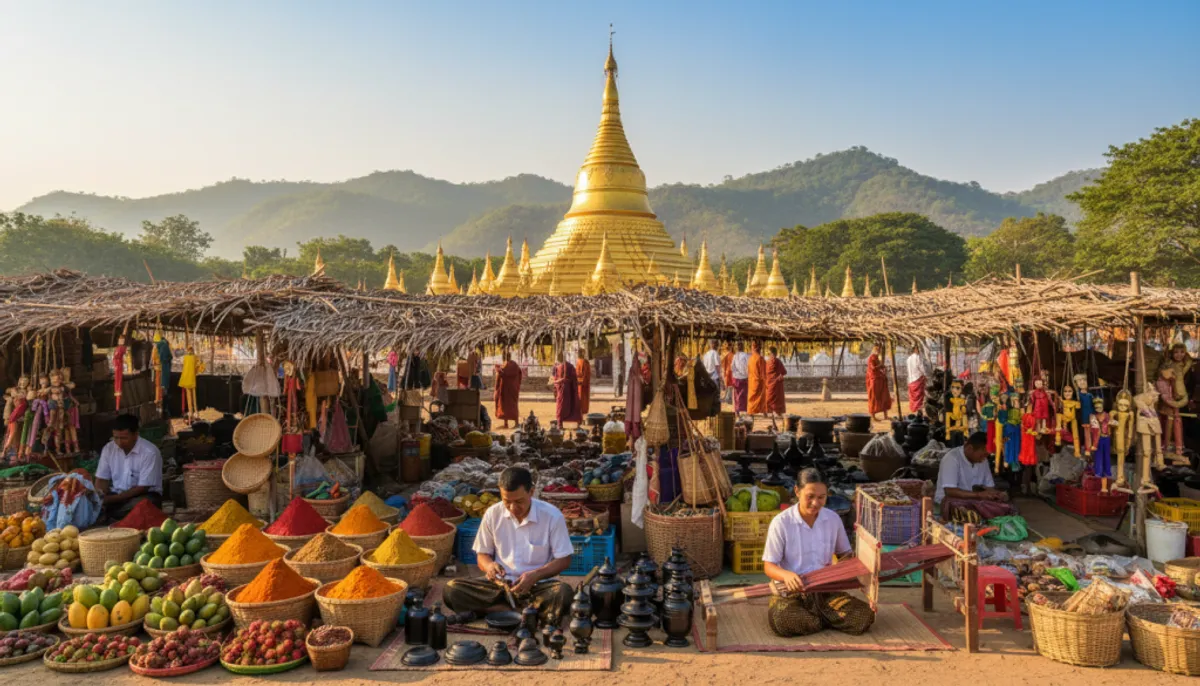
This Southeast Asian country has managed to preserve a rare authenticity that fascinates travelers in search of genuine discoveries. Its unique character lies in the diversity of its ethnicities and the strength of its ancestral customs.
Understanding these social practices is the key to a respectful and memorable travel experience. A successful immersion involves respecting local codes and maintaining a kind curiosity.
The richness of this nation is expressed through its tumultuous history, its religious rituals, its refined craftsmanship, and its delicious gastronomy. Each dimension tells a part of its complex identity.
This comprehensive guide aims to provide you with all the keys to appreciate this culture in its entirety. Let’s embark together to explore the multiple facets of a world that was long closed, now open to authentic encounters.
Key points to remember
- An exceptional heritage blending ancient traditions and Buddhist spirituality.
- A preserved authenticity that fascinates travelers in search of discoveries.
- The importance of understanding local customs for a respectful stay.
- A cultural richness expressed through history, craftsmanship, and gastronomy.
- Exploring these different facets allows for a better understanding of the country's identity.
- This guide aims to provide all the keys for a successful cultural immersion.
Introduction to Burmese culture and customs
A journey in this Southeast Asian country is primarily a human encounter. Nearly 48 million inhabitants live here, spread between the Irrawaddy delta and the northern mountains.
This nation offers a deep immersion into centuries-old social codes. Values of respect and harmony are fundamental here.
Overview and historical context
The territory presents very varied landscapes. Its history is marked by successive kingdoms, British colonization, and recent independence.
This tumultuous history is reflected in the architecture and numerous remnants. A relative isolation has allowed for the preservation of exceptional traditions.
Importance for travel and discovery
Grasping cultural details transforms every encounter. It influences how travelers are perceived by local inhabitants.
The people are known for their warmth and kindness. Their hospitality towards foreigners is remarkable.
Understanding this context is the key to a successful stay. It allows for authentic and respectful exchanges.
| Aspect | Description | Importance for the traveler |
|---|---|---|
| Demographics | Approximately 48 million inhabitants, ethnic diversity. | Understanding the social composition of the country. |
| Hospitality | Warm and kind welcome from locals. | Facilitates encounters and exchanges. |
| Social codes | Deep attachment to respect and harmony. | Avoiding faux pas and showing respect. |
| History | Rich past of kingdoms and colonization. | Appreciating sites and national identity. |
The historical roots of Myanmar
The foundations of this nation date back millennia, with the arrival of the first peoples in its fertile plains. This tumultuous history explains the current social mosaic.
The evolution of kingdoms and empires
The Mons settled as early as the 3rd millennium BC. They founded a first kingdom in the 3rd century BC.
The Pyus arrived around the 7th century. The Burmese then established the kingdom of Bagan. King Anawrahta unified the country around 1057.
This first empire lasted a hundred years. The Mongols disrupted it in the 13th century.
The second empire was born in Taungoo in 1535. The third, Konbaung, emerged in 1767. Three wars in the 19th century led to British colonization.
Independence was gained in 1948. Decades of military rule followed.
The legacy of the Mons, Burmese, and other peoples
Each group has left a lasting mark. This heritage shapes traditions and craftsmanship.
The current population is the result of this blend. The inhabitants perpetuate ancestral customs.
This rich chronicle forges the unique identity of the country. It continues to influence social life even after so many years.
| Empire | Period | Major contribution |
|---|---|---|
| Bagan | 1044-1297 | Territorial unification and diffusion of Buddhism. |
| Taungoo | 1535-1752 | Cultural renaissance and military expansion. |
| Konbaung | 1767-1885 | Consolidation of borders and colonial resistance. |
Burmese traditions and festivals
From purification by water to nighttime illuminations, celebrations reveal the collective soul of the country. They punctuate the lunar calendar and create a strong social bond.
Each event blends religious devotion with popular festivities. It is a unique opportunity for sharing for travelers.
Religious and local celebrations
Vesak, in May, honors the birthday of the Buddha. Devotees flock to the pagodas for offerings.
The Buddhist lent, Vassa, lasts several months. It begins in June-July and ends in October-November.
At this time, Thidingyut, the festival of lights, illuminates the country. It marks the return of the Buddha to earth.
Thingyan and other iconic festivals
The New Year, Thingyan, is the most important festival. For several days in mid-April, people sprinkle each other with water for purification.
This custom precedes the descent of Thagyamin, the king of spirits. The balloon festival in Taungyi takes place in November.
The nat festival in August honors local spirits. It reflects beliefs that are thousands of years old.
On January 4th, the national day commemorates independence in 1948.
| Festival | Period | Main characteristic |
|---|---|---|
| Thingyan (New Year) | Mid-April | Water festival and purification. |
| Vesak | May | Celebration of the Buddha's birth. |
| Festival of Lights (Thidingyut) | October-November | Illumination of pagodas and streets. |
| Inle Lake Festival | Full moon of October | Procession on the Karaweik boat. |
| National Festival | January 4th | Commemoration of independence. |
Buddhism and the spirit of the pagodas
The golden pagodas that dot the landscape are visible symbols of a deeply rooted faith. The Theravada Buddhism is practiced by 89% of the inhabitants. It structures daily life and collective values.
The influence of Theravada Buddhism
This school engages each believer on a path of individual liberation. It rejects the intercession of bodhisattvas. Personal effort towards Awakening is paramount.
In its popular form, pure doctrine blends with beliefs in spirits (nat). This syncretism creates a unique spirituality.
Monastic life and temple visits
Monastic life is the surest means to achieve liberation. The monks occupy a central spiritual and social role. They are educators and guardians of traditions.
During visits, observe strict rules. Remove shoes and socks at the entrance of the pagodas. Walk around Buddha statues on the left.
In relation to the monks, avoid any physical contact. Do not sit higher than them. Offer donations with the right hand.
| Rule of respect | Context | Explanation |
|---|---|---|
| Removing shoes | Entering pagodas and temples | Respect for the sacred area |
| Walking around on the left | Around Buddha statues | Symbolic tradition |
| No touching of monks | In their presence | Monastic purity |
| Offering with the right hand | Donations to monks | Respectful gesture |
For an authentic immersion, visit a temple in the late afternoon around 5:00 PM. Attend the prayer of the monks for an enchanting moment. This experience reveals the deep spirit of the pagodas.
Organization and ethnic diversity in Myanmar
With over 130 ethnic groups, the country offers one of the most complex cultural diversities in Asia.
This human mosaic is officially recognized through 135 distinct peoples.
The ethnic groups and their distribution
The Burmese, or Bamars, constitute the majority group with about 75% of the population.
They are followed by the Shan (11%), the Arakanese (6%), the Karens (5%), the Mons (3%), and the Kachin (2.5%).
Nearly forty of these communities have more than 100,000 people.
Linguistic and cultural diversity
The official language is Burmese, a Sino-Tibetan language spoken by 75% of the inhabitants.
The territory has nearly a hundred different languages or dialects.
Among them, Shan, Arakanese, Karen, and Jingpho also belong to the Sino-Tibetan family.
Austroasiatic languages such as Pegu (Mon) and Vo are also spoken.
This linguistic richness reflects a varied culture, where each group has its own traditions.
The Burmese thus share the territory with a multitude of other people.
The total population exceeds 50 million inhabitants.
This plural culture is a national treasure, despite complex religious and ethnic divides.
Exploring Burmese culture in its multiple facets
To grasp its full depth, one must look beyond monuments. Identity is read in simple gestures and everyday objects.
The pillars of tradition and identity
Respect for sacred values and elders structures each day. This remarkable fidelity forges a solid social framework.
Three visible symbols embody this attachment to ancestral customs:
- The longyi, this fabric skirt worn by a majority of men and women.
- The thanaka, a natural cosmetic paste applied to the face for sun protection.
- The kun ja, a mixture of betel chewed for its stimulating effects.
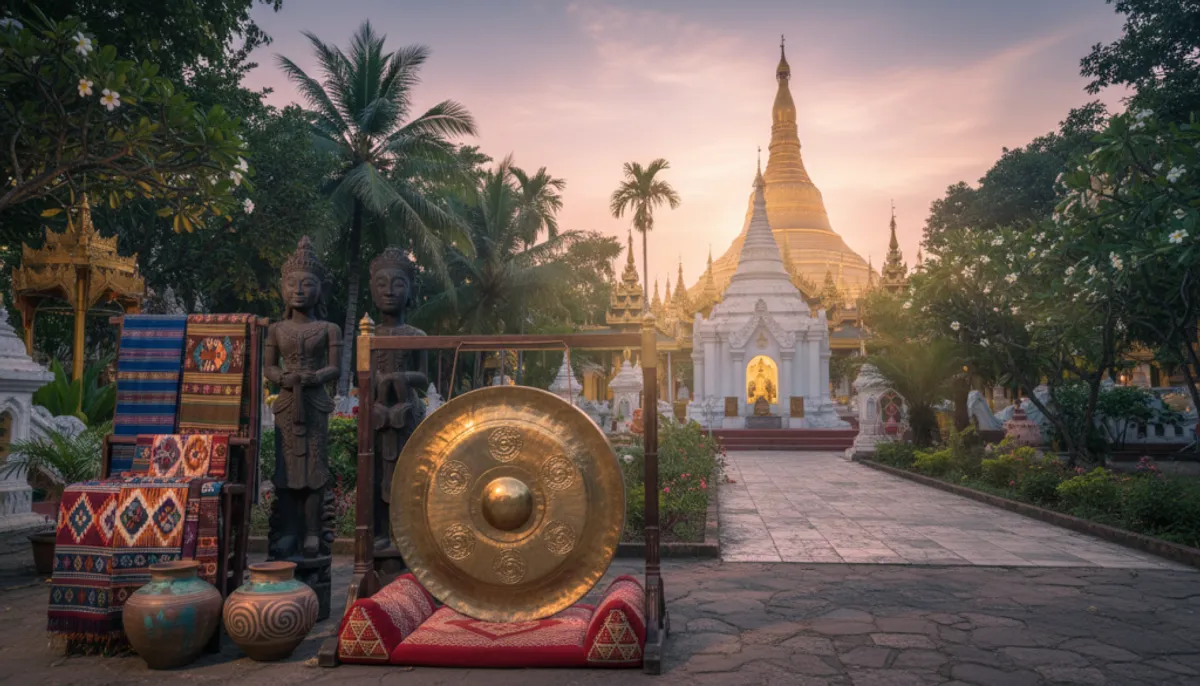
A successful journey goes through these authentic encounters. They allow for understanding the pillars of this society.
You will discover a collective harmony where the spiritual part prevails. These encounters offer new ideas about other ways of life.
Traveling in Myanmar: guidelines and etiquette
Your stay in Myanmar will be all the more enriching if you master the local politeness codes. These simple gestures show your consideration and facilitate every encounter.
Practical tips and polite gestures
Start any interaction with a smile and a “Mingalaba.” Slightly bow your head as a sign of respect.
Physical contact is highly codified. Men may sometimes shake hands. It is forbidden to shake hands with a woman or a monk.
Never touch a person's head, even a child. Feet are considered impure.
Do not point your feet at someone or a sacred statue. Always remove your shoes before entering a temple or a house.
For donations, always use the right hand. Support your right wrist with the left hand.
Etiquette rules in religious and family sites
Address elders with the title “U.” Wear decent clothing covering shoulders and knees.
Avoid any display of affection in public. Do not point at a person's face.
Do not walk on the threshold of a door. When visiting a family, wait for someone to indicate your place.
Women must never touch a monk. They should avoid walking on his shadow.
These rules demonstrate your deep respect for local values. They ensure a harmonious trip to Myanmar.
| Context | Rule to observe | Meaning |
|---|---|---|
| Greeting | “Mingalaba” with a bow | Mark of respect and kindness |
| Physical contact | No handshake with a woman or a monk | Respect for distance and purity |
| Body part | Do not touch the head, do not point with feet | The head is sacred, feet are impure |
| Donations and offerings | Always use the right hand | The left hand is considered impure |
| Clothing | Covering and modest clothing | Decency and respect for sacred places |
Craftsmanship and traditional arts
Mandalay shines as a nerve center where ancestral know-how comes to life in a thousand workshops. This city is the undisputed capital of craftsmanship.
Here, one discovers exceptional diversity. Artisans make gold leaves for pagodas and create delicate puppets.
Wood carving occupies a major place. It adorns temples, houses, and palaces with remarkable finesse.
Goldsmithing, sculpture, and woodworking
Other techniques are equally prized. Bagan lacquer, glass painting, and silk weaving produce the famous longyis.
Goldsmithing works with silver and precious stones. Visiting these workshops with a guide allows you to understand techniques passed down through generations.
Take the time to observe this meticulous work. It is a unique moment of sharing.
Dance, music, and puppet theater
Traditional dance is vigorous and energetic. It features rapid movements and difficult acrobatics.
The music uses percussion and the saung-gauk harp. This very ancient instrument dates back to the 8th century.
Puppet theater was born in the 5th century. It plays a prominent role in transmitting history and religious narratives.
| Art form | Characteristic | Main use |
|---|---|---|
| Wood carving | Remarkable finesse of details | Decoration of temples and houses |
| Lacquer objects | Complex traditional patterns | Artisan souvenirs and everyday items |
| Traditional dance | Rapid movements and acrobatics | Celebrations and festivals |
| Puppet theater | Religious and popular stories | Cultural transmission and entertainment |
For responsible travel, buy souvenirs like Shan bags or Pathein umbrellas. Visit workshops accompanied by a good guide.
Burmese cuisine and its authentic flavors
The Burmese table offers a unique sensory experience, where each dish tells a story of terroir and traditions. Tasting these specialties is a highlight of any stay.
Traditional dishes and mohinga
The typical meal consists of a curry of poultry, goat, or fish, accompanied by rice. Fish paste ngapi and the condiment balachaung add depth.
The national dish, mohinga, is a rice vermicelli soup with fish curry. Many consume it every day for breakfast.
Street stalls also offer fried foods, noodles, and skewers. These discoveries enrich your travels.
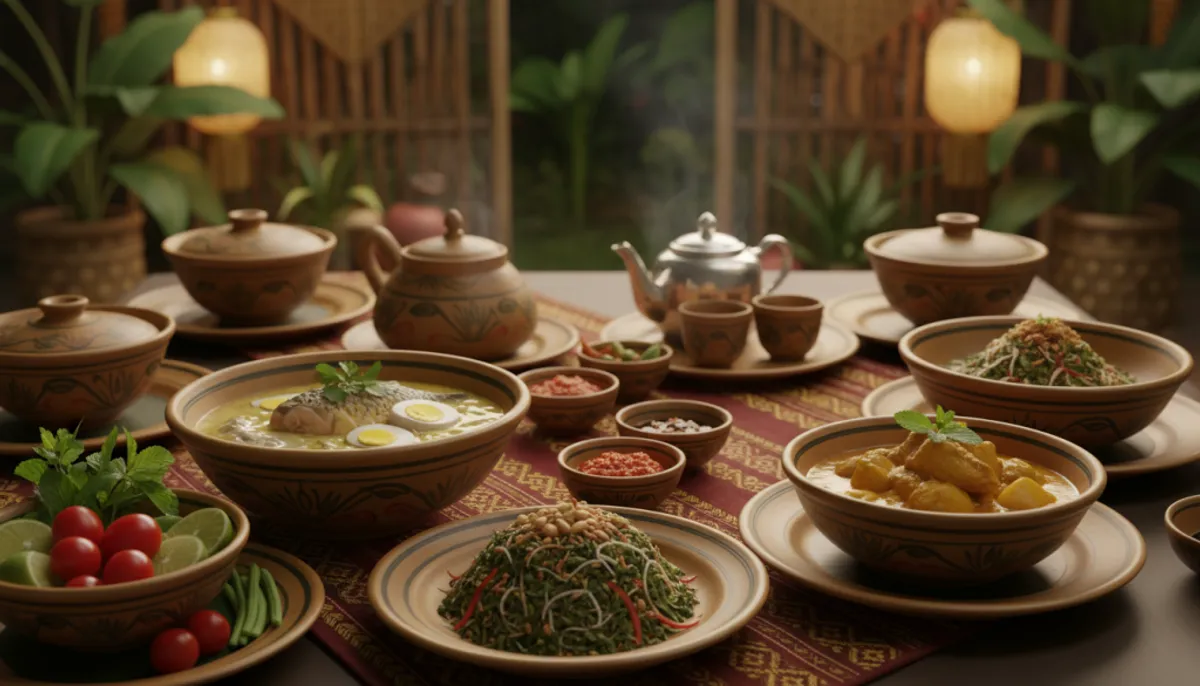
Regional influences and local spices
Near Inle Lake, one finds fermented rice or flower salads. The lahpet, marinated tea leaves, is an original specialty.
Local gastronomy fuses Indian, Chinese, and Thai influences. Take the time to discover this diversity.
For drinks, prioritize bottled mineral water or green tea, consumed every day. A good guide will point out fresh cane juices.
Buffets allow you to taste everything in one meal. It’s ideal when traveling with family or with little time. These moments of sharing with local family are memorable.
For your next travels, seek advice from a local guide. They will reveal flavors consumed every day.
Conclusion
At the end of this exploration, Myanmar reveals itself as a destination that profoundly transforms its visitors. Its richness deserves a journey of several days, organized around a balanced program.
This ideal stay combines the discovery of major sites with authentic stops, such as Inle Lake. Encounters with the Burmese are at the heart of the experience.
To truly understand this culture, a good local guide is invaluable. Plan your visit from October to February to enjoy the beautiful landscapes.
You will leave with the feeling of having experienced a unique journey, far beyond mere tourism.
FAQ
What is the best time for a trip to Myanmar?
The dry season, from November to February, is ideal. The weather is pleasant for visiting the temples of Bagan or cruising on Inle Lake. Avoid the monsoon, from May to October, when rains can complicate travel.
What role does Buddhism play in daily life?
Theravada Buddhism is at the heart of society. It influences customs, art, and people's routines. Monks are respected, and pagodas are important social spaces for the inhabitants.
What polite gestures should I know on-site?
Respect is fundamental. Remove your shoes before entering a house or a religious site. Avoid touching people's heads and pointing with your feet. Speak softly and dress modestly, especially women.
What is the most important festival not to miss?
Thingyan, the water festival marking the Burmese New Year, is emblematic. It is a joyful celebration lasting several days where locals splash water in the streets. It’s an intense cultural experience!
Is local cuisine spicy? What should I absolutely try?
Flavors are varied and not always spicy. You must try the mohinga, a national dish made with noodles and fish. Also taste tea salads and curries, which reflect the country’s regional influences.