Welcome to a captivating journey into the heart of an exceptional heritage. Located at the crossroads of continents, this territory has always been a hub of influences.
Nearly 39 million inhabitants, along with several million members of its diaspora, share this vibrant heritage. Berber, Arab, Andalusian, and African traditions blend harmoniously here.
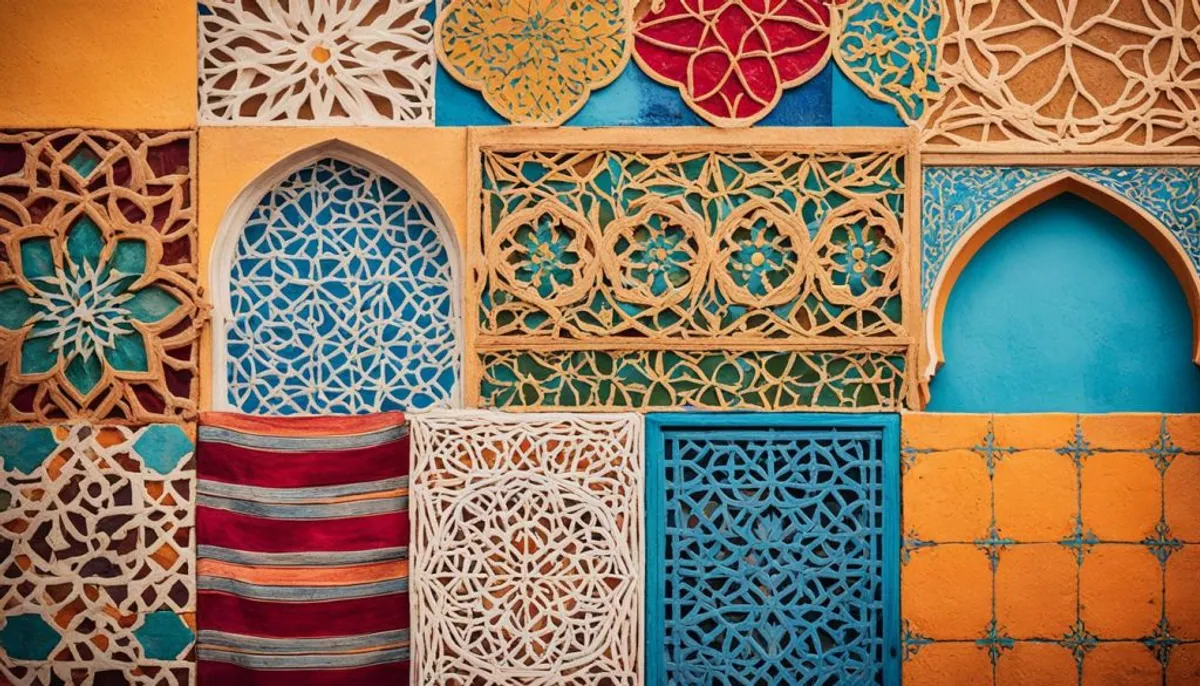
Its millennia-old history tells a unique fusion of civilizations. From this alchemy arises a flourishing artistic expression, from ancestral craftsmanship to contemporary creations.
The table is also an extraordinary place of sharing. A world-renowned gastronomy has been passing down family secrets for generations.
This guide invites you to explore this richness from all angles. You will discover how this country preserves its authenticity while engaging with the modern world.
Key Points to Remember
- Morocco is a land of mixing, shaped by Berber, Arab, Andalusian, and sub-Saharan influences.
- Its historical and artistic heritage is of remarkable depth and diversity.
- The local cuisine is a national treasure, ranked among the best in the world.
- Centuries-old traditions coexist with a vibrant contemporary dynamic.
- Craftsmanship, festivals, and architecture reflect a plural and welcoming identity.
- Exploring this mosaic means understanding the soul of a people and its history.
Introduction to Moroccan Culture
This unique cultural mosaic draws its roots from an ancestral Berber heritage. It has been enriched over the centuries by Arab, Andalusian, and Mediterranean contributions.
The demographic base rests on nearly 39 million inhabitants. The vast majority of Moroccans are Sunni Muslims. Islam is the state religion, and the king holds the title of Commander of the Faithful.
A remarkable balance between tradition and modernity defines this society. Linguistic diversity, with dialectal Arabic, Berber, and French, is a living reflection of this.
“Our identity is a tapestry woven from many threads, each carrying a unique story and color.”
| Influence | Characteristic | Current Impact |
|---|---|---|
| Berber | Language and ancestral customs | Identity foundation |
| Arab | Religion and official language | National unifying framework |
| Andalusian | Arts and architecture | Refined artistic heritage |
| Mediterranean | Exchanges and openness | Contemporary dynamism |
This culture expresses itself daily through legendary hospitality and festive celebrations. It preserves its authenticity while engaging with the world.
History and Evolutions of Moroccan Culture
The history of this region begins hundreds of thousands of years ago. Discoveries at Djebel Irhoud date back 300,000 years.
This long chronology shows a fascinating evolution. Each era has left a lasting imprint.
From Ancient Origins to Dynasties
In the 9th century BCE, the Phoenicians established trading posts. The Roman period follows, with Tingitana Mauretania.
A major turning point arrives in the 7th-8th centuries. The Arab conquest introduces Islam and transforms society.
Subsequent dynasties built great empires. The Idrissids founded Fez. The Almoravids created Marrakech in the 11th century.
The Roman, Arab, and Colonial Influence
The French protectorate is a significant event of the 20th century. It began in 1912 and lasted until 1956.
This phase brought modern infrastructures. Independence then marked a new era for the country.
| Period | Key Event | Cultural Heritage |
|---|---|---|
| Prehistory | Human presence (Djebel Irhoud) | Earliest foundations |
| Antiquity | Phoenician trading posts & Roman domination | First structured exchanges |
| Middle Ages | Arab conquest & dynasties (Almoravids, etc.) | Islam, imperial cities, Hispano-Moorish art |
| Modern Era | French protectorate (1912-1956) | Mix of influences and modernization |
| Contemporary Period | Independence (1956) | Building national identity |
Exploring Moroccan Culture: Traditions, Art, and Innovation
The 1990s marked a turning point in national cultural expression. This period saw media liberalization and the arrival of new technologies.
The current landscape is a fascinating mix. The deep heritage engages daily with new forms.
The Multiple Facets and Traditional Values
Hospitality and respect for elders remain solid pillars. These values forge social bonds, even in large cities.
The daily practices illustrate this duality. The ritual of mint tea coexists with modern, trendy cafés.
The Impact of Modernity and Globalization
The political openness of the 1990s allowed for greater artistic freedom. Media pluralism provided new platforms for creation.
Globalization introduces influences from the whole world. Paradoxically, it stimulates a renewed interest in local heritage.
Creators draw from this heritage while being inspired by international currents. This evolution creates a dynamic and unique artistic scene.
| Aspect | Traditional Expression | Contemporary Expression |
|---|---|---|
| Social | Extended family solidarity | Social networks and online community |
| Artistic | Craftsmanship (zellige, carpets) | Design merging ancestral techniques and modern aesthetics |
| Media | National press and radio | Media pluralism and digital content |
Moroccan Art and Craftsmanship
From ancestral workshops to modern art galleries, the creative scene is remarkably rich. This vitality expresses itself through a precious heritage and a creation that is resolutely current.
Traditional Art and Handcrafted Objects
The meticulous work of artisans perpetuates centuries-old techniques. Zellige, glazed pottery, and silver jewelry are splendid examples.
The caftan, inscribed in the intangible heritage of UNESCO, illustrates this excellence. These works embody craftsmanship passed down from generation to generation.
The Emergence of Contemporary Art
A new scene has emerged strongly since the 1990s. It dialogues with local heritage while adopting a universal language.
Artists like Mounir Fatmi and Bouchra Khalili produce works acclaimed internationally. Their creations question identity and modernity.
Institutions such as the Marrakech Biennale provide essential dissemination spaces. They bridge traditions and current forms.
| Field | Traditional Expression | Contemporary Expression |
|---|---|---|
| Craftsmanship | Zellige, Fez pottery | Installations, multimedia works |
| Clothing | Caftan (UNESCO heritage) | Design inspired by heritage |
| Institution | Islamic Art Museum | Marrakech Biennale, Apartment 22 |
Architecture and Historical Heritage
The stones and built forms tell a millennia-old story of encounters and adaptations. This architectural heritage bears witness to centuries of stylistic evolutions and multiple influences.
The Arab-Andalusian Style and Urbanism Mechanisms
The Arab-Andalusian style embodies the refinement inherited from Al-Andalus. Its palaces adorned with calligraphy, its mosques, and its slender minarets define an urban art of living.
The traditional urbanism of historical cities prioritizes domestic intimacy and community life. This complex spatial organization shapes the unique character of the medinas.
The Medinas and Vernacular Habitats
The medinas of Fez, Marrakech, and Meknes are classified by UNESCO. Their architectural value is an invaluable world heritage.
The vernacular Berber architecture, with the southern ksars and fortified agadirs, shows remarkable adaptation to the climate. These habitats reflect the ingenuity of the builders.
Today, contemporary architecture in the country dialogues with this heritage. It meets modern needs while honoring the past.
Gastronomy: Flavors and Traditions
The enchanting aromas and complex flavors define a world-renowned gastronomy. This cuisine is recognized for its aromatic richness and ancestral preparations. It forms an essential pillar of social life in this country.
Iconic Dishes and Ancestral Recipes
The tagine, of Berber origin, is a dish cooked in a clay pot. It combines meats, vegetables, dried fruits, and subtle spices. The Friday couscous represents a major cultural fact.
It is a moment of family gathering around a generous dish. Its base is durum wheat semolina, accompanied by seven vegetables and meat.
The pastilla mixes sweet and savory flavors in crispy brick sheets. The harira, a creamy soup, is served to break the fast during Ramadan.
| Dish | Characteristic | Tasting Moment |
|---|---|---|
| Tagine | Slow cooking in clay, infinite variations | Everyday meal |
| Couscous | Semolina, vegetables, meat, family recipe | Friday, family meal |
| Pastilla | Brick sheets, chicken, almonds, cinnamon | Celebrations and festivities |
| Harira | Tomato and dried vegetable soup, spiced | Breaking the fast (Ramadan) |
Beverages, Pastries, and Culinary Influences
The tradition of mint tea is an essential hospitality ritual. Prepared ceremoniously, it symbolizes warm welcome.
The pastries, like the fine gazelle horns, testify to exceptional craftsmanship. This cuisine integrates Arab, Andalusian, and Berber influences.
“Sharing a meal is the most sincere expression of friendship.”
Traditional beverages complete the experience. The leben (buttermilk) refreshes, while fruit juices are ubiquitous. The tea remains the central element of conviviality.
This unique gastronomic fusion is the foundation of a strong culinary identity. It is a source of pride for this country and delights its visitors.
Festivals and Cultural Celebrations
The annual calendar of Morocco is punctuated by a festive effervescence that animates each region. These events rhythm social life and offer the public unique opportunities to discover the artistic richness of the country.
Traditional Festivals and Moussems
The moussems are festive pilgrimages honoring local saints. There are between 600 and 700 across the country. The Moussem Moulay Abdellah in El Jadida and the Imilchil Engagements in the Atlas are living examples.
These ancestral celebrations occupy a central place in the transmission of traditions. They have endured through the years.
Contemporary Events and Artistic Manifestations
Recent years have seen the birth of world-renowned festivals. The Mawazine Festival in Rabat attracts millions of spectators every May.
Jazzablanca in Casablanca and the Marrakech International Film Festival in October place local creation on the international stage. These events demonstrate an openness to global artistic currents.
| Type of Event | Example | Main Characteristic |
|---|---|---|
| Traditional (Moussem) | Moulay Abdellah (August) | Festive pilgrimage and community celebration |
| Contemporary Music | Mawazine (May) | One of the largest music festivals in the world |
| Art & Cinema | Marrakech Film Festival (October) | Exceptional showcase for national and international cinema |
These events take place in exceptional settings, including historical medinas and natural sites. They have energized cultural life for many years.
The Influence of Music and Dance
An exceptional sonic heritage is passed down from generation to generation. It merges Berber traditions, Arab-Andalusian influences, and African contributions.
This music is much more than entertainment. It tells stories, accompanies rites, and unites communities.
Traditional Music and Iconic Instruments
Musical practices come in several distinct genres. Amazigh music from the mountains coexists with sophisticated Arab-Andalusian sounds and hypnotic gnaoua rhythms.
The instruments are the tools of this creation. The oud, guembri, and qarqabas produce unique sounds.
Gnaoua music illustrates the historical links with sub-Saharan Africa. Its trance ceremonies are an art form in their own right.
Dance, Performances, and Living Expressions
The art of dance expresses itself through multiple forms. There are collective Berber dances, ahwach, and desert guedra.
These performances occupy a central place in all celebrations. From weddings to festivals, they animate social life.
Artists like Amina Alaoui embody a contemporary renewal. Their creations respect traditions while engaging with other musical universes.
This vitality reflects a dynamic culture. It preserves its heritage while opening up to innovation.
Literature and Cinema in Morocco
Written narratives and moving images offer a unique window into the soul of a nation. These two artistic fields have produced major works over the years.
Major Authors and Notable Works
Francophone and Arabophone literature has seen prominent figures. Tahar Ben Jelloun won the Goncourt Prize in 1987.
Authors like Driss Chraïbi paved the way for engaged creation. A new generation, with Leïla Slimani, is renewing this field.
Evolution of Cinema and New Voices of the Seventh Art
The local cinematic art took off in the 1970s. The film Wachma by Hamid Bennani (1972) is a milestone.
The Moroccan Cinematographic Center (CCM), created in 1944, established a support fund in 1984. This stimulated creation.
The 2000s saw the emergence of talents like Nabil Ayouch. His film Horses of God received twelve international awards.
The studios in Ouarzazate, active since the 1950s, attract global productions. These works and awards illustrate the vitality of this culture.
Together, literature and cinema tell a story in perpetual evolution. They are essential pillars of contemporary cultural expression.
Communication and Media in Moroccan Culture
The Moroccan media landscape is a fascinating mirror of the social and political evolutions of the country. This field has undergone a radical transformation since the 1990s.
The Press, Radio, and Television Facing Contemporary Issues
The sector has shifted from a state monopoly to relative pluralism. The public television Al Aoula (SNRT) now coexists with many private channels.
| Type of Media | Example | Main Role |
|---|---|---|
| Public | SNRT / Al Aoula TV | Broadcast official information and national programs |
| Private | Thematic channels | Offer a diversity of content and entertainment |
The level of press freedom remains a concern. In 2016, Reporters Without Borders ranked the country 131st in the world.
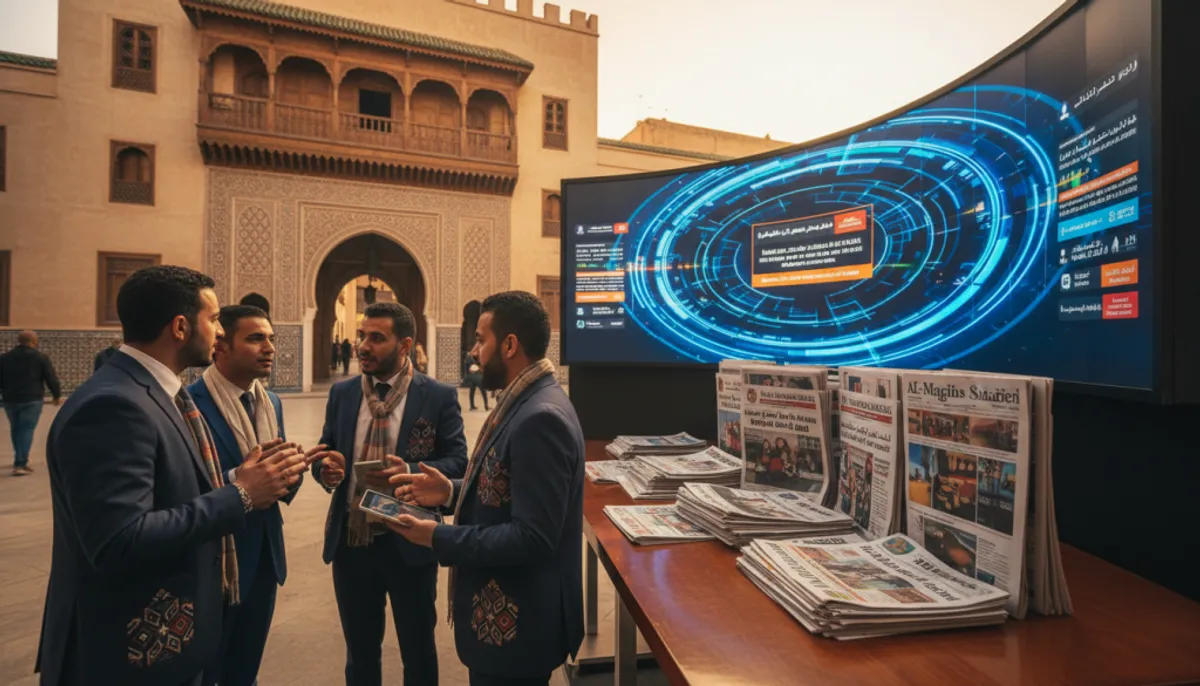
Media are often deterred from addressing certain sensitive topics. These “red lines” concern the monarchy, Islam, or Western Sahara.
The digital field is experiencing rapid expansion. The massive adoption of the Internet and social networks by Moroccans is changing communication.
Professionals navigate between democratic aspirations and institutional constraints. The Maghreb Arab Press (MAP) disseminates official information.
Contemporary issues concern the balance between openness and respect for the frameworks defined by the state. This sector remains in constant evolution.
Languages and Cultural Identities
The Moroccan linguistic landscape is characterized by remarkable and dynamic diversity. This richness reflects the complexity of its identity.
Two official languages coexist: classical Arabic and Berber (Amazigh). This duality is the legal basis of a plural system.
Arabic, Berber, and Influential Languages
Arabic comes in several registers. The dialect (darija) is the mother tongue of nearly 70% of Moroccans.
Classical Arabic, that of the Quran, dominates the religious and administrative spheres. Modern standard Arabic is used in education and media.
Berber, spoken by 16% of the population, has many regional variants. Its standardized form, Amazigh, is gaining recognition.
French retains a strong place in the economy and higher education. English is becoming increasingly essential.
Moroccans skillfully navigate between these codes. This multilingualism shapes daily exchanges.
- Dialectal Arabic: language of everyday life and spontaneity.
- Berber (Amazigh): symbol of an ancestral heritage in full revitalization.
- French: language of social promotion and business.
- English: vector of international openness.
This mosaic is a strength. It also represents a challenge for national cohesion and education in the country.
The Evolution of Cultural Practices in the Modern Era
A silent but radical transformation is redefining how citizens live and share their heritage. The 1990s marked a major turning point in this evolution.
The liberalization of audiovisual media and the arrival of new technologies have disrupted communicative fields. This period saw the birth of true media pluralism.
The traditional practice, centered on family spaces, now coexists with new forms of sociability. The 2000s accelerated this shift with the explosion of digital.
Young generations now consume art and music differently. They also create original content that blends local references with international influences.
This evolution is set within a context of cultural globalization. Paradoxically, it sparks a renewed interest in the oldest traditions.
| Traditional Practice | Modern Practice | Impact on Society |
|---|---|---|
| Family and community gatherings | Sociability via digital networks | New forms of sharing |
| Oral and artisanal transmission | Digital consumption and online creation | Wider access and democratization |
| Local festivals and moussems | Multiplication of international events | Openness to the world |
| Expression rooted in the land | Hybridization of references | Renewed cultural identity |
A growing part of the urban population adopts these hybrid habits. Modern tools serve a culture that remains deeply rooted in its specificities.
Recent years demonstrate a creative appropriation of technologies. This dialectic between tradition and modernity defines contemporary practice.
The Impact of Travel and Cultural Tourism
Every year, millions of travelers choose this country for a total immersion in its living history. This journey offers much more than just a stay.
It becomes a vital economic engine. It also plays a key role in safeguarding an exceptional heritage.
Discovering Historical and Heritage Cities
The imperial cities like Fez, Marrakech, and Meknes are must-visit destinations. Their architectural heritage reveals itself at every street corner.
The Jemaa el-Fna square in Marrakech is a symbol. Inscribed by UNESCO, it offers a unique sensory spectacle in the world.
The historical medinas are true preserved labyrinths. They plunge visitors into a fascinating medieval atmosphere.
The coastal city of Essaouira brings a different touch. It combines authenticity and maritime heritage.
Immersive Experiences and Authentic Itineraries
Tourism services have greatly professionalized. They now offer activities deeply rooted in traditions.
A typical day may include visiting a craft workshop. It continues with tasting mint tea in a riad.
The itineraries prioritize real encounters with locals. Sharing a family meal or participating in a local festival enriches the journey.
In the south, desert tourism offers immersion in Berber communities. These services create lasting memories.
These experiences transform a simple day of visiting into a personal adventure. They allow for understanding the soul of this country.
They also give a central place to local populations. Thus, tourism directly benefits the preservation of heritage.
Initiatives and Cultural Valorization Projects
Support for artistic creation has been structured over the decades. Public and private initiatives take an active part in it.
Support for Artists and Community Projects
The cinema sector benefits from a public fund. The Moroccan Cinematographic Center (CCM) allocates about 60 million dirhams per year.
This system finances creation through advances on receipts. The Higher Institute of Cinema Professions also trains professionals.
The field of visual arts sees the emergence of independent spaces. Apartment 22 in Rabat and the Atelier de la Source du Lion in Casablanca are examples.
These places offer residencies and direct contact with the public. They are essential for the dissemination of contemporary creation.
| Type of Initiative | Example | Main Role | Impact |
|---|---|---|---|
| Public funding | CCM Fund | Support film production | Stimulates national creation |
| Independent space | Apartment 22 (Rabat) | Residence and exhibition of contemporary art | International outreach |
| Community project | Tangier Cinematheque | Education and training of the public | Cultural democratization |
The cultural sector forms a favorable ecosystem. Private initiatives complement public action in this field.
The art market is structuring itself with galleries and fairs. These projects take part in a movement of democratization.
“Supporting artists is investing in the soul of a nation.”
The field still requires investments. But it creates opportunities for young talents and energizes the local market.
The Role of Women and Influential Figures
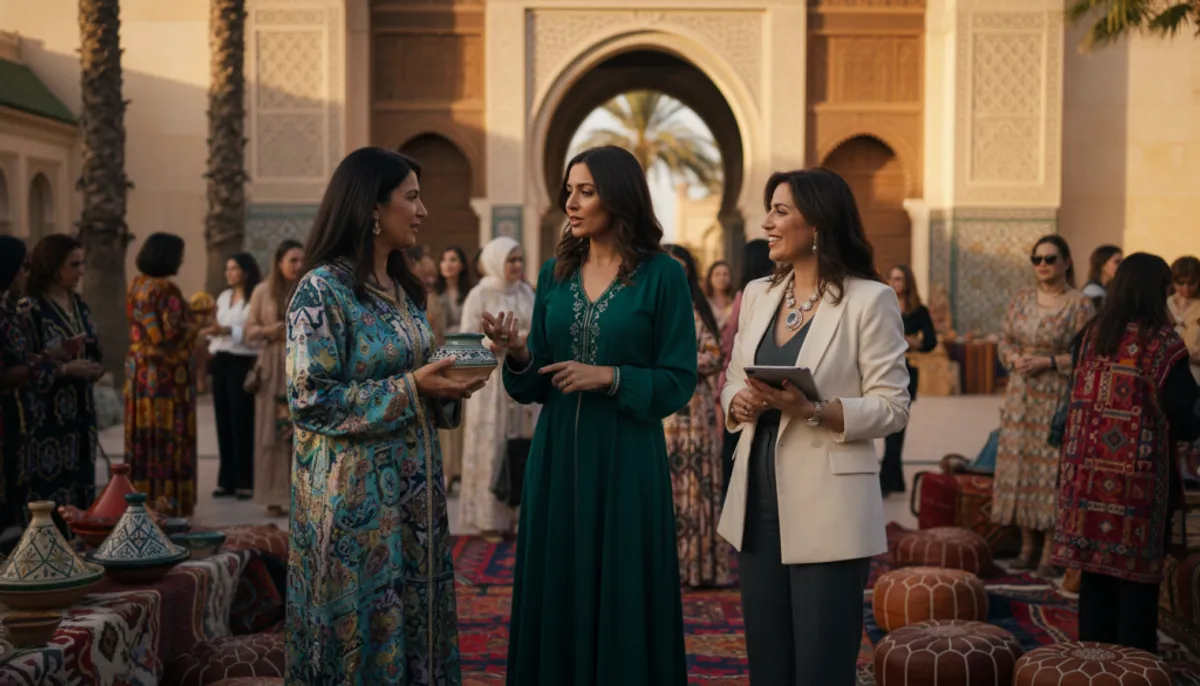
Moroccan painters, writers, and athletes inspire through their journeys and exceptional achievements. They take an active part in artistic and social life.
This movement is gradually transforming the national landscape.
Iconic Figures and Agents of Change
Pioneers like painter Chaïbia Talal have paved the way. Their works assert themselves in a field long dominated by men.
Contemporary creators, such as Lalla Essaydi, now shine internationally. Their paintings question identity.
In literature, Leïla Slimani won the Goncourt Prize in 2016. Laila Lalami also explores the condition of women in her novels.
Athlete Najat El Garaa, a gold medalist at the Paralympics, symbolizes determination. She proves the excellence of women in all fields.
Cultural Engagements and Notable Contributions
A major fact has improved the legal status of women. King Mohamed VI reformed the Moudawana, the family code, after his accession in 1999.
This action strengthened their rights regarding marriage and divorce. It illustrates the priority given to their social promotion.
The feminist movement combines demands and artistic expressions. Women now hold positions of responsibility in institutions.
The Moroccan state, under the king's impetus, is gradually integrating their voice into decisions. Contemporary culture owes much to their essential contribution.
| Field | Notable Example | Major Contribution |
|---|---|---|
| Visual Arts | Chaïbia Talal, Lalla Essaydi | Opening and international recognition of female painting |
| Literature | Leïla Slimani, Laila Lalami | Questioning identity and prestigious literary awards |
| Sport | Najat El Garaa | Inspiration and demonstration of Paralympic excellence |
| Law & Society | Reform of the Moudawana | Concrete improvement of women's legal status |
Conclusion
Ultimately, exploring this identity reveals a fascinating dynamic between past and present. A plural heritage, shaped by Berber, Arab, Andalusian, and many others, continues to live and evolve.
This alchemy produces an inexhaustible artistic richness. Art in all its forms captivates the whole world, making the country an essential destination.
Tradition and innovation nourish each other, creating a unique vitality. Preserving this treasure while reinventing it is the challenge of the coming centuries.
Thus, this Moroccan culture demonstrates its strength: rooted in its history, it boldly dialogues with modernity.
FAQ
What are the main historical influences visible in the country's heritage?
The architectural and artistic heritage shows traces of Berber dynasties, Islamic empires, and colonial and Roman periods. This fusion creates a unique style, notably in the medinas and Arab-Andalusian art.
What does traditional craftsmanship represent in the daily life of Moroccans?
Craftsmanship, such as pottery, weaving, and woodworking, is an ancestral practice. It supports the local economy and perpetuates a know-how passed down through generations, forming an essential part of the national heritage.
What are the must-try dishes of local gastronomy?
Couscous, tagine, and pastilla are iconic dishes. The cuisine uses spices like saffron and cumin, reflecting a blend of Berber, Arab, and Mediterranean influences.
Are there major festivals celebrating traditional arts?
Yes, events like the Marrakech Popular Arts Festival or the Gnaoua Festival in Essaouira showcase music, dance, and craftsmanship. These moussems attract an international audience.
How has traditional music evolved today?
Genres like Chaâbi or Gnaoua music remain alive. Many artists, such as Oum, fuse them with modern sounds, ensuring their evolution and dissemination in the global market.
Who are some famous Moroccan authors in the field of literature?
Figures like Tahar Ben Jelloun, who won the Goncourt Prize, or Leïla Slimani, are globally recognized. Their works often explore identity and the social history of the country.
How are practices evolving with modernity?
Globalization and new media introduce new forms of expression, particularly in cinema and visual arts. However, family values and traditions remain a solid foundation for society.