
Discover a millennia-old treasure that enriches our cultural landscape today. This introduction invites you on a fascinating journey through centuries of history and exceptional traditions.
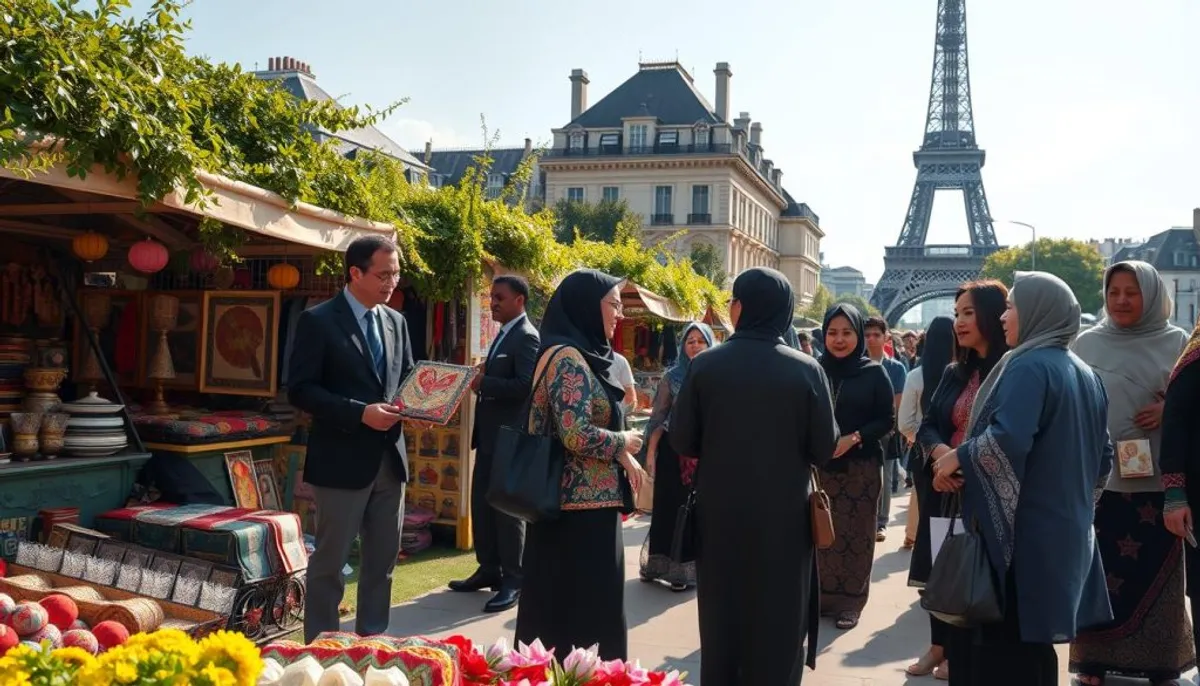
We will explore how this ancient civilization continues to influence our contemporary life. A dynamic diaspora passionately shares its heritage with authenticity across our territory.
You will understand why the Persian language and refined art constitute an invaluable heritage. These age-old traditions transcend geographical and temporal boundaries.
This country, a historical crossroads between East and West, has developed a unique identity. It shines through literature and the everyday practices of modernity.
Key Points to Remember
- A rich cultural heritage of over 2500 years of history
- A significant influence on global artistic development
- The Persian language as a fundamental pillar of this civilization
- A dynamic presence of the diaspora in France today
- Traditions that continue to enrich our cultural landscape
- A spiritual and artistic heritage of exceptional depth
Introduction to Iranian Culture
Iran offers us a fascinating heritage where ancestral traditions meet modernity. This unique civilization blends pre-Islamic and Islamic influences, creating a rich and complex identity.
Historical and Identity Context
The history of this country dates back over 2500 years. Ancient Persia experienced glorious periods such as the Sassanid era.
This era marked the entire world. China, India, and Europe were all influenced by Persian refinement.
The intellectual role of the Persian language was decisive. For centuries, it was the language of scholars and thinkers.
The Importance of This Culture in France
In France, the Iranian diaspora actively shares this heritage. For the first time, cultural exchanges are truly intensifying.
The community preserves its traditions while integrating into French life. It creates valuable bridges between two millennia-old civilizations.
This presence enriches our intercultural dialogue. The French thus discover a culture where spirituality and art blend harmoniously.
Origins and History of Iranian Culture
At the heart of the Middle East, a nation with millennia-old roots has traversed the centuries while preserving its unique identity. This fascinating history spans over 2500 years, marked by prestigious empires.
Historical and Civilizational Roots
The Achaemenid Empire, founded in 550 BC by Cyrus II, represents the first great civilizations. For centuries, this country, known as Persia until 1935, shone over Central Asia.
The Sassanid Empire dominated for nearly half a millennium, creating a major cultural center. This period saw the emergence of intense exchanges with neighboring civilizations.
Cultural Influences and Exchanges with the East
Modern transformations began with the Islamic Revolution of 1979. On January 16, 1979, the Shah left the country, opening a new era.
On February 1, Ayatollah Khomeini returned after 14 years of exile. The establishment of the Islamic Republic was proclaimed on April 1, 1979.
This revolution profoundly transformed society. The Iran-Iraq war (1980-1988) caused the death of 1.2 million people, marking the collective memory.
Traditions and Customs in Iranian Culture
Iranian celebrations weave a vibrant tapestry of millennia-old traditions that continue to enliven modern daily life. These unique practices revolve around an ingenious solar calendar, the Hejri-Shamsi.
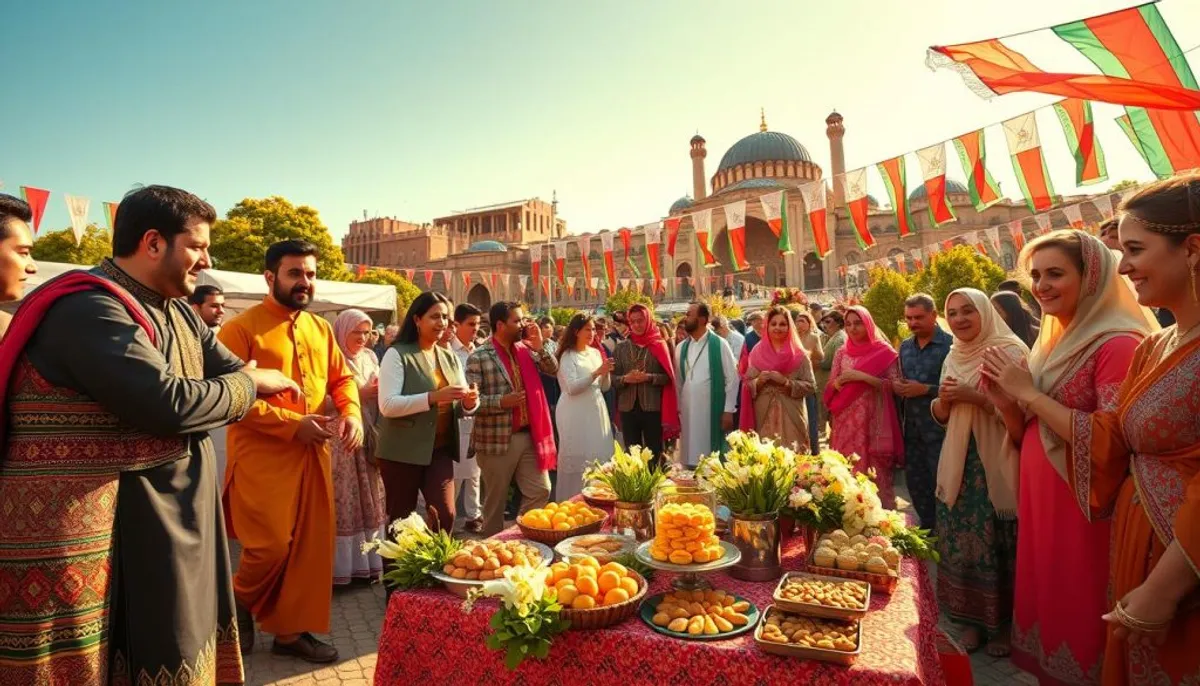
This calendar system, developed by Omar Khayyam, reflects a remarkable connection between science and spirituality. It structures the year around significant natural and cultural events.
Traditional Festivals and Rituals
The Iranian New Year, Nowruz, marks the peak of celebrations. Celebrated every March 21, it symbolizes the renewal of nature after winter.
Families prepare the Haft-Seen table with seven symbolic items. This tradition has persisted for over 3000 years, embodying values of abundance and prosperity.
The calendar incorporates ancestral seasonal festivals such as Jashn-e Tirgan in June. These celebrations perpetuate millennia-old Zoroastrian rituals linked to natural elements.
Among the highlights, Sizdah bedar on the thirteenth day invites Iranians to picnics in nature. This practice aims to ward off the bad luck associated with the number thirteen.
Chaharshanbeh suri, the last Wednesday of the year in March, offers a spectacular ritual of purification by fire. Participants jump over flames to close the past year.
Friday, the weekly day of rest, allows for regular family gatherings. This pause structures social and religious life harmoniously.
The Persian Language and Literature
The Persian language, with deep roots, traverses the centuries with remarkable elegance. This Indo-European language serves as a bridge between a glorious past and a dynamic present.
Persian Through the Centuries
Used continuously for 2500 years, this language was considered the language of intellectuals during the second millennium. It now shines as the official language of Iran, understood by 83% of the population.
The Persian language has managed to preserve its unique structure despite Arabic influences. Its role was comparable to that of Latin in medieval Europe.
The Literary and Poetic Heritage
Poetry occupies a central place in this culture. Masters like Hafez, Rumi, and Saadi have marked world literature.
The Shâh Nâmeh by Ferdowsi, a true book of kings, recounts the national epic in 60,000 verses. The Rubaiyat of Omar Khayyam continues to inspire thinkers worldwide.
This living tradition perpetuates itself in daily life. Iranians often quote classical verses during family celebrations.
Arts and Architecture: Reflections of an Identity
From the ancient reliefs of Persepolis to the turquoise domes of Isfahan, Persian art testifies to a constant quest for beauty. This unique visual expression traverses the millennia with remarkable elegance.
The various art forms tell the story of a civilization that values harmony and spirituality. Each work becomes a bridge between the past and the present.
Calligraphy, Miniatures, and Visual Heritage
The art of calligraphy transforms writing into spiritual expression. The fluidity of letters creates a captivating visual dance.
Persian miniatures unfold complex narratives with extraordinary precision. These works tell tales of mythological and historical epics.
Traditional carpets represent artisanal excellence with their symbolic patterns. Each detail holds a deep meaning.
| Type of Art | Characteristics | Famous Example | Period |
|---|---|---|---|
| Calligraphy | Fluid, spiritual letters | Quranic manuscripts | Medieval to modern |
| Miniatures | Precise details, vivid colors | Illustrated Shâh Nâmeh | 13th-17th century |
| Architecture | Domes, geometric patterns | Shah Mosque of Isfahan | Safavid period |
| Carpet weaving | Complex patterns, fine wool | Kashan carpets | Antique to contemporary |
Iranian architecture reaches its peak in the city of Isfahan. The Safavid mosques impress with their perfect proportions.
These arts continue to inspire creators worldwide. They represent a living and evolving heritage.
Music and Cinema: Artistic Expression in Iran
The Iranian artistic scene vibrates to the rhythm of millennia-old musical traditions and a globally acclaimed cinema. These two forms of art offer unique windows into the soul of the country.
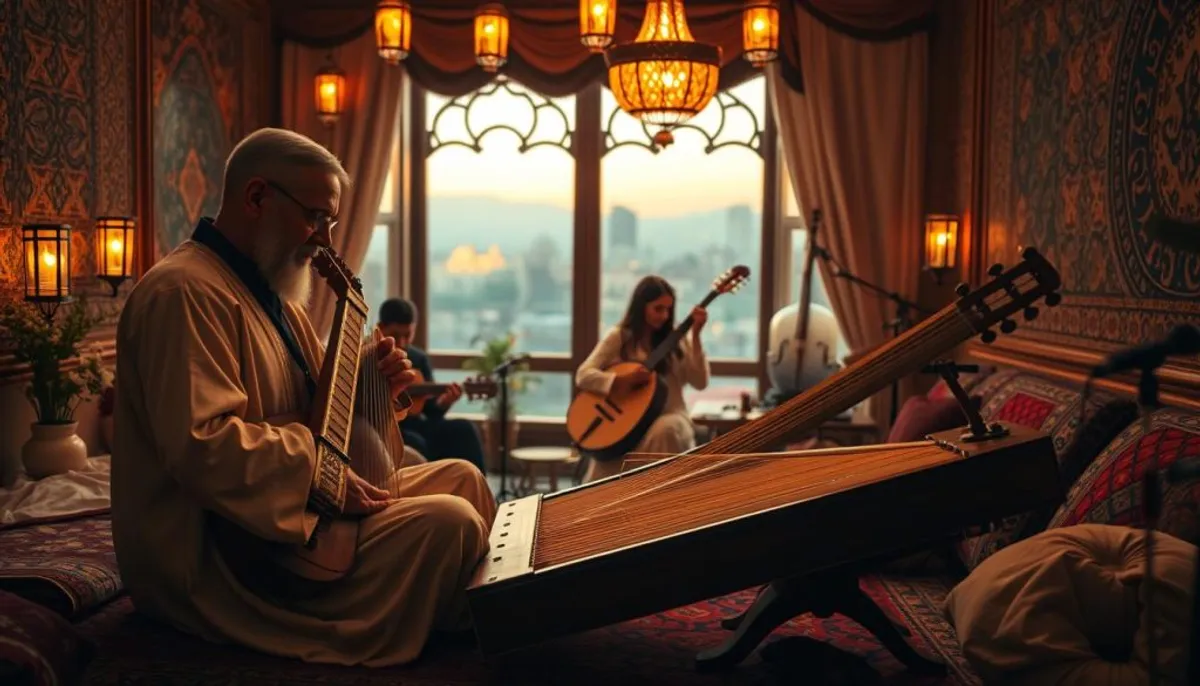
Music draws its roots from Sassanid antiquity. The legendary Barbod created traditions that influenced many cultures around the world.
Traditional Instruments and Sounds
The modal system dastgah structures compositions according to the desired emotions. This complex organization creates a sound palette of exceptional richness.
Traditional instruments produce characteristic sounds. The tar, setar, kamancheh, and daf each contribute to the unique texture of this music.
| Instrument | Type | Sound Characteristics | Traditional Use |
|---|---|---|---|
| Tar | Long-necked lute | Deep and resonant sound | Main soloist |
| Setar | String instrument | Delicate and intimate tone | Spiritual meditation |
| Kamancheh | Vertical violin | Warm and expressive timbre | Classical ensembles |
| Daf | Frame drum | Catchy rhythms | Sufi ceremonies |
Iranian directors like Abbas Kiarostami revolutionized the seventh art. Their approach blends social realism and poetic symbolism.
This fusion of tradition and modernity characterizes contemporary artistic expression. It continues to enrich the global cultural heritage.
The Impact of Iranian Culture on Modern Society
The current Iranian social landscape reflects a unique synthesis between Shia spirituality and contemporary realities. This fusion profoundly influences the lifestyle of citizens.
The commemoration of Ashura represents the most significant religious event. Millions of men and women participate in annual processions.
Influence on Lifestyle and Cultural Landscape
The family constitutes the fundamental basis of social organization. Intergenerational bonds remain exceptionally strong in this culture.
Children grow up in an environment that values respect and solidarity. Mothers play a particularly important role in education.
Despite the restrictions of the Islamic Republic, women have made remarkable progress. The number of university graduates often exceeds that of men.
| Aspect | Public Space | Private Space | Social Impact |
|---|---|---|---|
| Dress Code | Strict code imposed | Freedom of expression | Cultural duality |
| Education | Regulated coeducation | Equality of opportunity | Academic excellence |
| Relationships | Religious norms | Assumed modernity | Traditional balance |
For a successful journey, visitors must respect dress codes. Women wear scarves while men avoid light clothing.
This culture continues to evolve while preserving its spiritual essence. It represents a fascinating model of coexistence between tradition and modernity.
Iranian Gastronomy and Culinary Heritage
The Iranian table represents a true art of living, where each meal becomes a celebration. This refined cuisine blends ancestral traditions with contemporary creativity.
Traditional Dishes and Sweets
Rice is the central element of many Iranian dishes. Prepared with care, it accompanies national specialties.
The traditional bread comes in several varieties. Each type has its unique texture and aroma.
| Iconic Dish | Main Ingredients | Characteristics | Region of Origin |
|---|---|---|---|
| Chelo kabab | Rice, lamb, saffron | Grilled over charcoal | Throughout Iran |
| Ghormeh sabzi | Fresh herbs, lamb | Slow-cooked | Central regions |
| Fesenjan | Chicken, walnuts, pomegranate | Sour-sweet sauce | North of the country |
| Khoresht | Vegetables, meat, spices | Fragrant stew | Regional variations |
Desserts reveal the sweetness of this culture. Iranians enjoy fine pastries and seasonal fruits.
Influence of Spices, Tea, and Meal Rituals
Tea occupies an essential place in daily life. Served in tea houses, it punctuates gatherings.
Spices delicately flavor each preparation. They create the characteristic balance of Persian flavors.
The meal represents a moment of sharing and conviviality. This tradition strengthens family and friendly bonds.
Conclusion
Exploring contemporary Iran reveals a fascinating fusion of tradition and modernity. This millennia-old country maintains its unique identity despite political transformations.
The Constitution of the Islamic Republic, established in July 1979, now structures every aspect of public life. National celebrations like the Islamic Republic Day on April 1 mark the civil year.
Despite these changes, the artistic and spiritual richness continues to shine. Shia Islam coexists harmoniously with pre-Islamic heritages.
Each day of discovery reveals new facets of this complex culture. An impressive number of traditions survive political upheavals.
The death of certain practices is compensated by the revival of other expressions. This culture ultimately transcends all geographical boundaries.
It offers humanity treasures that will inspire future generations. Exploring this fascinating city enriches our understanding of the world.
FAQ
What are the main festivals celebrated in Iranian culture?
The Iranian New Year, Nowruz, is the most important festival. It marks the beginning of spring, around March 21. Other major celebrations include Yalda (the longest night of the year) and Chaharshanbe Suri (a fire festival). These events are rich in family rituals and special dishes.
What is the national dish of Iran?
It is difficult to choose just one, but chelow kabab is often considered the national dish. It consists of fragrant rice (the *polo*) and grilled meat skewers. Another very popular dish is *fesenjan*, a stew made with chicken, walnuts, and pomegranate juice.
How did the Islamic Revolution of 1979 influence culture?
The Islamic Revolution introduced significant changes in daily life and artistic expression. It strengthened the role of religion in society and influenced areas like cinema and music. Despite this, ancient Persian traditions, such as poetry, remain very much alive.
What is the importance of poetry in Iranian society?
Poetry is at the heart of cultural identity. Poets like Hafez and Rumi are revered. Their works are read on special occasions, such as Nowruz, and are used for divination. Their influence extends to literature and philosophy worldwide.
What are the most recognized traditional Iranian arts?
Calligraphy and Persian miniatures are world-renowned art forms. Architecture, with its mosques featuring turquoise domes and Persian gardens, is also a remarkable visual heritage. Carpet making is another renowned craft.
Does tea hold a special place in Iran?
Absolutely! Tea (*chai*) is much more than a beverage; it is a social ritual. It is served throughout the day, often in small glasses, and accompanies conversations. It is inseparable from Iranian hospitality.