
At the heart of Southern Africa lies a landlocked nation with unknown treasures. This country, home to several million inhabitants, features a landscape of hills and plateaus. Its tropical climate is softened by altitude.
Its subsoil is rich in resources, particularly copper. But its true wealth lies in its human heritage. More than seventy ethnic groups weave a remarkable social harmony here.
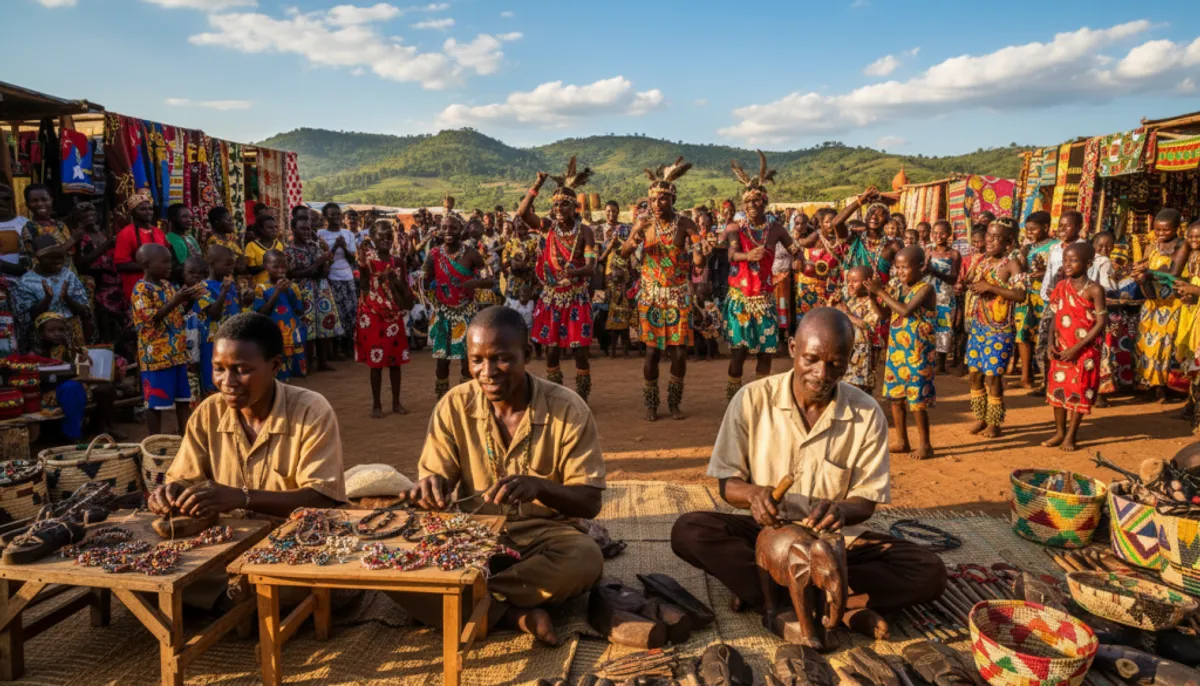
This human mosaic creates a unique identity, where ancestral traditions converse with modernity. The absence of pronounced tribalism makes the experience authentic and welcoming for any visitor.
This flourishing is set within an exceptional natural framework. Wonders like Victoria Falls and the abundant wildlife of national parks provide the local culture with a vital strength drawn from its environment.
Prepare for a journey beyond landscapes. You will discover how history, languages, arts, and colorful ceremonies define the soul of this captivating country.
Key Points to Remember
- Zambia is a country in Southern Africa with a rich natural and cultural heritage.
- More than 70 ethnic groups coexist peacefully, forming a united society.
- Its identity skillfully merges age-old traditions with contemporary influences.
- The territory is home to spectacular sites like Victoria Falls.
- Craftsmanship, music, and traditional ceremonies are pillars of its social life.
- It is an ideal destination for an authentic and immersive cultural experience.
Introduction to Zambian Culture
The human landscape of this Southern African territory is as rich and varied as its geography. It is home to over 17 million inhabitants belonging to more than 70 distinct ethnic groups.
Overview and Context
Despite this diversity, a remarkable social harmony unites the country. The population is organized into nine administrative provinces. This structure promotes local governance while strengthening national unity.
| Province (example) | Notable Characteristic | Ethnic Diversity |
|---|---|---|
| Eastern Province | Multiple historical influences | Very high |
| Copperbelt Province | Urban mix and traditions | High |
| Western Province | Preserved ancestral practices | Moderate to high |
Objectives of the Ultimate Guide
This advertising guide aims to introduce you to all aspects of this society. You will understand how its plateaus and savannas have shaped its development.
We will explore daily customs and elaborate arts. This immersion will show you a model of rare cohesion in the contemporary world.
History and Evolution of Zambian Culture
The evolution of the current society is the result of a blend of age-old influences. Its history is a rich tapestry woven over millennia.
From Ancient Origins to Bantu Peoples
Settlement dates back over 110,000 years. The discovery of the skull of the "Rhodesian man" attests to this.
Initially, Khoisan-speaking hunter-gatherers occupied the territory. The Bantu peoples arrived later, during the early centuries.
They introduced agriculture and new social structures. This period laid the foundations for many traditions.
| Period | Major Event | Cultural Impact |
|---|---|---|
| Prehistory | Presence of the Khoisan | Rock art, survival techniques |
| Bantu Migrations | Arrival of farmers | New languages, clan structures |
| Colonial Era | British domination | Centralized administration, mining economy |
The Colonial Influence and Independence
The Portuguese explored the region in the 18th century. British domination was then firmly established.
In 1924, the protectorate of Northern Rhodesia was created. This year marked the beginning of intense economic exploitation.
Independence was finally proclaimed in 1964. President Kenneth Kaunda then promoted "Zambian humanism."
His departure in 1991 opened an era of multiparty politics. This liberalization allowed for a more diverse artistic expression.
The Peoples and Ethnic Groups of Zambia
An exploration of the communities inhabiting this territory highlights a remarkable ethnic diversity. More than seventy distinct groups live here in harmony, making discovering europe an enriching experience.
This mosaic forms the vibrant heart of society. Each community brings its own traditions and history.
Main Groups and Their Distribution
The Bemba constitute the largest ethnic group. They represent about 26.6% of the population.
Their traditional home is in the northeast. They are also found in urban areas of the Copperbelt.
The Tonga form the second major group. They primarily occupy the southwest regions.
Other significant peoples include the Nyanjas in the east and the Lozis in the west. The Lala-Bisa are established in the central country.
| Ethnic Group | Main Region | Population Share |
|---|---|---|
| Bemba | Northeast, Copperbelt | 26.6% |
| Tonga | Southwest | 13.4% |
| Nyanja | East | 10.1% |
| Lozi | Extreme West (Barotseland) | 6.2% |
| Lala-Bisa | Center | 9% |
More than half of the inhabitants live in urban areas. This nation has the highest urbanization rate in Africa.
Diversity and Cultural Interactions
Despite this great variety, tribalism is virtually absent. Mutual respect and national cohesion prevail.
Cities like Lusaka are becoming melting pots. Different ethnic groups mix and share their practices.
This interaction creates new forms of expression. It enriches the heritage without erasing distinct identities.
The north and south exhibit unique regional cultural traits. Yet, they all contribute to a unified national identity.
Languages in Zambia and Their Social Role
Everyday communication relies on an astonishing linguistic patchwork. It blends a unique official language with a myriad of regional dialects.
This diversity profoundly shapes interactions and collective identity.
English and Bantu Languages
English is the only official language. Only 1.7% of the population speaks it as their mother tongue.
However, about 26% of the inhabitants master it as a second language. It serves as a bridge between communities.
Seven main Bantu languages are officially recognized. Bemba dominates, spoken by over 50% of the people.
| Language | Speakers (L1+L2) | Region of Influence |
|---|---|---|
| Bemba | 50.3% | North, Copperbelt |
| Nyanja | 30.2% | East |
| Tonga | 15% | Southwest |
| Lozi | 10.9% | West |
A common spelling was approved by the government in 1977. It standardizes the writing of these languages.
Language Impacts on Education and Communication
Primary education often begins in the child's local language. A transition to English follows gradually.
This approach facilitates early learning. It also poses challenges for curriculum harmonization.
In rural areas, proficiency in English remains limited. Access to official information may suffer as a result.
The majority of Zambians are multilingual. They fluently speak four or five languages that they mix naturally.
This multilingualism strengthens social cohesion. It enriches the oral heritage of each community.
Customs and Ancestral Traditions
Popular wisdom, conveyed through vivid proverbs, guides the daily lives of the inhabitants. These senegalese customs and traditions form a living heritage.
Proverbs hold a central place. They teach morality and common sense in all local languages.
A Tumbuka proverb says: "The stranger is like a white chicken, immediately recognizable." Another, from the Lunda, states: "The old leopard may lose its wickedness but not the color of its skin."
The extended family and clan are the basis of social organization. This structure promotes mutual aid and solidarity.
Rites mark each stage of life. Birth, initiation, marriage, and death are celebrated with elaborate ceremonies.
These events strengthen bonds within communities. They transmit essential values from generation to generation.
Nearly three-quarters of the population is Christian. Others follow traditional African religions.
This coexistence creates a unique spiritual syncretism. Beliefs in ancestors often blend with Christian practices.
Ubuntu and the gathering under the tree illustrate the importance of consensus. Collective conflict resolution takes precedence.
These ancestral traditions continue to influence modern society. They provide a valuable moral framework in a changing world.
Exploring Traditional Ceremonies
The social calendar is punctuated by celebrations that blend spirituality, history, and festivities. About twenty annual ceremonies testify to a vibrant will to perpetuate traditions.
These events gather entire communities. They strengthen ties and transmit a precious heritage.
The Ku-omboka and Its Meanings
Among the most emblematic ceremonies, the Ku-omboka of the Lozi people takes place during the rainy season. The rising water levels trigger a symbolic exodus.
The king embarks on the royal boat Nalikwanda, dressed in ceremonial attire. The entire population follows in a journey lasting several hours.
Songs and dynamic dances mark the arrival on higher lands. This ceremony celebrates mastery over nature and a harmonious transition.
Other Initiation and Passage Rituals
The Likumbi Lya Mize prepares young Luvale adults for their future roles. It combines symbolic teachings, dances, and the wearing of masks.
Among the Chewa, the Kulamba is a purification ritual. It allows for a spiritual connection with ancestors through offerings.
UNESCO has recognized the importance of several of these practices. The Makishi masquerade and the Mooba dance are part of the intangible cultural heritage of humanity.
These ceremonies sometimes adapt to tourism. They remain authentic performances that preserve ancestral heritage.
Diving Deeper into Zambian Culture
Contrary to a static image, cultural heritage is constantly evolving under the influence of globalization and exchanges.
New technologies like satellite and the Internet have transformed access to information. Inhabitants are now exposed to influences from South Africa, Nigeria, and the United States.
This flow creates fascinating creative tensions. Urban youth often blend contemporary modes of expression with ancestral practices.
Cultural tourism also plays an increasing role. It highlights unique ceremonies and craftsmanship, generating income.
This raises questions about the authenticity and commercialization of heritage. The Zambian case shows how a country can preserve its essence while opening up.
In 2009, Reporters Without Borders ranked Zambia 97th worldwide for press freedom. This media environment contributes to an openness to the world.
Understanding this culture in depth means admiring its ability to maintain remarkable social cohesion and its cultural impact. It persists despite ethnic diversity and pressures of modernization.
Art and Craftsmanship in Zambia
From creative recycling to precious metal work, local craftsmanship is a pillar of national identity. This artistic expression transforms raw materials into captivating works of beauty.
Applied and decorative arts hold an important place in daily life. They are an integral part of the living heritage.
Visual Arts, Sculptures, and Art Crafts
The ingenuity of artists is striking. In Kitwe, sculptures made from wire and recycled inner tubes mimic motorcycles with astonishing realism.
Woodwork produces traditional masks and statues representing ancestors. Blacksmithing and metalworking exploit copper, an emblematic resource of the Copperbelt.
Pottery and ceramics from sub-Saharan Africa use ancestral techniques. Leather and paper crafts complement this diverse palette.
Contemporary artists like painter Stephen Kappata are emerging. They develop personal styles while drawing from this rich heritage.
Textiles, Design, and Traditional Styles
Traditional textiles combine weaving, embroidery, and natural dyes. They produce ceremonial clothing and cloths with colorful symbolic patterns.
These creations blend functionality and aesthetics. Each pattern tells a story or conveys a value.
This artisanal diversity can be discovered in different regions of the country. Each area develops its specialties based on local resources.
Copper also inspires sophisticated decorative objects. Craftsmanship is much more than an economic activity; it reflects a collective soul.
Music, Dances, and Festive Rituals
Enthralling rhythms and expressive movements define the festive soul of this nation. For a long time, percussion, songs, and dances have accompanied every important ritual.
These manifestations were sometimes suppressed during the colonial era. A spectacular renaissance marked the end of the 1990s.
Traditional Instruments like the Silimba
The silimba is an iconic xylophone. It uses empty gourds as resonators.
This sophisticated instrument is common among the Lozis. Explorer David Livingstone had already noted it.
It creates unique sounds that form the basis of many traditional melodies.
Dances and Performances During Cultural Festivals
The Nyau, Mganda, and Kankanga dances perpetuate ancestral practices. They are directly rooted in the beliefs of the communities.
The performances blend choral songs in local languages and instrumental music. They transport everyone into a traditional universe.
The current music scene draws from multiple sources. It is difficult to identify a specific sound over the past few decades.
Groups like Black Muntu or Bantu Roots create a unique fusion. They combine ancient instruments with modern technologies.
The interest of visitors helps preserve these arts. It also raises questions about their original function.
Theater and Literature: Cultural Voices
Theater and literature have long served as a sounding board for the aspirations of the people. These arts tell the struggles, hopes, and transformations of society, reflecting the complex entrepreneurship dynamics that shape cultural narratives.
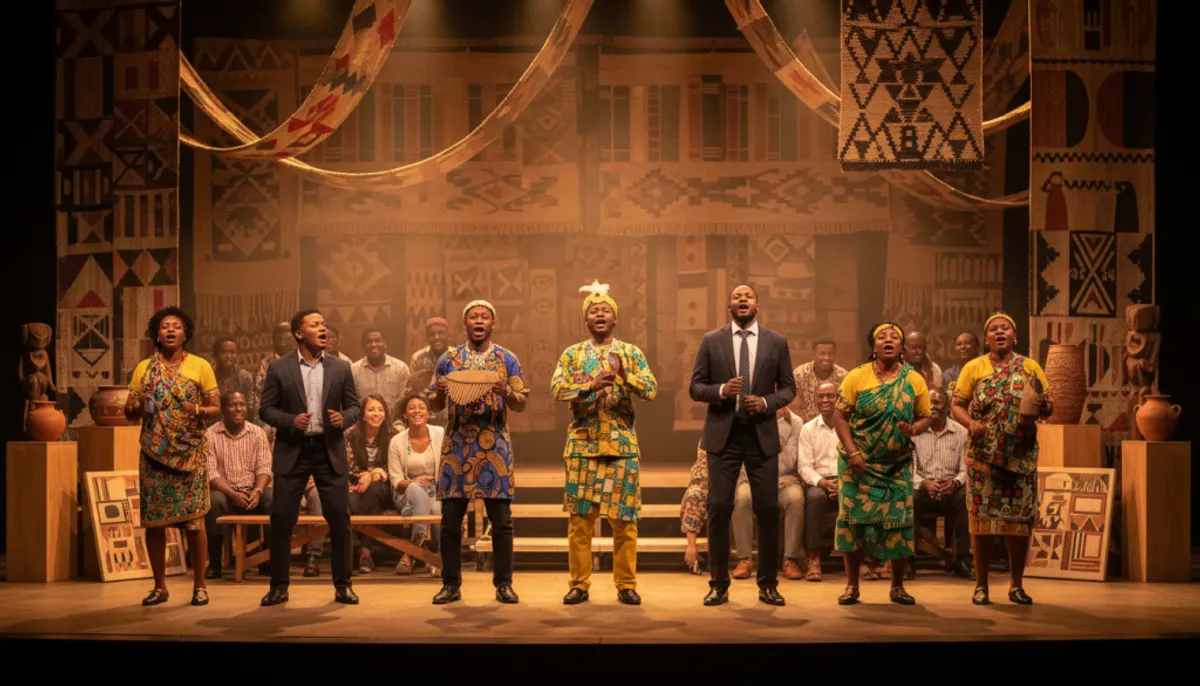
Evolution of Theater in Social Struggle
Modern theater arrived in the 1950s with the colonists. It was then a part of the lives of white expatriates.
A major turning point occurred in the late 1960s. The Chikwakwa movement, inspired by Kenneth Kaunda's humanism, was born.
This engaged theater staged plays on development. It even presented "Che Guevara" at an international summit.
The movement later declined, affected by the difficulties of Kenneth Kaunda's regime. The 1980s saw the birth of the Kanyama Theatre, the first permanent professional troupe.
The Emergence of Literature in Local Languages and English
Written literature appeared late. The strong oral tradition and economic obstacles account for this.
Stephen Andrea Mpashi wrote primarily in Bemba. Today, most major authors use English.
This language gives them access to a global readership. Their works often explore the challenges of society.
Notable contemporary voices include:
- Binwell Sinyangwe and Monde Sifuniso.
- Namwali Serpell, winner of the Windham-Campbell Prize.
- Economist Dambisa Moyo, who brings local thought to the global stage.
These creators document and question their country. They form essential voices for understanding its evolution.
Religion and Spirituality in Zambia
The religious landscape presents a harmonious diversity between ancestral traditions and Christian faith. This coexistence defines the spiritual approach of millions of people.
Coexistence Between Christianity and Traditional Religions
Nearly three-quarters of the population adhere to Christianity. Protestants make up about 35% of believers. Catholics account for 25% to 50% depending on estimates.
| Religious Affiliation | Estimated Percentage | Characteristics |
|---|---|---|
| Protestantism | 35% | Diverse denominations, historical influence |
| Catholicism | 25-50% | Established presence, significant educational network |
| Independent African Churches | ~10% | Christian and African syncretism, local leadership |
| Traditional African Religions | Significant minority | Animism, ancestor veneration, tutelary spirits |
Traditional African religions maintain a notable influence. Their practice remains vibrant in many rural areas. Animism, fetishism, and ancestor veneration are their pillars.
A unique syncretism marks the life of many communities. Inhabitants often combine Christian rites and ancestral beliefs. This hybridization creates a solid moral framework.
In the face of major health challenges, faith offers essential comfort. It structures community support in life's trials.
Heritage and National Museums
Tangible and intangible heritage finds its guardians in several national museums and recognized sites. These institutions preserve collective memory and offer a comprehensive Zambian perspective, including insights into cultural education in africa.
Historical Sites and Important Monuments
UNESCO has praised the vitality of intangible cultural heritage. Three elements are inscribed: the Makishi masquerade, the Nyau Gule Wamkulu cult, and the Mooba dance.
These living traditions are an integral part of national identity, including the rich flavors of ivorian cuisine. They are celebrated during ceremonies across the country.
Museums and Cultural Institutions
A network of four national museums covers the regions. The Lusaka National Museum, in the capital, presents a global history.
The Copperbelt Museum documents the exploitation of copper. This industry has shaped the development of the northern region.
In the extreme south, the Livingstone Museum explores natural heritage. Specialized institutions like the Choma Museum honor the Tonga people.
These places play a crucial educational role. They connect visitors to the ancestral and modern cultural riches.
Cultural Tourism and Authentic Discoveries
Discovering this country through its landscapes and traditions offers an adventure where nature and heritage meet. This form of tourism in Southern Africa creates unique memories, especially with the culture pass france that allows deeper engagement with local experiences.
National Parks, Savannas, and Victoria Falls
Nearly twenty national parks protect abundant wildlife. They are spread across different regions of the territory.
Exceptional savannas attract safari enthusiasts from around the world. The Victoria Falls is the major attraction.
This natural spectacle is particularly impressive during the rainy season. It is a wonder shared with the neighboring Zimbabwe.
Immersion During Traditional Ceremonies
Immersion represents a unique dimension of travel. It allows participation in authentic events, not reenactments.
Zambians warmly welcome visitors into their rituals. This creates opportunities for enriching intercultural exchanges.
A journey combining safaris and traditions is an unforgettable adventure. It is a holistic experience that unites adventure and culture.
Socio-Economic Impacts and Cultural Modernization
Modernization, driven by education and media, shapes a new cultural dynamic. This evolution creates tensions between local traditions and globalized lifestyles.
Role of Education, Media, and Technologies
The education system, inherited from the colonial regime, initially uses local languages. It then transitions to English, posing pedagogical challenges.
The media experienced liberalization in the 1990s. The government still controls titles like Times of Zambia. The Post remains the most popular private daily.
Radio is the most effective medium, even reaching rural areas. For this reason, access to information remains uneven in some regions.
New technologies expose the majority of urban dwellers to foreign content. This influence rapidly transforms the media landscape.
Exploitation of Natural Resources and Economic Influence
The exploitation of copper has structured the economy for a long time. This dependence generates considerable debt for the state.
Mineral resources attract investments but create imbalances. The president and the government steer policies to balance tradition and modernity.
| Sector | Influence | Challenges |
|---|---|---|
| Education | Modernization of mindsets | Regional disparities |
| Media | Information dissemination | Government control |
| Mining Resources | Export revenues | National debt |
Cultural Integration in a Multilingual Africa
Positioned at the junction of several linguistic areas, Zambia is a true melting pot. This country stands at the crossroads of the Francophone, Lusophone, and Anglophone worlds of the continent.
Swahili, though spoken little as a mother tongue, serves as a commercial bridge. It is vital in the Eastern provinces, near Congo-Kinshasa.

Urban centers resonate with many immigrant languages. One can hear Chinese, Gujarati, Arabic, and Portuguese in the markets.
Local English has developed its own flavor. It simplifies verbs and incorporates South African words, creating a unique variety.
The majority of Zambians fluently speak four or five languages. They mix them naturally in their daily conversations.
However, in rural areas, proficiency in English remains limited. The lack of exposure is the main reason.
This affects access to formal education and opportunities. The government and each president have had to find a delicate balance.
They must value local dialects while maintaining a unifying official language. In the Zambian case, this integration occurs without major ethnic tension.
The current state shows remarkable cohesion. The historical Portuguese influence is part of this rich linguistic heritage.
Conclusion
Zambia offers us the exemplary case of a national identity woven from multiple ethnic and linguistic threads. From Bantu migrations to the independence of former Northern Rhodesia, this heritage has traversed the ages without losing its essence.
Living traditions, from ceremonies to ritual dances, and the mosaic of local languages perpetuate a dynamic legacy. A clear problem statement emerges as it provides valuable wisdom for addressing contemporary challenges, from resource exploitation to education, in the course of daily life.
This diversity, spread from the north to the south, constitutes the most precious part of the national state. It makes it an inspiring model where roots are honored while building the future, for one simple reason: unity is born from shared wealth.
FAQ
What are the main ethnic groups in Zambia?
The country has over 70 ethnic groups, primarily Bantu. The largest are the Bemba, Tonga, Lozi, Chewa, and Ngoni. This diversity creates a fascinating social mosaic, where each community brings its own traditions and local language.
How many languages are spoken in this Southern African country?
There are over 70 languages! English is the official language, used by the government and in education. However, Bantu languages like Bemba, Nyanja, and Tonga are widely spoken in daily life and ceremonies.
What is the significance of the Ku-omboka ceremony?
It is a major annual ritual of the Lozi people. During the rainy season, the Zambezi River floods the plain. The Ku-omboka, which means "to come out of the water," marks the migration of the king and his people to higher ground, symbolizing survival and royalty.
How did the colonial period influence society?
Formerly called Northern Rhodesia, the country gained independence in 1964 under President Kenneth Kaunda. The colonial regime left marks on administration, but ancestral traditions remained strong, creating a unique blend.
What are the best places to discover local heritage?
For a total immersion, visit national parks like South Luangwa and Victoria Falls. Participating in a cultural festival or visiting the Lusaka National Museum are also excellent ways to understand Zambian history and art.
What role does religion play in daily life?
Spirituality is very present. Christianity is predominant, but it coexists harmoniously with traditional beliefs and practices. Many Zambians integrate both into their lives, especially during rites of passage or to honor ancestors.