
Imagine a country vibrant, populated by nearly two hundred million inhabitants. This is Nigeria, the demographic giant of Africa. Its roots reach far back in time, to the mysterious Nok civilization.
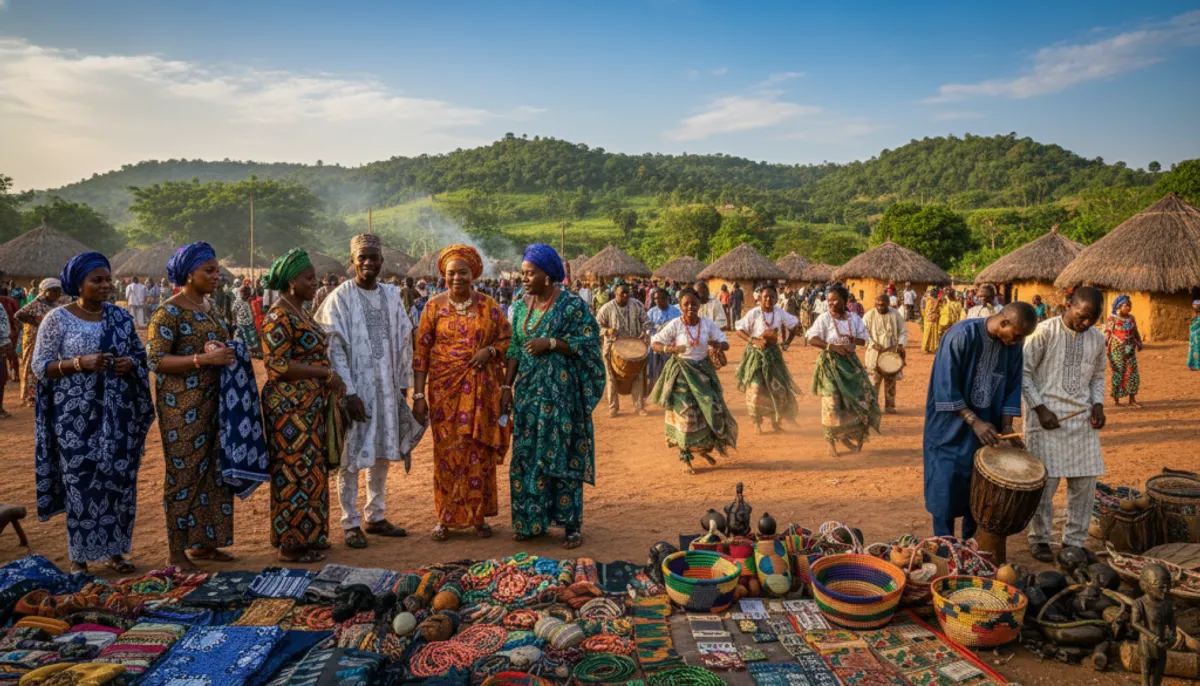
This ancient society left fascinating traces, such as the oldest statues in sub-Saharan Africa. This distant heritage is the first chapter of an extraordinarily rich cultural history.
The current ethnic mosaic, composed of hundreds of groups, creates a kaleidoscope of traditions and cultural symbols. This unique blend captivates the entire world. It makes this nation a crossroads where the past dialogues with the present.
Key Points to Remember
- Nigeria is the most populous country in Africa, with around 200 million inhabitants.
- Its cultural heritage dates back to prehistoric times, with the famous Nok culture.
- The coexistence of hundreds of ethnic groups creates exceptional diversity.
- This West African giant is a crossroads where traditions and modernity meet.
- Its cultural heritage fascinates and inspires far beyond the African continent.
- Nigerian artistic expressions shine today on a global scale.
Introduction and Historical Context
The heritage of this country does not date back to yesterday. It has been built layer by layer, century after century.
The Origins and Culture of Nok
More than two thousand years ago, the Nok civilization thrived. It left the oldest statues in sub-Saharan Africa.
These terracotta sculptures demonstrate exceptional craftsmanship. On the archaeological site, there are also signs of iron mastery.
This ancient culture laid the artistic and technical foundations for the entire country.
Evolution of Nigerian Civilizations
Other powerful kingdoms later emerged. The Kingdom of Benin is famous for its bronzes, true masterpieces.
The pre-colonial cultures had complex political systems. They forged an essential part of Nigerian identity.
The Yoruba and Hausa kingdoms, as well as the Igbo city-states, developed distinct traditions. Today, they coexist and enrich the common heritage.
| Civilization | Approximate Period | Major Contribution |
|---|---|---|
| Nok | 1000 BC – 300 AD | Terracotta sculptures, iron metallurgy |
| Kingdom of Benin | 13th century – 1897 | Bronzes and carved ivories |
| Yoruba Kingdoms | 11th century – present | Urban art, system of government |
| Hausa States | 10th century – present | Trans-Saharan trade, architecture |
This evolution shows a remarkable capacity for adaptation. The dialogue between the past and the present remains very vibrant.
Exploration of Nigerian Culture and Its Manifestations
Speaking of identity in Nigeria first evokes an extraordinary diversity of languages and peoples. This richness shapes every aspect of daily life.
Identity Through Peoples and Languages
The country has about 500 different languages. Each is linked to a specific ethnic group.
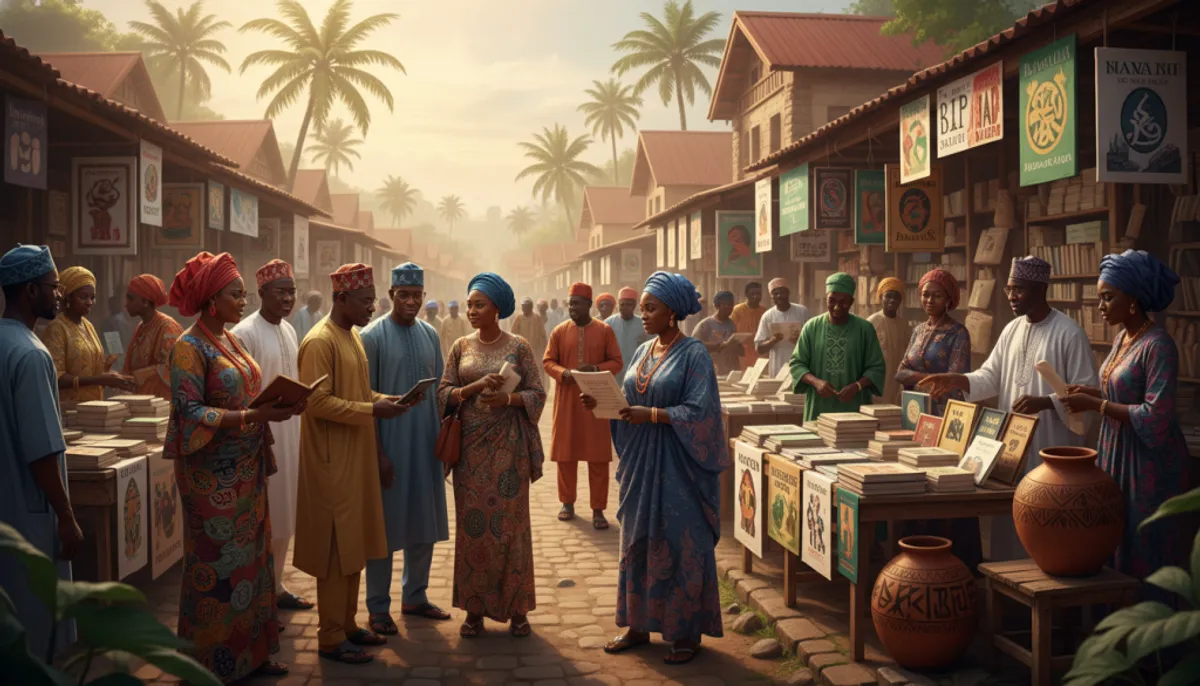
Three major languages structure exchanges among millions of people. These are Hausa, Yoruba, and Igbo.
| Major Language | Main Ethnic Group | Dominant Region |
|---|---|---|
| Hausa | Hausa | North of the country |
| Yoruba | Yoruba | South-West |
| Igbo | Igbo | South-East |
English is the official language. It unites all these communities.
Each group passes on its mother tongue within the family. It is a treasure preserved with care.
“A nation is recognized by the vitality of its multiple voices.”
The school system teaches thirty indigenous languages. This initiative protects a unique heritage in West Africa.
With over 214 million inhabitants, this mosaic is a strength. It celebrates both unity and diversity.
Artistic Expressions and Literary Heritage
From novels to screens, artistic expression is a major pillar of national identity. This creative vitality impresses the entire world.
Iconic Literary Figures: Achebe and Soyinka
Chinua Achebe revolutionized literature with his novel “Things Fall Apart.” Translated into French, it paved the way for generations of writers.
Wole Soyinka received the Nobel Prize in literature in 1986. He is the first black author to receive this distinction.
Other writers like Chimamanda Ngozi Adichie continue this legacy. Their works are read worldwide.
| Artistic Field | Major Figure | Main Contribution |
|---|---|---|
| Literature | Chinua Achebe | Father of modern African novel in English |
| Literature | Wole Soyinka | Nobel Prize in literature (1986) |
| Film | Nollywood | Industry producing hundreds of films per year |
| Music | Fela Kuti | Creator of afrobeat |
| Visual Arts | Artists from Benin | Renowned bronzes and traditional sculptures |
Film, Visual Arts, and Music
The local cinema, nicknamed Nollywood, is a global powerhouse. Half of its films are shot in Yoruba.
In music, Fela Kuti remains a legend. He invented afrobeat, a political and dance style.
Musicians like Burna Boy dominate the international scene today. Visual art, from masks to contemporary works, is equally dynamic.
Social Practices, Rituals, and Religious Influences
The Nigerian spiritual landscape is characterized by a dynamic coexistence of Islam, Christianity, and traditional religions. This diversity profoundly shapes daily practices.
Ethnic Diversity and Ancestral Traditions
Nearly half of the population is Muslim. A similar proportion follows Christianity. Ancestral beliefs, such as the Yoruba worship of the Orishas, still permeate the lives of millions.
This traditional spirit persists even among those who identify as Christian or Muslim. Unique syncretisms, such as Chrislam, have emerged.
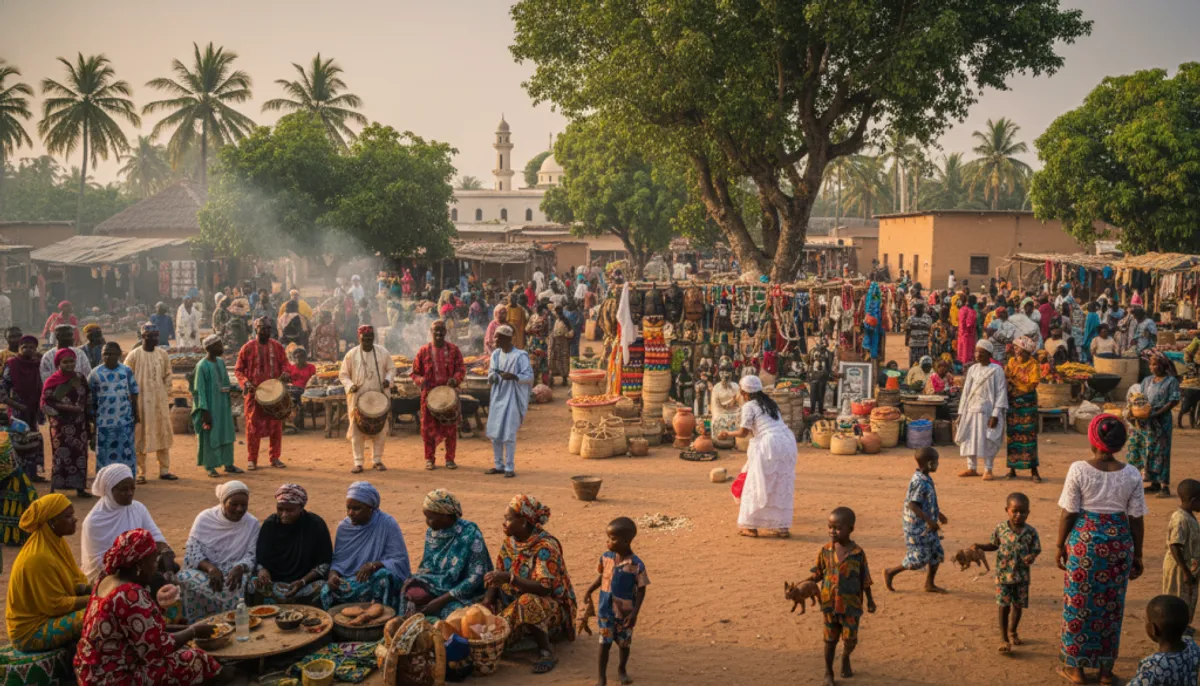
Rituals, Festivals, and Cultural Symbols
Traditional festivals mark the year. The Gèlèdé, honoring the power of women, is even classified by UNESCO.
In the south, evangelical churches attract huge crowds. The extended family remains the cornerstone of society. Women play a crucial role, although sometimes facing controversial practices.
| Aspect | Example | Note |
|---|---|---|
| Major Religion | Islam | 45-50% of the population, active Sufi brotherhoods. |
| Major Religion | Christianity | 40-45%, including ~18 million Catholics. |
| UNESCO Festival | Gèlèdé | Yoruba-Nago ceremony honoring women. |
| Rite of Passage | Marriage | Major community celebration. |
| Cultural Symbol | Orishas | Deities of the Yoruba religion (Ogun, Mami Wata). |
These rituals strengthen social bonds. They form an essential part of collective identity, preserving a resilient community spirit.
The Economic and Regulatory Impact on Cultural Expression
The entrepreneurial boom is transforming the cultural landscape dramatically. Africa's largest economy generates a dynamic market.
A young population of over 230 million inhabitants attracts investors from around the world. This dynamism directly fuels the creative industries.
Entrepreneurial and Technological Challenges
In the technological field, a revolution is underway. Innovative startups are conquering regional market shares.
However, they must contend with power outages and limited access to credit. The resilience of entrepreneurs is remarkable.
Regulations and Business Environment
The life of businesses is governed by multiple laws. The diversity of languages poses a challenge for communication.
The adoption of digital technology transforms every activity. Creators broadcast their works from their local site to global platforms.
“Innovation flourishes where entrepreneurial spirit meets a need.”
Each year, millions of dollars in investment flow in. This reflects great confidence in the potential of the country.
| Regulatory Aspect | Example of Law | Impact on the Creative Sector |
|---|---|---|
| Business Creation | Companies and Allied Matters Act | Defines the legal framework for studios and production houses. |
| Taxation | Companies Income Tax Act | Affects the profitability of cultural industries. |
| Investment | Nigerian Investment Promotion Commission Act | Facilitates the entry of foreign capital into the field. |
| Labor | Labour Act | Regulates employer-employee relations in media and arts. |
Conclusion
In the face of obscurantism, Nigerian artists respond with a creative effervescence. The group Boko Haram, whose name means “Western education is forbidden,” has caused the deaths of more than 36,000 people. It particularly persecutes men and women of culture.
Yet, from January to December, festivals and concerts animate the cities. In October and December, the stages of Lagos and Abuja attract visitors from around the world.
An afrobeat musician can electrify a room in a few minutes. A writer presents their novel in French or English. This vitality defies violence.
Nigerian art, from sculptures to performances, asserts itself in the global market. This country in West Africa remains an essential creative laboratory. Its heritage enriches the cultures of humanity.
FAQ
What are the most important ancient civilizations of the country?
How many languages are spoken in Nigeria?
It is estimated that there are over 500 living languages! English is the official language for administration, but major regional languages like Hausa, Yoruba, and Igbo are spoken by millions, reflecting incredible diversity.
Who are the most famous Nigerian writers in the world?
Chinua Achebe, with his novel *Things Fall Apart*, and Wole Soyinka, the first African Nobel laureate in literature, are monumental figures. Their works explore history, colonialism, and the spirit of their homeland.
What is the influence of Nigerian music internationally?
Afrobeat, created by the legendary Fela Kuti, has conquered the planet. Mixing jazz, funk, and traditional Yoruba rhythms, this genre has inspired musicians worldwide and remains a powerful vector of the contemporary music scene.