
In the heart of the South Pacific, a unique archipelago fascinates with its diversity. Vanuatu consists of 83 islands that house a mosaic of millennia-old traditions. This country has managed to preserve its heritage despite external influences.
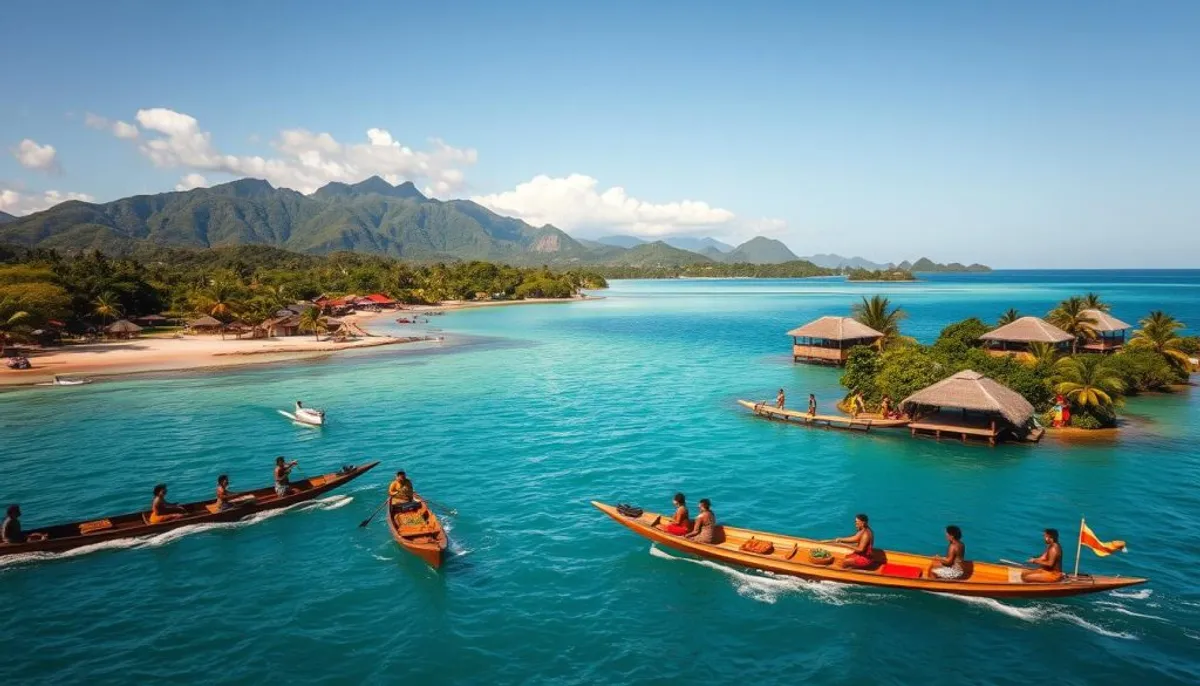
The population, primarily Melanesian and Polynesian, proudly perpetuates its customs. The inhabitants maintain a deep connection with the sea and their land. Their history dates back centuries of oral traditions and ancestral practices.
Independence gained in 1980 strengthened the national identity. Today, cultural elements such as crafts and village rituals remain vibrant. This richness testifies to a remarkable balance between modernity and heritage.
Key Points to Remember
- Vanuatu is an archipelago of 83 islands in the South Pacific
- The population is predominantly of Melanesian and Polynesian origin
- The country boasts extraordinary linguistic diversity
- Ancestral traditions remain alive today
- The balance between modernity and heritage characterizes this culture
- Independence in 1980 reinforced cultural identity
Historical Origins and Evolution of Vanuatu
The fascinating history of Vanuatu dates back over 3000 years. The first traces of settlement appear with the Lapita populations around 1400 BC. These ancestors left remnants near Santo and Teouma.
The Ancient Peoples and Melanesian Migrations
The Melanesians arrived from Asia via New Guinea. Different tribes gradually populated the islands from north to south. This migration created exceptional diversity.
Between the 11th and 15th centuries, Polynesian expeditions enriched the heritage. Their genetic traces are visible in the Banks and Torres Islands. These exchanges marked the history of the region.
The Colonial Influence and the Quest for Independence
In 1606, Pedro de Quiros discovered Santo and attempted to establish a colony. Louis Antoine de Bougainville visited the island in 1767. James Cook mapped the archipelago in 1774.
The Franco-British Condominium was established in 1906. This joint administration created a dual influence. The French and English languages coexist even today.
In the 1970s, Father Walter Lini led the movement toward independence. On July 30, 1980, Vanuatu became a sovereign state. This date is celebrated as a national holiday.
Artistic Expressions and Cultural Manifestations
Artistic expressions, including papuan art, are the vibrant heart of ni-Vanuatu heritage. They represent an essential form of transmitting ancestral knowledge. Each creation tells a part of the history of these islands.
Traditional Dances, Songs, and Music
Traditional dances enliven important life ceremonies. Men and women perform codified movements passed down through generations. Each dance has its own meaning and context of use.
These dances are accompanied by songs and unique music. Iconic instruments include slit drums carved from hardwood. Bamboo flutes and conch shells produce characteristic sounds.
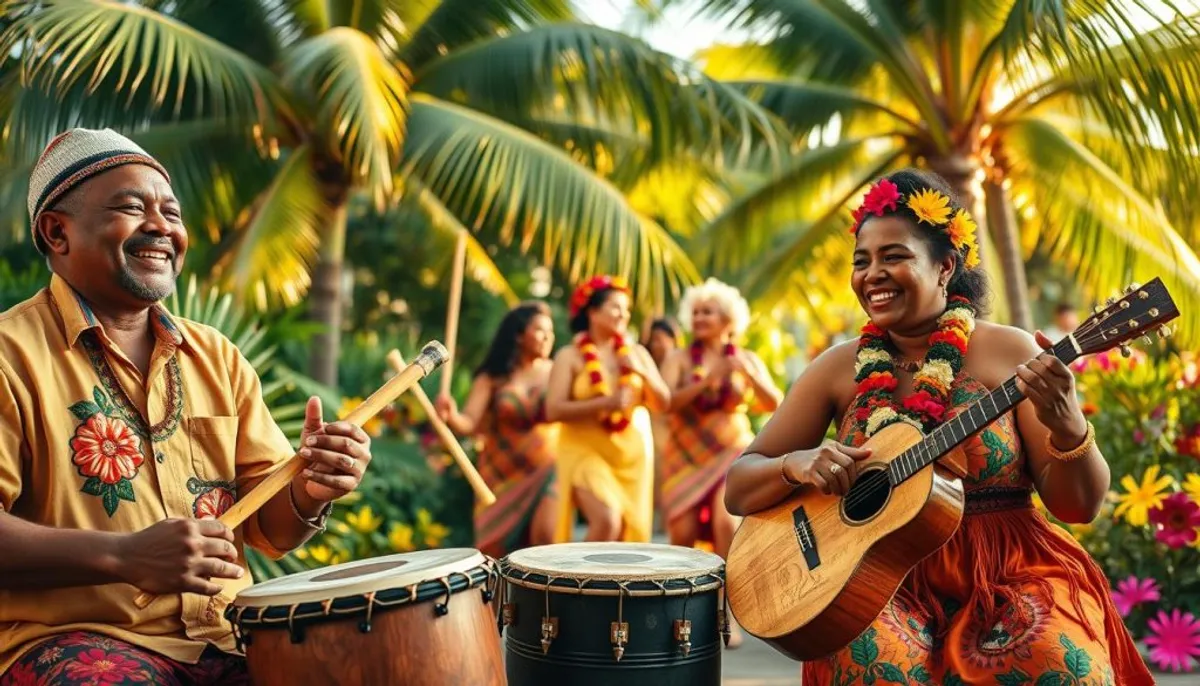
Water music represents a spectacular form originating from the Banks Islands. Women strike the water according to complex rhythms. This tradition remains particularly vibrant in Gaua and Merelava.
Crafts and Ritual Objects
Traditional crafts primarily use wood, fibers, and leaves. Artisans create finely crafted utilitarian and ceremonial objects. Sculptures often depict stylized animals like turtles or fish.
Weaving produces decorative mats with purple patterns. Some mats require weeks of meticulous work. They are reserved for special occasions and important ceremonies.
Ritual objects include masks made from leaves and beaten bark. These creations represent ancestral spirits or natural forces. Their manufacture follows strict rules passed down within initiated families.
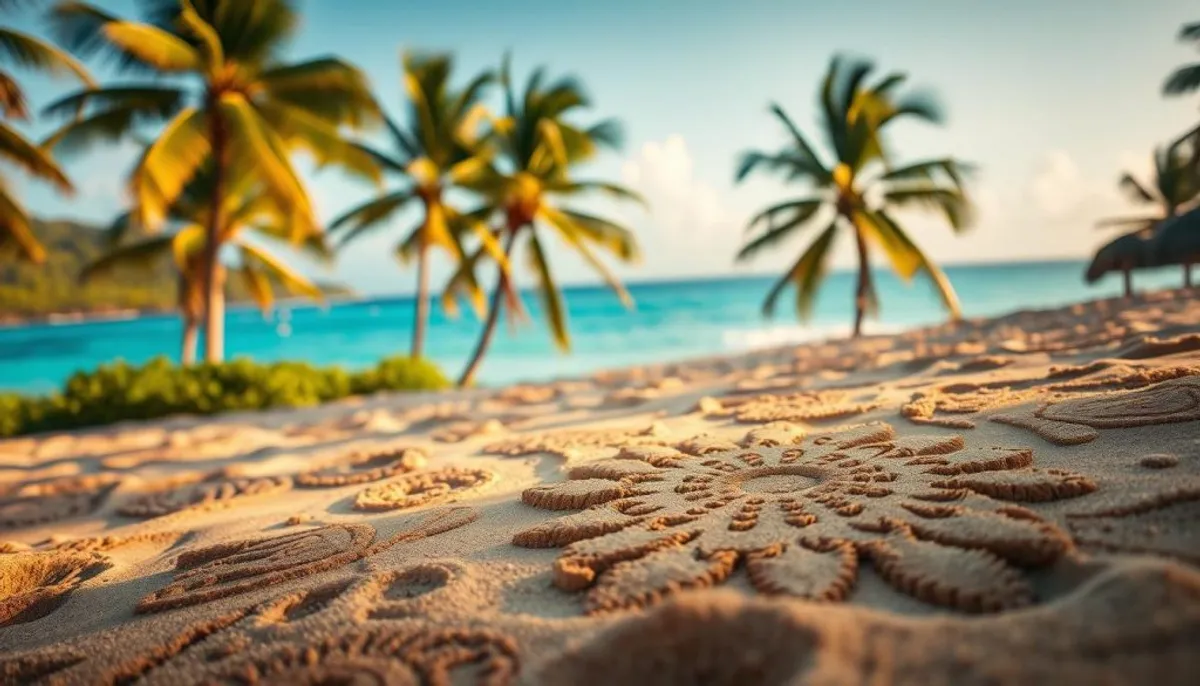
Sand drawings, inscribed in UNESCO's heritage, constitute a unique basis for communication. This tradition allows for the transmission of knowledge between different linguistic groups. It testifies to the richness of Vanuatu culture.
The Foundations of Vanuatu Culture
The nakamal is the beating heart of the community, where important decisions are made. This central institution organizes social life according to ancestral customs.
Village Rituals and the Role of the Nakamal
Every evening, men gather at the nakamal after work. They drink kava and discuss village affairs. This “place of peace” is off-limits to women and children.
The chief administers justice according to the transmitted traditions. The social organization includes hamlets of 30 to 60 people. The villages group 100 to 300 inhabitants around the nakamal.
Grade rituals allow men to gain prestige. They sacrifice pigs with curved tusks according to the rank sought. This system varies between north and south.
| Social Aspect | South/Central Region | North Region |
|---|---|---|
| Family Structure | Patrilineal | Matrilineal |
| Power Transmission | Hereditary | By Merit |
| Main Rituals | Pig Sacrifices | Collective Ceremonies |
Subsistence agriculture nourishes the community. Yam and taro are cultivated on respected soil. Ceremonies mark key moments in life.
Births, marriages, and deaths bring the whole village together. Dishes made with coconut are shared. These rituals strengthen bonds between tribes.
Languages, Traditions, and Intangible Heritage
Vanuatu holds a fascinating world record with its exceptional linguistic mosaic. This archipelago has between 113 and 138 distinct indigenous languages, creating the highest linguistic density in the world.
The Unique Linguistic Diversity of Vanuatu
This verbal richness testifies to centuries of isolation between the different island communities. Bislama serves as a unifying national language, a creole based on English incorporating elements of French.
The coexistence of the three official languages – Bislama, English, and French – enriches the linguistic landscape. This trilingual situation remains unique in the Pacific.
Rituals, Festivals, and Sand Drawings
The sand drawings, inscribed in UNESCO's intangible heritage in 2008, constitute a remarkable tradition. These complex geometric forms allow communication between groups speaking different languages.
The main traditional festivals mark important life stages. A marriage typically involves exchanges of mats and pigs, reinforcing community ties.
In April, various celebrations animate the villages. National festivals like that of July 30 commemorate independence. The fusion between Christianity and ancestral traditions characterizes these rituals.
The domain of Chief Roymata, another site classified as a world heritage site, reflects the complex social organization. These traditions preserve the collective memory of the islands.
Daily Life and Modern Influences
Vanuatu today presents a remarkable balance between ancestral traditions and contemporary influences, including bahraini architecture. This duality particularly characterizes life in the different islands of the archipelago.Fusion of Tradition and Modernity
Port Vila on Efate and Luganville on Espiritu Santo offer an urban face with modern shops and infrastructure. However, most of the other islands maintain a traditional lifestyle where paths replace roads.
The local diet illustrates this fusion. Lap-lap, an emblematic dish, combines grated tubers and coconut milk cooked in an oven dug into the soil. This collective preparation strengthens community bonds.
Impact of Tourism and Cultural Exchanges
Responsible travel allows for an authentic discovery of this country. Many villages offer kastom performances where the inhabitants share their traditions.
A good guide recommends avoiding the cyclone season from April to November. Respecting local customs, such as appropriate clothing, is essential for a successful experience.
These cultural exchanges preserve traditional elements while generating income for communities. They keep the rich Vanuatu culture alive.
Conclusion
Each visit to Vanuatu reveals the depth of a culture where past and present coexist harmoniously. This exceptional archipelago, including the beautiful region of polynesia, preserves its ancestral traditions with a rare authenticity in the Pacific.The different islands offer a mosaic of unique customs while sharing common cultural elements. Most inhabitants proudly maintain this intergenerational transmission.
A respectful journey in this country allows for the discovery of welcoming communities. Their balance between modernity and heritage is truly inspiring.
Supporting community tourism ensures the preservation of this living treasure. The richness of Vanuatu lies in the authenticity of its human exchanges.
FAQ
What are the most well-known traditional dances of the archipelago?
Traditional dances vary greatly from one island to another. In the north, you will discover rhythmic dances with foot stomps, while the south is known for its more graceful hand and arm movements. These performances, often accompanied by songs and music, are a central element of festivals and ceremonies.
What is the typical dish made with coconut milk and fruits?
An emblematic dish is “laplap.” It is a preparation made from grated roots (such as yam or taro), mixed with coconut milk and sometimes meat or fish. The whole is steamed in banana leaves on hot stones. It is a true delight!
How are marriage and social customs celebrated?
Marriage is an important event that unites not only two people but also two families. Celebrations often involve exchanges of woven mats, pigs, and other valuable items. These rituals strengthen ties between tribes and villages.
What is the role of the nakamal in village life?
The nakamal is the central place of the village, an essential gathering spot. It is here that men meet to discuss village affairs, make important decisions, and share kava, a traditional drink. It is the heart of local social and political life.
Has the country been influenced by French and English presence?
Absolutely. The Franco-British condominium, a unique form of government, lasted many years before independence in 1980. This history, intertwined with omani history, has left traces in language (with French and English as official languages) and in certain aspects of daily life, creating a fascinating cultural fusion.
How do the inhabitants preserve their heritage today?
The population is very proud of its heritage. Traditions are passed down orally and through practice. Sand drawings, for example, are an art recognized by UNESCO. Traditional festivals and rituals continue to mark life, even with the arrival of modernity and tourism. Additionally, emirati art has influenced some contemporary expressions, showcasing a blend of cultural narratives.