
Welcome to this fascinating exploration of a unique heritage from the Horn of Africa. This exceptional heritage has developed over the centuries in a country of 637,700 km².
Nearly 18 million inhabitants share this remarkably homogeneous identity. The capital, Mogadishu, has over 2 million residents.
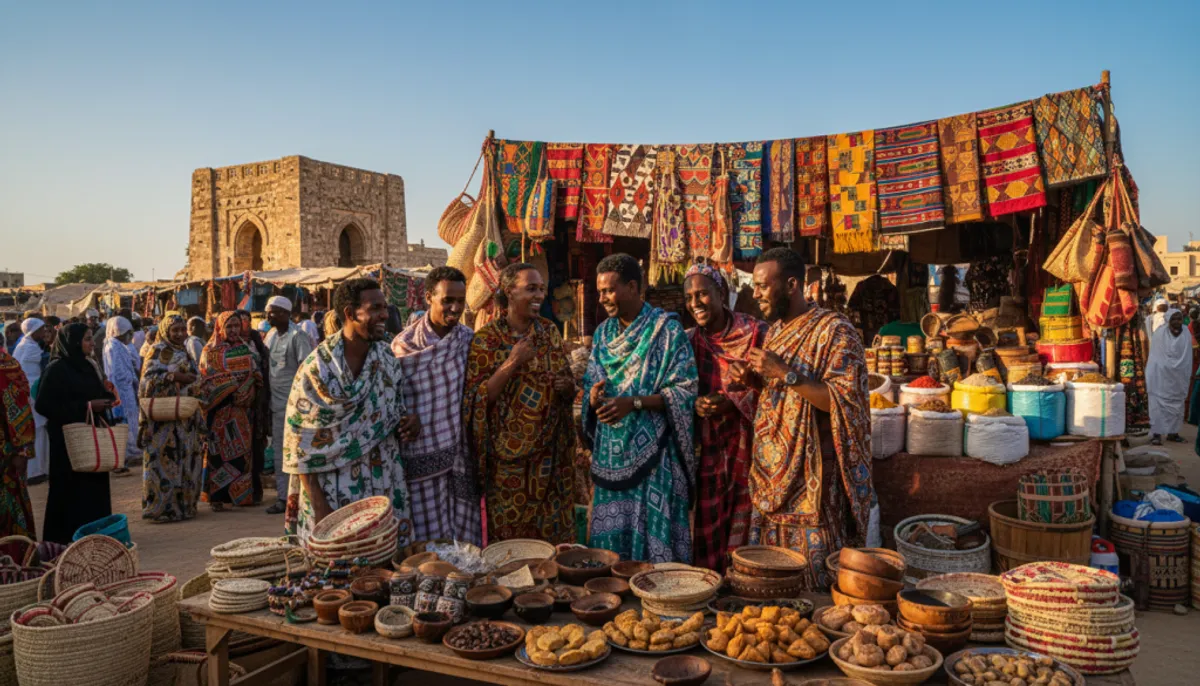
Sunnite Islam profoundly influences all aspects of daily life for Somalis. This religion permeates clothing, food, and social relationships.
The official languages, Somali and Arabic, play a central role in the transmission of traditions. They preserve this precious heritage despite historical challenges.
This culture has managed to maintain its distinctive character while integrating ancestral religious practices. It represents a harmonious fusion between local traditions and Islamic influences.
Key Points to Remember
- Somalia has an area of 637,700 km² in the Horn of Africa
- The country has approximately 18 million inhabitants in 2023
- Mogadishu is the capital with over 2 million inhabitants
- 94.4% of the population belongs to the majority ethnic group
- Sunnite Islam is practiced by almost the entire population
- Somali and Arabic are the official languages of the country
- This culture has preserved its unique identity despite external influences
Introduction and Historical Context
Let us delve into the deep roots that have shaped this remarkable identity over the millennia. Archaeological data attest to an organized human presence dating back over 2000 years. This strategic territory was already known to the ancient Egyptians for its commercial importance.
Between the 2nd and 7th centuries, several regions were integrated into the Ethiopian kingdom of Aksum. This period marked the beginnings of structured exchanges with neighboring civilizations. In the 7th century, Arab tribes established trading posts along the coasts.
| Historical Period | Significant Events | Cultural Influences |
|---|---|---|
| Antiquity | Known to the Egyptians | Ancient trade |
| 2nd-7th centuries | Kingdom of Aksum | Ethiopian influences |
| 7th century | Arrival of Arabs | Islamization |
The arrival of Islam constituted a decisive turning point in the regional history. Companions of the prophet Muhammad sought refuge in this welcoming country. This event permanently transformed social and religious structures.
This rich past explains the foundations of current traditions. The tumultuous history of this country reveals an exceptional capacity for adaptation. Multiple influences have created a unique cultural synthesis in Africa.
Origins and Heritage of Somalia
The Somali identity finds its foundations in a millennia-old Cushitic heritage. This people shares common roots with other groups in the Horn of Africa.
Anthropological data reveal an affiliation with the Afro-Asiatic family. This connection unites several regional populations.
The Major Historical Periods
The evolution of this civilization spans several centuries. External influences have shaped its unique development.
| Period | Characteristics | Cultural Impact |
|---|---|---|
| Pre-Islamic | Traditional African spirituality | Belief in Eebe and Ayaanle |
| Medieval | Progressive Islamization | Fusion of traditions and religion |
| Modern | Contacts with the outside world | Cultural adaptation |
Ancestral and African Influences
The people maintain deep ties with their pre-Islamic past. Original African spirituality still influences certain practices.
“Somalis preserve a rich cultural heritage despite historical transformations.”
The Somali language belongs to the Cushitic branch. This affiliation confirms its grounding in the Horn of Africa. Linguistic data clearly establishes this classification.
Somalis have developed a distinctive identity while preserving their roots, including aspects of oromo ethnicity. This duality enriches their cultural heritage.
Ancient History and Colonization
The 19th century marked a decisive turning point in the history of this region with the arrival of European powers. These external influences permanently transformed the social organization.
The Influence of Arab and European Empires
As early as the 9th century, Arab empires established commercial and religious ties. They Islamized the population without managing to impose their language.
This linguistic preservation allowed for the maintenance of a distinctive identity. Traditional structures resisted external influences.
The British and Italian Colonial Period
Great Britain established its protectorate in 1887 under the name of British Somaliland. The Italians simultaneously created Somalia italiana.
The British colonial government imposed English in administration. Italian became the official language in the area under Italian influence.
| Colonial Power | Date of Establishment | Administrative Language | Notable Resistance |
|---|---|---|---|
| United Kingdom | 1887 | English | Dervish Revolt (1899-1920) |
| Italy | 1887-1905 | Italian | Resistance of local sultanates |
This territorial division triggered a war of resistance led by Mohammed Abdullah Hassan. The conflict lasted over twenty years.
The new colonial government replaced the sultanates with European administrations. This transformation created persistent tensions.
The war of independence left deep marks in the collective memory. It forged a resilient national identity.
The Influence of Islam and Religious Traditions
Religious practice extends far beyond the spiritual realm to encompass all aspects of existence, including the rich culture and traditions of ethiopia. This holistic approach distinguishes this society from many others.
Sunnite Islam represents much more than a mere belief. It constitutes a comprehensive system governing daily life and social structures.
The Role of Islam in Somali Customs
Local traditions are deeply infused with Islamic precepts. Social attitudes and gender roles find their foundations in this religion.
| Aspect of Life | Islamic Influence | Concrete Manifestation |
|---|---|---|
| Calendar | Official recognition | Parallel use to the Julian calendar |
| Education | Religious teaching | Learning of literary Arabic |
| Governance | Inspired structures | Fusion of traditions and culture |
The Call of Sacred Texts and the Use of Arabic
The Arabic language plays an essential role in religious practices. Its learning allows direct access to sacred texts.
Believers study Quranic Arabic to participate in spiritual activities. This knowledge creates a unique connection with the original sources of Islam.
Linguistic Diversity and Cultural Richness
At the heart of collective identity, the language plays a remarkable unifying role. This linguistic diversity reflects centuries of exchanges and adaptation.
Somali and Its Dialectal Variants
The Somali language consists of several distinct regional varieties. Northern Somali represents about 60% of speakers and serves as the basis for the standard language.
Benaadir, spoken along the coasts, accounts for 18% of the linguistic population. Central Somali, including Mai-Mai and Digil, represents about 20% of speakers.
Linguistic Borrowings and Foreign Influences
The Somali vocabulary incorporates about 20% of Arabic words, reflecting historical ties. European languages like English and Italian have also contributed to the lexicon.
These borrowings mainly concern modern and technical concepts. The language thus maintains its vitality in the face of contemporary evolutions.
This capacity for linguistic integration demonstrates an exceptional cultural openness. The various minority languages coexist harmoniously within the territory.
Writing Systems: Latin and Arabic Alphabets
The graphic systems used to transcribe this language reveal a complex history. This scriptural duality perfectly illustrates the cultural synthesis characteristic of this region.
The evolution of written languages follows a unique path here in Africa. Two alphabets coexist today in remarkable balance.
The Adoption of the Latin Alphabet in 1972
The year 1972 marked a decisive turning point in linguistic history. The government then officially adopted the Latin alphabet as the state spelling.
This alphabet presents interesting technical peculiarities. It uses all English letters except p, v, and z. No diacritical marks are employed, except for the apostrophe.
This political choice represents significant national pride. Somali thus becomes one of the few Afro-Asiatic languages using the Latin alphabet.
The Continued Use of the Arabic Alphabet in Religious Life
Despite this officialization, the Arabic alphabet retains an essential place. Its status is explained by the co-officiality of Arabic with Somali.
In the religious domain, its use remains paramount. Access to sacred texts requires mastery of Arabic writing.
“This dual scriptural tradition reflects our identity as both African and Muslim”
This peaceful coexistence of writing systems demonstrates exceptional cultural adaptability. Each alphabet serves specific needs in contemporary society.
This article highlights how this duality enriches the linguistic heritage. This unique situation deserves thorough analysis in any serious article on the subject.
Rituals and Social Customs
Social rituals constitute the backbone of daily interactions in Somalia. These practices strengthen community ties and create a strong sense of belonging among people, reflecting the rich kikuyu culture that emphasizes communal values and traditions.
Values Passed Down Through Generations
Families play a crucial role in the transmission of traditions. Elders share their wisdom with the young during family gatherings.
This transmission ensures the continuity of fundamental values, including the luo beliefs. Respect for elders and community solidarity remain priorities.
| Life Stage | Main Ritual | Social Significance |
|---|---|---|
| Birth | Naming Ceremony | Integration into the clan |
| Marriage | Negotiations between families | Strengthening alliances |
| Death | Community Vigil | Support for the bereaved |
The reason for these ceremonies goes beyond the religious aspect. They maintain cohesion between generations and different clans.
Somalis place particular importance on the elderly. Their experience guides important collective decisions.
Over the centuries, these customs have evolved while retaining their essence. They represent a balance between African traditions, including amhara culture, and Islamic influences.Gender roles primarily follow religious precepts. This organization structures family and social responsibilities.
People actively participate in these rituals throughout their lives. This participation reinforces their unique cultural identity.
Dress Codes and Dietary Practices
Clothing and culinary choices offer a fascinating window into social and religious values. These daily aspects reveal a harmony between tradition and spirituality.
Dress Traditions for Men and Women
Men follow precise dress codes based on Islamic modesty. Their outfits systematically cover from neck to knees.
They often wear loose tunics called khamis with traditional trousers. A turban sometimes completes this outfit for special occasions.
Women adopt loose-fitting clothing covering from neck to ankles. Wives generally add a scarf or shawl for the head.
Culinary Specificities and Local Food
Food occupies a central place in social life. The markets of cities offer an abundance of local products.
Camel meat is a highly appreciated delicacy. Wheat, barley, and fragrant spices enrich traditional cuisine.
Historically, access to food was so abundant that obesity affected more people. This food prosperity attests to a flourishing past.
Islamic rules also influence culinary practices. The prohibition of pork and the consumption of halal are strictly observed.
Trade and Cultural Exchanges
The Somali trade network has woven remarkable economic ties across continents for centuries. This trading activity has profoundly influenced regional development.
The Historical Role of Trade in the Region
Commercial activity represented a fundamental economic pillar. Port cities thrived due to their strategic position.
Mogadishu was among the richest cities in East Africa. Millions of inhabitants lived there, including many wealthy merchants.
Exports included high-quality fabrics, gold, and ivory. The Somali coast enjoyed exceptional prosperity.
Interactions with the East and the Interior of Africa
Commercial exchanges connected Africa to the entire known world. Foreign coins testify to these connections.
Artifacts from Sri Lanka, Vietnam, and China have been discovered. The Ajuran empire even maintained ambassadors in China.
| Trade Partner | Exchanged Products | Archaeological Evidence |
|---|---|---|
| China | Fabrics, spices | Ming coins |
| Venice | Gold, ivory | Venetian coins |
| Arabia | Incense, myrrh | Historical texts |
These trade relations facilitated enriching cultural exchanges. The East African coast participated in this flourishing international trade.
Colonial Influence and Political Evolutions
European protectorates introduced administrative systems that permanently transformed traditional organization. This period marked a decisive turning point in institutional moldovan history.
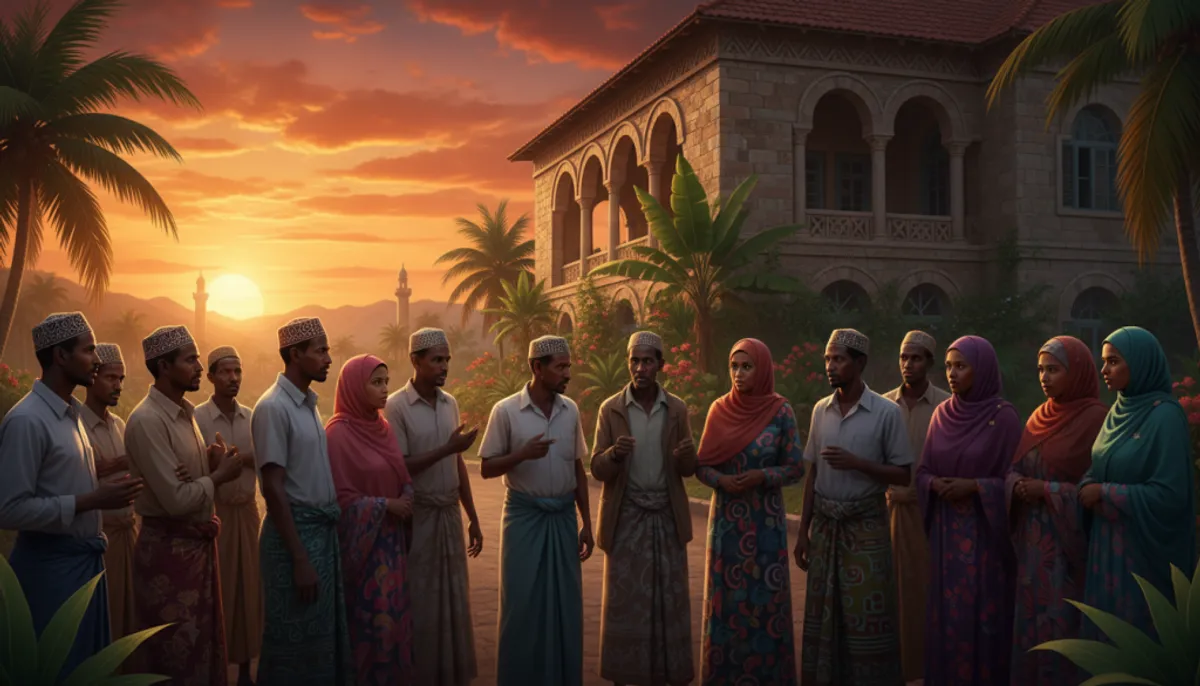
The British and Italian Legacies
The British imposed English as the official language of the colonial administration. This decision created a significant social fracture.
Less than 10% of the population mastered this foreign language. Only this minority had access to government positions and technical jobs.
The Italian legacy is evident today in everyday vocabulary. About 300 words have been integrated into the local language.
The Impact on Social and Political Organization
In 1949, the UN granted Italy a territory under trusteeship. The same administrators as under the fascist regime often retained their positions.
The legal systems and administrative structures still bear the imprint of European models. This transformation reshaped the social organization based on clans.
The modern government is directly inspired by these colonial legacies. The current administration combines local traditions and foreign influences.
Artistic and Architectural Contributions
Medieval explorers described impressive cities with monumental buildings, including those built by the pharaohs. These testimonies reveal a sophisticated and prosperous African civilization.Monuments and Iconic Structures
In the 15th century, Chinese travelers reported the presence of tall stone houses in Mogadishu. This city had buildings of 4 to 5 stories, which was exceptional for the time.
Ibn Battuta described Mogadishu as “excessively large.” Vasco de Gama depicted a great city with imposing palaces. The urban center featured mosques with monumental cylindrical minarets.
Art and Architecture in the Horn of Africa
Archaeological excavations in Zeila uncovered 200 to 300 stone houses. Some reached 18 meters in height, equivalent to 8 to 9 stories.
This architecture demonstrates advanced craftsmanship in the Horn of Africa. Monuments often bore the names of their founders, thus preserving collective memory.
Architecture presents similarities with other regional civilizations. However, it retains unique and distinctive characteristics. These achievements testify to remarkable technical mastery.
diaspora and International Influence
The international presence of Somalis reflects an exceptional capacity for adaptation. This presence far exceeds the borders of the country of origin.
The Somali population numbers about 22 million people spread across several nations. The largest communities are found in Ethiopia (888,000), Kenya (277,827), and Djibouti (181,420).
Migrations and Cultural Transmission
Significant groups also reside in Yemen (229,280) and the United Arab Emirates (25,000). These figures illustrate historical ties with the Arab world.
The international influence dates back to the 15th century. Somalis from Mogadishu led the Maldives archipelago. They also established the port of Solafa in Mozambique.
The modern diaspora keeps the transmission of traditions alive. It strengthens identity while creating bridges between cultures.
Expressions and Rituals of Somali Culture
Artistic and ceremonial practices are a vibrant aspect of Somali heritage. These activities rhythm community life and preserve ancestral values.
Oral poetry represents the supreme art, passed down from generation to generation. Musical and dance activities enliven important celebrations. They strengthen social ties with the help of the entire community.
Rites of passage mark life stages. Each event unfolds with the help of elders and relatives. These ceremonies consolidate collective identity.
Among the distinctive traditions is the Xeer system of conflict resolution. It operates alongside modern structures. This article emphasizes its importance in daily life.
Tales and legends serve as educational tools for children. They teach moral values with the help of traditional narratives. This oral transmission preserves collective history.
This article takes into account the regional diversity of practices. Despite variations, elements unite all members of this culture. This intangible heritage deserves careful documentation.
Contemporary Challenges and Future Perspectives
Since 1991, the country has faced major challenges that have profoundly transformed its trajectory. The collapse of the regime marks the beginning of a complex period.
Current Social and Political Issues
The civil war that began in 1991 created a failed state. The prolonged conflict placed the territory under the control of warlords.
This situation has had devastating consequences for vulnerable people. The famine of 2011 caused 260,000 casualties. In 2019, 1.7 million inhabitants lacked food.
The conflict has also fragmented the country. Somaliland declared independence in 1991 without international recognition. This division complicates reconstruction efforts.
Initiatives for Cultural Revitalization
Despite these difficulties, revitalization projects are emerging. They aim to preserve heritage in a divided context.
These efforts strengthen national identity in the face of challenges. Traditional culture becomes a vector of resilience. Educational programs transmit ancestral values.
The country is exploring pathways for national reconciliation. These initiatives offer hope for the future. Gradual reconstruction allows for the prospect of stabilization.
The Influence of Islam on Education and Administration
Since the 2012 Constitution, educational and administrative institutions have deeply integrated Islamic principles. This constitutional creation establishes a modern framework while respecting religious traditions.

Religious Role in Educational Systems
Article 5 of the provisional Constitution recognizes Somali and Arabic as official languages. This linguistic duality reflects national identity. The main reason for learning Arabic remains access to sacred texts.
The National Education Policy of 2012 represents a major creation. It standardizes teaching with the help of religious institutions. These have historically played a central role in the transmission of knowledge.
Administrative Structuring Inspired by Islamic Traditions
The modern administration combines contemporary principles and religious heritage. Islamic religion influences the organization of governmental structures. This approach ensures cultural continuity.
The creation of new educational institutions benefits from international partnerships. The constitutional article guarantees the preservation of this unique identity. The reason for this integration lies in the country's rich history.
The official languages serve complementary functions in the administration. Somali dominates daily life while Arabic prevails in religious domains. This balanced distribution represents an intelligent creation.
Conclusion
Our journey through Somali traditions reveals an identity deeply rooted in history. This people shares remarkable cohesion from north to south, from coastal regions to interior lands.
The article has shown how Somalis have built a civilization that counts among the greatest in East Africa. Their heritage continues under the name of Soomaaliya, harmoniously integrating various influences.
The historic cities of the coast, including Mogadishu, once the largest regional metropolis, testify to this past greatness. The north of the country, although politically distinct, retains the same traditions.
Despite contemporary challenges, Somalis maintain their customs with resilience. This article counts among the explorations that celebrate the richness of this unique heritage.
The Somali people continue to write their history, proud to pass on their ancestral values while building their future.
FAQ
What are the official languages spoken in Somalia?
Somali and Arabic are the two official languages. English and Italian are also used, particularly in business and administration, a legacy of the colonial period.
What is the role of Islam in the daily life of Somalis?
Sunnite Islam is at the center of social and cultural life. It influences customs, celebrations, law, and even education. Sacred texts in Arabic play a fundamental role.
How has the civil war affected the country since 1991?
The conflict has had a profound impact on the population, the economy, and state structures. It has led to major challenges but also strengthened the resilience and cohesion of the people.
What are the main traditional economic activities?
Trade, particularly with the countries of the Horn of Africa and the Arab world, has always been vital. Nomadic livestock herding and agriculture along the coasts are also historical pillars.
What are the typical dishes of Somali food?
The local cuisine is flavorful! It often features spiced rice, meat (goat, beef), dishes like “canjeero” (a pancake), and influences from Arab and Indian cuisines.
What is the importance of the clan structure in society?
Social organization traditionally relies on a clan system, which guides relationships, dispute resolution, and solidarity. This remains an important aspect of identity, reflecting the rich tapestry of sri lankan culture.