
Pop culture is everywhere around us. It influences the way we think, speak, and even dress. This global phenomenon creates connections between people, regardless of their age or background.
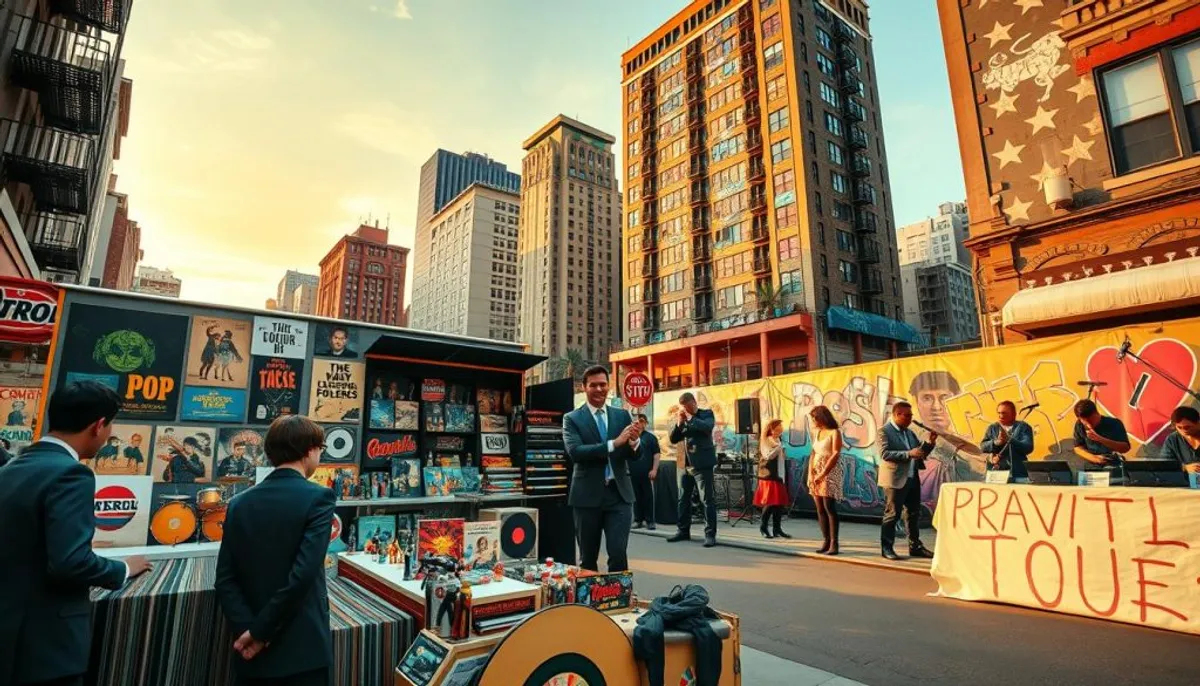
This artistic expression constantly evolves with time. It mixes different influences to create something new and exciting. What was trendy yesterday may already be outdated today.
Popular culture crosses borders and unites generations. It gives rise to common references that we share in our modern society. These cultural rallying points often become topics of conversation.
This artistic movement includes music, cinema, video games, and much more. Its perception varies according to regions of the world, creating a rich diversity of expressions. This variety makes pop culture so fascinating to study.
Key Points to Remember
- Popular culture is a constantly evolving global phenomenon
- It transcends geographical and generational boundaries
- This artistic expression subtly influences our daily lives
- It encompasses various fields such as music, cinema, and video games
- Popular trends can vary by region
- This cultural movement creates common references in society
- Pop culture is never static but continually transforms
Introduction to Popular Culture
Did you know that the term 'Pop Culture' originates from the English expression 'Popular Culture'? This linguistic contraction already reveals the very essence of the concept.
Definition and Contextualization
Popular culture represents the set of cultural phenomena that resonate significantly in society. It constantly evolves with its time.
This form of artistic expression is distinguished by its democratic access. It does not require specialized knowledge to be understood and appreciated.
The scope covered is impressive: media, fashions, customs, and shared references. All these elements touch a large number of people simultaneously.
Unlike elitist culture, pop culture addresses everyone. Gordon Lynch also emphasizes that its definition is regularly debated among specialists.
This inclusive approach allows personalities like Einstein to become icons. Their media image and merchandise make them accessible to the greatest number.
History of Pop Culture: From Origins to Today
The term 'Pop Culture' officially entered public discourse in 1966. Harold Wilson, the British Prime Minister, used it in a landmark speech.
Journalists quickly adopted this expression. It naturally became popular in the media and everyday language.
The First Cultural Manifestations
To understand the true origins, we must go back several centuries. Each era developed its own cultural phenomena shared by the majority.
Works like The Three Musketeers by Alexandre Dumas illustrate this journey. Initially published as a serial, this novel became a literary classic over time.
Major Influences Through the Centuries
Popular cultures have always evolved by absorbing various influences. These currents have traversed the ages to shape our current landscape.
| Period | Popular Manifestation | Subsequent Evolution |
|---|---|---|
| 19th Century | Serialized Novels | Become literary classics |
| 1960s | Rock Music | Global cultural institution |
| Early 21st Century | Social Media | New vectors of influence |
This history of France shows how popular culture is continually transforming. It draws from the past to invent the future.
The Origins of Popular Culture
The first manifestations of collective entertainment date back thousands of years. This rich history shows us how ancient societies were already creating shared cultural experiences.
Ancient and Medieval Examples
The Roman expression “Bread and Circuses” perfectly illustrates this concept. Arena spectacles constituted a form of entertainment accessible to all.
Gladiatorial combats can be considered the ancestors of modern wrestling shows. They gathered immense crowds without social distinction.
During antiquity, Greek and Roman mythology was transmitted orally. The Olympic Games and Homeric epics were already major cultural phenomena.
| Period | Manifestation | Modern Impact |
|---|---|---|
| Roman Antiquity | Arena Spectacles | Precursor to spectacle sports |
| Ancient Greece | Theater and Epics | Foundation of Western storytelling |
| Middle Ages | Chansons de geste | Oral transmission for illiterate audiences |
In the Middle Ages, the Arthurian Legend and chansons de geste united communities. These heroic tales created a common culture accessible to all classes.
These examples demonstrate that popular culture finds its roots in ancient traditions. They were an integral part of daily life long before the modern era.
The Birth of Mass Culture and Cultural Industries
Industrialization profoundly disrupted artistic creation in the 19th century. This transformation gave rise to a new form of dissemination accessible to the masses.
The Impact of the Industrial Revolution
The industrial revolution enabled large-scale cultural production. This change made accessible to the greatest number what was once reserved for the elites.
As early as 1839, Sainte-Beuve invented the term “industrial literature.” This expression marks the first critique of cultural commodification.
The term “mass media” appeared in 1923 in an advertising publication. “Subculture” (1936) and “mass culture” (1939) would quickly follow.
| Date | Key Term | Meaning |
|---|---|---|
| 1839 | Industrial Literature | First critique of mass cultural production |
| 1923 | Mass Media | Emergence of media for the general public |
| 1947 | Cultural Industries | Concept developed by Adorno and Horkheimer |
In 1947, Theodor Adorno and Max Horkheimer launched the concept of cultural industries in The Dialectic of Enlightenment. This critical thought analyzes mass culture in the post-war society.
The 19th and 20th centuries constitute a crucial period for this new cultural era. Mass production has definitively transformed our artistic consumption habits.
The Influence of Media on Popular Culture
At the heart of modern dissemination lies a fascinating symbiotic relationship. Media and popular culture feed off each other in a constant exchange. This dynamic relationship has transformed our artistic landscape for over a century.
The Role of Magazines and Popular Press
Pulp magazines revolutionized access to entertainment from the early 20th century. These affordable publications created new audiences eager for captivating stories. The popular press democratized artistic creation like never before.
Mass media do not merely reflect trends. They actively participate in their creation and transformation, as evidenced by the French advertising. This constant interaction defines our contemporary pop culture.
The evolution of media formats shows their growing impact. From the first illustrated magazines to television channels, each innovation expands the audience. Cultural phenomena thus reach an impressive mass scale.
These channels also become vectors of social critique. They reflect political issues while influencing public opinion. This fertile ground mixes artistic creation and societal debates.
The Role of Cinema and Television in Cultural Dissemination
The 20th century marked a turning point in the history of global entertainment. The advent of cinema revolutionized our way of storytelling. This new form of visual art captivated imaginations across the planet.
Films quickly became a fundamental pillar of pop culture. Their accessibility and emotional power created a universal language. Millions of people now shared the same visual references.
The Rise of Hollywood Cinema
Hollywood established the dominant model of film production. Its studio system standardized creation while maintaining remarkable quality. This industrial approach allowed for massive dissemination on a global scale.
| Period | Major Innovation | Representative Film |
|---|---|---|
| 1920s | Talkies | The Jazz Singer |
| 1950s | Wide Screens | Ben-Hur |
| 1980s | Blockbusters | Star Wars |
After the end of World War II, television emerged as the dominant medium. It brought entertainment directly into homes. This immediacy transformed our relationship with daily culture.
The 1980s represented the peak of this American model. The new Hollywood produced timeless cultural icons. Television broadcast these works, creating a truly global pop culture.
The Popular Press and Mass Literature in the 19th Century
The 19th century witnessed a silent revolution in access to information. Growing literacy created an audience eager for accessible content. This transformation gave birth to cheap press.
Popular newspapers captivated the masses with sensational stories. Intriguing news items and political cartoons enlivened the pages. This approach made information entertaining for the greatest audience.
Serialized novels achieved phenomenal success during this period. Works like The Three Musketeers were published in episodes. Readers eagerly awaited each new part of the story.
Authors like Dickens and Dumas reached a diverse audience. Their stories crossed social barriers. This mass literature created common references.
The phenomenon of serialized publications paved the way for modern popular culture. It established the foundations for a democratic access to fiction. This era marks a turning point in cultural history.
Editorial production reached a mass scale never seen before. The 19th century thus laid the foundations for our current media landscape.
Transformations of Pop Culture in the 20th Century
Never before had creative expression undergone such a revolution as in the 20th century. This period saw the emergence of radically new forms of art that redefined our relationship with art.
From Cinema to Pop Art
Pop Art transformed everyday objects into legitimate art works. Soup cans and soda bottles became cultural icons. This movement democratized access to artistic expression.
Music experienced a remarkable creative explosion. Jazz, blues, and rock conquered the entire world. Legends like Elvis Presley and The Beatles became international references.
Michael Jackson and Madonna transcended generations with their unique talent. Their influence far exceeds the musical realm. They shaped the cultural identity of an entire era.
Hollywood cinema produced cult characters. These iconic figures populated our collective imagination. The 7th art offered a limitless space for expression.
These different artistic forms intertwined harmoniously. They created a rich cultural landscape accessible to all. The 20th century remains an essential reference in the history of creation.
Popular Culture and Consumer Society
The post-war period created fertile ground for a new relationship between artistic creation and buying habits. The regained stability in the West and the amplification of communication means favored the emergence of a society oriented towards consumption.
Mass Media as Vectors of Trend
The American way of life experienced considerable growth, spreading its influence across the planet. This expansion sparked debates, with some seeing it as an Americanization of other societies. At the same time, the history of Haiti was also marked by diverse cultural influences, thus enriching the global dialogue.
The concept of mass consumer society was formalized by George Katona in 1960. The idea was already circulating in the United States and would be adopted in France.
Jean Baudrillard published his analysis in 1970, but the term was already in use. Mass media became the main artisans of this Japanese culture and mass culture, shaping desires.
| Year | Key Figure | Major Contribution |
|---|---|---|
| 1960 | George Katona | Theorizes “mass consumer society” |
| 1960s | French Intellectuals | Reception and debate around the concept |
| 1970 | Jean Baudrillard | Publication of “The Consumer Society” |
This era definitively linked popular culture to market mechanisms. Pop culture and consumption thus mutually reinforced each other, fostering collaborative creativity. This symbiosis still characterizes our modern pop culture.
The Advent of Digital Culture and Social Networks
The emergence of the web has disrupted traditional codes of cultural creation and sharing. This transformation has radically changed the way people interact with works. The end of the 20th century opens a fascinating new digital era.
Internet has democratized access to popular culture like never before. Every individual can now become a creator rather than just a consumer. This freedom of expression offers an unlimited space for creation.

Social networks have accelerated this revolution by connecting virtual communities. Platforms like YouTube and TikTok allow for instant dissemination. Pop culture now circulates at an impressive speed.
| Platform | Type of Content | Cultural Impact |
|---|---|---|
| YouTube | Viral Videos | Creation of internet celebrities |
| TikTok | Short Content | Ephemeral trends and memes |
| Influencers | New cultural prescribers |
Memes and viral videos represent typical forms of expression of this era. Blogs and podcasts offer remarkable creative freedom. This diversity significantly enriches the contemporary cultural landscape.
The digital culture has fragmented pop culture into multiple specialized niches. Each community develops its own references and codes. This diversification creates an unprecedented cultural richness, thus enriching our understanding of culture in the digital age.
The Various Artistic Expressions of Pop Culture
The 1980s marked a turning point in the fusion of music and images. This decade saw the birth of new forms of expression that redefined pop culture.
Music, Visual Art, and Live Performances
Music represents an extremely diverse field in the contemporary landscape. Hip-hop, rock, and electro each develop their own cultural universe.
The advent of MTV transformed the public's relationship with music. Music videos became a true form of visual art in their own right.
These creations merge cinema, choreography, and musical storytelling. They elevated the music video to the status of a complete artistic work.
Visual arts show remarkable richness in modern pop. Street art and digital works constantly engage with mass culture.
Live performances create unique moments of communion. Concerts and festivals bring communities together around shared experiences.
This constant interaction between different artistic disciplines shapes our current pop culture, particularly through movements like trock culture. Each domain influences the others in a permanent creative dialogue.
The Emergence of Japanese Pop Culture
Manga and anime represent one of the greatest successes of cultural export. This Japanese pop culture has conquered the entire world with its unique style.
Manga and Anime
Osamu Tezuka, considered the father of modern manga, revolutionized Japanese comics. After World War II, he created foundational works like Astro Boy and Black Jack.
Akira Toriyama, born in 1955, also marks history with Dragon Ball. This series becomes the model for shonen and inspires generations of authors. Toriyama passed away on March 8, 2024.
The magazine Shonen Jump plays a crucial role in this dissemination. It allows works like One Piece and Naruto to cross borders.
International Impact
Japanese influence extends far beyond the archipelago. Events like Japan Expo in Paris have become essential.
Korea develops its own style under this influence. The different Asian cultures enrich each other.
This popular culture continues to evolve and fascinate. It shows how a comic can unite peoples.
Popular Culture in the Video Game Domain
Pac-Man and Space Invaders have marked the collective imagination of an entire generation. These iconic titles paved the way for an interactive revolution that would transform our relationship with entertainment.
The arrival of personal computers and home consoles democratized access to this emerging medium. From arcades to family living rooms, video games became accessible to all.
The Evolution of Video Games
The sector has experienced phenomenal growth since the end of the 20th century. Games on consoles, PCs, and mobiles have created varied experiences.
MMOs (massively multiplayer online games) have developed global virtual communities. This diversity of platforms constantly enriches the offering.
The video game industry is now one of the most profitable in the world. It often surpasses cinema in terms of revenue.
The Influence on Other Media
The influence of video games far exceeds their original domain. Cinema, literature, and comics regularly draw inspiration from them.
Creators like Akira Toriyama have illustrated these connections. Designer of Dragon Quest, he merged manga universes with Japanese RPGs.
This interactive pop culture continues to shape our contemporary imagination. Games create common references on a global scale.
Critical Analysis: Between Mass Imagination and Social Evolution
The opposition between high culture and popular culture spans the centuries. This debate pits the “doctors Tant-pis” against the “doctors Tant-mieux.” The former often dominate the intellectual field.
Debate Between Elitist Culture and Popular Culture
In the 1930s, Georges Duhamel and Jean-Richard Bloch clashed. Fifty years later, Christopher Lasch and Herbert Gans picked up the torch. Political positioning does not determine their relationship to controversy.
This between high culture and mass culture presents three major difficulties. The ambiguity of terms creates initial confusion. The antithetical functioning artificially opposes the people and elites.
The nostalgia trap idealizes the past. These obstacles complicate the analysis of social classes and their cultural expression.
| Concept | Approach | Main Focus |
|---|---|---|
| Popular Culture | Questions a content | The People as a political entity |
| Mass Culture | Questions a structure | The Mass as an abstract agent |
| Intellectual Debate | Transcends divisions | Non-political positioning |
These two notions fundamentally refer to the same phenomenon. The culture of a society that does not identify with its elites. Viewed from different angles depending on the eras.
The debate on the mass and its expressions continues to animate contemporary reflection. It questions our relationship to works and social classes.
Focus on Popular Culture in Our Daily Lives
Our daily lives are imbued with cultural references that shape our behaviors. These influences permeate all aspects of our modern life, including concepts like Western philosophy.
Influence on Habits and Leisure
Pop culture subtly shapes our entertainment choices. Streaming platforms and social networks guide our preferences.
Our evenings may be dedicated to series marathons. Video games occupy a significant part of our free time.

Television and cinema provide striking examples of this influence. Personalities like Einstein have become global icons.
These phenomena can be observed across generations. They unite people from different years.
Contemporary Interpretations
The way we consume culture has radically changed. Each domain interacts with others, including the digital society, creating a dynamic landscape.
The end of our week may be marked by festivals or conventions. These events highlight the importance of popular culture.
These spaces offer remarkable creative freedom. Everyone finds their place in this contemporary pop culture.
Conclusion
At the end of this analysis, one constant emerges: popular culture defies any attempt at rigid classification. This major cultural phenomenon represents a set of representations in perpetual transformation.
Our historical journey shows its remarkable adaptability. From ancient spectacles to digital platforms, it has traversed the centuries by absorbing innovations. The Second World War marked a decisive turning point for cultural industries.
Theoretical debates reveal issues of legitimization between different social classes. Globalization has amplified the influence of various expressions, such as Japanese mangas.
Pop culture now influences all aspects of our daily lives. It remains a democratic space accessible to the greatest number, destined for future transformations.
FAQ
How to simply define pop culture?
It is the sum of trends, leisure activities, and artistic works that are widely shared and appreciated by a large part of society. It is often disseminated by modern media such as television and the internet.
When did this form of culture emerge?
Its roots are ancient, but it really took off with the industrial revolution and the development of popular press in the 19th century. Its massive expansion is linked to the advent of cinema and television.
What has been the impact of video games on this phenomenon?
Video games have become a major pillar, creating complete universes and influencing other areas like cinema. They have transformed leisure and created new communities on a global scale.
How have mass media changed the game?
They have allowed for unprecedented dissemination of works, making music, films, and series accessible to a large number of people. This has accelerated the creation and circulation of trends.
Is pop culture considered "real" art?
Absolutely. Movements like Pop Art have celebrated everyday objects and icons of consumer society. Today, works like mangas or blockbusters are studied for their artistic and narrative value.
How has digital transformed this culture?
The digital age and social networks have democratized creation. Everyone can now participate, share, and influence trends in real time, evolving the phenomenon at an incredible speed.