Welcome to a guide designed to help you discover the riches and unique features of a fascinating society located at the other end of the globe.
This nation has forged its unique identity through a captivating blend. Its roots dive deep into a 60,000-year-old Aboriginal history, while its modern development has been largely influenced by traditions from the British Isles and other European settlers.
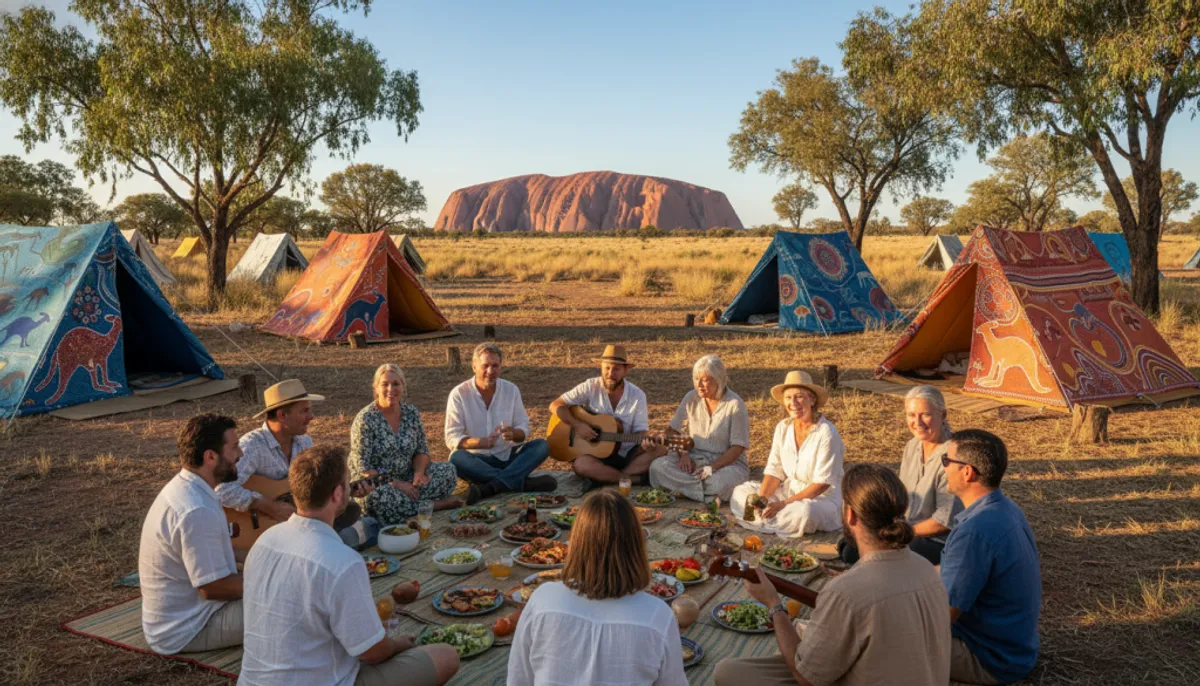
Get ready for an immersive journey into the heart of a people known for their warmth and spirit of camaraderie. You will understand how geographical isolation and vibrant multiculturalism have shaped distinct customs.
Whether you are planning a visit or simply curious, this journey will show you how tradition and modernity harmonize to create a remarkable social dynamism admired around the world.
Key Points to Remember
- The identity of this country is a unique blend of ancient heritages and Western influences.
- The Aboriginal presence dates back 60,000 years, forming the oldest cultural foundation.
- The egalitarian and warm spirit of its inhabitants is a striking characteristic.
- Its geographical isolation has contributed to shaping distinct customs.
- It is a dynamic society where the past and present coexist harmoniously.
- Its attractiveness and way of life spark interest on a global scale.
- This guide is an ideal entry point for travelers and the curious.
Introduction to Australian Culture
Today's Australia is the result of a rich history and multiple contributions from various backgrounds. Its main social identity is Western, inherited from the British Isles. It has also been shaped by other European settlers and a unique geography.
It is crucial to note that Aboriginal nations possess distinct cultures, forming a valuable set of indigenous traditions.
The contemporary result is a subtle blend. The British colonial heritage merges with contributions from an increasingly diverse population.
The life on the ground is characterized by a relaxed and welcoming style. Values of equality and camaraderie permeate every part of daily life.
General Overview and Context
This mosaic of influences forms the unique identity of this country. Understanding its society means recognizing the coexistence of multiple identities.
Modern Aussies thus evolve in a framework where mutual respect is fundamental.
Objectives of the Exploration
Our goal is to enable you to grasp the nuances of this unique Western culture. It is enriched by its island history and geography.
This introduction sets the necessary context to appreciate the following chapters. They will detail every aspect of this dynamic society.
The Origins and History of Australian Culture
Two major events, separated by millennia, have shaped the fate of this continent. Understanding this dual history is key to grasping the complex identity of the modern nation.
The arrival of the first European explorers marks a turning point in Australian history. In 1770, James Cook claims the east coast.
A few years later, in January 1788, the First Fleet lands with 1,500 convicts. These first settlers establish the penal colony of Sydney.
The Arrival of the First European Explorers
These events of the late 18th century laid the foundations for a new society. It would profoundly transform the social landscape.
| Event | Date | Key Figure | Main Impact |
|---|---|---|---|
| Aboriginal Settlement | ~60,000 years ago | First Peoples | Development of complex tribal societies |
| European Claim | 1770 | Captain James Cook | Opening to British colonization |
| Colonial Establishment | 1788 | First Fleet | Foundation of the first penal colony |
Comparative table of founding events.
The Ancestral Aboriginal Heritage
The arrival of the first peoples on this land dates back 60,000 years. They developed sophisticated civilizations long before European contact.
By 1788, the continent was populated by 250 distinct tribes. Each had its own language and laws, forming an Aboriginal heritage of unparalleled richness.
The British Influence and the Advent of Multiculturalism
A profound British imprint and a multicultural openness define society today. This unique journey has transformed the country in just a few generations.
Colonization and Its Impacts
British colonization begins in 1788. Waves of settlers from the West then settle.
They bring the English language and the Westminster political system. These foundations still structure the modern state.
For nearly two centuries, a restrictive immigration policy favored Europeans. Cultural assimilation was the rule.
Demographic and Cultural Evolution Since 1973
The year 1973 marks a radical turning point. The government abandons the so-called "White Australia" policy.
It officially adopts multiculturalism. This decision opens the doors to Aussies from around the world.
Immigrants from Asia and the Middle East become the majority. Major cities transform into cosmopolitan metropolises.
Culinary and artistic influences flourish. Diversity is now celebrated as a national strength.
| Period | Main Characteristics | Cultural Impact |
|---|---|---|
| 1788 – 1970s | British colonization, exclusive European immigration, assimilation | Dominance of Anglo-Saxon traditions, English language, Western institutions |
| Since the 1970s | Multiculturalism policy, global immigration, celebration of diversity | Cosmopolitan society, fusion of influences, dynamic and inclusive identity |
Comparison of the two major periods of national identity formation.
Aboriginal Cultures and the Dreamtime
A deep understanding of Australia necessarily involves discovering its original cultures. These societies keep alive the oldest continuous civilization on the planet.
Oral and Artistic Traditions
The Dreamtime, or Tjukurpa, is its spiritual foundation. It explains the creation of the world and establishes a sacred link between humans and the land.
According to these stories, mythical beings like the Rainbow Serpent shaped the landscape. They rendered every element of nature sacred in their eyes.
Oral traditions convey much more than myths. They carry ancestral practical knowledge about survival and environmental management.
Aboriginal art is a direct expression of these stories. Its evidence dates back over 30,000 years, making it one of the oldest forms of continuous art.
Today, Aboriginal culture thrives through contemporary works. Music and dance perpetuate this unique connection with the dream.
Sport, Music, and Legends at the Heart of Identity
Beyond the landscapes, it is in sports and musical narratives that the heart of the nation beats. These areas create moments of collective communion and forge a powerful sense of belonging.
The Passion for Rugby, Cricket, and Other Sports
Sport occupies a central place. Aussies display a unique fervor for cricket and rugby.
Cricket matches are major social events. The atmosphere is friendly and competitive.
Rugby, in its various forms, is among the most popular disciplines. It evokes intense passion, especially in the east of the country.
Despite a modest population, this nation is a powerhouse on the world stage. It won 49 medals at the Athens Games in 2004.
Myths and Cultural Heroes
Music draws inspiration from national legends. The figure of the bushranger Ned Kelly from the 19th century is a striking example.
His story of rebellion has resonated for years in folk and rock music. These narratives reflect values of independence cherished by the population.
Sport and melodies thus function as vectors of identity. Together, they celebrate a spirit of resistance and excellence.
The Cuisine and Way of Life in Australia
The Australian table is a joyful celebration of local flavors and outdoor conviviality. It defines an essential part of social life.
This culinary scene reflects a unique blend. Local traditions merge with contributions from around the world.
The Barbecue and Regional Specialties
The barbie is much more than just cooking. It is a social institution and an icon of culinary culture.
Aussies favor quality meats like lamb and beef. These barbecues enliven parks, beaches, and gardens.

The proximity to the ocean also offers exceptional seafood. Many coastal restaurants are ranked among the best in the world.
| Specialty | Main Product | Typical Region | Tasting Context |
|---|---|---|---|
| Traditional Barbecue | Lamb, beef, sausages | Nationwide (parks, gardens) | Family gatherings, weekends |
| Fresh Seafood | Oysters, barramundi, shrimp | Coasts (Sydney, Melbourne) | Coastal restaurants, markets |
| Modern Fusion | Local products and Asian influences | Major cosmopolitan cities | Dynamic restaurant scene |
Mediterranean and Asian Influences
In recent years, multiculturalism has transformed the palette. Mediterranean and Asian flavors now dominate.
Aussies have integrated techniques and ingredients from Greece and Italy. Olives, cheeses, and olive oils are ubiquitous.
In major cities, the fusion scene is booming. It creatively marries culinary traditions from different cultures.
Life in big cities is also marked by a sophisticated café culture. Farmers' markets and organic products are gaining popularity.
Australian Values and the Concept of Fair Go
At the heart of national identity lies a simple yet powerful principle: the 'Fair Go'. It means that every individual deserves a fair chance. This belief is an essential part of local culture.
The Spirit of Equality and Brotherhood
Aussies cultivate a deep egalitarianism. They display a natural distrust of the rich and powerful. Mateship, or brotherhood, is its natural extension.
This code of loyalty unites people. It finds its roots in the shared trials of the first settlers. Today, it extends to the entire society.
This culture is evident in the support for underdogs. Those who struggle against adversity are encouraged. Unexpected victories are celebrated with fervor.
In daily life, communication is direct and informal. Titles and excessive formalities are often avoided. Even authority figures are addressed simply.
The Fair Go occupies a central place in public debates. It justifies robust health and education systems. The goal is to ensure opportunities for all Aussies.
These values create a unique social contract. Material success is respected, but humility remains paramount. Helping one's neighbor is a moral obligation for many Aussies.
The Impact of Politics and Social Systems
A distinctive democratic model, combining obligation and social protection, defines the living framework of citizens. This country has built institutions that reflect its core values.
Mandatory Voting and Democracy
Electoral participation is a legal obligation for all adult citizens. This rule applies at all levels, federal and state.
People who do not vote without a valid reason receive a fine. This ensures some of the highest participation rates in the world.
The state functions as a constitutional monarchy. Real power is held by the Prime Minister and Parliament.
Since the late 19th century, this country has been a pioneer. It established elected parliaments and granted advanced rights to women and workers.
The Constitution, enacted in 1901, ensures the separation of Church and State. This neutrality is crucial in a multicultural society.
The public health system Medicare illustrates the commitment to equality. It provides accessible care to all residents.
Over the years, a robust welfare state has developed. It combines social security, education, and universal health services.
This model balances British traditions and progressive innovations. It positions Australian democracy as stable and mature.
Traveling in Australia: Cultural Immersion
For a foreign traveler, landing in this continent-country opens the doors to a world where nature and history intertwine. Organizing such a journey requires careful planning, starting with your long-distance plane tickets.
The distances are immense between cities and regions. It is wise to prioritize your destinations based on your interests.
Historical Sites and Must-Visit Destinations
Each state and territory offers a unique experience. Here is an overview of major places to discover.
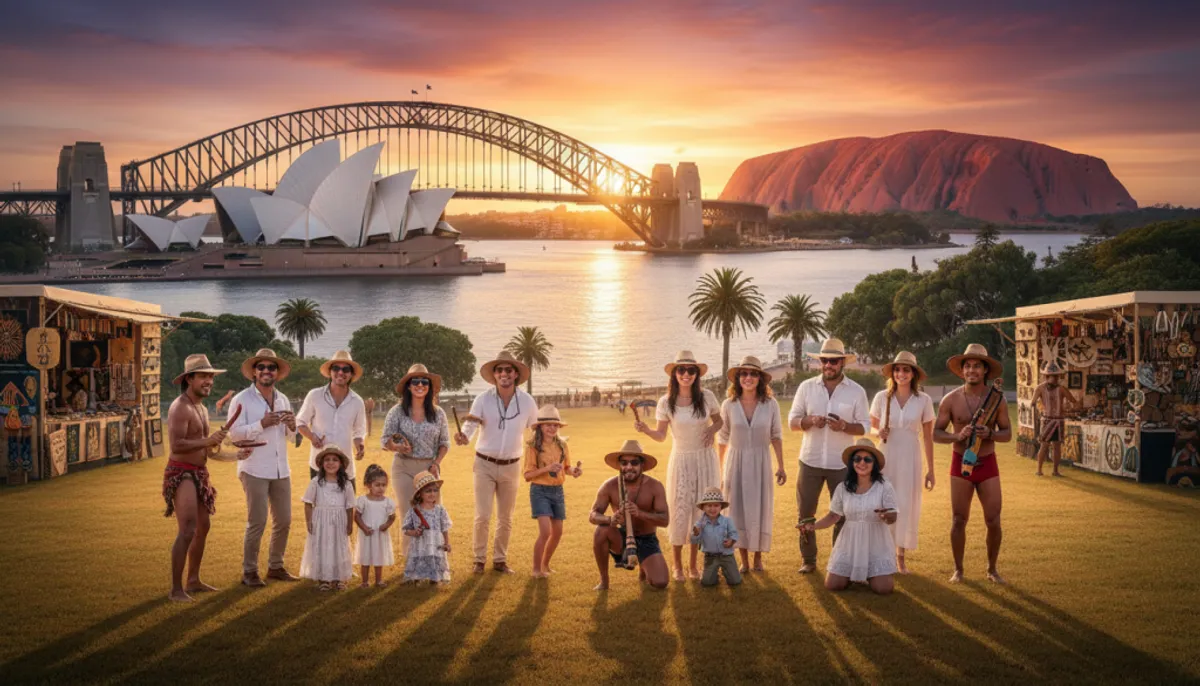
New South Wales is often the first entry point. Sydney, its capital, charms with the Opera House and the historic Rocks district.
Further south, Melbourne and Adelaide shine with their artistic scene and architecture. Their vibrant atmosphere is a must for any journey.
The Northern Territory offers a radically different immersion. Uluru and Kakadu parks are sacred sites of breathtaking beauty.
In the west, Western Australia reveals Perth and the wild landscapes of Kimberley. It rewards patient explorers.
To connect these jewels, compare domestic flight tickets. Domestic flights are essential to optimize your time.
| Region | City / Highlight | Main Experience | Practical Tip |
|---|---|---|---|
| New South Wales | Sydney | Iconic landmarks and colonial history | Main international entry point |
| Victoria / South Australia | Melbourne, Adelaide | Cultural life, festivals, Victorian architecture | Explore art galleries and markets |
| Northern Territory | Uluru, Darwin | Encounter with Aboriginal traditions and spectacular nature | Plan for a local guide for authentic immersion |
| Western Australia | Perth, Kimberley region | Pristine beaches and preserved landscapes | Allow time for long journeys |
| Tasmania / Victoria | Port Arthur, Ballarat | Penitentiary history and gold rush | Ideal for history enthusiasts |
From the Blue Mountains to the goldfields, each site tells a part of this nation's history. Your itinerary will depend on your desires for adventure or urban exploration.
Exploring "Australian Culture" Through Its Traditions
Australian traditions offer a vibrant kaleidoscope where festivals, arts, and innovations intertwine. This dynamic society perpetuates unique customs while inventing new forms of expression.
Religious and Festive Influences
Christmas is celebrated in the summer, transforming traditional meals into barbecues on the beach. This adaptation illustrates local creativity.
Three-quarters of the population identify as Christian, mostly Catholic or Anglican. However, religious diversity is significantly increasing.
Buddhism has grown by 79%, Hinduism by 42%, and Islam by 40%. This landscape is reflected in sacred architecture.
St. Mary's Cathedral in Sydney stands alongside the Nan Tien Temple, the largest Buddhist building in the Southern Hemisphere.
Art, Architecture, and Cultural Innovation
Art has evolved from Aboriginal rock paintings to contemporary galleries in Melbourne and Sydney. Local music shines on an international level with artists like AC/DC.
Canberra, in the Australian Capital Territory, is home to the National Gallery. The Sydney Opera House remains a global architectural icon.
The most popular festivals enliven the streets of major cities. They attract talents from around the world.
Innovation is also evident in public health approaches and nature conservation. The country serves as a model in this regard.
Conclusion
At the end of this exploration, one certainty stands out: this society is a model of multicultural cohesion. Its unique identity fuses ancient traditions with contemporary contributions from around the world.
Aussies have built a nation where equality and the 'Fair Go' occupy a central place. These values are reflected in a relaxed lifestyle and strong social commitment.
The richness of this culture shines at all levels. From ancestral art to the innovative culinary scene, every aspect celebrates diversity.
Respectful of nature and open to the world, its inhabitants embody inspiring principles. Their legendary hospitality makes any stay memorable.
Whether you visit this country or deepen your knowledge, its dynamic population continues to fascinate. It offers a valuable lesson in coexistence.
FAQ
What are the pillars of national identity in Australia?
The identity of this country rests on several foundations. The spirit of "Fair Go," a notion of equal opportunity, is central. The passion for sports like cricket and rugby, along with a deep respect for Aboriginal history and traditions, completes this unique picture.
How did British colonization shape the country?
The arrival of British settlers profoundly marked the development of the nation. It established English as the official language, introduced the Westminster parliamentary system, and sports like cricket. This period also unfortunately impacted Indigenous populations, a complex legacy that society addresses today.
What does "Dreamtime" mean in Aboriginal cultures?
"Dreamtime" is the spiritual and cultural foundation of the First Peoples. It describes ancestral stories of the creation of the world, explaining laws, nature, and connections to the land. It is transmitted through oral traditions, paintings, and ceremonies, preserving knowledge that is thousands of years old.
Why is the barbecue so emblematic of local lifestyle?
The barbecue, or "barbie," is much more than a way of cooking. It is a convivial social event, symbolizing relaxation and brotherhood. Whether in a public park in Sydney or in a private garden, it brings people, friends, and family together around simple grilled foods, reflecting an outdoor and sharing-focused lifestyle.
What are the best places for cultural immersion during a trip?
For a complete immersion, visit Uluru in the Northern Territory to understand Aboriginal spirituality. Explore the multicultural neighborhoods of Melbourne for its arts and music. In Sydney, the Opera House and Harbour Bridge are architectural icons. Finally, Tasmania offers a poignant look at the history of the first settlers.