
At the heart of West Africa, lies a vast landlocked state with unsuspected treasures. Mali gained its independence on September 22, 1960, after a period of colonization. This space, surrounded by seven neighboring nations, is home to a rich population of millions of inhabitants.
Its heritage is one of the most diverse on the continent. A mosaic of ethnicities has woven, over the centuries, a living and extraordinary heritage. This diversity is felt in every aspect of daily life and major celebrations.
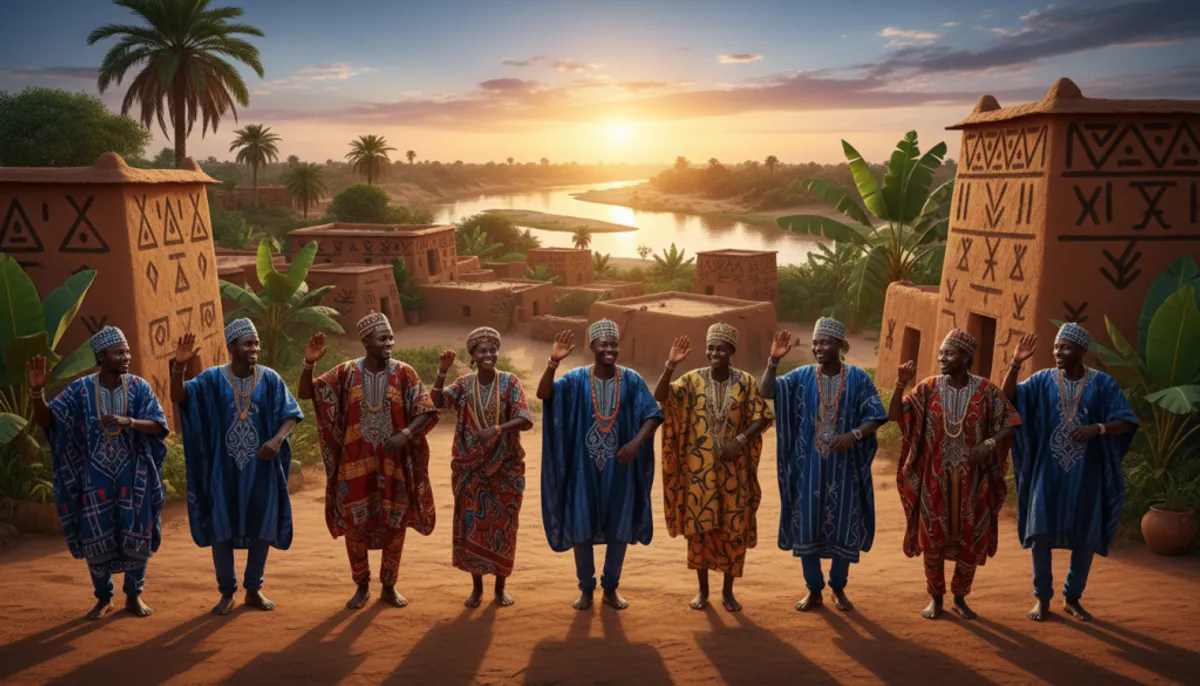
Traditional customs engage in dialogue with modernity. Griots, true guardians of memory, perpetuate epic tales. Local craftsmanship reflects a valuable know-how, passed down from generation to generation.
The influence of this nation extends beyond its borders. Enchanting music, UNESCO World Heritage sites, and unique artistic expressions captivate the entire world. It is a force that evolves while keeping its deep roots.
Key Points
- Mali is a landlocked country in West Africa, independent since 1960.
- Its cultural heritage is exceptionally rich and diverse.
- Griots play a crucial role in the transmission of oral history.
- Traditional craftsmanship represents preserved ancestral know-how.
- Malian music and its historical sites have international renown.
- This culture is a living force, both rooted in tradition and evolving.
- It unites diverse peoples around common values and rites.
Introduction to Malian Culture
To understand this unique heritage, one must explore its two founding pillars: a rich history and remarkable human diversity. These elements combine to create a strong and complex national identity.
Historical Context and Independence
September 22, 1960 is a sacred date. It marks the independence of the country after colonization. This event opened a new era for the Malian people.
This recent sovereignty is rooted in a glorious past. Great empires, such as the Mandé Empire 800 years ago, shaped the history and traditions. The context has forged a palpable national pride.
Ethnic and Linguistic Diversity
Nearly twenty ethnic groups coexist. Bambaras, Peuls, Dogons, Tuaregs, and Soninkés are part of this mosaic. Together, they form a population of about 17 million inhabitants.
This diversity is also reflected in the languages. French has been the official language since independence. However, Bambara is spoken by more than half of the people.
The country values this wealth. An initiative called “convergent pedagogy” allows children to learn first in their mother tongue. This approach respects all ethnic groups and their expressions.
Malian Culture: A Living Heritage
The intangible heritage of Mali beats to the rhythm of its griots' voices and ancestral rites. This legacy is passed down from generation to generation, creating a strong link between the past and the present.
Oral Traditions and the Art of Griots
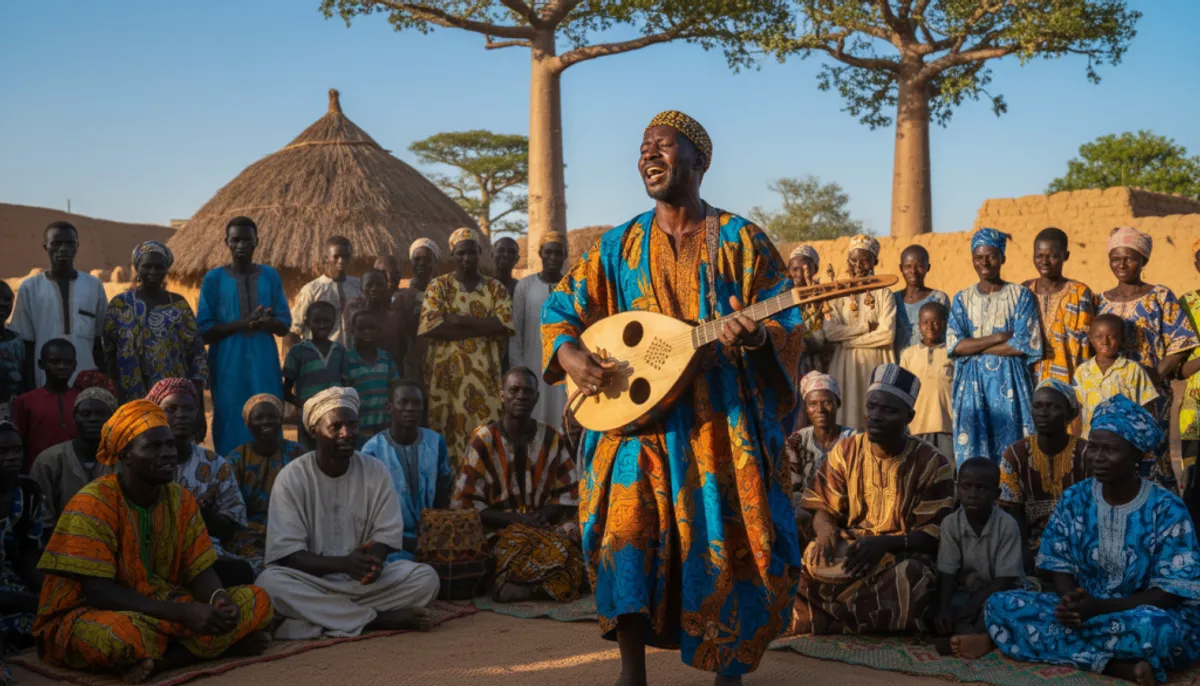
The griots, known as “djéli,” master the djélia. This art consists of recounting the history of families during major events.
They are living books, true wells of knowledge. The current chief, Mamadou Kaladjoula Diabaté, perpetuates this essential role.
Their rhythmic speech even influences modern music. They are considered the ancestors of rappers.
Beliefs, Rites, and Traditional Practices
The spiritual life is rich and diverse. Islam is the majority religion, but Christianity and traditional religions coexist harmoniously.
Unique rites structure time and strengthen social ties. The Sanké mon celebrates fishing, while the yaaral and degal marks the crossing of the river by herds.
The latter is recognized by UNESCO as an intangible cultural heritage. In the villages, initiation societies like the Kôrêdugaw Bambaras play a key role.
The joking kinship (sinankunya) allows for frank exchanges between groups. This practice paradoxically reinforces harmony through humor.
Ritual masks and ceremonies keep these traditions alive. They shape a resilient and deeply rooted culture.
Artistic and Musical Expressions
The artistic expressions of Mali vibrate with a unique energy, blending ancestral heritage, including the argentine tango, and contemporary creativity. This dynamism is felt in every note and every movement.
Traditional and Modern Music
Music is the beating heart of this nation. Legends like Ali Farka Touré and Salif Keïta have conquered the world.
Their sounds rely on iconic instruments. The kora, balafon, and n'goni create enchanting melodies.
Mythical groups, such as the Super Rail Band, have fused traditions with modern influences. The desert blues-rock, carried by Tinariwen, resonates just as powerfully.
Dance, Theater, and Performing Arts
The art of dance tells stories through the body. Malian ballets and traditional rhythms like the soumou captivate audiences.
Popular theater, such as the kotéba bambara, blends humor and social critique. It preserves the unity of communities.
Malian cinema shines internationally with renowned directors. Souleymane Cissé and Cheick Oumar Sissoko bring these stories to the big screen.
Craftsmanship and Traditional Trades
Craftsmanship is a major economic and cultural pillar for many communities. It provides an essential source of income for many inhabitants. Skills are passed down from parents to children within the family.
Traditional Techniques and Modernization
These techniques use natural materials. Gold, of which the country produces nearly 70 tons per year, is transformed into jewelry inspired by mythologies. Leather is used to create bags and belts.
Bogolan is a fabric dyed with plant dyes and clay. Its symbols carry deep cultural messages. This art evolves with the times.
Jewelry, Leather Goods, and Pottery
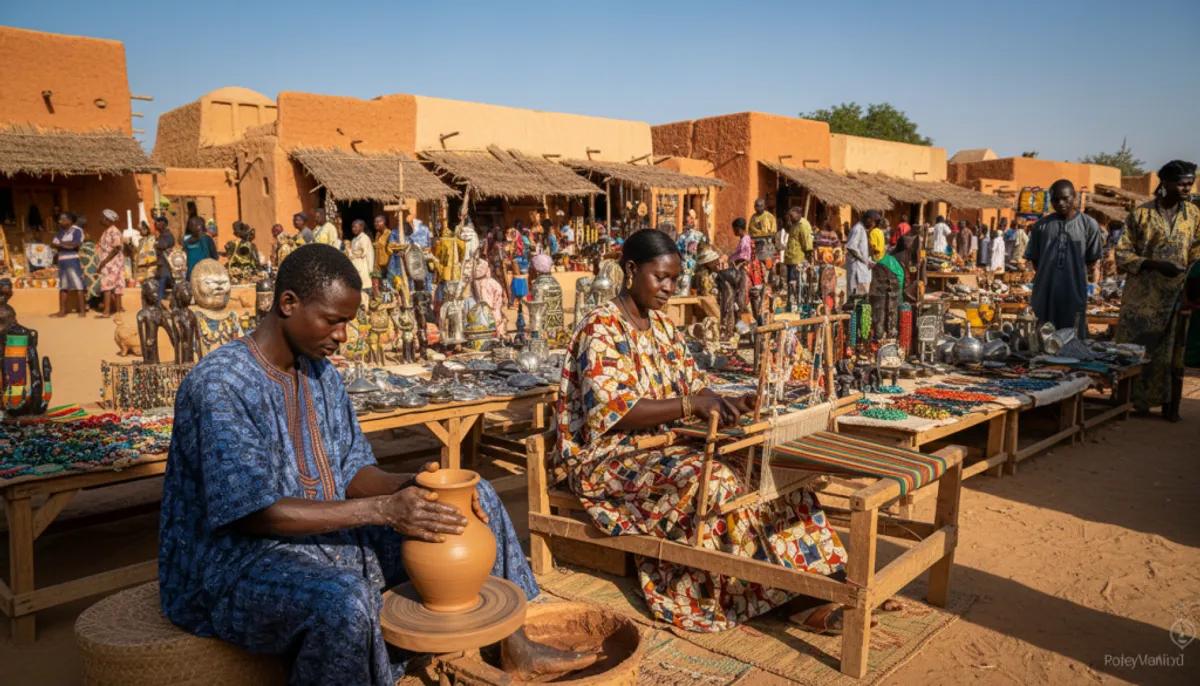
Leather goods support about 20% of artists. They make boots for camels and sword sheaths. Pottery is sold in markets like in Djenné.
Women's cooperatives, such as the Shea Butter House in Siby, bring together 1200 women. They produce shea butter to ensure their economic independence. This improves their daily life.
Modern fashion houses elevate these fabrics. Ikalook, Bortini, and others create a bridge between heritage and modernity. Thus, craftsmanship transcends time.
| Trade | Materials & Techniques | Typical Products | Modern Evolution |
|---|---|---|---|
| Jewelry | Gold, silver, bronze, ebony wood | Jewelry inspired by animals and mythologies | Contemporary design incorporating semi-precious stones |
| Leather Goods | Tanned leather, cutting and sewing techniques | Hunter bags, belts, camel boots | Fusion of Western designs and traditional patterns |
| Textiles (Bogolan) | Plant dyes, clay, cotton | Fabrics carrying symbols, traditional boubous | Valued by fashion houses (Ikalook, Bortini) |
| Cooperatives (Shea Butter) | Shea nuts, processing methods | Shea butter for cosmetics and food | Structuring into cooperatives for women's economic autonomy |
Contemporary Influences and Cultural Tourism
Four architectural jewels classified by UNESCO serve as a gateway to a booming cultural tourism. This world heritage engages with dynamic festivals, creating a unique offering.
UNESCO Sites and World Heritage
These sites tell the history of the country. The Djenné mosque impresses with its banco architecture. Timbuktu, at the edge of the desert, preserves its ancient manuscripts.
The Tomb of the Askia in Gao and the Bandiagara escarpment complete this prestigious list. Each location offers a dive into a unique universe.
| Site | Location | Main Feature |
|---|---|---|
| Djenné | Mopti Region | Great mosque in Sudanese banco architecture |
| Timbuktu | Timbuktu Region | Former intellectual capital, 13th-century manuscripts |
| Tomb of the Askia | Gao | Unique pyramid structure made of raw earth |
| Bandiagara Escarpment | Dogon Country | Troglodyte habitat and Dogon culture |
Impact of Modernity on Cultural Identity
Modernity enriches this identity. The African Photography Encounters in Bamako, born in 1994, shine a light on artists.
The Étonnants Voyageurs festival and the Literary Return, extended to Djenné in September 2018, energize the scene. These events attract an international audience.
The Dynamism of Craft Trade and Music
Malian music and malagasy music conquer the world. The country has the most African artists signed by American record labels.Cities like Mopti on the Niger River or Ségou are becoming popular destinations. Tourism from Burkina Faso and Côte d'Ivoire is thriving, celebrating this vibrant culture.
Conclusion
Ultimately, Mali offers a remarkable example of cultural resilience where the past dialogues with the present. This West African country shines thanks to a living heritage.
Its strength lies in the diversity of its ethnic groups. Each people contributes to a proud national identity, consolidated since independence. French, as the official language, coexists with many national languages.
Preserving this heritage is crucial. From griots to artisans in the villages, skills are passed down. Music, arts, and historical sites inspire the world, including parks and gardens accepting illicado culture.
Come discover this fascinating country. Its future is being written with confidence, rooted in millennia-old traditions and open to French as a language of connection.
FAQ
What are the main ethnic groups that make up Burkina Faso and Mali?
These West African countries host a great diversity. Notably, there are the Peuls, Bambaras, Dogons, Sénoufos, and Bobos. Each group brings its own languages, customs, and know-how, creating a very rich cultural heritage.
Which UNESCO World Heritage sites can be visited?
The region has exceptional sites! In Mali, the ancient cities of Timbuktu and Djenné, with their earthen architecture, are famous. The Dogon country and its cliffs are also listed. These places testify to a fascinating history and ancestral construction techniques, reflecting the rich history of nicaragua.
What role does music play in social life and traditions?
Music and dance are at the heart of life. They punctuate ceremonies, celebrations, and tell the history of peoples. Instruments like the balafon, ngoni, or dundun drums are essential. Griots, masters of speech and song, perpetuate this oral tradition through generations.
How is traditional craftsmanship transmitted and evolving today?
Techniques, such as bogolan weaving or leather and silver jewelry making, are often passed down in families. Today, artisans innovate by merging these ancestral skills with modern designs. This dynamism is visible in markets and supports the local economy.
What is the importance of local languages in relation to the use of French?
French is the official language, used in administration and education. However, national languages like Bambara, Dioula, or Mooré are very much alive in daily life, in villages and cities. This linguistic plurality is a real strength for the identity of the inhabitants.
How do traditional beliefs coexist with majority religions?
There is peaceful coexistence. Islam and Christianity are widely practiced, but many traditional practices and rites, related to ancestor worship or nature, persist. They are an integral part of family customs and significant life events, enriching the intangible heritage.