
Welcome to a journey into the heart of an exceptionally rich cultural heritage. The Ivory Coast shines like a jewel of West Africa, offering a mosaic of vibrant traditions.
This nation is characterized by remarkable diversity, with around sixty ethnic groups living in harmony. Each contributes to a unique heritage, shaped by a fascinating history and multiple artistic expressions.
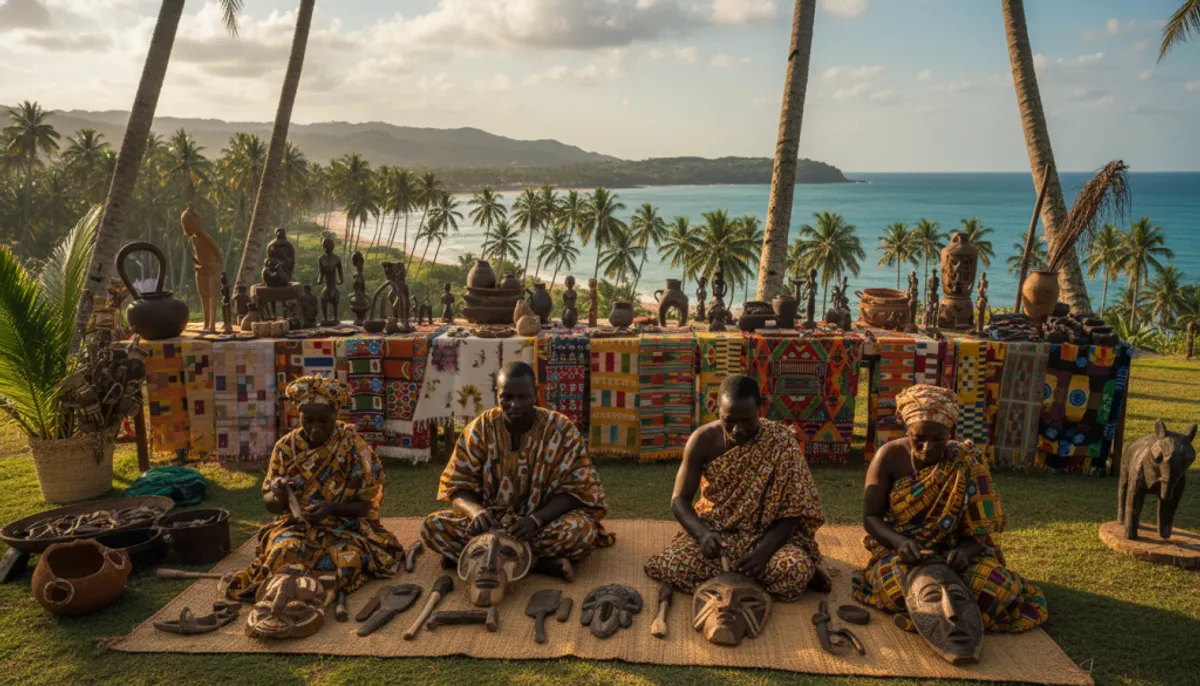
This guide invites you to explore this abundant identity in depth. You will discover how history, arts, and ancestral customs engage with modernity to create a unique social dynamic.
Key Points to Remember
- The Ivory Coast has a rich and diverse cultural heritage.
- About 60 ethnic groups coexist and contribute to this identity mosaic.
- Its history, arts, and traditions form a coherent and vibrant whole.
- This guide is an invitation to discover the many facets of this wealth.
- The proposed exploration covers both the past and contemporary expressions.
- Understanding this culture means appreciating a major contribution to global diversity.
Introduction: Diving into the Heritage of the Ivory Coast
Discover the treasures of a nation where diversity shapes identity. This country in West Africa is much more than just a point on the map.
It is a vibrant crossroads, shaped by centuries of exchanges. Its unique heritage is the result of this ongoing encounter.
General Overview and Historical Context
The Ivory Coast has a rich and complex history. From the earliest settlements to pre-colonial kingdoms, each era has left its mark.
The colonial period and independence subsequently shaped the current face of the nation. This trajectory explains the exceptional human mosaic found there today.
Objectives of the Ultimate Guide
This guide aims to provide you with a comprehensive understanding of this culture. We will explore its deep roots and modern expressions.
You will see how both tangible and intangible heritage engage with the contemporary world. The goal is to appreciate the depth of this heritage.
We will also address the challenges of preservation. The Ivory Coast maintains a precious balance between tradition and innovation.
The Origins and Historical Roots of the Ivory Coast
The foundations of the nation rest on millennia of settlement and exchange. This distant past explains today’s rich human mosaic.
The Early Settlements and Historical Evolution
The history of chile begins with successive waves of migration, several millennia ago. These movements gradually formed the current ethnic composition of the country.
Sophisticated pre-colonial kingdoms emerged, such as the Baoulé kingdom founded in the 18th century. These political organizations showcase the complexity of ancient societies.
The population is structured around four major groups, as shown in this table:
| Ethnic Group | Main Location | Population Share |
|---|---|---|
| Akan | Southeast | 28.8% |
| Mandé | Northwest and Southwest | 26.5% |
| Gour | North | 17.6% |
| Krou | West | 12.2% |
The Influence of Cultural and Commercial Exchanges
The trans-Saharan trade routes were vital. They connected the territory to the great empires of the Sahel and North Africa.
The trade of gold, cola, and ivory fostered contacts. These exchanges led to a mutual enrichment of local cultures.
The arrival of Arab and later European traders added new influences. These contributions were integrated into the social fabric, creating a unique common heritage.
This complex origin forged an adaptable and open people. Each group managed to preserve its particularities while participating in the whole.
Indigenous Cultural Traditions and Practices
A complex system of rites and celebrations structures collective life and strengthens social ties. These practices punctuate the calendar and ensure the transmission of values.
Ancestral Rites and Ceremonies
The Poro, practiced by the Sénoufo, is an elaborate initiation system. It structures social organization and imparts essential knowledge to the youth.
Traditional ceremonies mark births, marriages, and funerals. They invoke the spirits of ancestors to bless and protect the community.
The Diversity of Traditional Festivals
The Abissa in Grand-Bassam celebrates the New Year of the N'zima people. The yam festival among the Agnis and Abrons honors the tuber that saved the Ashanti people.
The Kouroubi is a joyful dance of the Malinké girls. The generation festival in Tiagba showcases the vitality of the local heritage.
| Festival / Celebration | Group or Region | Indicative Period |
|---|---|---|
| Abissa | N'zima Kôtôkô | Variable (New Year) |
| Yam Festival | Agnis, Abrons | September, November, February |
| Generation Festival | Tiagba | February |
| Kouroubi | Malinké Peoples | Festive Occasions |
These events coexist with contemporary festivals like FEMUA. They create a permanent dialogue between the past and the present throughout the country.
The Essence of Ivorian Culture: Languages, Ethnicities, and Religions
The social fabric of the Ivory Coast is woven with an incredible diversity of languages and beliefs. This plurality forms the beating heart of society.
The Linguistic Wealth and Multilingualism
French is the official language. It has a local variant with three distinct levels.
The country has over seventy national languages. This profusion reflects the human mosaic.
| National Language | Language Family | Speakers (%) |
|---|---|---|
| Dioula (Mandingue) | Mandé | ~70% |
| Baoulé | Akan | ~15% |
| Sénoufo | Gour | ~10% |
| Bété | Krou | ~8% |
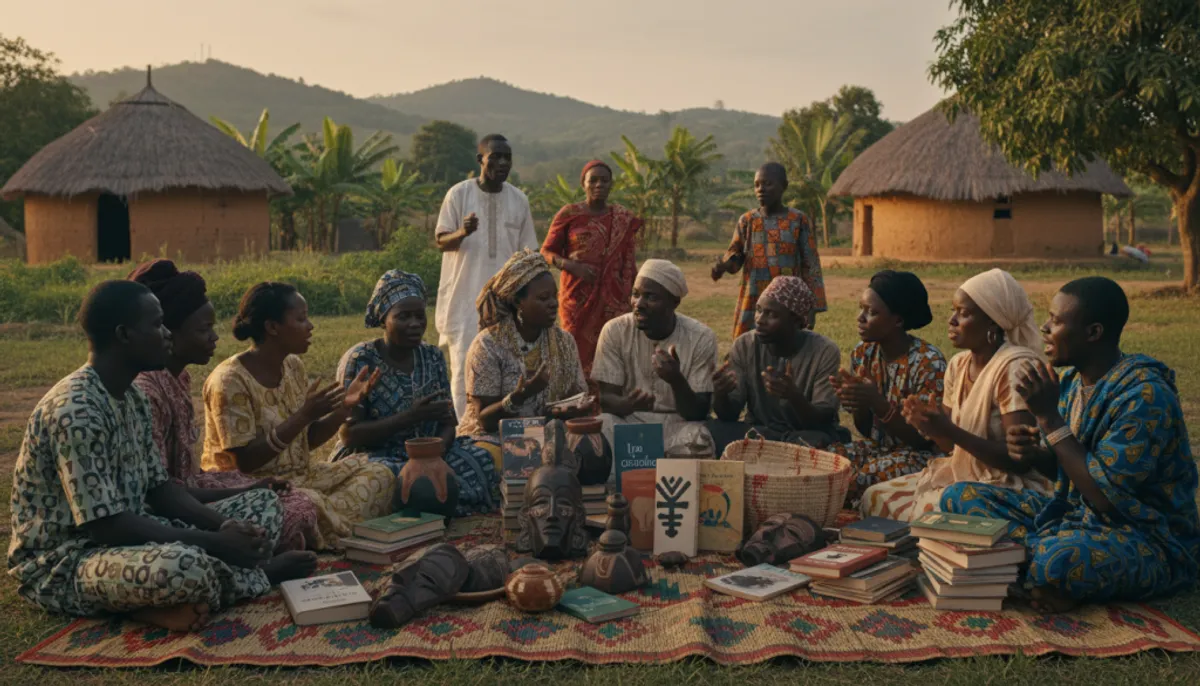
Multilingualism is the norm. Many citizens master three languages or more. This skill facilitates exchanges and strengthens national unity.
The Major Ethnic Groups and Their Beliefs
The sixty ethnic groups share a common territory. Their belief systems illustrate peaceful coexistence.
The main religions are Islam and Christianity. Ancestral animism persists among 2.2% of the population.
These spiritual practices often intertwine. They create a unique religious syncretism in the world.
The Arts and Cultural Expressions in the Ivory Coast
The artistic expressions of the Ivory Coast form a kaleidoscope of creativity. This vibrant heritage is expressed through sound, movement, speech, and material.
Music, Dance, and Performing Arts
The local music offers an immense spectrum. It ranges from traditional rhythms to urban genres like zouglou.
Alpha Blondy has brought reggae to the global stage. His messages of peace resonate well beyond borders.
Dance is a powerful body language. It conveys stories and celebrates community life.
Literature, Comics, and Visual Arts
Literature boasts three generations of authors. Bernard Dadié and Ahmadou Kourouma paved the way.
Writers like Véronique Tadjo and Josué Guébo continue this legacy. Their work explores universal themes.
Comics, with Marguerite Abouet, address everyday life with humor. Aya de Yopougon has become a reference.
Craftsmanship, Sculptures, Masks, and Textile Design
Traditional art shines through its sculptures and masks. The Baoulé, Dan, and Sénoufo peoples are renowned.
The masks actively participate in rituals. The statues, on the other hand, remain still during ceremonies.
Craftsmanship excels in working with wood, bronze, and raffia. It produces both utilitarian and sacred objects.
The local fashion is experiencing remarkable growth. Designers boldly reinvent traditional fabrics.
The Impact of Modernity on Cultural Heritage
In the digital age, ancestral heritage faces new challenges and opportunities. The modern world accelerates the transformation of sometimes millennia-old heritages.
Globalization opens local cultures to external influences. This encounter creates a fascinating and sometimes destabilizing hybridization.
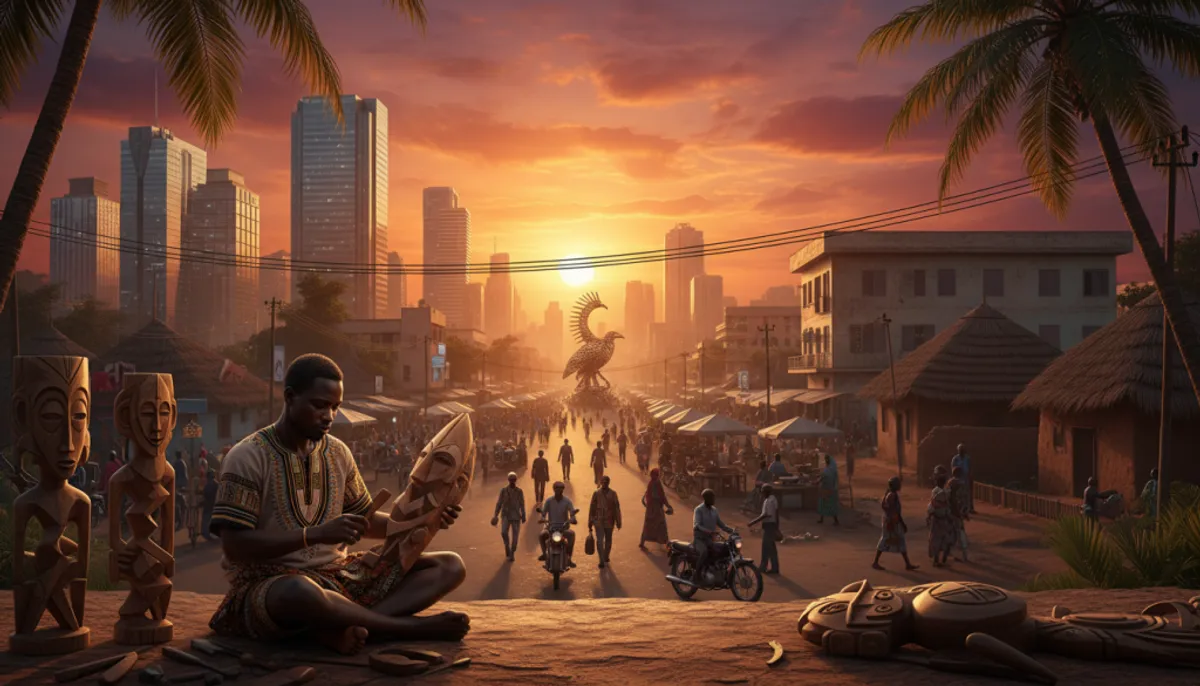
The Transformation of Traditional Practices
Practices are rapidly evolving with urbanization. Young generations in cities create hybrid forms of expression.
Digital technologies play a key role. They allow for the documentation and dissemination of songs and dances on a global scale.
This transformation is not a disappearance. It is a necessary adaptation to remain relevant.
The Hybridization Between Traditional Art and Contemporary Creation
Contemporary artists play a crucial bridging role. They reinterpret masks and patterns in new works.
Festivals like FEMUA illustrate this successful dialogue. They blend ancestral traditions with urban music.
This conscious hybridization preserves the heritage. It makes it attractive to ensure its future transmission in the Ivory Coast.
The Transmission and Evolution of Ivorian Traditions
How do traditions manage to cross centuries and remain relevant today? This vital process ensures the continuity of a unique cultural heritage in Austrian history and West Africa.
It relies on a constant dialogue between generations. Elders and youth collaborate to preserve this precious heritage.
The Mechanisms of Intergenerational Transmission
Traditionally, transmission occurs through oral communication and practice. Elders teach stories, dances, and craft techniques to the younger ones.
This transmission takes place within communities, during daily life. Initiation rites and family ceremonies, along with various rites and ceremonies, play a central role.
They create privileged spaces for the passage of knowledge. Today, formal education complements these methods.
Schools integrate local history and national languages. Museums become spaces for interactive learning.
| Traditional Mechanism | Modern Mechanism | Impact on Transmission |
|---|---|---|
| Oral Transmission and Observation | National School Programs | Structuring and Wide Dissemination |
| Initiation Rites (e.g., Poro) | Museums and Interactive Exhibitions | Contextualization and Accessibility |
| Participation in Community Festivals | Digitalization Projects and Online Archives | Documentation and Sustainability |
The Challenges and Perspectives in a Globalized World
The heritage faces new challenges. Urbanization and global media can threaten minority languages and certain practices.
Local and international initiatives address these issues. UNESCO programs and NGOs help preserve traditions.
The young generations of the country show increasing interest. They participate in a renaissance that reinvents customs.
The success of major festivals and the promotion of craftsmanship testify to this vitality. The future relies on a balance between preservation and creative adaptation.
Conclusion
This exploration concludes with a certainty: a remarkable cultural vitality animates this country. Its cultural heritage, the result of a unique blending, reflects an exceptional ethnic and artistic diversity.
Through music, dance, literature, and arts, the communities express their identity. From renowned authors to creators in fashion, this creativity shines.
Preserving this heritage is crucial for the future. Each festival and work of art strengthens national unity. It transmits these values to future generations.
This cultural heritage is a valuable asset for the Ivory Coast and for West Africa. It enriches global diversity through its originality and life.
FAQ
What are the main ethnic groups in the Ivory Coast and what do they represent?
The country has over 60 ethnic groups, forming a fascinating mosaic. The Akan, Krou, Northern Mandé, and Southern Mandé are among the largest groups. Each brings its own traditions, beliefs, and arts, contributing to the richness of the national heritage. This diversity is experienced daily through languages, festivals, and ancestral rites.
What role do masks play in traditional Ivorian societies?
Masks are much more than art objects. They often embody spirits or ancestors and are central during important ceremonies. Used in ritual dances, they ensure the community's protection, resolve conflicts, or initiate youth. The Mask Festival of Man is a famous event that highlights this living heritage.
How do music and dance express Ivorian identity?
Music and dance are the beating heart of cultural expression. From urban zouglou to traditional balafon rhythms, they tell the story and life of the people. The movements and instruments specific to each region, such as the tam-tam, serve to celebrate, communicate, and perpetuate collective memory across generations.
What languages are spoken in the Ivory Coast today?
French is the official language, used in administration and education. However, the true richness lies in the multitude of local languages spoken daily, such as Baoulé, Sénoufo, or Dioula. This multilingualism reflects the deep diversity of the communities and cultures that make up the country.
How do traditions resist modernity and globalization?
Evolution is constant. While some practices transform, cultural heritage remains dynamic. Many artists and craftsmen create a dialogue between traditional art and contemporary forms. Festivals, family education, and a resurgence of identity pride are key mechanisms to preserve this heritage while adapting it to the current world.
Are there important rites of passage for young Ivorians?
Absolutely. These rites, like the famous Poro initiation among the Sénoufo, mark the transition to adulthood. They often involve secret teachings about responsibilities, the group's history, and societal values. These ceremonies, although less visible in cities, remain fundamental for social cohesion and the transmission of knowledge in many ethnic groups.