
Welcome to your journey towards one of the richest and most fascinating South Africa. Here, ancient customs meet modernity to create a unique heritage that inspires the entire world.
This heritage represents much more than just a simple past. It is a vibrant way of life. It expresses itself through enchanting melodies, energetic dances, and customs deeply rooted in daily life.
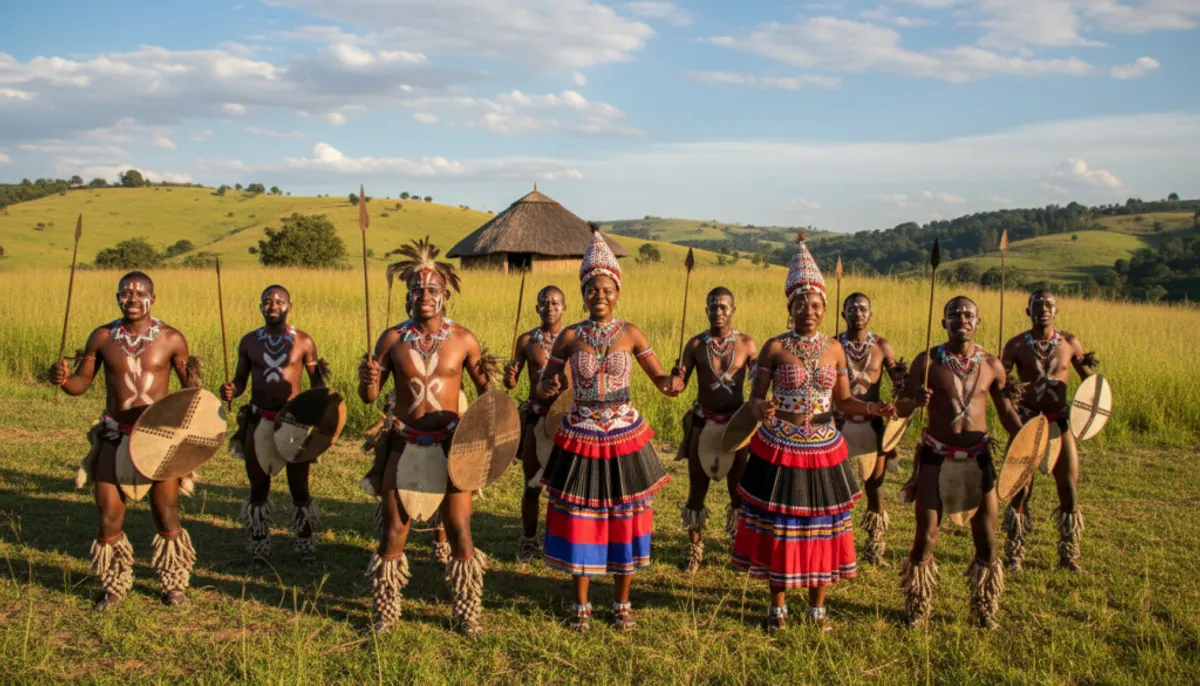
The amaZulu people, which means "the people of the sky," today form the largest ethnic group in the country. More than 10 million people proudly uphold their identity while contributing to the building of the rainbow nation.
This discovery will allow you to understand how a small clan became an influential nation. Their legacy continues to profoundly mark modern South African society.
Prepare to dive into a universe where a warrior history coexists with exceptional artistic creativity. Every element tells a part of the fascinating story of this community.
Key Points to Remember
- The Zulus are the largest ethnic group in South Africa.
- The name "amaZulu" translates to "the people of the sky."
- Their heritage is a dynamic blend of ancient traditions and modern expressions.
- Music and dance are central pillars of identity expression.
- Their traditions are alive and visible in daily life.
- This community is primarily located in the KwaZulu-Natal province.
- Their history shows a remarkable transformation from a small clan to an influential nation.
Origins and History of Zulu Culture
The epic of the Zulus begins with a millennial journey across Africa. Their history dates back to the region of present-day Tanzania, from where they began their migration.
In the 14th century, these populations arrived in South Africa. They settled in what would become KwaZulu-Natal.
| Period | Event | Impact |
|---|---|---|
| Circa 800 AD | Arrival of the Nguni | First settlement |
| 1709 | Foundation of the clan | Official birth |
| 1816-1828 | Reign of Chaka | Decisive unification |
The Beginnings and Bantu Migrations
The beginning of this adventure sees the Bantu peoples moving southward. This migration lasted several years.
The name "Zulu" means "sky" in Nguni dialects. This origin explains the designation "people of the sky."
The Role of King Chaka in Unification
Chaka radically transforms the fate of his people. In just twelve years, he unifies the territories.
His revolutionary military strategy ensures overwhelming victories. The legacy of this leader still marks the history of the region today.
The Zulu Traditions and Customs
Ancestral customs form an essential framework for understanding this community and its rich african cultural heritage. They structure the life of each individual across generations.
Ceremonies, Rituals, and Ancestral Beliefs
Every stage of existence is marked by symbolic practices. The umemulo initiation ceremony celebrates the transition to adulthood.
Traditional weddings are an important occasion for gathering. The entire community participates in these joyful events.
Spirituality is based on the belief in Nkulunkulu, the creator. The ancestors (Amatongo) play a central role in daily life.
Traditional healers, sangomas, and inyangas maintain the connection with the spirits. Their ancestral knowledge heals physical and spiritual ailments.
Traditional Clothing and Symbols
Traditional clothing communicates precise social information. For men, the ibheshu indicates age and status by its length.
Women wear cowhide skirts adorned with beads. Beadwork allows for the expression of feelings and clan belonging.
These clothing traditions evolve over time. They adapt to modern realities while retaining their deep significance.
Music and Dance in Zulu Culture
Vocal harmonies and energetic steps tell the living history of this nation. These artistic expressions cross borders and touch hearts around the world.
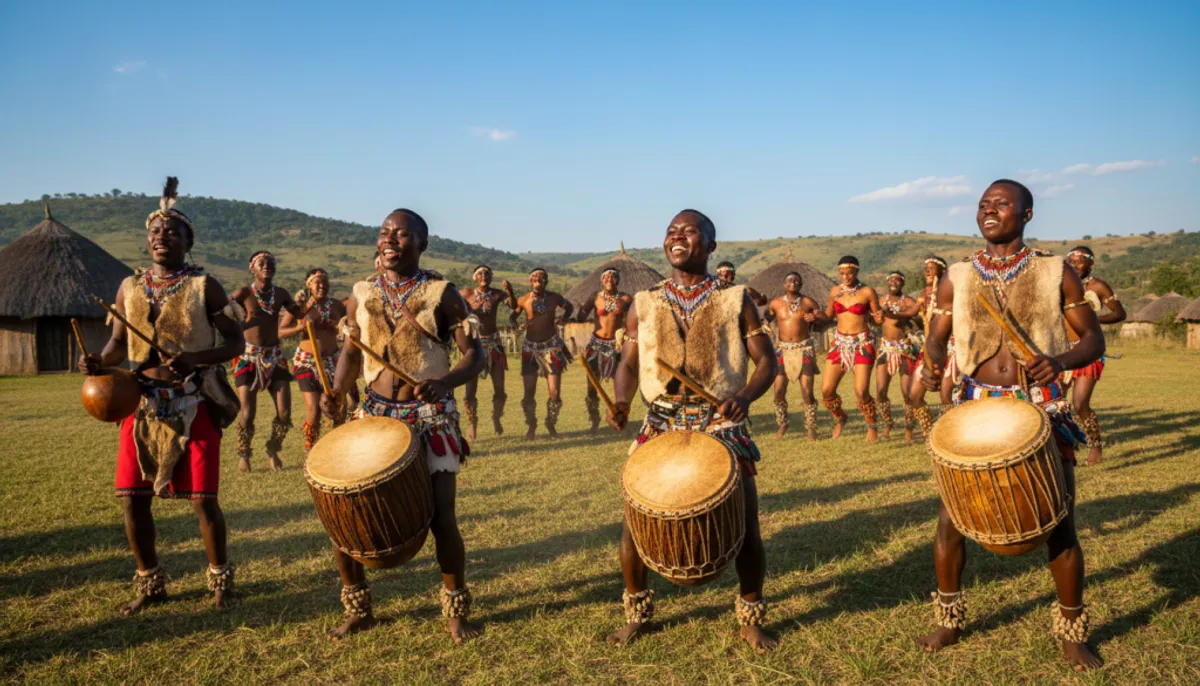
History and Evolution of Traditional Music
The vocal tradition has developed extraordinarily over the centuries. It has integrated European religious songs to create a unique syncretism.
The famous song Siyahamba means "We are walking in the light of God." This a cappella polyphony produces harmonies of striking beauty.
The Impact of International Artists
Johnny Clegg, known as the "white Zulu," popularized this music in the 1980s. His band Juluka blended African songs with electric guitar.
Paul Simon collaborated with Ladysmith Black Mambazo on the album Graceland. Their work revealed the Mbube and Isicathamiya vocal techniques.
| Artist/Group | Contribution | Period |
|---|---|---|
| Johnny Clegg & Juluka | Innovative musical fusion | 1980s |
| Ladysmith Black Mambazo | Traditional a cappella singing | 1980s-present |
| Solomon Linda | Composition of "Mbube" | 1939 |
The song "The Lion Sleeps Tonight" showcases international acclaim. Composed in 1939 by Solomon Linda, it has become a global hit.
Today, these artistic expressions continue to evolve in South Africa and across the world. They inspire new generations of artists.
Zulu Arts and Crafts
The skilled hands of artisans transform simple materials into true works of art, including igbo arts and crafts. This artistic heritage represents an exceptionally rich legacy.Craft Techniques and Weaving
Weaving is distinguished by its intricately patterned rush baskets. These ancestral techniques have been passed down from mother to daughter for generations.
Each shape and color tells a part of this people's story. Pottery and traditional beer brewing complement this craftsmanship.
Beadwork
Beadwork is the most emblematic artistic expression. Artisans meticulously assemble thousands of colored beads.
They create aprons, necklaces, and bracelets worn during special occasions. The patterns communicate coded messages about identity and social status.
| Type of Craft | Materials Used | Main Use |
|---|---|---|
| Weaving | Natural rushes | Baskets and containers |
| Beadwork | Colored beads | Jewelry and accessories |
| Leatherwork | Cow and springbok hide | Clothing and shields |
Men excel particularly in leatherwork. They make shields from cow hide and traditional clothing.
In contemporary South Africa, this craftsmanship is experiencing a remarkable revival. Local markets offer visitors a unique opportunity to discover these techniques.
Artisans perpetuate these traditions while adapting them to modern tastes. Their work captivates international collectors and tourists seeking authenticity.
The Historical and Political Impact
The 19th century marks a turning point in the relations between the Zulus and colonial powers. This period reveals remarkable resistance to European expansion.
Conflicts with Colonizers
The Anglo-Zulu War of 1879 represents a pivotal moment. On January 22, the battle of Isandhlwana sees warriors inflict a humiliating defeat on the British army.
This spectacular victory, dubbed the "African Waterloo," demonstrates their advanced military strategy. Despite traditional weapons, they kill 1300 enemy soldiers.
However, the conflict ends in defeat in July 1879. King Cetshwayo is captured, and the kingdom is divided into thirteen rival entities.
The Influence of Apartheid and South African Politics
Modern history is profoundly marked by apartheid. In 1970, the government created the fragmented KwaZulu bantustan.
Hundreds of thousands of people were forcibly displaced from their ancestral lands. This policy aimed to weaken their political unity.
The founding of the Inkatha Freedom Party in 1975 accentuated internal divisions. Bloody violence erupted with the ANC until the first democratic elections.
These events illustrate how colonial empire and apartheid shaped political destiny, including the narrative of african history. Resilience in the face of these challenges continues to forge collective identity today.The Pillars of Zulu Culture
The fundamental principles that structure this society have allowed its survival through the centuries. These pillars represent the very essence of collective identity, including the unique aspects of hausa architecture that reflect their cultural heritage.
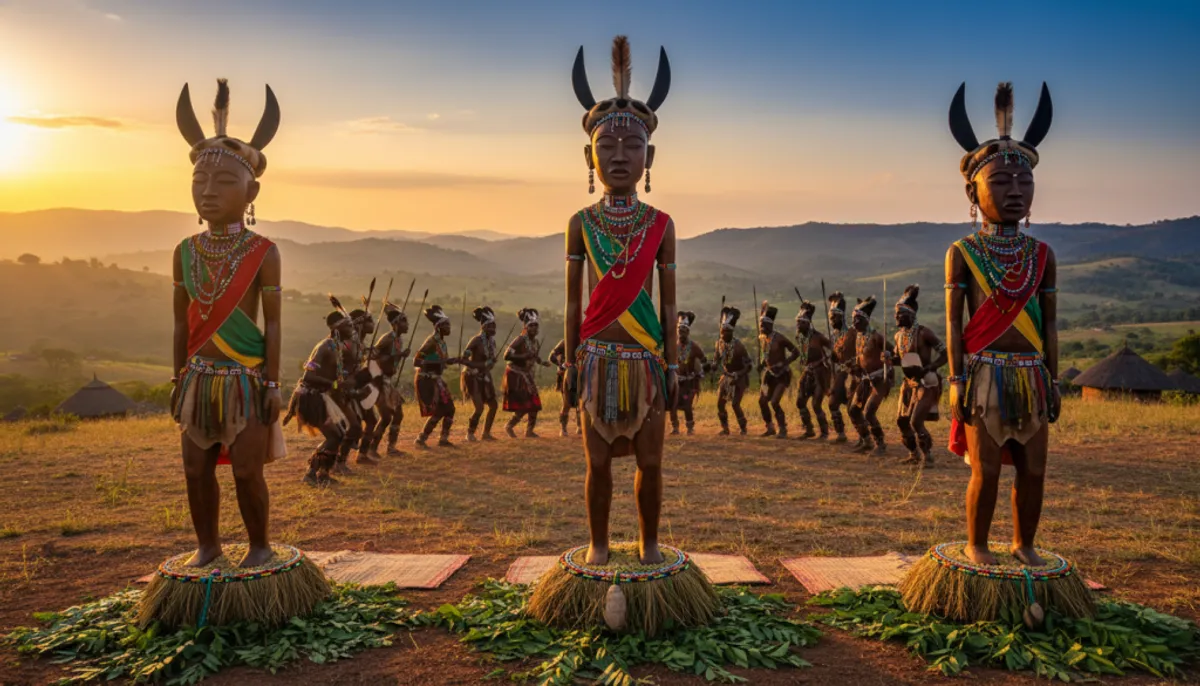
The extended family traditionally forms the basis of social organization. Each member plays a specific role for the common good.
Values and Intergenerational Transmission
The departure of men for work has disrupted the family unit. Polygamy, once common, has become exceptional today.
The transmission of values occurs through elders and initiation ceremonies. Respect for ancestors guides important decisions in the community.
Orality occupies a central place in this transmission. Stories and proverbs convey ancestral codes of conduct.
Values such as ubuntu (humanity towards others) and solidarity form the moral foundation. These principles continue to inspire modern behaviors.
Despite contemporary challenges, this culture shows remarkable resilience. Families keep their traditions alive through creative adaptations.
The Zulu Language and Oral Expression
The linguistic richness of South Africa finds one of its most vibrant expressions in isiZulu. This language represents much more than just a simple tool for daily communication.
IsiZulu and Its Importance in Identity
With over 9 million native speakers, isiZulu is the most spoken language in this country. Its official status strengthens its presence in education and media.
This Bantu language has preserved unique click consonants. These distinct sounds create a bridge between different populations of the Nguni group.
| Linguistic Feature | Historical Origin | Cultural Importance |
|---|---|---|
| Click Consonants | San and Khoi languages | Connection to the first inhabitants |
| Bantu Structure | Ancient migrations | Belonging to the Nguni sub-group |
| Written Standardization | European missionaries | Preservation of heritage |
Songs, Stories, and Oral Traditions
The oral tradition occupies a fundamental place in this culture. Epic tales and proverbs transmit ancestral knowledge.
The izibongo, complex praise poems, celebrate historical heroes. These compositions use a rich metaphorical language that requires great mastery.
The vitality of this expression is also manifested in contemporary music. IsiZulu dominates current musical productions in South Africa.
The Contemporary Influence of the Zulus in South Africa
The Zulu presence in contemporary South African society reflects a remarkable adaptation to modern challenges. This people represents about 20% of the population of the country.
The Place of the Zulus in Modern Society
After the end of apartheid, the Zulus found their place in the rainbow nation. Urbanization attracted millions of men and women to the major cities.
The election of Jacob Zuma in 2009 marked an important symbolic turning point. The province of KwaZulu-Natal retains a symbolic royalty.
The International Influence of Zulu Culture
The world is discovering this rich tradition through tourism and media. Villages like Shakaland allow visitors to immerse themselves in this fascinating universe.
Durban airport is now named after King Chaka. This international recognition shows the vitality of this millennial heritage.
Conclusion
At the end of this exploration, we measure the importance of a heritage that continues to inspire the world. This yoruba culture has managed to traverse the centuries while retaining its unique identity.The Zulu people demonstrate remarkable resilience. They have transformed historical challenges into vibrant strengths for the future.
Artistic expressions shine today thanks to their authenticity. Music, dance, and craftsmanship captivate an international audience.
Traditional values offer valuable reference points in our modern world. The isiZulu language ensures the transmission of this heritage.
This rich culture evolves while remaining true to its roots. The Zulu people continue to write their history through generations.
FAQ
Who is the most famous king in the history of the Zulu kingdom?
King Chaka Zulu is the most emblematic figure. In the early 19th century, he unified many clans to create a powerful empire in South Africa. His military genius, particularly during the battle of Isandhlwana, marked history.
What are the most well-known Zulu crafts?
Glass bead items are highly reputed. Each color and pattern has a specific meaning, allowing for storytelling or indicating social status. Weaving and animal hide shields are also strong symbols of this people.
How has the isiZulu language survived through the centuries?
Thanks to a strong oral tradition! Stories, songs, and proverbs have been passed down from generation to generation. Today, isiZulu is one of the most spoken languages in South Africa, a true pillar of national identity.
What has been the impact of apartheid on the Zulu population?
This policy had profound consequences. It divided territories and limited the rights of this ethnic group. Despite this, the nation preserved its traditions, including songhai traditions, and now plays a crucial role in modern South African society.
Is Zulu culture still alive today?
Absolutely! It shines well beyond the KwaZulu-Natal region. Music, like that of Ladysmith Black Mambazo, and traditional dances are known worldwide, showcasing the vitality of this unique heritage.