
Welcome to a captivating guide that opens the doors to one of the most influential cultures in West Africa. This journey invites you to discover a universe rich in traditions and history.
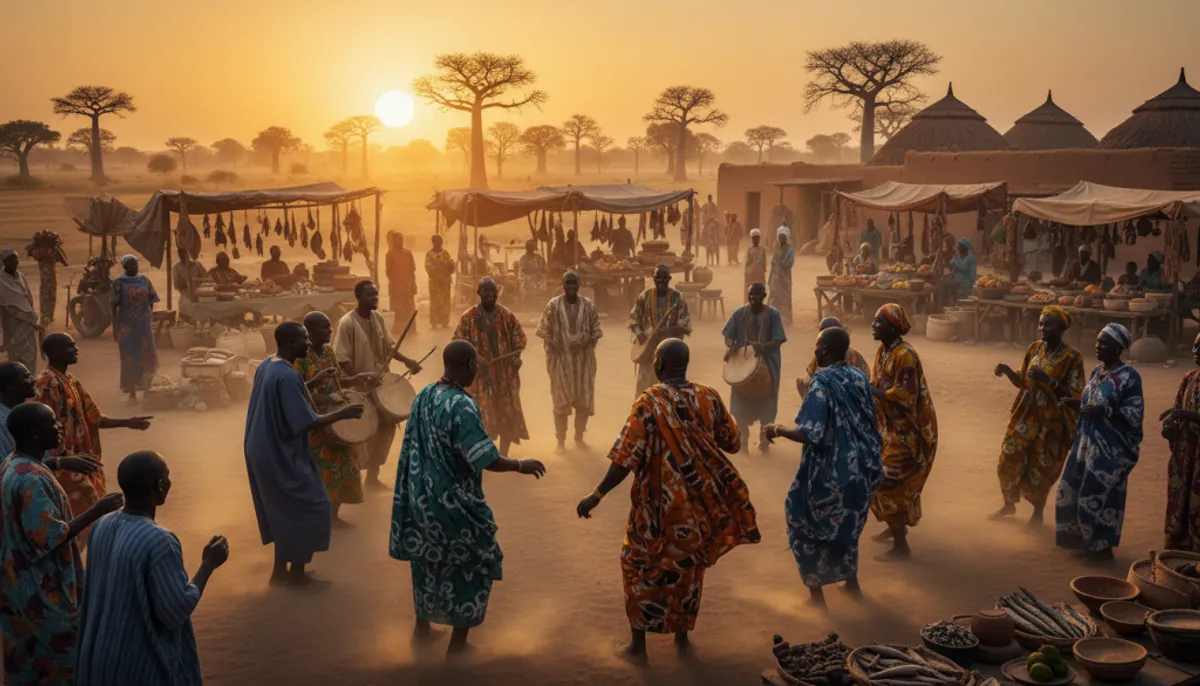
The Wolof people, the majority in Senegal, have profoundly shaped the identity of an entire nation. Their influence extends well beyond current borders.
You will discover how this community has forged a unique heritage. We will explore its fascinating history, ancestral customs, and deeply rooted values.
This journey will also show you how traditions have evolved in the face of modernity. A remarkable adaptation that allows for the preservation of a living heritage.
Whether you are passionate about history or simply curious, this immersion holds beautiful surprises for you. Prepare for a most enriching human adventure.
Key Points to Remember
- Discovery of a major culture in West Africa
- Importance of the Wolof people in Senegalese identity building
- Exploration of ancestral traditions and language
- Adaptation of heritage to contemporary challenges
- International influence of this community
- Comprehensive guide for an authentic immersion
Introduction and General Overview
Let’s dive into the demographic universe of this West African community. The Wolof people represent a major force in the region.
In Senegal, this ethnic group constitutes the absolute majority with 43.3% of the population. This represents over 5 million people according to the latest census.
| Country | Wolof Population | Percentage | Main Regions |
|---|---|---|---|
| Senegal | 5,335,968 | 43.3% | Djolof, Cayor, Baol |
| The Gambia | 12-20% | 12-20% | Banjul, coastal areas |
| France | 71,000 | Diaspora | Paris region |
| Italy | 125,000 | Diaspora | Industrial North |
The Wolof language dominates exchanges in Senegal. Nearly 85% of the inhabitants speak it fluently.
This Wolof language even surpasses the use of French in daily life. Its influence extends well beyond borders.
The diaspora maintains strong ties with the country of origin. Community networks facilitate this transnational connection.
Understanding this Wolof society allows one to grasp the dynamics of West Africa. Its social role remains fundamental.
Origins and History of the Wolof
The exploration of the origins of this West African community reveals surprising links to ancient Egypt. This history dates back centuries of fascinating migrations.
The Early Migrations and Historical Influences
According to Cheikh Anta Diop, the ancestors came from the Nile Valley. The term "walaf" would mean "those coming from the shore."
The historical sources mention six major migrations. They connect the Nile to the Senegal River.
| Period | Major Event | Direction | Influence |
|---|---|---|---|
| Before the 11th century | Coexistence with Berbers | Southeast Mauritania | Bafour Culture |
| 11th century | Almoravid Pressure | Towards present-day Senegal | Religious changes |
| 13th century | Foundation of the Djolof Empire | Central region | Political unity |
The Evolution of the Wolof People Through the Centuries
The political history reaches its peak in the 13th century. The Djolof Empire unifies several vassal states.
“The reading of origins reveals deep connections with Nilotic civilizations.”
European contacts begin as early as 1455. The Portuguese use various names before settling on the current one.
This evolution shows the rich origin of this people. Their journey is a testament to remarkable adaptation.
The Wolof Culture: Heritage and Traditions
The cultural heritage of this society reveals an exceptional capacity for integration. This community far exceeds its original ethnic boundaries.
The collective identity unites different components of Senegalese society. This gradual assimilation creates a determining factor in national construction.
The research of Abdoulaye-Bara Diop sheds light on fundamental social structures. Kinship, alliance, and family constitute the primary foundation.
The castes and political orders form the secondary organization. This complex system has structured community relations for centuries.
Oral transmission remains particularly vibrant thanks to the géwél. These memory keepers perpetuate historical narratives and genealogies.
Hospitality (teranga) and honor (jom) animate social interactions. These ancestral values transcend time with remarkable adaptability.
Craftsmanship, music, and dress codes enrich this traditional universe. Each domain contributes to defining the group's identity.
This people preserves its traditions while integrating other ethnicities. Its linguistic and cultural influence surpasses traditional divides.
Linguistic Heritage and the Wolof Language
At the heart of Senegalese identity lies a language with multiple influences. This linguistic heritage unites different communities across the country.
Nearly 85% of the population understands this national language. It functions as a mother tongue for millions of people.
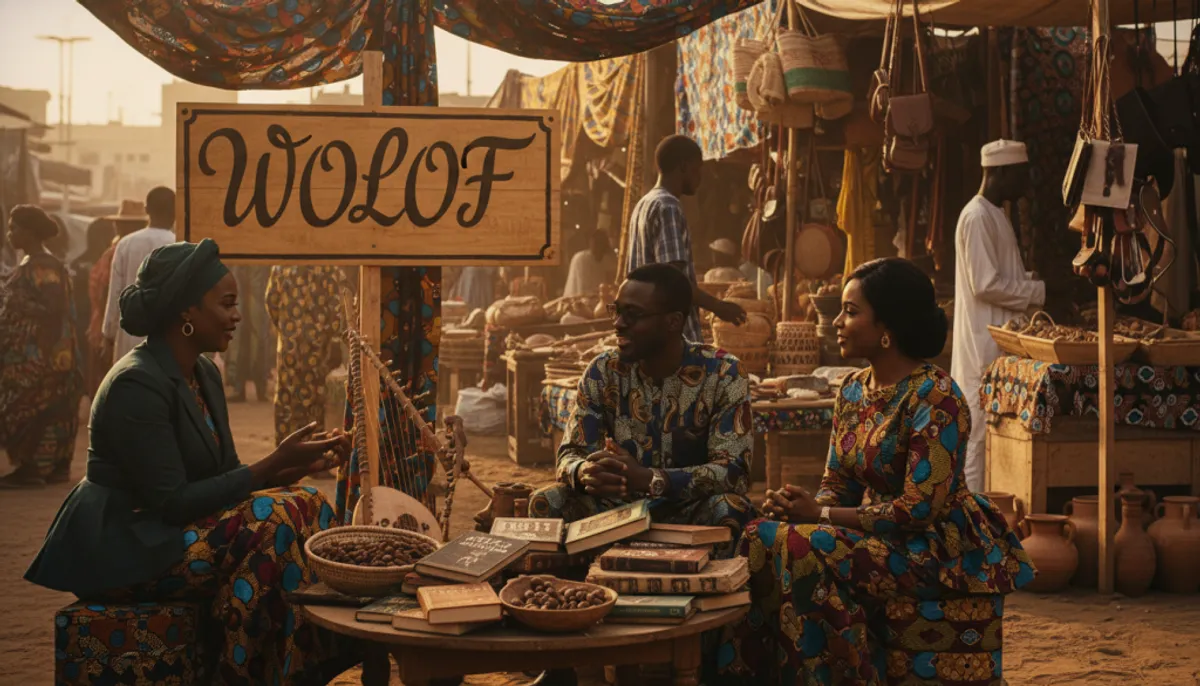
The Influence of Arabic and Other Languages on Wolof
The Wolof language incorporates elements from various languages. Arabic has particularly influenced its religious and commercial vocabulary.
| Source Language | Type of Influence | Examples of Domains |
|---|---|---|
| Arabic | Religious vocabulary | Prayer, commerce, education |
| French | Administrative terms | Administration, technology |
| English | Modern expressions | Media, internet |
“Wolof naturally absorbs external influences while maintaining its fundamental structure.”
The Phenomenon of "Wolofization" in Urbanization
Urbanization accelerates the adoption of this language. In large cities, it becomes essential for social integration.
Rural migrants quickly adopt it. This people sees its language establish itself as a lingua franca.
The process transforms the national linguistic landscape. The Wolof language now competes with French in many areas.
Religion and Spirituality in Wolof Society
Spirituality is a fundamental pillar of social organization within this community. It unites members around common values.
Islam and Sufi Brotherhoods
This society today counts 95% Muslims. Islam influences all aspects of daily life.
Four major Sufi brotherhoods structure the religious landscape. Each has its own specificities and history.
| Brotherhood | Founder | Particularity | Influence |
|---|---|---|---|
| Tijaniyya | Ahmad al-Tijani | Spiritual rigor | Panafrican |
| Mouridiyya | Cheikh Ahmadou Bamba | Integral lifestyle | Economic |
| Qadiriyya | Abd al-Qadir al-Jilani | Antiquity | Historical |
| Layène | Limamou Laye | Local prophecy | Regional |
“Mouridism transcends mere religious practice to become a true art of living.”
Traditional Rituals and the Heritage of Ancestral Beliefs
Despite Islamization, pre-Islamic traditions persist. Syncretism characterizes this unique spirituality.
The téré talismans protect against invisible forces. Their use remains common among the population.
The Lébous group particularly preserves these practices. They harmonize Islam and ancestral heritage.
A few Christian minorities complete this religious landscape. This diversity testifies to the openness of this people.
Social Structures and Traditional Castes
The caste systems have defined interactions within this community for centuries. These complex structures organize daily life according to ancestral rules.
Social Hierarchy and Organization of Castes
At the top are the géer, the free men who are not castrated. This category is divided into three distinct groups.
| Category | Social Role | Main Functions |
|---|---|---|
| Garmi | Royal aristocracy | Kings, notables, war chiefs |
| Diambour | Non-aristocratic elite | Marabouts, merchants, landowners |
| Badolo | Free peasants | Agriculture, land work |
The artisans ñeeño form a particular category. Blacksmiths, shoemakers, and weavers practice strict endogamy.
“The griots Gëwël master the art of speech and preserve collective memory.”
Surnames and Their Importance in Society
Family names reveal belonging to different groups. More than a hundred surnames exist.
The joking kinship kal structures humorous relationships. It unites certain families like the Niang and Dieng.
These social structures show the complex organization of this society. The people maintain these traditions with adaptability.
The Influence of Cheikh Anta Diop on Cultural Research
The revolutionary theories of this Senegalese Egyptologist opened new historical perspectives. Cheikh Anta Diop proposed a bold vision of African origins in his fundamental research.
His landmark works like Negro Nations and Culture establish controversial links with the Nile Valley. Cheikh Anta used the term "walaf" to refer to this people.
The etymology suggested a Nilotic origin according to his analyses. These historical sources have inspired several generations of African researchers.
Aboubacry Moussa Lam and Théophile Obenga continued this research. However, their Afrocentric approach faced academic criticism.
“The work of Cheikh Anta Diop has transformed our perspective on African history.”
Linguists emphasize that ancient Egyptian belongs to a different language family. Despite these debates, the intellectual influence of Cheikh Anta remains considerable.
His works encourage a reinterpretation of sources from an African perspective. This methodology values often neglected oral traditions.
Today, the sources mobilized by Cheikh Anta Diop continue to fuel scientific discussions. His intellectual legacy still inspires new generations.
Modernization: Urbanization and Evolution of Traditions
In the face of massive rural exodus, large urban areas become melting pots of new identity dynamics. This transformation profoundly affects traditional social organization.

Contemporary Challenges and Adaptation of Practices
Massive urbanization modifies the geographical conditions of life. The population must adapt to new economic realities.
This urban fact significantly accelerates the process of "Wolofization." In large cities, mastering this language becomes essential for social integration.
| Main City | Estimated Population | Economic Specialization | Impact on Traditions |
|---|---|---|---|
| Dakar | 3+ million | Commerce, services, administration | Strong modern adaptation |
| Thiès | 600,000 | Industry, railway | Blend of tradition-modernity |
| Saint-Louis | 250,000 | Tourism, fishing | Partial preservation |
| Kaolack | 500,000 | Commerce, agriculture | Progressive evolution |
The Impact of Urbanization on Traditional Lifestyles
The geographical conditions of urban areas favor interethnic mixing. National consciousness gradually surpasses ethnic identities.
This people demonstrates remarkable adaptability. They reinvent their traditions while preserving their identity.
“Urbanization creates a new social grammar where the Wolof language becomes the unifying cement.”
The urban society diversifies its professional activities. Beyond agriculture, professions multiply across all sectors.
This fact profoundly transforms family structures. Community solidarities evolve in the face of economic realities.
Arts, Crafts, and Oral Expressions Among the Wolof
Artistic creations and traditional craftsmanship offer a fascinating window into the creative universe of this community. These material and oral expressions reveal an exceptional heritage richness.
Traditional Trades and Craftsmanship
Among the Wolof, craftsmanship is organized according to a system of specialized castes. Each group possesses skills passed down through generations.
The Teugg or Balla excel in metalwork. They create weapons for warriors and precious jewelry for ceremonies.
The women of this group practice pottery and hair art. Their elaborate hairstyles, documented by David Boilat, impress with their complexity.
The Laobé, wood artisans of Fulani origin, carve utilitarian and decorative objects. The Woudé, on the other hand, master leatherwork.
Textile manufacturing involves collaboration between men and women. The Rabb weave cotton grown by men, creating renowned indigo fabrics.
Music, Poetry, and the Role of Griots
Oral expression is a fundamental pillar of Wolof society. The Gëwël griots are its undisputed guardians.
These masters of speech perfectly master their mother tongue. They play the xalam and tama during important ceremonies.
Their role goes beyond mere musical animation. They preserve collective memory and genealogies of this people.
Among the Wolof, music and poetry form an inseparable art. Epic narratives are accompanied by sophisticated instrumentation.
This oral tradition uses a language rich in imagery. It transmits historical values and social commentary with great finesse.
The Place of Family and Cultural Values
Family ties represent the central pillar around which all community life is organized. This extended family has structured social relationships for generations.
The organization relies on a unique dual system of filiation. Each branch transmits distinct yet complementary elements.
| Family Branch | Transmission | Specific Elements |
|---|---|---|
| Guegno (paternal) | Name, social status | Sant, totem animal, condition |
| Meen (maternal) | Character, spirituality | Jiko, Deret, Soox, Xel, ndëmm |
The Jom, Teranga, and Values of Hospitality
The jom embodies all cardinal virtues. Courage, respect, and generosity guide each member of the family.
The teranga symbolizes the exceptional welcome reserved for visitors. This value is an integral part of collective identity.
Respect for elders remains fundamental in this society. They embody wisdom and the link to traditions.
The Traditional Role of Women and Social Changes
Islamization has modified the family structure towards a patrilineal system. However, women retain an honored place.
They practice an Islam that grants them remarkable freedom. Their role evolves with contemporary urban transformations.
The language conveys these values through proverbs and expressions. It constantly reminds of the importance of jom in each family.
These traditional structures now face new challenges. Urbanization alters the respective share of different generations.
Clothing Customs and Rites of Passage
Beyond their practical function, traditional clothing constitutes a true symbolic language. They reveal social belonging and important life stages.
Meanings and Symbols in Traditional Attire
The garments of this people subtly communicate status and age. Every detail of clothing has a precise meaning.
Women once practiced gum tattooing. This technique accentuated the whiteness of teeth.
The use of henna for hands and kohl for eyes complemented this refined aesthetic. The moussor, headscarf, is an integral part of women's attire.
| Clothing Element | Social Meaning | Moment of Use | Concerned Category |
|---|---|---|---|
| Silver bracelet | First maternity | Rite of passage | Women |
| Embroidered boubous | Aristocratic status | Official ceremonies | Men |
| Dial-diali (beads) | Traditional adornment | Festive events | Women |
| Turban/hats | Religious belonging | Daily life | Men |
Women’s hairstyles represent a complex art. They are adorned with cowries, pieces, and jewelry according to family means.
The adornment includes earrings, necklaces, and leather wallets. These elements vary according to the social group of belonging.
Terms in the local language like "mboubb" refer to traditional boubous. These outfits retain their importance during contemporary ceremonies.
The Wolof Diaspora and Its Influence in France
Beyond the African continent, this population has established influential diasporic networks. Expatriation to different countries around the world reflects a remarkable migratory dynamic.
In France, approximately 71,000 people form a dynamic community. The Paris region concentrates the majority of this French settlement.
Expatriation and the Influence of Cultural Exchanges
Italy hosts the largest European population with 125,000 members. Mouride networks facilitate this transnational settlement.
This migratory system organizes efficient commercial channels. The language serves as a means of professional communication.
In the United States, about 95,000 people represent a significant part of the African diaspora. New York and other metropolises house these active communities.
Other European countries like Spain count 50,000 members. Germany and the United Kingdom complete this diasporic landscape.
Within West Africa, migration affects The Gambia, Mali, and Côte d'Ivoire. Each settlement site maintains strong ties with Senegal.
The Wolof people preserve their traditions across generations. Baptisms and weddings recreate authentic cultural spaces abroad.
Exchanges mutually enrich communities. Financial transfers and innovations circulate between continents.
This presence gradually transforms identity into a transnational phenomenon. Geographical borders become less defining.
Internet and social networks facilitate permanent connection. Transmission to young generations born abroad intensifies.
Conclusion
Our journey through the Wolof universe comes to an end. This exploration reveals a people of remarkable vitality.
The Wolof people represent the majority in Senegal. Their influence extends throughout West Africa.
The Wolof language functions as a regional lingua franca. It unites different communities beyond ethnic origins.
This society demonstrates exceptional adaptability. Tradition and modernity coexist harmoniously.
The Wolof people continue to enrich the West African cultural landscape. Their future looks promising.
FAQ
What is the origin of the Wolof people?
The first groups seem to have originated from the Senegal River valley. Their history is marked by migrations and exchanges with other West African societies, gradually forming a distinct identity.
What is the status of the Wolof language today?
It is the most spoken national language in Senegal, even by those for whom it is not the mother tongue. This phenomenon, linked to urbanization, reinforces its unifying role in the country.
How is traditional society organized?
It was structured around a social hierarchy comprising free men, specialized artisans, and griots. This caste organization influenced trades and alliances.
Who was Cheikh Anta Diop and what is his connection to this population?
He was a great Senegalese historian and scientist. His research profoundly impacted studies on the origins of African civilizations, offering a new reading of the history of this region.
What are the fundamental cultural values?
The jom (dignity, honor) and teranga (legendary hospitality) are pillars. These principles guide social relations and the welcoming of guests, forming an integral part of the heritage.
How do traditions resist modernization?
Evolution, particularly in large cities, presents challenges. However, there is strong adaptation, where ancestral practices coexist with contemporary lifestyles, thus preserving a living heritage.