
Welcome to a journey into the heart of a fascinating culture, born several millennia ago. Its roots run deep into the ancient civilization of the Indus Valley. This unique richness continues to live and evolve today.
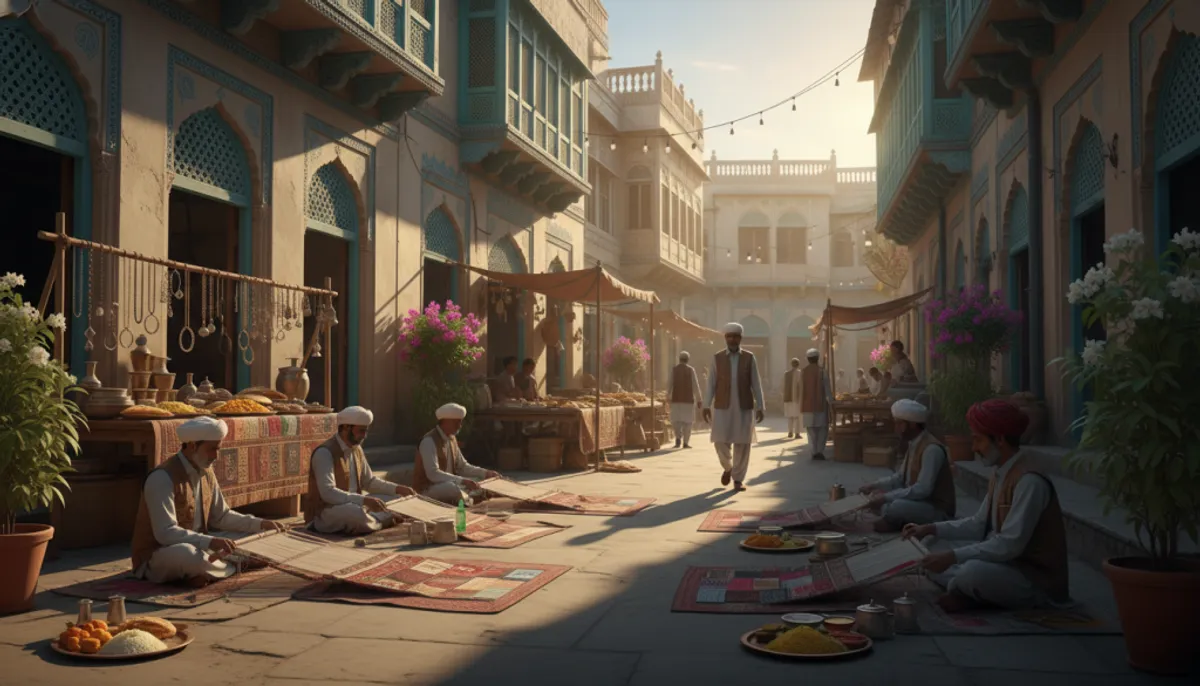
Sindh, a region of Pakistan, owes its distinctive character to its geography. A vast desert, the majestic Indus River, and the Arabian Sea have shaped its development. These natural elements have fostered maritime traditions and an adapted way of life.
The unique climate and local resources explain why this identity stands out sharply from its neighbors. It has its own language, folklore, and social customs. This uniqueness is the result of a history marked by constant exchanges.
Over the ages, this precious heritage has managed to preserve its ancestral practices while integrating external influences. Today, the Sindhi diaspora, scattered across the world, plays a crucial role in supporting cultural institutions that keep these traditions alive and create a bridge between the past and the present. A thorough safety culture analysis can further enhance our understanding of how these practices are maintained and adapted in contemporary contexts.
Key Points to Remember
- Sindhi culture finds its origins in the ancient civilization of the Indus Valley.
- Geography (desert, Indus River, Arabian Sea) has profoundly influenced its development.
- It distinguishes itself from neighboring cultures through its climate, resources, and history of exchanges.
- This heritage has evolved by preserving its traditions while adapting to external influences.
- The global Sindhi diaspora actively contributes to the sustainability of this unique culture.
- Its identity is marked by distinct folklore, spirituality, and craftsmanship.
Introduction to Sindhi Culture
Let us dive into the sources of an identity shaped by centuries of history and exchanges. This culture dates back to a distant past, with roots anchored in the ancient civilization of the Indus Valley.
Archaeological research from the 19th and 20th centuries has revealed fascinating aspects of social life. They show how the people developed unique agricultural and artisanal practices. Their existence was closely linked to their natural environment.
This living tradition represents a complex system of values and beliefs. It has evolved while preserving its distinctive character. Language, music, and poetry form a coherent whole.
The heritage of this civilization demonstrates remarkable continuity. The people of Sindh have managed to integrate various external influences. Their culture remains dynamic and adaptive.
This introduction allows us to appreciate the richness of the traditions discussed in the following sections. It reveals how a millennia-old heritage continues to inspire current generations.
The Ancient Origins of Sindh and the Indus Civilization
The roots of Sindh delve into a history several millennia old. This region was the cradle of a remarkable civilization that shaped its unique identity.
Mohenjo-Daro and its Archaeological Discoveries
Mohenjo-Daro represents one of the jewels of the Indus Valley. Excavations have uncovered a sophisticated city dating back approximately 5000 years ago. Its urban plan reveals an advanced social organization.
Archaeologists have discovered ingenious drainage systems and valuable artifacts there. These objects testify to the high technical level of this valley civilization.
Ranikot Fort: A Symbol of Millennia-Old Heritage
Ranikot Fort impresses with its monumental scale. Its walls extend over 20 kilometers, making it the largest fort in the world.
This majestic structure embodies the continuity of the Indus Valley heritage. It now attracts visitors eager to discover this exceptional heritage.
These archaeological sites are not mere remnants. They constitute the living foundations of a civilization that still influences the region after several millennia.
The Historical Foundations of Sindhi Culture
The history of Sindh is a complex tapestry woven by centuries of external influences. This rich history truly begins with the arrival of Islam in the 8th century.
Arab and Colonial Influences
The Arab conquest led by Muhammad bin Qasim profoundly transformed this region. Contemporary intellectuals offer a nuanced perspective on this event.
They describe the Arab commander as a conqueror rather than a liberator. Nevertheless, this period gave rise to remarkable cultural developments.
The Sindhi language was the first Eastern language to receive a translation of the Quran. This fact attests to its intellectual importance from these early years.
The British colonial period also left a lasting mark. It created social tensions that still influence the Pakistani nation today.
The Legacy of Local Dynasties
Several dynasties have successively ruled this province. Each has contributed uniquely to enriching the local heritage.
| Dynasty | Period | Major Contribution |
|---|---|---|
| Rai | 6th-8th centuries | Administrative foundations |
| Soomra | 11th-14th centuries | Agricultural development |
| Samma | 14th-16th centuries | Distinctive architecture |
| Kalhora | 18th century | Patronage of the arts |
| Talpur | 19th century | Colonial resistance |
These various influences have layered upon local traditions, including cultural activities in france. They have created the cultural mosaic we know today.
Understanding this complex history is essential to appreciate the identity of the people of this region. Their heritage continues to evolve after so many years.
The Richness of Sindhi Literature and Poetry
The Sindhi literary tradition shines like a precious jewel of the Indus heritage. This artistic expression dates back millennia and continues to inspire.
Evolution of Oral and Written Poetry
Sindhi poetry began as an oral tradition a thousand years ago. The verses relied on folk tales passed down from generation to generation.
Two original forms of poetry characterize this tradition: the bait and the Waei. Since the 1940s, poetry has incorporated global influences such as the sonnet.
Iconic Figures and Literary Traditions
Shah Abdul Latif Bhittai and Sachal Sarmast are revered masters. Their mystical works deeply touch the hearts.
The Sindhi language possesses a distinctive literary color. It stands out among other languages in the region for its richness in prose and poetry.
Ancient books on astronomy and medicine testify to this intellectual tradition. Literature remains a central pillar of regional identity.
The Musical Heritage and Artistic Expressions of Sindh
At the heart of Sindh's artistic expressions, music holds a privileged place. This ancestral art unites communities and conveys deep spiritual values.
Sufi and Traditional Music
Sufi music represents the soul of this musical tradition. It is performed in sacred shrines during mystical ceremonies. These performances create a unique spiritual connection.
Abida Parveen, a prominent figure, has popularized this heritage worldwide. Her visit to Oslo in 2007 demonstrated the universality of this art. The people of Sindh recognize its importance.
| Musical Form | Context | Characteristics |
|---|---|---|
| Sufi Music | Shrines and dargahs | Mystical, devotional |
| Folk Music | Community gatherings | Rhythmic, narrative |
| Contemporary Music | Studios and stages | Fusion, modern |
These artistic expressions preserve identity while evolving. They create bridges between tradition and modernity.
Cultural Festivities and Celebrations
Festive celebrations are a vibrant pillar of regional identity, reflecting various american traditions. They bring communities together around shared symbols.
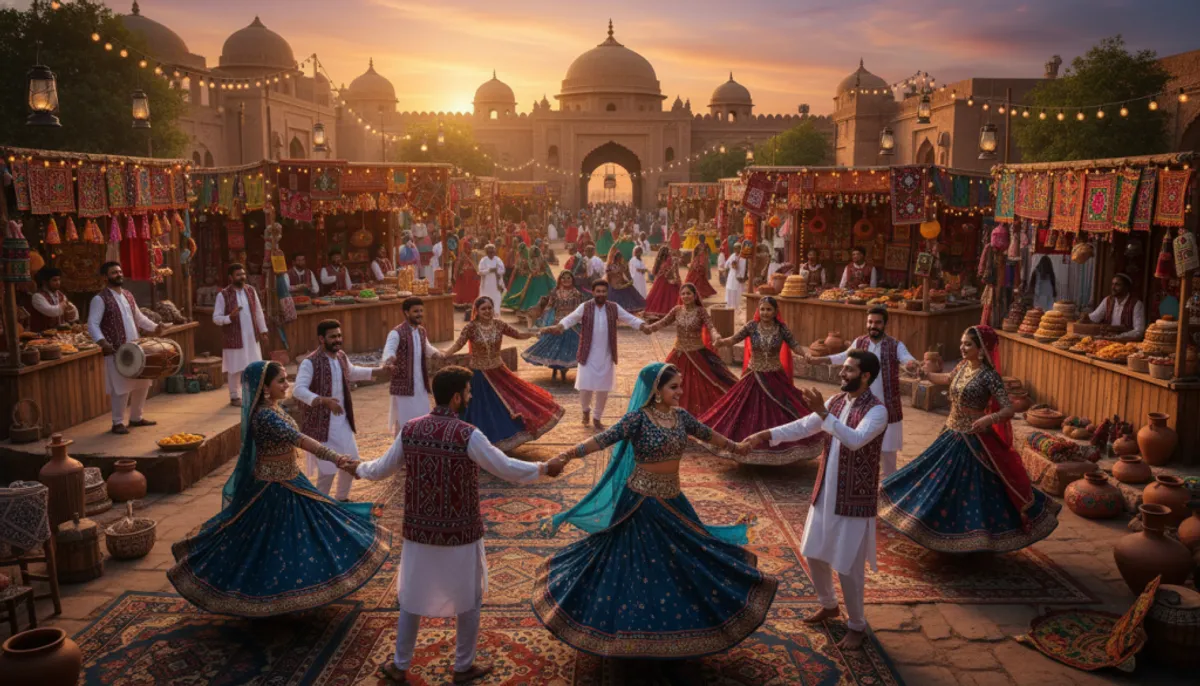
These events create exceptional moments of unity. They allow ancestral values to be passed on to younger generations.
Sindhi Cultural Day (Ekta Day) and its Manifestations
The Sindhi Topi Day represents a major event each year. Set on the first Sunday of December, this Topi Day was initiated by Dr. Sarang Ansari.
This day emerged in 2009 as a response to criticism. It now celebrates identity pride worldwide.
Participants wear the Ajrak and the Sindhi Topi with pride. Monuments are illuminated with traditional patterns.
| Element | Meaning | Manifestation |
|---|---|---|
| Ajrak | Textile heritage | Urban decoration |
| Sindhi Topi | Identity symbol | Collective wearing |
| Musical Programs | Artistic expression | Gatherings |
| Global Celebrations | Unity of diaspora | International events |
Other Festivals and Traditional Rituals
The annual calendar includes several important festivals. Each day has its own specific traditions, including maratha traditions that highlight the rich cultural diversity of the region.
These celebrations punctuate the year with joyful moments. They strengthen community ties every year.
The Topi Day remains the most publicized, symbolizing peaceful cultural resistance.
Daily Rituals and Ancestral Practices
The rhythm of daily life in Sindh revolves around ancestral practices that weave a deep connection between generations. These repeated gestures mark the passage of time and create a unique continuity.
Women play an essential role in preserving these customs. They pass on valuable knowledge from mother to daughter.
Ceremonies Related to Life Cycles
The Sagra, or sacred thread, represents an important tradition. The wives of the Bhaibands fasted for four Mondays in the month of Sawan for the health of their husbands working abroad.
After these days of devotion, they received the sacred thread on their wrist during a ceremony called Bandhan. This practice illustrates the strength of family bonds.
The Mahalakshmi-a-jo-Sagro consisted of 16 bands and spanned 17 days. Regular fasting was an integral part of daily spirituality.
The Teejri festival transformed the month of Sawan into a joyful celebration. Women decorated their hands with Mehndi and sang love songs.
These simple yet profound rituals keep a rich popular culture alive. They demonstrate how ancestral practices adapt to modern realities.
The transmission of these customs ensures the sustainability of a precious heritage. This culture continues to enrich community life today.
In-Depth Exploration of Sindhi Culture and Traditions
The Sindhi language reveals itself as the beating heart of a millennia-old identity. It carries the values and collective memories of an entire people. This exploration leads us deep into unique traditions, including the vibrant and diverse Punjabi traditions.
The Role of the Sindhi Language in Cultural Identity
The Sindhi language represents much more than a mere communication tool. It is the custodian of the cultural soul of this region. Its literary richness reflects a profound history.
The local climate and geography have shaped this distinctive culture. They explain the differences with neighboring regions. Folklore and customs reflect this uniqueness.
In the face of modern linguistic pressures, preservation becomes essential. Urdu as the national language and English as the prestige language threaten its existence. However, revitalization initiatives are emerging.
The diaspora plays a crucial role in transmission. It keeps this culture alive around the world. New generations thus discover their heritage.
Intellectuals and educational institutions work for its sustainability. Their efforts ensure the continuity of this ancient language. Literature and poetry nourish contemporary identity.
The Preservation of Heritage through Museographic Means
The province of Sindh has chosen a remarkable path to protect its heritage. It invests significantly in ethnographic museums. This vision creates dedicated places for showcasing a specific identity.
Ethnographic Museums and Heritage Exhibitions
The Sindh Museum, opened in 1971, is a pioneering example. Its goal is to give a new existence to traditions. It showcases local craft, costumes, and lifestyles.
These institutions often use dioramas. These reconstructions depict scenes of traditional life. They allow visitors to immerse themselves in the past.
This museographic approach serves a dual function. It preserves a heritage threatened by modernization. It also asserts a distinct identity within the nation.
These places have become essential for education and transmission. They offer a space where the province tells its own story. Their role in identity construction is fundamental.
Folklore and Folk Tales of Sindh
Sindhi folklore transports us to a universe where each tale whispers the secrets of an ancient civilization. These narratives constitute the living memory of the people, passed down orally for generations.
Legendary love stories like Sassui Punnhun particularly captivate the collective imagination. These tragic romantic tales continue to deeply move contemporary listeners.
Traditional poetry draws its inspiration directly from this rich folklore. The verbal verses relied on folk tales, creating an unbreakable link between narration and poetic creation.
Several types of narratives can be distinguished: fairy tales, historical legends, and humorous anecdotes. Each category reflects different aspects of local traditions and shared values.
Some folklore like Nagapanchami is common with neighboring regions of Kutch and Gujarat. These similarities testify to fruitful historical cultural exchanges.
These narratives play a crucial role in the transmission of cultural identity. In the face of modern transformations, their preservation becomes essential for future generations.
Clothing Symbols and Traditional Attire
At the heart of Sindhi clothing expression lie two emblematic symbols. These elements transcend their utilitarian function to become powerful markers of identity.
The Sindhi Topi and Ajrak: Emblems of Pride
The Sindhi Topi represents much more than a simple headgear. This hat with colorful geometric patterns is worn with particular pride on special occasions.
The Ajrak Topi often complements this traditional outfit. This hand-printed textile features intricate patterns in red, black, and white tones.
These symbols have gained a political dimension since 2009. The controversy surrounding President Zardari wearing the Sindhi Topi abroad has reinforced their importance.
Evolution of Clothing Styles Over Time
Attire has evolved over the years while retaining its essential identity elements. Contemporary urban adaptation incorporates these symbols into modern creations.
Sindhi women traditionally wear colorful saris accompanied by characteristic jewelry. The Ajrak often serves as a shawl or decorative element during celebrations.
The exchange of Ajrak Topi and Sindhi Topi during ceremonies strengthens community ties. This ritualized practice asserts an identity in the face of homogenizing pressures.
The Influence of the Sindhi Diaspora on Cultural Heritage
New York, London, Gibraltar: many new lands of welcome where the Sindhi cultural flame continues to shine. This diaspora, established across the four corners of the world, plays a fundamental role. It ensures the vitality of traditions far from the homeland.
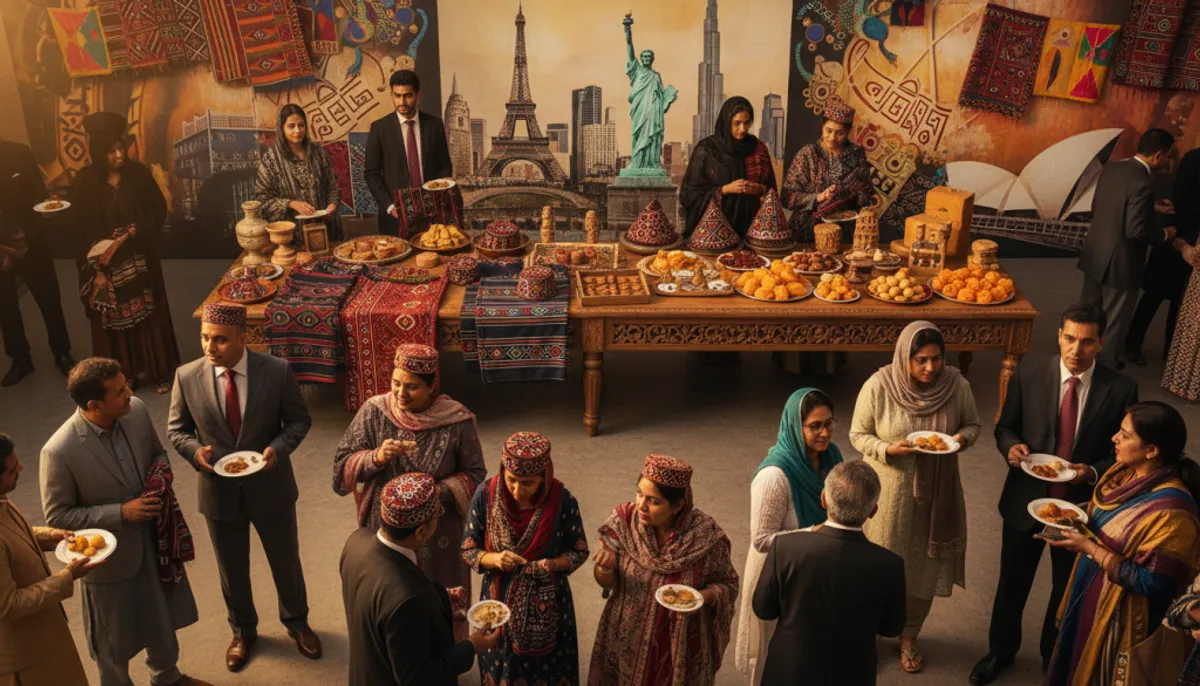
A prominent figure embodies this transnational link. Dr. Sarang Ansari, a poet residing in New York, institutionalized Sindhi Cultural Day. Celebrated every first Sunday of December, this event now unites communities everywhere.
These groups, from India to Australia, organize gatherings and festivals. They thus create strong networks that reinforce ties with Sindh. These events are a central place for identity expression.
The main challenge remains transmission to younger generations born abroad. The language and local context differ. Technology offers a valuable solution.
Social networks and digital platforms allow for constant connection. They facilitate participation in the cultural life of the homeland. This engagement is crucial for the future.
| Region of the Diaspora | Major Contribution | Notable Initiative |
|---|---|---|
| North America (New York, Canada) | Institutionalization of events | Sindhi Cultural Day |
| United Kingdom | Financial support for institutions | Funding for publications |
| Australia | Transmission to new generations | Community language schools |
This diaspora demonstrates a deep attachment. It preserves a precious heritage while integrating into its new societies. Its influence ensures the sustainability of a rich heritage.
Political Contributions and Notable Figures
Political engagement has played a decisive role in enhancing regional heritage, including aspects of british history. Some figures have marked history by supporting local traditions.
The Role of Ali Bhutto in Cultural Promotion
Zulfikar Ali Bhutto initiated an innovative policy valuing regional identities. Founder of the Pakistan People's Party, this statesman understood the importance of cultural specificities.
In 1974, Ali Bhutto launched the National Institute of Folk Heritage (Lok Virsa). This institution helped preserve the traditions of each province of Pakistan.
Asif Ali Zardari, the political heir of Ali Bhutto, continued this approach. His wearing of the traditional hat during official trips created a memorable controversy.
This action, however, strengthened identity pride throughout the province. It contributed to the emergence of Sindhi Topi Day.
These political figures skillfully navigated between national construction and regional affirmation. Their work institutionalized valuable cultural practices.
The provincial government continues this mission today. It actively supports language, arts, and traditions, including naga crafts, to preserve a unique heritage.
This approach has allowed Sindhi culture to shine on both national and international levels. It demonstrates how politics can serve culture.
The Impact of Ethnographic Museums in a Postcolonial Context
The ethnographic museums of Sindh today represent spaces of cultural resistance and identity reappropriation. They are part of a political vision that has been active since the 1930s, and these cultural institutions play a crucial role in this narrative. As a cultural institution, they embody the values and traditions that define the Sindhi identity.
Decolonization and Reappropriation of Heritage
These museum institutions participate in an active decolonization process. They allow local communities to regain control over their representation.
The central question remains: who has the right to represent a culture? Ethnographic museums offer an answer to this postcolonial debate.
| Initiative | Objective | Impact |
|---|---|---|
| Creation of research institutes | Legitimize regional studies | Academic autonomy |
| Specialized publications | Disseminate knowledge | International visibility |
| Annual conferences | Bring researchers together | Scientific network |
| Educational programs | Transmission to youth | Sustainability of heritage |
Initiatives in Sindhology
The term “Sindhology” now refers to studies dedicated to this region. It affirms the existence of a legitimate and autonomous research field.
This intellectual place participates in a strategic folklorization process. It establishes certain traditions as essential identity markers in the face of official nationalism.
These initiatives create a fruitful tension between preservation and innovation. They ensure the vitality of a precious heritage while adapting it to contemporary realities.
Culinary Aspects and Gastronomic Traditions
The flavors of Sindh tell a story of terroir and traditions. This vibrant cuisine unites communities around symbol-laden dishes.
During festivals, food becomes a language of affection. During Akhan Teej, sharbat is offered to passersby. The Tirmoori sees large pots of Taahri, a sweet rice, prepared and generously distributed.
Culinary diversity reflects geographical differences. In the villages, recipes use simple local products. The cities integrate urban influences while maintaining authenticity.
Characteristic ingredients include aromatic spices and ancient grains. The desert climate and the Indus River have shaped this unique flavor palette.
Food sharing strengthens social ties. During Diyaaree, the people exchange sweets with affection. These moments create an exceptional community warmth.
Despite modernization, ancestral recipes are faithfully transmitted. This gastronomic culture remains a strong identity pillar. It continues to evolve while honoring its roots.
Festive Rituals of the Traditional Sindhi Calendar
Each season brings its unique festivities in this tradition. The calendar rhythms community life with colorful celebrations.
These events mark natural cycles and important passages. They create memorable moments of sharing.
Seasonal Celebrations and Rites of Passage
Cheti Chand opens the new year with the birth of Jhulelal. This festival honors the water god each year.
During the month of Sawan, Teejri transforms time into joyful celebration. Women decorate their hands and sing love songs.
Bright festivals like Diyaaree illuminate homes. Earthen lamps create a magical atmosphere.
“These rituals connect the present to the past, creating a precious continuity.”
Lal Loi warms January 13 with bonfires. Dances enliven this winter day.
Local folklore fully expresses itself during these moments. Mythological tales come to life.
| Festival | Period | Meaning |
|---|---|---|
| Cheti Chand | New Year | Birth of Jhulelal |
| Teejri | Month of Sawan | Women's celebration |
| Rakhri | Purnima of Sawan | Sibling bond |
| Holi | Change of season | Collective joy |
These traditions remain alive despite the passage of time. They constitute an essential part of collective identity.
Contemporary Trends and the Future of Sindhi Heritage
Sindhi heritage skillfully navigates between tradition and modernity. This dynamic vision ensures its relevance in a world in constant evolution.
In recent years, artistic creation has integrated new forms. Poetry, for example, now welcomes the sonnet and the haiku.
Cultural Innovations and Modern Perspectives
The media play a central role in this renaissance. Channels like KTN and Mehran TV broadcast dedicated programs.
They also organize large musical events. These platforms provide an essential place for contemporary artists.
The younger generation seeks its own place in this heritage. It reinvents traditional forms with a current sensibility.
Challenges exist, such as rapid urbanization. But digital initiatives help preserve this precious heritage.
The future of this rich culture rests on a balance. It is necessary to honor the past while embracing innovation.
Education and community engagement are a crucial part of this vision. They ensure transmission to future generations.
Conclusion
This journey through Sindhi heritage reveals a cultural tapestry of exceptional richness. From the ancient cities of the Indus Valley to contemporary villages, this civilization demonstrates remarkable continuity.
The numerous traditions explored in this article form a coherent and living whole. Each aspect – literature, music, gastronomy – reflects deeply rooted values.
The preservation of this heritage represents a crucial issue for the people of this province. Cultural institutions and the diaspora play an essential role in this transmission.
The future of this millennia-old heritage seems promising. The languages and customs continue to adapt while retaining their unique essence.
This exploration has shown how a regional identity finds its place within a nation while shining internationally. A beautiful balance between roots and openness.
FAQ
What is the importance of the Sindhi Topi and Ajrak?
The Sindhi Topi (cap) and Ajrak (scarf or printed fabric) are much more than clothing. They are powerful symbols of identity and pride for the Sindhi people. They are worn with great respect on special occasions like Sindhi Topi Day, celebrated each year to honor culture and solidarity.
How does the Indus Valley civilization influence Sindh today?
The legacy of the ancient Indus civilization, with sites like Mohenjo-Daro, is deeply rooted in the region. It influences art, symbols, and even a sense of historical continuity. This millennia-old heritage is a source of pride and a fundamental part of Sindhi identity.
Is the Sindhi language in danger?
The Sindhi language has a rich literary tradition and is spoken by millions of people. However, like many regional languages, it faces challenges. Preservation efforts, particularly through education, literature, and media, are essential to ensure its vitality for future generations.
What are the most important cultural celebrations?
Sindhi Cultural Day (or Ekta Day) is a major festival. Each year, people in Sindh and the global diaspora, such as in New York, wear traditional attire and celebrate their heritage. Other festivals, including gujarati festivals and traditional rites, related to seasons or life cycles, also punctuate the year.
Who are some important figures in Sindhi history?
The history of Sindh is marked by many influential figures. In the political and cultural sphere, Zulfikar Ali Bhutto is a prominent personality of the 20th century. His role contributed to the promotion of Sindhi culture on the national and international stage.