
Welcome to a journey into the heart of one of the oldest civilizations in the world. This country of the Near East, bathed by the Mediterranean, has seen the birth of millennia-old traditions.
Its history is a fascinating mosaic. Canaanites, Phoenicians, Arameans, and many others have left an indelible mark on its heritage.
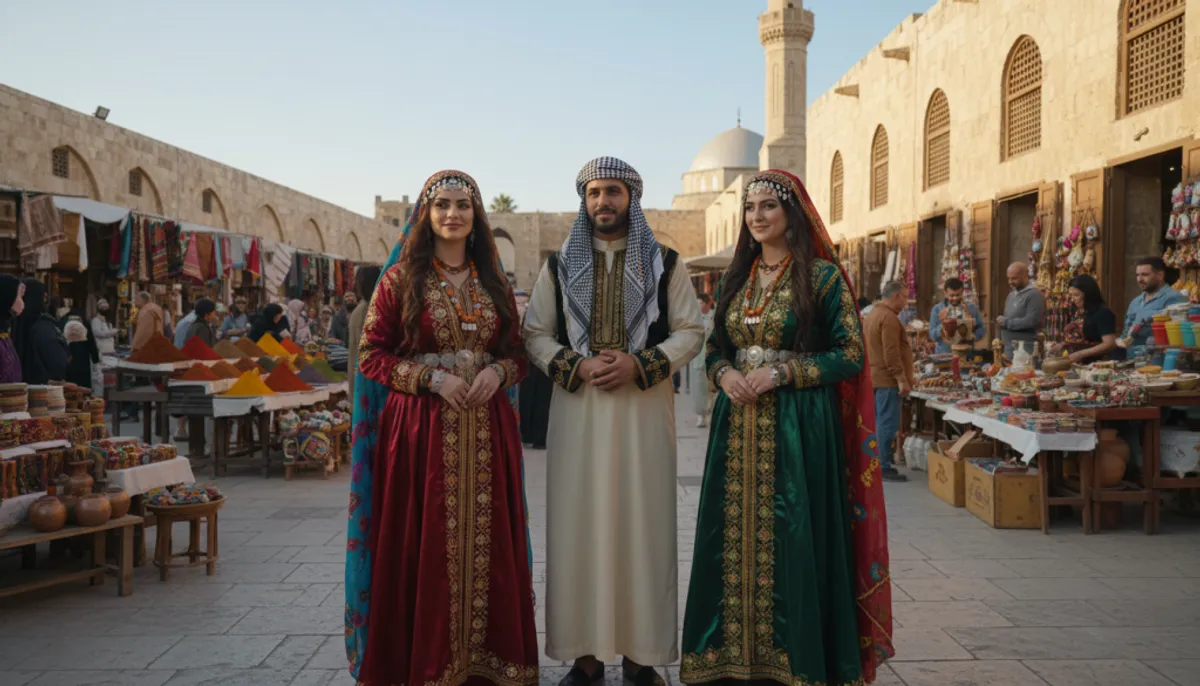
Daily life there is rhythmically marked by extraordinary diversity. A generous cuisine, refined craftsmanship, and enchanting music are its jewels.
Discovering this country means understanding how an ancestral heritage dialogues with modernity. Its customs continue to shine far beyond its borders.
Key Points to Remember
- Syria is home to one of the oldest civilizations on the planet.
- Its geographical position in the eastern Mediterranean has forged its unique identity.
- Its history is marked by numerous successive civilizations.
- Cultural diversity is expressed in gastronomy, craftsmanship, and the arts.
- This heritage remains alive and adapts to contemporary realities.
- Exploring its traditions offers a window into the region's rich past.
- The values of hospitality and sharing are fundamental there.
General Introduction to Syrian Culture
To grasp the richness of its heritage, a look at its geography and demographics is essential.
This country spans 185,180 km². It shares borders with five neighboring nations. This region has always been a strategic crossroads.
Its capital, Damascus, is one of the oldest inhabited cities. Founded thousands of years ago, it today beats to the rhythm of millions of inhabitants. It forms the cultural heart of the state.
| City | Population (in millions) | Particularity |
|---|---|---|
| Damascus | ~1.8 | Capital, historical site |
| Aleppo | ~1.7 | Major economic center |
| Homs | ~1.0 | Communication hub |
| Latakia | ~0.7 | Main maritime port |
The total population is estimated at nearly 24 million people. The official language of the state is Arabic. A local dialect, Northern Levantine Arabic, is spoken by the majority.
This society consists of an ethnic mosaic. Arabs, Kurds, Armenians, and Assyrians contribute to it. This diversity shapes the region.
Understanding this framework is essential. It opens the door to all expressions of this unique culture.
The Foundations and Values of "Syrian Culture"
The collective identity of this country is built around essential pillars such as hospitality and respect. These principles guide daily interactions.
Family solidarity is sacred there. It is passed down from generation to generation. Respect for the elders is a concrete manifestation of this.
Religion plays a central role in structuring social life. A historic coexistence exists between different groups.
Before recent conflicts, the population was composed as follows:
- Muslims (88-90%): Sunnis (70%), Alawites (12%), Shiites (5%), Druze (3%).
- Christians (10-12%): Greek Orthodox, Melkite Catholics, Syrian Orthodox, Maronites, among others.
Each community has developed, over time, its own distinct traditions. Yet they share fundamental common values.
Family honor and generosity are part of this. The social organization values close ties within each group.
A deep attachment to the land and ancestral history also unites people. Respect for diversity is a historical characteristic of this society.
These foundations continue to influence the lives of the inhabitants. They remain alive, whether on-site or within the global diaspora.
Syrian Customs and Traditions
Throughout the seasons, a series of celebrations punctuate social life. They blend ancient heritage with modern dates.
Traditional Festivals and Celebrations
The festive calendar reflects remarkable diversity. National, Islamic, and Christian holidays coexist.
The New Year, on January 1st, kicks off the festivities. March 8th commemorates an important political event.
March 21st is double. It honors mothers and celebrates Norouz, the Persian New Year.
| Festival | Date | Meaning |
|---|---|---|
| New Year | January 1 | Beginning of the civil year |
| March 8 Revolution | March 8 | Baasist commemoration |
| Mother's Day & Norouz | March 21 | Family tribute and Persian New Year |
| Independence Day | April 17 | End of the French mandate in 1946 |
Ancestral Rituals and Ceremonies
Weddings illustrate these traditions well. These events can last several days.
Folk music and dances enliven the celebration. Generous feasts gather the entire community.
These practices have been passed down for years, sometimes for over a century. They unite generations.
Syrian Cuisine: Flavors and Know-How
Syrian gastronomy is a sensory journey through the centuries, blending heritage and innovation. It combines Mediterranean, Ottoman, and Levantine influences to create a unique taste.
This cuisine represents one of the most refined culinary traditions in the Arab world. Every meal becomes a generous celebration.
Iconic Dishes and Mezzes
Mezzes are the signature of this gastronomy. They are small, varied appetizers shared in a group.
There is creamy hummus, smoky baba ganoush, and fresh labneh. Tabouli and crispy falafels are also very popular.
Each region of the country adds its touch to the recipes. This diversity reflects the geographical richness of the territory.
Traditional Beverages and Authentic Recipes
Beverages perfectly accompany the dishes. Cardamom-scented Arabic coffee is essential.
Anise-flavored arak, creamy salep, and refreshing ayran are also popular. For hot days, jallab syrup or mint polo offer sweet alternatives.
A lesser-known wine tradition also exists. The Bargylus Estate perpetuates this millennia-old heritage in the region.
This culinary richness makes the country a major gastronomic destination, showcasing diverse flavors including swedish cuisine. It invites you to discover authentic flavors and ancestral know-how.
Craftsmanship and Artisanal Professions in Syria
In the heart of Syrian cities, workshops perpetuate ancestral artisanal professions. This refined craftsmanship is a pillar of local identity.
Aleppo Soap and Other Artisan Treasures
Aleppo soap is the most famous jewel. Made in the eponymous city, it combines olive oil and laurel.
About forty artisans preserve this centuries-old know-how. Their production is globally recognized for its quality.
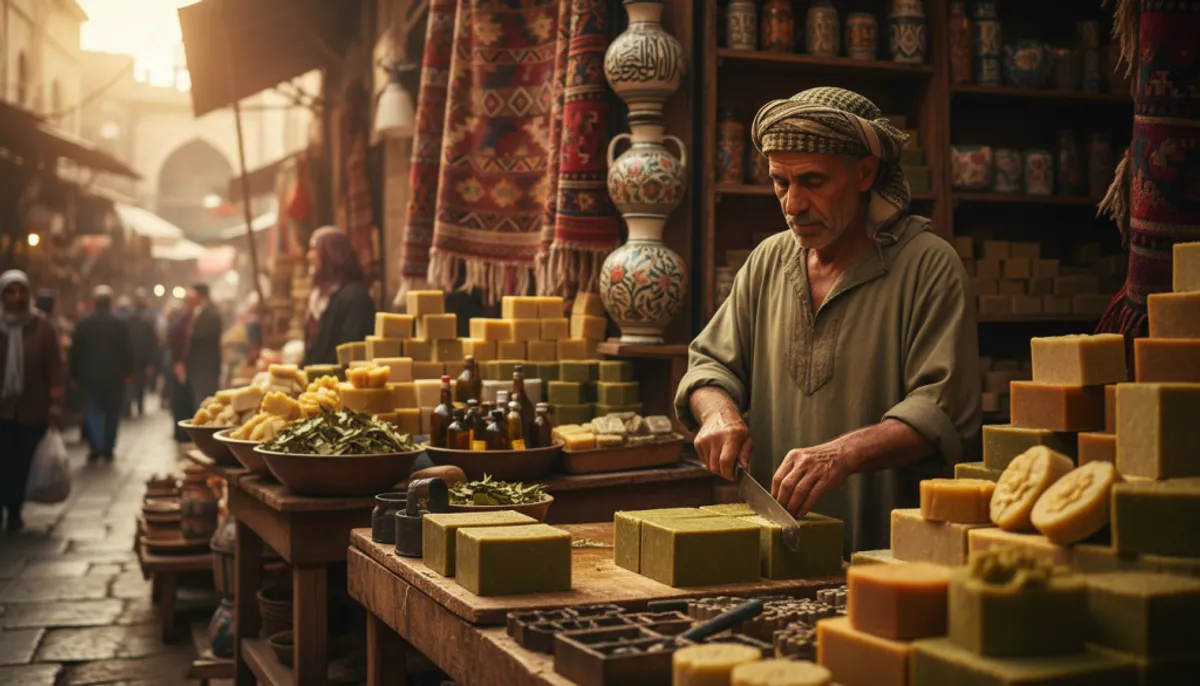
Fine marquetry also produces games, boxes, and decorative furniture. These objects testify to great manual dexterity.
Textiles, Hookahs, and Blown Glass Objects
Each major city excels in a specific textile domain. Damascus shines with its luxurious brocades, Hama with its refined sheets.
Aleppo is renowned for its brightly colored silk scarves. These creations are favored by top designers.
Artisans from the north of the country excel in other fields. They make decorated hookahs and colorful blown glass objects.
Handwoven carpets and Kurdish rugs also come from the cities of the north. They combine functionality with traditional aesthetics.
These professions, passed down from generation to generation, form an invaluable intangible heritage. They embody the resilience of a rich culture.
Music, Dance, and Performing Arts
The Syrian artistic scene shines far beyond its borders. It is supported by exceptional talents in the field of performance.
Great Names of Syrian Music
This musical tradition occupies a prestigious place in the Arab world. It rivals the Egyptian and Iraqi heritages.
Legendary names like Farid el-Atrache and Sabah Fakhri have marked the scene for years. The master Najmi al-Soukkari is also a reference.
The heritage draws from ancient Hurrian chants. It presents fascinating similarities with Gregorian music.
Theater, Puppetry, and Contemporary Performances
Theater has produced renowned playwrights. Saadallah Wannous (1941-1997) left an influential humanistic body of work.
Wael Kadour represents the new generation. He has been renewing this art since the 1980s.
The art of puppetry shines with Rafat Alzakout. He created the satirical theater Masasit Mati and the series Top Goon.
Figures like Najdat Isamail Anzour are famous in Arab television. These arts continue to shine despite the challenges of recent years.
Syrian Literature and Artistic Expression
From the early 20th century, a generation of intellectuals shaped a distinctive literary voice. This tradition draws from a deep linguistic and philosophical heritage.
Iconic Authors and Poets
The first decades of the century saw the emergence of founding figures. The linguist Sheikh Ahmed Reda (1872-1953) worked for the Arab literary renaissance.
Poets like Zaki al-Arsouzi (1900-1968) and Badawi al-Jabal (1903-1981) laid the foundations for modern and engaged poetry. Their writings reflect the concerns of their time.
| Writer | Period | Major Contribution |
|---|---|---|
| Sheikh Ahmed Reda | 1872-1953 | Linguist, Arab literary renaissance |
| Zaki al-Arsouzi | 1900-1968 | Engaged and philosophical poetry |
| Badawi al-Jabal | 1903-1981 | Foundations of modern poetry |
| Adonis | 1930- | Arab and Francophone poetic renewal |
Modern Influences and Contemporary Writing
The second half of the century welcomed globally recognized talents. The poet Adonis, born in 1930, has been renewing Arabic poetry for years.
The philosopher Sadik Jalal Al-Azm (1934-2016) marked critical thought. His article and works, such as “Self-Critique of Defeat,” remain influential.
Contemporary writers like Rosa Yassin Hassan (1974-) explore the complex realities of recent years. Their work ensures the vitality of this tradition.
Poetry is not a pastime; it is a worldview.
This rich production constitutes an essential form of artistic expression. It constantly dialogues with history and the present.
The Architectural Heritage and Historical Sites
Syrian historical monuments form a stone chronicle of the empires that have succeeded one another. This country is an open-air museum, reflecting the rich history of mexico.
Each building tells a different era. From antiquity to the Ottoman era, layers accumulate.
Damascus was the capital of the powerful Umayyad empire from 661 to 750. The Umayyad Mosque and the Azim Palace are its jewels.
In the center of the country, near Homs, the Krak des Chevaliers impressed. This Crusader fortress was among the best preserved.
To the east, Palmyra shone like a two-thousand-year-old jewel. Its UNESCO status highlighted its universal value before the damage.
| Site | Region | Key Period |
|---|---|---|
| Aleppo Citadel | North | Medieval |
| Bosra | South of Damascus | Roman |
| Apamea | Northeast of Hama | Roman |
| Margat Fortress | South of Latakia | Crusader |
The Aleppo Citadel dominated the city for centuries. It symbolized its commercial power.
Archaeological sites like Ebla and Mari reveal civilizations from the 3rd millennium BCE. They are located in the north and south of the country.
This unique ensemble testifies to the historical richness of the state. It attracts enthusiasts from around the world.
Architecture is the great book of humanity.
The coastal fortresses and Roman ruins complete this panorama. This heritage remains a pillar of the country's identity.
The Ethnic Mosaic and Religious Diversity
The social composition of this country is distinguished by a remarkable plurality of ethnic and confessional groups. This diversity has shaped its intangible heritage for centuries.
The Syrian Communities and Minorities
Before recent conflicts, the population was divided between a Muslim majority (88-90%) and several minorities. Muslims included about 70% Sunnis, 12% Alawites, 5% Shiites, and 3% Druze.
Christians represented 10-12% of the population. They were divided into about ten distinct communities. Among them, Greek Orthodox, Melkite Catholics, and Syrian Orthodox were the most numerous.
Other ethnic groups enriched this mosaic. Kurds made up about 8% of the population. Armenians, Assyrians, and Circassians also brought their traditions.
A significant number of Palestinian and Iraqi refugees also resided in the country. This demographic mix was a fundamental characteristic.
The Role of Religions in Cultural Life
Religion has always structured collective life. It influences celebrations, marriage rites, and daily social practices.
Each community has its own religious traditions. Yet, common values such as hospitality unite people.
The Alawites, although a minority religious group, have held a dominant position in the state apparatus for decades. This community represents about 6.1% of the population.
The majority of Christians have undergone a massive exodus since 2011. About half are believed to have left the country, affecting demographics.
This confessional diversity remains a pillar of national identity. It testifies to a history of complex coexistence.
The Impact of Recent Conflicts on Culture
A devastating conflict erupted in March 2011, profoundly disrupting the country. This civil war, born from the Arab Spring, marked the beginning of dark years.
The human toll is immense. Between March 2011 and September 2016, nearly 500,000 deaths were reported. More than two million people were injured.
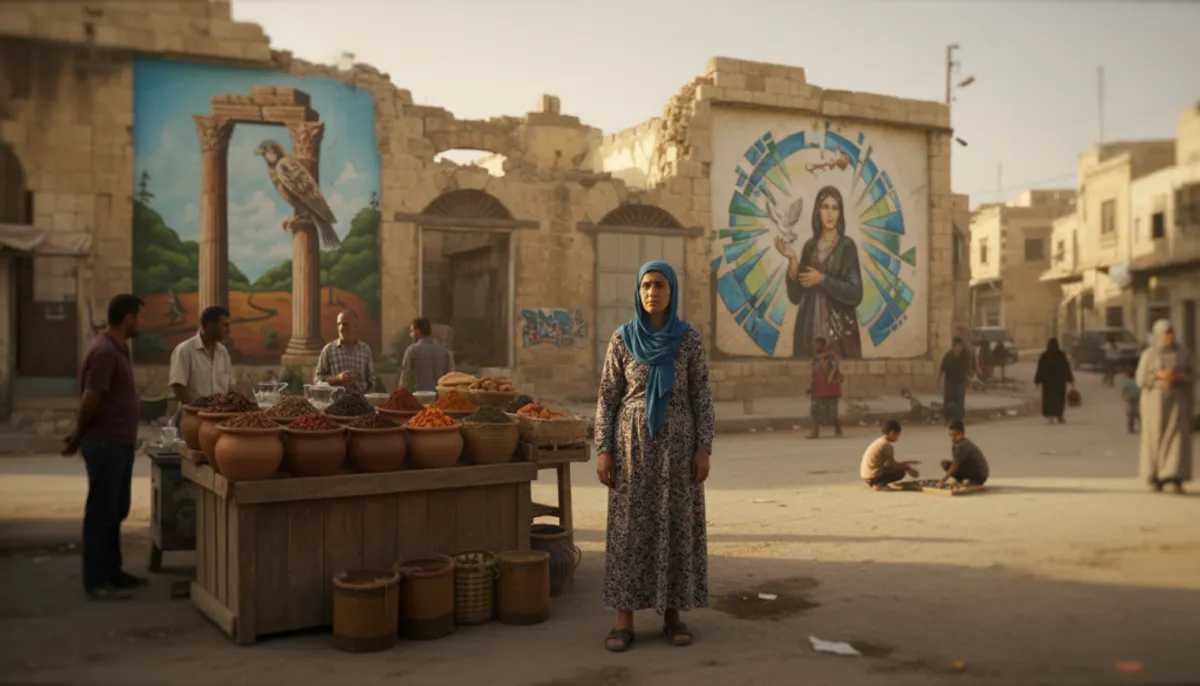
The heritage has suffered massive destruction. The Islamic State razed part of the two-thousand-year-old site of Palmyra in 2015.
The Aleppo Citadel, Apamea, and Bosra have also been severely damaged. These losses are irreparable for the history of humanity.
The Assad regime collapsed on December 8, 2024. Hafez al-Assad, followed by his son Bashar, ruled the state for decades.
Despite these years of war, Syrian culture demonstrates remarkable resilience. The determination of its people to preserve their identity remains strong.
The Syrian Diaspora and the Transmission of Heritage
In the face of upheaval, millions of Syrians have found refuge far from their homeland, taking with them a precious heritage. This massive dispersion, especially since 2011, has created a global community.
Migration and Cultural Adaptation Abroad
The population of the country has decreased from 25.3 million in 2014 to 23.8 million in 2024. This decline reflects the scale of departures.
Syrians established in Europe, North America, and the Gulf maintain their traditions. Cuisine, music, and craftsmanship and artisanal travel with them.
Exiled artists, like puppeteer Rafat Alzakout in Germany since 2015, continue to create. They testify to the reality of their country from abroad.
Adaptation is a delicate balance. It mixes integration into the host society with the preservation of original identity.
Associations organize events and language courses. Their goal is to ensure transmission to young generations born outside the country.
This diaspora constitutes a cultural bridge between Syria and the world. It enriches the societies that welcome it with its unique heritage.
Despite the distance, Syrians abroad remain active guardians of their culture. They ensure its continuity for the years to come.
The Media, Education, and Cultural Influence
The educational system and the media have long served as pillars for the intellectual influence of this country. The Syrian state has historically structured these fields to disseminate its influence.
Education is organized by legislative decree No. 55 of 2004. This text frames public and private education at all levels. Universities follow law No. 6 of 2006, under the authority of the central government.
This policy has allowed for a high level of literacy in the region. Several educated generations have thus emerged.
Syrian television has produced renowned figures. Najdat Isamail Anzour is considered one of the most influential directors in the Arab world.
The media, including press and radio, have played a key role. They have been heavily controlled by the power in place, especially before 2011.
Despite this, new voices have emerged. Syrian bloggers have emerged as cultural and political actors since the 2000s.
The influence has also manifested through academic articles and television productions. These contributions are recognized far beyond borders.
Access to quality education has shaped the intellectual elite of the country since the 80s. This legacy continues to influence Syrian culture today.
The Influence of Syrian Culture in the Arab World
From Spain to Central Asia, the imprint of Damascus has marked centuries of history. As the capital of the Umayyad Empire (661-750), this city spread its heritage over a vast territory.
Its cultural power has never faded. The music of this country rivals those of Egypt and Iraq. Syrian Arab television is among the most influential in the entire region.
Levantine cuisine, with its mezzes and shared dishes, has shaped the culinary traditions of many countries. The Levantine Arabic dialect spoken in Damascus also serves as a reference.
ICESCO will soon designate Damascus as the capital of culture in the Islamic Arab world in 2025. This influence touches all the arts, from theater to Arab cinema.
| Field of Influence | Example | Geographical Scope |
|---|---|---|
| Architecture & Governance | Umayyad Empire | From Spain to Central Asia |
| Performing Arts | Television & Music | All of the Arab world |
| Culinary | Levantine Mezzes | Levant, Gulf, North Africa |
| Linguistics | Damascus Dialect | Media of the region |
Despite recent challenges, this culture demonstrates remarkable vitality. Its imprint continues to shape the identity of the region.
Contemporary Challenges and Future Perspectives
After years of conflict, the future of Syrian cultural heritage is now at stake. The country faces the immense task of rebuilding its state and its identity.
The war, which began in 2011, has destroyed a large part of the heritage. UNESCO sites and artisanal techniques have been severely affected.
Globalization and Preservation of Traditions
Globalization presents a double-edged sword. On the one hand, it threatens to dilute ancestral practices.
On the other hand, it offers powerful tools. Syrians can now digitally disseminate their heritage.
Many skills have regressed over time. Documentation has become an urgent priority.
Innovations in the Cultural Sector
In the face of these challenges, creativity is activated. The diaspora and Syrians on-site innovate with technologies.
Virtual archives and online educational platforms are emerging. They ensure transmission despite distance.
Training a new generation of artisans is crucial. They must perpetuate traditions while adapting them.
| Challenge | Impact | Innovation / Response |
|---|---|---|
| Damaged Material Heritage | Historical sites at risk, loss of tourism | 3D digitization, international crowdfunding campaigns |
| Disappearance of Know-How | Break in artisanal transmission | Online tutorials, training workshops for youth |
| Reconstruction of Cultural Fabric | Need to revive local artistic life | Artist residencies, hybrid festivals (in-person and online) |
The new transitional government, established at the end of 2024, has a key role. It must mobilize resources for this renaissance.
Reconstruction requires more investments and solid international support. The coming years will be decisive.
Will the country manage to preserve its unique identity while adapting? The commitment of Syrians and the global community at the cultural level is essential to turn the page on the war.
Conclusion
At the end of this exploration, one thing is clear: Syrian cultural vitality transcends borders and challenges. This country possesses a heritage of exceptional richness, forged by millennia of history.
Despite recent trials, Syrians have shown remarkable resilience. They preserve and transmit their unique identity to the world.
Every part of this culture, from cuisine to the arts, testifies to ancestral know-how. Most observers recognize its profound influence on the Arab world.
Within the diaspora as well as in the country, cultural life is reinventing itself. It finds new forms while remaining true to its roots.
In the face of destruction, safeguarding this heritage is a crucial issue. The time has come for the international community to actively support these efforts.
Exploring this Syrian culture today means discovering authentic traditions and hope for the future of Syrians.
FAQ
What are the main religious communities in Syria?
The country is home to a rich mosaic of confessions. There is a majority of Sunni Muslims, as well as significant minorities such as Alawites, Christians of various denominations (including Greek Orthodox), and Druze. This diversity profoundly shapes social life and traditions.
Which Syrian dish is the most famous abroad?
The Syrian mezze, an assortment of small appetizers, is world-renowned. Dishes like hummus, tabbouleh, and falafels are the stars. Kibbeh, in all its forms, is also considered an emblematic dish of the country, showcasing the rich flavors of portuguese gastronomy.
Which traditional Syrian craftsmanship is recognized by UNESCO?
The art of hand embroidery, known as *Talli*, is listed in UNESCO's intangible cultural heritage. Aleppo soap, made from olive oil and laurel berry for centuries, is another artisanal treasure renowned worldwide.
How has the war affected cultural heritage?
Does the diaspora play a role in preserving culture?
Is Arabic the only language spoken in Syria?
Arabic is the official language, but other languages are used by ethnic communities. Armenian, Aramaic, and Kurdish, for example, are spoken within certain minorities. This linguistic diversity reflects the historical complexity of the region.