
Welcome to this immersion at the heart of an exceptional African heritage. We invite you to discover the fascinating world of the Basotho, a community with deep roots and vibrant traditions.
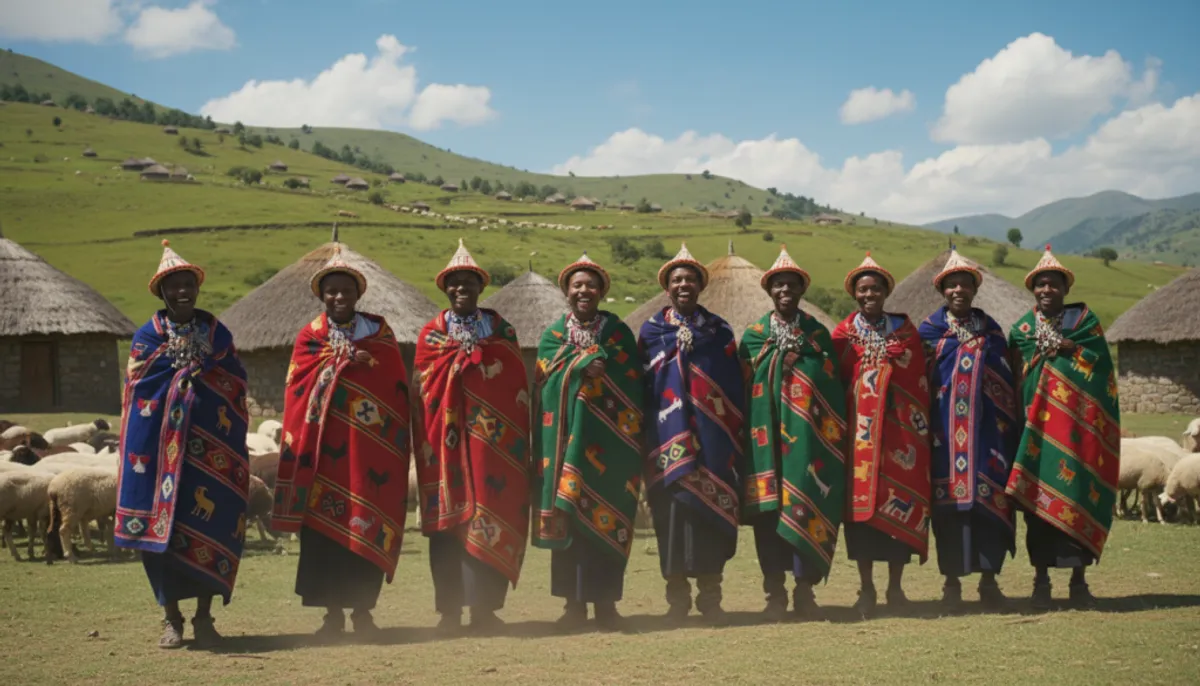
This people has managed to preserve its unique identity despite historical upheavals. Their heritage has primarily developed in Lesotho, a mountainous country in Southern Africa, while radiating beyond its borders.
You will explore the various aspects that make this nation a remarkable cultural treasure. From ancestral rites to social structures, each element reflects an incomparable richness.
Prepare for a captivating journey through the history and customs of a major ethnic group in this region. Their contribution to African heritage deserves our full attention.
Key Points to Remember
- Discovery of an authentic and preserved African cultural heritage
- Exploration of the history and traditions of the Basotho
- Focus on Lesotho as the homeland of this nation
- Presentation of rites, social structures, and artistic expressions
- Understanding the importance of this ethnic group in Southern Africa
- Journey through a strong and distinctive cultural identity
- Appreciation of the contribution to contemporary African heritage
History and Origins of Sotho Culture
The roots of the Basotho run deep into the prehistoric history of Southern Africa. Their journey dates back centuries of migrations from the northern regions.
The Beginnings and Ancestral Migrations
Over the centuries, different tribes settled in various parts of the territory. Some groups chose the west, becoming the Batswana. Others settled in the east, like the BaPedi.
The Basotho proper established themselves further south. Each clan retains its distinctive identity even today.
Notable Figures and the Role of Moshoeshoe
The 19th century was a crucial period. In 1822, Nguni invasions disrupted the established peace. The tribes suffered heavy losses against the armies of Shaka and Mzilikazi.
Moshoeshoe I then played a decisive role. This visionary king offered refuge to survivors at Thaba-Bosiu. He united the scattered clans to form the modern nation.
His influence extended well beyond current borders. The country he shaped covered much of present-day South Africa.
- Prehistoric origins in northern Southern Africa
- Gradual separation into different ethnic groups
- Importance of clan names for identity
- Uniting role of Moshoeshoe I in the 19th century
- Territorial expansion up to the Free State
Traditions and Customs
The transition to adulthood among the Basotho revolved around two fundamental pillars: initiation and clothing. These aspects shaped the identity of each individual within the village.
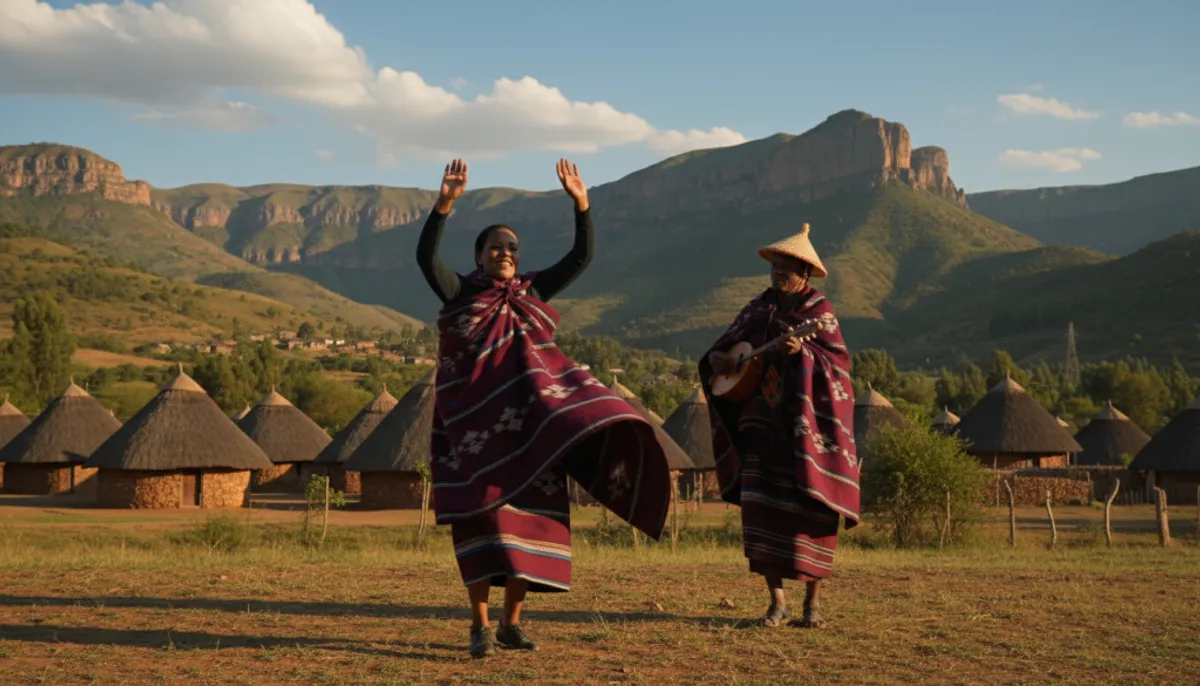
The Initiation Rites and Traditional Schools
The initiation school represented a crucial stage in the life of the youth. This mandatory training transformed children into responsible adults.
Boys learned endurance and courage to become respected men. Girls acquired essential domestic skills for their future roles as women.
“Initiation was not just a simple rite but constituted the complete education of a future member of the community.”
| Aspect of Initiation | Teachings for Boys | Teachings for Girls |
|---|---|---|
| Social Skills | Leadership and Decision-Making | Home Management and Education |
| Core Values | Courage and Physical Endurance | Family Responsibility |
| Community Role | Protection of the Village | Transmission of Traditions |
Traditional Clothing and Symbolic Accessories
Clothing marked each stage of life. Young girls wore the sefaha sa letsopa, a clay bead necklace symbolizing their youth.
After the initiation, women adopted the mose oa lekoko, a skirt made of fibers or cowhide. Men donned blankets made of skin that distinguished their social status.
The mokorotlo, a conical hat inspired by Mount Qiloane, remains the most emblematic accessory of these traditional garments.
Music, Songs, and Mythology
Beyond rites and clothing, verbal art occupies a central place in Basotho identity, reflecting elements of songhai culture. These artistic expressions serve as a true pillar of collective memory.
They play an essential role in transmitting the values and history of the nation. This oral tradition represents a site of living memory for the people.
The Lithoko and Praise Songs
The Lithoko are epic poems inspired by warrior feats. They celebrate the great leaders who led their people to victory.
This form of oral literature preserves descriptions of origins and historical events. It captures the various aspects of mythical belief systems.
The Liboko, or family odes, contain the philosophical history of each clan. They allow for the identification and differentiation of tribal groups.
Myths and Legends: Moshanyana and Ancestral Tales
The Litsomo were traditionally told in the evening by the elders. These tales served as educational tools for teaching younger generations.
The myth of Moshanyana perfectly illustrates this tradition. A monster devours all the inhabitants of a village, sparing a hidden pregnant woman.
She gives birth to an adult warrior who confronts the monster. The hero kills it and frees the swallowed villagers, teaching the values of courage.
These fantastic tales play a fundamental role in identity construction, including the rich peul heritage. They strengthen social cohesion through shared aspects of morals and spirituality.
Social and Political Structures
Behind the traditional way of life lies a sophisticated political system structuring every aspect of the community. This complex social structure ensures a balance between authority and collective participation.
The Clan System and the Role of Chiefs
The organization is based on clans led by hereditary chiefs. Among the Tawana, this hierarchy comprises four distinct social classes.
The ruling aristocracy oversees the commoners, aliens, and hereditary serfs. Each village functions as an autonomous unit under local authority.
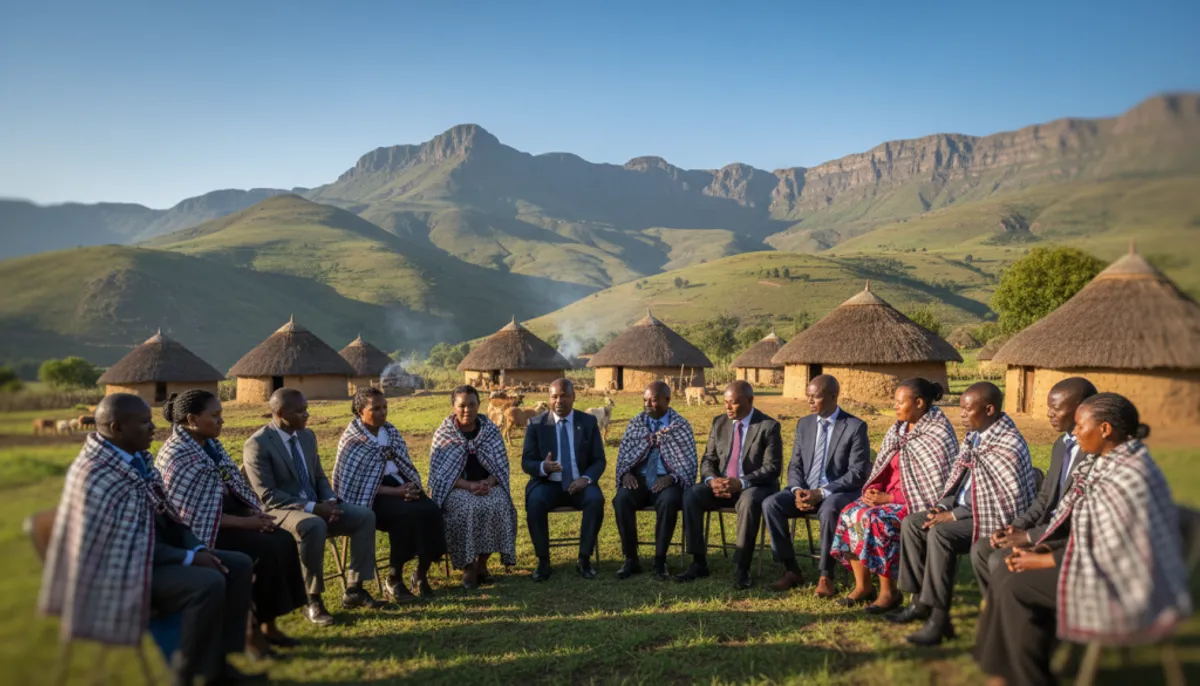
The chiefs maintain social cohesion while preserving the traditions of conquered tribes. This decentralized structure allows for governance adapted to each community.
The Evolution in the Face of Modern Influences
The case of the Lovedu illustrates the flexibility of these systems. Since 1800, women have taken on the role of king, adopting traditionally male functions.
These queens demonstrate how women have gained significant power despite a patrilineal framework. They control marital arrangements and capitalize on polygyny.
The elders play a crucial part in each village by transmitting knowledge and stories. Women continue to influence important community decisions.
In the face of modernity, the chiefs adapt their functions while preserving the essence of this rich culture. The sotho heritage thus evolves with its time.
Agriculture, Livestock, and Community Life
The daily economy of the communities relied on a symbiosis between cultivated lands and herds. This organization formed the center of collective life, structuring social relations in each settlement.
Agricultural Practices and Traditional Livestock Farming
A well-established division of labor governed subsistence activities. Men and boys primarily took care of the animals while women cultivated the fields.
| Activity | Men's Role | Women's Role |
|---|---|---|
| Livestock Farming | Care of cattle, milking | Occasional collection |
| Agriculture | Clearing of lands | Planting and harvesting |
| Provisioning | Hunting | Collecting water and berries |
The agricultural system produced corn, millet, and various vegetables. Livestock represented the most valued animal, symbolizing wealth and social status.
“These activities not only nourished the bodies but also forged the soul of the community.”
The initiation taught the youth the skills necessary for this agricultural life. The villages varied in size according to the groups, some with a central place, others in satellite hamlets.
Women played a fundamental role in this community agriculture. Their work ensured food security for all the villages.
Conclusion
Throughout this exploration, the historical depth and contemporary vitality of Basotho traditions clearly emerge. This nation has about 7 million people primarily spread across Lesotho and South Africa. Understanding the igbo history and origins can provide valuable insights into the broader context of African cultures.
The legacy of Moshoeshoe I, founder of a nation of peace, remains at the center of collective identity. Since the 19th century, missionaries and modernity have transformed several aspects of the traditional social system.
Yet, this culture demonstrates remarkable resilience. The rites of initiation, clan structures, and oral literature endure as a site of living memory.
Women and men play a complementary role in this transmission. Each contributes their part to preserving traditional knowledge.
The villages maintain their community structure at the heart of contemporary life. This major ethnic group shows that a tradition can evolve while retaining its essence.
Documenting these cultural riches ensures their transmission to future generations in a country and a world in constant transformation.
FAQ
What is the role of women in traditional society?
They play a fundamental role, particularly in agriculture, crafts, and child education. Their contribution to maintaining traditions is essential for the transmission of knowledge.
How does initiation prepare youth for adult life?
These rites, like traditional school, teach the group's values, responsibilities, and practical knowledge. It is a crucial passage to becoming an active member of the community.
What is the impact of livestock farming on the economy and social life?
Cattle, especially, hold great economic and symbolic value. They are at the center of exchanges, dowries, and strengthen ties between families and villages.
How has the political structure with chiefs evolved over time?
The clan system and traditional authorities have adapted while preserving their essence. It coexists today with the modern structures of the South African state.
What are the most important animals in their traditions?
Certain animals, like cattle, are highly respected. They are not only a source of food but also a symbol of wealth and status within the nation.