
Welcome to this captivating exploration of one of the civilizations most fascinating in West Africa. Together, we will discover a universe rich in traditions and history.
The Fulani represent a major ethnic group spread across fifteen different countries. Their presence extends from Senegal to Sudan, passing through Nigeria and Cameroon.
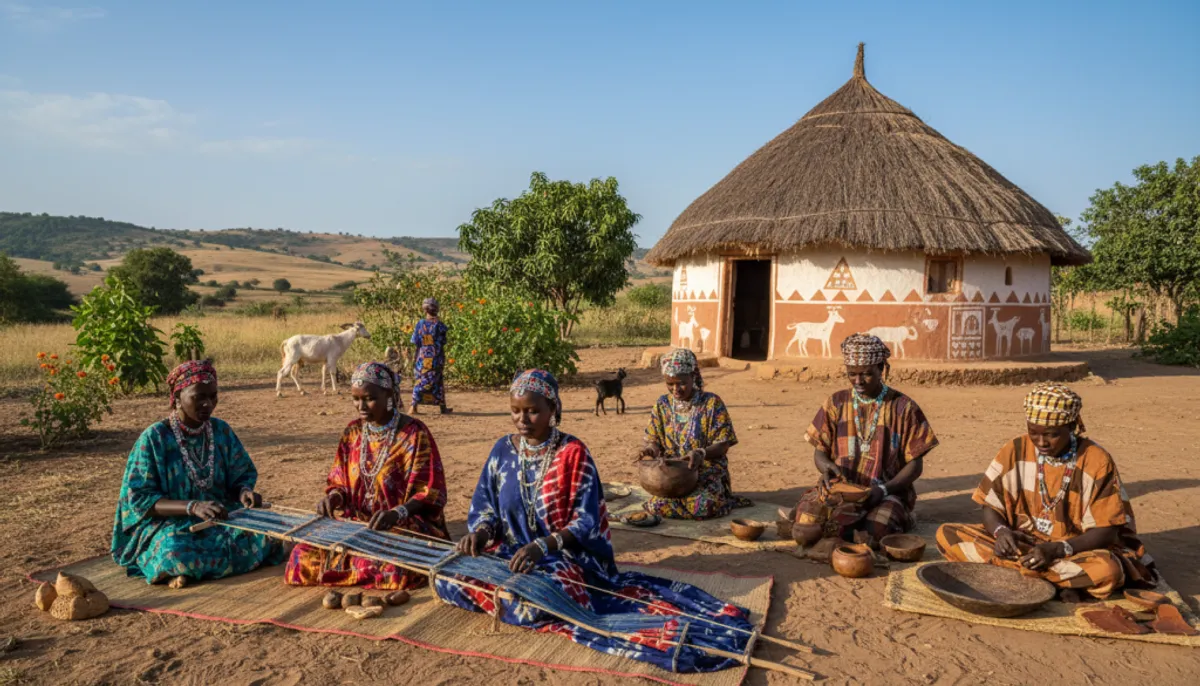
This community numbers between 50 and 65 million people. Their ancestral pastoral lifestyle has shaped their unique identity over the centuries.
Their attachment to Islam and their well-preserved traditions create a remarkable cultural heritage. The code of honor called Pulaaku guides their daily lives.
Prepare for an exciting journey through space and time. Discover how this people has influenced an entire region while maintaining its roots.
Key Points to Remember
- The Fulani are a traditionally pastoral people present in 15 countries
- Their population is estimated to be between 50 and 65 million people
- They are particularly numerous in Nigeria, Niger, Cameroon, and Mali
- Their identity is based on language, pastoral traditions, and Islam
- The Pulaaku code of honor structures their way of life
- Their geographical dispersion has fostered rich cultural exchanges
- They embody values of wisdom and bravery passed down through generations
Introduction: Delving into the Fulani Heritage
Diving into the Fulani heritage means discovering an identity that has managed to navigate between tradition and adaptation. This heritage, including the kabyle cultural heritage, represents much more than just an ethnic chronicle.
The identity foundation rests on four fundamental pillars. The Muslim religion, pastoral skills, a tendency towards endogamy, and language constitute this solid base.
The geographical dispersion and constant mobility have facilitated enriching exchanges. These interactions with other populations have created a remarkable cultural blend.
There is not one unique society, but multiple Fulani societies. This cultural corpus demonstrates exceptional flexibility, evolving perpetually while retaining its characteristic traits.
The history of this pastoral people continues to profoundly influence West Africa. Their ability to maintain a recognizable identity while adapting remains impressive.
These traditions form an inseparable triptych with language and Islam. Together, they define the very essence of what it means to be Fulani today.
Origins and Historical Dispersion of the Fulani
The narratives about the beginnings of the Fulani blend fascinating legends and historical facts. This duality between oral tradition and scientific research makes their history particularly captivating.
Myths and Legends
Tradition evokes a symbolic union between Oqba the Arab and Tadjimaou the black princess. From this alliance were born the four founding clans: Barry, Diallo, Sow, and Bah.
This mythical account establishes a prestigious Arab origin for the Islamized Fulani. It links their lineage to the conqueror Oqba ibn Nafi of the 7th century.
Historical Facts
Recent genetic studies reveal a much more complex origin. An analysis from 2019 shows a unique blend within the Fulani populations.
Their genetic makeup includes 74.5% West African ancestry. Additionally, there is 21.4% European origin and 4.1% East African.
Scientists place their cradle in the Upper Nile Valley. Their migration to the west began at a time when the Sahara was still green.
Their expansion across the Sahel stretched from the 6th century BC to the 8th century AD. This gradual dispersion explains their current presence in fifteen countries.
The Fulani Culture: Traditions and Identity
The artistic expressions of the Fulani testify to a millennia-old cultural richness, including elements of emirati cultural heritage. This community does not form a single society but several societies adapted to their environments.
Their cultural corpus remains flexible and evolving. Oral traditions constitute a living treasure passed down through generations.
Pastoral songs and epic tales animate the evenings. These narratives celebrate nature and herds.
Music employs soft flutes and calabash drums. It expresses love and attachment to the land.
Among the Fulani, identity rests on four fundamental pillars. Pastoral skills, language, Islam, and endogamy form this foundation.
| Cultural Expression | Medium | Main Themes | Transmission |
|---|---|---|---|
| Pastoral Songs | Voice and instruments | Nature and herds | Oral |
| Epic Tales | Recitation | History and values | Family |
| Lyrical Poetry | Declamation | Love and beauty | Community |
| Traditional Music | Flutes and percussion | Emotions and celebrations | Intergenerational |
This dynamic system integrates modernity and ancestral heritage. It allows younger generations to remain connected to their roots.
Dynamics of Fulani Empires and States
The 19th century marked a major turning point in West African political history with the emergence of Fulani empires. These entities transformed the regional landscape.
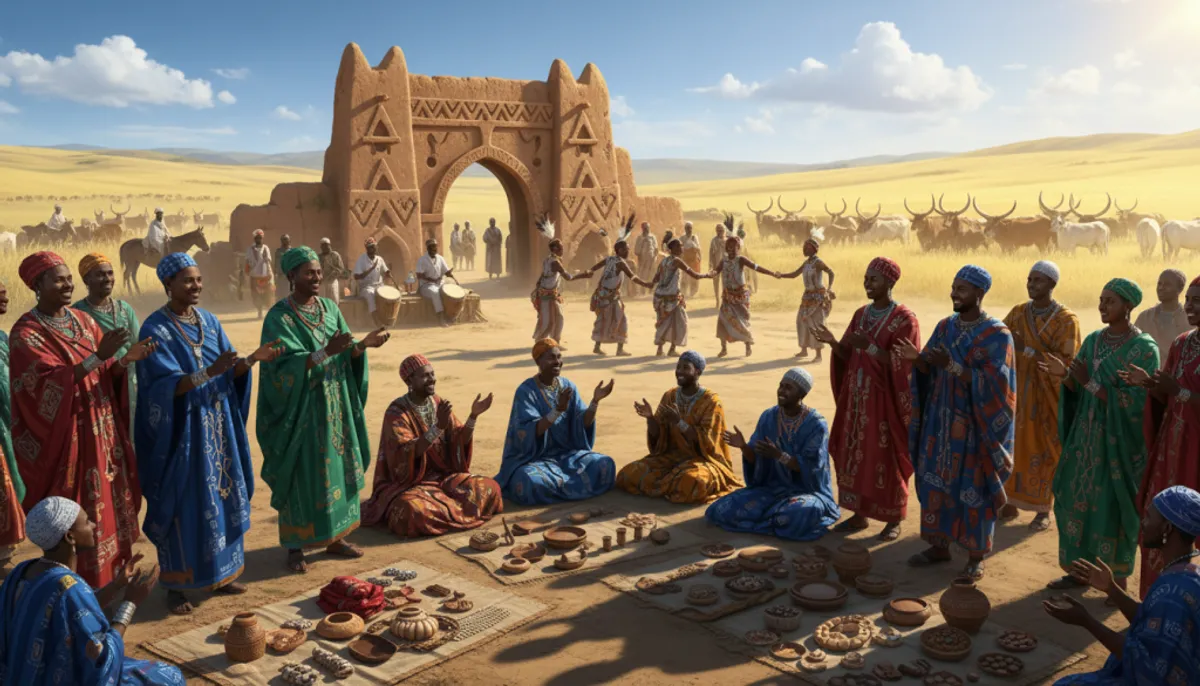
Intellectual and religious elites led djihads to establish Islamic governments. Their influence extended over many current countries.
The Sokoto and Macina Empires
The Sokoto Empire, founded by Ousmane dan Fodio, became one of the largest in Africa. Located in the north of Nigeria, it was a major center of Islamic education.
The Fulani Empire of Macina illustrates how pastoral traditions align with political organization. This theocratic state thrived in present-day Mali.
Influence of Theocratic Kingdoms
As early as the 16th century, Koli Tenguella established the Deniankobé dynasty. He conquered a vast territory between the Upper Niger and Fouta-Djalon.
The 18th century saw the peak of hegemony with theocratic kingdoms in Fouta-Toro and Fouta-Djalon. These social structures still influence the region today.
The Influence of Islam on the Fulani
The encounter between Fulani traditions and Islam has created a unique spirituality in West Africa, deeply rooted in saharan heritage. This religious fusion dates back centuries and continues to define their identity.
Conversion and Jihad
The adoption of Islam occurred between the 11th and 18th centuries depending on the regions. The empires of Fouta Toro, Macina, and Sokoto played a crucial role in this transformation.
In the 19th century, religious elites led jihads to purify Islamic practice. These movements profoundly altered the spiritual landscape of the region.
Daily practice includes five prayers a day and fasting during Ramadan. Quranic learning remains a priority for communities.
Religious Syncretism
Despite their conversion, some pre-Islamic elements persist discreetly. This cohabitation creates a rich and complex religion.
Nomads often carry protective amulets against the evil eye. Beliefs in djinn and natural spirits complement their Muslim faith.
| Islamic Practice | Syncretic Element | Social Function |
|---|---|---|
| Five daily prayers | Protective amulets | Spiritual protection |
| Ramadan fasting | Belief in djinn | Connection to the invisible |
| Quranic learning | Animist rites | Cultural transmission |
| Pilgrimage to Mecca | Nature spirits | Ancestral connection |
This harmonious blend illustrates the Fulani's adaptation to various influences. Their spirituality unites tradition and modernity with balance.
Language, Oral Transmission, and Linguistic Heritage
At the heart of Fulani identity lies a language with multiple facets, a true bridge between generations. This linguistic heritage unites millions of people across different countries in West Africa.
Pulaar and Fulfuldé
The Fulani language has two main variants depending on the regions. Pulaar is spoken in Senegal and in the west of the area, while Fulfuldé dominates in the east, particularly in Cameroon.
This diversity of languages coexists with remarkable homogeneity. Between 50 and 80 million speakers share this common language despite their geographical dispersion.
Oral Heritage and Traditions
Oral transmission constitutes the true pillar of this heritage. Pastoral songs, tales, and poems are faithfully passed down from generation to generation.
This oral transmission goes beyond mere entertainment. It represents the collective memory and the teaching of values for these people.
Fulani children face linguistic challenges in modern educational systems. Teaching in Wolof or French sometimes creates a barrier with their mother tongue.
The Pulaaku: Code of Honor and Cultural Values
The Pulaaku represents much more than just a code of conduct for this West African society. This ethical system defines the “way of being” authentic to the Fulani. It structures the entire set of expected behaviors within this community.
Definition and Importance of Pulaaku
The term Pulaaku refers both to the code and to the community itself. Four fundamental pillars support this moral edifice. Restraint (semteende) avoids excess, endurance (munyal) faces difficulties.
Wisdom (hakkile) guides important decisions. Bravery (gacce) allows one to overcome challenges. These values create a sense of belonging that transcends borders.
Examples in Daily Life
Among the Fulani, Pulaaku manifests concretely in social relations. Hospitality towards strangers and generous sharing illustrate these principles. Patience in facing daily adversities shows the importance of endurance.
Education and work are valued as means of elevation. Discretion in personal success reflects the sought-after restraint. Physical beauty and integrity are among the sought-after qualities.
This code of honor guides all interactions, from family relationships to business transactions. It constitutes a comprehensive ethical framework for social life, passed down from generation to generation.
Social Organization and Fulani Lifestyles
The social organization of the Fulani reveals a fascinating structure where hierarchy and harmony coexist. This society is among the most stratified in West Africa.
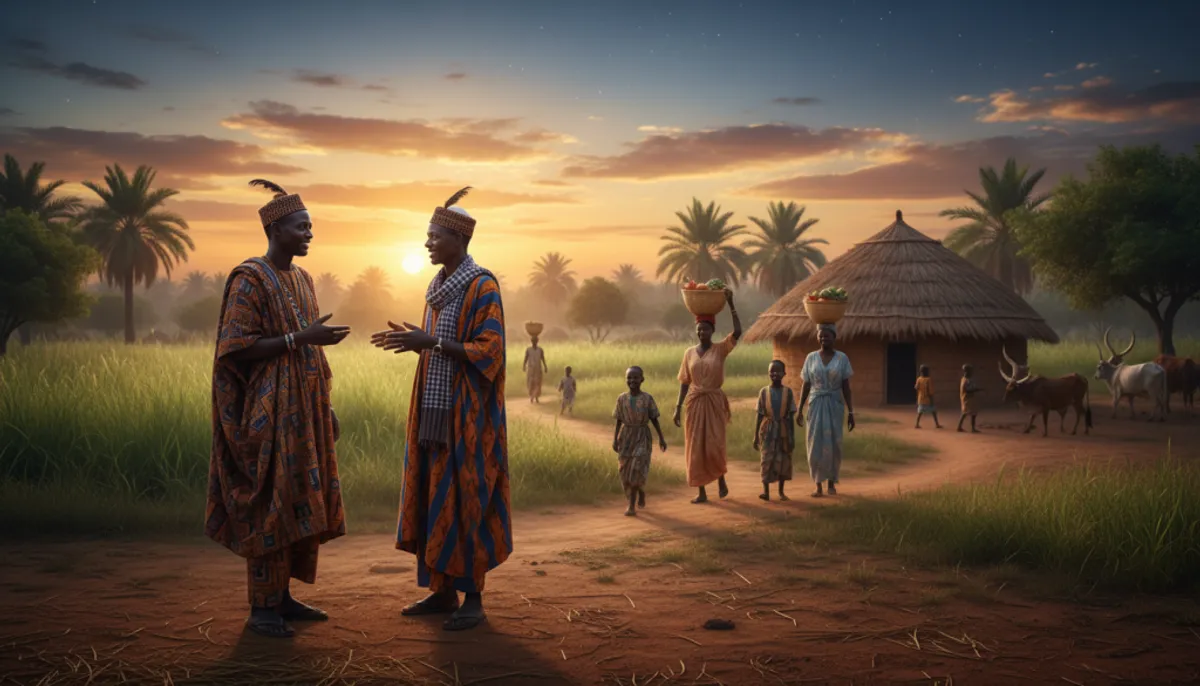
The caste system presents remarkable complexity. It surpasses that observed in other ethnic groups in the region.
Marriage Rituals and Family Hierarchy
Lineage follows a semi-agnatic model, transmitted through men. Unlike some regional practices, women do not wear veils.
Four types of traditional marriage structure marital life. The dewgal is the first arranged marriage around the age of 21.The Islamic marriage was added in the 16th century. It enriches ancestral practices while preserving vietnamese traditions.
| Type of Marriage | Context | Typical Age | Characteristic |
|---|---|---|---|
| Dewgal | First marriage | 21 years | Arranged by parents |
| Remarriage | Divorce/Widowhood | Variable | Second union |
| Marriage-gift | Political | Adult | Strategic alliance |
| Culnol | Concubinage | Adult | Noble with a servant wife |
Women occupy a central place in this organization. They manage the camp and participate in family decisions.
Despite the strict hierarchy, group cohesion prevails. Each member contributes to the collective well-being according to their abilities.
Craftsmanship, Arts, and Aesthetic Expressions
Fulani craftsmanship reveals a unique aesthetic where functionality and beauty intertwine harmoniously. These artistic creations testify to a remarkable adaptation to different modes of life.
Weaving, Hairstyles, and Tattoos
Nomads create essential items such as decorated calabashes and conical hats. Their leather aprons showcase craftsmanship passed down through generations.
Women practice indigo tattooing on lips and gums. This body beauty marks feminine identity according to ancestral aesthetic standards.
The “gourd” hairstyle of the Wodaabe creates a distinctive silhouette. Long hair is elegantly gathered at the top of the head.
Nomadic and Sedentary Creativity
Nomadic Fulani commission complex crafts from local populations they encounter. This practice reflects their constant mobility across different territories.
Sedentary communities excel in geometric patterned weaving. Their textiles preserve traditions while integrating contemporary innovations.
These artistic expressions constitute deep identity markers. They reinforce the sense of belonging through the daily life of each member.
Migrations, Contemporary Challenges, and Adaptation to Change
In a context of accelerated climate and social changes, the Fulani herders are reinventing their ancestral way of life. This transformation responds to the realities of today's world while preserving the essence of their identity.
In Gourmel, communities practice transhumant herding closely linked to the seasons. During the dry season, they seek pastures before returning to the villages during the rains.
Adaptation and Modernization
Climate change is causing prolonged droughts and an increasing lack of resources. These conditions push herders closer to villages and water points.
This proximity sometimes rekindles centuries-old conflicts between nomadic herders and sedentary farmers. Animals encroach on irrigated crops, creating tensions in several regions.
Immigration to new countries like Ivory Coast began in the 1930s. Droughts in the 1970s and 1984 accelerated this movement towards the southern savannas.
Between 1974 and 1994, Ivorian authorities encouraged sedentarization with investments in infrastructure. This policy aimed to stabilize populations while improving livestock health monitoring.
Schooling for children represents a significant challenge for these mobile families. Initiatives like pastoral schools attempt to reconcile modern education with the transmission of traditional knowledge.
Cultural Interactions in West Africa
The exceptional mobility of the Fulani has woven a unique network of exchanges across West Africa. Their geographical dispersion has fostered enriching encounters with many local populations.
Exchanges and Regional Influences
The Mandé Empire in the 13th-14th centuries integrated various ethnicities into peaceful coexistence. Tuaregs, Wolofs, Bambara, and Songhai adhered to the Charter of Manden.
The term Fulani archipelago is used to describe their distribution in islets across the Sahelian band. This dispersion has created a remarkable dynamic of cultural and linguistic exchanges.
Among the nomadic groups, the Seedoobe from Mali and the Weiheebe from Hayre stand out. The Djelgobe come from Burkina Faso while the Toleebe are from Niger.
These peoples have developed specificities while sharing a common identity. Their interactions with the Sérères, Tekrouri, and Haoussas have mutually enriched traditions.
Pastoral mobility has created transnational trade networks throughout the region. These exchanges have facilitated the dissemination of ideas and practices among different groups.
These interactions have not diluted identity but have instead enriched it. The Fulani culture remains deeply rooted while being open to external influences.
Conclusion
At the end of this journey, the richness of the Fulani heritage appears in all its complexity. This people spread across fifteen countries embodies a millennia-old civilization that is still alive.
Their unique heritage rests on a remarkable balance. Tradition and adaptation harmoniously combine thanks to Pulaaku. This code guides behaviors while evolving with the times.
The Fulani face significant challenges today. Climate change and modernization require constant adaptation. Their historical resilience provides valuable assets for the future.
Their contribution to West African diversity remains essential. Interactions with other peoples enrich the whole region. This openness does not weaken their distinct identity.
The Fulani youth are now forging their own path. They honor the ancestral heritage while inventing new solutions. This dynamic ensures the sustainability of their unique culture across generations.
FAQ
Who are the Fulani and where do they primarily live?
The Fulani are a people of West Africa, present in about twenty countries. Their community is historically dispersed throughout the region, from Senegal to Sudan. Traditionally pastoralists, some groups are nomadic while others are sedentary.
What is the historical origin of this people?
The origins are the subject of various theories. Some research suggests links to North Africa or the Nile Valley. Their history is marked by centuries of migrations and the formation of powerful states, such as the Fulani Empire of Macina.
What role does Islam play in their society?
Islam has profoundly influenced their culture, particularly from the 18th century with movements of conversion and jihads that gave rise to theocratic kingdoms. Some syncretism with traditional beliefs can be observed.
What is Pulaaku?
Pulaaku is a code of honor and a set of values that define Fulani identity. It encompasses principles such as restraint, courage, patience, and respect. This code guides behavior in everyday life and strengthens group cohesion.
How are their traditions transmitted?
Oral transmission is fundamental. The linguistic heritage, with languages like Pulaar and Fulfuldé, conveys wisdom, history, and legends. The tales of the elders, poems, and songs ensure the perpetuity of this heritage across generations.
What are their characteristic arts and crafts?
Their creativity is expressed through weaving, elaborate hairstyles, and symbolic tattoos. Craftsmanship often reflects their way of life, whether nomadic or sedentary, and shows great aesthetic mastery.