
Welcome to a universe where volcanoes meet legends. This island country, lost in the North Atlantic, is home to a unique society. Despite a population of about 340,000 inhabitants, its heritage is immense.
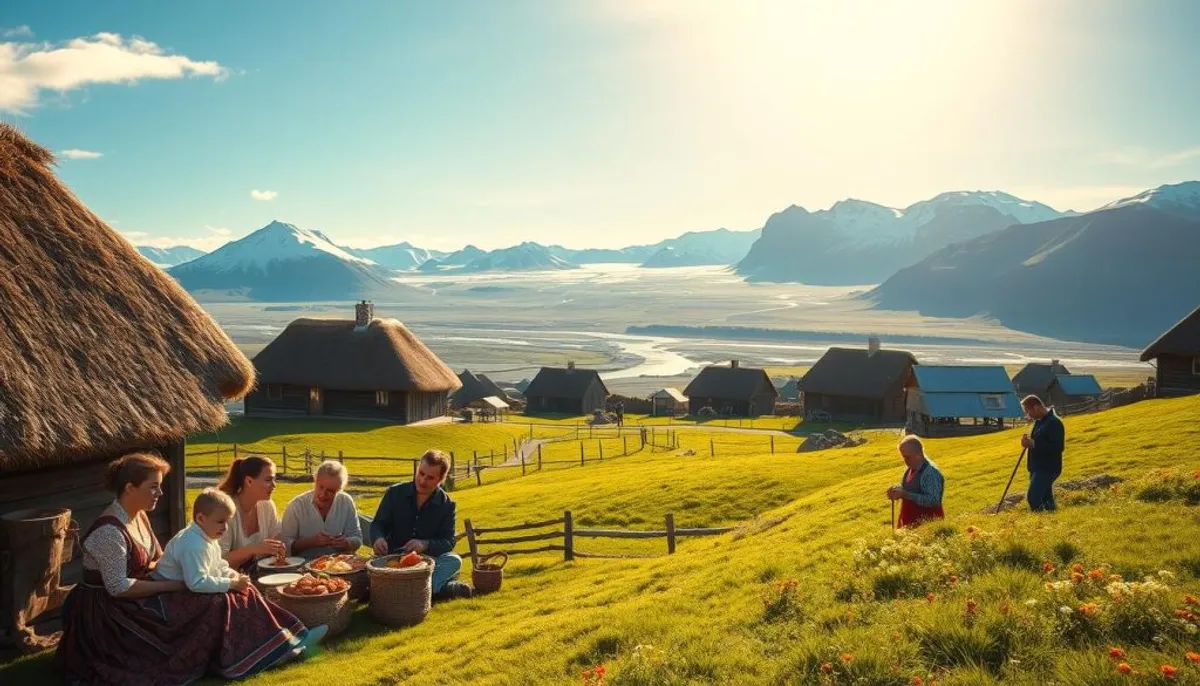
The medieval sagas, like that of Hrafnkell, remain pillars of local identity. Icelanders still read and cherish them today. This connection to the past is remarkable.
The society navigates between two worlds. On one side, ancestral beliefs, such as the existence of invisible elves, persist. On the other, Western influence is palpable, with visible Americanization in daily life.
This duality makes Icelandic culture so captivating. It is not frozen in time, but lives and evolves. You will discover how this small island has forged such a strong character.
Key Points to Remember
- Iceland is a Nordic island with a population of about 340,000 inhabitants.
- Its cultural heritage, including the cultural heritage of cyprus, is based on medieval sagas that are still popular today.
- The society balances between ancestral traditions and modern influences.
- Unique beliefs, such as those in elves, coexist with contemporary culture.
- The island country is known for its landscapes and exceptional cultural heritage.
- The Icelandic language is remarkably preserved.
- Contemporary music and art thrive alongside folklore.
Discovering Icelandic Culture
Unlike many European nations, the narrative of this country, including north macedonia, is relatively young but deeply marked. Its history seriously begins in the 9th century, with the arrival of Scandinavian and Celtic settlers.
General Overview and Historical Context
The geographical isolation has protected the island from major conflicts. However, external events like the Protestant Reformation or the Black Death have left a lasting mark.
The struggle for autonomy culminated in independence in 1918. The last ties with Denmark were severed in 1944, during the proclamation of the Republic.
The Specificities that Make it Unique
This isolation has allowed for exceptional preservation. The language, for example, has remained almost unchanged for centuries.
The specificities lie in a remarkable balance. On one side, a deep respect for ancestral traditions.
On the other, a total openness to the modern world. This duality forges a strong and unique cultural identity.
- A recent but intense history, sheltered from wars.
- A preserved language, a direct link to the medieval past.
- A constant balance between tradition and modernity.
Historical and Legendary Origins
At the heart of local identity lies a heritage straight from the Viking Age. This foundational period shaped the basis of a unique society.
The Scandinavian settlers brought much more than their ships. They brought their belief system and their epic tales.
The Sagas and Norse Mythology
The sagas constitute the literary treasure of this nation. Written mainly in the 13th century, they recount the colonization and the exploits of the first inhabitants.
These medieval narratives remain incredibly alive today. Works like the Saga of Njáll the Burned continue to be studied and admired.
The Edda of Snorri Sturluson represents a pillar of Norse mythology. This major work has preserved the entirety of beliefs for future generations.
The Scandinavian pantheon with Odin, Thor, and Freyja still permeates art and literature, including notable examples of greek art. This mythology even influences contemporary popular beliefs.
The Vikings also introduced a whole legendary bestiary. Elves, trolls, and revenants have adapted to the local volcanic landscape.
This rich narrative history establishes a direct link between the present and a bygone but still vibrant era.
Ancestral Traditions and Customs
Celebrations punctuate the lives of Icelanders throughout the year. These traditions create a strong bond between generations.
Rituals, Festivals, and Holidays
The Icelandic calendar is marked by significant events. June 17, the national holiday, commemorates the independence obtained in 1944.
The Summer Festival, celebrated on the third Thursday of April, symbolizes the end of the harsh winter. This custom holds particular importance for the inhabitants.
The first Monday of August, the Merchant's Festival enlivens the country. These celebrations strengthen social cohesion.
| Festival | Date | Meaning | Participation |
|---|---|---|---|
| National Holiday | June 17 | Independence 1944 | Massive |
| Summer Festival | 3rd Thursday of April | End of Winter | Popular |
| Merchant's Festival | 1st Monday of August | Local Economy | Professional |
Costumes and National Symbols
The Þjóðbúningurinn, national costume, is worn on special occasions. A special authority has ensured its authenticity since 2001.
The coat of arms represents the four mythical protective figures. The flag and the anthem Lofsöngur complete these patriotic symbols.
These elements unite the society and preserve the unique identity in the face of globalization. Each year, they are celebrated with pride.
Language and Cultural Identity
The Icelandic identity finds its deepest roots in a carefully preserved language. This linguistic connection unites the people to their history in an exceptional way.
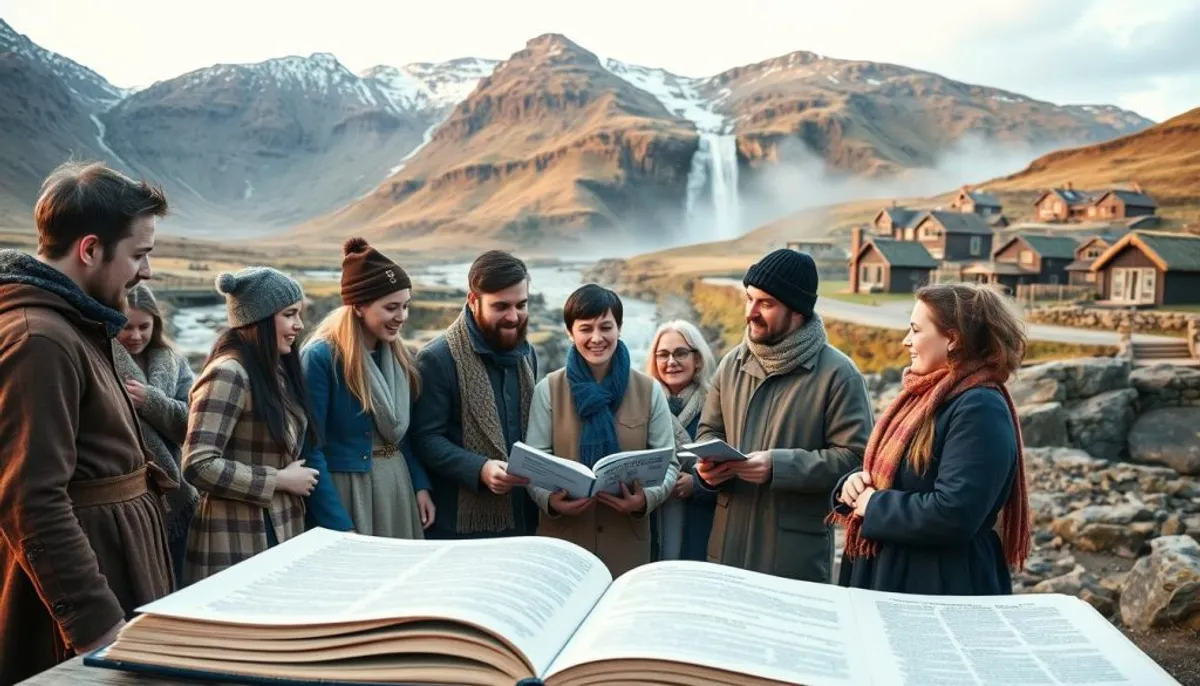
What makes this heritage remarkable is its stability over nearly a millennium. Medieval texts remain perfectly readable today. This continuity over ten centuries is unique in the world.
Linguistic Purism and the Preservation of Icelandic
The Íslensk málstöð, the linguistic academy, actively oversees the Icelandic. It creates neologisms rather than borrowing foreign terms. This approach maintains the purity of the language.
Even the choice of first names follows this preservation logic. The Names Committee must approve any non-traditional name. This rigor ensures grammatical harmony.
| Institution | Role | Impact | Key Year |
|---|---|---|---|
| Íslensk málstöð | Linguistic Preservation | Icelandic Neologisms | 20th Century |
| Names Committee | Name Approval | Grammatical Harmony | Active |
| Icelandic Parliament | Official Recognition | Sign Language | 2011 |
These efforts ensure the freedom to maintain a strong identity. The recognition of sign language in 2011 shows that this protection extends to all forms of communication. The Icelandic thus remains alive and dynamic.
Icelandic Art and Literature
Beyond spectacular landscapes, Iceland cultivates a written heritage that spans centuries. This literary production represents a precious treasure for the world as a whole.
Medieval Sagas and Sacred Poetry
The sagas form the foundation of this tradition. Works like the Saga of Njáll the Burned still fascinate readers today.
Between the 15th and 19th centuries, sacred poetry dominated. The Passion Psalms of Hallgrímur Pétursson are a beautiful example. They remain deeply rooted in the local culture.
Contemporary Literature and Literary Awards
Halldór Laxness received the Nobel Prize in 1955. He carries the voice of his country onto the international stage. This article highlights his importance.
Contemporary literature is experiencing remarkable success. Nordic crime novels captivate millions of readers. Authors like Arnaldur Indriðason are translated into many languages.
| Period | Main Genre | Representative Author | International Impact |
|---|---|---|---|
| Medieval | Epic Sagas | Anonymous Authors | Cultural Foundation |
| 15th-19th | Sacred Poetry | Hallgrímur Pétursson | Religious Influence |
| Contemporary | Crime Novel | Arnaldur Indriðason | Global Success |
Iceland ranks among the countries with the highest publication rate per capita. This literary vitality impresses for the second time in its history. The present article shows how this small nation influences the world of letters. To further enhance knowledge retention and performance, it’s essential to explore strategies for succeeding in a general knowledge multiple choice questionnaire.
Music and Live Performances
The sound of Iceland resonates well beyond its borders, blending sacred heritage and contemporary boldness. This music captivates listeners from the world over with its authenticity.
Traditional Music and Rímur
The rímur represent the purest traditional musical form. These epic tales sung a cappella plunge their roots into medieval skaldic poetry.
Religious music long dominated with the Protestant hymns of Hallgrímur Pétursson. These 17th-century works are still sung today during celebrations.
Modern Bands and the Pop-Rock Scene
The live performance scene underwent a revolution in the 20th century. Artists like Björk revolutionized experimental pop with international success.
Groups such as Sigur Rós and Of Monsters and Men showcase the diversity of the current scene. Their creativity impresses with its originality.
Many music festivals attract visitors from the world over each year. These events strengthen the country's musical reputation.
The Icelandic live performance scene continues to evolve, driven by new artists and talented groups. This vitality ensures a unique place on the international stage.
Culinary Traditions and Gastronomy
The Icelandic culinary adventure transports you to a universe of authentic and surprising flavors. The bosnian cuisine draws its essence from the natural resources available, creating a unique culinary experience.
This island country has developed ingenious preservation techniques in the face of climatic conditions. Fermentation and drying allow food to be preserved during the long winters.
Typical Dishes and Culinary Excursions
Among the traditional specialties, hákarl (fermented shark) stands out as a significant example. Its distinctive taste often surprises novice visitors.
Lamb soup provides comfort during the cold seasons. This simple yet tasty dish is enjoyed throughout the territory.
| Traditional Dish | Main Ingredients | Particularity | Ideal Season |
|---|---|---|---|
| Hákarl | Greenland Shark | Long Fermentation | All Year |
| Lamb Soup | Lamb, Vegetables | Comfort Dish | Winter |
| Svið | Sheep's Head | Traditional Preparation | Special Events |
Culinary excursions in Reykjavík offer a complete immersion in this Icelandic cuisine. You will discover how modern chefs reinterpret ancestral recipes.
The Fiskidagurinn mikli in Dalvík is another remarkable example. This fish festival gathers thousands of people every August.
Architecture and Design in a Unique Landscape
Icelandic buildings tell a fascinating story of adaptation and innovation. This architectural evolution perfectly reflects the resilient character of its inhabitants.
Scandinavian Influence and Local Adaptations
The Scandinavian heritage is clearly manifested in traditional constructions. However, the lack of wood in this northern region has stimulated creativity.
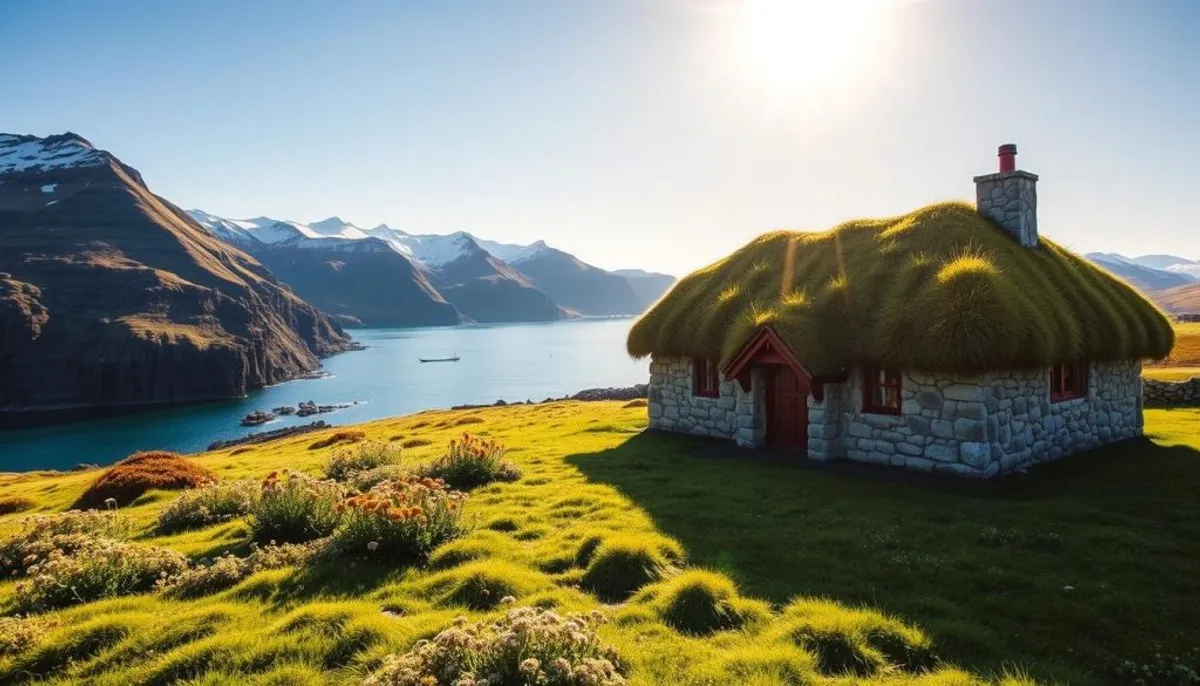
Architects have developed ingenious solutions using local materials. Lava stone and turf have become fundamental elements.
Houses with turf roofs represent a remarkable example. They integrate harmoniously into the volcanic landscapes while offering exceptional insulation.
Contemporary architecture has managed to preserve this connection to the environment. The Harpa concert hall in Reykjavík beautifully illustrates this approach.
Its glass façade reflects the changing landscapes and possesses world-renowned acoustics. This building symbolizes the bold modernity of current architecture.
The Sun Voyager (Sólfar) embodies the meeting of contemporary art and maritime traditions. This monumental sculpture on the waterfront has become iconic.
Icelandic design draws inspiration from the austere beauty of natural elements. It creates a unique minimalist style that respects the environment while asserting a strong visual identity.
This symbiosis between art, zambian art, architecture, and nature defines the country's distinctive aesthetic. It reflects a balanced relationship between man and his territory.
Icelandic Society and Modernity
Iceland stands out for its resolutely modern and egalitarian societal approach. This small nation has managed to build a remarkable social model that inspires the world over.
Evolution of Roles and Gender Equality
As early as 1915, women obtained the right to vote. This early advancement heralds a quiet revolution.
In 1980, Vigdís Finnbogadóttir became the first woman elected by direct universal suffrage to head a state. Her election marks a historic turning point for Icelandic society.
Jóhanna Sigurðardóttir continues this tradition in 2009. She is the first openly lesbian head of government in the world. This appointment demonstrates real freedom of expression.
The World Economic Forum ranked Iceland first for gender equality in 2013. This international recognition confirms the advancement of society.
The financial crisis of 2008 profoundly shook the country. It triggered the "kitchenware revolution" that transformed the political landscape.
This financial crisis ultimately strengthened the resilience of Icelandic society. In 2022, the country reached the top of the Global Peace Index.
Cultural Visits and Excursions
Exploring the sites of Iceland means understanding how history and nature intertwine. These immersive experiences plunge you into the heart of living traditions.
Guided Discovery of Reykjavík
The capital is full of iconic places to explore. The imposing Hallgrímskirkja church dominates the urban landscape with its unique architecture.
The Tjörnin pond and the Harpa concert hall offer fascinating contrasts. The Sun Voyager completes this rich palette of must-see sites.
The Reykjavik City Card simplifies your exploration. It provides access to museums and thermal pools for 24 to 72 hours.
Excursions Outside the Capital
Traveling in the north of the country reveals other treasures. The herring history museum in Siglufjörður has received a prestigious European award.
Some tours combine the Golden Circle with Northern Lights hunting. These nighttime experiences create magical memories.
Fans of series love the filming locations near Lake Mývatn. These sites served as the backdrop for Game of Thrones.
All of Iceland offers memorable cultural excursions. Observing the Northern Lights remains a unique experience in this northern country.
The Influence of Folklore and Norse Myths
The boundary between reality and mythology remains surprisingly porous in the contemporary society of this country. Legends are not relegated to history books but live in daily life.
Legendary Creatures and Folk Tales
Many inhabitants sincerely believe in the existence of invisible elves. These mysterious beings coexist with humans in the collective imagination.
Iceland shows remarkable respect for these beliefs. Construction projects have sometimes been modified to avoid disturbing the presumed habitats of elves.
The exceptional Icelandic nature has profoundly transformed Norse mythology. Volcanoes and glaciers have given a unique color to traditional tales.
According to legend, trolls would have turned to stone at sunrise. They would today form the spectacular rock formations of the landscape.
This persistence of folkloric beliefs testifies to the deep bond uniting the people to their millennia-old heritage. The mythology continues to enrich daily life.
The Impact of Media and Visual Arts
Iceland shines on the global media stage with a creativity that defies its small size. This vitality is rooted in an absolute constitutional freedom of expression, unique in the world.
The Icelandic Modern Media Initiative of 2010 reinforced this protection. It makes the country a source of inspiration for international journalists.
Press, Radio, Television, and Contemporary Art
Icelandic media offer remarkable diversity. The newspapers Morgunblaðið and 24 stundir coexist with the radios Rás 1 and Bylgjan.
On television, Sjónvarpið (public) and Stöð 2 (private) offer varied programming. The global success of series like LazyTown demonstrates this excellence.
This children's program created by Magnús Scheving is broadcast in 98 countries. It illustrates the international reach of local audiovisual production.
Contemporary artists draw their inspiration from the landscapes and mythology. Their works are exhibited in Reykjavík in prestigious venues.
The National Gallery and the Hafnarhús museum present resolutely modern art. The sites Vísir.is and Mbl.is constitute the main source of digital information.
This article highlights how Icelandic media and series conquer the world. The next article will conclude this fascinating exploration.
Conclusion
Iceland brilliantly demonstrates that a small country can shine well beyond its borders. This northern territory perfectly combines respect for ancestral traditions and openness to the modern world.
Since the beginning of its history, this island has managed to preserve its unique identity. Each era brings its share of innovations while maintaining the Icelandic essence.
The spectacular Icelandic nature serves as a backdrop for a vibrant and dynamic culture. Historical sites and cultural places offer a total immersion.
The example of this country proves that size does not prevent major cultural influence. Iceland continues to enrich the world heritage with its unique creativity.
FAQ
Is Norse mythology still important to the inhabitants today?
Absolutely! The stories of gods like Odin and Thor are part of everyday life. Place names, works of art, and even conversations often reference these ancient legends. It is a source of pride and a direct link to the past.
What are the best times to attend traditional festivals?
Summer is fantastic for experiencing the energy of Þjóðhátíð or the Viking Festival. In winter, you can discover the warmth of Christmas celebrations, with their thirteen Santa Clauses. Each season offers a unique live spectacle.
Is Icelandic a difficult language to learn?
Its grammar is complex, but islanders love it when visitors make the effort to learn a few words. Linguistic purism means that the language has changed little, making it close to that of the ancient sagas.
Are there typical dishes that I must absolutely try?
Yes, for a culinary adventure, try the skyr or a Reykjavík hot dog. The boldest sometimes venture to try hákarl (fermented shark). Icelandic cuisine always surprises with its direct connection to nature.
Do Icelanders really believe in elves?
It’s a fascinating topic! Many have respect for these legendary creatures and the stories surrounding them. Even during construction projects, some sites are sometimes modified to avoid disturbing these invisible neighbors.
How has society evolved since the financial crisis?
The island has shown incredible resilience. This period reinforced community and innovation values. Today, it is a country known for its balance between modernity and kenyan traditions, with great freedom and strong equality.