
Welcome to a journey to the heart of the Balkans, where an exceptional cultural heritage unfolds. The Republic of Macedonia, an independent state since 1991, possesses a unique identity shaped by centuries of history.
This country in Southeast Europe has approximately 2.1 million inhabitants over an area of 25,000 km². Its central position in the Balkans makes it a crossroads of European civilizations.
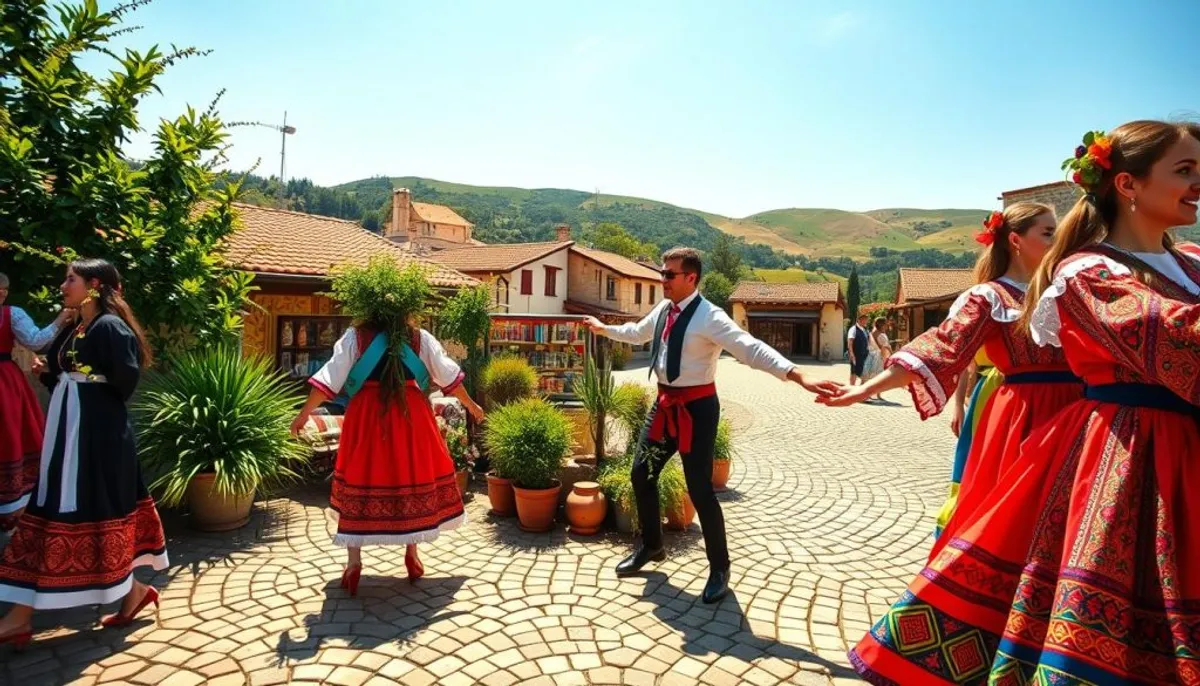
North Macedonia inherits a fascinating blend of ancient, Byzantine, Ottoman, and Slavic influences. This diversity is reflected in all artistic and traditional expressions of the country.
Several ethnic and religious communities coexist harmoniously, each bringing its traditions. This plurality makes the discovery of this region particularly enriching.
Throughout this article, we will explore the history, religions, languages, and arts of this authentic destination. You will discover a delicious cuisine and vibrant music.
Key Points to Remember
- North Macedonia is a young state heir to a millennia-old history
- Strategic position at the crossroads of European influences
- Exceptional cultural diversity with several communities
- Unique blend of ancient, Byzantine, and Ottoman influences
- Material and immaterial heritage of remarkable richness
- Authentic destination to discover Balkan traditions
General Introduction
Let us embark on a discovery of a unique heritage at the crossroads of European civilizations. Our goal is to help you explore the unknown riches of this Balkan region.
Objectives of the Article
This educational guide aims to present French-speaking readers with the extraordinary diversity of artistic and traditional expressions. We will cover all aspects that make this nation unique.
You will discover how folk music and poetry have marked the local identity. Contemporary development under the communist regime particularly favored literary growth.
Context Presentation
Understanding the specificities of North Macedonia requires grasping its geographical and historical framework. This territory occupies a strategic position in the Balkans.
Our thematic approach will guide you through history, religions, languages, and arts. This chronological exploration will cover from antiquity to the challenges of the 21st century.
The country today maintains a delicate balance between heritage preservation and openness to modernity. This dynamic directly influences the evolution of traditions.
Historical Context of Macedonia
Over the centuries, this territory has undergone profound transformations under the influence of various imperial powers. Its fascinating history truly begins with the conquests of Philip II in the 4th century BC, which is a significant part of Slovenian history.
From Antiquity to the Byzantine Empire
The ancient history sees the kingdom of Philip II and then of Alexander the Great dominate the region. The Romans take control in 148 BC, integrating this territory into their vast empire.
In the 4th century, during the division of the Roman Empire, the region comes under Byzantine jurisdiction. This crucial era sees the establishment of Orthodox Christianity.
A major demographic event occurs in the 5th century with the arrival of the Slavs. They impose their language and permanently transform the local identity. By the end of the 9th century, the Bulgarians create a state that annexes the region.
The Ottoman Legacy and Revolutions
The Ottoman Empire incorporates the region after its victory in 1371. This long period of five centuries brings lasting Eastern influences.
The 19th century sees the emergence of national resistance movements. The Revolutionary Organization is founded in 1893. It leads the Ilinden uprising in 1903 against the Ottoman Empire.
The Balkan Wars of the years 1912-1913 result in the division of historical Macedonia. This beginning of the 20th century marks a new stage in the complex history of the region.
Major Cultural and Religious Influences
The spiritual landscape of this Balkan region reveals remarkable religious diversity and a vibrant pastel lifestyle. This plurality reflects the complex history of the territory and its strategic positioning.
Orthodox Christianity and Liturgical Rites
The Macedonian Orthodox Church represents nearly 65% of the population. This spiritual institution preserves unique Byzantine liturgical traditions.
The Archbishopric of Ohrid plays a fundamental historical role in the spread of Slavic Christianity. Macedonian Orthodox rites present distinct characteristics compared to other Orthodox churches.
These religious practices rhythm the annual calendar of the people. Orthodox monasteries constitute emblematic places of worship.
The Impact of Islam and Other Spiritualities
Islam comprises about 33% of the population, mainly within the Albanian, Turkish, and Romani communities. This significant presence reflects the Ottoman heritage.
Historic mosques coexist harmoniously with Christian churches. Mother Teresa, born in Skopje, illustrates the presence of the minority Catholic community.
Religious tolerance characterizes contemporary society. This peaceful coexistence of different spiritualities enriches the national cultural heritage and encompasses various disciplines of general knowledge.
Languages and Ethnic Diversity
The country stands out for its unique linguistic mosaic, reflecting a complex history. This diversity constitutes a fundamental element of national identity.
Macedonian and Its Dialects
The main language, Macedonian, is spoken by about 66% of the population. This southern Slavic language uses the Cyrillic alphabet.
Codified in 1945, it shares similarities with Bulgarian while maintaining its specificities. Regional dialects enrich this linguistic diversity.
The Albanian, Turkish, and Romani Communities
The Albanian community represents 25.2% of the inhabitants. Mainly settled in the west, it claims increased recognition of its language.
The Macedonians form 64.2% of the population. Turks (3.9%) and Roma (2.7%) complete this rich ethnic mosaic.
The Turkish people keep the Ottoman heritage alive. The Romani community benefits from increasing integration efforts.
Legislation grants co-official status to languages spoken by at least 20% of citizens. This approach values the cultural plurality of the country.
Popular Traditions and Customs
Family customs and traditional festivals weave the social fabric of this nation, reflecting the rich cypriot traditions. These ancestral practices mark the year and significant milestones in life.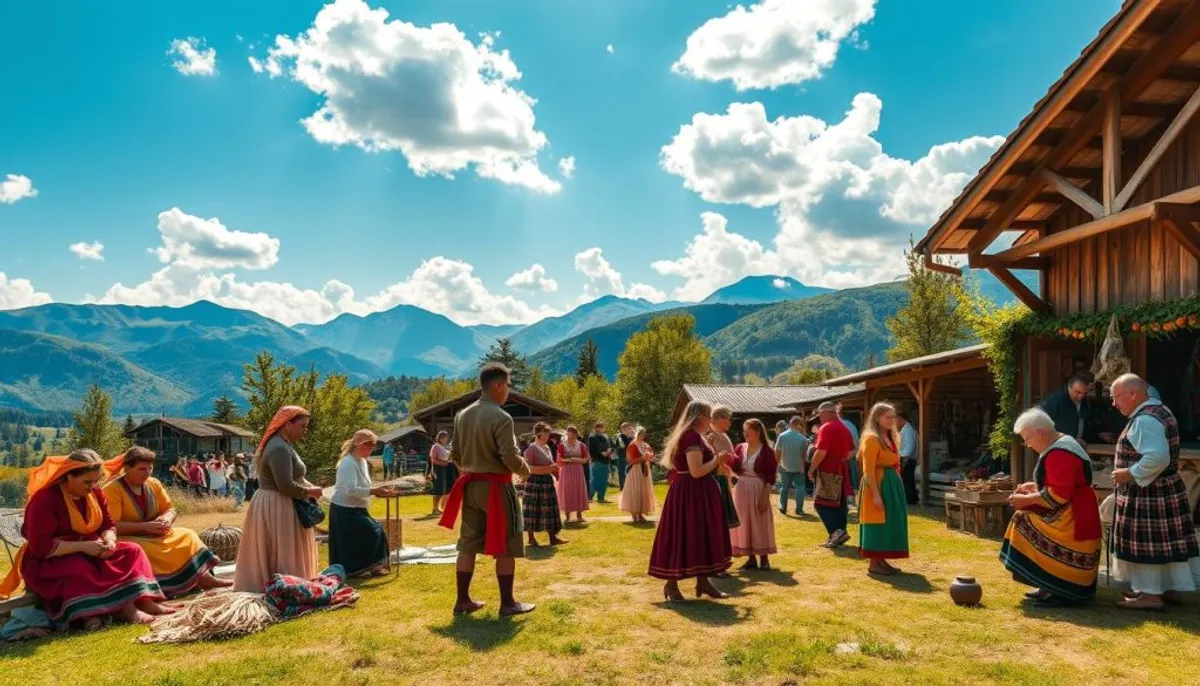
Traditional Festivals and Public Holidays
The official calendar includes twelve public holidays blending religious celebrations and national commemorations. Orthodox Christmas on January 7 and Easter in spring are among the most important festivals.
| Date | Event | Type |
|---|---|---|
| January 7 | Orthodox Christmas | Religious |
| May 24 | Saints Cyril and Methodius | Cultural |
| August 2 | Republic Day | National |
| September 8 | National Holiday | National |
The tradition of the Koledari, Christmas carolers, enlivens the villages during the winter festivities. On March 1, spring is celebrated with red and white bracelets.
Family Ceremonies and Rituals
Significant events in family life are accompanied by specific rituals. The Galitchnik wedding represents the pinnacle of wedding celebrations with its sumptuous costumes.
Each family perpetuates artisanal traditions such as embroidery or the preparation of festive dishes. Hospitality is a fundamental value during all these occasions.
Baptisms and funerals also follow protocols established for generations. These moments strengthen community and identity bonds.
Folklore, Mythology, and Legends
The Macedonian mythological universe opens the doors to an enchanted realm populated by supernatural beings. These wonderful tales constitute an essential part of the immaterial heritage.
Fantastic Creatures and Ancient Tales
The imaginary world includes emblematic figures such as the Roussalka, a water spirit often benevolent. Balkan vampires and the Dhampire, a vampire's son with protective powers, have fascinated for centuries.
These legends are deeply rooted in the local landscapes. Mysterious forests and enchanted lakes harbor these creatures in the collective imagination.
In the 19th century, the Miladinov brothers collected these orally transmitted tales, contributing to the rich history of nepal. Their work saved a rich popular history from oblivion.
Rituals for protection against evil spirits demonstrate the lasting influence of these beliefs. Orthodox Christianity has integrated some pagan practices, creating a unique syncretism.
Today, folklore festivals perpetuate this tradition. They allow new generations to discover this precious heritage.
Craftsmanship and Traditional Costumes
Textile craftsmanship reveals a fascinating facet of North Macedonian heritage. This material legacy includes around 70 distinct regional costumes, each narrating the story of its community.
Textile Techniques and Regional Embroideries
Artisanal know-how is passed down from mother to daughter for generations. Techniques include hand weaving, intricate embroidery, and fine lace.
Each region develops specific patterns, such as the colorful geometric embroideries of Tetovo. Natural materials dominate: wool, linen, cotton, and hemp.
Evolution of Traditional Clothing
The peak of costumes occurs in the early 20th century. Today, their use is limited to folkloric festivals and traditional weddings.
The western part is distinguished by costumes rich in pieces, dominated by bright red. The eastern region favors more subdued and lighter versions.
The women's costume combines a shirt, embroidered apron, and functional caftan. The men's attire includes an embroidered vest and characteristic traditional skirt.
This artistic development reflects the diversity of local expressions. The preservation of these traditional arts remains a cultural priority.
Visual Arts, Painting, and Sculpture
Visual artistic expression constitutes a fundamental pillar of North Macedonian heritage, including estonian art. These arts tell a millennia-old story of creativity and spirituality.
Religious frescoes represent the pinnacle of this tradition. Emerging in the 11th century, they reach their golden age in the 12th century.
Religious Frescoes and Icons
The frescoes of Nerezi perfectly illustrate this flourishing era. Their naturalism and three-dimensional perspective distinguish them from Byzantine canons.
After the Ottoman conquest, production declines significantly. The 18th century marks a revival with the construction of new churches.
Carved iconostases enrich these places of worship. Their decoration combines floral motifs and Eastern influences.
In the 20th century, artists like Nikola Martinoski and Petar Mazev emerge. Their expressionist approach renews the local arts.
Dimo Todorovski becomes the most famous sculptor of this era. His work reflects a modernity respectful of traditions.
These works continue to adorn the churches and museums of the country. They constitute a precious legacy for future generations.
Architecture and Historical Monuments
Architecture reveals the fascinating history of this region through remarkable buildings. These constructions testify to the different influences that have marked the territory over the centuries.
Byzantine and Ottoman Influences
In the 10th century, Clement of Ohrid develops an original Slavic architecture. The local style departs from Byzantine models with four apses and five aligned domes.
The conquest by the Ottoman Empire radically transforms the urban landscape. Elegant mosques, caravanserais, and hammams appear in the cities.
The painted mosque of Tetovo perfectly illustrates this era. Its wall panels feature polychrome floral and geometric motifs.
Iconic Monuments and Listed Sites
The Cathedral of Saint Sophia in Ohrid represents a jewel of the 11th century. This church has three naves, a central dome, and a narthex with galleries.
Medieval fortresses dominate the landscape. Samuel's fortress in Ohrid features walls 10 to 16 meters high with 18 towers. The fortress of Skopje dates back to Justinian I around 535.
Numerous monasteries dot the site, housing precious frescoes and manuscripts. Each part of the country preserves unique churches and monuments.
The conservation of this architectural heritage remains a significant challenge. Earthquakes have destroyed several buildings over time.
Literature and Writing: Heritage of Saints Cyril and Methodius
A cultural revolution in the 9th century laid the foundations of the Slavic written tradition. This profound transformation marks the beginning of a rich literary history.
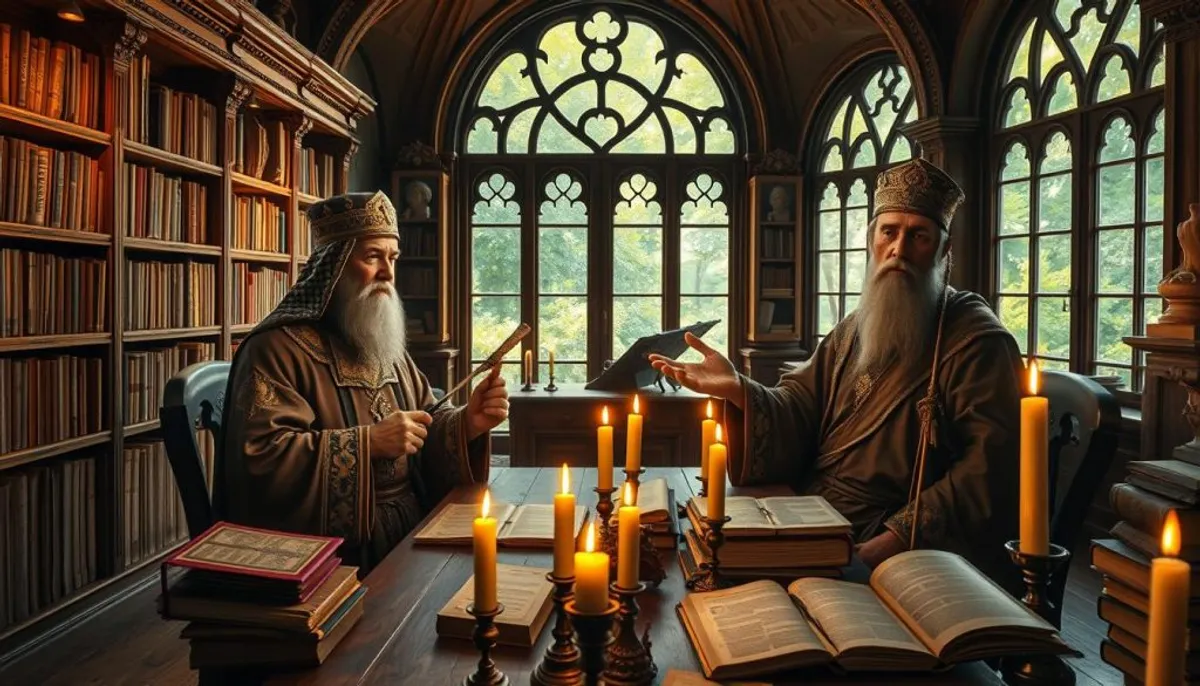
Birth of the Glagolitic and Cyrillic Alphabets
The brothers Cyril and Methodius created the first Slavic alphabet around 863. Their invention, the Glagolitic, allowed for the transcription of Slavic languages.
Their disciples, Clement and Naum, perfected this alphabet in Ohrid. They developed the Cyrillic, which is simpler and more practical. This innovation facilitated the spread of writing.
The University of Ohrid became a major intellectual center. It trained thousands of literate individuals for several centuries. This institution radiated throughout Eastern Europe.
| Period | Major Event | Contribution |
|---|---|---|
| 9th century | Mission of Cyril and Methodius | Creation of the Glagolitic |
| End of 9th century | Foundation of the University of Ohrid | Development of the Cyrillic |
| 1792 | First modern book | Publication in Vienna |
| 1945 | Official codification | Language recognition |
The 18th century sees the publication of the first modern book. Marko Todorovitch achieves this significant advancement. The 19th century brings the collection of oral traditions.
Official codification occurs in 1945 after long years of effort. This recognition crowns a complex historical process. It establishes the language in its contemporary form.
Macedonian Cuisine and Traditional Beverages
Cuisine reveals the authentic soul of this Balkan nation through its unique flavors, deeply intertwined with Latvian folklore. Each dish tells a millennia-old story of encounters and exchanges.
Iconic Dishes like Tavče Gravče
The tavče gravče reigns supreme on local tables. These white beans slowly simmered in a clay pot are the must-try national dish.
The cuisine of this country harmoniously synthesizes Mediterranean, Balkan, and Eastern influences. The ajvar, a condiment made from roasted peppers, generously accompanies every meal.
Regional specialties include börek (stuffed pastries) and pastrama (cured beef). The Ohrid trout represents the absolute reference for fish lovers.
Local Beverages and Rhythms of Life
Traditional beverages punctuate the daily life of the inhabitants. Turkish coffee remains a social institution, shared during convivial moments.
The rakija, homemade fruit brandy, and mastika (national anise liqueur) accompany celebrations. Winemaking dates back to Roman antiquity with indigenous grape varieties like vranec.
This region lives to the rhythm of family meals and gastronomic festivals. The legendary hospitality makes every meal an authentic sharing moment, and obtaining the cultural card enriches the experience of understanding and appreciating local traditions.
Music and Dance: Living Artistic Expressions
The enchanting melodies and rhythmic steps embody the vibrant energy of this Balkan nation. These artistic expressions transcend time while remaining deeply rooted in contemporary life.
Oral transmission ensures the longevity of this precious heritage. Each generation enriches this immaterial legacy.
Ancestral Folk Dances
Traditional choreographies are characterized by their unique asymmetrical rhythms. Circle or line formations create an impressive collective dynamic.
Regional costumes add a spectacular visual dimension to these performances. This tradition is perpetuated during major occasions.
| Instrument | Type | Characteristic |
|---|---|---|
| Gaïda | Bagpipe | Deep and enveloping sound |
| Tapan | Drum | Catchy and powerful rhythms |
| Kaval | Flute | Soft and melancholic melodies |
| Gusle | Strings | Accompaniment of epic ballads |
Contemporary Festivals and Celebrations
Esma Redzepova, queen of Roma music, represents an emblematic figure of this heritage. Her commitment to the Romani cause inspires new generations.
The Struga Poetry Evenings enliven cultural life every year. These events blend literary creation and musical performances.
The current scene fuses traditional and modern influences. This evolution ensures the vitality of musical art for decades to come.
Social Life and Etiquette in Macedonia
The art of living in North Macedonia is characterized by legendary hospitality that touches every aspect of daily life. The inhabitants welcome visitors with a spontaneous warmth that makes every encounter memorable.
The family represents the fundamental pillar of social organization. Respect for elders and intergenerational solidarity shape human relationships. Family gatherings during holidays hold particular importance.
Hospitality rituals include the traditional offering of coffee or rakija. The generous sharing of food and prolonged conversations testify to the importance placed on relationships. These gestures create lasting bonds between hosts and guests.
In daily life, warm greetings and direct eye contact are customary. Firm handshakes and kisses among close ones illustrate this conviviality. In religious places, respectful attire is required.
The rhythm of life follows a Mediterranean cadence with an important family lunch. Evening strolls (korzo) and gatherings in cafés animate social life. This organization makes every day a moment of sharing.
For services, a tip represents a measure of courteous appreciation. Guides and drivers appreciate this acknowledgment of their work. Society retains its traditional values while opening up to international influences.
Politics, Identity, and Cultural Renewal
Contemporary political evolution outlines a new chapter in the history of this Balkan nation. The proclamation of independence in 1991 marks a decisive turning point after the Yugoslav era.
Independence and National Expression
On November 20, 1991, the Republic of Macedonia becomes a sovereign state following a popular referendum. This independence is accompanied by the adoption of a democratic constitution.
The fundamental text establishes a unicameral parliament of 123 deputies. The president is elected by universal suffrage for five years.
The post-independence identity construction relies on strong national symbols. The Skopje 2014 project embodies this desire for cultural renewal.
| Date | Event | Impact |
|---|---|---|
| 1991 | Proclamation of independence | End of the Yugoslav era |
| 2001 | Inter-communal conflict | Major political crisis |
| 2018 | Agreement with Greece | Resolution of the name dispute |
| 2019 | Change of official name | European opening |
The Challenges of Minority Integration
The Albanian question remains a sensitive challenge despite constitutional guarantees. The clashes of 2001 revealed deep tensions.
Political reforms have strengthened linguistic rights and the representation of minorities. Administrative decentralization promotes inclusion.
The Republic of North Macedonia is now working towards its European integration. This EU candidacy symbolizes the aspirations of the people.
The Challenges of Macedonian Culture in the Modern World
Faced with the transformations of the 21st century, North Macedonian heritage navigates between tradition and modernity. This Balkan country maintains a dynamic artistic life despite globalizing influences.
The digital age offers opportunities but also threats to local expressions. The transmission of ancestral knowledge requires innovative approaches.
Influence of Cultural Policies
The contemporary development accelerated under the communist regime (1945-1991). Illiteracy dropped from 64% to 11% during this period.
After independence, the state implemented measures to protect heritage. The pass culture file waiting time for funding for artistic institutions remains a government priority.
The digitization of archives and the organization of international festivals illustrate this modernization. Regional cooperation enhances the visibility of local heritage.
| Initiative | Objective | Impact |
|---|---|---|
| Archive digitization | Sustainable preservation | Universal access |
| International festivals | Global outreach | Cultural exchanges |
| Educational programs | Youth transmission | Tradition sustainability |
| Community integration | Social cohesion | Balkan example |
The integration of the Romani population represents a notable success in the Balkans. This social measure promotes cultural diversity.
Cultural tourism development, including well-planned tourist circuits, contributes to the national economy. New technologies help artists reach an international audience.This country demonstrates that a balanced cultural policy can preserve authenticity while opening up to the world.
Conclusion
This cultural journey offers us a comprehensive panorama of an exceptional cultural heritage. North Macedonia reveals its unique identity shaped by centuries of history.
The 2.1 million inhabitants of this country preserve a remarkable legacy. From Skopje to Ohrid, each site tells a part of this millennial epic.
The ethnic and religious diversity constitutes a source of wealth for the Macedonians. This plurality nourishes a dynamic artistic scene and living traditions.
The future looks promising with the candidacy for the European Union. This northern Balkan country now shines on the international stage.
We invite you to personally discover North Macedonia. This authentic land promises you an unforgettable experience where past and present harmoniously dialogue.
FAQ
What is the capital of North Macedonia?
The capital is Skopje. It is the largest city in the country and its economic and cultural center. It has a rich history that blends ancient and modern influences.
What language is primarily spoken in North Macedonia?
The official language is Macedonian, a southern Slavic idiom. A large part of the population also speaks Albanian, which has co-official status in some regions.
What are the main religions?
The majority of the inhabitants are Orthodox Christians, belonging to the Macedonian Orthodox Church. There is also a significant Muslim community, a legacy of the Ottoman era.
Does North Macedonia have a national holiday?
Yes! The country celebrates its independence on September 8. This day commemorates the 1991 referendum that led to the creation of the Republic of Macedonia.
Who are the important figures Cyril and Methodius?
These two brothers are highly revered saints. In the 9th century, they and their disciples created the first Slavic alphabet, the Glagolitic, laying the foundations for literature and the written tradition.
What is a traditional dish that must be tasted?
The tavče gravče is an iconic dish! It is a delicious pot of white beans baked in the oven, perfectly representing Macedonian cuisine, simple and flavorful.