
Welcome on a journey through the centuries, discovering an extraordinary heritage. This heritage has shaped a large part of our modern world. We invite you to explore this wealth with us.
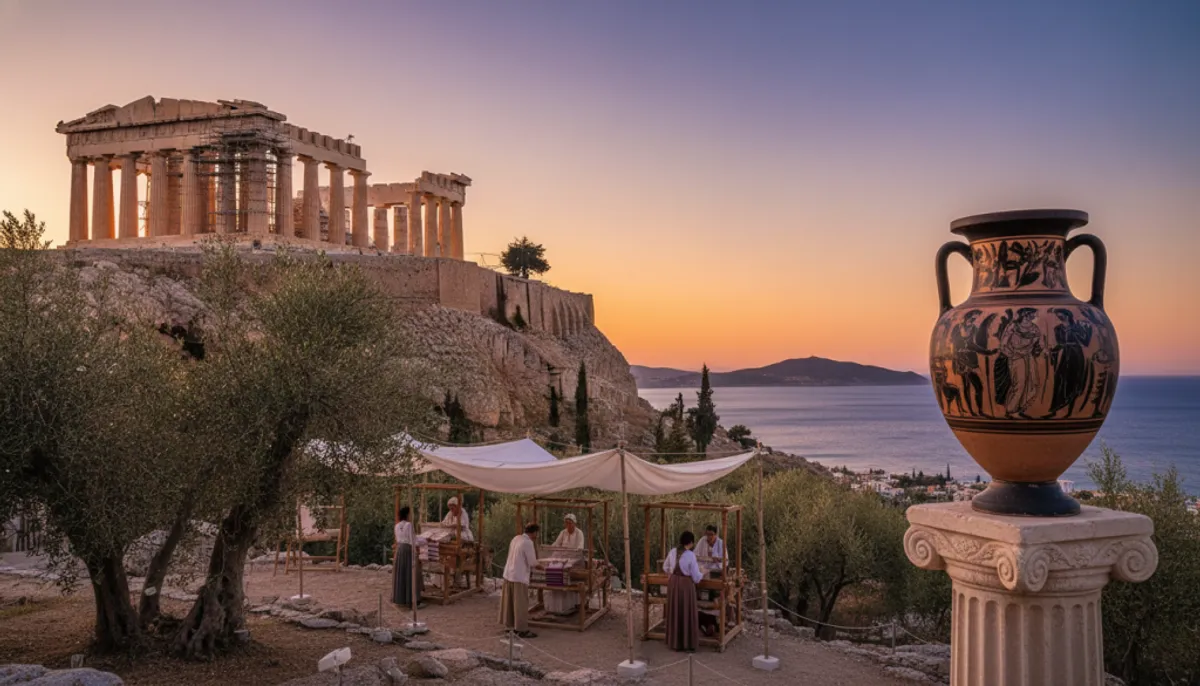
The identity of this country is the fruit of a millennia-old history. It blends influences from antiquity, the Byzantine period, and the Ottoman era. This combination forms a living and dynamic civilization.
Symbols like the Parthenon summarize this greatness. They embody not only the Hellenic soul but also the foundations of the West. This culture continues to inspire artists and thinkers today.
Greece occupies a strategic geographical position, between Europe and the Mediterranean. This location has enriched its traditions with multiple contributions. It is one of the oldest civilizations in the world, alongside its Sumerian and Egyptian counterparts.
Prepare to explore a heritage where every stone tells a story. Discover why this legacy remains so captivating for our country and beyond.
Key Points to Remember
- The Greek culture is a millennia-old heritage that has profoundly influenced Western civilization.
- Its heritage is the result of the fusion of several distinct historical periods.
- Greece is one of the oldest civilizations in the world.
- Its unique geographical situation has enriched its culture with various influences.
- Iconic monuments, like the Parthenon, symbolize this historical richness.
- This heritage remains alive and continues to inspire the contemporary world.
- Exploring this culture is to understand an essential part of our shared history.
Discovery and Interest in Greek Culture
Exploring the roots of our Western civilization inevitably leads us to a fascinating heritage. This universal appeal is explained by origins deeply rooted in time.
The Origins and Historical Richness
The history of this tradition dates back several millennia. It represents the first civilization of Europe and the West. Its rise in the 8th century BC marks a decisive turning point.
This period sees the birth of fundamental institutions. Athenian democracy and great temples like that of Apollo at Delphi emerge. The works of Homer, the Iliad and the Odyssey, become literary pillars.
A Multifaceted Heritage
Ancient Greece bequeathed a colossal legacy to Europe. Its influence touches philosophy, sciences, arts, and architecture. Each domain contributes to shaping Western identity.
This heritage continues to attract researchers and enthusiasts from around the world. Its rich and diverse culture, deeply rooted in Greek cultural heritage, fascinates with its historical depth. It remains an inexhaustible source of inspiration for understanding our common roots.
The Origins of Ancient Greece and the Birth of a Civilization
The foundations of modern Europe are rooted in a fascinating period of ancient history. This era sees the emergence of the first complex social structures that will shape the Mediterranean world.
The Mycenaean and Archaic Civilizations
In the 12th century BC, the Mycenaean civilization represents the first identifiable origin of ancient Greece. These peoples speak an archaic Greek dialect and establish powerful city-kingdoms.
Pylos, Knossos, and Sparta are among the most important centers. The beginning of the 12th century BC also marks the start of the colonization of the Anatolian coast.
The period between 1100 and 800 BC remains mysterious. Historians call it the “Dark Ages.” It is during this time that Athens begins its ascent.
The Legacy of Heroes and Myths
Myths are a fundamental element of these origins. The Trojan War is believed to have actually occurred between the 14th and 13th centuries BC.
The poet Hesiod, in the 8th century BC, gathers the legends of various city-states. He tells the epic tales of early heroes like Hercules and Achilles.
These mythological narratives give ancient Greece its epic dimension. They testify to the imaginative richness of this nascent civilization.
The Emergence of Democracy and Political Influence
At the heart of social transformations in the 6th century BC emerges a revolutionary system. This political innovation profoundly transforms the organization of city-states.
The Foundations of Athenian Democracy
Athens plays a central role in the development of this new model. Ancient Greece invents direct democracy where citizens participate in decisions.
Isonomy guarantees equality before the law. The assembly of the people becomes the supreme institution. Every free man can express his opinion there.
The Political Legacy in the Modern World
These principles still influence contemporary political systems. Citizen participation remains a fundamental value worldwide.
Athenian concepts inspire Enlightenment thinkers. They lay the foundations for today’s representative democracies. This legacy shows remarkable durability.
| Democratic Principles | Ancient Athens | Modern Democracies |
|---|---|---|
| Citizen Participation | Direct Assembly | Representative Voting |
| Equality Before the Law | Isonomy | Constitutionalism |
| Collective Deliberation | Public Agora | Parliaments |
This table illustrates how ancient democracy continues to influence the contemporary world. Modern adaptations preserve the spirit of the original institutions.
Philosophy, Science, and Art in Ancient Greece
The intellectual genius of antiquity continues to amaze with its diversity and depth. This period saw the emergence of visionary thinkers whose ideas transcend the centuries.
The Great Philosophers and Thinkers
Socrates, Plato, and Aristotle laid the foundations of Western philosophy. Their inquiries into ethics and knowledge remain relevant today.
Epicureanism and Stoicism offer practical answers to the challenges of existence. These schools of thought still influence our relationship with happiness.
Scientific and Artistic Innovations
Mathematics owes much to Pythagoras and Euclid. Their theorems form the foundations of this discipline.
Architectural art reaches new heights with the Parthenon. This achievement embodies the pursuit of harmony and proportion.
Archimedes and Hippocrates revolutionize physics and medicine. Their discoveries lay the groundwork for modern sciences.
This flourishing in all domains showcases the exceptional richness of this culture. The legacy of ancient Greece continues to illuminate our 21st century.
Focus on “Greek Culture” and Its Multiple Influences
In the 8th century BC, a colonization movement permanently transformed the Mediterranean cultural landscape. This expansion allowed Greek culture to radiate far beyond its country of origin, contributing to the rich tapestry of Mediterranean culture.
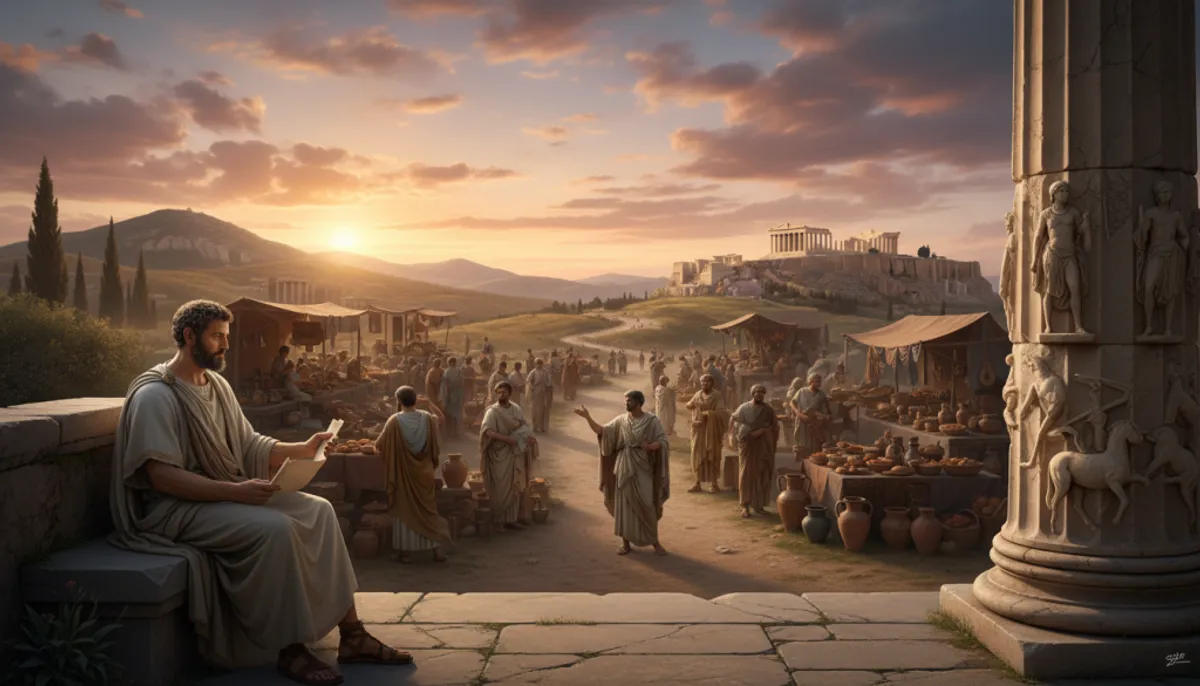
Seafarers establish cities throughout the Mediterranean basin. They found Byzantium in Asia Minor and Alexandria in Egypt. Their network extends to the Black Sea and North Africa.
This diffusion creates a true cultural koinè in the ancient world. Hellenic traditions influence local architecture and religious practices. Political systems draw inspiration from models developed in Greece.
The influence of this civilization shapes the societies of many Mediterranean countries. It establishes the foundations of a shared heritage that endures to this day. This expansion testifies to the power of ancient Greek culture.
Language, Literature, and Mythological Legends
At the heart of Hellenic identity lies a linguistic tradition among the oldest in Europe. This Greek language has a fascinating history that dates back over 4,000 years.
The Evolution of Greek and Its Influence
Modern Greek descends directly from the ancient language spoken millennia ago. It is an Indo-European language with its own alphabet.
In the 19th century, a significant debate pitted archaizing Greek against demotic Greek. The latter established itself as the official language. Its influence still affects our scientific vocabulary.
The Epics of Homer and Literary Richness
Ancient Greek literature begins with Homer’s Iliad and Odyssey. These foundational works date back to the 8th century BC.
Homer’s Odyssey and Iliad continue to inspire artists and writers. This rich literature also includes poets like Sappho.
Mythology emerges from this archaic period. It creates a corpus of legends that fascinates the entire world.
National Symbols and Iconic Monuments
From the Acropolis to coins, Hellenic heritage is expressed through powerful emblems. These symbols transcend the centuries and embody the identity of the country.
The Parthenon and Other Historic Monuments
The Parthenon, built between 447 and 432 BC, represents the pinnacle of classical architecture. This iconic monument illustrates the quest for harmony and proportion.
Greek architectural art sets aesthetic standards still admired today. Sculpture reaches technical heights with masterful works.
Cultural Symbols in Art and Currency
The national flag and the Hymn to Freedom are the modern official symbols. They represent the contemporary values of the country.
The sun of Vergina, discovered in 1977, testifies to the legacy of Alexander the Great. On euro coins, Athena’s owl connects the present and the past.
| Type of Symbol | Example | Meaning | Period |
|---|---|---|---|
| Architectural Monument | Parthenon | Classical Harmony | 5th century BC |
| Historical Symbol | Sun of Vergina | Macedonian Heritage | Antiquity |
| Monetary Symbol | Athena’s Owl | Traditional Link | Modern Era |
This visual heritage constitutes a universal language. It testifies to the richness of this culture through the ages.
Greek Cuisine and Mediterranean Culinary Traditions
Beyond historic monuments, Greek heritage is savored in a rich and varied cuisine that includes techniques like stir-frying. This millennia-old tradition is classified as an intangible cultural heritage by UNESCO.Iconic Dishes and Local Products
Greek cuisine and its specialties delight with flavors famous worldwide. Moussaka, gyros, and tzatziki perfectly embody Mediterranean flavors, showcasing the richness of hungarian cuisine as well.
Local products form the basis of this gastronomy. Feta, PDO olive oil, and yogurt come directly from the Greek land.
Characteristic aromas like oregano and mint delicately flavor the dishes. This Greek cuisine uses fresh and simple ingredients.
The Influence of the Mediterranean Diet
Hellenic nutrition is an essential part of the Mediterranean diet. Recognized by UNESCO since 2010, it emphasizes nutritional balance.
This culinary approach values fresh vegetables, grains, and olive oil. It represents a healthy and convivial way of life.
Traditional desserts like baklava complete this generous Greek cuisine. They testify to the ancestral know-how of this country.
Festivals, Carnivals, and Religious Rites
Festivities are a vibrant aspect of the heritage, where history and spirituality meet. These events punctuate the year and bring communities together, reflecting the rich history of sports in france as well as cultural traditions.
Traditional Celebrations and Orthodox Holidays
Apokriá marks the beginning of festivities before Lent. This carnival lasts three weeks and precedes Easter by forty days.
The Patras carnival attracts thousands of participants each time. It is the largest event of its kind in the country.
National holidays commemorate crucial historical moments. March 25 celebrates independence, while October 28 honors the refusal of the Italian ultimatum.
The Imprint of Ancient Rituals
Modern celebrations bear the imprint of ancient traditions, including burmese traditions. Apokriá finds its roots in festivals dedicated to Dionysus.
Easter represents the most sacred period of the year. The Orthodox Church plays a central role in these celebrations.
Each day of celebration testifies to a remarkable continuity. This connection between past and present enriches each celebration.
The forty days of Lent spiritually prepare for Easter. This particular day unites the entire nation in religious fervor.
Architectural Heritage and Dedicated Museums
Greece possesses one of the most remarkable architectural heritages in the world. This wealth is discovered through prestigious institutions and exceptional sites.
The Museums and International Collections
Athens is home to extraordinary museums like the Acropolis Museum and the Benaki Museum. These institutions preserve unique collections that tell the millennia-old history.
The National History Museum complements this cultural offering. Abroad, the Louvre exhibits masterpieces like the Winged Victory of Samothrace. These major pieces illustrate the genius of ancient art.
UNESCO World Heritage Sites
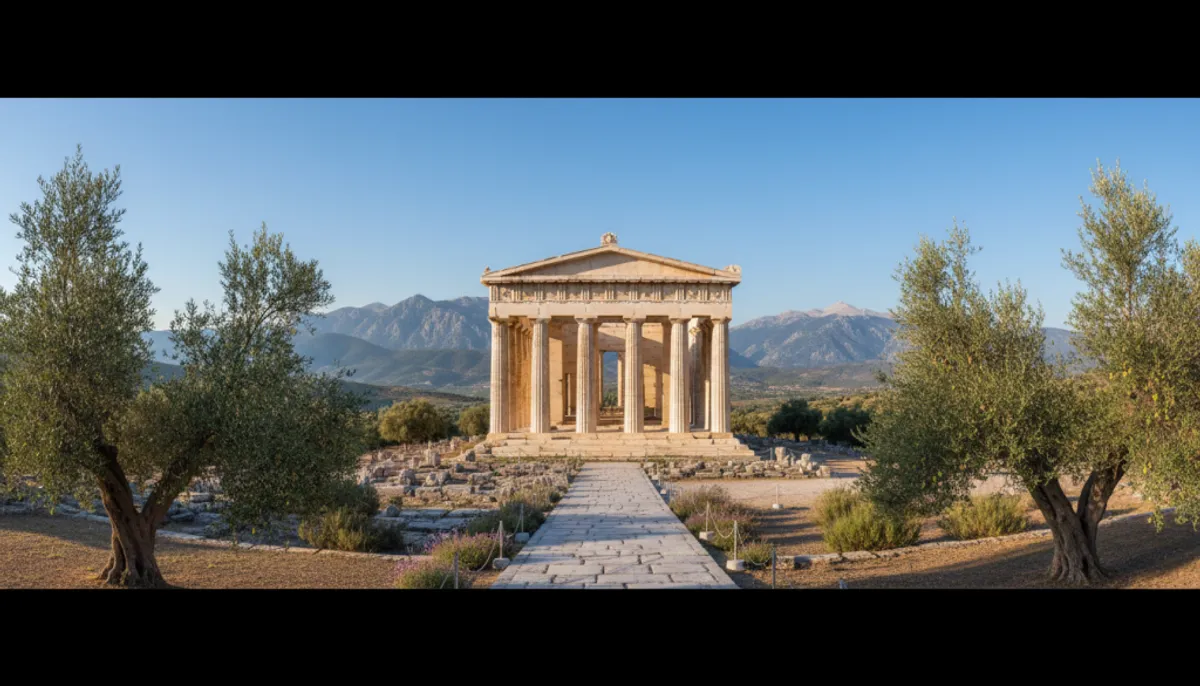
Eighteen Greek sites are listed as world heritage. This international recognition highlights their exceptional universal value.
Among these treasures are Delphi, Olympia, and the Meteora. Each site offers a unique testimony of different historical periods.
Melina Mercouri, a visionary minister, worked for the protection of this heritage. She created the concept of European Capitals of Culture in 1985.
These museums and world heritage sites ensure the transmission of this heritage to the world. They constitute a bridge between past and present, allowing for a faithful reproduction of cultural values and traditions.
Knowledge Transmission and Cultural Education
The transmission of knowledge represents a fundamental pillar for the sustainability of a millennia-old heritage. The educational system ensures this mission with compulsory schooling for all children.
Two ministries jointly supervise this cultural education. Their collaboration ensures a harmonious transmission of values and traditions.
The Historical Institutions and Universities
Universities play an influential role in disseminating this heritage. The institutions in Athens, Thessaloniki, and Patras are academic references.
The Erasmus program strengthens this international dissemination. These European exchanges enrich mutual understanding.
Heritage Preservation Initiatives
Several dedicated institutions protect the national language. Their mission is to encourage its dissemination and study.
The Greek state adopted the first protective measures in 1827. The law of 1834 formalized the safeguarding of antiquities.
| Institution | Main Function | Date of Creation |
|---|---|---|
| General State Archives | Conservation of historical documents | 19th century |
| National Library | Preservation of written heritage | 1829 |
| Academy of Athens | Research and scientific promotion | 1926 |
| Center for the Language | Language teaching and dissemination | 1994 |
These structures provide an essential service to the community. They ensure the continuity of a precious heritage for future generations.
Great Figures and Personalities of Greece
From visionary thinkers to inspiring artists, the country has given birth to remarkable talents. These exceptional personalities have marked their era and influenced the entire world.
Philosophers, Artists, and Historical Leaders
Ancient history shines thanks to figures like Sappho, a poet of the 7th century BC. Plato founded a major philosophical institution that endures.
Sculpture reaches new heights with the Venus de Milo and the Winged Victory of Samothrace. These works testify to the artistic genius of ancient Greeks.
John Chrysostom, archbishop of the 4th century, shone throughout the Byzantine Empire. His religious influence remains significant.
Modern Ambassadors of Greek Culture
In the 20th century, Odysseas Elytis won the Nobel Prize in Literature. Iannis Xenakis revolutionized electroacoustic music.
Nana Mouskouri became an internationally recognized singer. Aristotle Onassis transformed maritime transport with his supertankers.
Kallirroi Parren launched the feminist movement in the 1880s. Voula Patoulidou won the Olympic gold in 1992.
These personalities illustrate the diversity of Greek talents and the richness of belgian culture. They contribute to the radiance of Greek culture worldwide.
Modern Greece: Cultural Diversity and Communities
The demographic composition of modern Greece reflects a complex history of migrations and exchanges. In 2025, the country has 10,225,982 inhabitants, of which 90% consider themselves Greek.
This Hellenic majority coexists with various minority communities that enrich the social fabric. Albanians represent nearly 443,000 people, followed by Roma (160,000-250,000) and Vlachs (100,000-150,000).
The Coexistence of Minorities and Regional Traditions
The Hellenic government adopts an inclusive approach to citizenship. It does not officially recognize ethnic statistics, considering all legal residents as Greek.
Each community brings its regional traditions while sharing the national identity. The Arvanites, Turks, Pomaks, and Slavic Macedonians complete this demographic mosaic.
Hellenism transcends the borders of the country. It extends from Corfu to Constantinople, including Nicosia and Thessaloniki. The diaspora keeps traditions alive far from their origin.
This diversity is an integral part of Greek history. It shows how a diverse population can share a strong common identity.
Soft Power and International Influence
In 2020, international recognition confirmed the exceptional influence of modern Greece. The country ranked among the top ten in the world for its soft power according to the IFG-Monocle Survey.
Influence in Sports and the Arts
The modern Olympic Games, revived in Athens in 1896, are a direct legacy. The Olympic flame is still lit in Olympia before each edition of the games.
Ancient theater introduced fundamental dramatic forms. The festivals of Dionysus shaped contemporary traditions.
Traditional and modern music contributes to the current radiance. These artistic domains play a crucial role in the country’s attractiveness.
Soft Power in the Contemporary Era
Joseph Nye defines this power as “the ability to attract and persuade.” Greek culture exerts this influence through cinema and series.
Films like “Mamma Mia!” present the country in a positive light. “The Maestro's Blues” is the first original series on Netflix.
Individuals of Greek origin play a role as cultural ambassadors. Their impact strengthens soft power in the 21st century.
Conclusion
This exploration reveals how a small Mediterranean peninsula has influenced the course of world history. From the conquests of Alexander the Great to Roman foundations, Hellenic heritage has radiated across three continents.
The great wars of the Medes and the Peloponnesian shaped the identity of this country. The Byzantine Empire then preserved this precious religious and architectural heritage.
The ancient Greek civilization invented democracy and produced immortal literary works. Its mythology continues to inspire our collective imagination.
This unique culture has been enriched by Ottoman, Latin, and Slavic influences. It remains alive on this land of varied landscapes.
Diving into this universe is to discover the roots of our modernity. An invitation to understand how the Greeks of yesterday illuminate our lives today.
FAQ
What is the role of Greek mythology in ancient society?
Mythology played a central role. It explained the origin of the world, natural phenomena, and guided human conduct. Narratives like Homer’s Iliad and Odyssey were pillars of education and religion.
Why is Athenian democracy so important?
It laid the first foundations of governance by the people. This political system, born in the city of Athens, inspired many modern democracies around the world.
How has the Greek language influenced other languages?
Ancient Greek has greatly enriched scientific, medical, and technical vocabulary. Many words used today in these fields have Greek origins.
What are the most famous UNESCO World Heritage sites in Greece?
The Acropolis of Athens with the Parthenon, the site of Delphi, and the Meteora are among the most emblematic. They testify to the extraordinary architectural and historical heritage of the country.
What characterizes traditional Greek cuisine?
It is at the heart of the Mediterranean diet. It prioritizes fresh products like olive oil, vegetables, fish, and cheeses, like the famous feta. Dishes like moussaka and tzatzíki are known internationally.
What was the purpose of the ancient Olympic Games?
Beyond the sports competition, these games had a strong religious dimension. They honored Zeus and served as a sacred truce, uniting the Greek city-states during the events.