
Dive into the heart of a fascinating heritage rooted in ancient Greek mythology. This remarkable tradition continues to inspire our modern world through various artistic expressions.

The central character of Antigone embodies universal values of courage and resistance. This emblematic figure of Greek tragedy defends familial justice against oppressive authority.
Our journey through the centuries will reveal how this heritage has been transmitted and transformed. From ancient epics to contemporary adaptations, the story of this tradition remains alive.
You will explore the multiple dimensions of this rich culture: mythological origins, complex relationships between protagonists, and lasting impact on global creation.
This introduction lays the groundwork for an in-depth exploration of the Antiguan universe. The central themes will set the stage for the following sections.
Key points to remember
- Cultural heritage with roots in ancient Greek
- Emblematic figure of Antigone as a symbol of resistance
- Transmission through the centuries to our time
- Lasting influence on literature and the arts
- Universal values of courage and justice
- Modern adaptations in theater and cinema
- Morally relevant questions
Origins and historical contexts
It is in the epics of the Theban Cycle that the figure of Antigone is born. This daughter of Oedipus, ruler of Thebes, emerges from the oldest Greek epic tales.
Her complex genealogy presents her as the daughter of the king of Thebes and Jocasta. She shares this familial fate with her sister Ismene and her brothers Eteocles and Polynices.
Mythological and ancient beginnings
The earliest literary work, the Oedipus, presents a surprising version. Antigone's mother there is Euryganea, the first wife of her father.
In the 5th century BC, Aeschylus transforms this story. He establishes the incestuous union between the king and Jocasta as a tragic origin.
Medieval influences and evolution through the centuries
The Middle Ages perpetuate this tradition. The Roman de Thèbes in the 12th century and then Dante in the 14th keep the character alive.
Each era reinterprets this myth according to its values. The daughter of Oedipus thus becomes a mirror of the concerns of each civilization.
The Antiguan culture: heritage and traditions
A royal decree will provoke one of the most famous gestures of Greek mythology. Creon, the new ruler of Thebes, makes a radical decision regarding the body of Polynices.
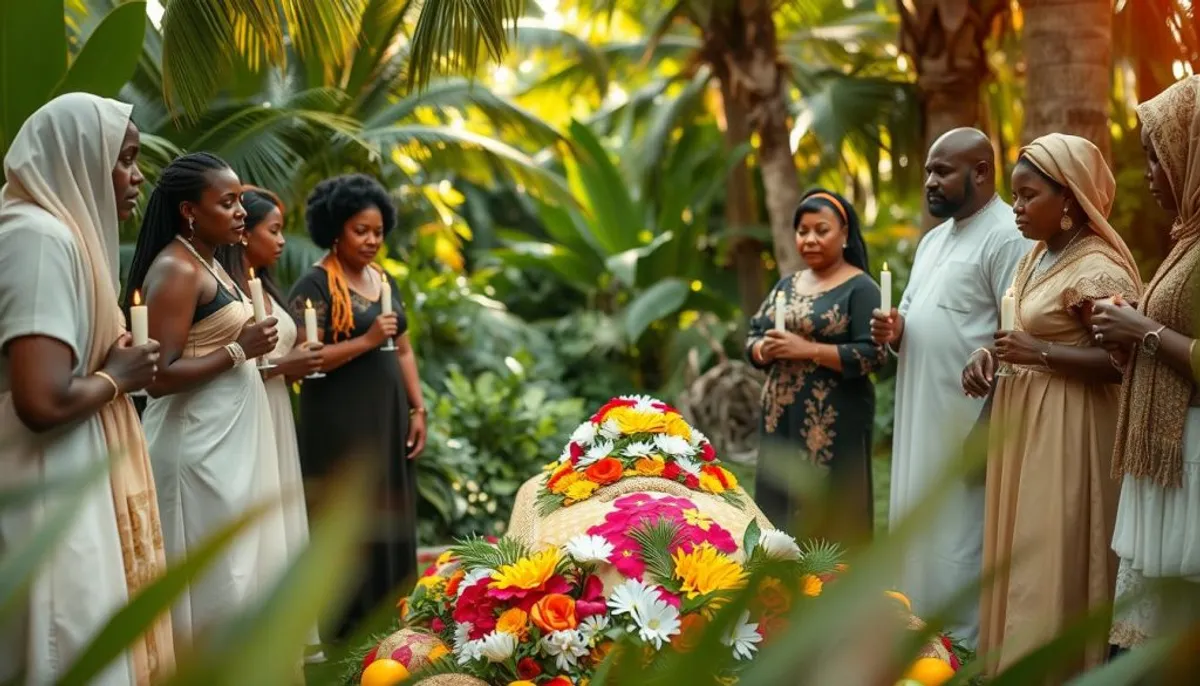
Ancestral practices and significant rites
The king formally forbids the burial of a brother considered a traitor. This order goes against the most sacred religious traditions.
In this context, leaving a body unburied represents the worst punishment. Antigone chooses to defy authority to honor her familial duty.
She declares that she will bury her brother despite the royal order. This act of piety becomes a powerful symbol of resistance.
Statius's version enriches this story. Argeia, Polynices' wife, helps Antigone in this perilous mission.
These practices reflect fundamental values. Familial loyalty and courage in the face of power characterize this rich culture, including the traditions of swaziland.
This conflict between divine and human laws inspires Western literature. It questions the price of a life dedicated to justice.
“I was born to share love, not hatred”
This phrase summarizes the essence of Antigone's struggle. Her legacy continues to inspire future generations.
The great figures and their stories
The conflict between Antigone and Creon constitutes one of the deepest confrontations in world literature. This opposition transcends the simple familial framework to question the very foundations of power and justice, including the historical context of colonization in the dominican republic.Antigone, emblematic figure and her struggle
The character Antigone embodies resistance against absolute authority. This young woman defies her uncle, king Creon, to honor the memory of her brother Polynices.
Her decision to bury her brother despite the royal prohibition shows exceptional courage. Antigone prefers death to betraying her familial convictions.
In Sophocles' tragedy, she is condemned to be walled up alive. Her final suicide triggers a cascade of family dramas.
Creon and the symbolism of power
Creon represents political authority and the reason of state. This king must enforce his laws even against his own niece.
His intransigence leads to the death of Antigone, then to that of his son Haemon. Creon's wife, Eurydice, also commits suicide.
The character of Creon illustrates the dangers of absolute power. His personal tragedy shows the limits of political authority.
| Characteristic | Antigone | Creon |
|---|---|---|
| Main values | Divine laws and familial loyalty | Political order and reason of state |
| Attitude towards power | Resistance and defiance | Authority and intransigence |
| Tragic consequence | Death by suicide | Loss of his family |
| Modern symbolism | Resistance against tyranny | Dangers of absolute power |
The sister Ismene contrasts with Antigone through her caution. Haemon, son of Creon, represents the voice of moderation.
The Antigone Creon confrontation remains highly relevant. It questions the balance between individual justice and collective order.
The influence on literature and art
From the 16th century, the character of Antigone experiences a spectacular rediscovery across Europe. Sophocles' play is reprinted and translated, paving the way for numerous adaptations.
Tragic works and literary rewritings
Robert Garnier composes Antigone or Piety in 1580. Jean de Rotrou creates his own version in 1638. These theater plays mark the beginning of a long tradition.
The 18th and 19th centuries see the flourishing of new interpretations. Friedrich Hölderlin translates the original text in 1804. The 20th century brings major adaptations, such as Jean Anouilh's in 1944.
| Period | Author | Major work | Contribution |
|---|---|---|---|
| 16th century | Robert Garnier | Antigone or Piety | First French adaptation |
| 17th century | Jean Racine | The Thebaid | Classical approach |
| 20th century | Jean Anouilh | Antigone | Famous modern version |
| 21st century | Anne Carson | Antigonick | Contemporary adaptation |
Interpretations in painting and music
The dramatic scene inspires visual artists. Nikiforos Lytras paints Antigone before the body of Polynices in 1865. Frederic Leighton creates a portrait in 1882.
Music also embraces the myth. Composers have been creating operas since the 18th century. Tommaso Traetta in 1772, Arthur Honegger in 1927. Additionally, calypso music has found its way into various adaptations, showcasing the timeless relevance of the narrative.
Modern adaptations and interpretations
Jean Anouilh revolutionizes the perception of the character with his play Antigone created in 1944. This major work transposes the ancient conflict into the context of the German Occupation.
Antigone in film and television
The rebellious girl of Anouilh embodies the Resistance against collaboration. Creon represents the authority forced to maintain order.
This play Antigone uses modern prose and deliberate anachronisms. It speaks directly to the French audience of this troubled era.
Film takes hold of the myth from the 1990s. Jean-Marie Straub and Danièle Huillet create an experimental version in 1991.
Sophie Deraspe modernizes the story in 2019 with Nahéma Ricci. Television popularizes the myth during the 1960s-1970s.
Each adaptation reinterprets the famous Antigone scene facing Creon. This confrontation questions authority and individual freedom.
The life of the character continues to inspire creators. Jean Anouilh transformed Antigone into a modern and idealistic young girl.
Her legacy transcends the years without losing its dramatic power. The myth remains highly relevant.
Material culture: witnesses of a history
Archaeological remains offer us a unique window into ancient societies. This material approach complements our understanding of literary tradition and literary traditions.
Archaeological remains and cultural objects
The concept of material culture appears at the end of the 19th century. Anglo-Saxon anthropologists develop this fundamental notion.
The objects then become keys to decipher belief systems. They reveal the social practices of ancient civilizations.

European archaeology experiences remarkable growth in the 19th century. Numerous discoveries enrich our historical knowledge.
In the Middle Ages, manuscripts carefully preserve mythological tales. These precious objects testify to cultural transmission.
The contemporary era sees a resurgence of interest in these studies. The 1990s mark an interdisciplinary turning point.
The book remains an essential vehicle for dissemination. From the Middle Ages to today, it carries this rich tradition.
Each century contributes to this transmission. The cultural objects tell a living story.
Perspectives on life and values in culture
The myth of Antigone offers us profound reflections on human existence and its moral dilemmas. This ancient story continues to illuminate our contemporary choices.
Lessons of resistance and justice
The conflict between Eteocles and Polynices, the two sons of Oedipus, shows the dangers of unchecked ambition. Their mutual death leaves a broken family life.
Creon, king of Thebes, then makes a radical decision. His order forbids the burial of brother Polynices, triggering Antigone's revolt.
Sophocles' play stages a fundamental confrontation. Antigone Sophocles defends divine law against the reason of state.
| Value | Represented by | Consequence |
|---|---|---|
| Familial justice | Antigone | Respect for traditions |
| Political order | Creon | Stability of power |
| Moral resistance | Civil defiance | Questioning authority |
The character of Antigone embodies courage in the face of injustice. This young girl prefers death to compromise.
“I was not born to share hatred, but love”
This Greek tragedy remains highly relevant. It invites us to reflect on our own values and commitments.
Conclusion
From ancient Greece to our contemporary era, the figure of Antigone has continually inspired creators and thinkers. This emblematic character, daughter of Oedipus and sister of Polynices, embodies universal values of courage in the face of injustice.
The historical journey of this tragedy spans the centuries, from the Middle Ages to modern adaptations in theater. Each era reinterprets this rich story through different plays and artistic works.
The famous confrontation scene remains highly relevant. It invites us to reflect on our own lives and the moral choices we make in the face of authority.
Discover or rediscover the multiple versions of this foundational myth. The cultural legacy of Antigone continues to enrich our global heritage with lessons that remain pertinent.
FAQ
What are the origins of the tragedy of Antigone?
The story comes from ancient Greece, with the play by Sophocles written in the 5th century BC. It is part of the myth of the Labdacids, the cursed family of Oedipus, king of Thebes. This foundational work explores timeless conflicts.
Why is the character of Antigone so important in literature?
Antigone embodies the revolt of the individual against unjust power. This young girl who defies King Creon to bury her brother Polynices symbolizes moral duty and conscience in the face of the law. Her struggle resonates even today.
How did Jean Anouilh modernize the play in the 20th century?
In 1944, Jean Anouilh rewrites the tragedy in a very particular context. His play, created under occupation, gives a new resonance to the conflict between Antigone's resistance and Creon's absolute order, making it a profoundly contemporary work.
What cultural objects or remains testify to this history?
Beyond texts, history has inspired many artifacts, including expressions of barbadian art and music. We find representations on Greek vases, and artworks across the ages, from classical painting to cinematic adaptations, that perpetuate the memory of these tales.
What is the main lesson we can draw from this culture?
One of the most powerful teachings is the defense of justice and human values, even in the face of overwhelming authority. The dilemma between the law of men and the law of the heart, central to the story of Antigone, invites ongoing reflection on ethics.