
Welcome to your essential guide for exploring an extraordinary destination. Here, ancestral traditions and deep spirituality blend with everyday life.
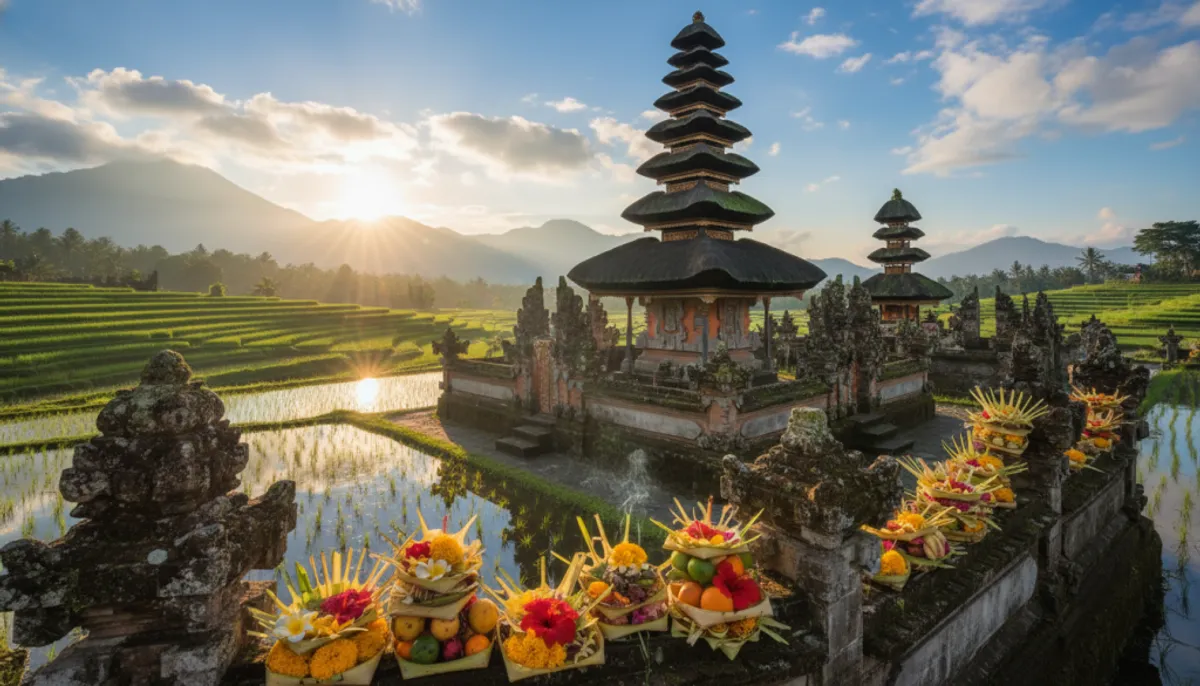
Bali, often called the island of the Gods, offers a unique sensory and spiritual journey. Its Hindu heritage shines throughout the Indonesian archipelago.
You will discover how this society has preserved its identity. Majestic temples, colorful festivals, and sacred dances punctuate existence.
This travel companion will prepare you for a respectful immersion. It will help you experience an authentic adventure in this magical destination.
Key Points to Remember
- Bali is unique for its Hindu heritage in a predominantly Muslim country.
- Spirituality influences all aspects of daily life on the island of the Gods.
- Temples and offerings are central elements of Balinese culture.
- Attending a ceremony or a traditional dance performance is an enriching experience.
- Understanding and respecting local customs is essential for a successful stay.
- This island harmoniously combines nature, traditions, and modern life.
Introduction to Bali: Between Traditions and Spirituality
The island of Bali reveals itself as a sanctuary where every daily gesture is imbued with devotion and respect. This unique destination in the world maintains its Hindu identity within Indonesia, the largest Muslim country.
Thanks to the determination of its inhabitants, the island has preserved its ancestral traditions. Balinese people welcome every visitor with legendary hospitality and a sincere smile.
Spirituality permeates every aspect of local life. From colorful offerings to daily ceremonies, the sacred rhythm governs existence.
Your journey to Bali thus becomes an authentic immersion. You will discover a society where harmony and respect guide all actions. This experience prepares your future travels for a deep understanding of spiritual foundations.
The History and Traditions of Bali
Your journey through time begins here, with the captivating evolution of this extraordinary island. Its history resembles a mosaic where different influences have harmoniously met.
Historical Evolution and Cultural Influences
For millennia, Bali has welcomed Hindu and Buddhist contributions. These currents have mingled with local beliefs to create something unique in the world.
Despite transformations in the rest of the country, the island has preserved its traditions with remarkable consistency. This resilience testifies to the identity strength of the communities.
Ancestral Customs and Knowledge Transmission
Customs are naturally passed down within families and villages. The banjar, this village community, represents an essential part of this process.
Each generation becomes, in turn, the custodian of ancestral knowledge. Elders and local guides play a crucial role in this oral transmission.
These traditions govern all significant moments of existence. From births to religious ceremonies, customs provide a precious framework for collective life.
Understanding this rich culture and the significance of sundanese cultural heritage will allow you to appreciate your stay even more. You will discover how the country has managed to preserve its authenticity in the face of modern changes.
The Iconic Temples of the Island of the Gods
Discover the sacred sanctuaries that contribute to this island's worldwide fame. These temples are not mere monuments but places of intense spiritual life.
Your journey will lead you to sites where architecture harmoniously embraces nature. Each visit becomes a memorable sensory and spiritual experience.
Besakih Temple: The Mother of All Temples
Perched on the slopes of Mount Agung, the temple of Besakih dominates the spiritual landscape. This monumental complex consists of several sanctuaries scattered across the mountain.
Considered the main religious center, it offers a unique atmosphere. Visitors feel a deep connection with ancestral traditions.
Tanah Lot and Uluwatu: Between Legend and Nature
The temple of Tanah Lot seems to rise from the waves. Set on a rock in the middle of the sea, it becomes accessible at low tide.
Uluwatu offers a different spectacle. Perched on a dizzying cliff, it overlooks the Indian Ocean. The sunsets here are truly magical.
These two places perfectly illustrate the fusion between spirituality and grand landscapes. They are among the must-see activities of any stay.
Attending a ceremony in these temples wonderfully complements your journey. The surrounding nature enhances the power of the moment.
Festivals and Traditional Dances
Cultural manifestations, including the rich swahili cultural history, are the living soul of this exceptional destination. They transform each visit into a memorable experience.
Spiritual Celebrations and Daily Rituals
The island vibrates to the rhythm of its traditional festivals. The calendar features two distinct systems creating a perpetual rotation of events.
Nyepi represents the most sacred day. For 24 hours, all activity ceases to promote meditation. This profound spirituality impresses visitors.
Galungan and Kuningan mark the victory of good. These celebrations transform the streets with spectacular decorations. The ceremonies include generous offerings.
Mythical Dances: Barong, Legong, and Kecak
The Barong dance illustrates the eternal battle between opposing forces. Performing troupes enliven major events.
The Legong dance tells ancient legends. Young artists dressed in golden silks captivate the audience. The Ubud Palace offers an ideal setting.
The Kecak dance creates an enchanting atmosphere at sunset. Uluwatu temple hosts these memorable performances.
| Festival | Period | Meaning | Characteristics |
|---|---|---|---|
| Nyepi | March | Day of Silence | Meditation, reflection |
| Galungan | April-May | Victory of Good | Decorations, offerings |
| Kuningan | November | Final Celebration | Traditional dances |
| Odalan | All year | Temple anniversary | Gamelan music |
These festivals and artistic performances are not mere shows. They embody a living tradition that enriches every day of the year.
The Museums and Artistic Heritage
The artistic treasures of Bali reveal themselves in fascinating cultural places and vibrant artisanal traditions. This island preserves an exceptional creative heritage that enriches your travel experience.
Le Mayeur Museum and Blanco Museum: A Journey into Balinese Art
Le Mayeur Museum in Sanur offers a unique artistic experience. It showcases the work of Belgian painter Adrien-Jean Le Mayeur de Merprès. His collection captures the beauty of local life from the 1930s.
The Blanco Museum in Ubud, nicknamed the "Palace of Love," displays colorful works by Spanish artist Antonio Blanco. These two institutions represent an essential part of the cultural landscape.
Traditional Crafts and Creative Expressions
Traditional craftsmanship is passed down from generation to generation. Wood carving produces works inspired by nature and mythology.
Metalwork brings to life gamelans and intricately crafted jewelry. Weavers create textiles with colorful patterns. These artisanal activities perpetuate a millennia-old know-how.
| Museum | Location | Main Collection | Particularity |
|---|---|---|---|
| Le Mayeur Museum | Sanur | 1930s Paintings | Former residence of the artist |
| Blanco Museum | Ubud | Colorful Works | Exceptional lush setting |
| Bali Museum | Denpasar | Historical Artifacts | Archaeological collection |
Visiting these places provides an enriching immersion into the art of this island. Each discovery deepens your understanding of this unique creative expression.
Daily Balinese Culture
Behind the enchanting landscapes lies a remarkable social organization guided by tradition. Your journey will take on a special dimension as you discover how spirituality animates every moment of life.
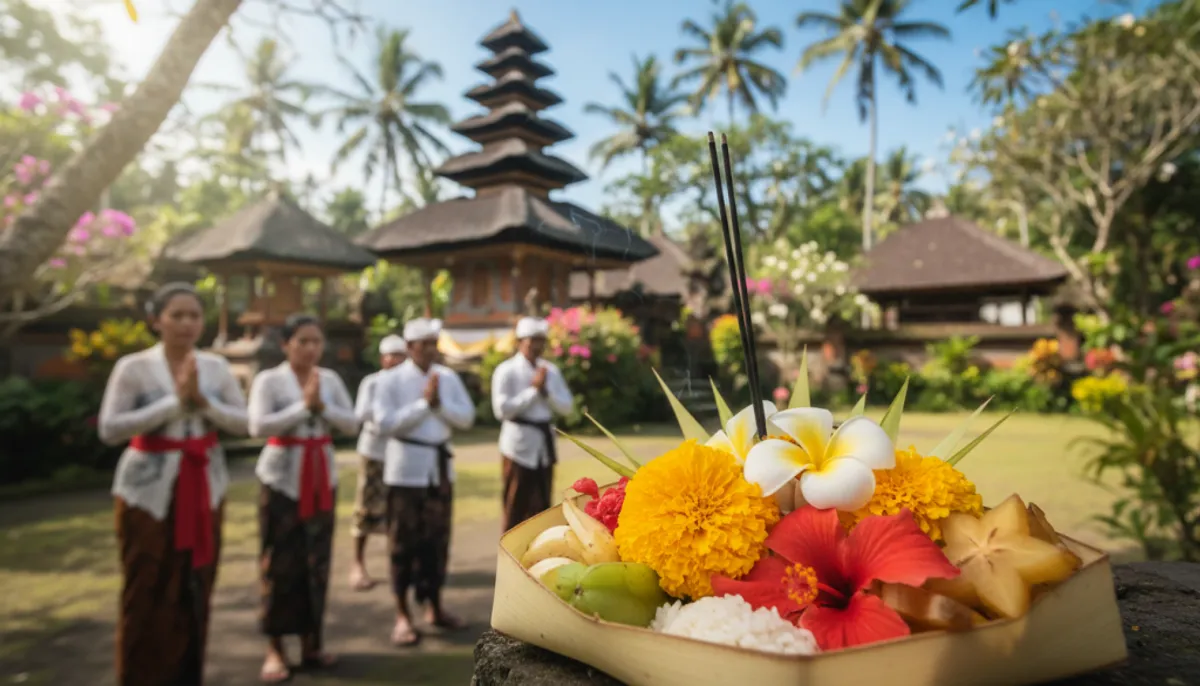
Daily Rituals and Canang Sari Offerings
Every morning, the inhabitants devoutly prepare the canang sari offerings. These small colorful baskets symbolize gratitude towards the gods.
Purification rituals punctuate existence regularly. They allow the Balinese to maintain the spiritual harmony necessary for their well-being, often incorporating zen practices that enhance mindfulness and tranquility.
"The beauty of daily offerings lies in their simplicity and profound meaning."
Family Life and Community Interactions
The extended family forms the heart of social organization. Multiple generations coexist around the family temple, preserving the rich saint lucian heritage.
The banjar system structures community life. This village organization governs ceremonies and temple maintenance.
| Daily Aspect | Frequency | Participants | Meaning |
|---|---|---|---|
| Preparation of offerings | Several times a day | Entire family | Expression of gratitude |
| Banjar Meetings | Weekly | Heads of family | Community decisions |
| Family Ceremonies | As events occur | Extended family | Strengthening bonds |
Observing these practices will enrich your journey. You will be able to measure the importance of ancestral customs for the inhabitants.
Interactions among Balinese are based on mutual assistance and respect. This social cohesion impresses all visitors.
Spirituality and Hindu Rituals
At the heart of the Balinese experience lies a distinctive form of Hinduism called Agama Hindu Dharma. This unique religion is markedly different from traditional Indian practices, which can also be understood through the history of java.Balinese Hinduism and Its Ritual Practices
Believers venerate the divine trinity composed of Brahma, Wisnu, and Siwa. These gods operate under the supreme authority of Sang Hyang Widhi Wasa.
The universe comprises three distinct levels. The Swah houses the gods in the upper world. The Bwah represents the central domain of humans. The Bhur constitutes the lower world of demons.
Spiritual Geography and Importance of Temples
This cosmology directly influences the location of sacred sites. The most revered temples occupy elevated places corresponding to the Swah.
Mount Agung, the highest point of the island, thus hosts the Pura Besakih temple. This position symbolizes the connection with the divine.
| Spiritual Level | Residents | Characteristics | Typical Location |
|---|---|---|---|
| Swah | Gods and spirits | Upper world | Mountains and hills |
| Bwah | Mortal humans | Central world | Villages and plains |
| Bhur | Demons | Lower world | Low areas and swamps |
This worldview guides every aspect of local spirituality. It explains why Balinese Hinduism remains so deeply rooted in the landscape.
Flavors and Cuisine of Bali
Your taste buds embark on a memorable culinary adventure. This culinary destination offers delightful surprises at every corner.
Your gastronomic journey begins with an immersion in local malaysian traditions. Aromatic spices and ancestral techniques create a unique experience.Signature Dishes and Tasting Experiences
The Babi Guling represents the signature dish of the island. This roasted suckling pig, prepared using traditional methods, impresses with its crispy texture.
The Bebek Betutu requires patient preparation. The spiced duck, slow-cooked in banana leaves, reveals complex flavors.
The Nasi Goreng and Mie Goreng reflect various influences. These popular dishes enrich the local culinary offering.
Traditional Markets and Restaurant Recommendations
The markets of Ubud and Gianyar offer an authentic experience. You will discover specialties prepared with fresh ingredients.
For a refined meal, several restaurants excel in their field. Warung Made in Seminyak and Bebek Bengil in Ubud are references.
Ibu Oka offers its specialties in two establishments. These restaurants combine authenticity with a warm atmosphere.
Exploring these options over a few days greatly enriches your journey. The center of Ubud concentrates many culinary possibilities.
This gastronomic discovery is among the must-do activities. It connects you deeply to local traditions.
Practical Tips for Traveling to Bali
Preparing for the subtleties of island traditions transforms each visit into a special moment. This guide accompanies you in your preparations for a successful journey.
Cultural Preparations and Initiation Tips
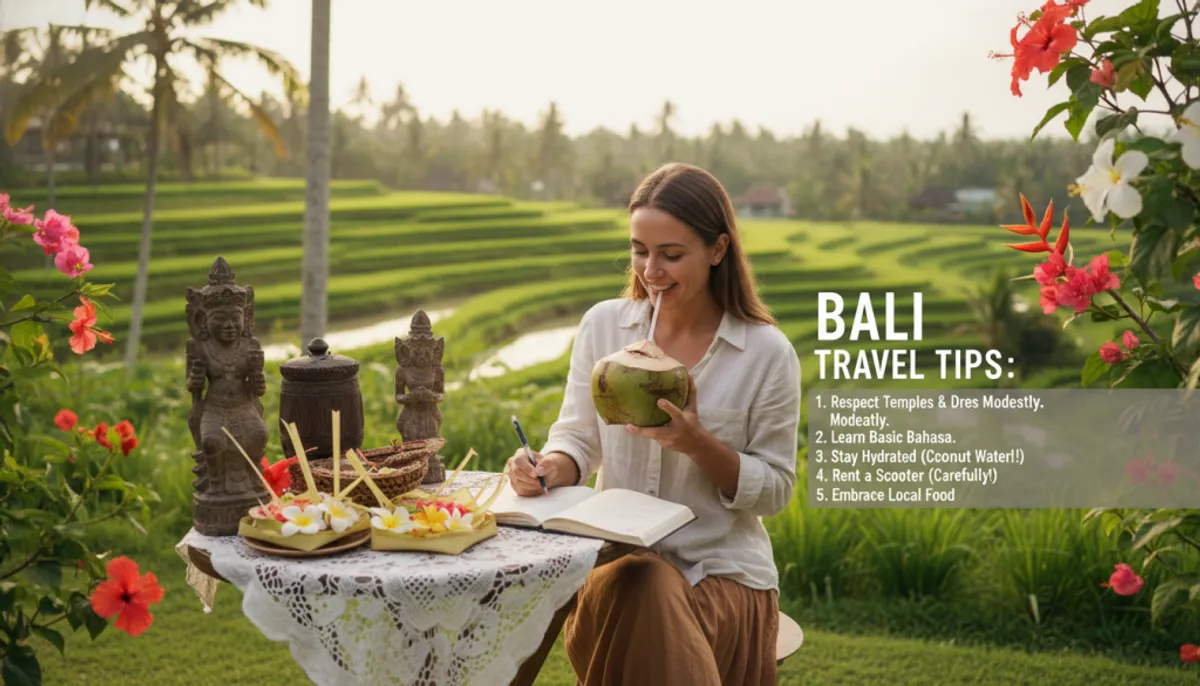
Your Bali journey requires particular attention to local customs. Learning a few words of Indonesian, such as "terima kasih" (thank you), facilitates exchanges.
Plan your days flexibly. The pace of life differs significantly from that of Western countries.
Etiquette, Attire, and Behaviors to Adopt
Modest dressing is essential in temples. Wear a sarong and cover shoulders and legs. Always remove your shoes before entering.
Avoid certain gestures, such as touching children's heads or using the left hand to give objects. Never walk on offerings placed on the ground.
| Practical Aspect | Recommendation | Avoid |
|---|---|---|
| Temple Clothing | Sarong, covered shoulders | Beachwear |
| Photography | Ask for permission | Intrusive photos |
| Behavior | Calm and respectful | Raising your voice |
| Restaurant Tips | 5-10% | Neglecting this practice |
| Guide per day | 50,000-150,000 IDR | Forgetting this recognition |
These tips will help you understand the importance of mutual respect. They ensure a harmonious journey throughout all parts of the island.
Conclusion
Your immersion in the Balinese universe is coming to an end. This comprehensive guide has accompanied you through the many facets of a unique destination where ancient traditions and vibrant spirituality create an incomparable experience.
The Balinese experience transcends mere tourism. It is a true immersion into a harmonious way of life. The inhabitants of this island of the Gods generously share their rich heritage.
Whether you visit for a few days or several weeks, every part of the island reveals unique treasures. By respecting local customs, your journey will become a transformative adventure.
Prepare your next trip with this guide and let yourself be carried away by the magic of this exceptional place. The beauty and depth of this land will offer you unforgettable memories.
FAQ
What are the most important holidays not to miss on the island of the Gods?
Don't miss Nyepi, the Day of Silence, a unique experience. Galungan and Kuningan, celebrating the victory of good, are also essential for understanding the traditions and spirituality of the inhabitants.
How to respect customs when visiting temples?
Wear a sarong and a belt, often available at the entrance. Speak softly and do not point. Respect areas reserved for family ceremonies and prayers.
Where can one attend traditional dances like Legong or Kecak?
Performances regularly take place in temples like Uluwatu at sunset, or in cultural venues in Ubud. Check the schedules on-site for these mythical shows.
What do the small colorful offerings visible everywhere mean?
These are the canang sari, daily offerings made in gratitude to the gods. They are a central element of spiritual life and Hindu rituals. Avoid stepping on them.
Which signature dishes should one absolutely try during their trip?
Try the babi guling (roasted suckling pig) and bebek betutu (smoked duck). For an authentic experience, visit local warungs and traditional markets.
What is the best measure to visit Bali and discover its heritage?
Plan for at least ten to fourteen days. This allows for exploring temples, attending festivals, meeting locals, and traveling through the island's varied landscapes in peace.