Dive into the heart of one of the most rich and fascinating traditions in the world, the result of a unique blending of pre-Columbian civilizations and Spanish colonial influences.

This extraordinary country has managed to preserve and transmit a millennia-old heritage. This transmission lives on through 68 indigenous peoples who perpetuate their languages, customs, and ancestral know-how.
Its modern identity is the result of a complex history, harmoniously blending pre-Hispanic heritage and European contributions. This evolution is reflected in a dynamic demographic, growing from 9 million inhabitants in 1872 to over 126 million today.
Explore the multiple facets of a living heritage, manifested in art, gastronomy, music, and celebrations admired all over the planet. Understanding this depth makes admiration for its traditions and the generosity of its people an obvious choice.
Key Points to Remember
- A heritage born from a unique blend of pre-Columbian civilizations and Spanish influences.
- A millennia-old legacy preserved by 68 distinct indigenous peoples.
- A vibrant culture expressed in art, cuisine, music, and traditional festivals.
- A complex history that has shaped the modern identity of the country.
- A dynamic transformation of a rich past into an authentic contemporary reality.
- The depth of traditions and the generosity of the inhabitants inspire a natural respect.
Origins and Heritage of Mexico
The Mexican territory has been the cradle of great civilizations long before the arrival of Europeans. This ancient history forms the foundation of its identity.
Pre-Columbian Civilizations and the Olmecs
The origin of this saga dates back to the Olmecs. This mother civilization thrived in the lowlands of the south.
They developed maize agriculture and built great centers like San Lorenzo. Their influence lasted for thousands of years.
The Rise of the Aztecs and Teotihuacán
During the first millennium, other peoples emerged. Teotihuacan, with its giant pyramids, remains a mysterious city.
The Aztecs founded Tenochtitlan in the 14th century. This ingenious capital had 200,000 inhabitants at one point.
| Civilization | Period | Location | Major Contribution |
|---|---|---|---|
| Olmecs | 1500-400 BCE | Lowlands of the south | Colossal heads, ceremonial centers |
| Mayans | 250-900 CE | Yucatán Peninsula | Calendar, glyphic writing |
| Aztecs | 1325-1521 CE | Valley of Mexico | Tenochtitlan, agriculture on chinampas |
Each group has left an indelible mark. Their architectural and artistic legacy still defines the landscape today. Understanding this distant time is essential.
The Foundations of Mexican Culture
Over the centuries, a unique dialogue has been established between ancestral traditions and European contributions. This encounter has shaped an original identity.
A Blend of Indigenous and Colonial Traditions
The Spanish influence gradually intertwined with pre-Hispanic customs. This fusion gave birth to a hybrid cultural form visible everywhere.
It is manifested in the architecture of baroque churches, spicy gastronomy, and colorful religious festivals. Spanish became the main language, replacing dialects like Nahuatl.
68 Indigenous Peoples and Their Languages
The current richness is nourished by 68 indigenous peoples. This impressive number perpetuates ancestral know-how.
These communities speak sixty-eight different languages. This exceptional linguistic heritage is a valuable foundation for contemporary identity.
They have managed to preserve their heritage while integrating colonial elements. This harmonious synthesis creates a living and dynamic culture.
Peoples and Ethnic Diversity
By 2025, the Mexican population is expected to reach nearly 130 million inhabitants. This society is distinguished by an exceptional ethnic mosaic.
This unique mix is the result of a long and complex history. It defines the current people.
Mestizos, Indigenous Peoples, and Descendants of Spaniards
Nearly two-thirds of the inhabitants are mestizos. This majority group is born from the mixing of indigenous populations and European settlers.
The Indigenous represent about 20% of the population. They mainly live in states like Chiapas, Oaxaca, and Yucatán.
Among the main indigenous peoples are:
- The Nahuas
- The Yucatec Mayans
- The Tzeltals and Tzotzils
- The Mixtecs and Zapotecs
Each community retains its language and traditions. The rest of the Mexican population includes descendants of Spanish settlers.
This diversity profoundly enriches contemporary society. All Mexicans share a common pride in their heritage.
They form a united people, celebrating their multiple roots. Thus, Mexicans build a strong and inclusive identity.
Emblematic Traditions and Festivals
The Mexican calendar is marked by vibrant celebrations that blend history and spirituality. These traditions enliven the country all year round.
Ancient Ceremonies and Modern Celebrations
Mexican festivals form a rich tapestry. They range from New Year in January to Christmas festivities in December.
Each event has a profound meaning. February 5 commemorates the Constitution of 1917.
| Date | Name of the Festival | Type | Description |
|---|---|---|---|
| January 1 | New Year’s Day | Religious/Civil | Celebration of the new year |
| September 16 | National Day | Historical | Commemoration of independence |
| November 2 | Día de Muertos | Ancient/Religious | Tribute to the deceased |
| December 12 | Our Lady of Guadalupe | Religious | Feast of the patroness |
The Symbolism of Día de Muertos and Piñatas
The Día de Muertos is particularly touching. Families honor their ancestors with colorful altars.
They believe that the souls return to visit the living on these days. It is a beautiful example of syncretism.
The piñata celebration dates back to 1586. Its Chinese origin traveled to the country via Europe.
The seven points of the star symbolize the seven deadly sins. Breaking the piñata represents victory over evil.
These festivals and traditions are passed down from generation to generation. They unite the people in joy.
The Cuisine and Mexican Way of Life
In Mexico, the art of the table goes beyond mere sustenance to become a complete cultural experience. This cuisine is a rich model that unites agriculture, rituals, and ancient know-how.
Traditional Dishes and Culinary Techniques
Iconic recipes tell a unique story. The mole poblano is considered the national dish.
Other specialties like chiles en nogada, enchiladas, and pozole are equally famous. Their preparations perpetuate millennia-old techniques.
The Role of Gastronomy in Cultural Identity
Its importance is such that it is inscribed in the intangible heritage of UNESCO. The collective preparation of meals creates a valuable social bond.
These ritual and community aspects make it an essential form of transmission. This art of living enchants visitors from around the world.
Artistic Heritage and Crafts
A powerful artistic heritage unfolds both in vast murals and in delicate handcrafted objects. This abundant creativity tells the story and values of a people.
Muralism, Painting, and Famous Sculptures
In the 20th century, a pictorial movement conquered the entire world. Muralists Diego Rivera, José Clemente Orozco, and David Alfaro Siqueiros became famous.
Their titanic work transformed the walls of public buildings in the cities. These monumental murals are true manifestos.
They celebrate the pre-Hispanic past and carry a strong social critique. This public art remains an essential reference.
Artisanal Techniques and Manual Traditions
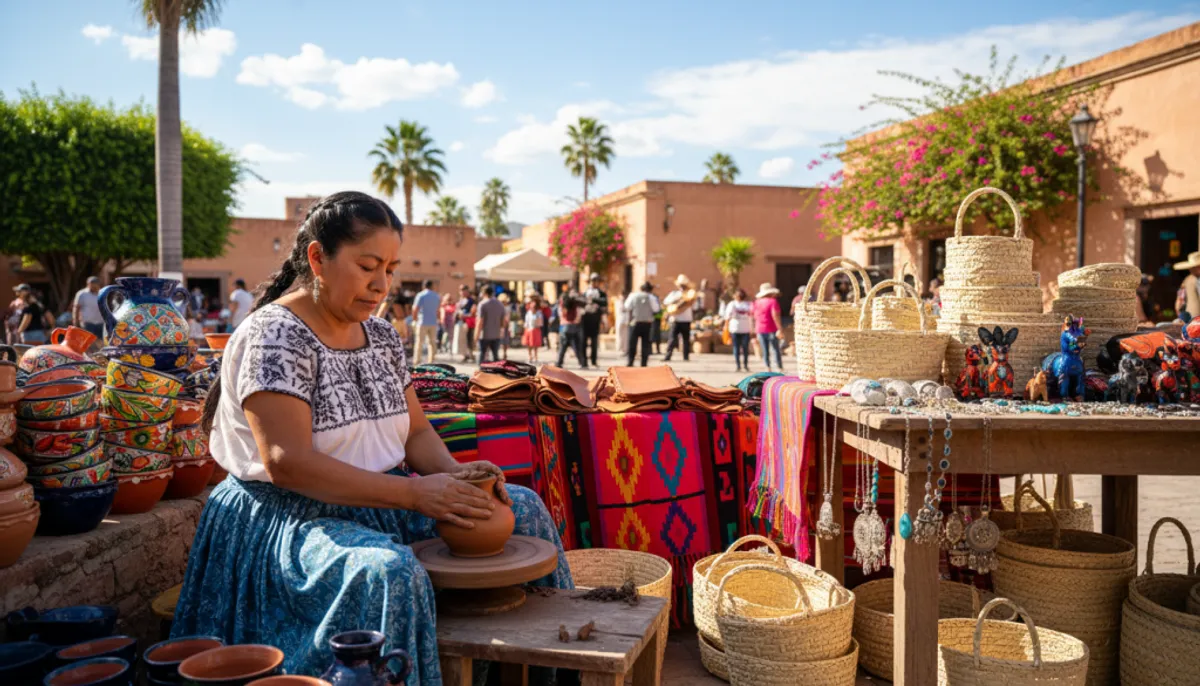
Popular art shines with its vibrant colors and meticulous craftsmanship. Textiles, like the Tenango embroideries, are a beautiful example.
The embroiderers prepare their threads with natural dyes of plant origin. They thus perpetuate ancestral techniques.
Artisanal work also includes ceramics, Talavera pottery, and copper. The cartonería (papier-mâché) showcases the diversity of colors and shapes.
These manual traditions are passed down from generation to generation. They constitute a living and precious heritage.
Traditional Music and Dances
Beyond dishes and festivals, it is often through music that the heart of a people beats the strongest. Its soundscape offers an impressive variety.
Styles like mariachi, norteña, or son jarocho are famous worldwide.
Hispanic and Pre-Hispanic Influences in Music
This richness stems from a unique blend. Pre-Hispanic musical foundations met the Spanish and European influences.
Missionaries taught their harmonies to the indigenous peoples. This fusion created a hybrid form over time.
Pieces like “Cielito Lindo” or “La Bamba” are undoubtedly its most famous ambassadors.
Festive and Ritual Dances
Traditional dances also result from this blending. The Matachines and Concheros perpetuate ancestral ritual choreographies.
Each musical genre tells a different story. This sound mosaic shows extraordinary vitality.
Music and dance evolve while preserving their roots. They embody a living and passionate culture.
Languages, Education, and Cultural Transmission
The transmission of heritage in Mexico relies on a complex linguistic and educational network. This system profoundly shapes contemporary society.
Spanish, Nahuatl, and Other Indigenous Languages
Almost the entire population speaks Spanish. About 94% of the inhabitants have this language as their mother tongue.
However, a significant number also speaks an indigenous language. The constitution recognizes sixty-seven different indigenous languages.
Nahuatl has 1.5 million speakers. Maya and Zapotec follow with 800,000 and 500,000 people.
The Educational System and the Valorization of Heritage
The school organization gradually integrates these linguistic heritages. It recognizes their value while maintaining Spanish as the national link.
This approach values each community. It encourages the transmission of knowledge between generations.
The impressive museum network supports this educational mission. The country has 121,000 museums dedicated to preserving heritage.
This cultural organization strengthens ties within society. It allows each community to share its unique history.
Modernity and Social Traditions
Contemporary Mexican society offers a remarkable balance between ancestral heritage and modern innovations. This unique organization allows the country to shine through its cultural synthesis.
Particular customs rhythm daily life. The Quinceañera is a striking example.
Customs, Traditions, and Media Influence
This 15th birthday celebration marks the transition to adulthood. It originates from the time of the Empire of Maximilian and Charlotte.
Families often save for years to organize a lavish celebration. It is a deeply rooted social rite.
Another fascinating example is Lucha Libre. This theatrical wrestling is a true media phenomenon.
The Mexicans express their passion for spectacle and performance. It is a guiding line of their entertainment.
The Mexican is an optimist; he loves life. Paradoxically, he flirts with death and above all loves to celebrate.
This philosophy of life is reflected in their joyful relationship with existence. Mexicans celebrate every moment with intensity.
Their social organization also incorporates various sporting passions. Soccer is a national obsession.
They also enjoy baseball and American football. This openness shows the influence of their North American neighbor.
| Tradition | Type | Description | Influence |
|---|---|---|---|
| Quinceañera | Family Ceremony | Transition to adulthood for young girls | Imperial origin, major social rite |
| Lucha Libre | Sporting Show | Theatrical wrestling, colorful masks | Media and cultural phenomenon |
| Football (Soccer) | National Sport | Collective and identity passion | Global influence, community bond |
| Baseball / US Football | Imported Sports | Popularity due to geographical proximity | Cultural exchange with North America |
This country demonstrates a remarkable ability to honor its past. It also embraces progress with enthusiasm.
This line of conduct creates a dynamic and welcoming identity. It is a unique model in Latin America.
Practical Guide for a Cultural Trip to Mexico
Your stay in Mexico can become an unforgettable cultural adventure by following a few practical tips. This country is full of treasures to discover.
Good organization is the key to a successful trip. It allows you to experience a deep immersion.
Must-See Museums and Archaeological Sites
Start your exploration with the museums. The city of Mexico has 121, out of the 121,000 that the country possesses.
They present various themes about the past and present. For ancient sites, several gems are worth seeing.
Visit Chichén Itzá and its pyramid of Kukulcán. Explore Teotihuacán and its monumental structures.
Don't miss Palenque, nestled in the jungle, or Monte Albán. These places bear witness to thousands of years of history.
Tips for Discovering Authentic Mexican Culture
For tips, a simple line exists. Align yourself with the price of a local beer or tea.
This gives insight into the cost of living and facilitates interactions. Prepare yourself without doubt for local driving.
In the cities, rules are sometimes interpreted loosely. An informal organization reigns nonetheless.
Adopt the line of conduct of savvy travelers. Venture off the beaten path to meet indigenous communities.
Taste street food and attend festivals. Let yourself be guided by the legendary generosity of the locals.
Also explore the colonial towns classified as world heritage sites. They are open windows to the soul of the country.
By following this line, your trip will gain depth. You will return transformed by this vibrant culture.
Conclusion
At the end of this exploration, Mexico reveals itself as a country of extraordinary human and historical richness. It undoubtedly represents one of the most fascinating places in the world.
This country has managed to preserve an unmatched cultural heritage. The Mexicans, proud of their history, share their traditions with legendary generosity.
Traveling here means diving into a vibrant cultural life. Each community perpetuates its ancestral customs with passion.
The Mexican people show how to honor the past while embracing the future. This harmony creates a dynamic and authentic society.
Respecting this culture becomes an obvious choice. The whole world admires this country for its depth and vitality.
FAQ
What is the oldest known civilization in Mexico?
The Olmecs, who appeared around 1200 BCE, are often considered the "mother civilization" of the region. Their legacy, with its famous colossal heads, influenced all the peoples that followed.
What does the Día de Muertos really represent?
Much more than a festival, it is a joyful and colorful ritual of memory. It symbolizes the belief in an eternal cycle of life and honors the deceased with altars, flowers, and offerings.
Why is gastronomy so central to the country's identity?
Because it tells its story! Each dish, like the ancestral molecular cuisine or nixtamalized corn, is a living heritage of indigenous peoples and the blending that has shaped society.
What languages are spoken in Mexico besides Spanish?
There are 68 indigenous languages! Nahuatl, spoken by the Aztecs, is the most widespread. This linguistic diversity is protected and is an integral part of the national heritage.
What is a good tip for discovering the authenticity of traditions while traveling?
Visit local markets and village festivals. Participating in a community celebration, like the Guelaguetza in Oaxaca, will immerse you in the colors, music, and sense of sharing.
Who are the Mestizos in today’s society?
The Mestizos refer to people of mixed descent, primarily indigenous and European. They form the largest ethnic group and embody the syncretism that is a pillar of national identity.
Where can one admire the best of Mexican muralist art?
The National Palace in Mexico City showcases the monumental murals of Diego Rivera. These works, full of symbols, tell the story and struggles of the people, from ancient times to the revolution.