
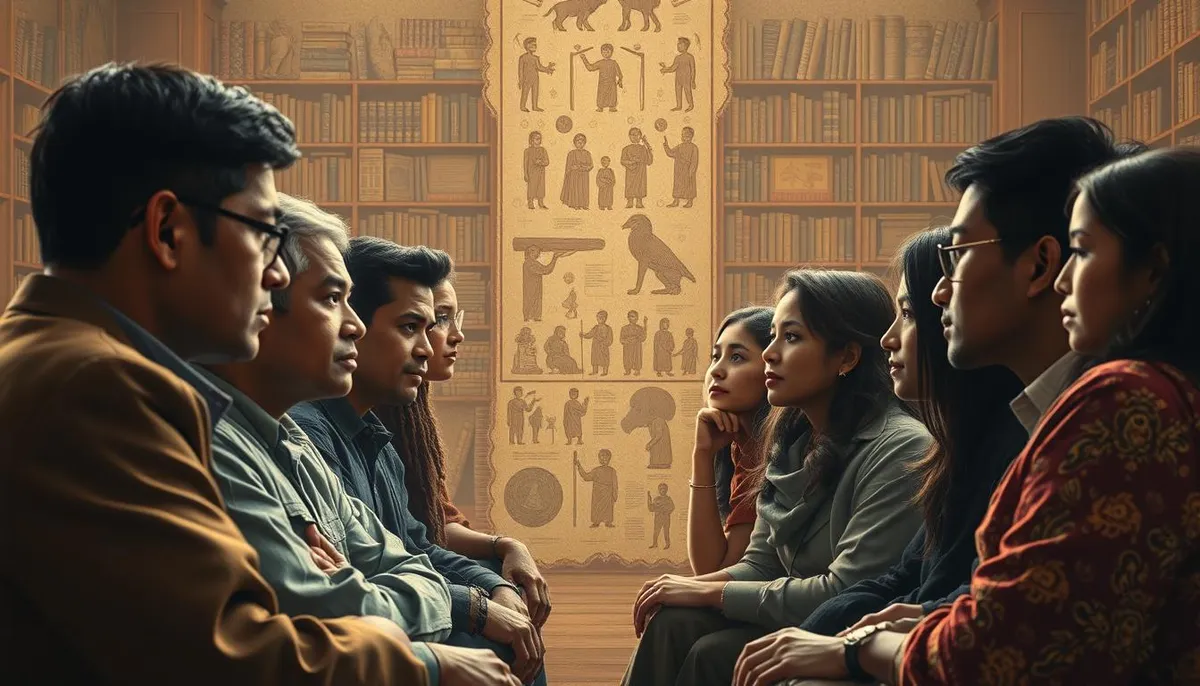
Let’s explore together this term that shapes our identities. In sociology, culture represents much more than a simple concept: it is the invisible cement that unites communities. It includes shared knowledge, transmitted traditions, and even our daily inventions.
UNESCO describes it as a set of material and spiritual traits specific to a group. But did you know that the word “culture” comes from the Latin cultura? Originally, it referred to both the cultivation of the land and the education of the mind. A revealing linguistic heritage!
This subject has fascinated researchers and philosophers for centuries. Debates oscillate between individual and collective visions, with concrete impacts on our politics and economy. For defining culture is also to choose how to organize society.
Contrary to popular belief, it is not limited to the arts. Our deep values, our leisure activities, our ways of cooking or greeting a neighbor – all contribute to this rich human mosaic.
In an interconnected world, grasping these nuances becomes crucial. This introduction to culture will give you the keys to approach the following chapters with curiosity and kindness, while celebrating our incredible diversity.
Introduction to culture and its multiple facets
Let’s dive into the depths of what unites humanity while drawing its differences. The totality of human practices forms a complex network where artistic creations, linguistic exchanges, and scientific discoveries intersect. These three fundamental pillars structure our ways of thinking and acting within society.
Did you know that your way of preparing morning coffee is as much a part of culture as a theater play? Family traditions, dress codes, or work methods embody forms of expression that are often invisible. These shared habits create a common language between generations.
| Field | Manifestation | Social Impact |
|---|---|---|
| Arts | Painting, music, dance | Expressing collective emotions |
| Language | Idioms, gestures, symbols | Facilitating exchanges |
| Sciences | Technologies, medicine | Shaping progress |
Local festivals reveal this richness better than any speech. But the real magic happens in the details: an exchanged smile, a transmitted recipe, an adopted innovation. Each society thus weaves its own signature, distinct from mere nature.
These varied forms compose a dynamic heritage, enriched by national traditions. They connect us to those who came before us while preparing the ground for future generations. A true bridge between past and present!
What is culture? Approach and exploration of the term
Did you know that a single word can hide a world of meanings? In 1952, Alfred Kroeber and Clyde Kluckhohn identified 150 different definitions of culture. This diversity shows how much the concept exceeds simple book knowledge.
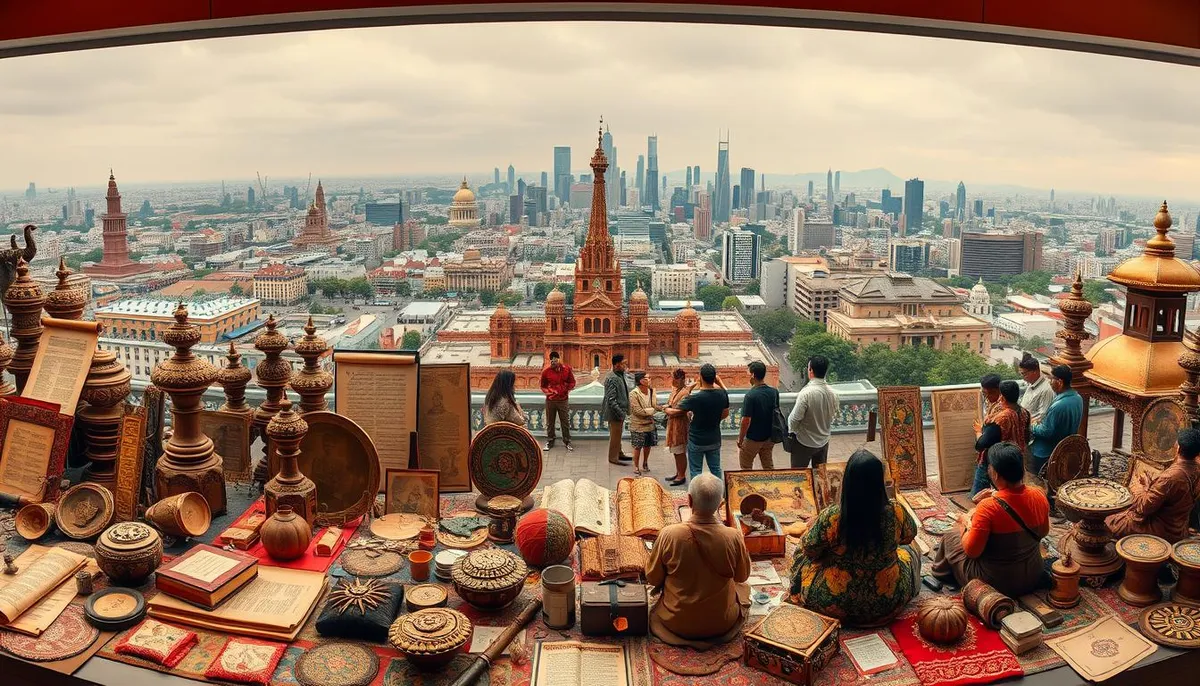
The meaning given to this term varies according to contexts. For some, it evokes individual erudition. For others, it describes the totality of a community's traditions. These multiple interpretations fuel exciting debates about our relationship with knowledge.
| Perspective | Definition | Concrete Example |
|---|---|---|
| Anthropological | Shared way of life | Family rituals |
| Sociological | Social cement | Regional languages |
| Everyday | Common practices | Eating habits |
A widespread conception opposes “noble” culture and “popular” culture. This view creates questionable hierarchies. Opera and hip-hop, for example, deserve equal consideration as human expressions.
The commercial uses of the term show another facet. Some brands use it to enhance products. Yet, true culture is rooted in exchanges that are far richer than mere consumption.
Understanding these nuances allows us to approach contemporary debates with accuracy. Each conception brings an essential piece to the puzzle of our collective understanding.
The history and evolution of culture
Our cultural heritage resembles a river with a thousand tributaries. Cicero already laid the foundations for essential reflection in the 1st century BC: “Like the earth, the human mind needs culture to flourish”. This agricultural metaphor marks the beginning of a fascinating intellectual adventure.
The origins and historical trajectory
The first civilizations shaped complex systems that are still present. The Sumerians invented writing around 3300 BC, revolutionizing the transmission of knowledge. In Mesopotamia as in Egypt, social and artistic codes lay the foundations of our modern societies.
The petroglyphs of Gobustan (Azerbaijan) bear witness to a creativity that is 12,000 years old. These rock artworks strangely converse with contemporary symbols like Robert Indiana's LOVE sculpture. A bridge between past and present!
The influence of civilizations over time
Trade routes have always been cultural highways. Chinese silk reached Rome during antiquity, while Indian spices influenced medieval European cuisine. Each commercial exchange becomes an invisible blending.
The Islamic expansion (7th-15th centuries) perfectly illustrates this dynamic. Arab scholars preserved and enriched Greek knowledge, while Moorish architecture inspired Europe. Today, the Internet accelerates these interactions on a global scale.
This evolution proceeds in successive leaps. The Renaissance rediscovers antiquity, the Enlightenment questions traditions, and our digital age invents new languages. An upward spiral where each generation reinterprets the heritage received.
The different definitions of culture
Do you know all the dimensions hidden behind this keyword? Specialists propose various angles of analysis to grasp this notion. Let’s see how these perspectives articulate and complement each other.

Sociological and anthropological definitions
In sociology, this concept acts as a social glue. Guy Rocher describes it as a “set of shared ways of thinking”. These common patterns allow a group to function harmoniously.
Anthropologists emphasize transmission. For them, each generation inherits and transforms practices. This dynamic explains why our traditions evolve while retaining their essence. The definition of culture is essential to understand this process.
| Discipline | Focus | Concrete Example |
|---|---|---|
| Sociology | Collective interactions | Dress codes |
| Anthropology | Intergenerational transmission | Family rituals |
Historical and philosophical definitions
History reveals a progressive accumulation. Each era adds its innovations to previous achievements. This stratification creates identities rich in nuances.
Philosophers often oppose this concept to nature. While instinct guides animals, humans build their landmarks. This distinction underpins our ability to create complex systems.
These approaches do not oppose each other. They rather reveal the multiple facets of the same diamond. Understanding these nuances helps navigate our interconnected world.
The contemporary stakes of culture
What if our view of culture hid unsuspected traps? Researchers like Ingrid Piller or Adam Kuper warn: this concept sometimes replaces the old notion of race, creating new stereotypes. Their work reveals how certain fixed representations divide peoples instead of uniting them.
The United Nations provide crucial insight. Their reports on cultural rights highlight the urgency of protecting women's access to traditions. A major challenge for cultural policies worldwide, often too uniform in the face of the diversity of local realities.
The preservation of minority languages illustrates these tensions. How to preserve a linguistic heritage in a globalized world? States are seeking innovative solutions, far from simplistic approaches that oppose tradition and modernity.
These reflections redraw our relationship to living together. By overcoming clichés, we can build societies where each language and custom enriches the common fabric. The challenge? To invent cultural policies as fluid as the world they aim to serve.