
Welcome to the heart of a fascinating region in the northwest of France! This territory invites you to discover its exceptional heritage and unique identity, forged over the centuries.
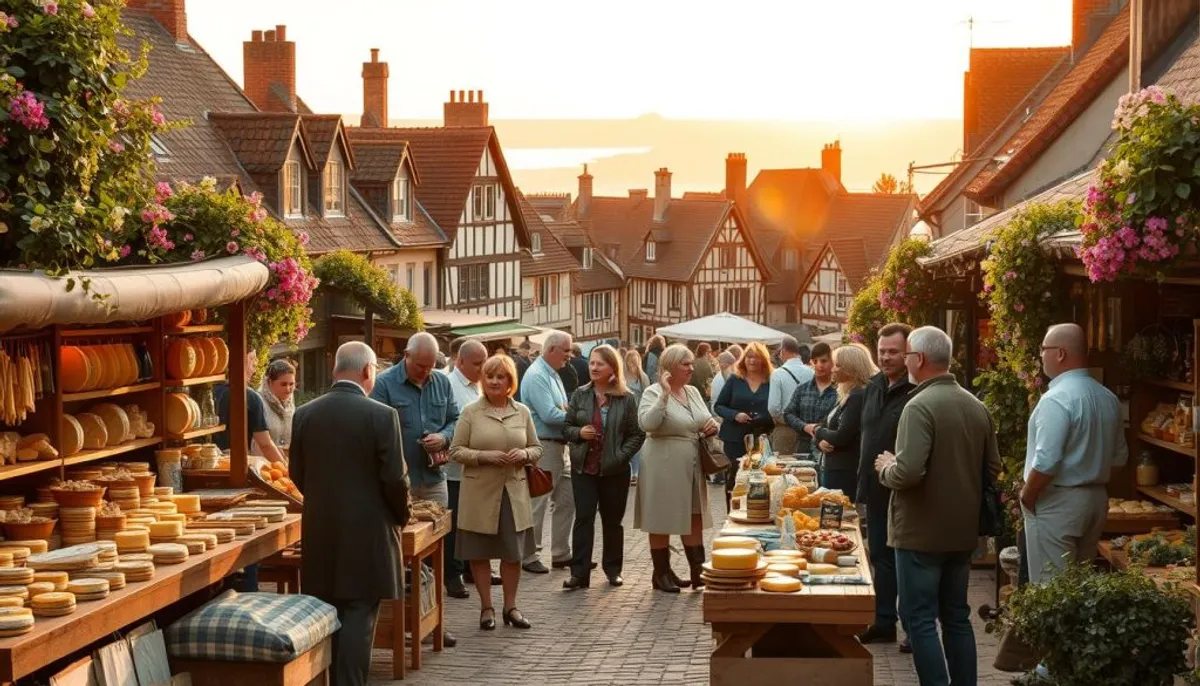
Since 2016, Normandy has brought together 3.3 million inhabitants spread across five departments. This merger has created a dynamic space where traditions and modernity meet harmoniously.
The region is characterized by its 600 km of magnificent coastlines and its typical hedged farmland landscapes. This exceptional natural heritage contributes to forging a deeply rooted maritime identity.
Through its remarkable architecture and vibrant traditions, this region expresses a rich and accessible culture. It has inspired artists and creators for generations, making it a true French artistic melting pot.
Key Points to Remember
- Normandy is a region created in 2016 comprising 5 departments
- It has 3.3 million inhabitants across its territory
- 600 km of coastlines characterize its maritime landscape
- Its architectural and natural heritage is exceptional
- The region has long inspired artists and creators
- Vibrant traditions and a dynamic cultural scene
- Strong identity forged by history and geography
Introduction to Norman Culture
Let’s explore the administrative and territorial genesis of this unique territory. Normandy as we know it today is a recent region, born from the merger of two historical entities.
Historical and Geographical Context
Since January 1, 2016, this region unites Lower and Upper Normandy. This administrative creation covers 29,900 km², placing it 11th nationally.
The territory consists of five distinct departments. Calvados, Eure, Manche, Orne, and Seine-Maritime together form a rich mosaic.
Positioned in the northwest of the Paris Basin, the region benefits from a privileged geographical location. Its 600 km of coastlines have always influenced its development.
Origins and Evolution of the Region
The history of this land dates back to the Celtic peoples. The Romans, followed by the Vikings, successively marked its identity.
Over the centuries, the characteristic hedged farmland landscape has shaped Haitian traditions and local customs. The river valleys, particularly that of the Seine, have played a crucial role.
Today, the three major urban areas (Rouen, Le Havre, Caen) structure this dynamic region. Each department contributes to the cultural richness of the whole.
Norman Traditions and Customs
Let’s meet the ancestral practices that constitute the soul of this territory. These vibrant traditions create a unique link between the past and the present.
Local Festivals and Celebrations
The Festival of the Normans represents a highlight of the year. It brings together the inhabitants of the entire Norman territory around their common heritage.
Local events vary according to the seasons and local products. Each department offers its own festivities.
| Type of Celebration | Period | Main Location | Specificity |
|---|---|---|---|
| Cider Festivals | Autumn | Pays d'Auge | Tasting and traditional production |
| Maritime Festivals | Summer | Coastal Ports | Naval heritage and fishing |
| Christmas Markets | December | Historic Towns | Local crafts and gastronomy |
| Festival of the Normans | September | Multiple sites | Regional identity celebration |
Ancestral Rituals and Practices
The Norman language persists in certain areas like Bessin and Cotentin. It transmits a precious oral heritage over time.
Traditional agricultural and maritime practices continue. They reinforce the sense of belonging to this rich cultural whole.
These local customs showcase the diversity that composes the regional identity. They are a fundamental element of contemporary culture.
Iconic Sites and Monuments
Normandy reveals its architectural treasures through exceptional sites that tell its history. These remarkable places attract millions of visitors each year.
National Monuments and UNESCO Sites
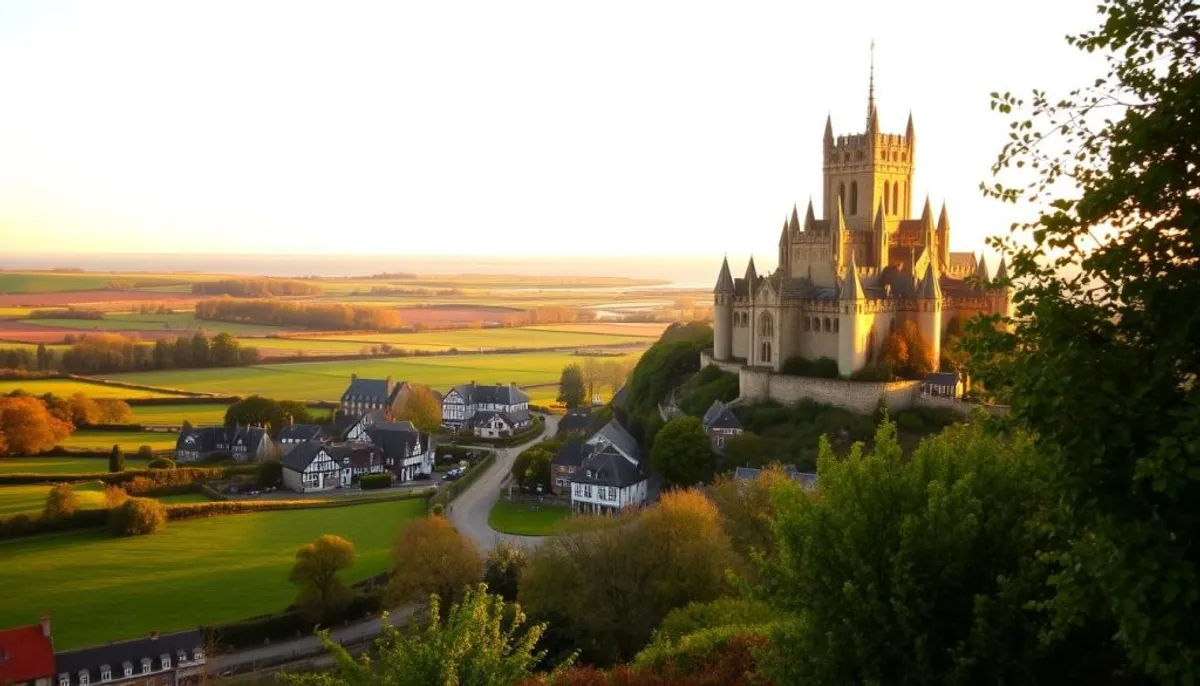
The Abbey of Mont-Saint-Michel is one of the most grandiose monuments in France. It welcomed nearly 1.5 million visitors in 2019.
Three sites are inscribed on the UNESCO World Heritage list. The bay of Mont-Saint-Michel, the Vauban fortifications, and the city of Le Havre rebuilt after the Second World War.
The famous Bayeux tapestry is a unique medieval treasure. It recounts the conquest of England with remarkable historical accuracy.
Memorial Sites Related to the D-Day Landings
The Normandy coastline bears the imprint of the landing on June 6, 1944. This major event of the Second World War changed the course of history.
The D-Day beaches have become places of international pilgrimage. They testify to this crucial episode of the world war.
The region has 3,000 protected buildings as historical monuments. These sites narrate the fascinating history of this territory since the medieval era.
Norman Architecture and Landscapes
The territory presents remarkable architectural diversity that perfectly complements its varied landscapes. This harmony between built and nature defines the visual identity of the region.
Cities, Ports, and Maritime Fauna
With 600 km of coastlines, the region develops a strong maritime identity. Le Havre stands out as the leading port in France for foreign trade.
The Lower Seine port complex includes several major ports. This concentration makes the area the third European hub.
The coastline is home to renowned seaside resorts. These coastal towns, where local artists can also be found, including Nevers artists, have welcomed Parisian tourism since the 19th century.
| Main Port | Specialty | Importance |
|---|---|---|
| Le Havre | Foreign Trade | 1st French port |
| Rouen | River Traffic | Historic Port |
| Cherbourg | Maritime Crossings | Cross-Channel Port |
| Dieppe | Fishing and Leisure | Seaside Resort |
Four regional natural parks protect 17% of the territory. They enhance the natural landscapes, plant cultivation techniques, and built heritage.
The hedged farmland fragments the countryside where 80% of the land is agricultural. This green landscape characterizes the interior of the land.
The sea profoundly influences local architecture. From fishermen's houses to seaside villas, each coastal town tells this relationship.
Norman Culture and Visual Arts
From the Impressionist movement to contemporary art, Norman artistic creation continues to evolve. This region has always been a true melting pot for visual arts.
Painters and the Impressionist Movement
In the 19th century, Impressionist painters discovered the Norman landscapes. Claude Monet immortalized Giverny, creating a mythical place for world art.
The region has birthed great artists like Géricault and Marcel Duchamp. Poussin and Fernand Léger complete this prestigious ensemble.
Art Exhibitions and Contemporary Initiatives
Nearly 100 museums welcome 2.9 million visitors annually. The Normandie Impressionniste festival celebrates this heritage in 2024.
Contemporary art flourishes with the Frac of Caen and Rouen. More than 30 centers for contemporary arts energize the current scene.
Urban painters like Oré and Seb Toussaint transform cities into open-air galleries. This creative ensemble demonstrates the vitality of visual arts in the region.
The Literary Wealth of Normandy
The Norman pen has shaped French literature since its medieval origins. This land of writing preserves an exceptional heritage that shines well beyond its borders.

Iconic Authors and Literature in Norman
As early as the 11th century, the Chanson de Roland marks the beginnings of French literature in Anglo-Norman. Prestigious writers like Gustave Flaubert and Guy de Maupassant drew their inspiration from this territory, enriching the literary history.
Jules Barbey d'Aurevilly perfectly embodies this vibrant literary tradition. Today, Annie Ernaux (Nobel Prize 2022) and Michel Bussi carry on this heritage with talent.
Homes of the Illustrious and Reading Places
The region has 130 publishing houses and 750 libraries. These places of reading ensure democratic access to books across the territory.
The Imec at the Abbey of Ardenne houses 50,000 precious volumes. The 17 homes of the illustrious pay tribute to the great writers who have marked literary history.
Festivals like Les Boréales in Caen energize the contemporary scene. Each book published reinforces the vitality of this exceptional writing tradition.
Theatrical and Cinematic Aspects
The screen and stage of Normandy shine well beyond regional borders. This artistic vitality relies on impressive infrastructures and recognized talents.
Traditional Theater and Contemporary Stages
Norman theater benefits from an exceptional network with 3 national dramatic centers. These structures offer a rich program throughout the year.
More than 250 performance venues animate the entire territory. Festivals like Spring or Éclats de rue in Caen reveal the diversity of the performing arts.
Films Shot in Normandy and Their Impact
Normandy provides a privileged playground for cinema. The famous D-Day beaches attract international productions.
Iconic films like The Longest Day or Intouchables have used these unique settings. The series Arsène with Omar Sy was recently filmed in Étretat.
The region has 100 cinema theaters with 300 screens. This infrastructure supports a cultural offer accessible to all.
Festivals like those in Cabourg or Deauville enliven cultural life every year. They confirm the attractiveness of the Norman beaches for the seventh art.
Music and Festivals in Normandy
Dive into the vibrant sound universe that animates this land of multiple musical talents. The region offers exceptional musical programming throughout the year.
Music Festivals and Local Concerts
More than 100 festivals rhythm the cultural calendar each year. Jazz sous les pommiers in Coutances and Papillons de nuit in Saint-Laurent-de-Cuvez are among the major events in the region, where cultural advertising plays an essential role in promoting these events.
These shows attract tens of thousands of spectators. They create magical moments that leave lasting memories.
Contemporary and Classical Music Scenes
Six SMAC (Current Music Scenes) structure the territory. They welcome emerging and established artists.
Classical music shines with the Rouen Opera and the Regional Orchestra. These institutions offer internationally acclaimed shows.
The region has cultivated this musical richness for decades. It supports community cultural initiatives and contemporary creation while honoring its heritage.
The Economic and Demographic Impact on Culture
Let’s decipher the links between economy, demographics, and cultural development. The distribution of the population directly influences access to artistic activities.
With 3.3 million inhabitants, the region has a moderate density of 111 inhabitants per km². More than half of the population lives in small municipalities.
Territorial Development and Its Challenges
The Norman territory faces various demographic challenges. Some departments are experiencing gradual depopulation.
The regional economy generates 95.1 billion euros in GDP. The industrial sector represents 16% of jobs, above the national average.
| Indicator | Regional Value | National Comparison | Cultural Impact |
|---|---|---|---|
| Rural Population | 55% in municipalities | Higher than average | Equitable access challenge |
| Higher Education Graduates | 24% of the population | Lowest metropolitan rate | Limited cultural participation |
| Cultural Professionals | 16,800 active (1.3%) | 1 point lower than average | Reduced professional network |
| Depopulation | Orne -0.5%, Manche -0.2% | Specific trend | Maintaining rural supply difficult |
Despite these challenges, the entire territory benefits from the actions of local authorities. They work to compensate for demographic imbalances.
The 16,800 cultural professionals maintain a dynamic offer. Their work ensures artistic vitality in each department.
This region demonstrates remarkable adaptability. The territorial whole preserves its rich cultural heritage in the face of economic changes.
Enhancing Heritage Through Cultural Initiatives
The cultural network of Normandy deploys its 4,300 facilities across the entire Norman territory. This strategic distribution ensures access to culture in all areas, including rural zones.
Cultural Structures and Institutional Support
More than half of the facilities are located in sparsely populated areas. The 700 libraries constitute the first proximity network for public reading.
The cinema benefits from remarkable support with 70 art house theaters. In Manche, 90% of establishments in rural areas have this prestigious label.
| Type of Facility | Distribution in Dense Areas | Distribution in Sparse Areas | Territorial Impact |
|---|---|---|---|
| Theaters | 44% | 56% | Balanced coverage |
| Art Centers | 75% | 25% | Urban concentration |
| Music Scenes | 41% | 59% | Rural dispersion |
| Art House Cinemas | 33% | 67% | Rural priority |
Specialized structures support professionals in each field. RN13BIS supports contemporary art, while Oblique/s develops digital visual arts.
Normandie Images and ODIA Normandie disseminate the artistic offer throughout the year. Renar coordinates 15 summer festivals dedicated to street arts.
This proactive policy enhances living heritage. It ensures accessible cultural programming for all residents.
Conclusion
This exploration has allowed us to discover the exceptional cultural richness of this French land. The five departments form a territory where each geographical area contributes its unique input, particularly concerning the origins of corporate culture.
From historic beaches to remarkable gardens, the entire territory benefits from an accessible cultural offer. The 4,300 places and facilities guarantee this equitable distribution.
The legacy of great artists continues to inspire contemporary creation in all artistic fields. Professionals and local authorities work hand in hand to animate these places of reading and creation.
This region stands out as one of the greatest cultural hubs in France. The heritage harmoniously dialogues with innovation over time.
Each department thus contributes to the ongoing vitality of the arts in this unique region. A remarkable balance between tradition and modernity characterizes this land of art and creation.
FAQ
What are the main historical sites to visit in Normandy?
The region is full of iconic places! Don't miss Mont-Saint-Michel, classified as a UNESCO site, the D-Day beaches like Omaha Beach, or the magnificent Bayeux Tapestry. These sites immerse you in the heart of the history of World War II and the Middle Ages.
Are there famous artists associated with Normandy?
Absolutely! The unique light of the region has inspired great painters like Claude Monet, the founder of Impressionism in Giverny. Writers such as Gustave Flaubert or Barbey d'Aurevilly also drew their inspiration from these landscapes. Their legacy is visible in many museums.
Where can one attend a live performance?
The offer is very rich! Many cities like Caen or Rouen have theaters and art house cinemas. During the summer, festivals take over gardens and ports to offer open-air performances accessible to all.
How is culture supported across the entire territory?
Many cultural structures, such as "Art and Essay" labeled facilities, are distributed throughout the Norman territory, including in rural areas. They are supported by local authorities to ensure access to reading, visual arts, and heritage for all residents.