
Dive into a universe of extraordinary richness and diversity. This heritage shines well beyond the borders of the hexagon.
It shapes the identity of a nation admired across continents. Its unique traditions and values continue to inspire the whole world.
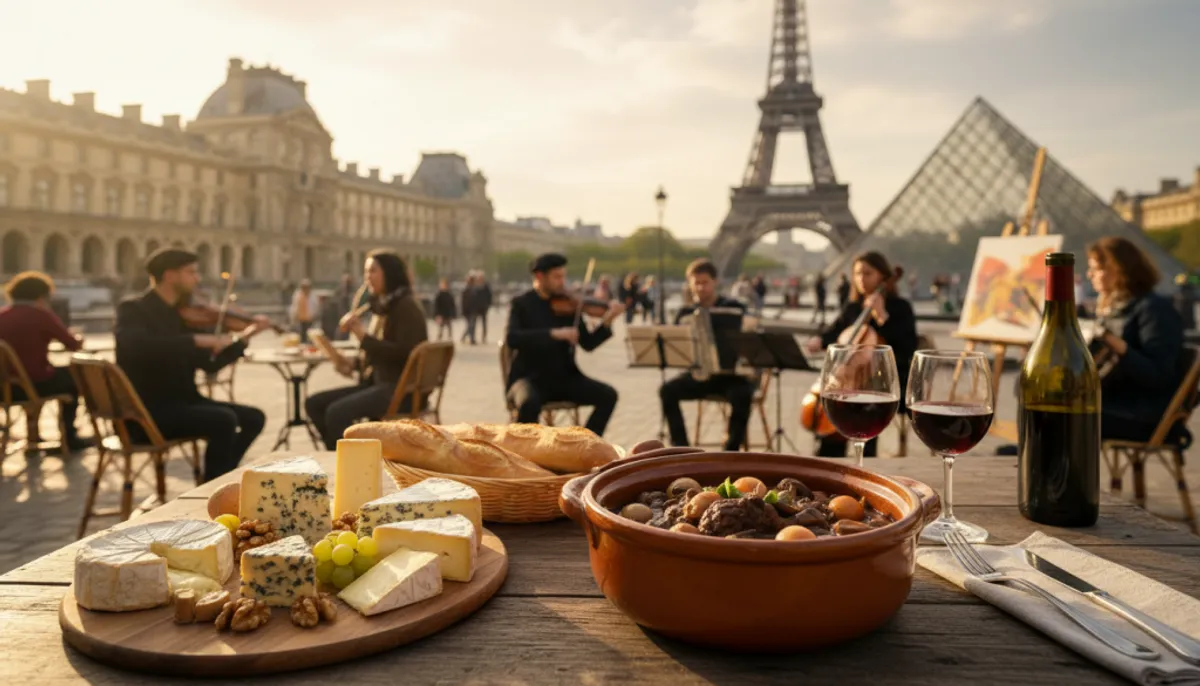
How has this heritage been built over the centuries? The answer lies in a clever blend. A profound historical legacy meets vibrant artistic expression and recognized culinary excellence.
This article invites you on a discovery journey. We will explore the many facets of this art of living, from republican symbols to the small rituals of everyday life.
You will understand the fundamental elements that make this cultural heritage a model. We will also reveal its peculiarities and sometimes surprising social codes.
Key points to remember
- The influence of this heritage is global and recognized in many fields.
- Its unique identity is forged through a blend of history, art, and gastronomy.
- This article offers a comprehensive overview of its riches.
- The art of living that stems from it defines the very essence of this country.
- Understanding its social codes allows for a better grasp of its influence in the world.
- Its heritage continues to evolve while retaining its deep roots.
- This article serves as a guide to discover the treasures of this nation.
Introduction to French culture
For many, approaching France involves understanding a unique and codified social system. This heritage is the cement of national identity.
It unites people around common values and traditions. For a visitor, mastering these codes is essential.
Presentation and importance in national identity
This shared heritage defines who the citizens are. It creates a deep sense of belonging.
Foreigners often discover with surprise the precision of the rules of politeness. Good preparation greatly facilitates integration.
Historical and social context
French DNA has been forged over centuries of political and artistic evolutions. Each era has left its mark.
Understanding one’s own culture helps appreciate these differences. It is the key to a successful immersion.
| Adaptation phase | Characteristics | Practical advice |
|---|---|---|
| Honeymoon | Awe and curiosity. Everything seems new and exciting. | Enjoy this energy to explore. |
| Confrontation | Frustration in the face of differences. Familiar landmarks are missing. | Educate yourself about local customs. |
| Integration | Acceptance and adjustment. A new balance is created. | Engage in social life to progress. |
This process is normal. Mental preparation reduces the stress associated with change.
The historical heritage and French heritage
From the Revolution to the Enlightenment, history has sculpted the core values of this society. This unique heritage tells the story of the major transformations of the country.
The republican symbols and the motto Liberty, Equality, Fraternity
The national motto embodies the soul of the Republic. Born from the Age of Enlightenment, it was proclaimed for the first time in 1789.
These three words still structure collective life. The symbols, stemming from this revolutionary history, unite the French citizens.
| Value | Meaning | Main guarantee |
|---|---|---|
| Liberty | Right to expression and free thought. | Protected by law in all areas. |
| Equality | Same rights and duties for every citizen. | Universal suffrage and justice for all. |
| Fraternity | Solidarity and social bond between people. | Principle of national solidarity. |
The influences of the Enlightenment and revolutions
The Age of Enlightenment infused the idea of reason and human rights. This thought paved the way for upheavals.
The revolutions built a modern state. They anchored these ideals in institutions and daily life.
Today, French society remains imbued with this heritage. Freedom of thought and equality before the law are its pillars.
Art and creative expression in France
From ancient masterpieces to contemporary installations, creative expression is celebrated here, particularly in the realm of music and art in germany. This vitality can be seen in every corner of the territory.
Museums, exhibitions, and artistic events
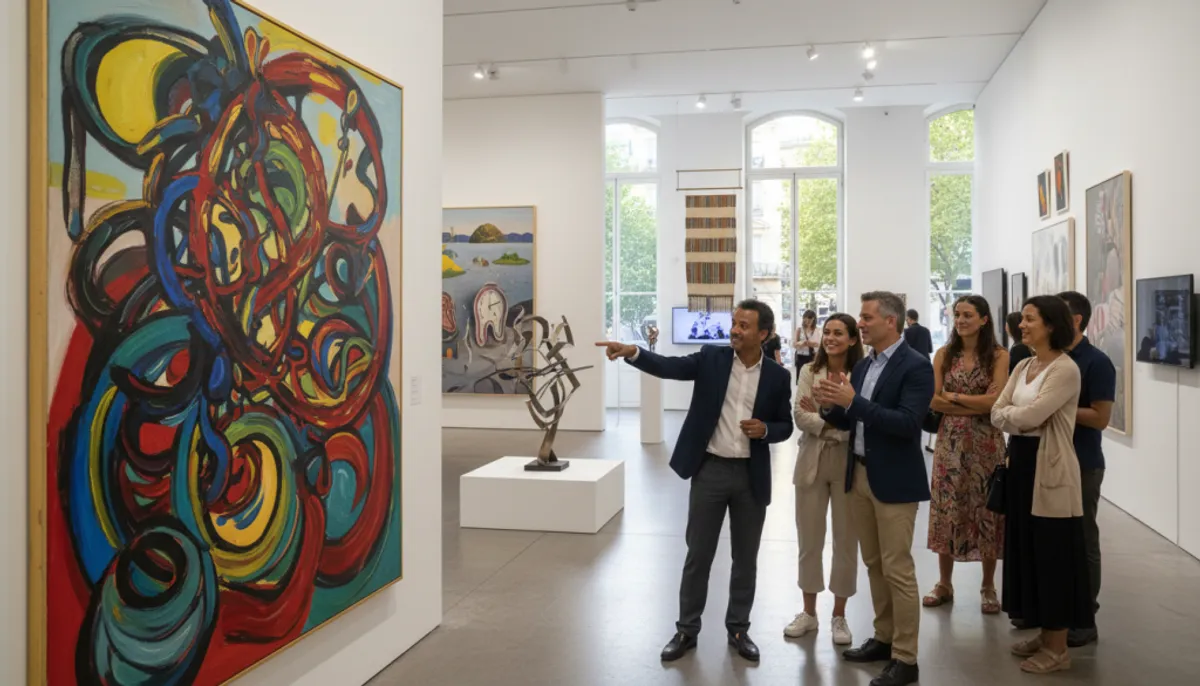
Museums welcome millions of visitors each year. Places like the Bassins des Lumières in Bordeaux or the exhibitions in Nîmes illustrate this wealth.
These popular museums showcase an immense artistic heritage. They offer a journey through time and styles.
| Type of event | Notable example | Region | Characteristic |
|---|---|---|---|
| Digital art center | Bassins des Lumières | Bordeaux | Immersive installations |
| Temporary exhibition | Events in Nîmes | Occitanie | Focus on modern art |
| Fine Arts Museum | Museum in Caen | Normandy | Historical collections |
| Contemporary art festival | Events in Aix-en-Provence | Provence-Alpes-Côte d’Azur | Current creations |
The impact of art on French society
Art profoundly shapes debates and collective thought. It influences the way we perceive the environment.
Exhibitions in each region create a permanent dialogue. This place of exchange unites tradition and innovation.
Participating in these events is an excellent way to understand aesthetic codes. Art remains a pillar of national identity.
Gastronomy: between tradition and innovation
The gastronomic reputation of this country rests on a delicate balance between heritage and modernity. This cuisine, recognized worldwide, combines ancestral rites with constant creativity, showcasing the richness of indonesian gastronomy.
Culinary traditions and artisanal know-how
Bread, baguettes, and pastries embody this art of living. Bakeries, essential places of life, offer a multitude of types.
An ancient superstition holds that one should never turn bread upside down on the table. This gesture is said to bring bad luck.
The aperitif is a social institution. This moment of relaxation, around 6 PM, brings people together over small savory things and drinks.
There is also the more substantial aperitif dinner, which can sometimes replace a full meal.
The locals are the biggest cheese lovers. They consume an average of 26 kg per year.
More than 400 varieties exist, reflecting a deep attachment to local products.
The family or friends meal is sacred. It often lasts several hours and includes several dishes.
The way of dedicating time at the table contrasts with other eating habits. It is a celebration in its own right.
These artisanal skills perpetuate an excellence that places this cuisine among the greatest heritages.
Customs and daily habits
The first contacts in this country are governed by precise codes that often surprise visitors. These daily rituals define the framework of social relations within french society.
Understanding these habits is essential for harmonious integration. They touch on how to greet and converse.
Greeting codes, formal address, and the kiss
Saying hello may seem complex. You have three main options depending on the situations.
You can kiss, shake hands, or simply say a word. The choice depends on the relationship between the people and the context.
Kissing on the cheek is common among women, and between men and women. Generally, two kisses are exchanged, one on each side.
The number may vary by region. It is a gesture of closeness and friendliness.
| Greeting | Typical context | Important note |
|---|---|---|
| The kiss | Among friends, family | Avoid the “hug” American style |
| Handshake | Professional setting, first meeting | Standard politeness formula |
| Verbal “Hello” | Stores, brief contacts | It is crucial to say hello first |
Formal address is a fundamental rule of politeness. It is used with someone unknown, a superior, or an elderly person.
Always start with formal address to show respect. Switching to “tu” marks a relationship that has become more informal.
This is an essential thing to master. It avoids misunderstandings in various situations.
The art of debate and double entendre
The French love to discuss and debate. It is considered a true art of living.
Conversations can cover politics, society, or current events. Exchanges are often passionate and direct.
Humor with double meanings is also very present. The words should not always be taken literally.
This subtlety can be disconcerting at times. Interjections like “oh là là” punctuate discussions to express emotions.
Accepting this style of conversation is key to enjoying social exchanges. It is part of the charm of local interactions.
French culture through its festivals and events
The French calendar is punctuated by vibrant celebrations that reveal the soul of its territories. These popular gatherings transform cities into open-air stages and offer direct immersion in the local art of living.
Iconic cultural events and regional festivals
Major festivals rhythm the seasons in many regions. They blend ancestral heritage with contemporary creativity, attracting thousands of visitors each year.
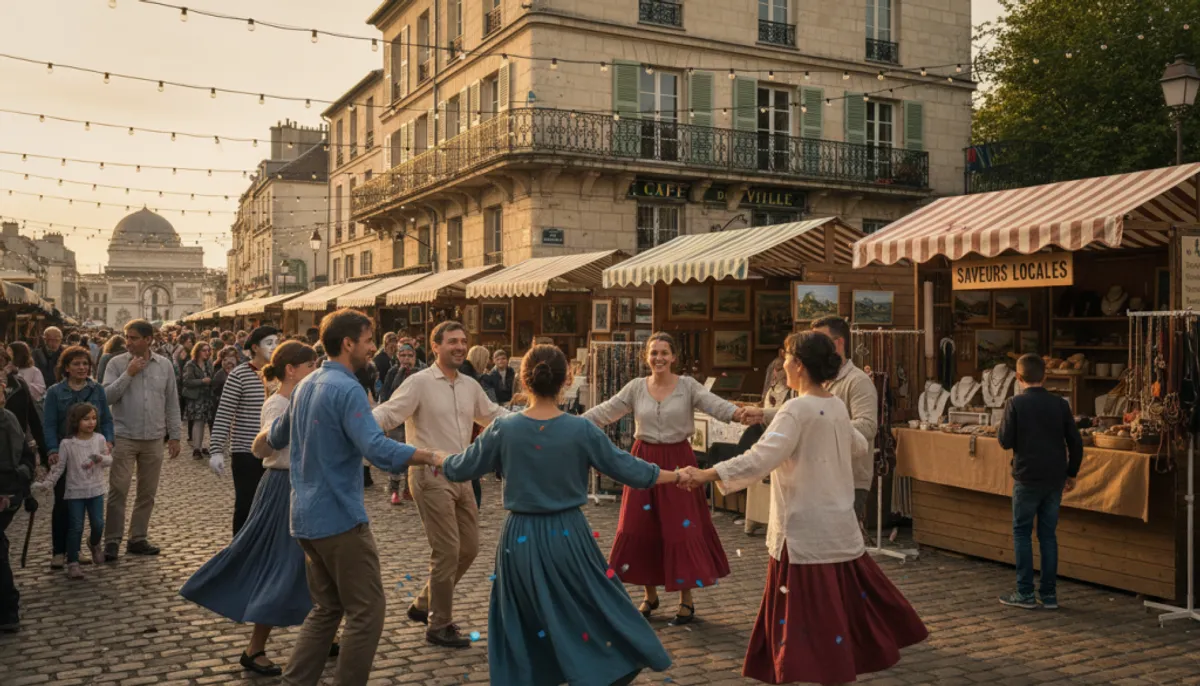
These privileged moments highlight a unique heritage. They also create moments of sharing and absolute conviviality.
| Festival | Location | Period | Estimated attendance |
|---|---|---|---|
| Carcassonne Festival | Carcassonne (Occitanie) | Summer | International shows |
| Festejades | Gruissan (Occitanie) | Summer | ~50,000 people |
| Musical of Périgord Noir | Church of Saint-Léon-sur-Vézère (Nouvelle-Aquitaine) | Summer season | Diverse audiences |
These events are pillars of artistic life. Each year, they contribute to keeping the traditions of the different regions alive.
This article highlights their key role. They testify to the richness and capacity for renewal of national heritage.
Exploring French culture and its regions
Every corner of the hexagon has a unique identity forged by its history and heritage. This territorial diversity offers a captivating journey for both foreigners and locals, including the rich cultural connections between belgium and france.
Discovering these lands means understanding the soul of a multifaceted nation. Each region cultivates its traditions and daily life.
From art cities to picturesque villages
The Ministry of Culture labels many cities of art and history. They preserve an exceptional architectural heritage.
Saint-Malo in Brittany impresses with its majestic ramparts. The list of the “Most Beautiful Villages of France” includes, among others, Talmont-sur-Gironde and La Flotte.
| Destination | Region | Notable heritage | Type |
|---|---|---|---|
| Saint-Malo | Brittany | Ramparts and corsair city | City of Art and History |
| Talmont-sur-Gironde | Nouvelle-Aquitaine | Medieval village | Most Beautiful Villages |
| La Flotte | Nouvelle-Aquitaine | Port and fortifications | Most Beautiful Villages |
| Montignac | Nouvelle-Aquitaine | Lascaux Cave | Prehistoric site |
Local heritage and regional traditions
Provence is part of the emblematic regions. It is renowned for its landscapes and traditional craftsmanship.
Foreigners discover pottery, soap, and textiles there. These skills enliven local and economic life.
Sites like Lascaux enrich the list of national heritage. They testify to a fascinating millennial history.
The French art of living
The balance between work and leisure, the precision of language, and the play of implications define a unique lifestyle. This art of living places immense value on the quality of relationships and shared moments.
It manifests in precise social rituals and a constant quest for pleasure. Understanding these nuances opens the doors to an authentic experience.
Politeness, conversations, and unique humor
Politeness is the foundation of any interaction. Saying “hello” and “goodbye” is crucial, even for exchanges lasting a few days.
The attachment to the French language and spelling is profound. Attempting to communicate in their language, even with basic notions, transforms your stay.
National pride is expressed through gastronomy and the richness of landscapes. When traveling, using your illicado card in france can enhance your experience. The question of money, however, remains a private matter.
| Aspect | Characteristic | Practical advice |
|---|---|---|
| Politeness | Mandatory formal greetings. | Always start with “Hello”. |
| Language | Attachment to correctness and expression. | Use French whenever possible. |
| Double entendre | Humor through implication and irony. | Do not take all words literally. |
| Holidays | Five weeks of annual paid leave. | Respect this privileged moment of relaxation. |
The double entendre is a subtle way of communicating. This form of humor, where not everything is said explicitly, is part of the local charm.
Watching French films is an excellent way to immerse yourself in this culture. They capture social codes and this unique humor.
The five weeks of vacation reflect the importance placed on personal life. This art of living celebrates balance and the quality of every moment.
Conclusion
At the end of this journey, the extent and depth of French heritage reveal themselves strongly. This article has explored its multiple dimensions, from history to current traditions.
This culture exerts a fascinating effect on visitors from the world over. Understanding its codes and its language transforms the experience of discovering this country.
For the foreigner, immersing means accepting its unique particularities. This also allows for reflection on one’s own culture through difference.
The French remain deeply attached to their heritage, among others to their gastronomy and their festivals. Regional traditions and diversity testify to a richness that is always renewed.
Exploring this universe represents an adventure that changes the perception of the country. The cultural heritage French continues to inspire well beyond borders.
Its fundamental values maintain a universal relevance for contemporary society.
FAQ
Why is history so important for understanding life in France today?
The past has profoundly shaped the identity and values of the country. From the Enlightenment to the Revolution, major movements established principles such as secularism and the motto “Liberty, Equality, Fraternity.” This rich historical heritage still influences public debate, education, and even the organization of society.
What are the must-see museums or artistic events for a first trip?
The Louvre Museum and the Musée d'Orsay in Paris are classics for art. For a more contemporary experience, the exhibitions at the Louis Vuitton Foundation or the Pompidou-Metz Center are excellent. Outside the major cities, many regions organize film festivals, like in Cannes, or events around local heritage.
Is French gastronomy limited to high-end starred restaurants?
Absolutely not! The true gastronomic richness also lies in the traditions of each region and artisanal know-how. From AOP cheeses to regional dishes like sauerkraut or bouillabaisse, it is a daily adventure. Local markets are the best places to discover these treasures.
What are the essential politeness codes to know to avoid faux pas?
Two key elements are “formal address” and the “kiss.” We use “vous” with people we do not know well. For the kiss, the number of kisses varies by region; just observe what others do. A “hello” when entering a store is also very much appreciated.
Are there major festivals that celebrate this unique art of living?
Yes, throughout the year! The Fête de la Musique in June fills the streets with free concerts. Events like the Chorégies d'Orange showcase opera in historic venues. Each region also has its own festivals, from grape harvests in Burgundy to medieval celebrations in Provence.
How to explore the diversity of regions beyond Paris?
Each territory has its own character, heritage, and traditions. Set out to discover the classified picturesque villages, cities of art like Lyon or Bordeaux, and varied landscapes. Taste local specialties and converse with locals to grasp the authentic French art of living.