
Thailand, often referred to as the “Land of Smiles“, is a fascinating universe where ancient traditions and legendary hospitality meet. This country, where over 95% of the population is Buddhist, is steeped in a peaceful atmosphere imbued with spirituality.
Daily life is rhythmically influenced by Buddhist rituals and ancestral customs. Every gesture, every tradition tells a story deeply rooted in spirituality and respect. Whether you are planning a trip to Thailand or are curious to explore this culture, we will take you on a journey to discover the fundamental aspects of Thai society.
You will discover how Thai society is organized around strong values such as respect for elders and the importance of family. It is a welcoming people who live in harmony with their centuries-old traditions.
The Foundations of Thai Culture
The foundations of Thai culture rest on a harmonious blend of historical influences and contemporary values. This rich cultural mosaic is the result of centuries of exchanges with various civilizations.
A Country of Multiple Influences
Thailand, located in the heart of Southeast Asia, has been influenced by various cultures over the centuries. Buddhist, Hindu, and Islamic influences have mingled with local culture, creating a unique identity.
These multiple influences are reflected in the architecture, cuisine, and traditions of the country. The Thai people have managed to integrate these diverse elements to form a distinct and vibrant culture.
The “Land of Smiles”: Origin and Meaning
Thailand is often nicknamed the “Land of Smiles” due to the hospitality and friendliness of its people. This characteristic smile is not merely an expression of joy but reflects a philosophy of life.
- It symbolizes welcome and respect in Thai culture.
- This smile is deeply rooted in the Thai mentality, influenced by Buddhism.
- For Thais, the smile represents a way of approaching life with lightness and maintaining harmonious social relationships.
This “Land of Smiles” has thus become a symbol of Thai identity, attracting visitors from around the world who seek to discover this warm and welcoming culture.
Buddhism: The Spiritual Heart of Thai Society
Buddhism is deeply embedded in Thai culture, influencing almost every aspect of daily life. This influence manifests through various practices and traditions that shape the national identity.
The Influence of Theravada Buddhism on Daily Life
Theravada Buddhism is the dominant form of Buddhism in Thailand. It plays a crucial role in the spiritual and cultural life of the country. Buddhist principles guide the behaviors and daily decisions of Thais.
The Buddha's teachings on compassion, patience, and wisdom are integrated into everyday life. This is reflected in how people interact with one another and in their daily spiritual practices.
The Temples (Wats): Community and Spiritual Centers
Temples, or “wats”, are essential elements of the Thai cultural landscape. They serve not only as places of worship but also as community centers where various social and cultural activities take place.
The Tradition of Temporary Ordination for Men
A deeply rooted tradition in Thai culture holds that most men become monks temporarily at least once in their lives. This practice, called “buat nakrian”, allows young men to immerse themselves in Buddhist teachings.
| Age | Duration of Ordination | Benefits |
|---|---|---|
| Adolescence to Young Adult | From a few days to several months | Spirituality, maturity, family respect |
| Before Marriage | Variable | Preparation for adulthood, spiritual merit |
For families, seeing their son don the saffron robe is considered a great honor. During this experience, novices follow the rules of monastic discipline, meditate, study sacred texts, and participate in the daily alms round.
This tradition perfectly illustrates the integration of Buddhism into the Thai life cycle, offering men a period of spiritual reflection before taking on their adult responsibilities.
Social Codes and Thai Etiquette
Understanding social codes and Thai etiquette is essential for an immersive experience in the local culture. Thais place great importance on rules of propriety and respect for tradition.
The Wai: The Art of Greeting and Its Rules
The “wai” is a traditional Thai greeting that involves joining hands. The manner of performing the “wai” varies according to the situation and the status of the person being greeted. For example, when greeting someone older or a monk, the hands are placed higher and the head is slightly bowed. It is a way to show respect and deference.
Respect for Elders and Monks
In Thailand, elders and monks are highly respected. When encountering a monk, it is important to follow certain rules. Women should not touch monks; if they need to hand something to them, it is better to go through a man or place the item on the ground. These gestures reflect the nuances of Thai codes and the respect for the religious.
Behaviors to Adopt in Sacred Places
Visiting a Buddhist temple in Thailand involves respecting certain rules. Modest clothing covering the shoulders and knees is required. At the entrance of the main buildings, it is imperative to remove shoes and not point feet towards Buddha statues. Inside, it is appropriate to maintain a calm and respectful demeanor.
By following these rules, visitors can show their appreciation for Thai culture and avoid misunderstandings.
Family: The Pillar of Thai Culture
Within Thai culture, family is a fundamental pillar, supporting its members through life's challenges. Thais place great importance on family unity and strive to maintain family ties even after children marry.
Relationships among family members are often marked by generosity and compassion. Thais are willing to help family members in need and share their resources with them. This family dynamic contributes to the cultural identity of the country. Family celebrations are numerous and allow family members to gather and celebrate together.
Traditional Family Structure and Hierarchy
In Thai culture, the family structure is traditionally hierarchical. Elders are respected and play an important role in passing on values and traditions, which contribute to shaping national identity.
- Children are encouraged to respect their parents and care for them as they age.
- Grandparents often play an active role in the education of grandchildren.
Intergenerational Roles and Responsibilities
Family responsibilities transcend generations, creating a system of mutual support. Children have the sacred duty to care for their aging parents, a moral obligation called “katanyu.”
The concept of “bun khun” (debt of gratitude) is central to these intergenerational relationships. Children are raised with the awareness that they must strive to repay what their parents have done for them.
The Thai family is thus characterized by strong cohesion and remarkable solidarity, serving as a refuge for its members.
Thai Cuisine: A Living Heritage
Thai cuisine is much more than a simple culinary tradition; it is an expression of the country’s cultural identity. It reflects the history, values, and traditions of Thailand, playing a central role in daily life and celebrations.
The Balance of Flavors: Sweet, Salty, Sour, and Spicy
Thai dishes are renowned for their perfect balance of different flavors: sweet, salty, sour, and spicy. This balance is achieved through the use of various fresh ingredients and condiments, creating a rich and varied culinary experience.
For example, Pad Thai combines stir-fried noodles with shrimp, tofu, bean sprouts, and peanuts, all enhanced by a touch of lime and chili. Similarly, Tom Yum is an iconic sour-spicy soup made with shrimp, mushrooms, lemongrass, galangal, and chili.
Iconic Dishes to Discover
Thailand offers a variety of iconic dishes that are delightful culinary discoveries. Besides Pad Thai and Tom Yum, there is Khao Soi, a noodle curry served in a coconut milk broth, garnished with chicken or beef and topped with crispy noodles.
For dessert lovers, Khao Niew Mamuang (mango sticky rice) is a must-try, combining sticky rice, fresh mango, and sweet coconut milk for a sweet, creamy, and refreshing experience.
The Social Importance of Shared Meals
In Thai culture, mealtime is a moment of social and family communion. Dishes are shared at the center of the table, encouraging a friendly atmosphere and sharing. This practice reflects the fundamental values of Thai society: sharing, generosity, and group harmony.
Meals often serve as an opportunity to strengthen family bonds, resolve disputes, or celebrate important events. The invitation “Kin khao reu yang?” (Have you eaten yet?) is an expression of care and an opening to human connection, highlighting the social importance of food in Thailand.
Traditional Festivals and Celebrations
Traditional Thai festivals are a window into the rich culture and traditions of the country. These events provide an opportunity to discover the customs and values that shape Thai society.
Songkran: The Thai New Year and Its Rituals
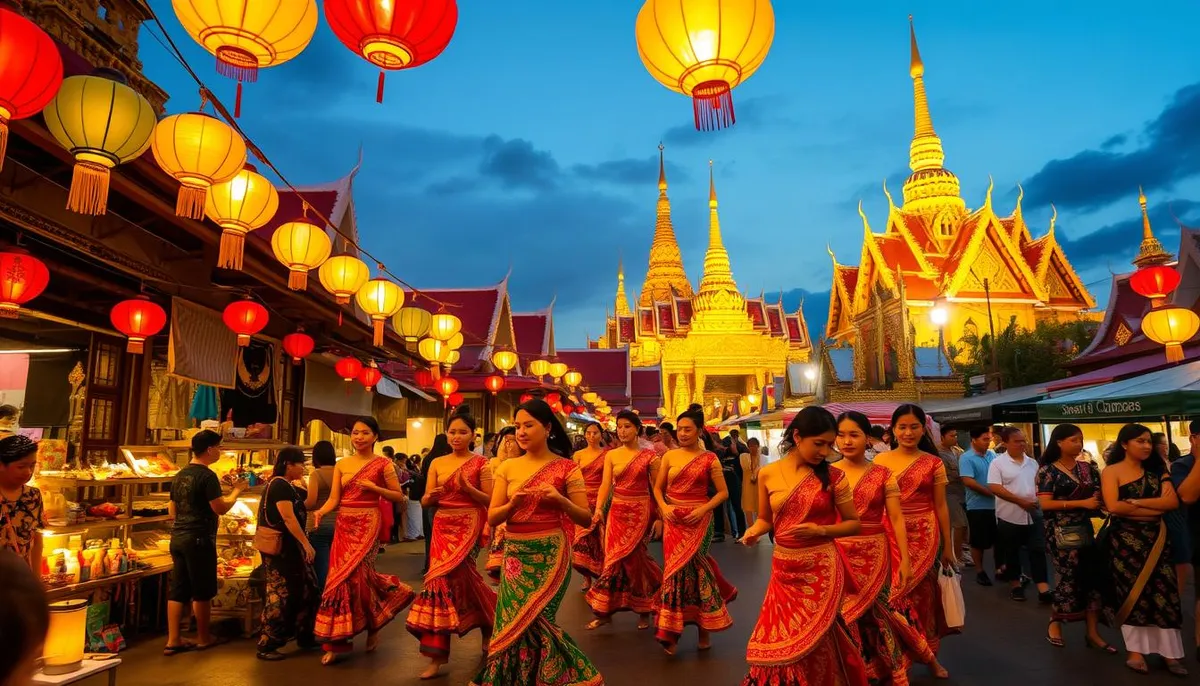
Songkran, celebrated from April 13 to 15, marks the Thai New Year. It is one of the most important festivals in the country, characterized by water splashes symbolizing purification and renewal. Thais take this time to visit family, clean their homes, and participate in processions.
Songkran rituals also include cleaning Buddha statues and temples. People pour water over the hands of monks and elders as a sign of respect and blessing.
Loy Krathong and Yi Peng: The Festivals of Lights
Loy Krathong and Yi Peng are two festivals celebrated simultaneously, usually in November. Loy Krathong involves floating rafts adorned with flowers and candles on rivers and lakes, symbolizing the release of worries and sins. Yi Peng, celebrated mainly in northern Thailand, involves releasing sky lanterns to bring luck and happiness.
These festivals literally and metaphorically illuminate the Thai landscape, creating a magical and serene atmosphere.
Royal and National Celebrations
Royal and national celebrations hold an important place in the Thai calendar. December 5, the birthday of King Bhumibol Adulyadej, is celebrated as Father's Day and National Unity Day. Chakri Day (April 6) commemorates the founding of the current dynasty, while Constitution Day (December 10) marks the adoption of the first permanent constitution.
- Public and private buildings are adorned with national colors – primarily royal yellow and blue.
- Portraits of the monarch are displayed with reverence on these occasions.
- These celebrations reinforce Thai national identity and pass traditional values to new generations.
These festivals and celebrations are essential to Thai culture, reflecting the deep attachment of the people to their monarchy, traditions, and heritage.
The Arts and Cultural Expressions
Thai culture is rich in artistic and cultural expressions. Thais have a deep appreciation for traditional arts, which play an essential role in their daily lives and celebrations.
The Khon and Other Traditional Dances
The Khon is a form of masked dramatic art that tells stories from the Ramakien, the Thai version of the Indian Ramayana. This traditional dance is characterized by graceful movements and elaborate masks. In addition to the Khon, there are other traditional dances such as classical Thai dance and folk dance, which vary by region and occasion.
The Architecture and Decorative Art of Temples
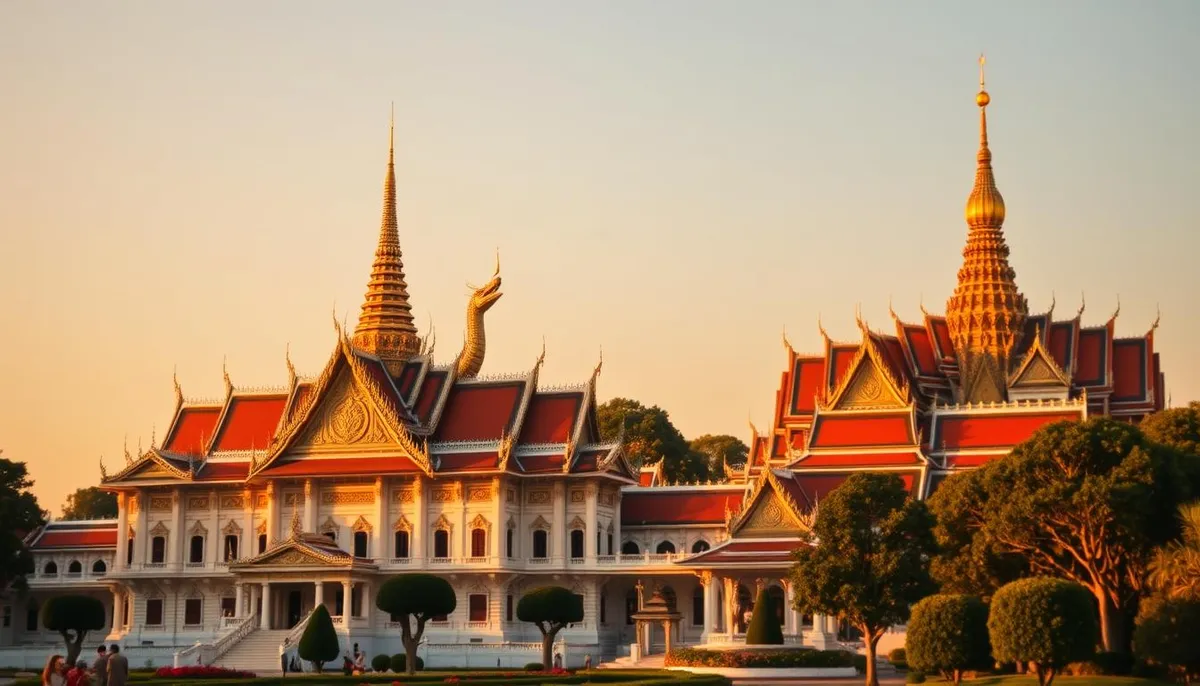
The architecture of Thai temples is renowned for its beauty and complexity. Temples, or wats, are adorned with sculptures, murals, and stucco decorations that depict scenes from the life of the Buddha and Hindu-Buddhist mythology. The decorative art of temples is an expression of Thai spirituality and creativity.
The Sak Yant Tattoo: Between Art and Spirituality
The Sak Yant is a sacred tattoo art that carries profound spiritual significance. Performed by monks or spiritual masters, these tattoos are believed to protect the bearer from misfortune and attract good luck. The designs include sacred figures and powerful symbols such as tigers and representations of the Buddha.
- The Sak Yant transcends mere body decoration to become a means of spiritual protection.
- These tattoos consist of Buddhist symbols and ancient Pali texts forming protective mantras.
- Each design has specific properties, such as the Hah Taew for protection and fortune.
These artistic and cultural expressions reflect the richness and diversity of Thai culture, where art and spirituality are intimately linked.
Traditions Related to Major Life Events
Thai traditions, including the traditional wedding, are deeply rooted in culture and play a crucial role during significant life moments. These meaningful events are marked by ceremonies and rituals that reflect the values and beliefs of Thai society.
Traditional Wedding Ceremonies
Wedding ceremonies in Thailand are joyful occasions that bring together family and friends. Tradition holds that the ceremony takes place over several days, with rituals such as the blessing by Buddhist monks and the exchange of vows between the spouses. Buddhist beliefs strongly influence these ceremonies, with prayers and offerings made to ensure a happy future for the couple.
Funeral Rituals and Their Symbolism
Funerals in Thailand are very important ceremonies that generally take place in a Buddhist temple. The prayers and rituals performed aim to assist the deceased in their passage to the next life, in accordance with Buddhist beliefs in reincarnation. The cremation, the climax of the funeral, is preceded by a procession around the crematorium, symbolizing the three jewels of Buddhism: the Buddha, the Dharma, and the Sangha. These rituals often extend over several days, with monks and family taking turns reciting prayers and mantras.
Thai funerals are also marked by moments of conviviality, with shared meals and sometimes entertainment, reflecting the Buddhist view of impermanence and acceptance of the natural cycle of life. This unique approach contrasts with Western traditions, which are often more solemn.
Unique Aspects of Modern Thai Culture
Modern Thailand harmoniously blends ancient traditions with contemporary cultural elements. This fusion is reflected in various aspects of daily and cultural life in the country.
Muay Thai: National Sport and Cultural Heritage
Muay Thai, or Thai boxing, is more than just a sport; it represents a cultural heritage deeply rooted in Thailand's history. This combat sport, with its rituals and specific techniques, is considered an expression of Thai strength and resilience.
The LGBTQ+ Community and Its Integration into Thai Society
Thailand is known for its open-mindedness towards the LGBTQ+ community. Major cities like Bangkok and Phuket host vibrant communities and regularly organize events to promote inclusion and diversity.
National Symbols: From Tuk-Tuk to the Ratchaphruek Flower
Thai national symbols are varied and reflect the country's rich culture. The tuk-tuk, an iconic motorized tricycle, has become a tourist icon. The ratchaphruek, or cassia fistula, is the national flower, symbolizing royalty and Buddhism with its bright yellow color.
- The ratchaphruek, known as cassia fistula, is celebrated for its beauty and symbolism.
- The elephant, a symbol of strength and wisdom, holds an important place in the national imagination.
- The garuda, a mythical creature, adorns government buildings, representing power and protection.
Conclusion: A Culture Between Tradition and Openness to the World
Thai culture is a fascinating blend of ancient traditions and adaptability to the modern world. From Buddhism that permeates daily life to festive celebrations like Songkran, Thailand proudly preserves its cultural heritage.
Traditional arts, such as the Khon dance and wedding ceremonies, testify to a cultural richness that continues to be passed down. This Land of Smiles embraces change with an open mind, whether in the evolution of roles between men and women or in welcoming external influences.
For the curious traveler, discovering Thai culture offers a unique experience, an immersion in a world where spirituality, respect, and joy of life form the heart of a hospitable people.