
Welcome to a captivating journey into the heart of an heritage of exceptional richness. This national treasure is the result of millennia of history and exchanges between various civilizations.
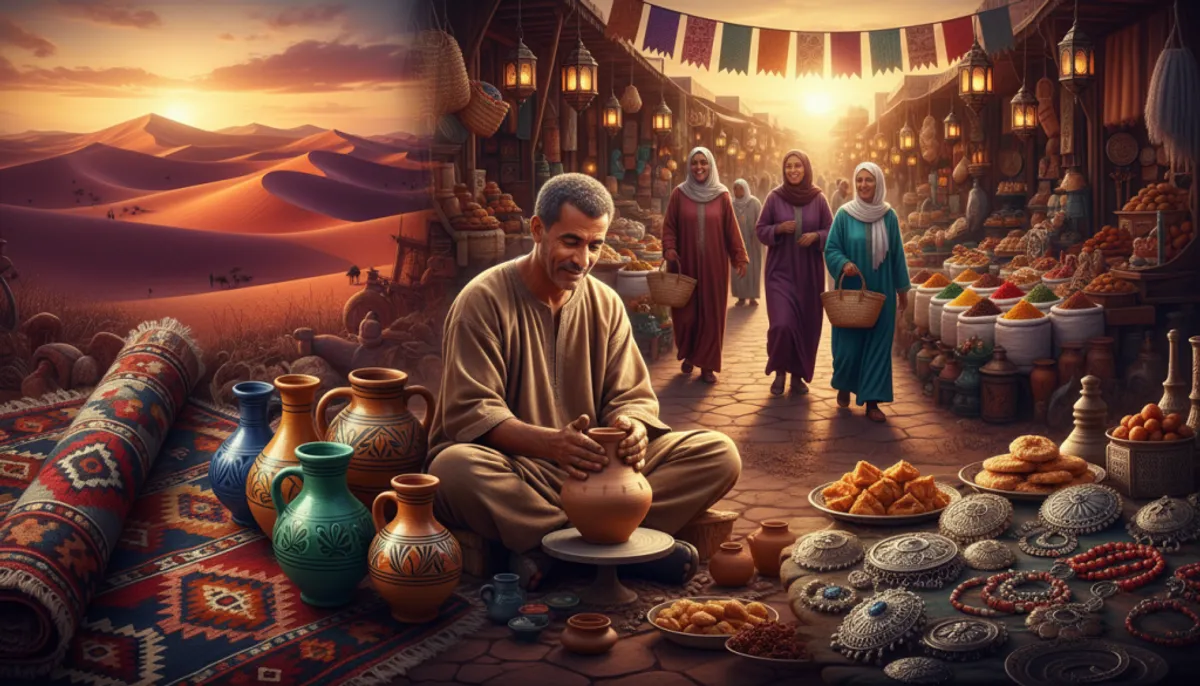
Every corner of this country possesses a unique identity. From Kabylie to the vast Saharan expanses, the regions each tell their own story. This diversity is shaped by geography and a rich past.
This cultural mosaic powerfully expresses itself through architecture, music, and craftsmanship. It bears witness to ancestral traditions that remain very much alive today. Algeria is a crossroads where Berber, Arab, and Mediterranean influence intertwine.
This blend creates a harmonious synthesis, admired throughout the world. It is a universe in constant evolution, preserving its roots while opening up to modernity. Let us discover together its multiple expressions.
Key Points to Remember
- An immense cultural diversity, the result of a millennia-old history.
- Each region has a distinct identity and specific traditions.
- A rich heritage expressed through art, architecture, and craftsmanship.
- A crossroads of Berber, Arab, Andalusian, and Mediterranean influences.
- A dynamic culture, rooted in tradition yet resolutely contemporary.
- A significant artistic and intellectual contribution on the international stage.
Introduction to Algerian Culture
Immersion in the fascinating universe of a human creation marked by diversity. This territory bears the traces of ancient civilizations that have shaped its identity.
Context and Cultural Diversity
The first artistic expressions date back several millennia. The rock paintings of Tassili n'Ajjer testify to this magnificently.
Each region has its specificities. The varied geography of the country has fostered the emergence of distinct traditions.
The cities and oases develop their unique characteristics. This mosaic of artistic expressions creates a rich cultural landscape.
The origin of this diversity finds its roots in the early Berber inhabitants. Phoenician, Roman, Arab, and Ottoman influences have enriched this heritage.
Objectives of the Article
We will systematically explore all dimensions of this national expression. From traditional arts to contemporary creations.
Let us take the example of Kabylie or the Aurès. These parts of the territory illustrate how each space contributes to the whole.
Our goal is to provide you with a comprehensive and accessible vision. We will highlight the most remarkable manifestations of this wealth.
Historical Origins and Multiple Influences
Let us explore the different chronological stages that contributed to forging this identity. Each era has left indelible marks on the development of the territory.
From Prehistory to Antiquity
The first traces date back over a million years. The man of Ain Hanech bears witness to this ancient presence.
The prehistoric period offers us the rock engravings of Tassili. These works date from the 6th to the 2nd millennium BCE.
Around 800 BCE, the Phoenicians established trading posts. The kingdom of Numidia unified by Massinissa emerged in the 2nd century BCE.
Colonization and Independence
In the 16th century, the Spanish seized Oran in 1509. The Barbarossa brothers drove them out of Algiers in 1516.
French colonization began in 1830. It lasted 132 years and profoundly transformed society.
Independence was proclaimed on July 5, 1962. This era marks the beginning of a new chapter.
| Period | Key Events | Influences | Duration |
|---|---|---|---|
| Prehistory | Man of Ain Hanech | First human traces | 1M+ years |
| Antiquity | Kingdom of Numidia | Political organization | 2nd century BCE |
| Middle Ages | Multiple dynasties | Berber and Arab influences | 776-1554 |
| Modern | Colonization | Social transformations | 1830-1962 |
Each century has made its unique contribution. These multiple influences create an exceptional historical wealth.
The Linguistic Diversity in Algeria
The Algerian linguistic landscape reveals a fascinating mosaic of sounds and expressions. This verbal richness is a true reflection of the complex history of the country.
Arabic, Berber, and French
Classical Arabic represents the official language, while Tamazight has been recognized as a national language since 2002. In daily life, residents primarily use Dardja.
This Algerian dialect harmoniously blends Arabic with Berber, French, and other influences. French occupies a special place as a vehicle for literary and scientific expression.
Regional Dialects
Berber comes in several variants depending on the regions. Kabyle is found in Kabylie, Chaoui in the Aurès, and Tuareg in the Sahara.
This linguistic diversity creates a fluid and dynamic multilingualism. About 70% of the population speaks Arabic, while 30% speaks various forms of Berber.
| Language | Status | Percentage of Speakers | Characteristics |
|---|---|---|---|
| Classical Arabic | Official language | Used in administration | Formal written language |
| Dardja | Vernacular language | Majority of the population | Algerian Arabic dialect |
| Tamazight | National language | About 30% | Regional variants |
| French | Foreign language | About 50% | Literary and scientific use |
The Tifinagh alphabet, an ancestral writing system, symbolizes this linguistic renaissance. Each region thus contributes to the national verbal richness.
The Artistic and Craft Heritage
A unique artistic treasure unfolds through the skilled hands of Algerian artisans. This creative expression dates back several millennia.
The craft heritage represents a living tradition. It testifies to local creative genius through the centuries.
Traditional Craftsmanship
The art of weaving perfectly illustrates this richness. Each region has its distinctive style of carpets.
The famous carpets of Tlemcen and M'Zab showcase this diversity. Ceramics and jewelry complete this artistic panorama.
The artists pass down ancestral techniques. Kabyle jewelry combines delicate goldsmithing and deep symbolism.
Contemporary Arts and Innovations
Contemporary craftsmanship innovates while respecting ancient know-how. Creators reinterpret traditional motifs.
This modern approach ensures transmission to new generations. It keeps a several millennia-old tradition alive.
Leatherwork and metalwork adapt to current tastes. This heritage constitutes an economic and cultural wealth.
Iconic Architectural Manifestations
Algerian architecture unfolds a striking panorama where the styles of several civilizations overlap. This historical preservation tells a complex story.
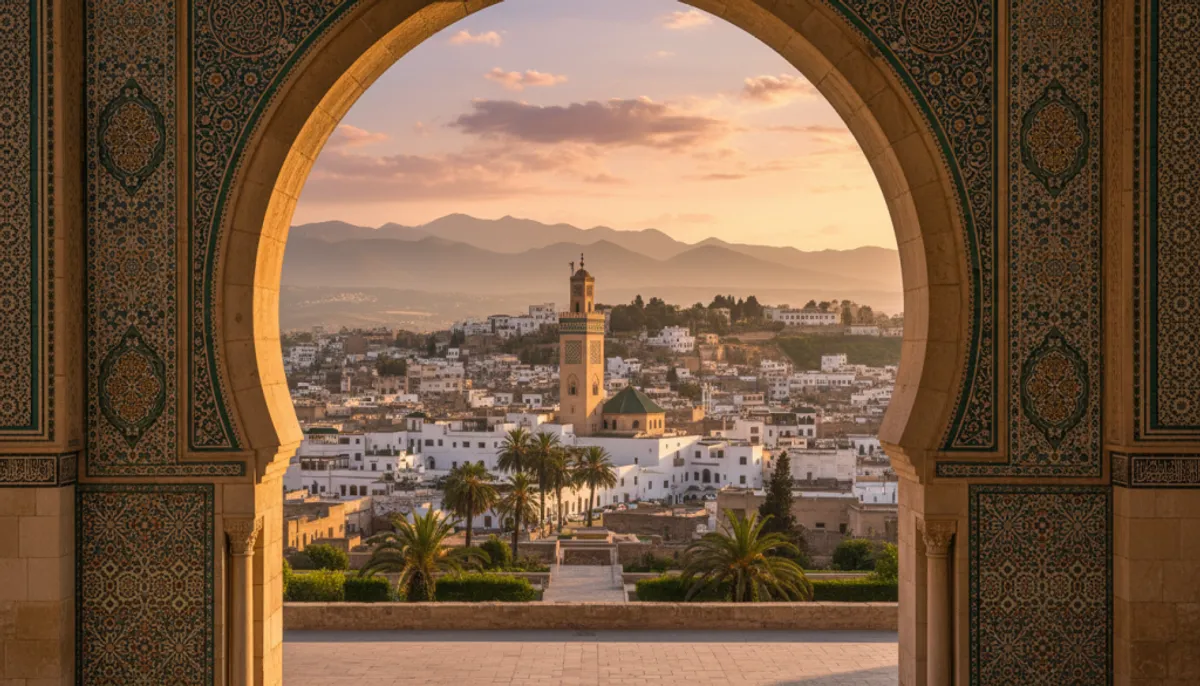
Its multiple origins draw from Numidian, Berber, and Andalusian traditions. Each era has added its distinctive layer.
Casbah, Palaces, and Historical Monuments
The Casbah of Algiers is classified as a UNESCO World Heritage site. It embodies the archetype of the traditional Mediterranean city.
Its winding alleys and Moorish architecture are famous worldwide. The Palace of Raïs showcases Ottoman refinement.
The cities of M'Zab offer a unique urbanism adapted to the desert. Their earthen constructions are perfectly integrated.
Foreign Influences and Modernity
The Basilica of Notre-Dame d'Afrique presents a remarkable neo-Byzantine style. It illustrates the syncretism of the colonial period.
In the 20th century, renowned architects left their mark. Oscar Niemeyer considered his university in Constantine as his best work.
André Ravéreau worked on the Desert Workshop in Ghardaïa. These creations merge tradition and innovation.
| Architectural Period | Iconic Example | Main Influence | Century |
|---|---|---|---|
| Numidian & Berber | Royal tombs | Ancient kingdoms | Antiquity |
| Arab-Muslim & Ottoman | Casbah of Algiers | Moorish style | 16th-18th |
| Colonial | Basilica of Notre-Dame d'Afrique | Neo-Byzantine | 19th |
| Modern | University of Constantine | Brutalism | 20th |
This rich heritage continues to evolve. It marks the landscape indelibly.
The Great Museums and Cultural Places
Guardians of collective memory, museums tell the artistic history of the country, including the influence of viennese art. These institutions preserve a vast heritage for future generations.
They also energize the life of cities through exhibitions and workshops.
National Museums and Cultural Centers
The National Museum of Fine Arts of Algiers, founded in 1930, has a major collection in Africa. It spans several centuries of creation.
Other establishments are much older. The Zabana Museum of Oran dates back to 1885.
The National Museum of Antiquities and Islamic Arts opened its doors in 1897. It showcases the historical depth of the region.
The commitment to contemporary art is strong. The MAMA (National Public Museum of Modern and Contemporary Art) was inaugurated in 2007.
The National Museum of Arts and Popular Traditions, created in 1987, safeguards the know-how of all regions. The Higher School of Fine Arts of Algiers has been training artists since 1843.
| Museum | City | Year of Foundation | Main Focus |
|---|---|---|---|
| National Museum of Fine Arts | Algiers | 1930 | Painting and sculpture |
| Zabana National Museum | Oran | 1885 | History and archaeology |
| National Museum of Bardo | Algiers | 1985 | Prehistory and ethnography |
| MAMA | Algiers | 2007 | Modern and contemporary art |
These places are much more than archives. They are living spaces where the public encounters art in all its forms.
The Richness of Algerian Music
The country resonates with a multitude of melodies that tell its story. This sound expression reflects the diversity of each region, including the rich tapestry of traditional music.Musical Styles and Traditional Instruments
Arab-Andalusian music is a scholarly pillar. It comes in three styles linked to specific cities: the gharnati of Tlemcen, the sanaa of Algiers, and the malouf of Constantine.
Its system of noubas, created in the 9th century, structures complex compositions. Sixteen original suites out of twenty-four are still played.
Chaâbi, born in popular neighborhoods, uses dialectal Arabic and an engaging rhythm. Other regional forms like Kabyle or Chaoui music, as well as traditional serbian music, have their own codes.
Evolution of Raï and Modern Music
Raï is a modern form that originated in Oran. It fuses Bedouin, Latin, and Andalusian sounds.
Cheb Khaled revolutionized this style in the 1980s. He introduced synthesizers and electric guitars.
This innovation propelled the music onto the international stage. It shows a constant ability to renew itself.
| Musical Style | Main Instruments | Region of Origin | Characteristics |
|---|---|---|---|
| Arab-Andalusian Music | Oud, violin, kanun | Tlemcen, Algiers, Constantine | Scholarly noubas, complex rhythm |
| Chaâbi | Mandole, derbouka | Algiers | Popular melodies, poetic lyrics |
| Raï | Synthesizer, electric guitar | Oran | Modern fusion, social themes |
| Gnawa Music | Guembri (name of the lute), qarqabus | Sub-Saharan influence | Hypnotic rhythms, spiritual dimension |
This table summarizes the variety and origin of the main expressions of the music of the country.
Dances and Festive Rituals
Popular gatherings are an opportunity to discover a unique choreographic and clothing heritage. These expressions punctuate key moments in community life.
Traditional Dances and Costumes
Traditional dances often involve women and men. They celebrate events such as weddings or harvests.
Each region has its style. The Chaoui dance of the Aurès is energetic, while the Kabyle is more graceful.
Costumes are beautifully adorned with embroidery and jewelry. They vary according to the occasion and local identity.
Cultural Festivals and Popular Celebrations
Religious festivals follow the Muslim calendar. Eid al-Fitr marks the end of Ramadan.
Eid al-Adha commemorates the sacrifice of Abraham. These are moments of intense family gathering.
National holidays are also significant. November 1st celebrates the beginning of the 1954 Revolution.
July 5th is the day of Independence, achieved in 1962. Parades and shows animate the country during this time.
The country ratified the UNESCO Convention for Intangible Heritage in 2004. This recognizes the value of these traditions.
| Type of Festival | Name | Date/Period | Characteristics |
|---|---|---|---|
| Religious | Eid al-Fitr | End of Ramadan | Family celebration, festive meals |
| Religious | Eid al-Adha | 70 days after Ramadan | Sacrifice, sharing with the needy |
| National | Revolution Day | November 1st | Official ceremonies, historical memories |
| National | Independence Day | July 5th | Popular manifestations, fireworks |
| Cultural | Regional Festivals | All year round | Dances, music, local crafts |
Literature: From Antiquity to Today
Words and stories weave the memory of a people, revealing its soul through the ages. This country has an exceptional written heritage.
It spans the centuries, carried by plural and engaged voices.
Historical Literary Figures
As early as the 2nd century, Apuleius was born near Constantine. He wrote The Metamorphoses in Latin.
Augustine of Hippo, in the 4th century, marked theology. His work still influences Western thought.
During the medieval period, from the 8th to the 15th century, the region was a major intellectual center. Historians and theologians shone there.
Contemporary Writers and Modern Expressions
The 20th century saw the emergence of literature in French expression. Mohammed Dib, Mouloud Feraoun, and Kateb Yacine assert an identity in the face of colonialism.
Kateb Yacine created Nedjma in 1956. This revolutionary work disrupts narrative forms.
The years of the Revolution and later inspire engaged writing. Moufdi Zakaria, by name, composes patriotic songs.
Assia Djebar shines internationally. She entered the French Academy in 2005.
Arabic expression literature has seen colossal success. Ahlam Mosteghanemi is the most read author in the Arab world today.
This richness in three languages testifies to a dynamic culture. Algerian literary creation remains vibrant.
Algerian Cinema and Theatre
The screen and the stage have offered a powerful mirror to Algerian society, capturing its struggles and dreams. These arts flourished after 1962, carrying a new voice.
The Birth of Cinema After Independence
The seventh art truly emerged after independence. The first years were marked by films about the liberation war.
Chronicle of the Years of Embers by Lakhdar Hamina won the Palme d'Or at Cannes in 1975. This was a major international recognition for the country.
Filmmakers like René Vautier documented the reality of the conflict. Ahmed Rachedi adapted the novel Opium and the Stick in 1969.
Theatre: From Tradition to Innovations
Theatre has illustrious precursors. The name of Rachid Ksentini remains engraved as the father of Arabic-language theatre.
His troupes traversed the territory during the war. They raised awareness of national claims.
After independence, authors like Kateb Yacine innovated. They developed forms rooted in popular culture, allowing communities to save on culture.The film Omar gatlato by Merzak Allouache explores daily life with humor. Assia Djebar gives a cinematic voice to women.
| Work | Director/Author | Year | Main Theme |
|---|---|---|---|
| Chronicle of the Years of Embers | Lakhdar Hamina | 1975 | National liberation war |
| Opium and the Stick | Ahmed Rachedi | 1969 | Anti-colonial resistance |
| Omar gatlato | Merzak Allouache | 1976 | Society and daily life |
| El Alleg | Abdelkader Alloula | 1969 | Innovative popular theatre |
The Importance of Intangible Heritage
Beyond stones and museums, a living treasure animates the heart of Algerian communities. This intangible heritage forms the very basis of collective identity.
It encompasses orally transmitted stories, manual know-how, and practices that rhythm life. The country has shown its pioneering commitment by ratifying the UNESCO Convention as early as 2004.
Oral Traditions and Know-How
Stories, proverbs, and poetry constitute an essential oral tradition. They preserve the memory and values on which society is founded.
Artisanal techniques, such as weaving or pottery, form a living part of this legacy, including the rich tradition of jordanian art and crafts. They are transmitted through direct learning, from master to apprentice.Customs and Rituals of Daily Life
Community life is organized around codified practices. Weddings, births, and seasonal festivals follow precise rituals.
These customs strengthen social bonds and provide a reassuring framework. Hospitality and the preparation of traditional meals are pillars of this.
This heritage constantly evolves, adapting to the present. Its official recognition ensures its transmission to younger generations.
Regional Influences on Algerian Culture
The cultural richness of Algeria is first expressed through the diversity of its regions. Each space has an identity shaped by its history and geography, including the history of the baoulé.
Kabylie, Aurès, and Other Regions
Kabylie, in the north, is distinguished by its Berber language and haitian craftsmanship. The Aurès, in the east, have a unique Chaoui culture.
Orania, in the west, is the cradle of raï. The Mzab, in the south, impresses with its architecture and oases.
The Saharan regions like Hoggar harbor lifestyles adapted to the desert.
Specific Cultural Identities
The nomadic Tuaregs of the great south preserve their language and traditions. Cities like Tlemcen also add their unique touch.
This mosaic forms an essential part of the country's identity. It creates a strong national unity, despite differences.
The International Impact and the Diaspora
Algerian influence radiates well beyond its geographical borders. A significant part of its heritage lives today abroad, carried by dynamic communities.
Cultural Dissemination Abroad
At the end of the war of independence in 1962, nearly 700,000 Pieds-noirs left the country. They took with them elements of memory that influenced their new countries.
Waves of labor immigration to France also played a role. These movements have been powerful vectors of dissemination.
Music, particularly raï popularized by Khaled, has conquered the entire world. It has introduced the sounds of the country to a wide international audience.
Contributions of Expatriate Communities
Expatriates keep traditions alive. They organize festivals and active cultural associations.
This transmission to younger generations born abroad is crucial. It ensures the sustainability of a precious heritage.
The state sometimes adopts a pragmatic position. Although not an official member, it participates in Francophonie meetings.
The contributions of the diaspora are multiple and vital:
- Artistic radiance in literature, cinema, and visual arts.
- Creation of events that celebrate and share heritage.
- Innovation of hybrid forms, reinterpreting traditions with a new perspective.
This presence creates bridges between civilizations. It enriches intercultural dialogue on a global scale.
The Role of Women in Algerian Culture
The contribution of women to Algerian heritage is immense, though sometimes overlooked. Their role has been fundamental in transmission and innovation.
Role in Arts and Heritage
In craftsmanship, women are the guardians of know-how. They create beautiful carpets and embroidery.
Historical figures like Lalla Fatma n'Soumer are symbols of emancipation. She resisted in the 19th century.
In literature, Assia Djebar has marked the French Academy. Ahlam Mosteghanemi is the most read author in the Arab world.
The painter Baya created a colorful universe. She is an icon of naïve art.
In music, Sultana Daoud shone in the hawzi style. In cinema, Yamina Chouikh explores social realities.
| Artistic Domain | Prominent Figure | Main Contribution | Period |
|---|---|---|---|
| Resistance & Symbol | Lalla Fatma n'Soumer | Heroine of Kabyle resistance | 19th century |
| Literature | Assia Djebar | First Maghrebian woman in the French Academy | Contemporary |
| Painting | Baya | International icon of naïve art | 20th century |
| Music | Sultana Daoud (Reinette l'Oranaise) | Star of the Judeo-Arab hawzi style | 20th century |
| Cinema | Yamina Chouikh | Director of the film "Rachida" | Contemporary |
These creators testify to an indispensable contribution. They continuously enrich the national heritage.
The Evolution of Algerian Culture
Contemporary creators navigate between collective memory and new aspirations, shaping a promising cultural future. This transformation is rooted in a complex recent past.
Contemporary Challenges and Future Perspectives
The national heritage bears the traces of a difficult period. The 1990s, marked by terrorism, profoundly affected artistic and intellectual creation.
Many authors have since developed a literature of expression that is disturbing. It bears witness to the traumas of the civil war and questions the future.
Since the beginning of the 1970s, music has diversified through contact with the Western world. Rock, rap, and jazz blend with local traditions.
The state has played a central role, especially at the end of the 1990s. Restoring civil peace became a priority after ten years of conflict.
The post-war period sees a renaissance. Performance halls and festivals are reborn, welcoming back exiled artists.
The Hirak movement in 2019 shows an active civil society. It expresses itself through new songs and graphic creations.
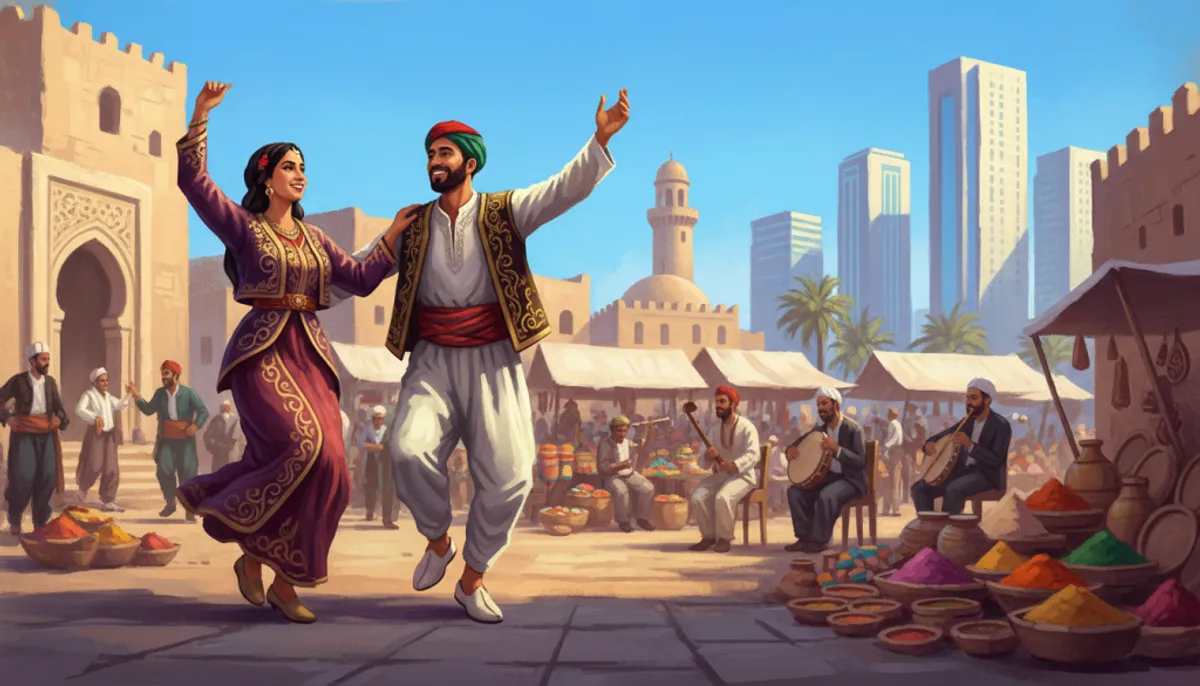
The youth develops a contemporary urban culture. It dialogues with traditions, creating original syntheses.
Challenges include training new artists and supporting the state. International openness must preserve authenticity.
The future is built in this creative tension. It promises new rich expressions between memory and modernity.
Conclusion
In closing this overview, the scope and vitality of the Algerian legacy impress. This heritage has been built over millennia, from the paintings of Tassili to today's creations.
The Berber kingdoms, the presence of the Spanish, and colonization have marked its history. The resistance of the troops and the war of independence, declared on November 1st, forged a strong identity.
The state took over after July 5, 1962. Since the end of the last century, this culture has radiated throughout the world.
Each region, from the Saharan south to the constantinian east, contributes its stone to the edifice. Let us take the example of music, which has managed to evolve while keeping its roots.
Later, historians will remember this ability to be reborn after each difficult period. This dynamism, visible since the beginning of the 21st century, promises a rich and open future.
FAQ
What are the main languages spoken in Algeria?
Arabic and Berber (or Tamazight) are the official languages. French is also widely spoken, especially in cities and for business. Each region also has its own dialects, enriching the linguistic diversity of the country.
What are the most well-known traditional musical styles?
Algerian music is very varied! We find chaâbi, popular in Algiers, gnawa in the south, and Kabyle music. Raï, originating from Oran, has achieved worldwide success. These styles use instruments like the mandole or the gasba.
What role do women play in preserving heritage?
Women are essential! They transmit oral traditions, stories, and artisanal know-how such as pottery or weaving. Additionally, many contemporary artists contribute to keeping cultural expressions alive and evolving.
Where can one discover traditional architecture?
The Casbah of Algiers, classified by UNESCO, is a magnificent example. Historical palaces and mosques can also be found in Constantine or Tlemcen. These monuments showcase a blend of Arab-Andalusian, Ottoman, and local influences.
How has Algerian culture evolved after independence?
After 1962, there was a strong movement to assert a national identity through cinema, literature, and music. Today, artists continue to innovate by blending tradition and modernity while opening up to the world.
What are the important cultural festivals?
The country celebrates religious festivals like Eid, but also popular events like the gnawa music festival in Béchar or the Berber spring (Tafsut) in Kabylie. These gatherings are opportunities for dances, songs, and sharing.