
Welcome to this unique exploration where a single word opens two fascinating universes. The term wok resonates in a particular way, evoking both an ancient cooking utensil and a modern societal movement.

On one side, we will dive into the rich culinary history of this Asian cooking tool. On the other, we will decipher the emergence of the woke phenomenon, born in the United States and now present worldwide.
This article offers you an educational journey through these two dimensions. We will discuss their origins, evolutions, and their impact on our time. Contemporary debates, particularly in France since the 2010s, will also be explored, especially regarding applying for a cultural grant.
Prepare to discover how a homophony reveals deep issues. This balanced approach, rooted in a woke culture, aims to shed light on a major subject of the 21st century.
Key Points to Remember
- The title plays on the homophony between culinary wok and the “woke” movement.
- The article explores two distinct yet related universes through their sound.
- A historical and social analysis of these concepts will be presented.
- The importance of the “woke” debate in the French context is examined.
- The approach aims to be informative and balanced on a complex subject.
The Origins and Evolution of the Term “Woke”
The origin of the term “woke” has its roots in several decades of struggle. This simple word, the simple past of the verb “to wake,” has undergone a remarkable transformation.
The Birth of the Word in the African American Context
As early as the 1920s, Marcus Garvey used the call to wakefulness in his Pan-Africanist speeches. The African American community gradually adopted this expression.
In 1938, Lead Belly sang “stay woke” to denounce the injustice of the Scottsboro case. This song marks an important milestone in the history of the term.
Martin Luther King, in 1965, urged young people to “stay woke” during a memorable speech. The New York Times was already using the word in a pioneering article in 1962.
The Rise with the Black Lives Matter Movement
The Black Lives Matter movement gave a new dimension to the term after 2014. The events in Ferguson amplified its reach.
The death of Michael Brown, an 18-year-old, catalyzed this awareness. The documentary “Stay Woke” in 2016 firmly established the modern meaning.
Erykah Badu had already popularized the expression in her music in 2008. Social media then accelerated its global dissemination.
Today, the woke term represents an active vigilance against injustices. Its history shows how a simple word can carry an entire movement.
Wok Culture: A Concept in Full Transformation
Wokism today represents a profound transformation of our relationship to social injustices. This ideology continues to evolve and adapt to contemporary challenges.
Definition and Fundamental Principles
According to Merriam-Webster, wokism means “being aware of significant issues related to racism and social equality.” Being woke implies active vigilance against discrimination.
This awareness distinguishes “woke” individuals from “sleeping” ones. The former recognize the structural inequalities affecting various minorities.
The concept encompasses multiple forms of discrimination. Differential treatment based on origin, gender, or disability is part of the injustices denounced.
Broadening the Term to Social and Environmental Causes
Initially focused on racial issues, the movement has expanded to other causes. Climate struggle and gender equality are now part of its concerns.
Movements like Black Lives Matter and #MeToo illustrate this diversification. Engaged individuals believe that society remains unjust towards certain minorities.
As Pap Ndiaye emphasizes, it is about a “change in lifestyle.” This questioning also touches on gender assignments and sexual identities.
Wokism fundamentally questions our way of inhabiting the world. It proposes a new ethics in the face of injustices suffered by vulnerable people.
Recipes and Culinary Traditions Inspired by the Wok
The wok, in its most tangible version, invites us to discover millennia-old gastronomic traditions. This iconic utensil has a rich history that deserves to be explored.
The Gastronomic Heritage and Cooking Techniques
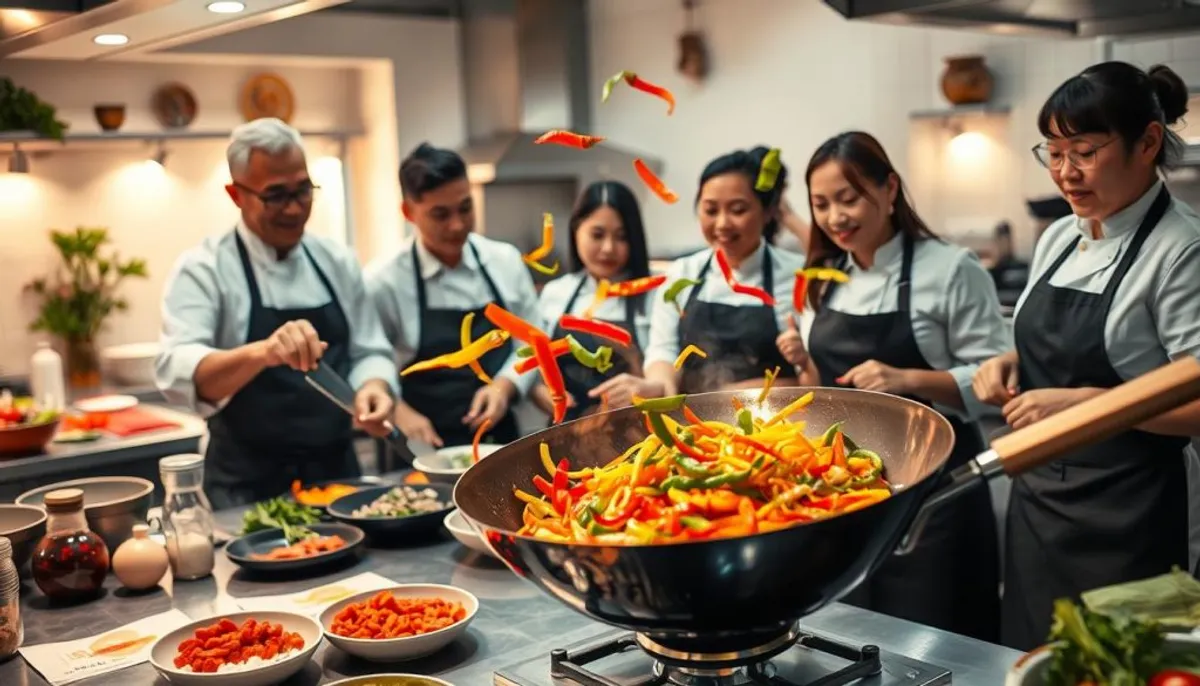
Born in China over 2000 years ago, the wok has conquered the whole world. Its concave shape allows for quick and even cooking.
Traditional techniques emphasize nutrient preservation. High temperatures sear food while retaining their flavors.
This culinary approach reflects a philosophy of balance and harmony. It aligns with certain contemporary values.
Culinary Innovations and Current Trends
Wok cooking evolves with our society. Modern chefs integrate environmental concerns, particularly the use of natural textiles in their culinary creations.
Vegetarian and anti-waste recipes are emerging. Fair trade also influences the ingredients used.
This gastronomic evolution shows how food reflects social transformations. The diversity of flavors meets cultural diversity.
This culinary digression illustrates how words and concepts intertwine. We now continue with the impact of social media.
The Impact of Social Media on the Spread of the Movement
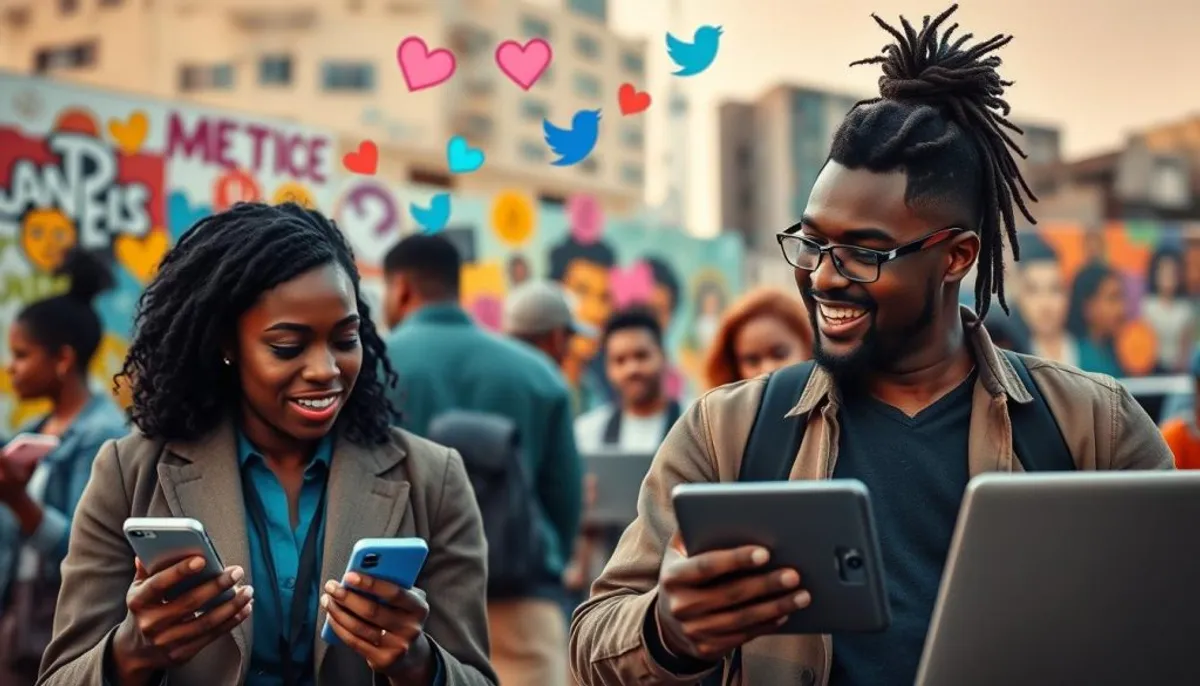
Digital platforms have radically transformed the way social ideas spread. Social media has provided massive amplification to terms like “woke.”
This transformation has created a new dynamic of mobilization. Contemporary movements benefit from instant visibility.
Amplification of Ideas via Twitter, Instagram, and Other Platforms
Marie Peltier, a history professor, highlights the horizontal nature enabled by these networks. “Everyone can express themselves to everyone,” she explains.
Concrete examples illustrate this power. Erykah Badu tweeted her support for the Pussy Riots in 2012. After Ferguson in 2014, a new generation of anti-racist activists emerged.
Hashtag campaigns like #MeToo demonstrate this effectiveness. They have allowed for unprecedented visibility of sexual violence.
Jacinthe Mazocchetti, an anthropologist at UCL, analyzes these new spaces. “Social media are places of expression and contestation,” she asserts.
The #OscarsSoWhite case created by April Reign in 2015 is emblematic. This hashtag encouraged concrete changes towards greater diversity.
However, these platforms present a double-edged sword. They facilitate mobilization but also remote insults.
Young people massively use these networks to express their values. This generation finds a direct means of expression there.
Engaged individuals can thus reach a global audience. Social media reflect the divergences in our society.
Societal Issues, Critiques, and Controversial Debates
Beyond its commendable intentions, the woke movement faces serious questioning. These debates touch on fundamental questions of our democracy, particularly regarding the proto-Indo-European culture.
Cancel Culture and Freedom of Expression
Cancel culture represents a major concern for critics. They fear a restriction of freedom of expression in the public space.
Emblematic cases illustrate this tension. J.K. Rowling was accused of transphobia after supporting a researcher. University lectures have been canceled to protect minorities.
Barack Obama warned against these excesses in 2019. “If all you do is throw the first stone, then you’re probably not doing much,” he stated.
Political Reactions and Social Implications
Institutional reactions testify to the extent of the debate. The University of Austin was created in 2021 to defend freedom of expression.
Andrew Sullivan compares wokism to a religion punishing heresy. This ideology questions the limits of political correctness.
Chloé Valdary offers a nuanced perspective. She describes the movement as a “double-edged sword.” Raising awareness of injustices while avoiding aggression.
| Perspective | Key Position | Notable Example |
|---|---|---|
| Critics | Threat to freedom of expression | University of Austin |
| Supporters | Protection of minorities | Awareness of racism |
| Observers | Balanced approach | Obama's quote |
These tensions reveal an essential question. How to reconcile the protection of minorities and respect for divergent opinions?
The Woke Culture in the French Sociopolitical Debate
The French context offers a unique perspective on the reception of the woke phenomenon. Our country fiercely defends its universal republican model. In this framework, the Pont Audemer gaming culture emerges as an interesting aspect to explore.
Government Initiatives and Republican Measures
The government has taken a position on this debate. Jean-Michel Blanquer, Minister of Education, launched a republican observatory in October 2021.
He considered these movements to be “a profound destabilizing wave for civilization.” This initiative explicitly targeted cancel culture and the wokism ideology.
Emmanuel Macron denounced the importation of American theories. Several political figures have expressed their reservations.
Perceptions and Issues within French Society
The French left shows divergent positions. Anne Hidalgo stated that she “would not campaign on wokism.”
Sarah El Haïry criticized Sandrine Rousseau’s woke thinking. She saw it as “the opposite of the history of France.”
An IFOP survey reveals a lack of understanding of the term. Only 14% of French people had heard of it, and 6% understood its meaning.
Renaud Maes relativizes the impact of these movements. He highlights the cultural differences between Europe and the United States.
The fluidity of identities in Europe makes an exact parallel difficult. These questions continue to fuel the public discourse in our country.
Conclusion
At the end of this analysis, it is clear that a simple homonym can open fundamental debates. This article has explored how the same sound evokes both a culinary utensil and a major social movement.
We traced the evolution of the term from historical struggles for civil rights to contemporary battles for women's equality. The movement has allowed for crucial awareness of structural injustices.
However, it is important to recognize the legitimate critiques regarding freedom of expression. The French specificity, with its republican universalism, creates a particular reception of this issue.
Social media has amplified this discussion, transforming a slang term into a global phenomenon. This issue touches not only on social justice but also on our fundamental values.
Everyone must form their own opinion on this complex subject. A nuanced approach recognizes the legitimacy of the fights against discrimination while avoiding excesses.
FAQ
Where does the term "woke" come from?
The word “woke” originated in African American communities to signify awareness of injustices suffered. It gained popularity through movements like Black Lives Matter, later extending to other social and environmental causes.
What is the link between woke culture and freedom of expression?
This is a topic of intense debate. Some believe that defending minorities can lead to a form of censorship, often referred to as “cancel culture.” Others see it as a necessary rebalancing of public discourse for greater equality.
How have social media influenced this movement?
Platforms like Twitter and Instagram have been crucial. They have allowed for rapid amplification of ideas, mobilizing people on a global scale and giving voice to narratives often ignored by traditional media.
How is wokism perceived in France?
In France, the debate is lively. It is often perceived as an American import that clashes with the republican model of universalism. This raises questions about how to address discrimination and equality in French society.
What are the main criticisms directed at this ideology?
Critics often point to a risk of dividing society into identity groups, a limitation of freedom of expression, or an approach they deem too radical. These opinions fuel a complex and passionate societal debate.