
Welcome to this exploration of a hidden treasure of West Africa. This country holds an extraordinarily rich identity, shaped by a complex history and remarkable ethnic diversity.
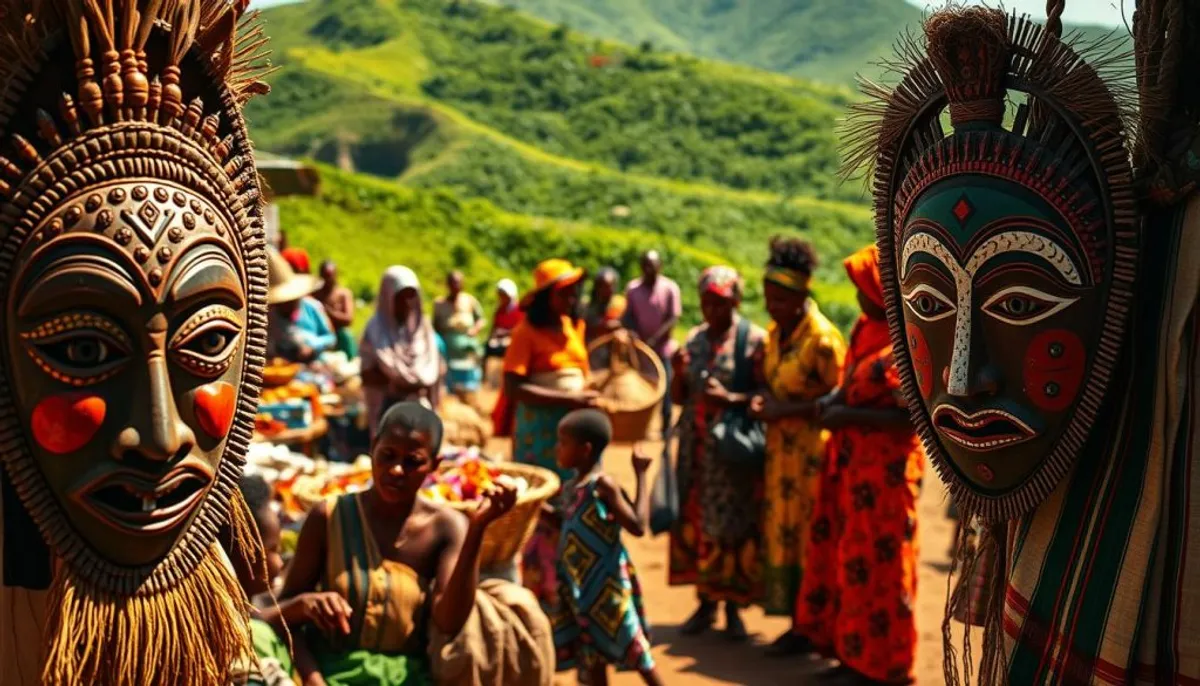
The Sierra Leone is a land of contrasts where ancestral traditions meet modernity. This fusion creates a vibrant and unique mosaic, ready to be discovered.
Our article guides you through the many facets of this society. From historical origins to contemporary artistic expressions, each element tells a part of its story.
You will understand how different communities have built a strong identity. Religious beliefs coexist harmoniously, and knowledge is passed down with passion.
This journey will reveal the deep soul of Sierra Leone. Despite past trials, it preserves and celebrates a heritage of incredible vitality.
We will together explore the enchanting music, delicious cuisine, and traditional rites. This article is an invitation to understand the beauty of Sierra Leone.
Key Points
- Sierra Leone has a rich and diverse cultural heritage.
- Its identity is the result of a blend of ancient traditions and modern influences.
- The harmonious coexistence of different religious beliefs is a fundamental aspect.
- Music, dance, and cuisine are pillars of cultural expression.
- The transmission of traditions between generations remains very vibrant.
- The country has managed to preserve its heritage despite historical challenges.
- Exploring this culture means discovering the resilient and joyful soul of the nation.
Introduction to Sierra Leone's Culture
To grasp the essence of this nation, one must trace back through time. The country currently has about 8.4 million inhabitants, a significant growth since its independence.
Historical and Social Context
The Sierra Leone shares its tropical climate and mountainous terrain with its neighbors, Guinea and Liberia. This geography has influenced its development.
Its history is marked by foundational events. The slave trades, British colonization, and a devastating civil war have profoundly shaped its identity.
The conflict from 1991 to 2002 was particularly traumatic. It caused hundreds of thousands of casualties and displaced a third of the population.
Contemporary Perspectives and Current Issues
Despite these trials, the resilience of the people is remarkable. The return to stable democracy in 2012 shows a collective will for reconstruction.
The current culture represents a unique fusion. The cultural blend in the philippines, African traditions, Creole heritage, and British colonial influences coexist harmoniously.
This article explores how these elements create a distinct identity in West Africa. Contemporary challenges include preserving heritage in the face of modernization.
The transmission of traditional knowledge to younger generations remains crucial. This article will help you understand the richness of modern Sierra Leone.
The Historical and Colonial Origins
The roots of this West African nation delve into a history marked by exploration and complex exchanges. This period has definitively shaped the country we know today.
The Beginnings of Sierra Leone and the Slave Trade
The documented history of Sierra Leone begins in 1460. The Portuguese explorer Pedro da Sintra gave it its name, evoking its impressive mountains.
In the early 16th century, the region was drawn into the tragic slave trade. European merchants and coastal populations participated.
This dark chapter left an indelible mark on the demographics of the entire region.
The Legacy of British Colonization
In 1787, the British established a colony at the site of the current capital, Freetown. Its name symbolized the hope of freedom for former slaves.
In 1792, former slaves from Nova Scotia joined the colony. They brought influences that contributed to the formation of Krio.
The Sierra Leone Company administered the colony until 1808. This year marked the beginning of its status as a Crown colony.
The hinterland only became a protectorate in 1896. This colonial legacy shaped the structures of the modern state of Sierra Leone.
| Year | Event | Significant Impact |
|---|---|---|
| 1460 | Naming by Pedro da Sintra | First European mention of the name “Sierra Leone” |
| 1787 | Foundation of the Freetown colony | Establishment of a refuge for freed slaves |
| 1808 | Crown colony of Britain | Beginning of direct colonial administration |
| 1896 | Protectorate of the hinterland | Complete territorial colonization of the country |
The Impacts of the Civil War and National Reconstruction
Eleven years of armed conflict deeply marked national development between 1991 and 2002. This war began when violence from neighboring Liberia spilled over into the territory.
The Sierra Leonean state then showed institutional weaknesses. In 1992, a military junta took power.
Consequences on Society and Institutions
The young officer Valentine Strasser, aged 27, became head of the state. His reign was brief as a new coup overthrew him in January 1996.
Subsequent elections brought Ahmed Tejan Kabbah to the presidency. However, President Kabbah was overthrown in May 1997 by Johnny Paul Koroma.
RUF rebels committed terrible atrocities against civilians. Their entry into Freetown in 1999 caused 6,000 deaths.
The UN mission (Minusil) oversaw the disarmament of 47,000 combatants. The war officially ended on January 18, 2002.
President Kabbah regained power and was re-elected in May 2002. Sierra Leone then began its reconstruction.
The Special Court for Sierra Leone was created to judge war crimes. This country today demonstrates remarkable resilience.
The Ethnic Groups and Linguistic Richness
The human diversity is one of the most fascinating aspects of this country in Africa. This ethnic plurality significantly enriches the national heritage, including the vibrant aspects of kurdish culture.
The Main Communities: Temne, Mende, Krio, and Others
Sierra Leone has several major ethnic groups. The Mende represent about 30% of the population. They are primarily established in the south of the territory.
The Temne constitute the second largest group with 23% of the inhabitants. Their presence is strong in the northwest of the country.
The Krio form a distinct community concentrated in the capital Freetown. Their name evokes their unique Creole heritage.
Languages and the Role of Krio as a Lingua Franca
This ethnic richness translates into exceptional linguistic diversity. About thirty different languages are counted in this territory.
Krio plays a crucial role as a lingua franca. Although only 10% of people speak it as their mother tongue, 95% of the population understands it.
English remains the official language of Sierra Leone. It is mainly used in administration and formal education.
Each ethnic group retains its language as an identity marker. This linguistic plurality is an integral part of national identity.
The Religions and Traditional Beliefs
The religious practices in Sierra Leone reflect a remarkable spiritual diversity. This plurality profoundly enriches society and fosters harmonious coexistence.
Religious Practices: Islam, Christianity, and Animist Traditions
Islam represents the majority faith with 60 to 70% of the population. Muslims generally practice a moderate Islam tinged with local customs of the comoros.
Christianity comprises between 8 and 30% of the inhabitants. Protestant churches dominate, inherited from British missions.
Traditional beliefs remain very vibrant throughout society. Animism, fetishism, and the worship of guardian spirits persist.
This diversity creates a unique religious syncretism. Many believers combine their faith with ancestral traditions.
Secret societies like Poro and Bondo play an important spiritual role. They organize initiation ceremonies for the community.
This interfaith tolerance characterizes Sierra Leone. It contributes to the cultural richness of the country.
The Artistic and Craft Practices
The skilled hands of artisans have been telling the story of this African land for centuries. This article explores how these unique know-how shape the visual identity of Sierra Leone.
Traditional Craftsmanship and Ancestral Techniques
The craft practices constitute a precious heritage passed down from generation to generation. Unfortunately, many of these techniques have declined with colonization and globalization.
Woodworking remains particularly developed. Artisans excel in wood carving, especially to create ritual masks and traditional furniture.
Graphic Arts, Textiles, and Wood Sculptures
Graphic arts include calligraphy and rock art visible at some archaeological sites. These works testify to a rich pre-colonial history.
Textile craftsmanship uses cotton weaving on ancestral looms. Ornamental embroidery decorates ceremonial clothing during important celebrations.
Nomoli sculptures, small stone figurines dating back to before colonization, represent a unique heritage. They are now preserved in prestigious international museums.
These crafts are not just economic activities. They preserve community identity in the face of modern influences, justifying current revitalization efforts.
Music, Dance, and Performing Arts
The performing artistic expressions offer a fascinating window into the collective soul of this African territory. These practices unite generations around living traditions, including vital aspects like music education for children.
Traditional Instruments and Local Rhythms
Music occupies a central place in social life. The genre Palm Wine stands out for its soft guitar melodies.
Traditional percussion accompanies important celebrations. The Master drummer transmits his art through oral learning.
Dance, Theater, and Community Performances
Dance expresses itself through energetic and symbolic movements. Figures like Asadata Dafora have marked choreographic history.
Community theater plays a crucial educational role. It uses improvisation to convey values and resolve conflicts.
Street arts transform public spaces into creative stages, showcasing the work of talented french graffiti artists. Puppetry and mime entertain while educating.
These artistic expressions strengthen the bonds within each community. They are an integral part of the identity in Sierra Leone.
Sierra Leonean Cuisine and Table Arts
The flavors of this West African country tell a rich story of encounters and traditions. Each dish is an invitation to discover a unique culinary heritage.
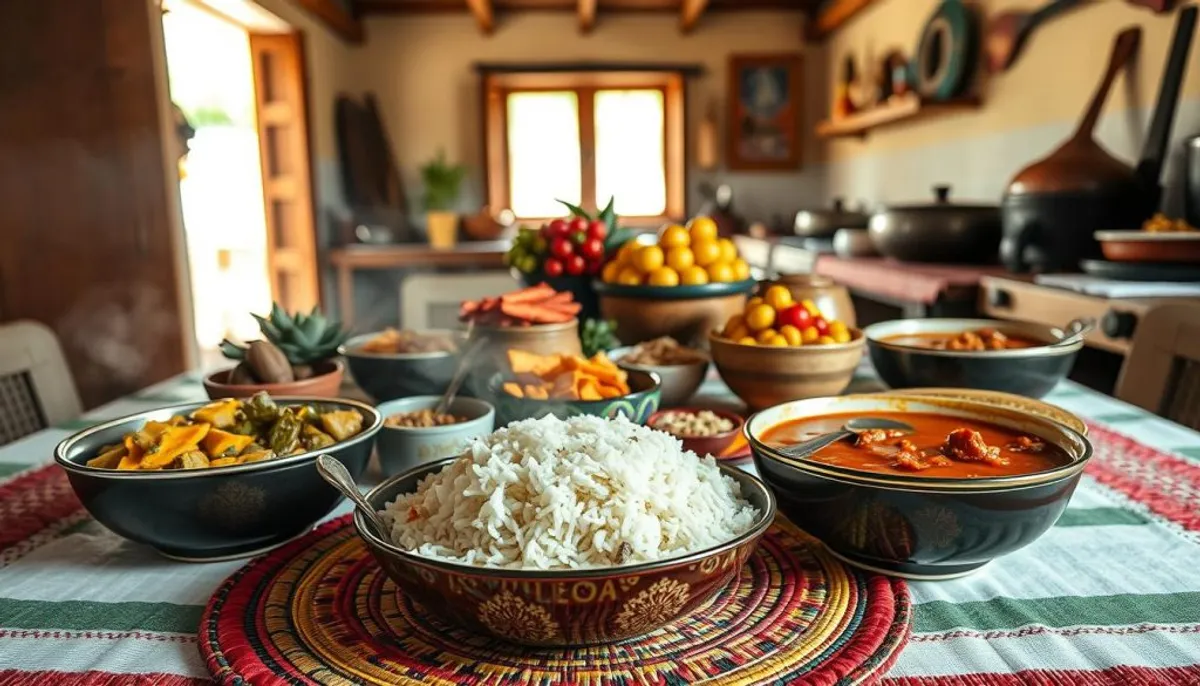
This article explores the foundations of this flavorful diet. It skillfully blends influences from various horizons.
Essential Ingredients and Local Recipes
The Sierra Leonean table relies on various nutritious starches. Cassava is prepared in many ways, offering unique textures.
Rice occupies a central place in daily nutrition. It is often accompanied by generous and spicy sauces.
Among the emblematic dishes, the palaver sauce stands out for its complexity. It simmers for a long time with leaves, palm oil, and fish.
Acarajé, a bean fritter, and fried fish are also very popular. For refreshment, ginger beer and palm wine are traditional choices.
| Ingredient | Common Preparations | Role in the Meal |
|---|---|---|
| Cassava | Gari, tapioca, cassava | Main starch, energy base |
| Rice | White rice, rice sauces | Central accompaniment to dishes |
| Yam / Potato | Boiled, fried, mashed | Starch complement |
Meals are traditionally moments of community sharing. This practice symbolizes family and social unity.
The cuisine of Sierra Leone shares much with its West African neighbors. However, it retains a distinct identity, reflecting the resilient culture of the country.
Initiation Rites and Secret Societies
Initiation rites represent a fundamental pillar of social organization in Sierra Leone. Over 90% of the population participates in these ancestral traditions.
These practices touch all layers of society and have structured community life for generations.
Traditional Ceremonies of the Bondo and Poro Societies
The Bondo society welcomes girls from the age of 4 for a complete apprenticeship. Retreats in the forest last from two weeks to several months.
Young girls learn dances, songs, and traditional values. They return with a new name marking their change of social rank.
The Poro society organizes similar initiations for boys. Ritual scarifications symbolize their transformation into adult men.
Contemporary Debates on Initiation Practices
This article must mention current controversies. Female genital mutilation concerns 90% of initiates.
The government has limited activities since 2018. Initiations are now only allowed from October to December.
Alternatives like “Yellow Bondo” are emerging. This initiative allows initiation without excision to preserve the cultural aspect.
| Society | Participants | Typical Duration | Key Elements |
|---|---|---|---|
| Bondo | Girls from 4 years | 2 weeks to 3 months | Domestic learning, FGM |
| Poro | Adolescent boys | 1 to 6 months | Scarifications, male training |
| Yellow Bondo | Consenting girls | Variable | Rituals without mutilations |
This article shows how these societies evolve in the face of modern challenges. Understanding how to structure an essay is crucial in analyzing the debate between tradition and human rights that continues in Sierra Leone.
Education, Media, and Literature in Sierra Leone
Education, media influence, and literature form an essential trio for understanding contemporary Sierra Leonean society. These fields reflect the challenges and progress of this country in reconstruction.
Evolution of the Educational System and Media Influence
The education system has undergone a profound transformation since colonial times. It has shifted from an education reserved for a few privileged individuals to a desire for universal access.
The civil war caused considerable damage to school infrastructures. For over ten years, an entire generation of children was deprived of learning.
Pioneers like Hannah Benka-Coker paved the way for girls' education as early as the 1900s. Today, the University of Sierra Leone trains leaders despite economic limitations.
Former minister Rugiatu Turay highlights a particular challenge: “we have more Bondo sites than schools”. This tension between traditions and modernity affects children's schooling.
Regarding the media, the country occupies a middle position in the global press freedom ranking. Journalists enjoy some independence, but must avoid direct criticism of the President.
Literary Figures and Written Heritage
The literary heritage of Sierra Leone deserves to be better known. Africanus Horton, as early as 1868, analyzed West African societies in his pioneering work.
Gladys Casely-Hayford contributed to the African cultural renaissance in the early 20th century. These authors are an integral part of the intellectual history of the country.
Community radios play a crucial role, especially in rural areas. They broadcast in Krio and local languages, reaching even illiterate populations.
Internet offers new opportunities to connected youth. However, the digital divide persists between urban and rural areas. This article shows how education and information build the future of Sierra Leone.
The Values and Traditions of Sierra Leonean Culture
A unique system of traditional governance has structured community life for over a century. This institution dates back to 1896, when Governor Frederic Cardew established chieftaincies.
Traditional chiefs are elected for life by local notables. They must belong to ruling families inherited from the colonial era.
Intergenerational Transmission of Knowledge
These leaders embody the guardians of ancestral customs. Their role extends far beyond the political sphere.
They oversee development projects in rural areas. Their support is crucial for any local initiative.
At the beginning of the 21st century, their influence diminished with the creation of local councils. However, they remain major actors in contemporary society.
The transmission of traditional knowledge occurs orally. Elders teach younger generations agriculture, medicine, and craftsmanship.
The national symbols reflect these values. The motto “Unity, Freedom, Justice” expresses the aspirations of the people.
The national anthem, adopted in 1961, celebrates the freedom won. These elements unite the nation around common ideals.
Sierra Leone faces challenges between tradition and modernity. Intergenerational dialogue allows for the adaptation of practices while preserving cultural identity.
Conclusion
At the end of this journey through Sierra Leonean heritage, a reality imposes itself with strength. This country in West Africa possesses a heritage of extraordinary richness, the result of a unique mix, including iconic structures like dutch windmills that symbolize the blend of cultures.
Despite historical trials, the vitality of the people remains remarkable. Under the leadership of each president, the state strives to rebuild national institutions.
Contemporary challenges remain numerous. How to modernize while respecting ancestral traditions? How to celebrate ethnic diversity from the north to the south while reinforcing national unity?
At the beginning of this new millennium, Sierra Leone shows an exceptional capacity for adaptation. Citizens pass on their heritage to younger generations with passion.
Exploring this unique identity means discovering the resilience of a proud people. Each visitor leaves enriched by this authentic human experience.
FAQ
What is the most spoken language in Sierra Leone?
Krio is the most commonly used lingua franca in daily life, especially in the capital Freetown. However, Temne and Mende are the most widely spoken mother tongues among the different ethnic groups.
What are the typical dishes that must be tasted?
Don't miss the rice with fish or cassava leaf, flavorful dishes that perfectly represent the local table arts. Essential ingredients like rice, fish, and cassava leaves are a must.
How did the civil war affect the country?
The conflict had a profound impact on society and institutions. Today, national reconstruction efforts and community projects aim to strengthen social cohesion and preserve the country's rich heritage.
Are there important cultural sites to visit?
Absolutely! The historic site of Bunce Island, linked to the slave trade, and the National Museum of Freetown are essential places to understand the history and social context of this West African nation.
What are the main religions practiced?
Islam and Christianity coexist peacefully. Many practices also incorporate elements of traditional and animist beliefs, creating a unique and tolerant religious landscape.