Welcome to this immersion in the heart of a millennial heritage. This country of South-East Asia, home to about 16 million inhabitants, reveals an identity of remarkable authenticity that captivates travelers from around the world.
The nation is deeply marked by its ethnic homogeneity, with 90% Khmers. This unity has forged a strong and resilient culture, imbued with Theravāda Buddhism, practiced by 95% of the population.
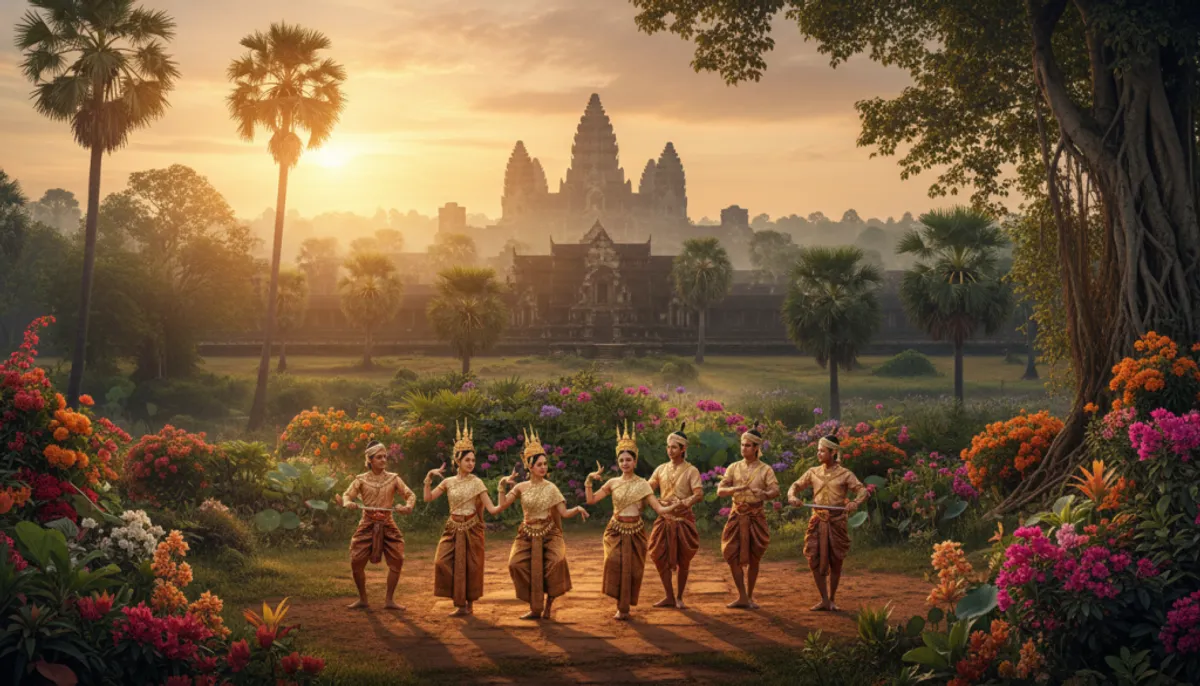
Iconic symbols define its soul. The majestic temple of Angkor Wat, featured on the national flag, is its jewel. The sugar palm and the delicate Romduol flower complete this unique picture.
International recognition is exceptional, with three UNESCO World Heritage sites and the Royal Ballet recognized as an intangible cultural heritage of humanity. Prepare for an authentic journey, from ancestral temples to vibrant traditions.
Key Points
- Cambodia is a South-East Asian country with a very homogeneous cultural identity.
- Theravāda Buddhism profoundly influences daily life and values.
- Angkor Wat, the sugar palm, and the Romduol flower are emblematic national symbols.
- The country has three sites inscribed on the UNESCO World Heritage list.
- The Royal Ballet of Cambodia is classified as intangible cultural heritage.
- This culture combines centuries-old traditions with modernity in a unique elegance.
The historical origins and heritage of the Khmer Kingdom
Let us go back in time to discover the deep roots of this fascinating nation. Its history dates back over two thousand years, marked by brilliant civilizations.
From the kingdom of Funan to the Angkor Empire
The first significant kingdom, Funan, thrived from the 1st to the 6th century. This powerful trading state established links with India and China.
Chenla took over from the 6th to the 9th century. It consolidated the identity of the Khmers and prepared for the emergence of a great empire.
The Khmer Empire ruled over South-East Asia from the 9th to the 15th century. Angkor Wat, the famous temple, was built in the 12th century by King Suryavarman II.
From the colonial period to independence
After the decline of Angkor, Cambodia sought protection against its neighbors. It accepted the French protectorate in 1863.
This colonial period lasted nearly 90 years. It allowed for the rediscovery of ancient temples.
Independence came in 1953 under Norodom Sihanouk. This period marked the end of one era and the beginning of a new chapter in the history of the kingdom.
Spirituality and religious traditions in Cambodia
The spiritual landscape of Cambodia reveals a unique harmony between millennia-old traditions and contemporary practices. This religious diversity profoundly enriches the daily lives of its inhabitants.
Theravāda Buddhism and ancestral rituals
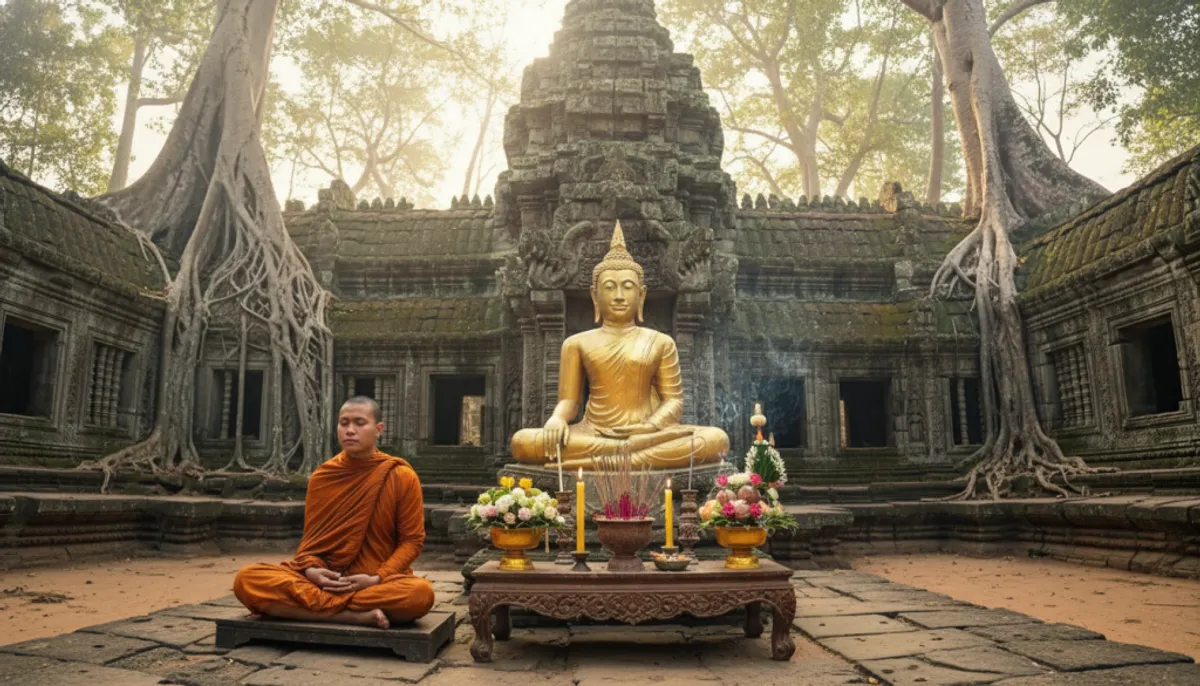
Theravāda Buddhism is the state religion, practiced by 95% of the population. Each village has its pagoda where monks guide the community.
These sacred places serve as spiritual and educational centers. Cambodians regularly perform their rituals there and seek advice from the monks.
Peaceful coexistence characterizes this society. Muslim, Christian, and animist minorities live in harmony with the Buddhist majority.
Animist and Brahmanic influences
The worship of protective spirits, the “neak ta”, remains vibrant in the countryside. Villagers offer them food and incense for protection.
The Brahmanic heritage still influences wedding and agricultural ceremonies. Priests officiate according to ancient Hindu traditions.
This fascinating religious synthesis also includes deities like Manimekhala and Suvannamaccha. It reflects the capacity for integration of different influences.
Ancient and modern temples reflect this rich diversity. They embody the profound spirituality that unites Cambodians in their practice of Buddhism and traditional rituals.
The arts, crafts, and cultural expressions
Cambodia showcases an artistic palette of exceptional richness. This part of the national heritage fascinates with its diversity and resilience.
Sculpture, dance, and traditional music
Stone sculpture represents a pillar of Khmer art. It harmonizes perfectly with the architecture of ancient temples.
The classical Khmer dance, known as “dance of the apsaras”, captivates audiences. Dancers in sumptuous costumes perform graceful movements inspired by mythology.
Traditional music uses unique instruments like the roneat and sralai. It accompanies ceremonies and celebrations throughout the country.
The renaissance of art and craft post-Khmer Rouge
The period of the Khmer Rouge profoundly marked the artistic world. 90% of artists disappeared during these dark years.
Today, an extraordinary renaissance animates the creative scene. Craftsmanship is revived with silk weaving and traditional pottery.
The Royal Ballet and the University of Fine Arts train new generations. Galleries exhibit in Phnom Penh and Siem Reap, showcasing this renewal.
This contemporary artistic vitality draws its roots from the millennial temples. It ensures the transmission of a precious heritage.
Cambodian cuisine and its authentic flavors
Let us now discover the gastronomic treasures of Cambodia. This cuisine stands out for its freshness and subtle balance.
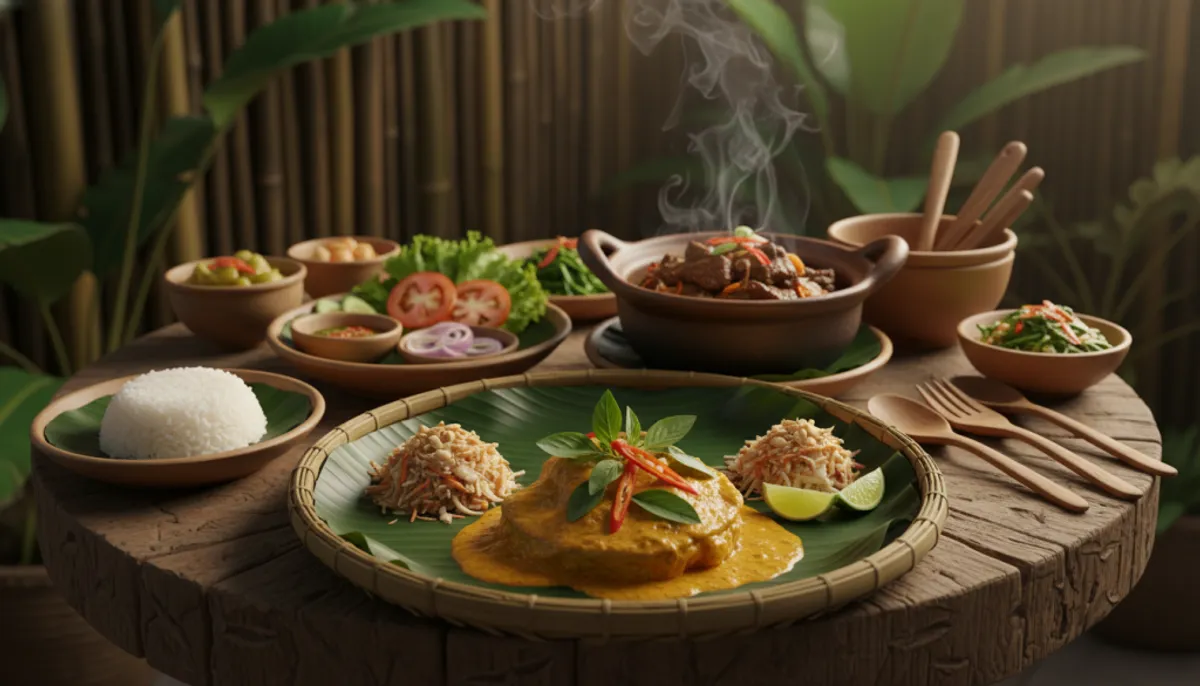
Local ingredients create unique harmonies. The generous use of aromatic herbs replaces overly strong spices.
Iconic dishes like amok and phlea sachko
The amok is the must-try national dish. This fish steamed in coconut milk melts delicately in the mouth.
The phlea sachko surprises with its boldness. Raw beef marinated in lime with fresh herbs.
| Iconic Dish | Main Ingredients | Characteristic |
|---|---|---|
| Amok | Fish, coconut milk, spices | Steamed in banana leaf |
| Phlea Sachko | Raw beef, lime, herbs | Tangy marination |
| Kep Crab | Crab, Kampot pepper | Exceptional terroir pairing |
Role of markets and culinary festivals
The markets of Phnom Penh, the capital, are vibrant with life. They offer tropical fruits and fresh fish from the Tonlé Sap.
Kampot pepper has a recognized IGP. Its black, red, and white varieties delight international chefs.
Meals become moments of shared conviviality. This tradition reflects the generosity of the inhabitants.
The multiple facets of Cambodian culture
Contemporary Cambodia presents a complex face where painful history and cultural renaissance intertwine. This nation has endured profound trials but shows remarkable resilience.
The legacy of the Khmer Rouge and cultural modernization
The Khmer Rouge period (1975-1979) indelibly marked the country. This tragedy claimed the lives of nearly two million people.
After these dark years, reconstruction was slow but determined. Political stabilization in 1993 allowed for an extraordinary cultural renaissance.
Enhancing heritage through UNESCO sites
The architectural heritage enjoys exceptional international recognition. Three sites are listed on the UNESCO World Heritage list.
The architecture of the Angkor Wat temples impresses with its scale. This temple spans 160 hectares with towers representing Mount Meru.
The list also includes Preah Vihear and Sambor Prei Kuk. These sites testify to the richness of Khmer heritage through the centuries.
The Royal Ballet and shadow theater complete this recognition. They have been on the intangible heritage list since 2008.
Conclusion
The Cambodian festive calendar reveals the authentic rhythm of this fascinating nation. Throughout the year, traditional celebrations punctuate the lives of Cambodians, creating a deep link between past and present.
The most important celebration remains the Khmer New Year, celebrated for four days in April. This period marks the end of the dry season and the arrival of beneficial rains.
In November, Bon Om Touk transforms Phnom Penh, the capital, into a grand aquatic spectacle. This celebration honors the unique reversal of the Tonlé Sap river, where the river changes direction.
The Tonlé Sap lake, the largest freshwater reserve in the region, symbolizes this intimate relationship between the Khmers and their environment. Your journey through the culture of this country thus reveals an exceptional harmony between traditions and nature.
Each celebration tells a millennial story, making Cambodia a destination where popular festivities illuminate everyday life with rare authenticity.
FAQ
What is the best time to visit Phnom Penh and the temples of Angkor?
The dry season, from November to February, is ideal. The climate is cooler and more pleasant for exploring the capital and historical sites such as those listed as UNESCO World Heritage.
How does local cuisine use Kampot pepper?
The famous Kampot pepper, a recognized IGP, enhances many dishes. It is used in iconic recipes like amok, a fish curry, or simply to season grilled dishes.
What role does the Tonlé Sap lake play in life in Cambodia?
This lake is vital. It ensures food security through fishing, influences the agricultural cycle, and is home to floating villages, illustrating a unique way of life in South-East Asia.
What are the major traditional festivals not to be missed?
Don't miss the Khmer New Year in April and the Water Festival in November. These celebrations, full of rituals and joy, are a true spectacle of local life.
How have Khmer art and sculpture survived after the Khmer Rouge?
Despite this dark period, a renaissance effort took place. Schools reopened to train new artists, thus perpetuating the tradition of classical dance and stone sculpture.