Welcome to this fascinating exploration of a South American country with unsuspected treasures. Ecuador reveals an extraordinary wealth that surprises with its intensity and authenticity.
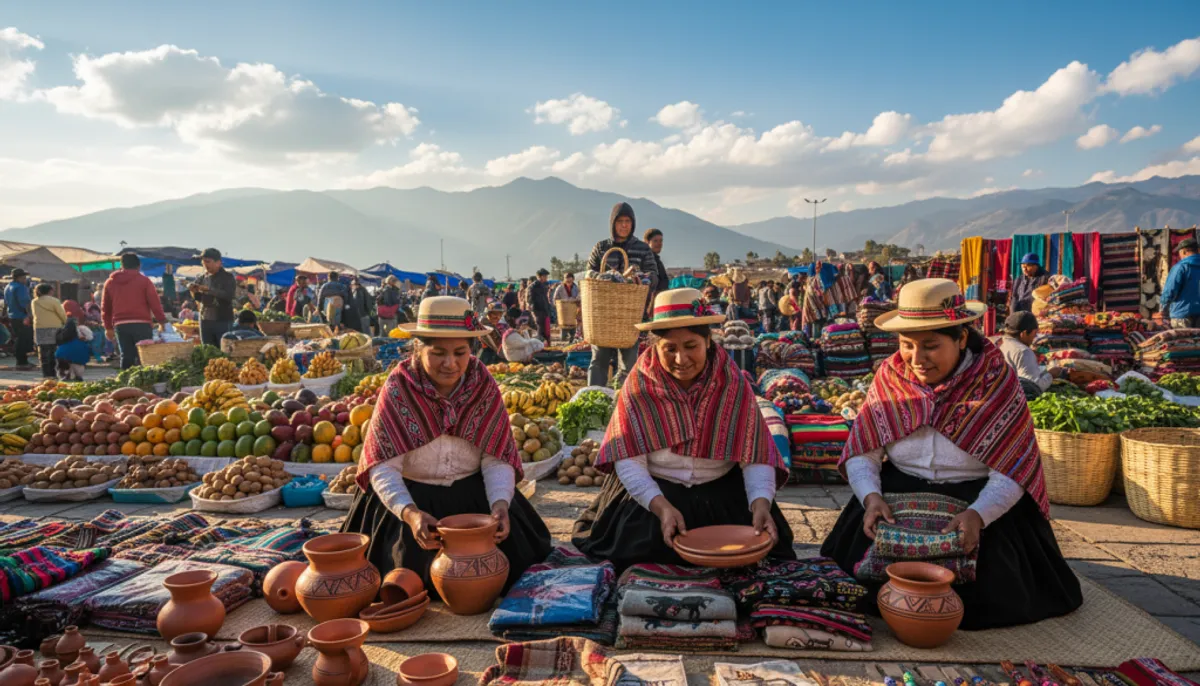
With over 18 million inhabitants, this nation is home to a remarkable human mosaic. Mestizos, indigenous people, Afro-Ecuadorians, and white populations coexist harmoniously.
Each region has its distinct character. The Pacific coast, the Andean mountains, the Amazon, and the Galápagos Islands offer unique cultural specificities.
The living heritage is expressed through thirteen officially recognized indigenous nationalities. This diversity of ethnicities constitutes the true strength of national identity.
Understanding this complexity allows for a full appreciation of the exceptional variety of traditions. A small territory concentrates a cultural richness that rivals the greatest nations of the world.
Key Points to Remember
- Ecuador has over 18 million inhabitants divided into several ethnic groups
- Four distinct geographical regions influence local traditions
- Thirteen indigenous nationalities have been officially recognized since 1998
- Cultural diversity is a fundamental characteristic of national identity
- Each region has specificities while sharing a common heritage
- The country offers an exceptional concentration of living ancestral traditions
Historical Overview and Cultural Diversity
The rich history of this territory dates back over six millennia of heritage. This long period has seen different civilizations succeed one another, leaving their mark on the country.
The Evolution of Ecuadorian Society
The population has experienced remarkable growth over time. From about one million inhabitants around 1850, it has grown to over 18 million today.
This demographic transformation reflects profound social changes. Each era has contributed to shaping the current society.
Indigenous, Spanish, and African Influences
Three main sources have influenced cultural development. Indigenous peoples, Spanish colonizers, and African populations have each made their contributions.
The Valdivia civilization, the first ceramic culture in the Americas, represents ancient origins. The Inca heritage has profoundly impacted the Andean regions.
| Influence | Historical Period | Main Contributions | Affected Regions |
|---|---|---|---|
| Indigenous | 6000 years to present | Languages, agricultural traditions, crafts | Andes, Amazon |
| Spanish | 16th century to independence | Language, religion, architecture | Entire nation |
| African | Colonial period | Music, dance, coastal traditions | Esmeraldas, Pacific coast |
The constitutional recognition in 2008 of the Kichwa and Shuar languages is a testament to this diversity. These languages are now official for intercultural communication.
The harmonious coexistence of different cultures defines national identity. This multicultural wealth constitutes a unique strength for the country.
Traditions and Cultural Practices
Religious and cultural festivities are an essential part of the living heritage. They rhythm the life of communities throughout the country.
Rituals, Pilgrimages, and Religious Festivals
Catholicism has profoundly influenced traditions since colonial times. Nearly 80% of the population practices this religion.
The annual pilgrimages attract thousands of worshippers. The pilgrimage of El Quinche in November represents a significant moment of devotion.
Local Celebrations: Inti Raymi, Mama Negra, and Other Festivities
Inti Raymi celebrates the sun god during the winter solstice. This Inca festival preserves pre-Columbian heritage.
The Mama Negra festival honors the Virgin of Mercy in Latacunga. It takes place twice a year to protect against volcanic eruptions.
| Festival | Origin | Period | Significance |
|---|---|---|---|
| Inti Raymi | Inca | Winter solstice | Celebration of the sun |
| Mama Negra | Syncretic | September and November | Volcanic protection |
| Pilgrimage of El Quinche | Catholic | November | Marian devotion |
Along the Pacific coast, African influences enrich the rituals. In the Andean villages, syncretism creates unique celebrations.
These festivities strengthen community bonds. They take on a distinctive form in each region.
Craftsmanship, Heritage, and Historical Sites
Ecuador reveals a remarkable heritage of architecture through its historical sites. These treasures testify to a rich history that attracts visitors from around the world.
Colonial Architecture and World Heritage Site
The historic center of Quito was the first site inscribed on the World Heritage list by UNESCO in 1978. Its cobbled streets wind between perfectly preserved Spanish colonial architecture.
The numerous baroque churches of the capital amaze with their detailed ornamentation. The city of Cuenca also possesses exceptional architectural heritage.
The Galápagos Islands complete this prestigious list of World Heritage sites. Their recognition highlights the unique natural importance of this archipelago.
| UNESCO Site | Type | Year of Inscription | Main Feature |
|---|---|---|---|
| Historic Center of Quito | Cultural | 1978 | Colonial architecture |
| Galápagos Islands | Natural | 1978 | Unique biodiversity |
| Historic Center of Cuenca | Cultural | 1999 | Colonial urbanism |
Markets, Cultural Centers, and Historical Remains
The archaeological site of Ingapirca offers a fascinating discovery of Inca remains. Located in the Andes, it represents the main testimony of this civilization.
The traditional artisan markets perpetuate ancestral know-how. Local craftsmanship is beautifully showcased there.
The Metropolitan Cultural Center of Quito occupies a 17th-century building. This museum preserves remarkable historical collections.
The MAAC in Guayaquil illustrates modern architecture dedicated to the conservation of heritage. These institutions complement the rich cultural offerings of the country.
Ecuadorian Culture in Daily Life
In the villages and cities of Ecuador, intercultural communication shapes the rhythm of everyday life. This linguistic diversity is an essential part of national identity.
Expression of Daily Life and Local Languages
Spanish dominates as the main language, spoken by 93% of the population. However, indigenous languages like Kichwa and Shuar enrich the linguistic landscape.
These indigenous languages have been constitutionally recognized since 2008. They serve as bridges between different communities.
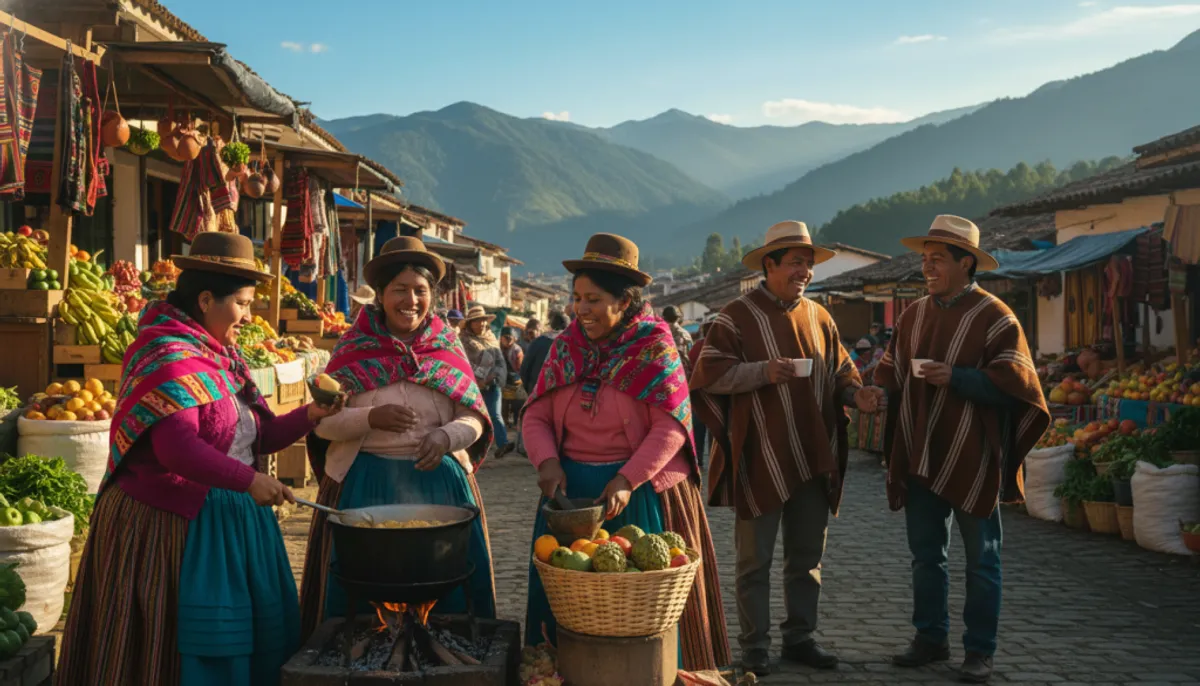
In each region, life takes on a distinctive form. The Andean villages preserve ancestral traditions with remarkable authenticity.
Intercultural Communication and Ancestral Influences
Exchanges between different peoples create a unique social dynamic. Mestizos, Indians, Afro-Ecuadorians, and white populations coexist harmoniously.
Along the coast, Spanish and African influences blend naturally. This fusion creates original cultural expressions.
Ecuadorians welcome visitors with characteristic warmth. This hospitality is part of a responsible and sustainable tourism approach.
The transmission of traditional knowledge to new generations occurs naturally. Village communities play a central role in this preservation.
Arts, Music, and Literature
Artistic expression through the centuries reveals a unique fusion of European and indigenous heritages. This rich tradition is an essential part of national identity.
Modern Art, Contemporary Art, and the Quito School Heritage
The Quito School marked an important period in the history of art. Born from the meeting of European techniques and indigenous know-how, it produced remarkable religious works.
Manuel Caspicara, Bernardo Legarda, and Miguel de Santiago are among its main representatives. Their creations still adorn the churches of the historic center today.
In the 20th century, the indigenist movement revolutionized the artistic scene. Eduardo Kingman and Oswaldo Guayasamín represented for the first time indigenous populations in their paintings.
Contemporary art continues to thrive with the Cuenca biennial. Pablo Guayasamín, son of Oswaldo, is now an internationally renowned artist.
Ecuadorian Literature and Tribute to Iconic Writers
Literature features prominent figures such as Juan Montalvo and Jorge Icaza. The latter denounced social injustices in his novel Huasipungo in 1934.
Andean music uses a unique pentatonic system. Traditional instruments like the rondador and charango create characteristic melodies.
On the coast, Afro-Ecuadorian influences enrich the music with the marimba. Papa Roncón currently represents this living tradition.
Antonio Neumane composed the music for the national anthem in 1866. Juan Léon Mera wrote the lyrics, thus creating a lasting patriotic symbol.
Traditional Cuisine and Local Beverages
The Ecuadorian table invites a sensory journey through its authentic flavors. Each region offers a unique culinary discovery that reflects the diversity of local cultures.
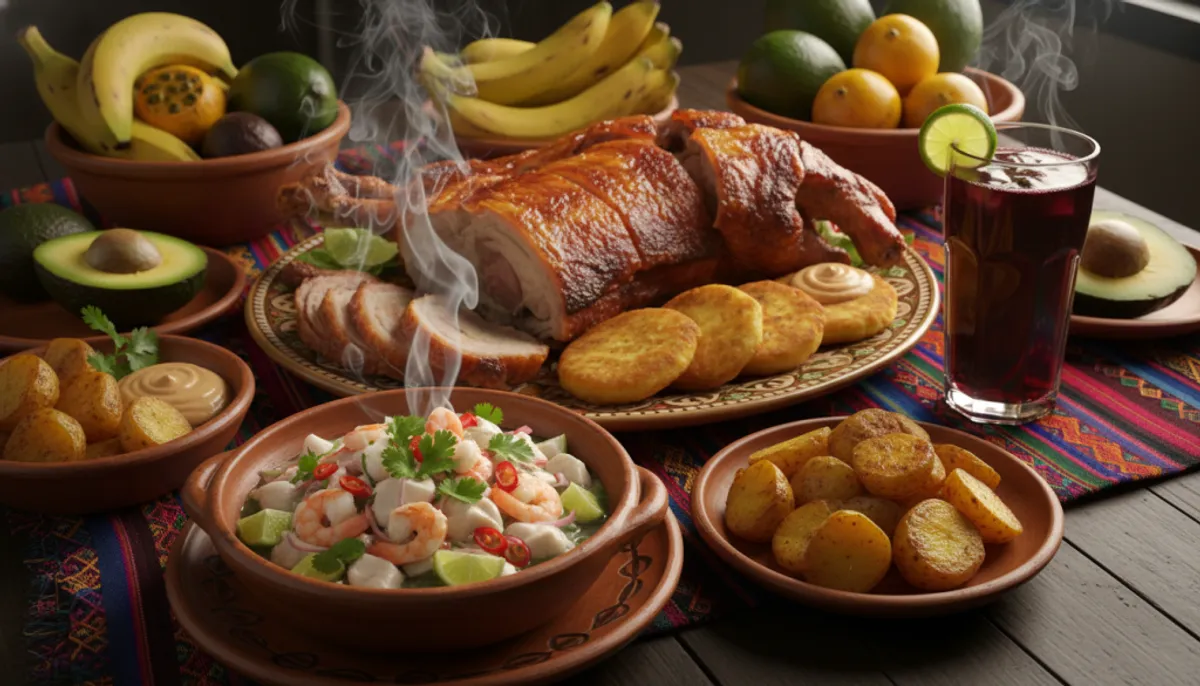
Iconic Dishes and Regional Recipes
The Sierra and the coast present distinct specialties. Mountain inhabitants favor meat, corn, and potatoes.
On the Pacific coast, seafood dominates the dishes. Ceviche marinated in lime and encebollado, a fish soup, are must-tries.
| Region | Main Specialties | Basic Ingredients | Typical Dishes |
|---|---|---|---|
| Sierra (mountains) | Local cuisine | Meat, corn, potatoes | Fritada, humitas, seco de chivo |
| Pacific coast | Maritime cuisine | Fish, rice, seafood | Ceviche, encebollado, patacones |
Traditional Beverages
Ecuadorian coffee offers an essential part of the gastronomic experience. Hot drinks like api (ground corn) warm up chilly mornings.
Colada morada, prepared once a year for All Saints' Day, mixes blackberries and blueberries. Tropical fruit juices like tomate de árbol refresh naturally.
Tasting local specialties at traditional markets remains the best form of culinary immersion.
Artisanal beverages like Spirito del Ecuador complement this rich taste palette. Each region offers its own creations.
Social Life and Local Lifestyles
The Ecuadorian educational system perfectly illustrates the social evolution of the country. A massive literacy campaign after World War II bore fruit.
In 1995, the literacy rate reached 90%. Schooling is free and mandatory for children aged 5 to 15.
Social Diversity, Education, and Family Dynamics
Despite these advances, the lack of resources still deprives many rural areas of decent schools. Remote villages face significant infrastructural challenges.
Higher education plays a crucial part in intellectual life. The Central University, founded in 1769, and the Pontifical Catholic University, established in 1946, enliven Quito.
Cuenca and Guayaquil also have prestigious institutions. The National Library, established in 1792, completes this educational landscape.
Social diversity manifests in the harmonious coexistence of different groups. Indigenous populations like the Quechuas maintain a close connection with their environment.
| Educational Aspect | Urban Areas | Rural Areas | Recent Progress |
|---|---|---|---|
| Access to Schools | Easy and widespread | Limited in isolated villages | Teacher mobility programs |
| Infrastructures | Modern and complete | Basic and often insufficient | Government investments |
| Higher Education | Prestigious universities | Difficult access | Scholarships for rural students |
Throughout the different regions, family dynamics take on a distinctive form. Society evolves with the recognition of same-sex marriage.
Ecuadorians place significant importance on preserving their land. This ecological awareness influences contemporary lifestyles.
For visitors, a responsible journey offers authentic immersion. Sharing the daily life of indigenous communities allows for an understanding of their relationship with the environment.
This respectful approach constitutes the second essential part of sustainable tourism. It values traditions while protecting ecosystems.
Conclusion
This country offers a rare cultural experience where past and present meet harmoniously. Your journey becomes an authentic discovery through millennia-old traditions that are still alive.
From colonial art to UNESCO sites, Ecuadorian heritage occupies a central place in the world. Each region reveals a unique form of cultural expression.
Explore this territory at the geographical center of the earth for a total immersion. The cultural richness is an integral part of national identity.
This name truly reflects its meaning: Ecuador remains at the heart of an exceptional heritage. A journey here transforms your view of global cultural diversity.
FAQ
What are the main influences that have shaped the country?
Society has been enriched by a unique blend of heritages. Indigenous peoples bring millennia-old traditions, while the Spanish colonial era left a strong mark, particularly in architecture. African influences are also visible, especially along the coast, in music and gastronomy.
Where can one discover authentic local craftsmanship?
Traditional markets are the best places! Villages like Otavalo are famous for their textiles. In major cities like Quito and Cuenca, you will also find cultural centers and shops that highlight the work of artisans, a living form of art.
What historical sites are must-see during a trip?
Don't miss the historic center of Quito, a UNESCO World Heritage site, with its beautiful churches. The Inca remains, such as those at Ingapirca, are fascinating. And of course, the Galápagos Islands offer a unique natural environment, essential for understanding the diversity of the world.
How is culture manifested in the daily lives of Ecuadorians?
It is everywhere! In everyday life, it can be seen in the friendliness of public squares, the use of local languages like Kichwa, and the importance of family dynamics. Festivals and traditions rhythm the year, creating a strong bond between generations and the different regions of the country.
Is there an ideal time of year to witness traditional celebrations?
Every season has its festivals! The carnival period is very lively. Inti Raymi (the sun festival) in June and Mama Negra in November are spectacular events. It is advisable to plan your trip according to the festive calendars for total immersion.