At the heart of West Africa, Burkina Faso shines with its unique heritage. This territory is home to over sixty ethnic groups, forming a vibrant social mosaic. More than twenty-three million inhabitants share this vast space of 274,200 km².
Its geographical position makes it an essential crossroads. The country shares its borders with six neighboring nations. This location fosters a constant mix of influences and ideas.
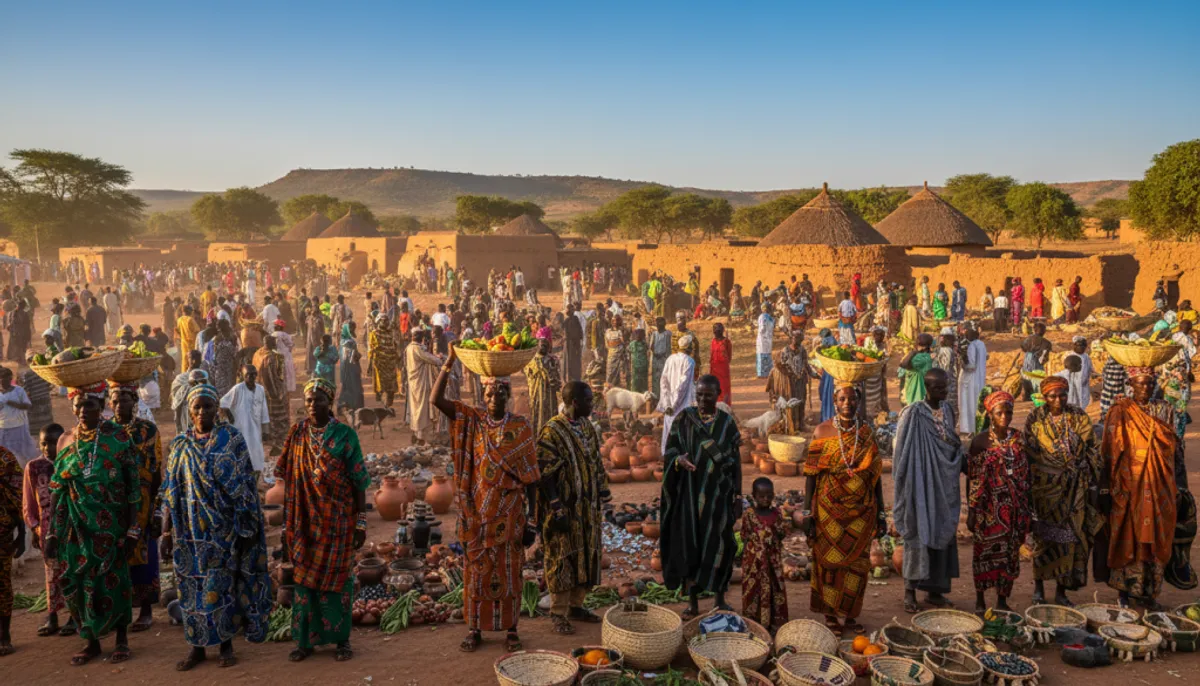
This wealth is reflected in architecture, gastronomy, and festivals. Refined craftsmanship and colorful ceremonies illustrate an ancestral heritage. The social organization is based on values of community and respect.
The linguistic diversity is impressive, with over eighty languages spoken. French is the official language, while Mooré, Fulfulde, and Dioula are national languages. This plurality strengthens harmonious coexistence.
The legendary hospitality of its inhabitants is rooted in this tradition of peace. Vibrant music, energetic dances, and colorful textiles define its identity. Preserving this intangible treasure for future generations is an exciting challenge.
Key Points to Remember
- Burkina Faso is a West African nation characterized by a very high ethnic diversity.
- Its territory, at the heart of the Sahel, is a cultural crossroads influenced by six neighboring countries.
- Its heritage is manifested through rich and varied architecture, cuisine, and craftsmanship.
- Over 80 languages are recorded, with French and three main national languages.
- Hospitality and community values are essential social pillars.
- Music, dance, and festivals are vibrant cultural expressions.
- The transmission of these traditions to younger generations is a major contemporary issue.
Introduction to Cultural Wealth
The extraordinary social mosaic of Burkina Faso is first explained by figures and a unique human geography. This territory is a true ark of diversity.
Historical and Demographic Context
The country has experienced impressive population growth. Its populations have increased from 4 million men and women in 1948 to over 23 million today.
This vitality reflects a deep social dynamic. It shapes the present and future of the nation.
The Origins of Ethnic Diversity
More than sixty distinct ethnic groups coexist in the territory. Each group brings its traditions, language, and history to the national whole.
The Mossi form the majority group, representing more than half of the populations of Burkina Faso. The Fulani, emblematic nomads, constitute another important pillar.
Other communities, such as the Gourmantché or the Bobo, enrich this picture. This distribution creates a harmonious social fabric, often beyond borders.
Everyday Burkinabè Culture
The everyday life in this West African country is a unique blend of modernity and ancient customs. Ancestral traditions harmoniously mingle with the rhythm of the cities.
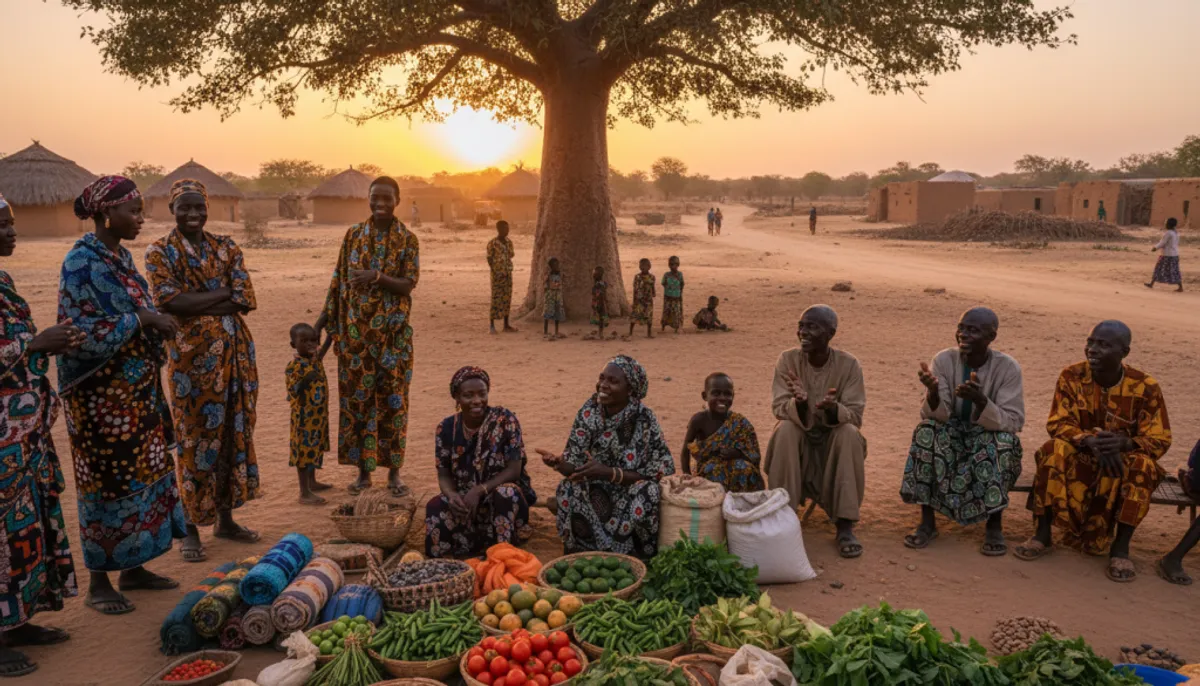
Community values remain central. They animate weekly markets and gatherings under trees. This art of living together resists urbanization.
Multilingualism is fundamental. French unites administration, but over 80 African languages resonate in households. This linguistic richness shapes the identity of Burkina Faso.
An exemplary religious tolerance also characterizes social life. Muslims, Christians, and animists coexist peacefully. They often share the same spaces and celebrations.
This harmony among different communities is a pillar of the national culture. It makes daily life in this country particularly serene and welcoming.
Traditions and Ancestral Customs
The intangible heritage, from sacred masks to sculpted objects, tells a profound story. These practices form an essential part of the collective identity.
Traditional Rituals and Ceremonies
Ceremonies mark the major stages of life. Initiations signify the transition to adulthood.
Fertility rituals and elaborate funerals last several days. Mask festivals are spectacular.
Among the Bobo, Mossi, Bwa, and Sénoufo, each mask represents a spirit. They emerge to protect the village or celebrate the harvest.
Craftsmanship and Intangible Know-How
Local craftsmanship is recognized throughout West Africa. Ancestral know-how is passed down from father to son.
Wood and bronze carving, pottery, and weaving produce both utilitarian and art objects. The faso dan fani, an emblematic textile, is a proud example.
The International Craft Fair of Ouagadougou (SIAO) showcases this treasure. Established in 1988, it attracts half a million visitors every two years.
Recycled craftsmanship transforms worn metal into works of art. Legends, such as that of Princess Yennenga, complement this oral heritage. They are a living part of memory.
The Influence of History on Culture
The imprint of the past profoundly shapes the identity of Burkina Faso. The current country is the result of centuries of evolution and major transformations.
The Legacy of Ancient Kingdoms
The Mossi kingdoms structured political organization for centuries. Their system, with the Moogho-Naaba in Ouagadougou, still influences society.
Before them, the Sénoufo were already established on this land. Their ancient presence marks the beginning of a long history of settlement.
The Transmission of Stories and Legends
The legend of Princess Yennenga is central. This warrior founder of the Mossi kingdom embodies a powerful national symbol.
The intellectual Joseph Ki-Zerbo allowed this history to be written. His work for UNESCO provided an essential African perspective.
The oral transmission by griots remains a living part of collective memory. It perpetuates ancestral exploits and values.
In 1984, a decisive page was turned. The country abandoned the name Upper Volta to become Burkina Faso, affirming a new identity.
Music, Dance, and Visual Arts
It is through its festivals that Burkina Faso asserts its vitality on the continental stage. These events transform cities into creative epicenters.
Cultural Festivals and Artistic Events
FESPACO, founded in 1969, is one of the largest film festivals in all of Africa. It attracts professionals from around the world to the capital every two years.
The Récréatrales, launched in 2002, offer a unique space for contemporary theater. About a hundred artists explore new writings there.
The Evolution of Dance and Music
Dance has evolved from traditional forms to contemporary expression. Irène Tassembedo founded the National Ballet, paving the way.
Salia Sanou and Seydou Boro created the Dialogues de Corps festival and La Termitière. This center is the first of its kind on the continent.
The music scene is equally rich. The National Music Museum in Ouagadougou attests to this. Artists like Victor Démé blend roots and modernity.
Cinema shines with renowned directors. Idrissa Ouedraogo and Gaston Kaboré have brought African stories to the international stage.
| Event | Type | Frequency | Main Location |
|---|---|---|---|
| FESPACO | Film & Television | Biennial | Ouagadougou |
| Les Récréatrales | Contemporary Theater | Biannual | Ouagadougou |
| Dialogues de Corps | African Dance | Annual | Ouagadougou |
| BISO | Sculpture & Visual Arts | Biennial | Ouagadougou |
“FESPACO is much more than a festival; it is a window into the soul of African cinema.”
These cultural events make Burkina Faso a crossroads of arts in all of Africa. Dance and music draw from a constantly renewed energy.
Gastronomy and Culinary Traditions
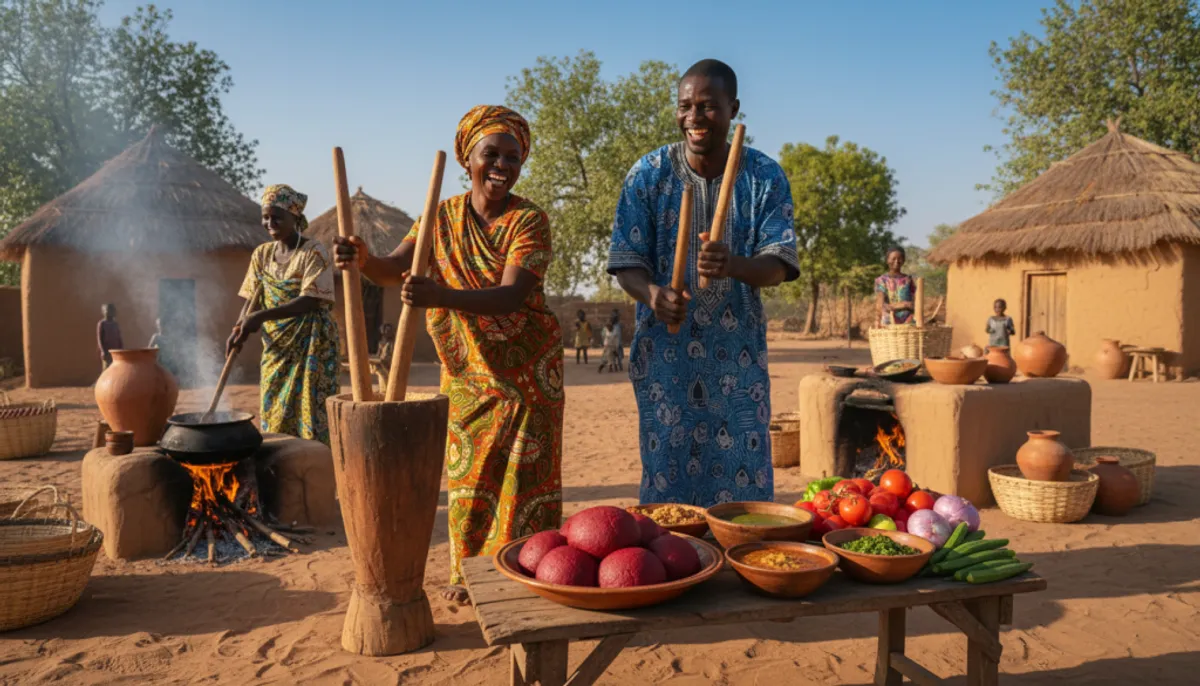
The flavors of Burkina Faso tell a story of terroir and sharing. This cuisine is a faithful reflection of the culture of the country, influenced by the traditions of local ethnicities and neighboring West African countries like Mali, Ghana, and Côte d'Ivoire.
Traditional Dishes and Local Recipes
Wolof rice, or fatty rice, is considered the national dish. It is rice cooked in a spicy tomato sauce with meat, fish, and vegetables. It symbolizes conviviality during major celebrations.
Other dishes are staples of daily life. Tô, a millet dough, is served with okra or peanut sauces. Mafé is a meat stew in peanut sauce, and Lakh is a millet couscous with curdled milk.
Traditional drinks refresh and nourish. Millet beer (dôlo or tchapalo) is fermented. Bissap, an infusion of hibiscus, and zoom-koom, made from millet and ginger, are very popular.
| Dish / Drink | Main Description | Occasion / Usage |
|---|---|---|
| Wolof Rice | Rice cooked in a spicy tomato sauce with meat or fish. | Celebrations, festive dishes. |
| Tô | Thick dough made from millet or sorghum, served with a sauce. | Basic daily meal. |
| Mafé | Meat stew (beef, chicken) in a creamy peanut sauce. | Family meals, special occasions. |
| Dôlo / Tchapalo | Traditional beer made from fermented millet. | Socializing, markets, ceremonies. |
| Bissap | Red and tangy drink made from hibiscus flowers. | Daily refreshing drink. |
Specialties vary by region. The Bissa, for example, excel in peanut-based preparations. Sharing a meal, often from a common dish, remains an essential social glue in Burkina Faso.
The Impact of Tourism on Cultural Valuation
Visiting Burkina Faso means discovering a country where each region offers a unique experience. Tourism highlights a rich and vibrant heritage.
It creates jobs for guides and artisans. It also funds the preservation of historical sites.
Tourist Sites and Historical Heritage
The country is organized into four main tourist zones. The west shines with its waterfalls and Bobo-Dioulasso.
The center houses the capital and Gourounsi architecture in the south. The east offers safaris in the W park.
Among the treasures are the ruins of Loropéni, classified by UNESCO. The painted habitats of Tiébélé and the museum of Manéga are also remarkable.
| Zone | Main Experience | Example Site |
|---|---|---|
| West | Cultural and nature tourism | Karfiguéla Waterfalls |
| Center | Business and traditions | Bangr-Wéogo Park |
| East | Safari and hunting | W National Park |
| North | Saharan adventure | Oursi Dunes |
Cultural Events and Festive Celebrations
Major festivals punctuate the calendar. FESPACO (film) and SIAO (craft) attract international visitors.
These events transform Burkina Faso into a continental cultural stage. They take place during the months of the tourist season.
Cross-border circuits with Côte d'Ivoire enrich the experience. They showcase the continuity of peoples on both sides of the border.
Conclusion
In summary, Burkina Faso presents a culture of exceptional richness in West Africa. Its unique ethnic diversity and artistic creativity shine internationally through cinema, music, and craftsmanship.
This country is a cultural crossroads where influences from six neighboring nations blend. Festivals like FESPACO and SIAO make it a cultural capital of the continent, attracting visitors from around the world.
The transmission of knowledge to younger generations remains crucial. Despite contemporary challenges, legendary hospitality and religious tolerance form a harmonious coexistence.
Come discover this living heritage. Explore its sites, taste its cuisine, and meet its artisans to appreciate this unique identity.
FAQ
What are the must-try typical dishes?
Don't miss the fatty rice, often prepared with chicken or fish. Tô, a dough made from millet or corn, is a staple food. For a tasty snack, try bean fritters, skewers, and millet balls.
Which festive events best celebrate the heritage?
FESPACO, the grand pan-African film festival, and SIAO, the International Craft Fair, are must-sees. Locally, the Bobo-Dioulasso Mask Festival or the National Culture Week offer authentic experiences.
Are there major historical sites to visit?
Yes! The ruins of Loropéni, classified by UNESCO, are fascinating. The old earthen mosque in Bobo-Dioulasso and the Bendrology Museum in Manéga are also places rich in history and stories.
How is local craftsmanship transmitted today?
Skills, such as cotton weaving or blacksmithing, are often passed down within families. Training centers and cooperatives also help young people learn these trades and make a living from their production.
Do music and dance hold an important place in social life?
Absolutely! They rhythm ceremonies, festivals, and gatherings. The balafon and djembé are iconic instruments. These artistic expressions strengthen bonds between communities and generations.