Welcome to this guide designed to introduce you to a universe of extraordinary richness. This human, artistic, and spiritual heritage spans the entire continent and touches the very heart of community life.
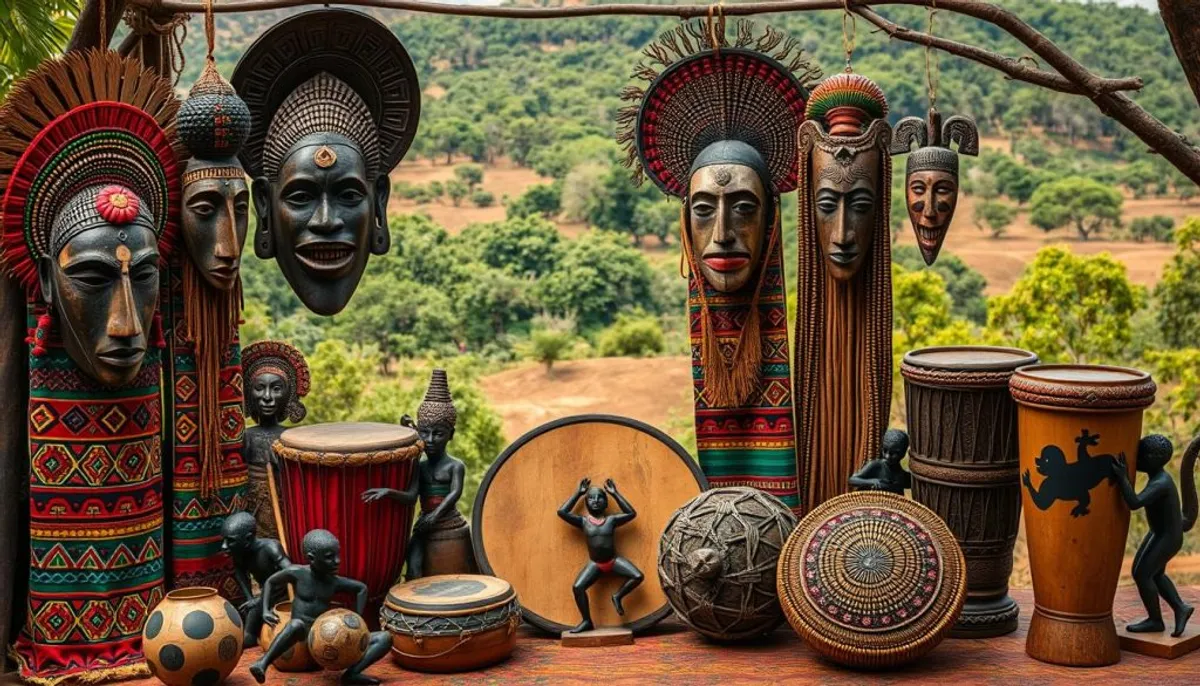
It is not a single entity, but a world teeming with differences. From ancestral traditions to modern creations, the expressions are numerous. This diversity is the true strength of this heritage.
Our goal is to explore together the origins, arts, beliefs, and languages that compose it. We will also address current challenges to preserve this precious heritage.
Get ready for a captivating journey through the centuries and regions. Discover how these treasures influence our contemporary world and contribute to building today's identities.
Key Points to Remember
- A vast heritage covering an entire continent.
- A diversity of expressions, from traditions to modern arts.
- An understanding that goes beyond the image of a uniform block.
- A guide to explore origins, arts, and languages.
- A significant impact on identities and the current world.
- An invitation to a journey through history and regions.
Introduction to the World of African Culture
Explore the multiple facets of a heritage that unites over fifty nations and a thousand distinct peoples. This complex ensemble stretches across the vast continent, creating a vibrant mosaic of traditions and expressions.
The 1950s and 1960s marked a decisive turning point. Advocacy movements accompanied the struggles for independence, affirming a historical autonomy long denied. This period saw a renewed pride in local civilizations emerge.
Colonialism had obscured the richness of these cultures, creating an urgent need for recognition. Expressions like "black civilizations" symbolized this return to roots after decades of disdain.
Art, traditions, and history form the fundamental pillars of this identity. They allow for an understanding of the extraordinary diversity that characterizes this unique African culture.
Today, these expressions are undergoing significant transformations. Fusions and original innovations coexist with ancient foundations, creating remarkable dynamism.
The modern approach must be selective, evoking contemporary dynamics while respecting historical foundations. This delicate balance ensures the sustainability of an invaluable heritage.
The Origins and Historical Evolutions
The deep roots of human history find their source on the African continent, the cradle of our common origins. The existence of modern man is inseparable from the first civilizations that emerged there.
Influences of Ancestral Civilizations
A notable fact lies in the extraordinary remnants left by these ancient societies, including the yamna burials. Paintings and rock engravings are scattered across the landscape, from central Morocco to the far reaches of Tanzania.
These works, found from the Sahara to the South African Drakensberg, testify to remarkable imagination and artistic mastery. They constitute an invisible map of the movements and beliefs of early humans.
Transformations Over the Centuries
The effect of migrations and exchanges has profoundly transformed the populations. Simple groups of hunter-gatherers evolved into structured kingdoms and vast empires.
Archaeological research on this land is an ongoing endeavor. The inventory of treasures from the past is far from complete, promising many more discoveries.
These complex evolutions show a constant dynamic of adaptation and innovation. Reciprocal influences with other continents have also enriched this unique heritage.
The Spectacular Landscapes and Authentic Nature of the Continent
At the heart of Southern Africa lies a panorama that challenges the imagination with its vastness and authenticity. These immense spaces have shaped the rhythm of local life for generations.
The Immensity of Deserts and Unique Oases
Botswana perfectly illustrates this intimate relationship between man and his environment. This country of vastness is home to ecosystems of exceptional richness.
The Kalahari Desert covers nearly 70% of the territory, offering an impressive mineral spectacle. This arid expanse contrasts with the Okavango Delta, a unique green oasis in the world.
Botswana's nature also reveals the vast salty expanses of the Makgadikgadi Pan. These varied landscapes testify to the geographical diversity of the continent.
Spared from mass tourism, the country retains an image of preserved authenticity. This wild nature deeply inspires local artistic expressions.
African Culture in Contemporary Inculturation
The figures testify to a profound transformation in contemporary religious expression. Between 1978 and 2004, the number of Catholics on the African continent rose from 55 to 149 million.
This spectacular growth is accompanied by a transformation of religious structures. Local leaders now occupy key positions within communities.
In 2004, over 32,000 priests, 8,000 brothers, and 60,000 sisters were of African origin. This massive representation profoundly changes religious practices.
Inculturation can be understood as a dialogue between value systems. It allows for the harmonious integration of local tradition into contemporary rites.
This process creates a unique form of African Christianity. Believers develop a dual belonging, both religious and cultural, and feel the impact of awakened culture on their identity.
The effect of this encounter mutually enriches the different spiritual expressions. It offers new perspectives for understanding culture in its contemporary dimension.
The Influence of Ancestral Religions and Traditions
As early as 1965, the term R.T.A. was introduced to designate ancestral African religious systems. This designation was officially adopted at a conference in Cotonou in 1970.
The Role of R.T.A. and Traditional Beliefs
Religious traditions exert a profound effect on the daily existence of man. They permeate all aspects of community life.
Anthropologist Gérard Buakassa states that this religion "exists nowhere, but is everywhere." It manifests in the consciousness, attitudes, and daily gestures.
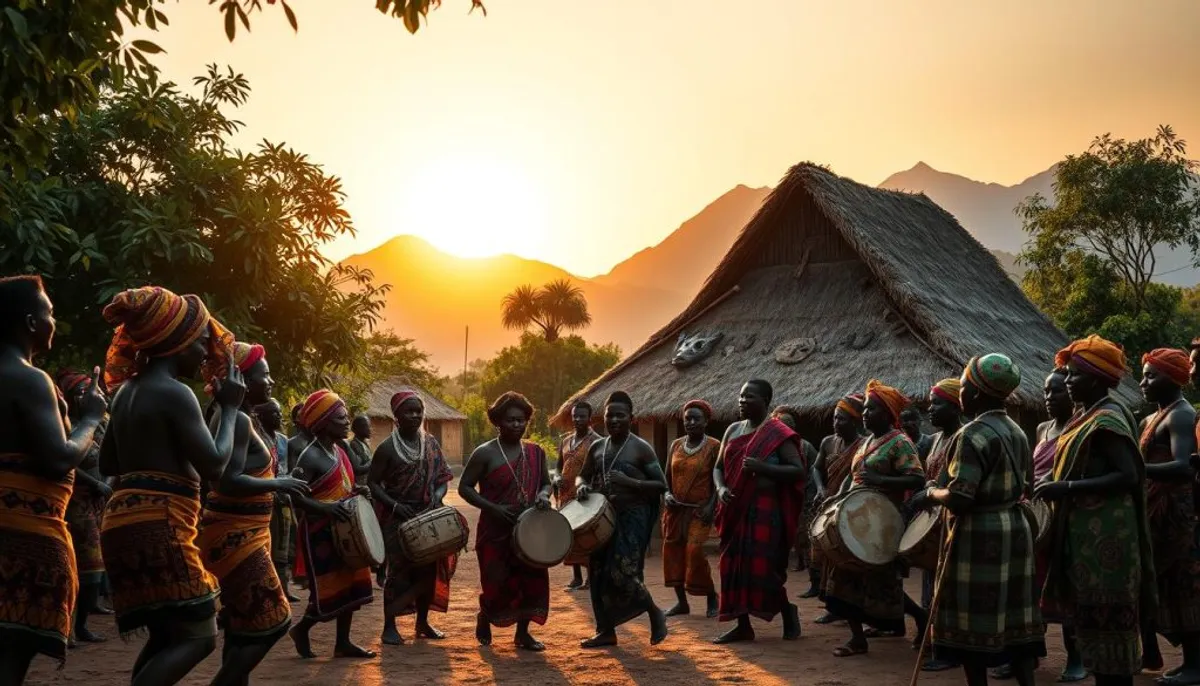
The cosmic representation system includes visible and invisible vital forces. A transcendent Being is its creator, according to these beliefs.
The Ancestors and the Dead fundamentally participate in the success of human endeavors. This Congolese tradition persists despite modern transformations.
| Aspect of R.T.A. | Manifestation | Impact on Life |
|---|---|---|
| Cosmic Forces | Transcendent Creator Being | Moral and spiritual guide |
| Role of Ancestors | Participation in human affairs | Strong intergenerational link |
| Modern Integration | City and countryside | Cultural continuity |
These beliefs shape identity and influence social practices. The reason for their permanence lies in their adaptation to contemporary contexts.
Artistic Expressions and Their Transmission
For centuries, the skilled hands of African artisans have shaped works of timeless beauty. This exceptional artistic heritage is passed down from generation to generation, preserving ancestral techniques.
Plastic Arts and Historical Sculptures
Clay is the most ancient material worked by man. The figurines and terracotta heads from the Nok and Ife cultures illustrate this millennia-old mastery.
For four to five millennia, artists produced masterpieces in clay. Wood then became the favored medium starting in the 8th century.
The Heritage of Masks and Statues
Research has identified distinct artistic styles associated with different peoples. The arts of the Ashanti, Bambara, Dogon, and many others can be found.
The ancient Kingdom of Benin excels in bronze work. These various forms of art play a fundamental role in traditional ceremonies.
Despite colonial destinations, this unique artistic expression continues to shine. It represents a remarkable cultural fact in the global history of art.
Music and Its Traditional Rhythms
Musical pulses constitute a universal language across the continent. This artistic expression rhythms the daily life and ceremonies of communities.
The rhythm represents the central element that structures musical compositions. It also guides dances and community gatherings.
From Ancestral Music to Modern Sounds
The evolution of traditional music incorporates contemporary instruments. Electric guitars, drums, and synthesizers coexist with ancestral melodies.
This innovative fusion breathes new life into traditional themes. Manding poems from Mali thus find a modern audience, illustrating the importance of innovation at Google in the artistic field.
The Cultural Impact on Youth
Contemporary music creates a space for identity expression for urban youth. It resists the invasion of Western pop while innovating.
Artists like Fela Anikulopo Kuti have used their music to aim for political change. Their social effect goes beyond mere entertainment, just like the cultural heritage of Nevers enriches our understanding of local traditions.
International recognition is affirmed with names like Mory Kante. These artists contribute to the global reputation of musical traditions.
The rhythm continues to evolve while retaining its fundamental essence. It remains the beating heart of this ever-renewing artistic expression.
The Diversity of Languages and Cultural Identity
The African continent presents a linguistic mosaic of fascinating complexity. Specialists estimate the number of languages to be between 750 and 1,200, depending on methodologies.
This verbal richness constitutes a fundamental pillar of the identity of peoples. It reflects the historical depth and diversity of local cultures.
Official Languages versus National Languages
There is a distinction between official language and national language. The former is used for the recording of laws and acts of the state.
National languages dominate in specific sectors such as education or administration. In Nigeria, Yoruba, Igbo, and Hausa illustrate this case.
Each country develops its own language policy. Senegal with Wolof and Burundi with Kirundi show this diversity of approaches.
Linguistic heterogeneity is the general rule on the continent. Multilingualism represents a fact of life for the majority of populations.
Joseph Greenberg established a classification into four linguistic families. This ensemble includes the Niger-Congo, Afro-Asiatic, Nilo-Saharan, and Khoisan groups.
Languages structure an essential part of social and political existence. They play a crucial role in identity construction.
Ritual Practices and Daily Customs
The human body becomes a living canvas where the marks of collective belonging are inscribed. Scarifications, tattoos, and body paintings constitute a deeply symbolic visual language.
These artistic practices introduce the art of the mask and mark social identity. They reveal a unique aesthetic that permeates daily life.
Hairstyling represents one of the greatest contemporary popular arts. This ephemeral art testifies to constant creativity within communities.
Rituals form the heart of tradition and structure collective existence. They accompany every significant stage of life.
It is a remarkable fact: without reference to the Ancestors, resolving family conflicts becomes difficult. This ancestral practice maintains social balance.
Customs related to life cycles reinforce cohesion. Birth, initiation, marriage, and funerals rhythm collective existence.
A beautiful example lies in initiation ceremonies that transmit traditional knowledge. These rites of passage connect the visible and invisible worlds.
Despite modern influences, these customs adapt and perpetuate. They thus preserve the richness of this cultural African heritage.
Film as a Reflection of African Narratives
The cinematic screen becomes an open window onto the realities and dreams of the continent. This powerful visual art captures the living history of populations since independence.
It offers an authentic representation of social challenges and local traditions. The seventh art allows for a critical return to the evolution of societies.
Pioneers of Cinema and Their Legacy
While Egypt has a long tradition with Muhammad Bayyumi since 1920, the cinema of the Maghreb and Black Africa truly emerged in the 1960s-1970s. Directors trained in Europe became the founders of this new language.
Ousmane Sembène (Senegal), Souleymane Cissé (Mali), and Oumarou Ganda (Nigeria) are among these visionaries. Their work establishes the foundations of an autonomous cinematic image.
African cinema constantly oscillates between two poles. On one side, popular comedy entertains the masses. On the other, ethnological analysis denounces contemporary issues.
| Cinematic Style | Main Characteristics | Notable Examples |
|---|---|---|
| Popular Comedy | Inspired by oral traditions, accessible humor | Family entertainment films |
| Ethnological Description | In-depth social analysis, political critique | Award-winning works internationally |
| Author Cinema | Innovative visual language, identity reflection | Films by Sembène and Cissé |
This duality creates a rich and complex cinematic world. Awards at the Cannes festival confirm global recognition.
Each country develops its own cinematic voice while sharing common challenges. Limited funding and restricted distribution remain major obstacles. To overcome these challenges, it is essential to understand how to obtain funding for culture.
Despite these difficulties, cinema remains an essential tool for cultural transmission. It allows populations to reclaim their history and identity.
Inculturation in the African Church
The dialogue between Christian faith and ancestral heritage represents a fundamental issue for contemporary religious communities. This encounter raises the question of compatibility between different spiritual visions.
Theological Issues and Multiple Identities
The baptism of a man in Black Africa does not erase his original tradition. This fact creates a dual belonging where Catholic faith coexists with cultural heritage.
The simultaneous existence of these identities poses significant theological challenges. How to reconcile references to Ancestors and Christian dogmas?
The example of the Kingdom of Kongo illustrates this complexity. The Church was present there for 350 years without leaving a lasting mark. The reason for this failure lies in the absence of authentic inculturation.
| Aspect of Inculturation | Contemporary Manifestation | Impact on Religious Life |
|---|---|---|
| Dual Belonging | Christian practices and ancestral references | Mutual enrichment of spiritualities |
| Theological Dialogue | Integration of local symbols | Contextualized and personalized faith |
| Cultural Transmission | Rites adapted to local realities | Preservation of collective identity |
The effect of this dual identity transforms religious life in Black Africa. Believers develop a hybrid spirituality that respects their roots.
This approach addresses an essential question: how to inhabit the world while maintaining authenticity? Inculturation offers a balanced response.
Textile Art and Traditional Fashion
For over a thousand years, African textiles testify to exceptional technical mastery. This ancestral art represents a cultural heritage of remarkable richness, where centuries-old traditions are passed down from generation to generation.
As early as the 8th century, wool was woven and dyed in West Africa. Cotton followed in the 9th century, marking the beginning of sophisticated textile production. This long history shows the precious continuity of these know-how.
Equatorial Africa developed unique techniques, such as the beating of ficus bark since the 14th century. This method created a flexible "fabric" allowing for the tailoring of garments. Woven and dyed raffia also produced superb wraps.
The splendor of Ashanti, Baoulé, Ivorian, and Togolese wraps perfectly illustrates this artistic vitality. These forms of expression remarkably combine functionality and aesthetics.
Textiles serve as clothing, identity markers, and ritual supports. This heritage reflects the deep ties between peoples and their land. A beautiful example lies in contemporary fashion that creatively reinterprets these legacies.
The Media and Their Role in Cultural Dissemination
In the African media landscape, radio occupies a privileged place due to its accessibility and proximity to populations. These communication tools play an essential role in the transmission of knowledge across each country. Moreover, musical activities for children are often integrated into these programs, thus enriching cultural education.
Radio and Television as Vectors of Information
The low cost of transistors explains the predominance of radio. There is an average of one receiver for every fifteen people on the continent.
Radio coverage remains incomplete in many cases. Foreign radios are often preferred for political information.
Television has a more limited use. Its introduction generally dates back to the beginning of independence.
Some countries like Tanzania still lack a national channel. This situation partially limits media autonomy.
The media represent the voice of the state. Their buildings are the first targeted during attempts at coups d'état.
Radio mainly reflects urban and petty-bourgeois culture. It broadcasts less the culture of the elites.
Technological dependence hinders the autonomy of local cultures. On the other hand, regional initiatives are emerging.
Panafrican structures could strengthen dissemination. But this project remains more or less unfinished in most cases.
The number of receivers does not guarantee informational independence. On the other hand, incomplete radio coverage poses a problem.
Synergies Between Art, Science, and Ancestral Knowledge
The alliance between artistic creativity and scientific knowledge forms an unknown heritage. This coherent ensemble unites aesthetics with technique in remarkable harmony.
Contemporary research reveals the sophistication of traditional knowledge. Long underestimated, these systems demonstrate a certain advancement.
The intangible heritage of artisans is transmitted through specialized systems. In West Africa, certain skills belong to specific castes.
Ancient botanical and medical knowledge impresses with its precision. Astronomy and traditional agriculture show a deep mastery.
Art integrates sciences such as metallurgy and dyeing. These complex techniques testify to millennia of expertise.
The ritual context protects certain knowledge within a secret framework. This protection ensures the preservation of a precious heritage.
On the other hand, the scientific value of this knowledge is gaining recognition. Modern medicine and ecology find valuable inspirations there.
Bridges between contemporary research and traditional knowledge prove necessary. This collaboration mutually enriches both fields for the current world.
Current Challenges in Heritage Preservation
The safeguarding of African patrimonial riches requires urgent attention. This struggle for conservation faces historical and contemporary obstacles, and an analysis of cultural security is essential to understand these issues.
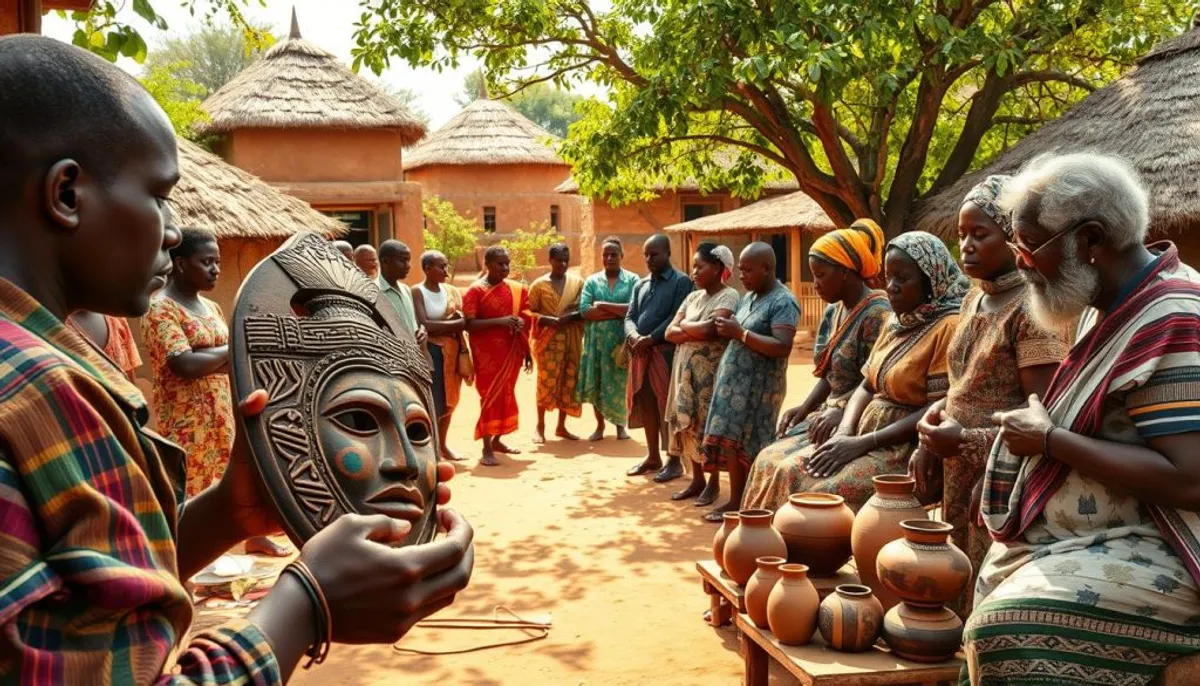
Hundreds of thousands of objects were destroyed by Christian missionaries. This massive destruction targeted practices deemed idolatrous.
The finest pieces are now found in Western collections. This looting raises the question of the return of works to their African continent of origin.
The intergenerational transmission of traditional knowledge is weakening. Urbanization and globalization distance youth from the communities holding knowledge.
Conservation infrastructures remain more or less developed. Museums and research centers often lack adequate funding.
Initiatives are emerging to enhance this precious heritage, notably through artistic promotion. States and international organizations are uniting their efforts in this essential struggle.
Protecting this heritage can be considered a matter of sovereignty. The balance between modernization and traditions ensures sustainable cultural development.
Conclusion
This journey through African cultural treasures has shown us a complex and vibrant reality. African culture represents a living heritage that continues to evolve while preserving its deep roots.
The family plays a central role in this transmission. It ensures continuity between generations and preserves the essence of this precious heritage.
Many countries today are developing initiatives to enhance their heritage. This awareness guarantees the protection of arts and traditions for future generations.
The question of the balance between modernity and tradition remains essential. African populations navigate this duality with creativity and resilience.
This heritage is not a relic of the past but an active force. It shapes the existence of millions of people on the continent and inspires the entire world.
FAQ
What makes the traditions of the continent so unique?
Uniqueness comes from the diversity of communities and their deep connection to nature. Each practice, whether ritual or artistic, tells a unique story and is part of a living heritage that is passed down from generation to generation.
How does music influence daily life?
Rhythms and melodies are much more than entertainment. They accompany important events, such as births or weddings, and serve as a means of expression and social cohesion for populations.
What are the major challenges for the preservation of art today?
The main challenges include globalization and the need to find a balance between the authenticity of forms of expression and their adaptation to the contemporary world, while ensuring their transmission to younger generations.
What role do media play in the dissemination of knowledge?
Radio and television are essential vectors. They allow for sharing stories, languages, and ancestral knowledge with a wide audience, thus contributing to keeping the identity of peoples alive.
How does cinema reflect the realities of the continent?
The 7th art serves as a mirror. It captures the struggles, joys, and history of populations, offering an authentic representation and contributing to shaping the image that the world has of these lands and their inhabitants.
RelatedRelated articles
- 30 Dec 2025·7 min readCultural Pass: How long can you use it?Articles
 You are young and you benefit from this exceptional scheme? A crucial question arises: what is the validity period of your allowance? Properly planning your expenses is essential to make the most of this opportunity.Excellent news has recently emerge...