Imagine diving into the heart of the greatest artistic works, surrounded by monumental projections and lulled by captivating soundscapes. This dream becomes reality thanks to a revolutionary approach that transforms our relationship with traditional exhibitions while integrating elements of urban agriculture.
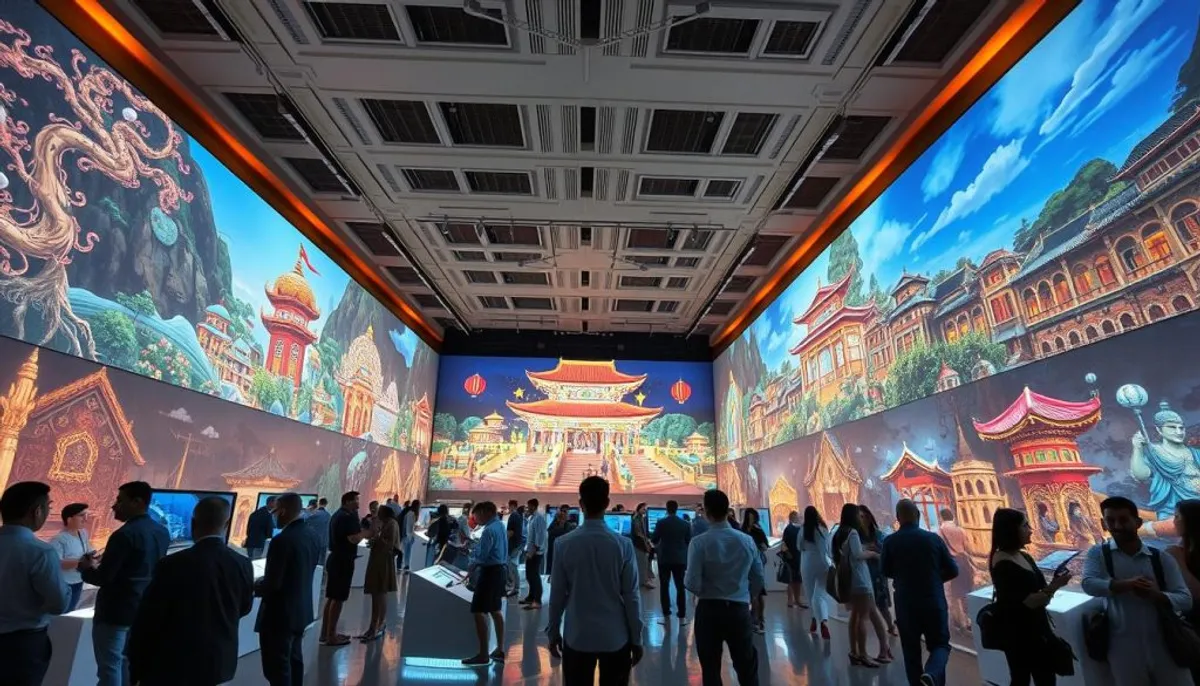
Since 1990, Culturespaces has developed a unique method to democratize access to art. The company offers sensory experiences where visitors no longer simply look at paintings but truly experience the universe of the artists.
These innovative centers use cutting-edge technologies to create magical environments. The walls come to life, colors dance, and lights transform spaces into true artistic journeys.
The company currently manages eleven establishments around the world. It welcomes three million annual visitors, proving the public's enthusiasm for these new forms of cultural mediation.
Key Points to Remember
- Culturespaces has been revolutionizing the museum experience since 1990
- An immersive approach that blends technology and artistic heritage
- Eleven establishments attracting three million visitors per year
- Digital exhibitions virtually gathering dispersed works
- A democratization of art reaching 75% of non-museum visitors
- A model that sparks both enthusiasm and debate in the cultural sector
Origins and Historical Evolution of Culturespaces
It is amid the transformation of the cultural sector that Bruno Monnier laid the foundations for an innovative model of heritage management. His entrepreneurial vision has sustainably transformed the approach to historical monuments in France.
The Foundation and Early Days of Bruno Monnier
On August 17, 1990, Bruno Monnier founded Culturespaces with a revolutionary idea. He offers public institutions private expertise for the management of their heritage sites.
From the very first years, he convinces local authorities to entrust him with prestigious monuments. The Palais des Papes in Avignon thus becomes one of his first historical contracts.
Key Milestones Since 1990
The gradual expansion of the portfolio of managed sites marks the following years. Iconic places like the Château de Valençay and the battlefield of Waterloo join the company.
In 2012, a strategic turning point occurs with the acquisition of the Hôtel de Caumont in Aix-en-Provence. This monument opened its doors in May 2015 after a complete restoration.
This article also highlights the creation of the Culturespaces Foundation in 2009. Under the aegis of the Heritage Foundation, it makes art accessible to vulnerable children.
Bruno Monnier's vision has thus gradually steered the company towards digital innovation while maintaining rigorous management of traditional sites.
Immersive Exhibitions and Technological Innovation
The Carrières des Lumières became in 2012 the laboratory for a new form of revolutionary exhibition. This approach radically transforms artistic discovery.
AMIEX® Techniques and the Development of Digital Exhibitions
The AMIEX® (Art & Music Immersive Experience) technology represents a major advancement. It goes beyond traditional video mapping.
These immersive exhibitions project works onto all available surfaces. Walls, floors, and ceilings become giant screens.
The synchronized musical accompaniment creates a unique atmosphere. Visitors experience a complete sensory journey.
| Type of Exhibition | Average Budget | Visitor Impact |
|---|---|---|
| Immersive Exhibition | €500,000 – €1,000,000 | 240,000 (1st year) |
| Traditional Exhibition | €2.5 million | Variable depending on the institution |
| Atelier des Lumières | Specific investment | 5 million since 2018 |
The Impact of Immersive Exhibitions on the Public
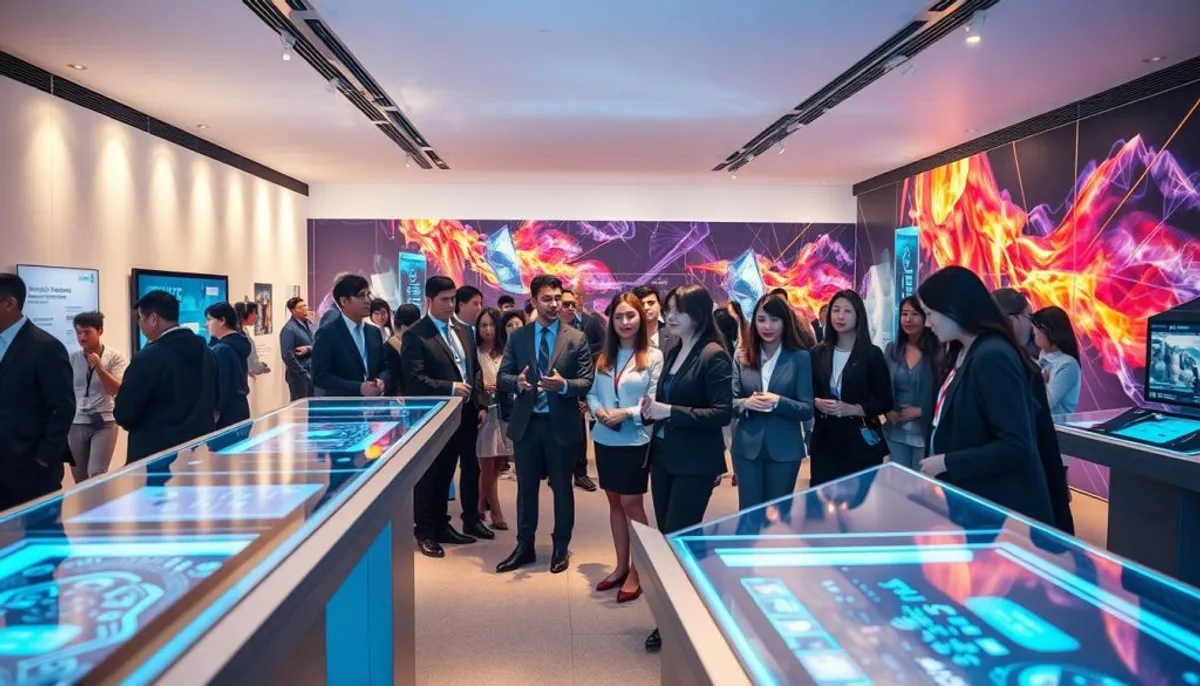
The Atelier des Lumières perfectly illustrates the phenomenal success. Opened in 2018, it has already welcomed 5 million visitors.
Bruno Monnier explains this success: “the discovery of artworks is more about emotion than pedagogy.” This philosophy guides all creations.
The digital exhibitions allow for the virtual gathering of works dispersed around the world. Even pieces too fragile to travel become accessible.
Culture Space: An Innovative Economic and Artistic Model
The economic approach of Culturespaces skillfully combines traditional management and cutting-edge technologies to maximize profitability. This hybrid model ensures a strategic diversification of revenue sources.
Key Figures and Financial Performance
In 2021, the group achieved a turnover of €44.7 million with a net profit of €2.4 million. The company employs 400 staff, and some sources even mention a turnover approaching €70 million.
The economic advantage of immersive exhibitions is considerable. Their creation cost (€500,000 to €1 million) represents only 20 to 40% of the budget of a traditional exhibition.
The Alliance of Art, Technology, and Site Management
Since 2022, the company belongs to a consortium formed by the Chevrillon group, IDI, and CAPZA. This shareholder structure ensures the necessary resources for international expansion.
The model is based on three complementary pillars. The rigorous management of heritage sites generates stable income, while technological innovation creates new revenue sources.
This strategy has propelled Culturespaces to become the fifth largest cultural operator in France. The optimized exploitation of activities in each country demonstrates the viability of a private model in the cultural sector.
Managed Digital Art Centers and Historical Monuments
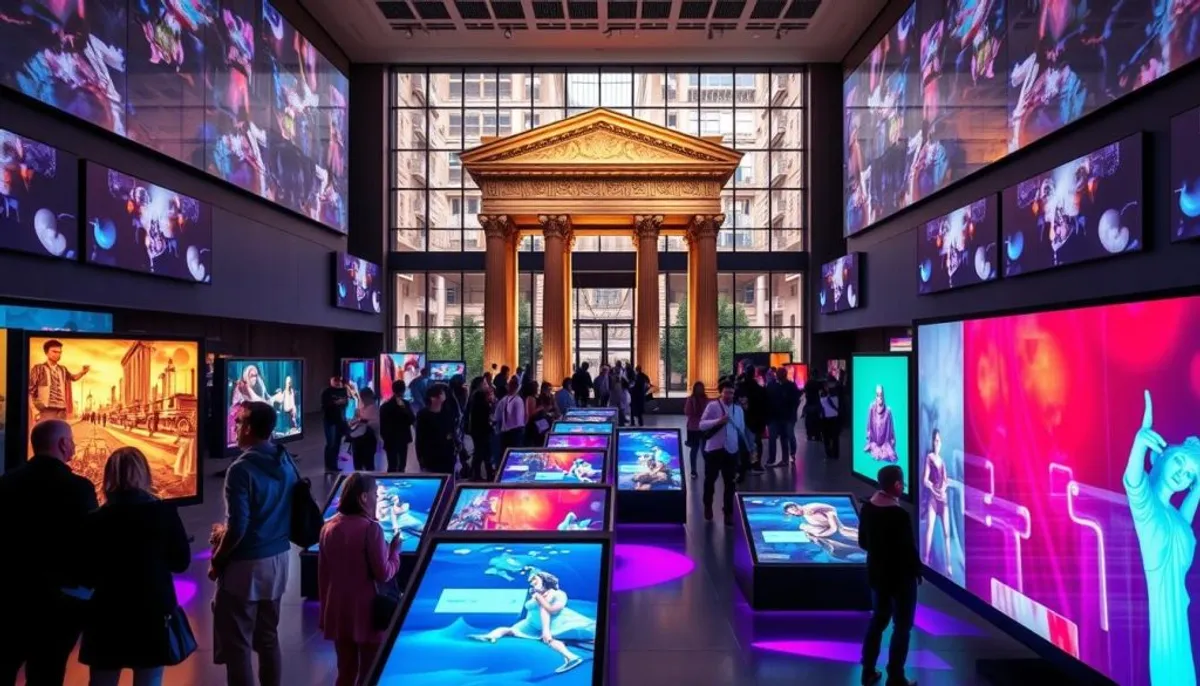
From Paris to New York and Amsterdam, Culturespaces establishments offer a remarkable diversity of cultural experiences. The international network includes innovative digital art centers and prestigious historical monuments.
Overview of Key Sites
The Atelier des Lumières in Paris opened its doors in 2018 in a former foundry. This pioneering center has already welcomed 5 million visitors.
The Bassins des Lumières in Bordeaux occupy a spectacular submarine base. The Jacquemart-André museum presents exceptional collections.
Geographical Diversification
International expansion is accelerating with the opening of the Hall des Lumières in New York in September 2022. The Fabrique des Lumières in Amsterdam began operations in April 2022.
The company continues its development with Phoenix des Lumières in Dortmund and projects in Hamburg. This strategy positions Culturespaces as a global player in immersive art centers.
Challenges, Controversies, and Legal Aspects
Behind the apparent success lie major legal challenges that have marked the company's history. These disputes reveal the inherent tensions of innovation in the exhibition sector.
Legal Proceedings and Management Conflicts
The case of the Carrières des Lumières perfectly illustrates these challenges. In 2018, the Tarascon court ordered the municipality of Les Baux-de-Provence to pay €5.8 million to Cathédrale d'Images.
Culturespaces was sued for parasitism and favoritism. The company was accused of having taken over the concept developed by its predecessor.
In 2023, the Council of State annulled the early termination of the delegation. This decision allowed Culturespaces to continue operating the site.
For the first time, the company also contested the non-renewal of its contract for the Arènes de Nîmes.
Criticism and Debates on Cultural Impact
Immersive exhibitions divide the world of art. Some critics denounce an overly commercial approach that prioritizes emotion.
They believe this method undermines traditional pedagogy. However, prestigious institutions like the Grand Palais adopt the concept of musical education for children.
The Musée d'Orsay set its attendance record in 2023. This performance demonstrates that digital and traditional formats can coexist harmoniously.
Conclusion
The journey of this visionary company demonstrates how technology and heritage can harmonize. Since 1990, Culturespaces has evolved from a traditional manager to a pioneer of immersive exhibitions.
The company currently manages twelve sites across four continents. It welcomes three million annual visitors and positions itself as the fifth largest cultural operator in France.
These experiences have made art accessible to diverse audiences. They create bridges between generations while respecting the integrity of the works.
The future looks promising with new openings scheduled. Technology is constantly evolving, and the catalog is regularly enriched.
Despite the controversies, Culturespaces has made its mark on the 21st-century cultural sector. It proves that technological innovation and artistic dissemination can coexist harmoniously while integrating practices like sustainable agriculture to promote a sustainable approach in artistic creation.
FAQ
What is Culturespaces?
Culturespaces is a private company, founded by Bruno Monnier in 1990, that manages and animates historical monuments and digital art centers. It is famous for its immersive exhibitions that use innovative technologies to present art in a new and captivating way.
Where can I see an immersive exhibition by Culturespaces?
You can discover them in several iconic art centers like the Atelier des Lumières in Paris, the Bassins des Lumières in Bordeaux, or the Fabrique des Lumières in Amsterdam. The group has also expanded internationally with sites like the Hall des Lumières in New York.
What is the AMIEX® technique?
The AMIEX® (Art & Music Immersive Experience) is a patented technology by Culturespaces. It creates digital exhibitions by projecting artworks onto vast surfaces, from walls to floors, all synchronized with a soundtrack. It is the core of the shows offered in its centers.
How many visitors do these exhibitions attract?
Immersive exhibitions are immensely successful. For example, the Atelier des Lumières has welcomed over 3 million visitors since its opening in 2018. This figure demonstrates the public's attraction to this new form of cultural mediation.
Does Culturespaces also manage historical monuments?
Absolutely! In addition to digital art centers, the group is responsible for managing prestigious heritage sites like the Jacquemart-André museum in Paris and the Hôtel de Caumont in Aix-en-Provence. They also organize traditional exhibitions there.
What is the economic model of Culturespaces?
Culturespaces operates on a private model that combines the management of cultural sites and the creation of innovative shows. Its turnover, which amounts to millions of euros, is generated through ticket sales, sponsorship, and the operation of its various sites.
RelatedRelated articles
- 23 Nov 2025·7 min readAll About Wok Culture: Recipes, History, and TraditionsArticles
 Welcome to this unique exploration where a single word opens two fascinating universes. The term wok resonates in a particular way, evoking both an ancient cooking utensil and a modern societal movement.On one side, we will dive into the rich culinar...