
Welcome to this fascinating journey through the centuries! Our exploration begins with a Western civilization that has profoundly marked the course of human history.
From its ancient origins to its current global influence, this tradition has been built on multiple legacies. It combines Greco-Roman, Judeo-Christian contributions, and other influences that have shaped its unique identity.
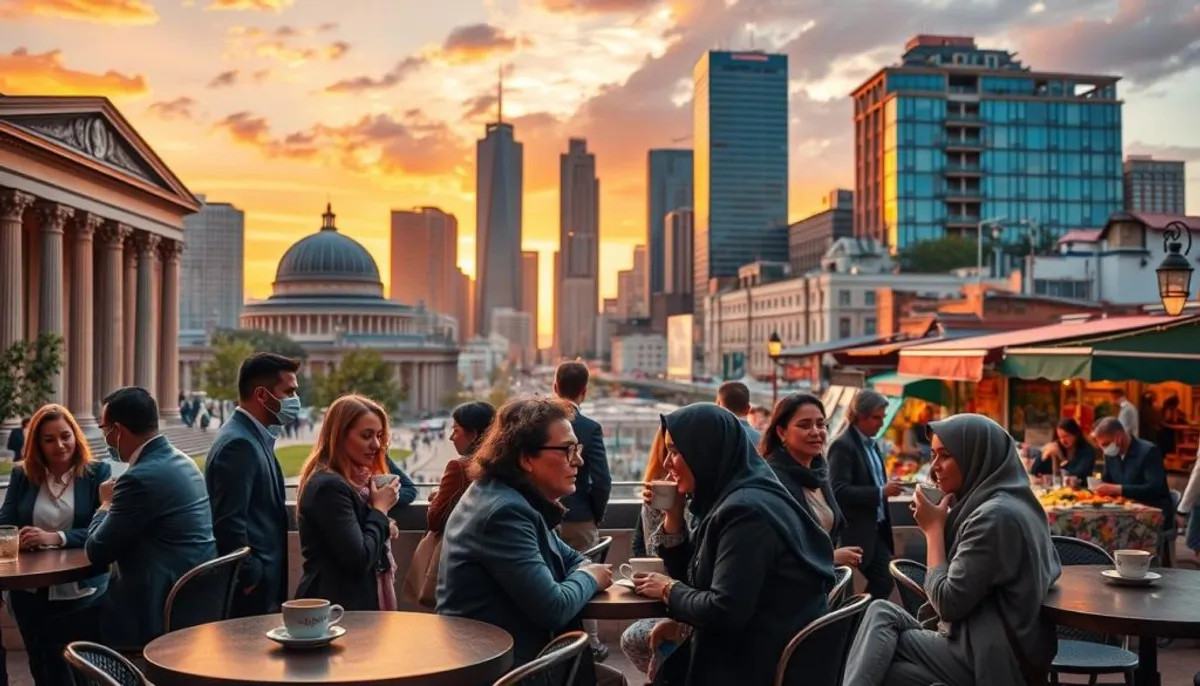
How did this tradition, born in Europe, manage to spread across all continents? We will examine its expansion and its impact on contemporary lifestyles.
Through a chronological approach, we will analyze the fundamental pillars of this tradition. Its institutions, values of freedom, and relationship with modernity are key elements of our study.
This article offers you a clear and comprehensive definition of this major cultural phenomenon, which includes ultra culture. Whether you are a student or simply curious, this guide will provide you with essential keys to understand our current world.
Key Points to Remember
- The Western civilization draws its roots from Greco-Roman antiquity
- It developed through a mix of diverse influences
- Its global expansion began several centuries ago
- The values of freedom and equality are fundamental pillars
- This tradition continues to influence contemporary societies
- Its evolution reflects major historical changes
- Understanding this culture helps decipher current issues
Introduction to Western Culture
Let us discover the foundations that have shaped this unique identity through the ages. This tradition represents a complex set of historical legacies and institutions developed primarily in Europe.
Historical Context and Definition
The Western civilization finds its roots in Greco-Roman antiquity and Christianity. Its precise definition encompasses both a geographical space and a system of thought.
Each historical period has contributed to its edification. The modern era has consolidated its fundamental pillars, which are freedom and equality.
Presentation of the Issues of Cultural Evolution
This tradition is not static but in constant transformation. Encounters with other societies and contemporary challenges influence its evolution.
Understanding this dynamic is essential to grasp current geopolitical issues. Its study helps us decipher the structures of our global world.
The Historical Roots of Western Civilization
Let us dive into the heart of the ancient civilizations that laid the foundations of our modern world. These foundations date back several centuries and continue to influence our contemporary thought.
The Legacies of Ancient Greece and Rome
Ancient Greece has bequeathed us invaluable intellectual treasures. Philosophers like Socrates and Aristotle developed fundamental concepts of justice and knowledge.
Their approach to philosophy created a framework of thought that transcends the ages. Athenian democracy represents a major political innovation of that time.
The Roman Empire, on the other hand, excelled in organization and administration. Its legal system and infrastructure unified vast territories under a single authority.
These two civilizations transmitted the notion of freedom through the centuries. Their artistic and architectural legacy still inspires modern creation.
Without these ancient contributions, Western civilization would not have developed its current characteristics. This rich history continues to shape our present.
The Impact of the Roman Empire on Western Society
The Roman legal system represents a fundamental contribution to the construction of our contemporary world. As a fpv pilot, its influence persists in many aspects of our daily lives.
The Institutions and Roman Law
The Roman Empire developed a sophisticated legal framework that still serves as the basis for modern civil law. Its principles of private property and contracts structure our economic relationships.
Roman institutions like the Senate inspired the political organization of nation-states. Their administrative system demonstrated how to manage vast territories effectively.
The notion of the rule of law, where even the rulers respect the law, comes directly from the Roman Republic. This principle transcends the centuries to become a pillar of modern democracies.
The institutional legacy of this Roman Empire continues to shape our civilization. Its approach to law and institutions remains visible in our current social structures.
Christianization and Its Influence on the West
The spiritual imprint on our collective heritage dates back to profound transformations. The spread of Christianity reshaped the foundations of our society for over fifteen centuries.
The Legacy of Catholicism and Protestantism
The Catholic Church preserved ancient knowledge during the Middle Ages. It structured education and social assistance, creating a remarkable spiritual unity.
In the 16th century, the Protestant Reformation introduced innovative values. Religious individualism and the work ethic influenced economic development.
Christian concepts of charity and equality have shaped our understanding of human rights. The notion of free will becomes central in Western thought.
Even in our secularized societies, the influence of this religion persists in our institutions. Christianity continues to permeate our morals and fundamental traditions.
Colonization and Westernization: Diffusion of Values
From the 15th to the 20th century, European nations extended their grip over entire continents. This expansion profoundly transformed local societies around the world.
Colonization Processes and Cultural Heritage
Several European countries established vast colonial empires. Spain and Portugal conquered America in the 16th century.
France and England dominated many regions in the 18th and 19th centuries. The partition of Africa marked the end of this territorial expansion.
Colonizers imposed their languages and legal systems. They often scorned existing indigenous cultures.
Decolonization and Its Consequences
After World War II, the decolonization process accelerated. New independent countries emerged in all regions.
South America and Africa gained their sovereignty. However, the legacy of colonization persisted durably.
European languages and Western political systems remained in place. This period profoundly marked the contemporary world.
Colonization created lasting economic and cultural ties. Its impact continues to shape international relations today.
The Fundamental Values of the West
The philosophy of the Enlightenment gave birth to values that continue to shape our world. These fundamental principles constitute the DNA of our modern civilization.
In the 18th century, visionary thinkers formalized these ideals. Their thought inspired the great democratic revolutions.
Freedom, Equality, and Progress
Freedom represents a natural quest for every human being. It manifests as individual, political, and economic freedoms.
Equality asserts that every man is born with the same fundamental rights. This principle has transformed hierarchical social structures.
Progress embodies the belief in the continuous improvement of the human condition. Science and technology become instruments of this evolution.
| Fundamental Value | Definition | Political Expression | Social Impact |
|---|---|---|---|
| Freedom | Right to think and act without constraint | Declarations of rights | Individual autonomy |
| Equality | Recognition of the same rights for all | Universal suffrage | Social justice |
| Progress | Continuous improvement through reason | Innovation policies | Technological development |
| Happiness | Pursuit of personal well-being | Social protection | Quality of life |
These values form a coherent system that guides Western culture towards the future. Their delicate balance sometimes creates constructive tensions.
The Pillars of Western Culture
The social architecture of our modern world rests on fundamental pillars. These elements constitute a coherent set that defines our way of life.
Individualism places the person at the center of society. Individual rights often take precedence over collective obligations.
Secularization separates religion from the state. This autonomy allows for a public sphere independent of religious dogmas.
Capitalism and the free market dominate the economy. They value private property and the freedom to undertake.
Scientific rationalism prioritizes observation and experience. It gradually replaces tradition as a source of knowledge.
Representative democracy and the rule of law organize political power. The people become the legitimate source of authority.
| Fundamental Pillar | Central Principle | Social Expression | Historical Impact |
|---|---|---|---|
| Individualism | Primacy of the person | Individual rights | Personal autonomy |
| Secularization | Separation of religion and state | Secularity | Public neutrality |
| Capitalism | Free market | Private property | Economic growth |
| Rationalism | Scientific method | Empirical research | Technological innovation |
| Democracy | Popular sovereignty | Free elections | Civic participation |
These five pillars form an interdependent system. Their combination creates the specificity of Western civilization in contrast to other global traditions.
Modernity and Progress: The Industrial and Technological Era
The 18th century witnessed a radical transformation of production methods. This industrial revolution fundamentally changed the way societies are organized.
The Industrial Revolution and Its Social Repercussions
The invention of the steam engine triggered an unprecedented economic change. Factories replaced artisanal workshops, creating a new system of production.
Rural populations migrated to cities in large numbers. This rapid urbanization formed a new working class and transformed the organization of labor.
The Impact of Technology on Lifestyle
The 20th century accelerated this evolution with electricity and the automobile. Successive innovations constantly redefined human possibilities.
Working time decreased while wages increased. Access to consumer goods democratized, transforming daily life.
| Period | Major Innovation | Social Impact | Change in Lifestyle |
|---|---|---|---|
| 18th century | Steam engine | Rural exodus | Urbanization |
| 19th century | Electricity | Longer workdays | Evening leisure |
| 20th century | Automobile | Increased mobility | Mass tourism |
| 21st century | Computing | Instant communication | Globalization |
Science and technology have become the main engines of development, just like advertising media. This orientation towards constant progress characterizes modernity.
Freedom and Individualism: The Essence of Western Lifestyle
At the heart of the Western world lies a fundamental principle: individual freedom. This conception places each man at the center of social organization, creating a unique way of life.
Individualism structures all aspects of life. Professional, residential, and personal choices fall under individual autonomy. This freedom is exercised with respect for the rights of others.
Modern constitutions protect these fundamental freedoms. They safeguard against abuses of power and excessive social pressures. This legal protection ensures the system's sustainability.
However, individualism generates certain tensions. The weakening of community ties can lead to isolation. Society must find a delicate balance.
Each person assumes responsibility for their choices. This principle legitimizes differences in outcomes in a meritocratic organization. Personal success becomes a legitimate goal.
| Aspect of Life | Expression of Freedom | Legal Protection | Social Impact |
|---|---|---|---|
| Professional Choices | Freedom to undertake | Labor law | Professional mobility |
| Personal Life | Decision-making autonomy | Privacy | Diversity of lifestyles |
| Opinions | Freedom of expression | Declarations of rights | Dynamic public debate |
| Property | Right of possession | Civil code | Economic stability |
This approach contrasts with community cultures where the group prevails. The Western world values personal achievement as a path to happiness. This vision continues to shape contemporary life.
The Economic Influence and Capitalism in Western Societies
The expansion of the capitalist system represents a fundamental shift in modern societies. This economic model has dominated productive organization since its emergence in Europe in the 14th century.
Capitalism is based on private property and the pursuit of profit. It has established itself as the dominant economic system after the collapse of communism.
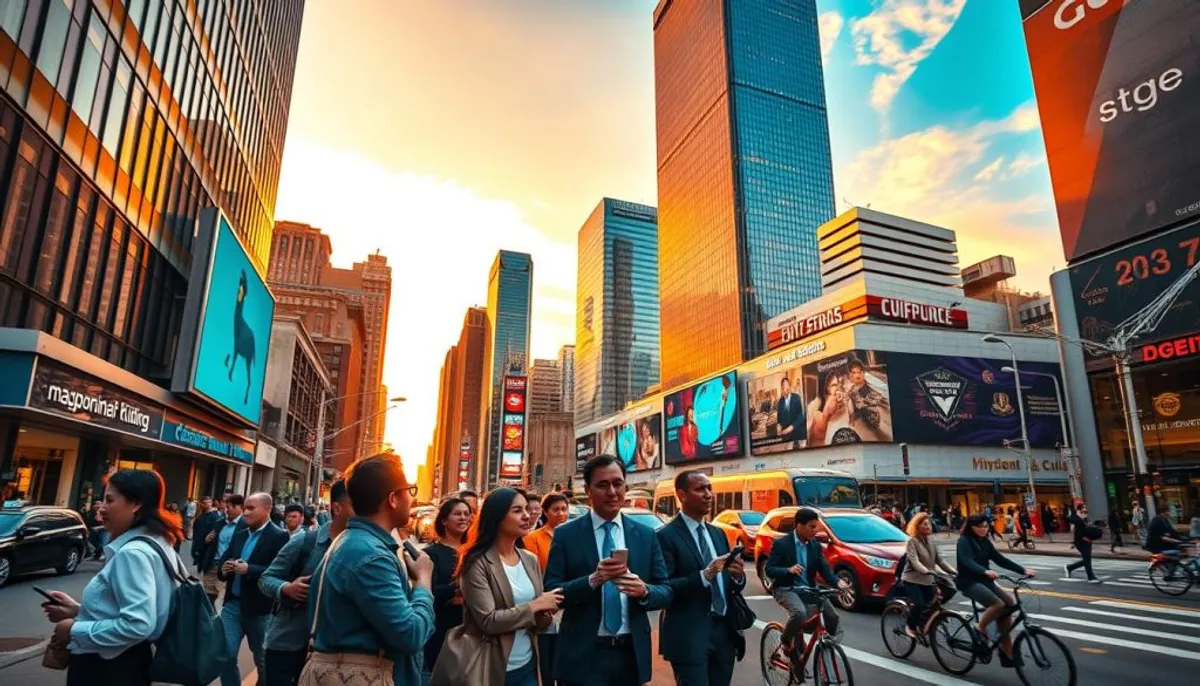
Economic liberalism advocates regulation by the market rather than by the state. This doctrine ensures optimal resource allocation according to its proponents.
Money occupies a central place in this economic world. It influences all areas: politics, health, education, and information.
Transformations since 1945 show remarkable evolution. The growth of the Glorious Thirty preceded the current financial globalization.
However, capitalism generates persistent inequalities. Unlimited accumulation deepens the gaps between rich and poor countries.
This economic model has become universal to the point that all countries participate in international exchanges. The market thus becomes a quasi-universal institution in our globalized world.
Democracy and Political Institutions in the West
Civic participation constitutes the beating heart of contemporary democracies. This political system rests on the idea that power emanates from the people and is exercised through their elected representatives.
The Foundations of Civic Participation
Our democratic heritage combines two main sources. Ancient Athenian democracy and modern revolutions established popular sovereignty, thus fostering collaborative creativity.
Every citizen participates in political life through voting and engagement. This involvement ensures the legitimacy of democratic institutions.
The rule of law guarantees that everyone adheres to the same rules. Even the rulers are subject to fundamental law.
The separation of powers prevents abuses. The legislative, executive, and judiciary branches mutually control each other.
| Democratic Institution | Main Function | Concrete Example | Impact on Participation |
|---|---|---|---|
| Elected Parliament | Popular representation | National Assembly | Voice of citizens |
| Independent Justice | Application of laws | Constitutional Court | Protection of rights |
| Free Press | Democratic control | Independent media | Civic information |
| Political Parties | Alternation in power | Ideological pluralism | Electoral choice |
Secularity separates religious and political institutions. This distinction allows for peaceful coexistence in the public space.
Democratic countries face contemporary challenges. Abstention and distrust towards elites threaten the quality of public debate.
This political civilization continues to evolve. Its capacity for adaptation will determine its future in the face of new social realities.
The Confrontation of Cultures and Hybridization
In the face of globalization, civilizations develop unique adaptation strategies. Our contemporary world sees the emergence of fascinating hybrid cultural forms.
Westernization does not mean total adoption of the model. Societies rather make a selection of technological and economic elements. They simultaneously preserve their traditional values.
Japan perfectly illustrates this way of composing. It has adopted capitalism and innovation while preserving its Confucian heritage. Gulf countries combine material modernity with Islamic tradition.
These encounters generate significant cultural tensions. Western individualism often opposes Asian collectivism. Secularization conflicts with traditional religiosities.
Some cultures resist this influence perceived as threatening. They develop movements of identity reaffirmation, such as Jewish history. This resistance enriches intercultural dialogue.
The 21st century does not lead to total homogenization. It rather creates a set of creative hybrid configurations. These sometimes contradictory combinations shape our contemporary thought.
Migrations and Mixing in Western Societies
Population movements have always shaped the face of Western nations. This phenomenon has significantly intensified since the 1960s, profoundly transforming demographic composition.
Demographic Evolutions and Cultural Diversity
Several waves of migration have marked Western countries. Labor migration during the Glorious Thirty was followed by family reunification.
Contemporary political and economic flows come from Africa, the Middle East, and Asia. This growing diversity creates multicultural societies where populations with varied traditions coexist.
Integration presents significant challenges such as language learning and access to employment. Occasional tensions arise between host communities and newcomers.
Western societies are evolving towards greater equality. The rights of ethnic minorities and LGBTQ+ individuals are constantly progressing.
Cultural mixing mutually enriches different communities. This transformation makes Western countries more complex and open to the world, illustrating the trend in France towards increasing cultural diversity.
Critiques and Paradoxes of Western Domination
Behind the glorious achievements lie dark pages of imperialist history. This global expansion has often contradicted the fundamental values proclaimed.
The Issues of Imperialism and Inequalities
Historical imperialism has been accompanied by numerous wars of conquest. These conflicts have led to acts of massive violence against indigenous populations.
Economic domination persists today through financial mechanisms. Structural inequalities keep certain countries in a subordinate position.
The capitalist system generates growing wealth disparities. This unlimited accumulation creates lasting power positions.
| Form of Domination | Historical Period | Current Impact | Observed Resistance |
|---|---|---|---|
| Military Imperialism | 15th-20th centuries | NATO hegemony | Anti-war movements |
| Economic Domination | Colonization to present | Control of financial institutions | South-South alliances |
| Cultural Conquest | Global expansion | Standardization of models | Identity reaffirmations |
| Systemic Inequalities | Modern Capitalism | Concentration of wealth | Social movements |
These contradictions challenge the credibility of the model in certain regions of the world. Postcolonial thinkers denounce this ethnocentrism disguised as universalism.
The current economic war uses sanctions against recalcitrant countries. This more subtle domination however generates increasing resistance.
Contemporary Challenges of Western Civilization
The 21st century places Western civilization before unprecedented challenges. These issues question the very sustainability of its development model.

The environmental crisis represents an existential threat. Climate change and the depletion of natural resources demand radical transformations.
Socio-economic and Environmental Issues
Social inequalities are increasing in the Western world. Precariousness affects a growing part of the population, while social protection systems show their limits.
Politically, distrust towards institutions is settling in. Democracies face the rise of populism and ideological polarization.
The future of this civilization depends on its ability to reinvent itself. It must reconcile the preservation of fundamental freedoms with the adoption of more sustainable models.
Geopolitical tensions with the emergence of new powers in the north and south complicate the situation. The Western world must navigate between cooperation and affirmation of its values.
This crucial period could mark the end of a cycle or the beginning of a new renaissance. It all depends on the collective choices that will be made in the coming years.
Conclusion
At the end of this journey through the centuries, an overview emerges on the unique trajectory of this tradition. From its ancient roots to its current position in the global world, the evolution of Western civilization shows remarkable dynamism.
Its success rests on valuable assets: technological innovation, values of freedom, and democratic institutions. These strengths have allowed for major contributions to science and human rights.
Yet, this Western culture also presents significant limitations. Historical imperialism and structural inequalities constitute contradictions with its proclaimed ideals.
In the face of the challenges of the 21st century, this heritage must evolve profoundly. Intercultural dialogue and a new relationship with nature will be essential for the future. This reflection invites a critical yet constructive look at our common heritage.
FAQ
What are the main origins of Western civilization?
Its foundations date back to ancient Greece for philosophy and democracy, and to the Roman Empire for law and institutions. Christianity later profoundly shaped its values and worldview.
How did the Roman Empire influence today's world?
Its legacy is immense! It bequeathed us fundamental legal concepts, models of administration, and infrastructure. Many European languages, such as French, also derive from Latin.
What role did colonization play in the diffusion of this culture?
Colonization was a major vector of diffusion but also of confrontation. It exported political models, languages, and religions, while creating complex legacies during decolonization processes.
What are the fundamental values often associated with the West?
Individual freedom, equality before the law, the pursuit of scientific progress, and respect for human rights are often cited. These ideals continue to evolve and be debated.
What are the major challenges this civilization faces today?
It faces global issues such as economic inequalities, the environmental crisis, and managing cultural diversity in increasingly interconnected societies, where solutions like live radio can play an important role.