
Welcome to a journey to the heart of the Western Sahara. This territory is home to a fascinating people, whose history is rooted in the desert for millennia.
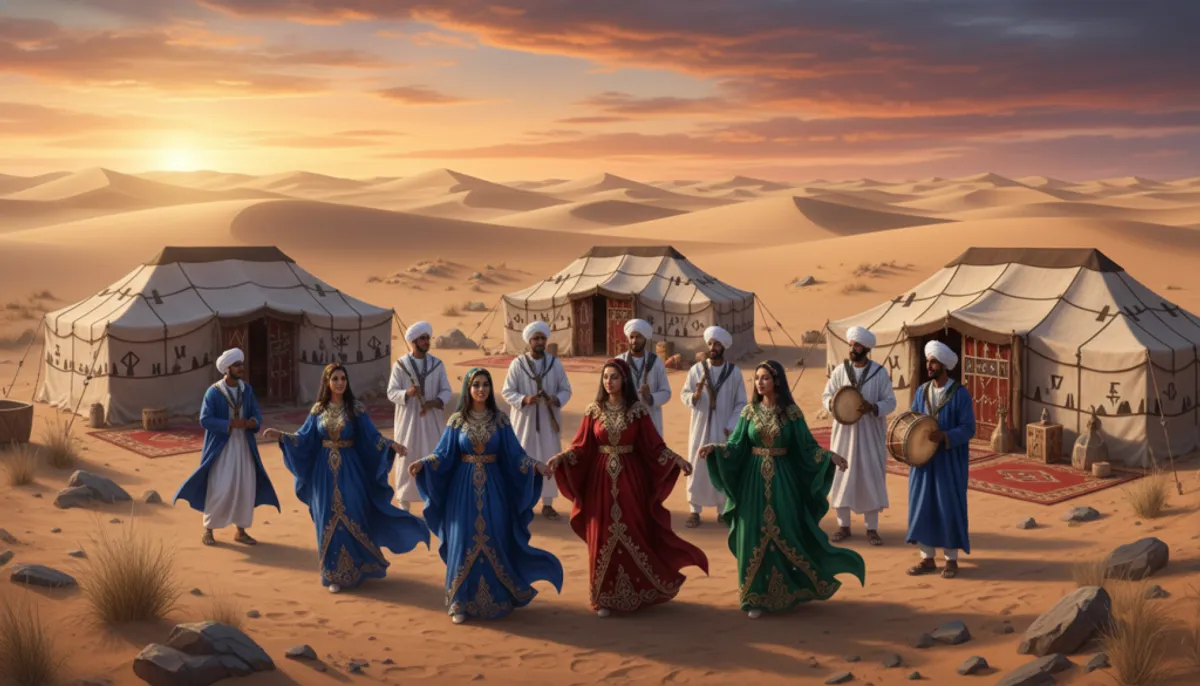
The term “Saharan” means “from the desert.” This ancient culture, nearly 10,000 years old, represents a heritage of exceptional richness. It was born from the nomadic lifestyle of many tribes.
Over the centuries, these communities have developed unique customs. They reflect a remarkable adaptation to a demanding environment. Legendary hospitality, respect for ancestors, and oral traditions hold a central place.
The Western Sahara forms a mosaic where Berber, Arab, and African influences intersect. This meeting has forged a unique and vibrant identity. Despite the challenges of history, this heritage continues to inspire the whole world.
Key Points to Remember
- The Saharan culture is a millennia-old heritage of the Western Sahara.
- The Sahrawi people have developed unique traditions adapted to the desert.
- Hospitality and oral traditions are pillars of this society.
- This culture is a blend of Berber, Arab, and African influences.
- It is a living heritage that has been preserved through time.
- The desert is a central space for Sahrawi life and spirituality.
Introduction to Sahrawi Culture
Let’s now explore the foundations of this remarkable collective identity. The inhabitants of the Western Sahara share a striking cultural unity despite their original tribal diversity.
This homogeneity has been built around essential values for survival in the desert. Solidarity, hospitality, and mutual respect form the social cement of this community.
The desert territory has shaped all dimensions of daily life. From social practices to artistic expressions, every aspect reflects this unique adaptation to the environment.
Despite historical upheavals, the people have preserved their social cohesion. This ability to maintain traditions while evolving demonstrates the resilience of this culture.
Understanding this society requires grasping its multiple identity dimensions. Space, community, and values passed down from generation to generation define the very essence of the people of this region.
Origins and History of the Sahrawi People
Let’s discover how the complex history of the inhabitants of this unique territory has been shaped, including the significant events that contribute to the history of bahrain.
Before the emergence of the current term, populations were identified by their specific ethnic groups. Notably, the Hassania, Sanhadja, Beidanes, and Haratine were distinguished.
The origin dates back to the 11th century when the Beni Hassan arrived in the Western Sahara. They encountered the indigenous populations speaking Zenaga, a Berber dialect.
Over the years, a rich intermingling developed among these communities. This process created a distinctive identity with multiple influences.
The modern notion of people consolidated during the 20th century. The struggles for independence in the south of Morocco and in the Western Sahara forged this collective consciousness.
From Nomadism to Sedentarization in the Desert
The transition from a wandering existence to a fixed life represents a profound change for the inhabitants of the Western Sahara. For centuries, nomadism dictated their movements across the arid expanse.
The raising of camels constituted the heart of this mobile economy. The Reguibat owned thousands of animals, with about ten animals per family. Their diet relied mainly on milk and meat.
These populations followed the rains across the desert, earning the poetic nickname of “children of the clouds”. Their nomadism was perfectly suited to the extreme conditions of the south of the Western Sahara.
Armed conflicts and urbanization during the years 1980-1990 caused a massive rural exodus. Bombings and forced relocations accelerated the end of this traditional life.
Today, the majority of the inhabitants are sedentary. However, the legacy of nomadism continues to profoundly influence their values and social practices. Engaging in general knowledge exercises represents one of the most significant transformations in their recent history.
The Tribes and Clans: The Foundation of Sahrawi Society
Traditional social organization finds its roots in a complex tribal system. This structure forms the fundamental basis of collective identity.
The kinship ties unite families within each group. These relationships create a strong and lasting social network.
Tribal Composition and Family Ties
Three main tribes dominate the demographic composition. The Reguibat and Tekna share a Berber Sanhaj origin. The Ouled Delim descend from Maqilian Arab lineages.
Each tribe recognizes a common founding ancestor. This filiation strengthens cohesion among all members.
| Tribal Group | Percentage (1974) | Ethnic Origin |
|---|---|---|
| Tekna | 31.4% | Berber Sanhaj |
| Reguibat | 28.4% | Berber Sanhaj |
| Ouled Delim | 15.6% | Maqilian Arab |
| Ouled Tidrarine | 12.2% | Mixed |
| Laarossiyen | 6.1% | Local |
The Place of Haratins in Social Organization
The Haratins represent about a third of the Sahrawis. This group occupies a particular position in society.
Descendants of ancient enslaved populations, they formed families of domestics. Their history reflects the complexity of relationships among the different tribes.
Today, these tribal ties continue to influence the population. They structure marriages and community organization.
The Hassaniya Language: Memory and Identity
The Hassaniya serves as a bridge between generations and territories. This dialect of Bedouin Arabic unites communities across several countries in the region.
Introduced in North Africa as early as the 11th century, Hassaniya has a rich origin. The Beni Hassan tribes brought it from the Arabian Peninsula.
Linguistic Influences and Oral Traditions
This dialect reflects a remarkable linguistic syncretism. It incorporates Berber words like iggiv (griot) and tidinit (lute).
The oral tradition finds its roots in rurality. It expresses the deep soul of this region for years.
| Linguistic Characteristic | Influence | Example |
|---|---|---|
| Nomadic Vocabulary | Saharan Life | Specific desert terms |
| Berber Elements | Historical Contacts | iggiv, tidinit, ardin |
| Classical Poetry | Literary Arabic | Traditional recitations |
The Hassaniya preserves an exceptional linguistic purity. It transmits stories, poetry, and ancestral wisdom.
This Arabic language remains an essential intangible heritage. It maintains identity in the face of external pressures.
Sahrawi Religious and Spiritual Practices
Spirituality in the Western Sahara reveals a unique adaptation to the desert. It reflects the nomadic history of local communities.
Practices occupy a central place in social organization. They structure daily time and mark important events.
The Influence of Brotherhoods and Marabouts
Islam spread mainly through marabouts and brotherhoods. This approach matched the mobile lifestyle.
The zaouïas played a crucial role in the transmission of knowledge. The Qadiriyya and Jazouliya brotherhoods have dominated for centuries.
These religious networks extend well beyond the region. They can be found from Mali to Nigeria.
Rituals, Messels, and Religious Symbolisms
The men practice prayer in messels, alignments of stones symbolizing a mosque. A central elevated stone represents the imam.
The society has developed a syncretic Islam integrating pre-Islamic beliefs. Protective rites and divination remain common.
Offerings to spirits (yennun) and natural elements persist. This spirituality combines Quranic tradition and local heritage.
Art and Poetry in Sahrawi Culture
Traditional arts offer a unique window into ancestral values and emotions. This artistic culture, deeply intertwined with caribbean culture, reveals the spiritual depth of desert communities.The Oral Tradition and the Role of Griots
The griots, called iggawn, keep the collective memory alive. They transmit stories and wisdom for years.
These guardians of tradition occupy an essential place in society. Their role goes beyond mere entertainment to touch on community education.
Musical Expressions and Poetic Recitations
Hassaniya poetry is expressed during long evenings called l’hawl. These recitals can last for hours, blending rhythmic verses and enchanting melodies.
Traditional instruments like the tidinit (lute) and ardin (harp) accompany the declamations. Weddings are the main occasion for these artistic performances.
Over time, these expressions have conquered the whole world thanks to modern technologies. The people thus perpetuate their poetic and musical heritage with pride, including influences from the bruneian culture in france.Culinary Traditions and the Tea Ceremony
Let’s dive into the heart of the flavors and rituals that rhythm desert macedonian cuisine life. Traditional food reflects a remarkable adaptation to arid conditions.In the past, food was simple yet nourishing. Camel meat, bread, and camel milk were consumed. Tea held a central place in daily life.
The Tea Ritual and the Art of Hospitality
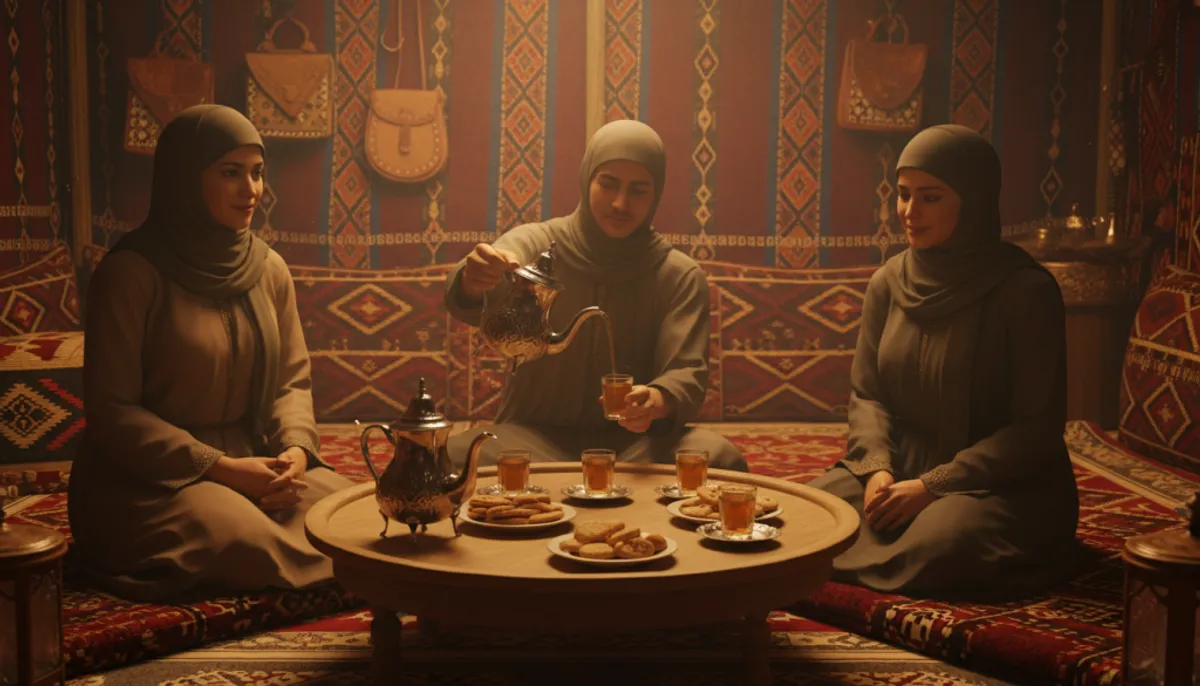
The preparation of tea represents a true art passed down within the family. Every man and woman learns the precise gestures of this ancestral ceremony.
Rainwater, precious, is used to prepare the drink. It is even sold for a higher price than well water. This rare resource gives tea a special value.
The ritual can last several days, creating the ideal occasion to strengthen social relationships. People gather around this tradition to exchange news.
During these shared moments, Hassaniya poetry is often improvised. The themes address nature or faith. The time dedicated to this ceremony reflects the importance of human bonds.
The tent, always open, becomes a place of exceptional hospitality. This art of receiving illustrates values of generosity passed down through generations.
The Traditional Habitat: The Tent and Nomadic Lifestyle
At the heart of traditional lifestyle lies the tent, a symbol of mobility and hospitality. This nomadic dwelling called khaïma represents much more than just a shelter.
The making of these tents requires exceptional craftsmanship passed down through generations. Women meticulously weave goat wool for nearly a year.
The architecture reflects a perfect adaptation to desert conditions. It protects against extreme temperatures while allowing for easy movement.
The open design promotes legendary hospitality. Families always welcome visitors crossing the desert of the south.
| Characteristic | Traditional Use | Contemporary Use |
|---|---|---|
| Mobility | Seasonal movements | Special occasions |
| Construction | Woven goat wool | Modern materials |
| Social Function | Complete living space | Gathering place |
| Location | Southern desert | Cities and countryside |
Nomadism has profoundly influenced this conception of habitat. The tent remains an important social space for community life.
Despite sedentarization, many families retain their tents. They use them for ceremonies and movements in the desert.
The Role of Women and Traditional Clothing
The clothing worn by women and men reveals ancestral traditions. These outfits express much more than just a style of dress.
They embody deep social values and a strong collective identity. Every textile detail tells a story of transmission.
The Melhfa as a Sign of Feminine Identity
The melhfa represents much more than just a piece of fabric for women. This loose garment, made of three unsewn panels, is elegantly tied at the shoulders.
Traditionally black and blue, it protects from intense sun. The melhfa symbolizes belonging to the community.
Silver jewelry completes this traditional outfit. Gold was once considered a bearer of misfortune.
Marriage Rituals and Role in Cultural Transmission
Marriage is a crucial moment in the lives of families. Until the 1970s, parents arranged these unions.
Today, the man chooses his future wife. The celebration used to last a week, now three days.
| Traditional Aspect | Old Practice | Modern Evolution |
|---|---|---|
| Marriage Organization | Families arranged | Man chooses |
| Duration of Celebrations | A full week | Three days |
| Financial Responsibility | Groom's family | Groom's family |
| Traditional Dowry | Jewelry, clothing, camels | Adaptation to cities |
The groom's family covers the costs including jewelry and clothing. After the birth of the first child, the woman returns to her parents' home.
Divorce remains common and values the woman. Relationships between ex-spouses often persist for life.
The Transmission and Preservation of Cultural Heritage
Preserving ancestral heritage represents a vital challenge for future generations. The people of the Western Sahara make constant efforts to keep their traditions alive, including the exploration of modernity in taiwan. These initiatives preserve the distinctive identity of this unique territory.The Hassaniya language occupies a central place in this transmission. It serves as a bridge between members of different communities. Resistance to linguistic assimilation constitutes the basis of this preservation.
In recent years, specialized institutions have emerged. The Saharan Studies Center, established in 2013, methodically documents this heritage, including the rich timorese cultural heritage. Cultural associations multiply events in the region's cities.
Intergenerational ties allow for daily transmission. Elders share their knowledge with the young during family gatherings. Every day, ancestral knowledge is thus preserved.
Digitalization offers new possibilities for conservation. Audio and video recordings capture traditional artistic expressions. These archives ensure the longevity of traditions for the years to come.
Sahrawi Culture in the Contemporary Context
At the heart of current evolutions, ancestral traditions meet new political realities. The people of the Western Sahara navigate between identity preservation and social integration.
Integration Challenges and Identity Maintenance
The indigenous inhabitants face increasing linguistic pressures. In administrations, Moroccan Arabic is gradually replacing traditional Hassaniya.
This situation creates a dilemma for younger generations. They must adapt their speech while preserving their linguistic heritage.
Impact of Policies and Migrations on the Territory
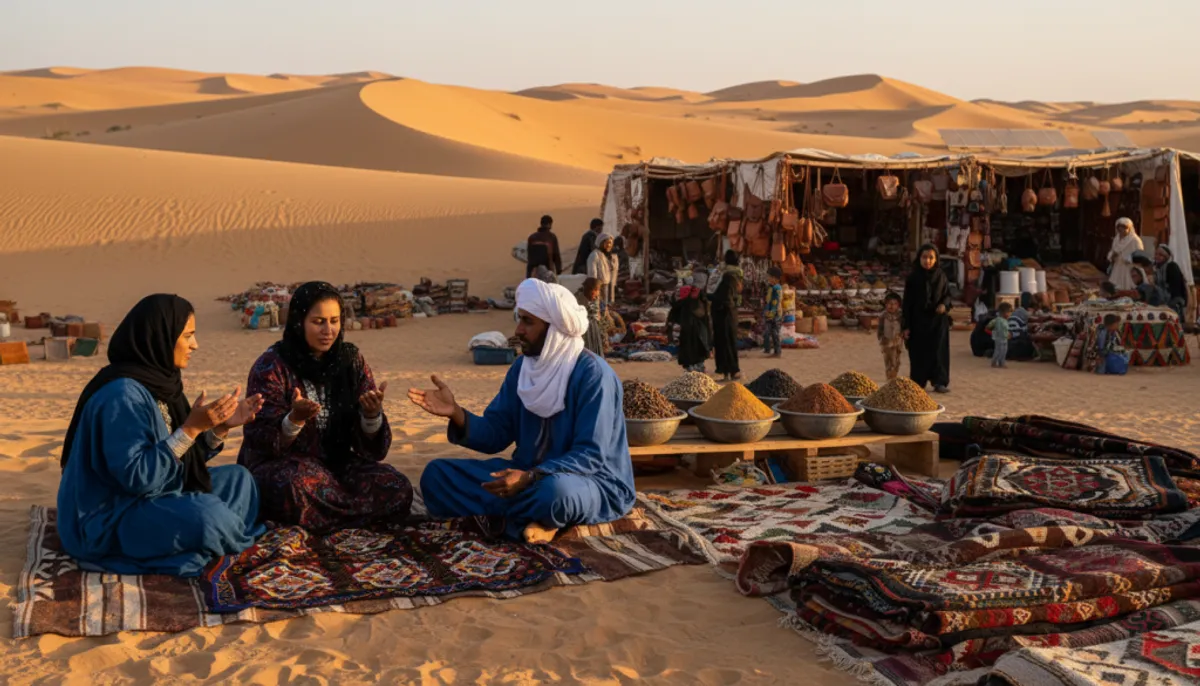
The massive arrival of populations from the north has transformed the demographics. The cities of the south see a decrease in the share of indigenous communities.
In recent years, this demographic evolution has accelerated. The territory is thus undergoing profound transformations.
Despite these challenges, cultural ties persist across borders. The Sahrawis scattered across different countries keep their traditions alive.
Conclusion
In conclusion, the heritage of the Western Sahara remains a living testimony to human resilience. This people has managed to preserve its millennia-old traditions despite contemporary challenges.
From the south to the north, across different regions, communities maintain their identity. Every day brings new opportunities to share this wealth with the world.
Transmission to younger generations remains essential for the future. Over the years, this unique culture continues to enrich our understanding of desert societies.
Despite political uncertainties, collective commitment transcends the borders of the territory. The Western Sahara and its neighboring regions thus see an exceptional heritage thrive.
FAQ
What are the main tribes that make up Sahrawi society?
The society is organized around several large tribes and numerous clans. These groups form the foundation of social life. Family ties are very strong and define relationships between people.
Is the Hassaniya language different from classical Arabic?
Yes, Hassaniya is a dialect of Arabic spoken in the region. It has its own particularities and is a pillar of identity. It carries very rich oral traditions.
What is the role of tea in traditions?
The tea ceremony is a very important social ritual. It is a true art of hospitality, symbolizing welcome. It takes place in three servings and can last a long time.
How has nomadism evolved today?
Many families have settled in cities over the years. However, the nomadic lifestyle and the connection to the desert remain very present in memory and customs.
What is the place of women in this culture?
Women play a central role, especially in the transmission of heritage. The melhfa, traditional clothing, is a strong sign of identity. They also have an important place in rituals such as marriage.
What are the challenges to preserve this heritage today?
The challenges are numerous, such as integration into a globalized world and the impact of policies on the territory. Transmission to younger generations, sometimes born far from the Western Sahara, is crucial to maintain identity.