
Welcome to Macau, a unique jewel where the East and West meet in a fascinating harmony. This small special administrative region of China offers extraordinary discoveries.
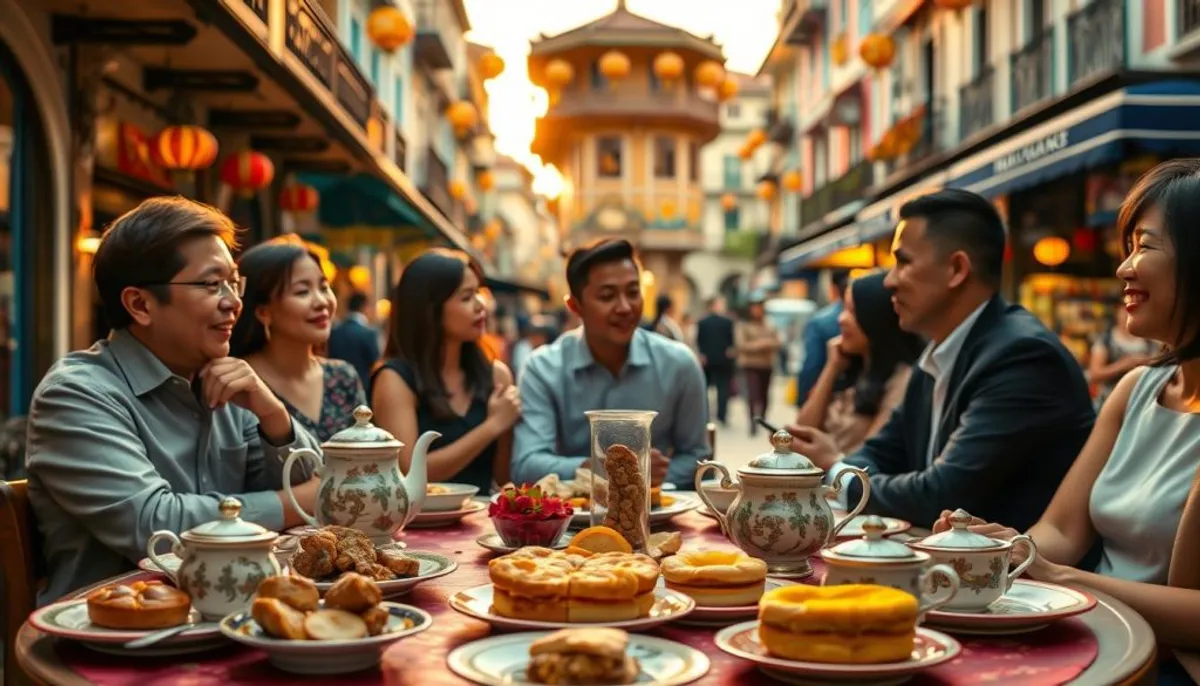
Located in southern China, near Hong Kong, Macau spans only 32.8 km². Despite its modest size, it is home to a vibrant population of 650,000 inhabitants.
The majority of residents are Chinese, but a valuable Portuguese and Macanese community enriches the social fabric. This diversity is reflected in the two official languages: Cantonese and Portuguese.
Prepare to explore a heritage where ancient temples coexist with European architecture. This fusion creates a truly exceptional identity.
Key Points to Remember
- Macau is a special administrative region of China.
- Its territory covers an area of 32.8 km².
- The population is predominantly Chinese with a Portuguese community.
- The official languages are Cantonese and Portuguese.
- The city represents a harmonious blend of Eastern and Western traditions.
- Its location is strategic, in southern China near Hong Kong.
Discovering Macanese Culture
For over four centuries, Macau has cultivated a unique heritage born from intercultural dialogue. This exceptional encounter has shaped a rich and complex identity, showcasing the cultural diversity of timor that enhances the local traditions.
Origins and Cultural Mixing
The arrival of the Portuguese in 1553 marks the beginning of a fascinating fusion. Trade exchanges facilitated daily encounters between populations.
This coexistence has created a community with distinct characteristics. Customs have naturally blended over generations.
| Period | Key Event | Cultural Influence |
|---|---|---|
| 1553-1600 | Portuguese Establishment | First trade exchanges |
| 1600-1800 | Port Development | Language mixing |
| 1800-1999 | Portuguese Colonization | Architectural fusion |
| 1999-present | Handing back to China | Heritage preservation |
Historical Evolution Through Exchanges
The Macanese patois perfectly illustrates this history of exchanges. This creole combines Portuguese with Cantonese and other languages.
This linguistic diversity reflects the complexity of influences. It bears witness to a successful mutual adaptation.
Traditional values have been enriched through contact with other cultures, including the influence of bruneian culture in france. This openness still characterizes the Macanese world today.
History and Heritage of Macau
The historical trajectory of this unique enclave reveals a fascinating dialogue between two worlds. This history rich dates back to 1553, when the Portuguese established their presence.
Portuguese Period and Traditional Influences
For over four centuries, European influences have profoundly marked the territory. Catholic missionaries spread their faith while creating cultural bridges.
By the end of the 19th century, education aligned with the Portuguese model. This educational heritage further strengthens the ties between the two countries.
| Period | Major Event | Cultural Impact |
|---|---|---|
| 1553-1600 | Portuguese Arrival | First architectural influences |
| 1600-1900 | Established Colonization | Spread of Catholicism |
| 1900-1974 | Military Presence | Population mixing |
| 1974-1999 | Transition Preparation | Heritage preservation |
Transition Under the People's Republic of China
December 20, 1999 marks a decisive turning point. Portugal hands Macau back to the People's Republic of China.
The Chinese government now oversees this special administrative region. This transition preserves the unique identity while integrating it into the national framework.
The People's Republic maintains a delicate balance between tradition and modernity. This approach ensures the continuity of the exceptional heritage.
World Heritage and Iconic Ruins
July 15, 2005 marks a historic date for Macau with the inscription of its historic center on the UNESCO World Heritage list. This international recognition highlights the exceptional value of its architectural heritage.
The Ruins of St. Paul and the Historic Center
The ruins of St. Paul are the most famous monument. This façade of a baroque church, burned in 1835, perfectly symbolizes the Sino-Portuguese fusion.
The entire center includes dozens of remarkable buildings. Here you can find Chinese temples, Catholic churches, and military fortresses.
These sites testify to over four centuries of exchanges between China and the Western world. The government places a top priority on preserving this unique heritage.
Among the architectural gems, we find St. Lawrence Church, the Leal Senado, and the Fortress of Monte. Each building tells a part of this fascinating story.
This exceptional concentration of historical buildings forms a historic center of incomparable richness. The ruins of St. Paul remain the most photographed church.
The protection of this world heritage ensures its transmission to future generations. Macau thus preserves its identity while sharing its wealth with the entire world, especially by promoting local experiences using the kadéos culture card.
Portuguese Influence and Cultural Exchanges
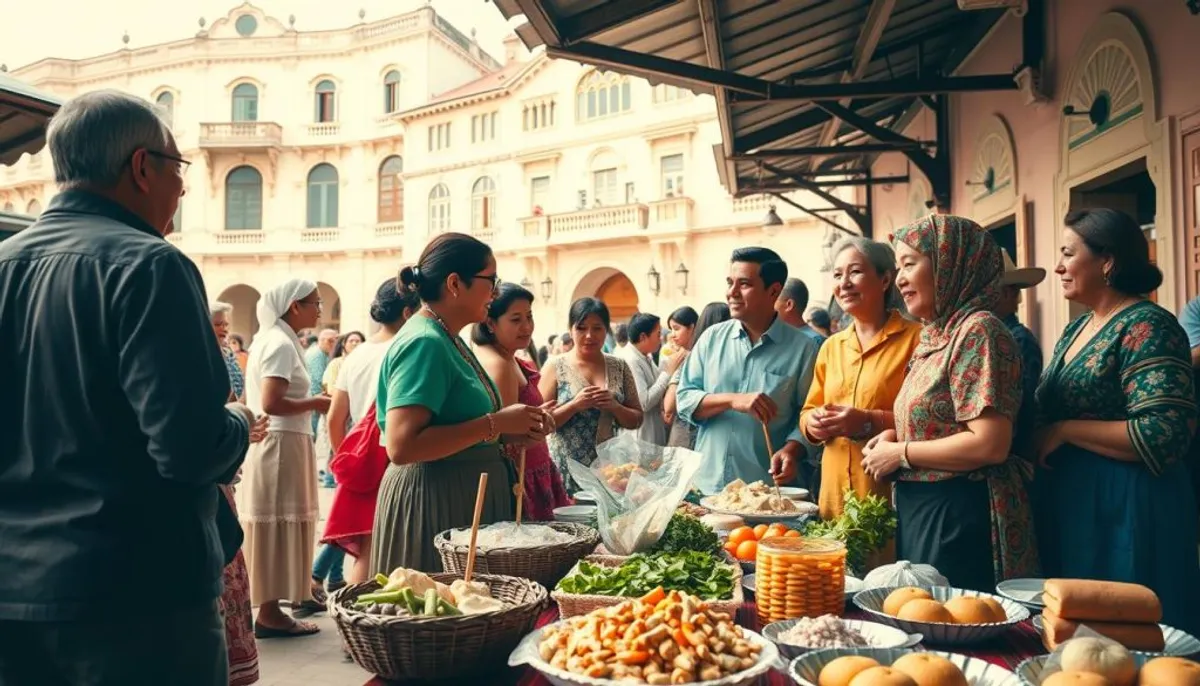
The Macanese patois represents the living fusion of Eastern and Western traditions. This unique language perfectly illustrates the centuries-old exchanges between the two communities.
Contributions of Matteo Ricci and Missionaries
Portuguese missionaries played a crucial role in cultural exchanges. Matteo Ricci, an emblematic figure, facilitated dialogue between Europe and Asia.
These exchanges were bidirectional. Missionaries brought Catholicism while Chinese art and philosophy reached Europe.
| Period | Linguistic Evolution | Main Influences |
|---|---|---|
| 16th-17th century | Birth of creole | Portuguese and Cantonese |
| 18th-19th century | Peak of the patois | Malay and other languages |
| 20th century | Gradual decline | Standardization of languages |
| 21st century | Heritage preservation | Mandarin and multilingualism |
The Evolution of Macanese Patois and Cultural Practices
This unique creole, based on Portuguese, mixed Cantonese with other influences. It was spoken by a significant part of the population.
Today, this language is practically extinct. However, it remains a valuable testimony to the mixed identity.
Within families, cultural practices continue to blend Portuguese and Chinese traditions. This part of the heritage remains alive in daily life.
Cuisine and Gastronomic Traditions
The culinary art of Macau represents a taste symphony where Eastern and Western flavors delicately marry. This unique cuisine emerged when the wives of colonists created innovative meals, reflecting the essence of taiwanese gastronomy alongside other influences.
The Culinary Fusion Between Portugal and China
This exceptional gastronomy combines local ingredients from the south of China with spices from elsewhere. Portuguese maritime routes brought influences from Malacca, India, and Mozambique.
Each dish tells a story of mixing. Portuguese techniques meet Chinese traditions in perfect harmony.
Iconic Dishes and Local Specialties
The Galinha a Portuguesa symbolizes this fusion. This chicken prepared with spices from both cultures is a true emblem.
Other specialties include curry chicken, stuffed large shrimp, and sautéed crab. On the traditional side, dim sum offers small dishes steamed to perfection.
Recipes are passed down from family to family. The pasteis de nata, these delicious egg tarts, remind us of the ever-living heritage.
Having a meal here becomes a complete cultural experience. Each bite reveals centuries of history and exchanges.
Festivals, Celebrations, and Cultural Events
The year in Macau flows to the rhythm of unique celebrations that testify to its rich multicultural heritage. This varied programming enlivens local life while attracting visitors from around the world.
The government of this special administrative region invests in numerous cultural projects. These initiatives strengthen the unique identity while promoting international exchanges.
Calendar of Holidays and Traditional Celebrations
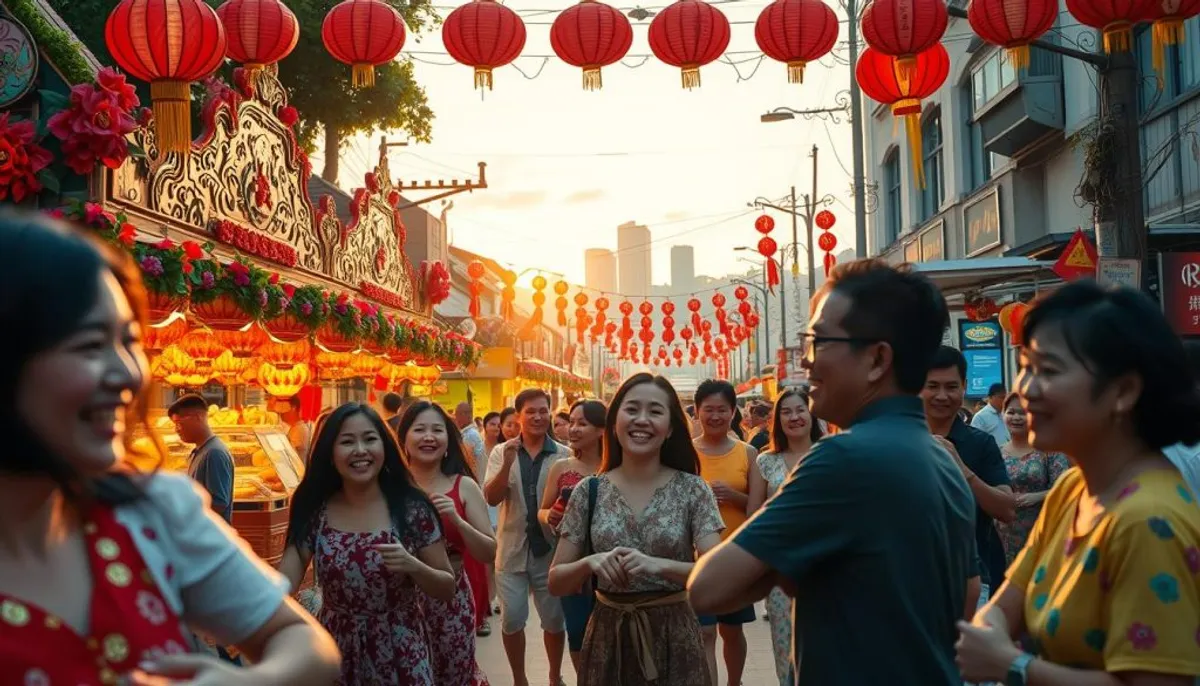
The official calendar perfectly reflects the harmonious coexistence of traditions. It features an impressive number of holidays from the two founding countries.
| Festival | Period | Cultural Origin |
|---|---|---|
| Lunar New Year | January/February | Chinese |
| Buddha's Day | May | Buddhist |
| Dragon Boat Festival | June | Chinese |
| Christmas | December | Portuguese |
Artistic Events and Recreational Shows
The Cultural Institute organizes major events throughout the year. The Arts Festival in March and the International Music Festival in October are particularly appreciated.
These artistic events serve as an essential bridge between generations and traditions.
The Macau Cultural Center, with its 45,000 square meters, serves as a home for these activities. This remarkable infrastructure contrasts with the small total area of the territory.
Public libraries and museums complement this exceptional cultural offering. They preserve the collective memory for future generations.
Conclusion
At the heart of this exceptional fusion, the gardens of Macau perfectly embody the harmony between Eastern and Western traditions. The Flora Garden, with its transformed ancient Portuguese palace, and the Lou Lim Lok Garden with its traditional Chinese landscapes, illustrate this successful coexistence.
Facing the ruins of St. Paul, a statue poetically symbolizes the handover. A young Chinese woman offers a lotus flower to a Portuguese gentleman. This artistic work summarizes the spirit of union that characterizes this special administrative region.
This article has shown how Macau preserves its unique heritage. The population keeps its traditions alive despite the passage of time. Every street, church, and house tells this story of encounter.
We invite you to discover this unique cultural experience. Macau continues to enrich the lives of its inhabitants and inspire visitors from around the world. Its exceptional universal value deserves to be experienced personally.
FAQ
What are the main influences that have shaped Macau's heritage?
The unique heritage of this special administrative region is a fascinating blend of Portuguese and Chinese influences, including the rich aspects of belizean culture. This fusion is visible in architecture, cuisine, and languages, the result of several centuries of exchanges and coexistence.
What is the current political status of Macau?
Macau is a Special Administrative Region of the People's Republic of China. Since the end of Portuguese administration in 1999, it enjoys the principle of "One country, two systems," which grants it significant autonomy to preserve its way of life and culture.
What sites are essential for understanding local history?
Don't miss the famous ruins of St. Paul and the historic center, listed as UNESCO World Heritage. These buildings, like churches and gardens, tell the story of the community and its mixing.
Is the Portuguese language still spoken in Macau?
Portuguese remains one of the official languages alongside Cantonese, but Mandarin is increasingly used. A local creole, patuá, bears witness to this past, even though its number of speakers is limited.
Can you name a typical dish from Macanese cuisine?
Absolutely! African chicken is an emblematic dish that perfectly illustrates the culinary fusion. Other dishes like steamed shrimp or balichão pork are also very popular.
How does the People's Republic of China influence contemporary culture?
The central government supports projects that promote Macau as a cultural platform between China and Portuguese-speaking countries. This strengthens exchanges while preserving the unique value of its identity.