
Welcome to a journey into the heart of one of humanity's most fascinating heritages. We set off to discover a universe where time seems to have stopped, preserving millennia-old customs.
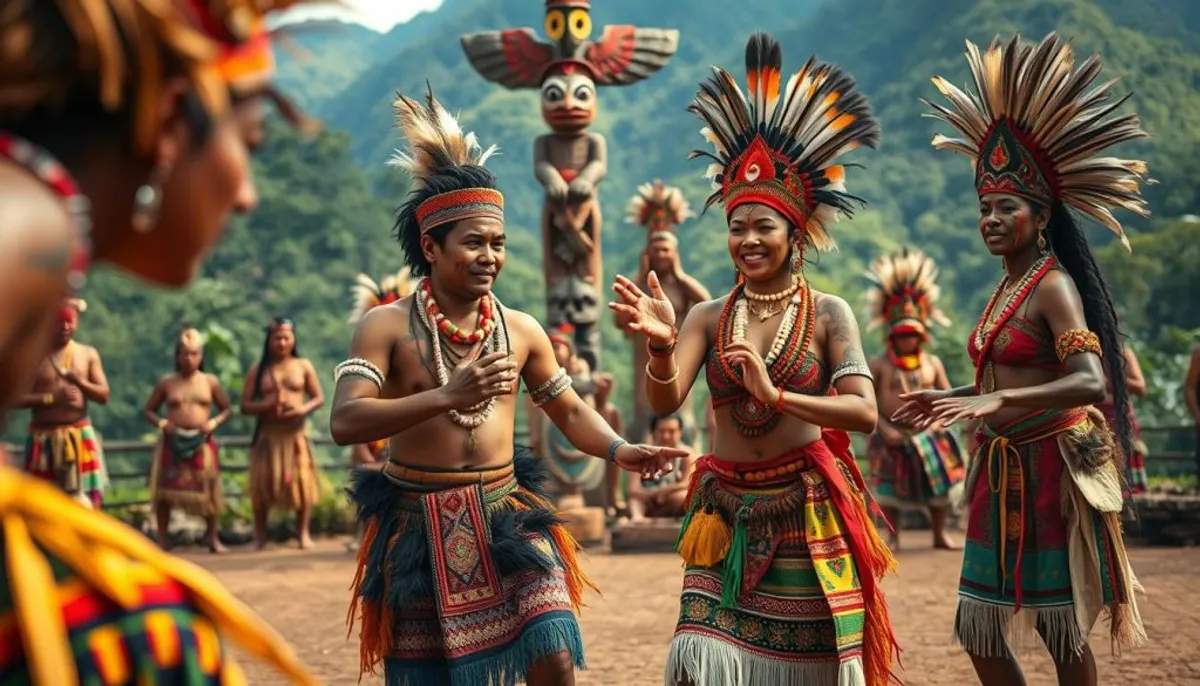
In the center of the great island of New Guinea, the indigenous peoples have managed to preserve their heritage. Despite modern influences, they maintain a unique set of traditions in the world.
These ancestral practices shape daily life. A majority of the population still lives according to rites passed down for over a thousand years. Tribal art, dances, and songs are their vibrant expressions.
The particular geography of this region has favored a mosaic of customs. Each valley, each mountain has given birth to distinct and rich expressions. This diversity is simply extraordinary.
Key points to remember
- Papua New Guinea is home to one of the most diverse cultural heritages on the planet.
- Ancestral traditions have remained alive for over 1,000 years.
- Tribal art, dances, and songs are major expressions of this wealth.
- The island's geography has favored the development of many distinct cultures.
- Over 80% of the population continues these customs in daily life.
- This unique heritage has resisted modern external influences.
Introduction and context
New Guinea, a true cultural mosaic, presents a unique territorial division. This vast island is shared between two distinct political entities.
To the east, Papua New Guinea has been independent since 1975. To the west, the Indonesian provinces of Papua and West Papua complete this exceptional region.
This division profoundly influences the situation of the indigenous peoples. More than 800 different languages testify to an extraordinary linguistic diversity.
Historical isolation has allowed the preservation of millennia-old traditions. The mountainous geography and dense forests have favored the development of distinct societies.
Each community has its own customs and artistic expressions. This richness remains alive in many remote villages.
Origins and history of Papua
The settlement of these lands began over fifty thousand years ago, according to archaeological discoveries. Melanesians migrated from Asia to the Pacific islands by crossing this region.
Traces of life dating back forty thousand years have been found in the province of Morobe. During the ice ages, Australia and New Guinea formed a single continent.
The first migrations and settlement
Seafarers from Southeast Asia discovered these lands about four thousand years ago. They spoke Austronesian languages and contributed to the cultural mix.
Climate warming twelve thousand years ago isolated the island from Australia. This separation favored the development of distinct societies.
Colonization, independence, and modernization
The colonial history begins in 1526 with the arrival of the Portuguese Jorge de Menezes. Local populations and the wilderness limited European settlement.
The western part was taken by the Dutch in 1660. The Germans established German New Guinea in the north, while the British administered the south.
World War I changed the fate of the region. Australia gained official administration in 1920 after driving out the Germans.
The Japanese invasion in 1941 marked the beginning of the path to independence in 1975. The eastern part gained autonomy, while the west was annexed by Indonesia in 1963.
Exploring Papuan culture: heritage and renewal
It is impossible to summarize the extraordinary richness of the customs that animate this territory in a single entity. Each community has its own identity, distinctive language, and unique artistic expressions.
This diversity is explained by the geographical isolation of the different regions. Steep mountains and dense forests have allowed the development of distinct societies for centuries.
Nearly 85% of the population maintains a traditional lifestyle based on agriculture. Ancestral omani traditions still structure daily life in remote villages.
Oral transmission ensures the longevity of this heritage for over a thousand years. Despite modernization, the essence of customs is preserved with care.
The national holiday on September 16 becomes the stage for spectacular celebrations. Different groups gather for impressive cultural shows.
This living heritage now attracts international attention. The country promotes this wealth through its Ministry of Tourism and Culture.
Diversity of peoples and languages
More than eight hundred different languages testify to the complexity and beauty of local societies. This incredible linguistic diversity reflects the millennia-old history of the indigenous peoples.
Richness of languages and oral traditions
The inhabitants preserve an exceptional oral heritage. Each language carries unique knowledge about the environment and foundational myths.
Oral transmission ensures the continuity of ancestral knowledge. Generation after generation, mythological tales and traditional techniques are passed down.
Some languages are spoken by only a few hundred people. Others serve as a lingua franca among different communities.
Tok Pisin facilitates communication among all groups. This pidgin language is understood by the entire population.
About 85% of the peoples live in rural villages. Their subsistence economy relies on agriculture and livestock.
Community life in these villages keeps traditions alive. However, modernization poses challenges for the preservation of languages.
Education in English and urbanization threaten this linguistic wealth. Yet, the resilience of oral traditions remains remarkable.
Rituals, traditions, and ancestral practices
Ancestral rituals are the beating heart of social life in these communities. They structure human relationships and define collective identity.
The Wantok system, based on a common language, unites extended families. Each person belongs for life to their clan of origin.
Traditional dances, songs, and ceremonies
Men and women occupy complementary roles according to tradition. While the men hunt, the women manage the household and community work.
The village chief plays a central role in organizing ceremonies. His authority guides important decisions for the community.
The inhabitants of the villages near the Sepik River practice unique scarification. These marks represent the skin of the crocodile to honor the water spirits.
Symbols and rites of passage
Initiation rites mark the transition from childhood to adulthood. These ceremonies profoundly strengthen community bonds.
Masks and sacred totems accompany these important transitions. Each symbolic object carries ancestral spiritual significance.
These practices create well-defined social responsibilities. Throughout their lives, everyone finds their place in harmony with nature.
The villages thus preserve a living tradition that connects the past to the present.
Tribal art and artistic expression
Tribal artistic expression represents a living treasure with multiple facets. Each region develops unique styles that reflect its deep identity.
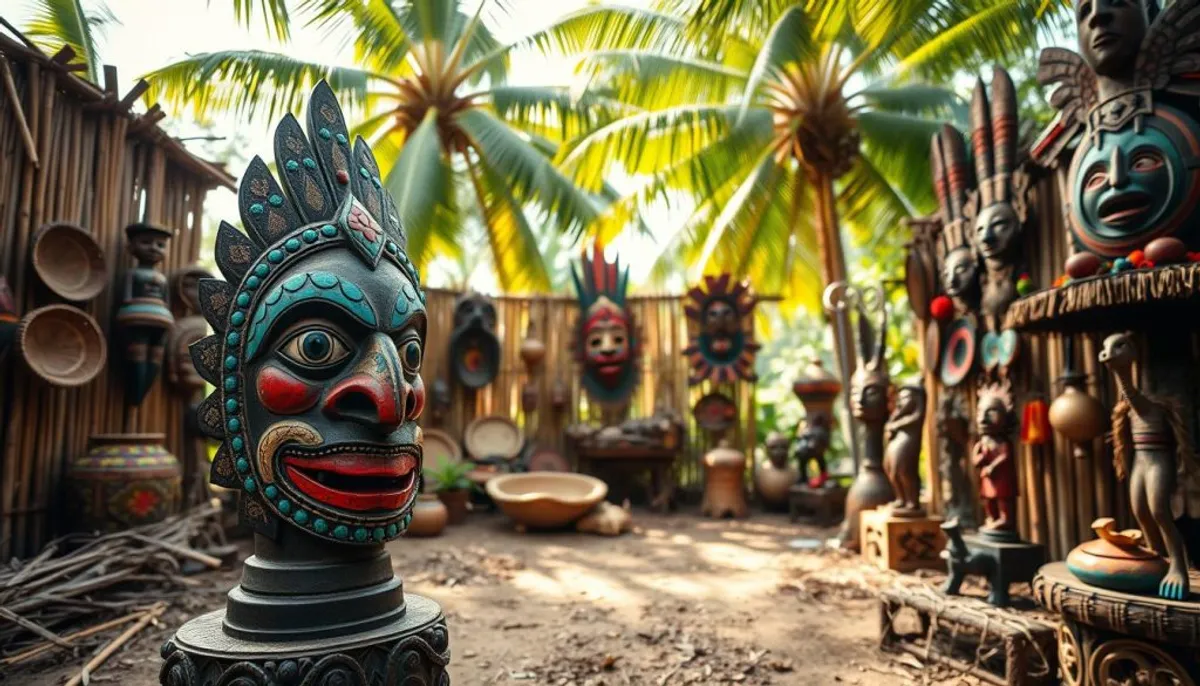
Artisans create remarkable pieces such as ceremonial masks and sacred drums. These objects are used during important rituals in the villages.
Sculptures, masks, and ritual objects
The PNG Art gallery in Port Moresby showcases works from all regions of the country. You will discover carved shields and traditional musical instruments there.
In the region of Cape Gloucester, fantastic masks made with foliage impress. The Asmat excel in creating statues with exuberant shapes.
Traditional techniques and materials
Artisans use ancestral wood carving techniques passed down through generations. They work with traditional tools for exceptional finesse.
Local natural materials bring these unique creations to life. Precious wood, bird feathers, and natural pigments from the forest are used.
| Artistic region | Specialties | Main materials |
|---|---|---|
| Cape Gloucester | Ceremonial masks | Foliage, local plants |
| Asmat Territory | Statues, totem poles | Precious wood, pigments |
| Sepik Valley | Wood sculptures | Hardwood, shells |
The villages preserve these unique know-how in the world. You can acquire these works directly from local artisans.
Festivals and cultural events
From August to November, the island comes alive with unique celebrations called Sing-Sing, showcasing various festivals and celebrations in bahrain. These gatherings allow you to discover living traditions in different parts of the territory.
Hagen Show, Paiya Show, and Sing-Sing
The Hagen Show is one of the most prestigious events in the Highlands. Groups like the wigmen huli from Tari actively participate.
The Paiya Show takes place the day before in a more intimate atmosphere. These two festivals perfectly complement each other over several days.
The Goroka Show offers an explosion of colors and energy every year. These large gatherings attract participants from all valleys.
Other regional festivals and celebrations
In the Simbai mountains, the Kalam festival features headdresses made of golden beetles. This event requires a charter flight to access.
The Crocodile Festival in Ambunti celebrates the water spirit revered by the inhabitants. It takes place in the region of the Sepik River.
In the southeast, the Huhu Festival in Alotau organizes traditional canoe races. In late September, the Asmat people present their longhouses and characteristic art.
These regional festivals often offer more authentic experiences than the grand shows. Visitors can establish direct contacts with local communities.
Tourism and immersion in the region
From August to November, travel opportunities intensify with the traditional festival season. This ideal period allows for a deep immersion in the different areas of this fascinating region.
Several well-structured programs are offered to explore these wild lands. The "Hagen and Paiya Show" tour lasts 19 days and combines the Highlands with the Sepik Valley.
Cultural journeys and authentic encounters
These expeditions guarantee genuine exchanges with local inhabitants. Experienced guides facilitate respect for ancestral customs.
The eastern part of the island offers spectacular mountainous landscapes. The surrounding islands attract diving enthusiasts.
We recommend booking several months in advance of your departure. Spots are limited during the major festivals in August and September.
Despite logistical challenges, each journey promises an unforgettable adventure. The return from these expeditions leaves lasting memories.
External influences and contemporary issues
The confrontation between tradition and modernity defines the current challenges of this land. External pressures have profoundly transformed indigenous communities for several years, impacting their emirati identity.
Modernization, migration, and development
In the western part of the island, the Indonesian government implements controversial resettlement policies. This program called transmigrasi groups dispersed populations into modern villages.
These changes radically affect traditional life. Ancestral agriculture must confront the commercial exploitation of natural resources.
Young men leave their villages for cities in search of opportunities. This internal migration creates constant tension between heritage and modernity.
Some ritual practices have been abandoned under pressure from the authorities. The exposure of the deceased on platforms no longer exists in several areas.
Despite these challenges, many communities fiercely resist. They seek to preserve their culture and ancestral lands.
Tourism plays an ambivalent role in this preservation. When well-managed, it can enhance traditions without turning them into mere spectacle.
Conclusion
At the end of this exploration, one truth emerges: this land harbors a human treasure of inestimable wealth. More than eight hundred languages coexist on this extraordinary island, testifying to a unique cultural diversity in the country.
Despite the challenges of modernization, ancestral traditions resist with remarkable strength. The peoples keep alive a millennia-old heritage that reminds us of the possible harmony between man and nature.
This country offers much more than a tourist destination: it is a journey through time that connects us to our common roots. The festivals of the surrounding islands allow for authentic encounters with these hospitable communities.
Preserving this fragile culture means protecting a universal heritage. Every responsible visit contributes to safeguarding this precious link with nature and ancestral knowledge for future generations.
FAQ
When is the best time to visit Papua to attend festivals?
The best time is generally between August and September. This is when many major events, such as the famous Hagen Show, take place. The climate is also often more favorable in these mountainous regions.
How many different languages are spoken on the island?
It is estimated that there are over 800 distinct languages! This incredible diversity reflects the historical isolation of many communities in valleys and remote areas for thousands of years.
What are the main challenges for preserving traditions today?
Rapid modernization, youth migration to cities, and economic development pose challenges. However, local populations and authorities are implementing programs to keep these ancestral practices alive.
Is it possible to travel responsibly in this region?
Absolutely. Favor tour operators who work in partnership with villages, respect customs, and contribute directly to the local economy. A respectful approach is essential for authentic immersion.
What does the term "Sing-Sing" mean?
A "Sing-Sing" is a large festival or gathering where different groups come together to share their dances, songs, and traditional attire. It is an explosion of colors and sounds, a highlight of social life.