
Welcome to a journey into the heart of a country with many facets. Located in Southern Africa, Mozambique borders the warm waters of the Indian Ocean. Its identity is a fascinating blend of ancestral African influences and a Portuguese colonial heritage.
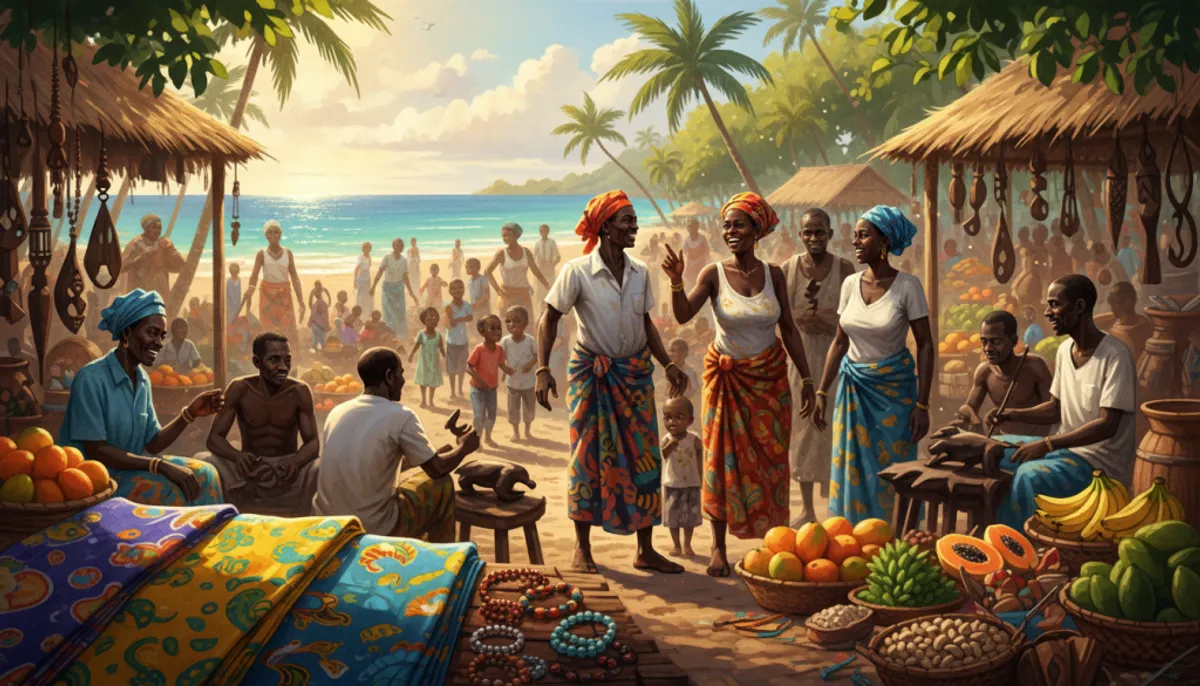
This nation has over 35 million inhabitants. Its population is spread across a hundred ethnic groups, creating a rich social mosaic. No fewer than 43 different languages are spoken here.
The Mozambican social fabric is primarily Bantu. A few Nilotic language-speaking peoples complement this picture. Centuries of exchanges have forged a vibrant and unique contemporary culture.
This article offers you a comprehensive exploration. Together, we will discover the history, arts, traditions, and customs of this charming territory. Prepare for an authentic immersion in a warm and welcoming society.
Key Points to Remember
- Mozambique is a country in Southern Africa with a rich mixed cultural heritage.
- It is home to a diverse population of over 35 million inhabitants belonging to many ethnic groups.
- The linguistic diversity is remarkable, with dozens of languages spoken.
- Its cultural identity is the result of a blend of African traditions and external influences, notably Portuguese.
- It is an increasingly popular destination for authentic cultural travel.
- Its coastline along the Indian Ocean has greatly influenced its history and exchanges.
General Introduction to Mozambican Culture
At the heart of Southern Africa, the country presents a complex face, marked by its history. Ancestral traditions and colonial influences coexist in a unique manner.
The population is 99.68% of African origin. Small communities of Europeans, Indians, and Chinese complete this multicultural picture.
Portuguese is the official language. However, the majority of Mozambicans speak a Bantu language in their daily lives.
The territory is divided into regions with marked ethnic specificities. The Makua dominate in the north, while the Tsonga live in the south.
| Main Group | Dominant Region | Traditional Activity |
|---|---|---|
| Makua | North | Subsistence agriculture |
| Tsonga | South | Agriculture and fishing |
| Diverse Bantu Groups | Center | Cultivation of maize and cassava |
In rural areas, traditional lifestyles persist. Subsistence agriculture, with cassava, maize, and yam, remains central.
A journey here allows you to discover this richness. Traditions remain vibrant despite the modernization of cities.
A fascinating duality is observed. Urban elites are steeped in Portuguese culture, while the countryside preserves its heritage.
This contrast makes a journey to Mozambique particularly enriching for the curious.
History and Origins
To understand the current identity, one must trace back the thread of time long before the colonial era. Human traces are ancient, as evidenced by the Ngalue cave with sorghum consumption dating back 100,000 years.
Between the 1st and 5th centuries, Bantu populations arrived. They permanently shaped the territory. Around the year 1000, a cosmopolitan Swahili system developed on the coast.
Exchanges with Arabs, Persians, and Indians then connected this region to the world of the Indian Ocean.
Colonial and Portuguese Influences
In 1498, Vasco da Gama reached the coasts. The Portuguese established a permanent base in 1507. In the 17th and 18th centuries, the system of prazos attempted to colonize the hinterland.
Resistance organized in the 20th century:
- Frelimo engaged in armed struggle in 1964.
- The Carnation Revolution in Portugal took place on April 25, 1974.
- Independence was finally proclaimed on June 25, 1975.
A long civil war followed, until the peace agreements of 1992.
Ancestral African Roots
This colonial heritage, marked by the Portuguese language, has not erased the African foundations. The political and economic elite bear its mark, but the countryside retains a solid traditional base, enriched by the vibrant local culture.
The history of this country is thus a permanent dialogue between its deep roots and external influences. This duality forges a unique society.
Linguistic and Ethnic Diversity
Mozambique stands out for its mosaic of voices and peoples, a true reflection of its history. This plurality shapes exchanges and daily life throughout the territory.
The Languages of Mozambique
There are no fewer than 43 different languages recorded. Makua ranks first, spoken by nearly a quarter of the population. Chisena and Tsonga follow among the most used.
The Portuguese language remains the official language. More than half of the inhabitants master it. However, only a small part makes it their mother tongue.
A recent evolution favors elementary education. About fifteen Bantu languages are now used. This allows the majority of children to learn in their native language.
Major Ethnic Groups
Nearly a hundred ethnic groups coexist. The Makonde, Tsonga, Yao, and Shona are among the most important.
The Makua largely dominate the north region. In the Zambezi valley, the Sena and Shona can be found. The Tsonga are primarily established in the south.
Along the coast, the Swahili population perpetuates a heritage of maritime exchanges. The Makonde, known for their sculpture, also live in the north.
In cities, Portuguese serves as a lingua franca. It facilitates communication among all these groups. It is the language of business and administration.
Traditions, Beliefs, and Cultural Symbols
The spiritual and festive fabric of Mozambique forms a living kaleidoscope, deeply rooted in daily life. These elements unite the people well beyond their ethnic diversity, reflecting the rich tapestry of bulgarian traditions and local customs.
Religious and Spiritual Practices
The state is secular, guaranteeing freedom of worship. A significant part of the population is Christian, with Catholics, Zionists, and Evangelicals.
Islam is also practiced. Traditional beliefs, such as animism, remain vibrant for many Mozambicans. Most inhabitants often blend these spiritualities.
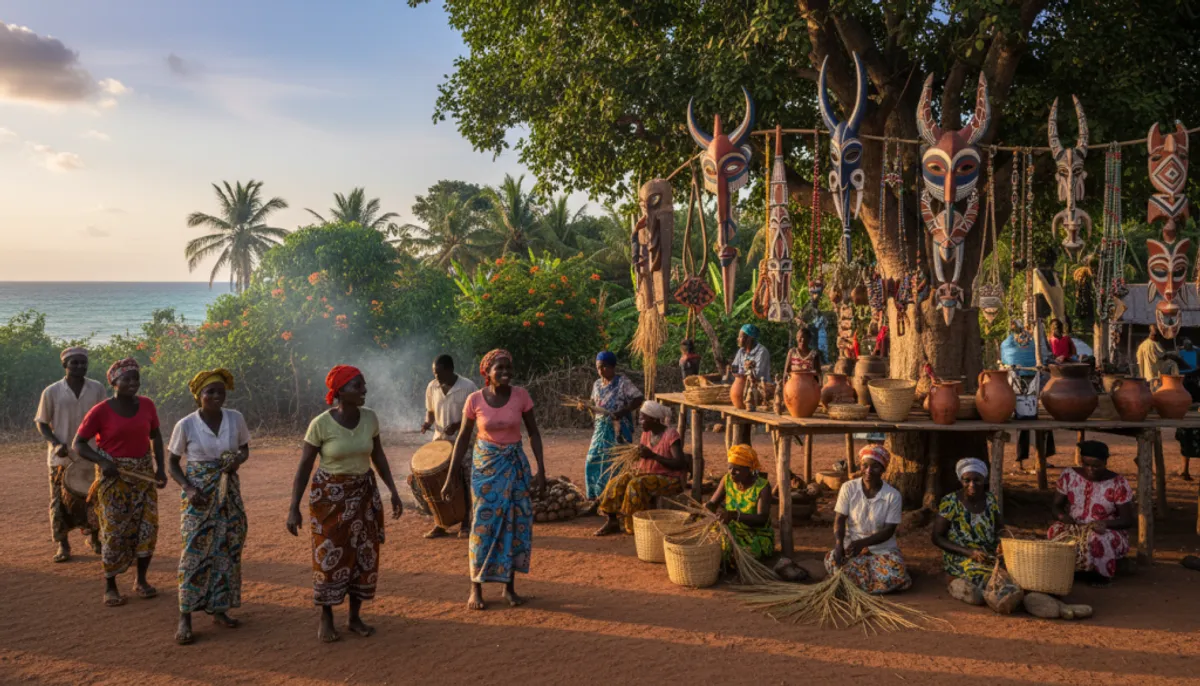
Holidays and Public Celebrations
The national calendar includes numerous public holidays. They honor history and social values.
Major days include May 1 (Labor Day) and June 25 (Independence Day). April 7 celebrates Mozambican women.
These celebrations strengthen the community spirit. National symbols, such as the flag and the elephant, also embody this pride.
Practices like the Gule Wamkulu cult are recognized by UNESCO. They showcase the richness of intangible heritage.
Arts, Crafts, and Cultural Expressions
Mozambican artistic expression bursts forth in a vibrant palette of sounds, colors, and words. It constitutes an essential pillar of its identity.
Music, Dance, and Theater
Traditional music shines with the timbila of the Chopi. This xylophone orchestra is listed as intangible heritage by UNESCO.
It dialogues with the musical arc and the valimba. Catchy rhythms support dances like Alma Txina and Marrabenta.
In the cities, kwaito has emerged as the main urban dance. The contemporary scene sees talents like André Cabaço and the Kapa Dech group flourish.
Manuela Soeiro founded the first national theater troupe. She paved the way for a vibrant dramatic scene.
Visual Arts and Craftsmanship
Visual art has monumental figures. The painter Malangatana Valente Ngwenya is known worldwide.
Photographers like Ricardo Rangel have documented history, including significant aspects of Yoruba history. Their black-and-white work is powerful.
Literature finds its poetic origin with Antonio Rui Noronha. In the 20th century, his collection Sonetos critiqued colonial reality.
The Makonde art, with its sophisticated wood sculptures, is also famous. Craftsmanship, from textiles to ceramics, is passed down from generation to generation.
Mozambican Cuisine and Lifestyles
Discovering the Mozambican table means diving into the heart of an identity shaped by land and sea. This gastronomy perfectly reflects the soul of this country and its people.
Ugali, also called nshima, forms the basis of the diet. This preparation of maize flour and water is inscribed in the intangible heritage. It is served with rice, cassava, and various vegetables.
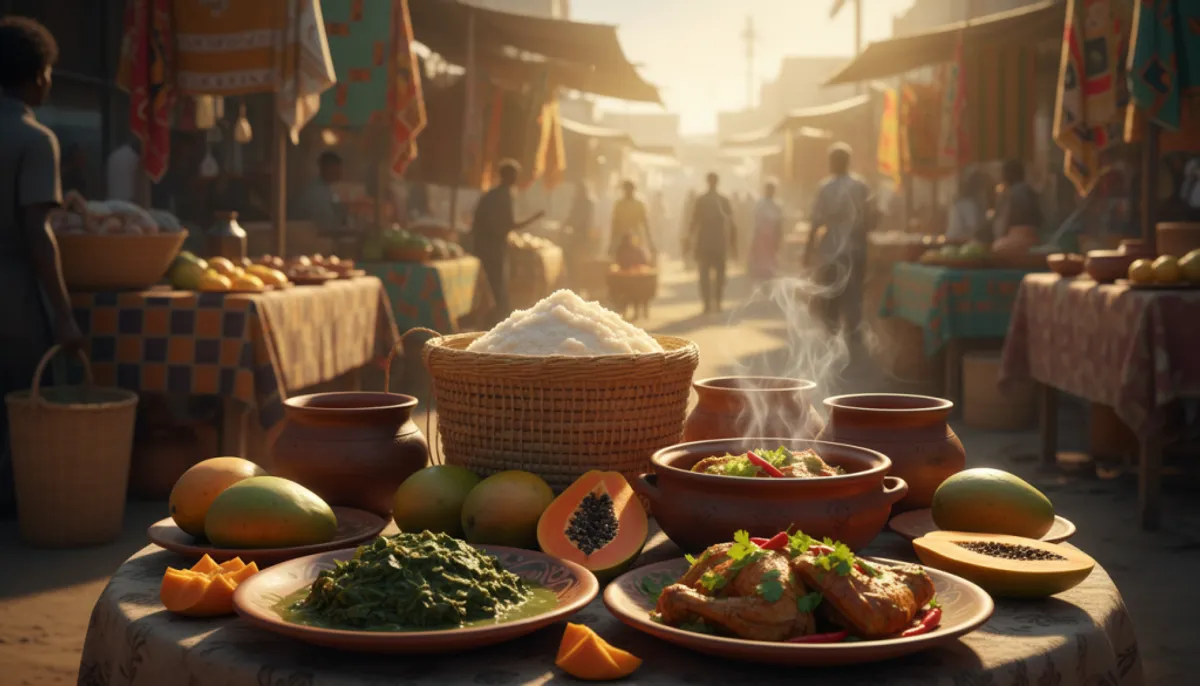
Culinary influences are multiple. African traditions coexist with the Portuguese heritage. Spices from the Indian Ocean complement this flavorful mix.
Matapa is an iconic dish. It combines pounded cassava leaves with crab, cashews, and coconut milk. The coastal nature also offers an abundance of fish and seafood.
Traditional Dishes and Street Food
Street food expresses urban culinary vitality. Grilled skewers, shrimp croquettes, and the famous prego sandwich can be found. The piri-piri chili enhances all these dishes.
| Dish | Description | Characteristic |
|---|---|---|
| Shrimp Rissois | Shrimp croquettes | Portuguese influence |
| Prawn Skewers | Grilled prawns | With piri-piri |
| Prego | Steak sandwich | Quick and spicy |
To accompany, local beers like Laurentina are popular. Traditional drinks maheu or pombe recall the roots. The galao, milk coffee, shows the Lusophone influence.
The lifestyles of Mozambicans oscillate between subsistence agriculture on their lands and diverse urban habits. This duality continually enriches the gastronomy of this country, generously offered by nature. Additionally, these lifestyles are deeply influenced by ghanaian traditions, showcasing the rich cultural tapestry that defines the region.
Mozambican Culture in the Modern World
The contemporary Mozambican scene reveals a cultural and sporting flourishing that radiates well beyond its borders. This dynamic relies on a booming tourism sector and an active intellectual life.
Influence in Education and Media
Education benefits from key institutions like Eduardo Mondlane University. Its museums preserve natural and historical heritage.
The media scene, framed by the state, ranks 131st globally for press freedom. Literary magazines Charrua and Xiphefo enliven city life.
Events like the Muvart art biennale and the Dockanema film festival stimulate creativity. They attract international attention.
Sports, Tourism, and Contemporary Festivals
The national sport shines thanks to Maria Mutola. This athlete has been a four-time world and Olympic champion in the 800 meters.
The country actively participates in the Olympic Games, Commonwealth, and African Games. The table below summarizes this sporting presence.
| International Competition | Notable Disciplines | Frequency of Participation |
|---|---|---|
| Olympic Games | Athletics, Swimming | Every 4 years |
| African Games | Football, Basketball | Regular |
| Games of the Lusophone | Multi-sports | Regular |
Travel is booming. The pristine beaches of the Bazaruto archipelago in the north and Tofo in the south are popular destinations.
The Ilha de Moçambique, a UNESCO site, is a must for a cultural journey. Visitors are now three times more numerous than twenty years ago.
Conclusion
At the end of this discovery, one thing is clear: the cultural strength of Mozambique is its openness. This country has woven its identity through the ages, from the first human traces over 100,000 years ago.
Its diversity is extraordinary. Forty-three languages and a hundred ethnic groups coexist, including various customs in africa. This mosaic forms a harmonious and vibrant whole.
Despite historical challenges, ancestral traditions endure. They are enriched by external influences. Transmission to younger generations ensures their continuity.
Each part of the territory offers unique experiences. From the coast to the inland lands, the welcome is warm. The future looks promising with a revival of artistic and tourist endeavors.
We encourage you to explore this fascinating country. It deserves a prominent place in the world heritage.
FAQ
What is the most significant influence of Portuguese colonization on the country today?
The most visible legacy is the official language, Portuguese, which unites this diverse nation. It is also found in the architecture of some cities and, of course, in the cuisine, with iconic dishes like piri-piri.
How many languages are spoken in Mozambique and which one dominates?
There are over 40 local languages! Portuguese is the language of the state and education, but Bantu languages like emakhuwa or xichangana are very much alive in daily life for a large part of the population.
Is there an important national holiday that celebrates the country's history?
Absolutely! Independence Day, June 25, is the most important holiday. It commemorates the end of Portuguese sovereignty in 1975. The celebrations, with music and dance, express great national pride.
Is Mozambican music known beyond its borders?
Yes, indeed! Rhythms like marrabenta have conquered Southern Africa and the world. Artists like poet Rui Noronha or contemporary groups bring the country's rich music to the international stage.
What is a must-try traditional dish?
Matapa is an iconic dish! It is prepared with pounded cassava leaves, cashews or peanuts, crab or shrimp, and coconut milk. It perfectly reflects the flavors of the land and the Indian Ocean.
Is the country a popular destination for its natural landscapes?
Mozambique is famous for its stunning white sand beaches and paradise islands, like the Bazaruto archipelago. A trip here is an invitation to discover preserved nature, from coral reefs to national parks in the north.
How does local culture manifest in modern life and tourism?
Through dynamic festivals, a flourishing contemporary art scene, and quality craftsmanship. Responsible tourism allows for authentic travel experiences, from traditional dances to craft markets, while supporting communities.