Welcome to a journey into the heart of a still unknown African treasure. Angola holds exceptional wealth, shaped by centuries and encounters.
Its unique identity arises from a fascinating blend of African, Portuguese, and Brazilian influences. These currents have intertwined to create a cultural heritage of great diversity.
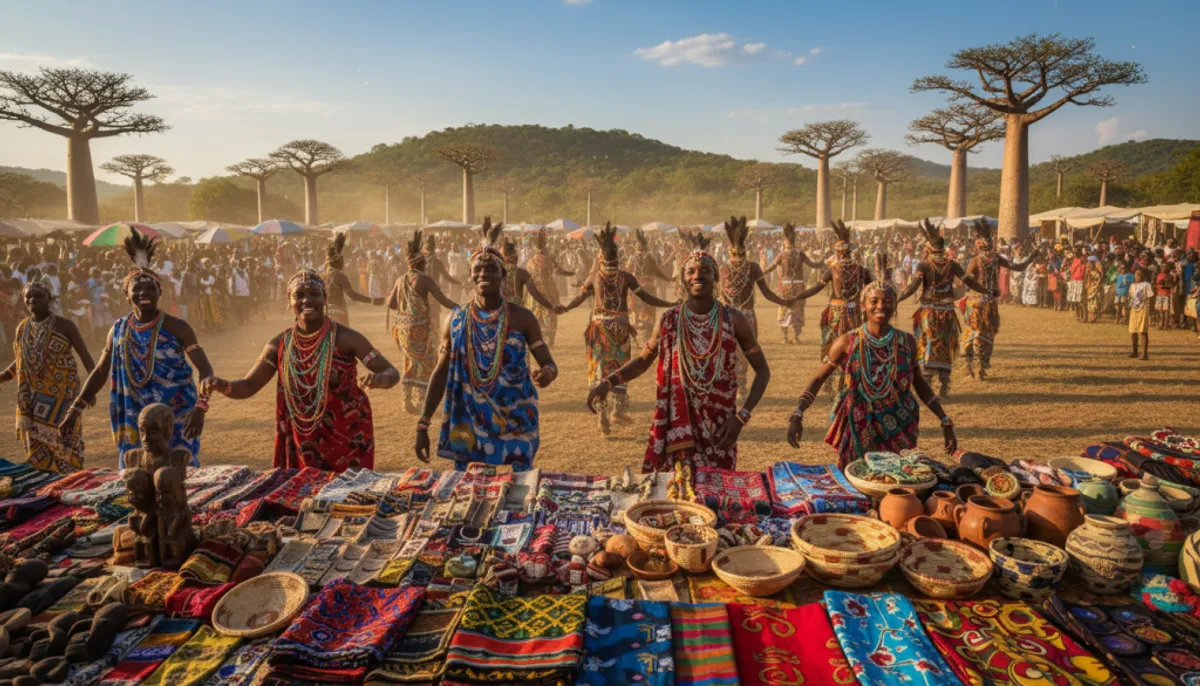
From enchanting music to culinary flavors, each facet tells a story. The epic of this country in Southern Africa is marked by remarkable resilience.
Despite challenges, ancestral traditions remain alive. They engage with modernity, creating a dynamic and contemporary legacy.
This article offers you a complete immersion. Get ready to discover the multiple dimensions of an incomparable cultural experience.
Key points to remember
- A unique heritage born from the blend of African, Portuguese, and Brazilian influences.
- A rich cultural expression, from music to culinary arts.
- A complex history that has forged the resilient identity of its people.
- A living heritage that preserves traditions while evolving.
- A destination offering a unique sensory and historical experience in Southern Africa.
- A Portuguese-speaking country with a strong and authentic character.
Introduction to Angola and its rich heritage
Located on the Atlantic coast of Southern Africa, Angola reveals itself as a multifaceted nation. With an area of 1.2 million square kilometers, this country ranks seventh on the continent.
The Republic of Angola is bordered by the Atlantic Ocean to the west. It shares its land borders with the Democratic Republic of the Congo, Zambia, and Namibia.
Its capital, Luanda, is a dynamic metropolis. It represents the economic and cultural heart of the nation.
The population of the country, estimated at 37.8 million inhabitants, is composed of many ethnic groups. This population diversity contributes to the richness of the heritage.
Angola is a mosaic where each people brings its color to the whole.
Its recent history is marked by the Portuguese colonial past. The access to independence on November 11, 1975, forged a resilient national identity.
| Aspect | Information | Comment |
|---|---|---|
| Area | 1,246,700 km² | 7th largest in Africa |
| Population (2025) | 37.8 million | Population growth |
| Capital | Luanda | Economic center |
| Official language | Portuguese | Common Bantu languages |
| National holiday | November 11 | Independence (1975) |
Positioned between French-speaking and English-speaking Africa, this Portuguese-speaking country forms a unique cultural bridge. The oil-rich enclave of Cabinda plays a crucial economic role.
Angolan culture: a plural heritage
The unique character of the Angolan nation emanates directly from its extraordinarily diverse human composition. This cultural heritage is a skillful blend of ancestral African, Portuguese, and Brazilian influences.
Nearly 90% of the inhabitants speak a Bantu language at home. This linguistic reality profoundly shapes everyday expressions.
The society is primarily structured around large ethnic groups. The Ovimbundus represent 37% of the population, followed by the Mbundus (24%) and the Bakongos (13.2%).
The Lunda-Tchokwés and Nganguela complete this rich picture. Each community brings its own traditions, languages, and customs.
This plurality is experienced daily, from gastronomy to the arts. It creates a dynamic and vibrant multicultural environment.
Religiously, about 90% of the population is Christian. Traditional beliefs continue to influence practices for about 10% of the Angolans.
This peaceful coexistence further enriches the social fabric. Tradition and modernity thus meet harmoniously.
Fascinating history of the country
The historical epic of this country plunges its roots into the golden age of the Kingdom of Kongo. This empire was well organized long before the arrival of Europeans.
The contact with the Portuguese in 1482 marked a turning point. The explorer Diogo Cão then reached the mouth of the Congo River.
This was the beginning of several centuries of colonization. A dark period of the slave trade transformed the region. For many years, it fed the colonies of Brazil and Cuba.
Independence was finally achieved on November 11, 1975. This day marked a major turning point after a long liberation struggle.
Unfortunately, the country then entered a long civil war. This internal conflict lasted 27 years and caused immense suffering.
The presidency of José Eduardo dos Santos spanned from 1979 to 2017. It covered most of this war period.
| Impact of the war | Number | Period |
|---|---|---|
| People mutilated | 400,000 | 1994 |
| People directly affected | 2.1 million | During the conflict |
| Displaced people | 1.3 million | During the conflict |
The ceasefire agreement of April 4, 2002, ended this civil war. It allowed the country to begin its reconstruction after many years of devastation.
This complex history, from empire to peace, has forged a resilient national identity. The country now looks to the future.
The culinary traditions of Angola
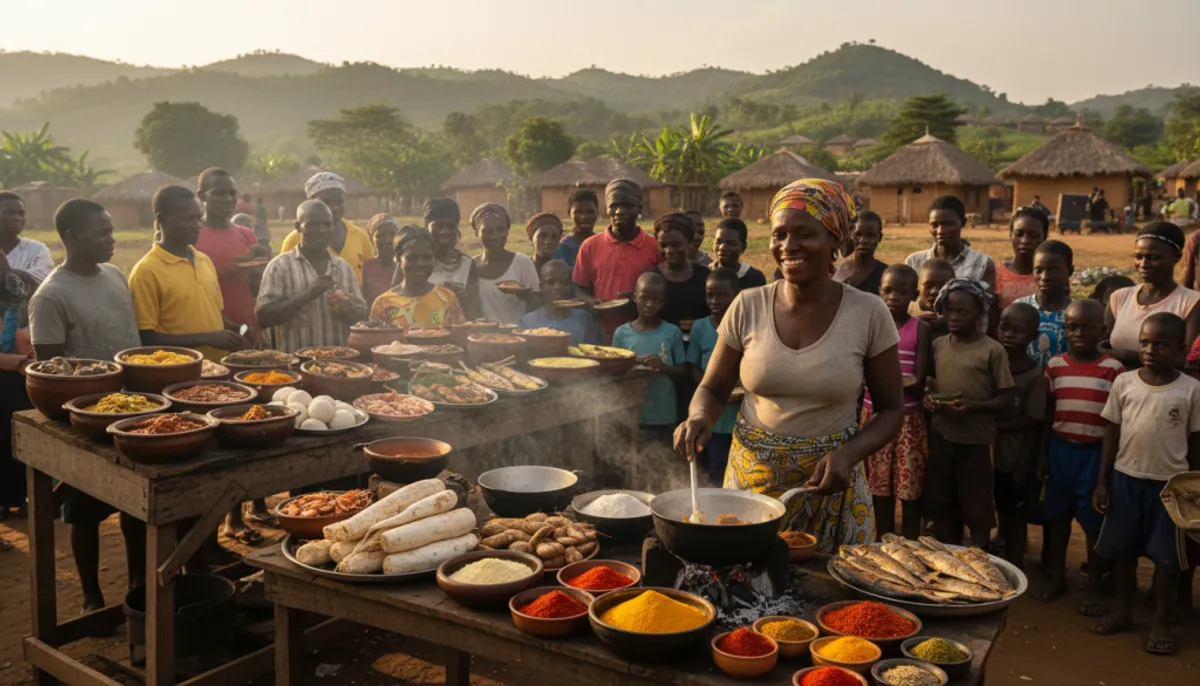
Discovering the gastronomy of this country is diving into its most convivial traditions. Each meal celebrates a savory heritage.
The preparation and sharing of dishes bring families and communities together. These moments perpetuate age-old customs.
Iconic dishes and their evolution
The Mufete is the festive dish par excellence. It is served at every special event such as weddings.
This feast consists of grilled fish, onion sauce, and beans in palm oil. It also includes steamed plantains and cassava.
This culinary example was already consumed during the colonial era. It was part of the menu of islanders throughout time.
The cherne (grouper) is another highly sought-after fish. Its flesh is prepared baked, roasted, or grilled.
The arroz de cherne, with or without shrimp, is a classic. These recipes illustrate a rich and varied cuisine.
Traditional drinks and festive accompaniments
Feasts are accompanied by drinks rooted in the land. The marufo, a palm wine, is produced locally.
It is made from palm trees and is widespread in sub-Saharan countries. It is a must for celebrations.
For non-alcoholic alternatives, kissanga is made from pineapple. The bididi is made from cashews.
These refreshing beverages perfectly complement every day of celebration. They make every meal a celebration.
| Item | Description | Characteristic |
|---|---|---|
| Mufete | Complete dish of grilled fish, beans, and plantains. | Iconic, served for major events. |
| Cherne | Grouper prepared in multiple ways. | Highly appreciated fish, irresistible flesh. |
| Marufo | Traditional palm wine. | Locally produced, unique taste. |
| Kissanga | Refreshing pineapple drink. | Non-alcoholic, fragrant, and sweet. |
These traditions reflect Portuguese, Brazilian, and African influences. Each recipe is a living example of this blend.
The table thus becomes a place of transmission and shared joy. It is another example of local conviviality.
Music and dance, expressions of Angolan identity
Enchanting rhythms and dancing movements form the beating heart of national identity. This art vibrates to the sound of instruments like the batuque, kissange, and marimba.
It tells stories and connects generations. It is a true flag for the people.
Semba, Kuduro, and Kizomba: rhythms and influences
The semba is an urban music born in Luanda in the 20th century. Its name comes from a ritual dance called “Massemba.”
In the 1960s, the group N’Gola Ritmos, with Liceu Vieira Dias, played a historic role. They created African music sung in the local language.
The kuduro emerged in the 1990s. Tony Amado invented it, drawing inspiration from electric sounds.
The kizomba, the “African tango,” was born in the early 1980s. It was influenced by the Cuban presence.
The artist Paulo Flores has been loved for 20 years by Portuguese-speaking audiences. His voice carries swaying melodies.
| Genre | Emergence period | Main characteristic |
|---|---|---|
| Semba | First half of the 20th century | Urban music, ancestor of Brazilian samba |
| Kuduro | 1990s | Electric and African mix, fast rhythm |
| Kizomba | Early 1980s | Slow couple dance, Cuban and zouk influence |
Traditional instruments and their cultural role
Instruments provide an essential base for each style. The batuque is a skin drum.
The kissange is a sanza or thumb piano. It produces complex melodies.
The marimba, a wooden xylophone, offers warm notes. These tools connect the past to the present.
Music is the language of the Angolan soul, where each instrument has a story to share.
Today, these sounds resonate around the world. They proudly represent the creativity of the Angolans.
The influence of Portuguese and local languages
The Portuguese language, once a colonial symbol, has become a pillar of national identity. Its evolution since 1975 is remarkable.
Angolan Portuguese and its peculiarities
Millions of people now speak Portuguese in major urban centers. A 1995 study revealed that nearly 99% of the population of Luanda, the capital, could express themselves in this language.
In these centers, a phenomenon of linguistic dispossession is observed. More than a third of children aged 6 to 14 only master Portuguese.
The civil war paradoxically accelerated this development. Population mixes spread the language as a vehicular tool.
Angolan vernacular Portuguese (PVA) has its own traits. Its phonetics feature more closed vowels.
Its lexicon incorporates many words from kimbundu. There are terms like batuque (drum), bombo (cassava), or camba (friend).
Regional dialects like luandense exist. Today, about 70% of Angolans use this language to varying degrees.
Unlike other colonies, no creole has formed. Portuguese has imposed itself directly, shaping a unique linguistic identity.
The dialects and Bantu languages in Angola
Beyond Portuguese, the country reveals extraordinary linguistic diversity with dozens of Bantu languages. This richness is an essential part of its identity.
More than 90% of Angolans use a Bantu language as their mother tongue. Nearly forty of these languages coexist within the territory.
The richness of regional languages
Five languages have national status and encompass about 80% of speakers. Each is rooted in a specific region.
The umbundu dominates with 4 million speakers, or 35.7% of the population. It is mainly spoken in the Central-South.
The kimbundu follows with 3 million speakers (26.7%). Concentrated in the Central-North, it has enriched the local Portuguese vocabulary.
The kikongo, linked to the ancient Kingdom of Kongo, has 1.1 million speakers. The quioco and ganguela complete this panorama.
| National language | Number of speakers | Percentage of the population |
|---|---|---|
| Umbundu | 4 million | 35.7% |
| Kimbundu | 3 million | 26.7% |
| Kikongo | 1.1 million | 9.8% |
| Quioco | 500,000 | 4.5% |
| Ganguela | 172,000 | 6% |
Lingala, although not native to the country, is also spoken by many Angolans. Khoisan peoples near the Zambian border speak non-Bantu languages.
In rural areas, these languages remain very much alive. They carry oral traditions and form a vibrant part of the heritage.
The Kingdom of Kongo and historical origins
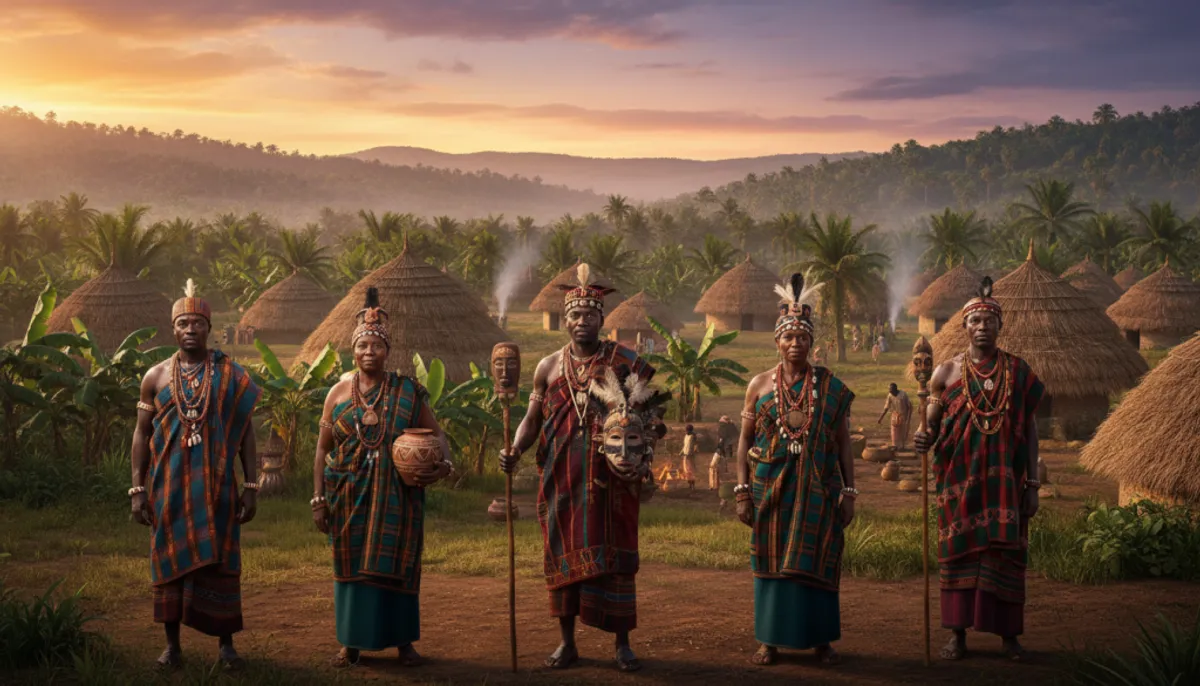
Long before the arrival of Europeans, a powerful empire dominated this region. This page of fascinating history begins with the Kingdom of Kongo.
It was the most organized state in sub-Saharan Africa. Its territory extended over the northern part of present-day Angola, Cabinda, and parts of several neighboring countries.
The legacy of the Kingdom of Kongo
This kingdom functioned as a sophisticated federation. In the 16th century, it brought together four distinct political sectors.
Clan chiefs led local entities. They were under the central authority of the mani-kongo, the king residing in Mbanza-Kongo.
The empire thrived thanks to a flourishing trade with the interior. Tools and weapons were exchanged for ivory and other precious goods.
The first relations with the Portuguese were peaceful at the time of their arrival. The sovereign Nzinga Nkuwu welcomed them favorably.
In 1491, missionaries converted the mani-kongo to Catholicism. The capital then changed its name to São Salvador.
For many years, the kingdom maintained a wide autonomy. But the situation deteriorated over time.
In 1668, the mani-kongo Antonio attempted to drive out the Europeans. He was defeated and killed in a decisive war.
This defeat marked the beginning of decline. It allowed the Portuguese to fully administer the territory.
The legacy of this empire remains very much alive today. The kikongo language and the traditions of the bakongo peoples testify to this.
The memory of this powerful kingdom still influences regional identity. It creates deep historical ties between nations.
Gastronomy as a vector of conviviality
Around a dish like Mufete, moments of joy transform into collective celebrations. Whenever good news arrives, whether it be a wedding or a birthday, this feast brings everyone together.
It transcends its simple food function to become a true social cement. Sharing this delicious meal strengthens the bonds of the community and perpetuates the sharing values of the society.
On a Sunday, a typical feast day, several generations gather. The table occupies a central place where culinary traditions are transmitted.
The collective preparation of meals creates a community dynamic. Everyone brings their know-how, weaving lasting memories and reinforcing identity.
Festivities and social traditions
A typical day of celebration perfectly illustrates conviviality and social traditions. It unites people around a festive meal.
The Mufete, an iconic dish, opens these moments of sharing. Everyone gathers to savor this hearty feast.
With full bellies, it is time to hit the dance floor. The music immediately animates the assembly.
Celebrations, dances, and community sharing
The rhythmic progression follows a joyful path. We start with semba, with catchy melodies.
Then the energy rises with electric kuduro. Finally, we come closer for kizomba, a couple dance.
Traditional instruments give soul to the party. The batuque, kissange, and marimba make every person vibrate.
A modern example of this expression is the series Windeck. Launched in 2012, it has captivated the audience.
This local production showcases the world of fashion. Its soundtrack draws from classic Angolan music, from morna to kuduro.
It demonstrates the vitality of contemporary cultural heritage. The festivities thus strengthen the bonds within the community.
| Dance style | Energy | Typical moment |
|---|---|---|
| Semba | Catchy and joyful | Beginning of the evening |
| Kuduro | Electric and fast | Heart of the party |
| Kizomba | Slow and sensual | End of celebration |
Young and old actively participate. These moments transmit a living heritage to all people.
The impact of the Angolan government on cultural enhancement
The lasting peace achieved in 2002 has allowed the Angolan government to refocus its priorities on cultural development. Since independence in 1975, the MPLA movement has governed the country.
The regime experienced the long presidency of José Eduardo dos Santos. These years were marked by the civil war.
The ceasefire agreement in Luanda in 2002 ended the conflict. This peace was fundamental for rebuilding the country.
President João Lourenço, who took office in 2017, has initiated reforms. The fight against corruption has freed resources for the cultural sector.
The Republic of Angola now plays an increasing role on the continent. It will hold the presidency of the African Union from 2025 to 2026.
The government has strengthened its cultural cooperation, particularly within the CPLP with Portugal and Brazil. It also maintains relations with historical partners.
These actions create a favorable environment for artists. The years of peace since the agreement of 2002 finally allow for this enhancement.
The place of culture in daily life
Twenty years ago, the streets of Luanda resonated with umbundu; today, Portuguese dominates conversations. This transformation illustrates the growing gap between urban and rural life.
Between urban life and rural traditions
In the capital, nearly a third of children speak only Portuguese. This language has become the key to school and work.
The urban population is very mixed. Refugees speaking French or English add a multicultural touch.
In the countryside, Bantu languages remain very much alive. They are an integral part of daily life and traditions.
The country has made enormous educational progress. The literacy rate reaches 72%.
After the peace, the number of schoolchildren exploded. It rose from 9,000 to 200,000 in just a few years.
The economy, heavily dependent on oil, has experienced ups and downs. This instability sometimes limits investments in heritage.
Yet, cultural life remains vibrant. Music, festivals, and traditional dishes bring Angolans together every day.
Despite the challenges, our heritage continues to unite us and give rhythm to our lives.
This resilience shows the strength of national identity. It evolves while keeping its deep roots.
Conclusion
At the end of this discovery, one certainty stands out: this country possesses a living treasure. Its unique heritage, a harmonious blend of African, Portuguese, and Brazilian influences, has survived the trials of history.
Angola plays an increasing role on the African and international stage. It exports its rhythms and flavors to the whole world.
We encourage you to experience this for yourself. Listen to the energetic semba or savor a traditional mufete.
This country also plays a significant diplomatic role. It uses its heritage as a bridge between communities.
This identity evolves while honoring its roots. It remains dynamic and deeply endearing.
FAQ
What are the main influences of Angolan cuisine?
The local gastronomy is a delicious blend of African ingredients, Portuguese contributions, and Brazilian influences. Dishes like *muamba de galinha* or *calulu* illustrate this fusion, creating a unique culinary experience in the world.
What musical styles originated in Angola?
The country is the birthplace of world-renowned rhythms like Semba, the ancestor of samba, and Kizomba. Kuduro, more recent, is an energetic urban phenomenon. These genres deeply express the identity and history of society.
Is Portuguese the only language spoken in the country?
No, although Portuguese is the official language, many Bantu dialects are alive, such as umbundu or kimbundu. This linguistic richness is an integral part of the national heritage and daily life for many people.
What role did the Kingdom of Kongo play?
This historical kingdom, powerful between the 14th and 19th centuries, profoundly marked the region. Its legacy, visible in traditions, art, and social organization, constitutes a fundamental basis for understanding the continent's history.
How do traditional festivities unfold?
Celebrations, whether family or community, are moments of great sharing. They often mix traditional dances, lively music, and hearty meals, strengthening the bonds within the population.
What is the impact of the civil war on heritage?
The long conflict unfortunately caused damage. Since the peace agreement in 2002, efforts have been made to preserve and revitalize traditions. This reconstruction plays a crucial role in the unity and future development of the nation.