
Welcome to this fascinating exploration of a small Balkan country. This nation hides treasures of exceptional wealth, perfect for enthusiasts of authentic travel.
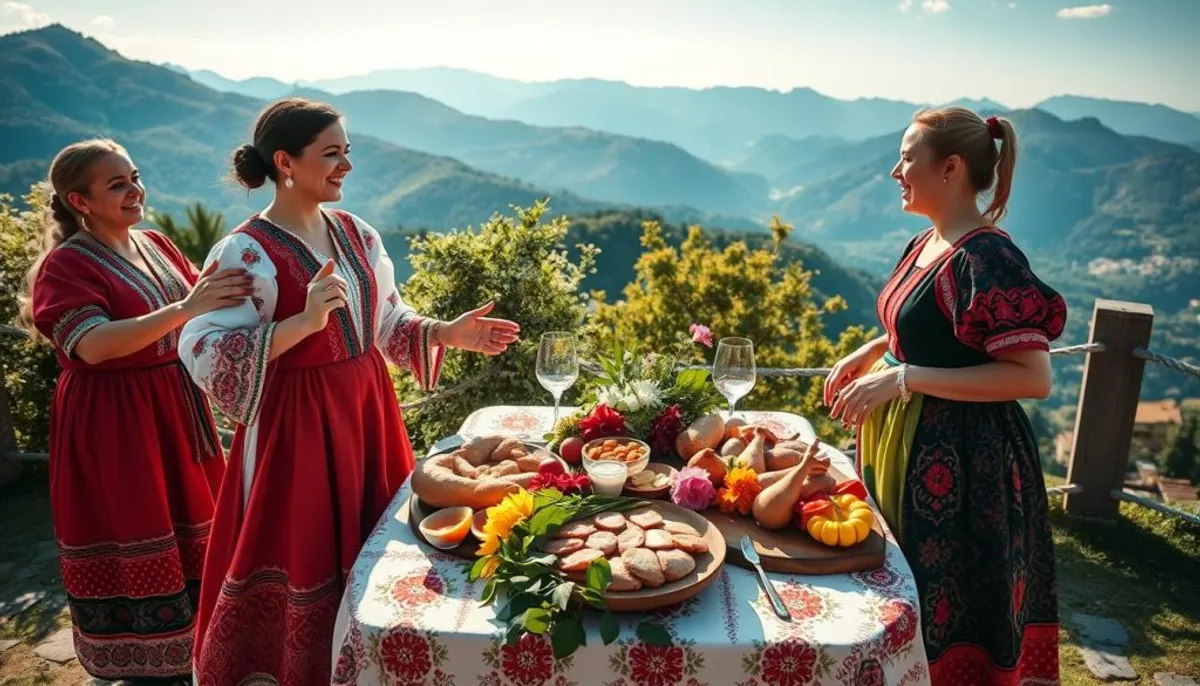
With around 650,000 inhabitants, this country in Southeast Europe has a unique identity. It is the result of a blend of influences from Greece, Rome, Byzantium, the Ottoman Empire, and Venice.
We will discover how ancestral traditions coexist with modernity. This vibrant culture is evident in ceremonies, art, gastronomy, and colorful festivals.
Every detail tells a centuries-old story. Prepare for a journey into the heart of a distinctive and captivating identity.
Key Points to Remember
- Montenegro is a small Balkan country with a rich and little-known culture.
- Its cultural identity is the result of centuries of diverse influences.
- Ancestral traditions remain very much alive.
- Culture manifests in daily life, gastronomy, and festivities.
- This article is an invitation to discover this unique heritage.
Introduction to Montenegrin Culture
Between sparkling sea and majestic mountains, Montenegro cultivates a unique heritage in Southeast Europe. This small country in the Balkans unfolds its charms between the Bay of Kotor and Lake Shkodër.
Its exceptional geographical position makes it a historical crossroads. The dividing line between Western and Eastern empires once traversed this territory.
Presentation and Geographical Context
With approximately 635,000 inhabitants projected in 2025, this compact nation has a modest human density. Yet, its influence far exceeds its borders.
The local name “Crna Gora” evokes the dark reliefs that dominate the landscape. These mountains have forged the resilient character of its population.
The Main Lines of Montenegro's History
The history of this country is marked by decisive stages. As early as the 14th century, the term referred to part of the Principality of Zeta.
In 1878, the Congress of Berlin recognized its independence. Then on June 3, 2006, Montenegro proclaimed its complete sovereignty.
This region of the world has managed to preserve its identity despite external influences. Between the Adriatic sea and high plateaus, its unique destiny continues to fascinate.
The Historical and Multicultural Influences
This region of the Balkans has served as a crossroads where the traditions of multiple civilizations have mixed over the centuries. The journey of this country reflects a rich history marked by varied influences.
Ancient, Byzantine, and Ottoman Legacies
As early as the 8th century BC, the Greeks established trading posts. The Romans took control two centuries later, administratively organizing the territory.
The Byzantine legacy brought Orthodoxy after the fall of Rome. The arrival of the Ottomans in 1479 introduced new cultural dimensions throughout the Balkan world.
The Impact of Empires and Migrations
Venice and Austria-Hungary also left their architectural mark. These various influences create a unique mosaic where diverse traditions coexist.
In the 16th century, power passed to the prince-bishops of Cetinje. This original period fused spiritual and temporal authority.
Political and Cultural Evolution in the 20th Century
The attachment to Serbia in 1918 marks an important turning point. Integration into communist Yugoslavia profoundly transformed society.
These successive transformations enrich the heritage without erasing the distinctive identity. Contemporary culture retains traces of this complex past.
Traditions, Customs, and Daily Life
Daily life in this Balkan country unfolds according to a calendar rich in celebrations and rituals inherited from the past. Traditions mark each stage of the year, creating a strong bond between generations.
Ceremonies, Festivals, and Traditional Rituals
The festive calendar is particularly dense. The inhabitants celebrate Orthodox Christmas on January 7 and 8, followed by Constitution Day on April 27.
The national holiday on July 13 commemorates international recognition. The Kotor Carnival, after Saint Tryphon on February 3, attracts thousands of visitors.
Religion plays a central role with 72% Orthodox, 16% Muslims, and 3.5% Catholics. This diversity is reflected in the festivals throughout the year.
Social and Friendly Practices
The “corso” is a deeply rooted social tradition. Montenegrins stroll in the late afternoon along the main avenue of towns.
This ritual creates special moments of conviviality. People dress carefully for these gatherings, demonstrating significant social respect.
The Fasinada, celebrated every July 22 in Perast, brings the community together around the islet of Gospa od Skrpjela. These traditions keep the local identity alive.
Arts and Intangible Heritage
The arts and intangible traditions of the country offer a unique window into its deep identity. This living heritage is passed down from generation to generation, preserving exceptional know-how.
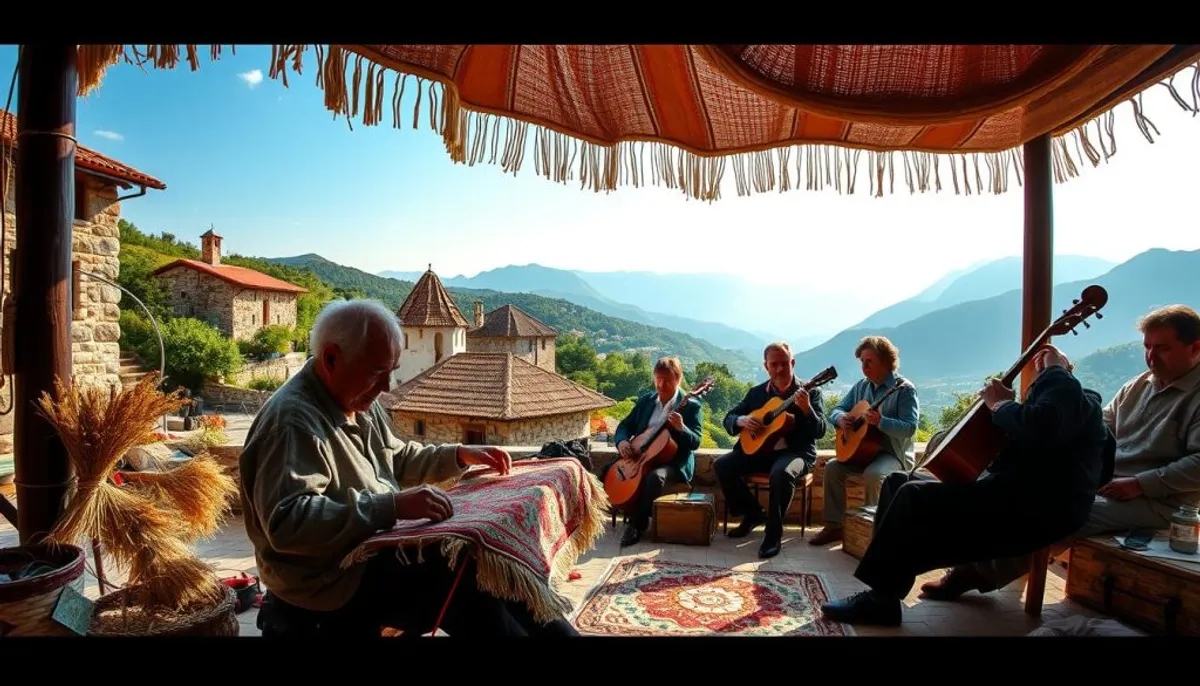
Craftsmanship, Architecture, and Local Design
The architecture reveals a fascinating evolution through the ages. The Ostrog Monastery, carved into the cliff in the 17th century, impresses with its boldness. The Cathedral of Podgorica represents contemporary design.
Traditional craftsmanship includes lace from Dobrota, which is eight centuries old. Each centimeter requires five to six hours of meticulous work. Renowned painters like Dado have contributed to spreading this artistic culture.
Music, Dance, and Cultural Festivals
The local music perfectly reflects the country’s crossroads position. Influenced by Ottoman and Slavic traditions, it creates a unique style. Traditional dances like the Kolo keep these expressions alive.
Cultural festivals celebrate this artistic richness throughout the year. They provide stages for traditional music and folk dances. This intangible heritage constitutes the vibrant soul of the region.Montenegrin Cuisine and Beverages
The gastronomic discovery of Montenegro reveals a palette of flavors as varied as its landscapes. This authentic traditional belarusian cuisine perfectly reflects the geographical diversity of the territory.Culinary Specialties and Street Food
The local gastronomy offers emblematic specialties. The famous ham from Njeguši and its artisanal cheese represent the essence of mountain flavors.
The popeci, breaded cutlets stuffed with cheese, and kacamak illustrate the richness of local products. Popular street food includes pljeskavica and ćevapi.
Mediterranean and Balkan Influences
The coastal cuisine is inspired by Mediterranean traditions. It uses olive oil, fresh vegetables, and fish as essential bases.
In the mountains, dishes become more rustic. Potatoes, cabbage, and onions form the basic diet of this region.
Wines, Rakija, and Drinking Traditions
The country produces excellent wines like red vranac and white krstac. These local wines pair perfectly with charcuterie.
Rakija, the national strong drink, comes in several versions. Nikšićko beer complements this varied brewing offer.
| Region | Typical Products | Specialties | Influences |
|---|---|---|---|
| Adriatic Coast | Fish, olive oil, Mediterranean vegetables | Chopska salad, popeci | Mediterranean, Italian |
| Interior Mountains | Cheese, ham, potatoes | Kacamak, Njeguški pršut | Balkan, Slavic |
| Central Valleys | Grilled meats, dairy products | Ćevapi, pljeskavica | Ottoman, Hungarian |
Cultural Tourism and Authentic Experiences
Cultural tourism in this Balkan nation transforms every visit into a memorable adventure. Travelers discover a country where each experience becomes a deep immersion.
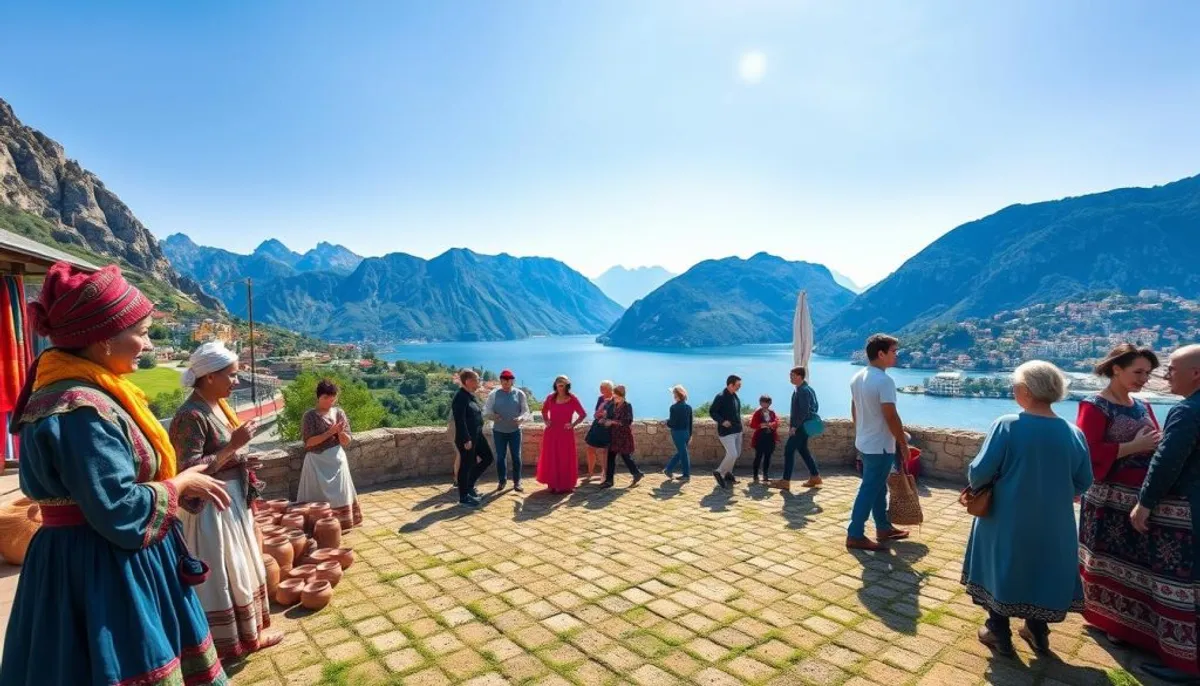
Must-See Historical and Natural Sites
Kotor, listed as a UNESCO World Heritage site, captivates with its medieval old town. The Ostrog Monastery, perched on the mountains, offers breathtaking panoramic views.
Lake Skadar offers rides in a “čun,” a traditional wooden boat. The “Niagara” waterfall and the canyon of the Cijevna River amaze nature lovers.
Immersion in Local Traditions
Attending a water polo match allows you to experience the national sporting passion. The team won gold at the 2021 World Championships.
Visiting a rakija distillery reveals the secrets of artisanal production. Observing the creation of Dobrota lace showcases a craftsmanship that is eight centuries old.
Cultural Activities and Travels
Participating in the Kotor Carnival, a vibrant cultural festival with its masked parades, creates unique memories. These festivals enliven the streets in an authentic festive atmosphere.This journey through the mountains and along the Adriatic sea allows for a deep understanding of local traditions. Each activity offers a real connection with the soul of the country.
Explore Montenegrin Culture
Diving into the heart of Montenegrin identity reveals a fascinating mosaic of linguistic and ethnic diversity. This complexity constitutes the very essence of the country.
An In-Depth Look at Its Riches and Heritage
Montenegrin is the official language, but four other languages enjoy official usage status. This recognition reflects the rich ethnic diversity.
The demographic composition illustrates this plurality. Montenegrins represent 47% of the population, followed by Serbs (30%).
This diversity is explained by the numerous influences throughout history that have shaped the territory. Contemporary traditions still bear these marks.
| Language | Status | Alphabet Used | Mutually Intelligible With |
|---|---|---|---|
| Montenegrin | Official | Latin and Cyrillic | Serbian, Croatian, Bosnian |
| Serbian | Official usage | Latin and Cyrillic | Montenegrin, Croatian, Bosnian |
| Croatian | Official usage | Latin | Montenegrin, Serbian, Bosnian |
| Bosnian | Official usage | Latin | Montenegrin, Serbian, Croatian |
| Albanian | Official usage | Latin | Specific |
The Montenegrin diaspora numbers around 800,000 people worldwide. It maintains close ties with the country of origin.
Since 2007, the constitution guarantees the preservation of this rich multicultural history. Ancestral traditions coexist harmoniously with modernity, including elements of estonian folklore that enrich the cultural tapestry.
Conclusion
At the end of this immersion in the Montenegrin universe, one thing is clear: this territory holds cultural treasures of rare authenticity, including the cultural heritage of cyprus. Our journey through this unique culture has revealed a remarkable balance between ancestral traditions and modernity.From the delicious local cuisine to the enchanting melodies of its traditional music, every aspect of Montenegrin life reflects a rich heritage. Montenegrins, proud of their history, passionately perpetuate their age-old customs.
This small country in the Balkans invites you to discover its secrets in the very heart of its breathtaking landscapes. An authentic experience awaits you, where legendary hospitality and vibrant traditions will create unforgettable memories.
Whether you are a gastronomy enthusiast, a history buff, or simply curious, Montenegrin cuisine and its vibrant culture will captivate you. Montenegro is waiting for you to share its treasures.
FAQ
What is the best time to visit Montenegro and participate in its festivals?
The period from April to October is ideal. You can attend events like the Budva Summer Festival. The summer months are perfect for enjoying the sea and outdoor festivities.
What typical dishes should you absolutely try during a trip?
Don't miss the smoked ham (pršut), local cheeses like njeguški sir, and mountain stew (kačamak). Montenegrin gastronomy is a true delight, made from fresh products.
How does religion influence daily life and traditions?
Religion, primarily Orthodox, plays a central role. It marks holidays, family ceremonies, and even the architecture of monasteries and churches, at the heart of the heritage.
What are the most popular traditional dances?
The Oro, a circle dance, is very widespread. It symbolizes unity and is practiced during festivals and large gatherings, accompanied by folk music.
Is the country easy to explore for a tourist seeking an authentic experience?
Absolutely! Between the mountains, the Adriatic sea, and ancient villages, the country offers easy immersion. The locals are very welcoming and love to share their customs.
What languages are spoken by Montenegrins?
The official language is Montenegrin. However, many people also speak Serbian, and English or German are often understood in tourist areas.