
Welcome to the fascinating universe of the Berber ethnic group originating from Kabylie. This mountainous region of Algeria, with its Djurdjura peaks and villages clinging to the terrain, is home to a living treasure.
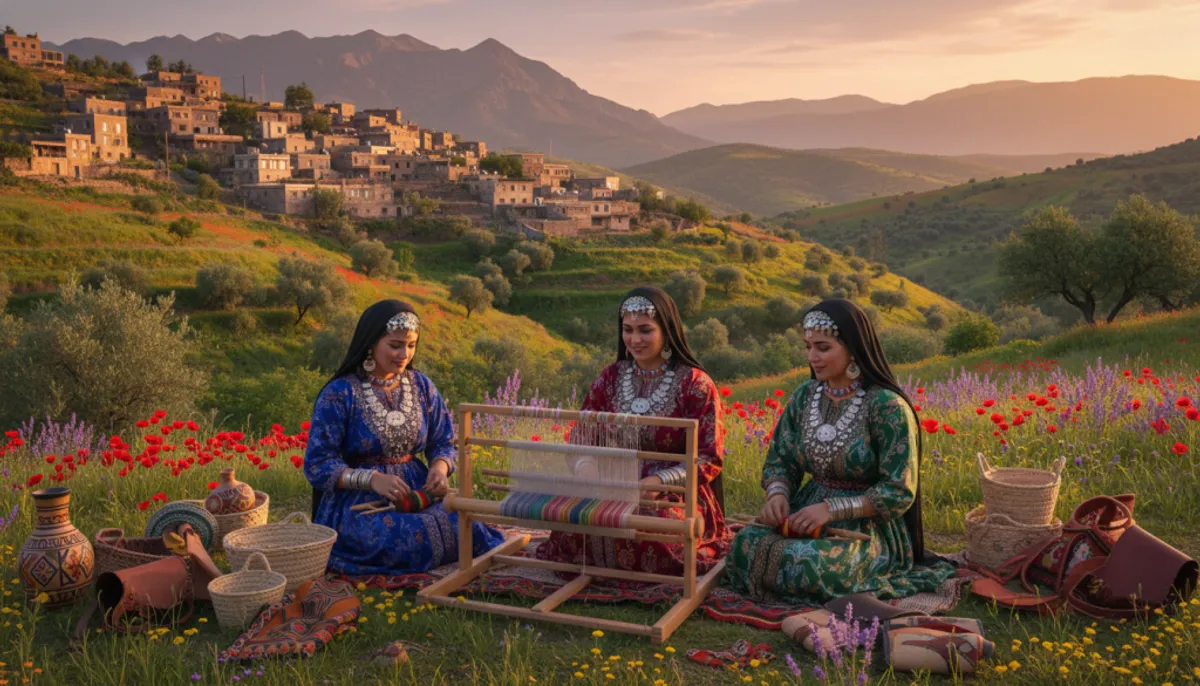
Its heritage has been built on a millennia-old history, marked by resistance and the preservation of a unique identity. We will explore its ancestral traditions, from craftsmanship to music, which tell a family and collective saga.
These artistic and social expressions continue to shine well beyond the mountains, carried by an active diaspora. This journey will reveal why this heritage remains so precious and dynamic today.
Key Points to Remember
- Kabylie is a mountainous Berber-speaking region in northern Algeria.
- Its cultural heritage is one of the most vibrant in North Africa.
- Oral traditions, craftsmanship, and music are its pillars.
- This culture has a long history of resistance and identity preservation.
- It continues to evolve and inspire, especially through its global diaspora.
- The Kabyle language is an essential vehicle for this cultural transmission.
Introduction to the World of Kabyle Culture
Let’s dive into the heart of an ancestral heritage that has traversed centuries in this mountainous region of North Africa, reflecting the rich saharan heritage. This Berber land offers a remarkable example of identity resilience.
Geographical and Historical Context
Kabylie occupies a strategic position in northern Algeria. Its mountain ranges, such as Djurdjura, create a protected natural space. The Mediterranean coastline complements this diverse landscape.
Historically, this region has always played an important role in the Berber world. It has served as a refuge against successive invasions. Its relative isolation has favored the preservation of traditions.
The Specificities of an Identity Living Through Time
The Kabyle identity is distinguished by its adaptability. It integrates changes while preserving its fundamental values. This village society maintains a unique social organization.
| Historical Period | Geographical Characteristics | Social Structures | Cultural Transmission |
|---|---|---|---|
| Pre-colonial Era | Mountainous perched villages | Village assemblies (tajmaat) | Oral poetry and tales |
| Colonial Period | Refuge in the mountains | Organized resistance | Patriotic songs |
| Contemporary Era | Growing urbanization | Active diaspora | Media and education |
Transmission occurs mainly through language and oral traditions. The extended family plays a central role in this perpetuation. Each generation adds its contribution to this living heritage.
Origins and Etymology of Kabyle Culture
The origin of the names designating this mountain population reveals a complex history of identity and perception. Each designation carries centuries of cultural interactions.
Etymology: Kabyle, Kabylie, and Their Variants
The French term "kabyle" finds its roots in the Arabic language. It derives from the word qabīla, meaning "tribe".
This designation became popularized in the 19th century. The French colonial administration adopted it to identify these mountain communities.
Historical and Cultural Names
Before the use of the name "kabyle", the populations used other designations. Izwawen represented their true indigenous identity.
Arabic speakers used the term Zouaoua. This word would derive from the Berber Agawa, referring to the mountain ranges.
| Name | Language Origin | Historical Usage | Meaning |
|---|---|---|---|
| Izwawen | Indigenous Berber | Traditional self-designation | Ancestral name |
| Zouaoua | Berber derivation | Usage by Arabic speakers | Geographical reference |
| Imazighen | Berber language | Self-designation of Djurdjura | Free men |
| Qaba'il | Arabic | Original term used by the French | Tribes |
Izwawen is the true ancient and indigenous name of the Kabyles.
These different names illustrate the richness of historical designations. They testify to the multiple perspectives on this community.
Understanding this language of designations sheds light on identity evolution. Each name tells a part of the story.
Ancient History and the First Confederations
Ancient historical sources illuminate the foundations of traditional society. This period already reveals a complex and structured tribal organization.
The Numidian Era and Roman Influence
The territory belonged to the kingdom of Numidia. The Romans controlled the valleys but avoided the mountains.
They named these ranges Mont Ferratus, literally "mountains of iron". This mountainous region remained largely autonomous.
The Confederations of the Quinquegentiens and Bavares
The populations were grouped into powerful confederations. The Romans identified them under the name of Quinquegentiens and Bavares.
The historian Ammianus Marcellinus documented five main tribes. Their descendants still populate the region today.
| Confederation | Documented Tribes | Current Location | System of Organization |
|---|---|---|---|
| Quinquegentiens | Tendenses, Mississenses | Ifnaien, Imssissen | Clan-based and familial |
| Quinquegentiens | Isaflenses, Iesalenses | Iflissen, Aït Irathen | Hierarchical tribal structure |
| Bavares | Jubaleni | Bibans | Military and familial alliance |
Local mythology evokes the giant Maziq as the founding patriarch. His kingdom included five confederations corresponding to the Quinquegentiens.
These structures foreshadowed the current village systems. The spirit of resistance was illustrated during the revolts against Rome.
Medieval Period and Muslim Conquests
The Islamic expansion in the 8th century profoundly transformed the cultural landscape of this Berber region. This era saw the establishment of a complex balance between external influences and local autonomy, often reflecting the ongoing debate of nature vs culture.
The Arrival of Islam and Relative Independence
The Umayyads took control of the plains around the 8th century. However, the mountain ranges fiercely resisted their authority.
The conquerors designated these rebellious areas in Arabic as el aadua, meaning "the enemy". This designation reflects the determination of the local populations.
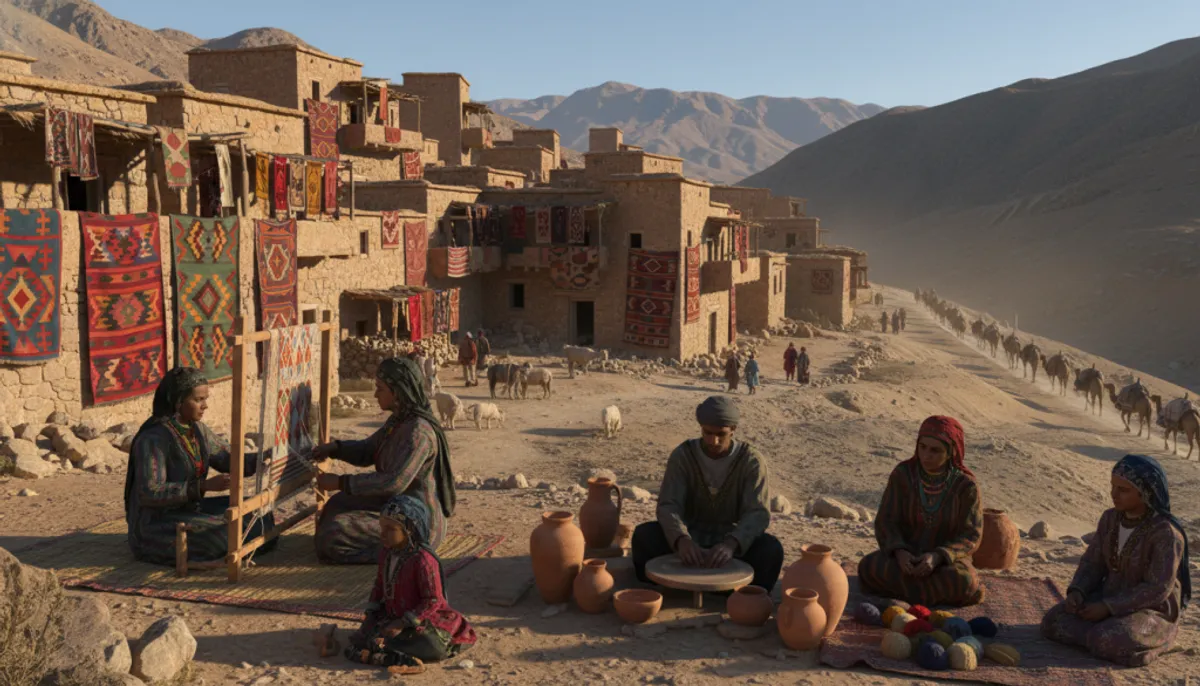
Islamization progressed peacefully thanks to respected marabouts. The mountain society adopted the new religion while preserving its traditional structures.
| Period | Political Authority | Status of the Mountains | Religious Evolution |
|---|---|---|---|
| Early 8th Century | Umayyad control of the plains | Active resistance | Gradual introduction |
| After 743 | Relative independence | Preserved autonomy | Islamization by marabouts |
| Subsequent Era | Select religious recognition | Space of freedom | Cultural integration |
The Great Berber Revolt of 743 marked a turning point. The communities maintained their independence against the Aghlabids.
This mountainous space became a refuge for ancestral traditions. The Kutamas recognized the religious authority of the kings of Tahert while preserving their autonomy.
Fatimid Era and Local Dynasties
The 10th century marked the beginning of a profound transformation for this Berber region. This period saw the emergence of powerful dynasties that significantly influenced territorial development.
The true home of the Fatimids was located in Petite Kabylie. The Ismaili preacher Abou Abdallah al-Chii found a receptive audience there.
Role of the Fatimids and Hammadids in the Region
The Ketama tribe played a decisive role in the foundation of the Fatimid empire. They led the conquest of Ifriqiya, significantly reducing the Arab presence in the Maghreb.
The Zouaouas, another important group, actively supported this movement. They rallied to Caliph Al Mansour during the revolt of Abu Yazid in 947.
After the departure of the Fatimids to Egypt, the Hammadids took over. This dynasty ruled for nearly two centuries, transforming the territorial organization.
Béjaïa became their capital and a radiant center of knowledge. The city attracted scholars, poets, and artisans from across the Mediterranean world.
These prosperous years saw the refoundation of major cities like Algiers. Béjaïa established itself as a city of sciences and arts.
The legacy of this era remains visible in architecture and intellectual traditions, including aspects of macedonian history. The region also welcomed Andalusian Berbers fleeing the Reconquista.
Ottoman Era and Local Resistances
In the face of Ottoman expansion, the mountain communities developed remarkable alliance strategies. This complex period saw military cooperation coexist with autonomy preservation.
The end of the 15th century coincided with the weakening of the Western Muslim world. After the fall of Granada in 1492, the corsair Arudj Barbarossa repatriated Muslims expelled from Spain.
Military Alliances and Kabyle Contribution
Ahmed Ibn Belkadi, sultan of Koukou, called upon the Barbarossa brothers in 1514. Together, they liberated Jijel and Béjaïa from the Spaniards. This collaboration marked the birth of the Regency of Algiers.
During these crucial years, the mountainous territory maintained a particular organization. Three kingdoms coexisted with a status that varied over time.
| Kingdom | Location | Political Status | Military Contribution |
|---|---|---|---|
| Koukou | Grande Kabylie | Relative autonomy | Alliance with Barbarossa |
| Aït Abbès | Central massif | Frequent independence | Victory at Tlemcen (1551) |
| Aït Jubar | Eastern region | Intermittent vassalage | Defense of Constantine |
The fighters formed one of the most formidable army corps. Their bravery was celebrated by the dey of Algiers after the victorious defense of 1775.
The Kabyle mountain has always remained a sanctuary of independence against central powers.
Captain Hamidou Ben Ali illustrates this maritime contribution. Despite their commitment, the mountain ranges remained largely inaccessible to governors.
Resistance to French Colonization
Faced with the advance of French colonialism, the Berber communities mounted remarkable resistance. This crucial period testifies to their determination to preserve their autonomy.
Emblematic Revolts and Heroic Figures
As early as 1830, the elders mobilized 18,000 soldiers to defend Algiers. Mohamed ben Zamoum, a man from the Iflissen Umellil tribe, organized the resistance from Tamentfoust.
Emir Abdelkader visited the region in 1837. He appointed Ahmed Ben Salem as khalifa and recognized Zamoum as Agha. This strategic alliance significantly strengthened the defense.
In 1844, Marshal Bugeaud encountered fierce opposition. The fighters lined up 25,000 men and repelled the French offensive. This victory marked a crucial moment.
Fatma N'Soumer, whose name remains etched in memory, continued the struggle until 1871. Her fierce resistance inspired an entire generation.
The society paid a heavy price during these difficult years. Authorities confiscated lands and deported entire families to New Caledonia.
The Mokrani revolt in 1871 represented the last major uprising. It was only in 1857 that France fully conquered the territory.
The Kabyle Language and Literature
The linguistic richness of this Berber community represents an exceptional living heritage. Taqbaylit, as it is locally called, is the first language of Berber in Algeria by the number of speakers.
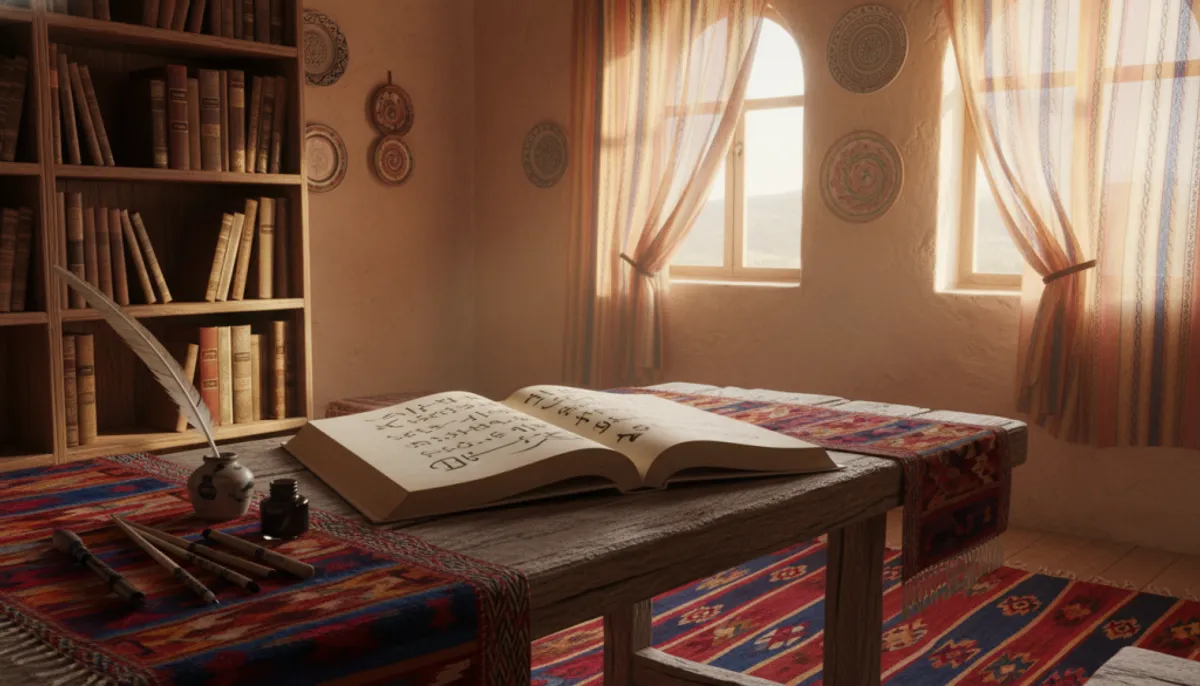
Oral Transmission and Traditional Poetry
For centuries, oral transmission has preserved this unique literature. The isefra (poems) and tales were passed down from generation to generation.
Figures like Si Mohand U Mhand have marked traditional poetry. Their poetic texts reflect ancestral wisdom.
The Evolution Towards a Modern Language
In the 20th century, Jean Amrouche undertook pioneering translation work. His Berber Chants of Kabylie have written down this oral heritage.
Tassadit Yacine scientifically studied the izli, these traditional love songs. His anthropological approach reveals the complexity of this artistic expression.
Today, this Berber language adapts to contemporary challenges. It is used in media, education, and modern artistic creation, including the vibrant world of taiwanese art.
Artists like Aït Menguellet perpetuate this heritage. Their work shows how traditional languages can evolve without losing their soul.
Traditions, Craftsmanship, and Intangible Heritage
Berber craftsmanship shines through its symbolic beauty and ancestral techniques passed down from generation to generation. These artistic expressions, including the traditional art of timor, constitute a living heritage that continues to evolve while retaining its identity essence.Craftsmanship, Weaving, and Ancient Symbols
The village of Aït Yenni is globally recognized for its traditional jewelry. Artisans work with enamelled silver in vibrant colors using methods passed down for centuries.
The Aẓetta, or traditional weaving, represents a particularly precious practice. Mainly carried out by women, it produces carpets and blankets adorned with geometric patterns carrying meaning.
The Aoucham form a true visual Amazigh language. These geometric symbols appear in all traditional arts, expressing identity and ancestral protection.
Polyphonic Songs and Cultural Manifestations
The Ahellil, inscribed in UNESCO's intangible heritage, testifies to the rich musical heritage of the Berbers. These songs accompany all important celebrations.
Traditional songs create a strong social bond during weddings and agricultural festivals. They rhythmically mark the community and spiritual life of villages like Bouzeguène.
Even natural sites integrate into traditions. The Kefrida waterfall served as a ritual site to request blessing and fertility.
These artistic expressions are not fixed but adapt to modernity while retaining their identity function.
Iconic Figures and Artists of Kabyle Culture
The 20th century saw the emergence of artistic and intellectual figures who brought Kabyle culture to the international stage. These personalities masterfully combined tradition and modernity, reminiscent of the vibrant cultural expressions of the 80s.
Mouloud Mammeri, Idir, and Lounis Aït Menguellet
Mouloud Mammeri embodies the cultural renaissance of the 20th century. A writer and anthropologist, he dedicated his life to preserving heritage.
His work opened a new page in international recognition. He wrote the preface to the Berber Chants of Kabylie.
Idir conquered the entire world with "A Vava Inouva". This song demonstrated the universality of traditional melodies.
Lounis Aït Menguellet represents the contemporary philosophical voice. His texts blend ancestral wisdom with the quest for freedom.
| Artist | Field | Period | Major Contribution |
|---|---|---|---|
| Mouloud Mammeri | Anthropology and literature | 20th century | Scientific preservation of oral heritage |
| Idir | Music | 1970s-2000 | Internationalization of traditional songs |
| Lounis Aït Menguellet | Sung poetry | 1970 to today | Poetic renewal and social engagement |
| Taos Amrouche | Literature and song | Mid 20th century | First female novelist and collector of traditions |
| Kateb Yacine | Engaged literature | 1950s-1980s | Defense of the Amazigh language |
These artists transformed their heritage into universal works. Their influence far exceeds the borders of their region of origin.
Their work continues to inspire new generations. It ensures the living transmission of a precious heritage.
Kabyle Diaspora and Living Memory
With nearly half of its population residing outside Algeria, the diaspora constitutes a major demographic phenomenon. This dispersion has profoundly marked recent history.
The Influence of the Diaspora in France and Internationally
France represents the second demographic home with approximately 800,000 people. This massive presence has had a determinant effect on the preservation of traditions.
Since the 1920s, immigrant workers have played a pioneering role. They created the first North African independence movements.
The dispersed families maintain strong cultural ties. They actively participate in the transmission of the language across the entire world.
| Host Country | Estimated Population | Settlement Period | Cultural Contribution |
|---|---|---|---|
| France | 800,000 | Early 20th century | Associations and media |
| Belgium | 70,000 | 1960s | Community events |
| United Kingdom | 60,000 | Late 20th century | Language education |
| Canada | 25,000+ | Last decades | Artistic creation |
The diaspora is not limited to a passive presence but constitutes a dynamic cultural actor on an international scale.
The "Kabyles of the Pacific" illustrate a painful page of history. Their ancestors were deported to New Caledonia after the revolts of the 19th century.
Today, modern technologies allow families to maintain collective memory. Social networks create bridges between different settlement areas.
The Place of Kabyle Culture in Contemporary Society
The cultural claims made by this community have profoundly marked the Algerian political landscape. This Kabyle society occupies a central position in discussions about identity and democracy in North Africa.
Since independence, this region has become the main hub for Berber identity demands. The Berber speakers advocate for linguistic and cultural claims.
The Impact on Education, Politics, and the Economy
The status of the Amazigh language remains at the heart of political tensions. The Black Spring of 2001 had a significant catalytic effect.
The political organization has been structured around movements like the MAK. Founded by Ferhat Mehenni, it demands self-determination after the tragic events.
| Political Movement | Year of Creation | Main Objective | Iconic Figure |
|---|---|---|---|
| MAK | 2001 | Self-determination | Ferhat Mehenni |
| Rassemblement pour la Culture | 1989 | Recognition of language | Diverse intellectuals |
| Coordination des Aarchs | 2001 | Local autonomy | Traditional representatives |
We must refuse to transform the Berber cultural renaissance into a regionalist political ghetto.
In education, this Kabyle society advocates for the official teaching of its language. Progress is real but still insufficient.
Economically, the region significantly contributes to the national economy. Its industrial and agricultural fabric is dynamic.
A new page of history is being written today. It combines the aspiration for recognition and participation in democratic construction.
In-Depth Exploration of "Kabyle Culture"
Decoding geometric patterns and traditional proverbs sheds light on this community's worldview. This approach reveals profound meanings often unknown.
Decoding Symbols and Cultural Expressions
The works of Tassadit Yacine Titouh represent a major advancement. Her study goes beyond simple compilation to offer rigorous analysis.
The Izumal n umrar, symbols engraved on doors, form a complex visual language. These geometric patterns possess ancestral protective and spiritual value.
The language conveys a unique philosophy of life. The proverb "Ad nerrez wala ad neknu" illustrates this characteristic pride.
| Traditional Symbol | Location | Meaning | Contemporary Use |
|---|---|---|---|
| Izumal n umrar | Door lintels | Spiritual protection | Modern craftsmanship |
| Aoucham geometric | Textiles and jewelry | Collective identity | Artistic creations |
| Ancient proverbs | Oral transmission | Community values | Language education |
| Memory Iwannuɣen | Traditional tales | Historical resistance | Identity claims |
For the Berber speakers, these texts and symbols constitute a living heritage. They continue to evolve while retaining their identity essence.
This in-depth study shows how an identity renews itself in the face of contemporary challenges. It remains dynamic thanks to modern creations.
Conclusion
This journey through the centuries reveals the exceptional longevity of a millennia-old heritage. From ancient confederations to contemporary challenges, this Berber heritage has managed to preserve its soul.
The arrival of modernity has not altered the heart of traditions. On the contrary, it has allowed for new forms of artistic expression. Recent scientific works enrich our understanding.
The translation of oral texts and the teaching of Amazigh languages build bridges between generations. Every man and woman participates in this living transmission.
Human sciences show that this identity is not a particularism. It contributes to the cultural diversity of the world. This in-depth study reminds us of the importance of preserving intangible riches.
FAQ
What is the origin of the word "Kabyle"?
The term "Kabyle" comes from the Arabic "qabā'il", which means "tribes". It designates the Berber-speaking populations of Algeria. This designation was popularized during the Ottoman period.
Who is Mouloud Mammeri and what is his significance?
Mouloud Mammeri was an Algerian writer and anthropologist. He is an emblematic figure for his work in preserving the Berber language and literature. His studies on traditional society are fundamental.
What are the most representative forms of art in this society?
Craftsmanship, particularly the weaving of carpets with symbolic patterns, and the polyphonic songs of women, called "awal", are central elements. These artistic expressions convey ancestral stories and values.
How has the Berber language evolved in recent years?
After a long oral tradition, the language has undergone significant evolution. It is now taught and has a growing written literature, strengthening its official status in Algeria.
What role does the diaspora play in preserving this heritage?
The diaspora, particularly in France, plays a crucial role. It contributes to the vitality of music, literature, and human sciences, maintaining a strong link with the home country.
What are the characteristics of traditional social organization?
The organization was based on a system of autonomous villages, the "tajmaat" (assembly), which managed collective affairs. The extended family constituted the heart of this structure, with specific customary rules.