
Dive into one of the oldest and most fascinating civilizations on our planet. This exceptional heritage has been shining for millennia, carried by an incomparable wealth that continues to amaze the whole world.
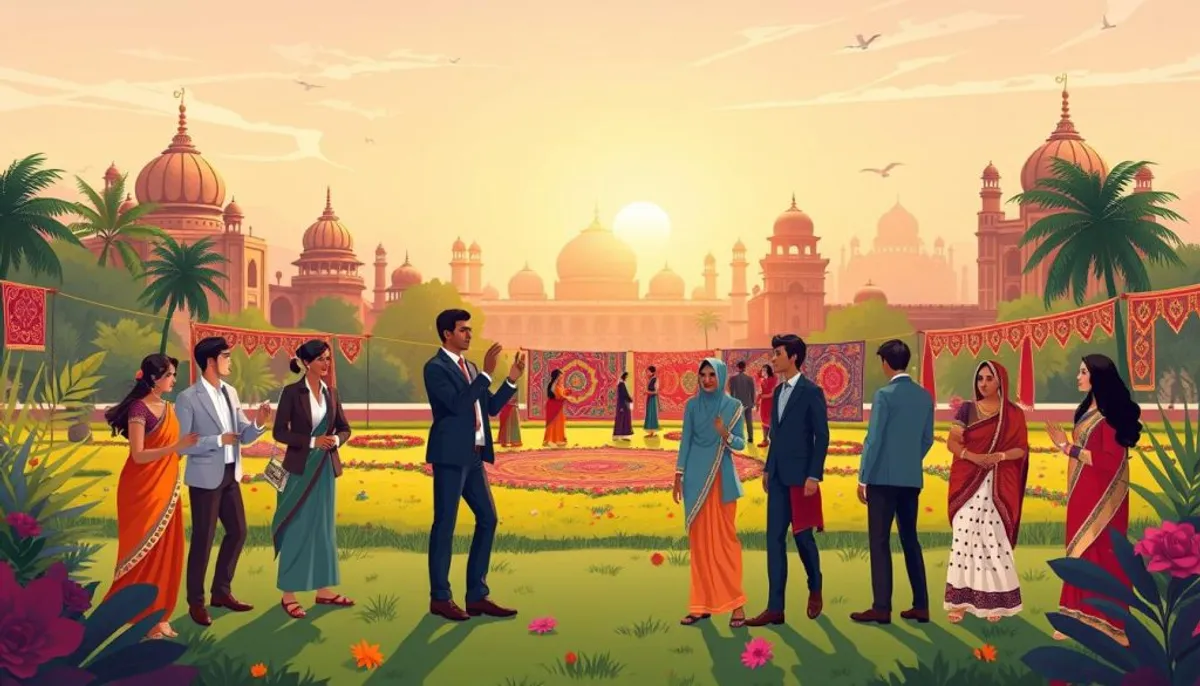
This continent country is home to a mosaic of traditions where each region has its own character. Artistic expressions, languages, and customs vary greatly from one state to another, creating a diverse and vibrant tapestry.
Beyond national borders, this culture profoundly influences South and Southeast Asia. Its legacy extends through migrations, trade exchanges, and historical ties.
We will explore together the three fundamental pillars that structure this society: its millennia-old history, its living traditions, and its omnipresent spirituality. These elements form a coherent system of ethical values and social norms, deeply rooted in the history of Western culture.
Key Points to Remember
- India has one of the oldest civilizations in the world
- Regional diversity creates a unique cultural mosaic
- The influence extends well beyond national borders
- The millennia-old history has shaped current traditions
- Spirituality permeates all aspects of life
- Each region develops its own artistic expressions
- Ethical values structure contemporary society
Introduction to the Wealth of Indian Culture
As the second most populous country in the world, this nation offers a unique panorama of living traditions. Its population exceeds one billion inhabitants, creating a society of exceptional diversity.
General Overview and Issues
Nearly 70% of the inhabitants live in rural areas. This distribution reflects a traditional lifestyle still present today. Major cities like Mumbai and Delhi are becoming dynamic cultural centers.
The linguistic diversity is remarkable with 18 recognized official languages. Hindi dominates as the national language, spoken by 45% of citizens. English serves as a bridge for trade and educational exchanges.
Why Explore This Diverse Culture?
This culture represents a living laboratory of peaceful coexistence. It shows how multiple religions and traditions can function together within a democratic framework.
Understanding this part of the globe helps to grasp contemporary challenges. The balance between modernity and ancestral heritage offers valuable lessons for the 21st century.
The Historical Origins of Indian Culture
The foundations of this rich tradition date back to the time of the Indus civilization, over 4500 years ago. This ancient period established lasting foundations that would influence the following centuries.
The Indus Civilization and Its Legacies
Between 2500 and 1800 B.C., the Indus civilization flourished with planned cities like Harappa. These urban centers demonstrate advanced social organization for their time.
The Aryans arrived around 1800 B.C., bringing Sanskrit and Vedic texts. Their influence would deeply shape society for millennia to come.
The Great Dynasties and the Evolution of Traditions
The Maurya Empire unified the subcontinent in the 4th century B.C. Under Ashoka, Buddhism experienced remarkable growth with values of non-violence.
The Gupta period (320-550 A.D.) represents a classical golden age. Arts and sciences flourished during this era of political stability.
| Period | Dynasty/Empire | Major Contribution | Current Influence |
|---|---|---|---|
| 2500-1800 B.C. | Indus Civilization | Advanced urbanization | Cultural foundations |
| 4th-2nd century B.C. | Maurya Empire | Territorial unification | National symbols |
| 320-550 A.D. | Gupta Empire | Artistic renaissance | Aesthetic canons |
| 1526-1857 | Mughal Empire | Cultural synthesis | Iconic architecture |
| 1849-1947 | British Raj | Modernization | Administrative systems |
Successive invasions constantly enrich this historical mosaic. Each period brings its unique contribution to the evolution of traditions.
The presence of the English from the 18th century transforms social organization. This colonial influence permanently marks certain modern institutions.
Religions and Spirituality in India
With remarkable religious diversity, India offers a unique panorama of beliefs and spiritual practices. Religion profoundly influences all aspects of social life.
Hinduism, Buddhism, and Other Beliefs
Hinduism encompasses 82% of the population with its multiple deities like Vishnu and Shiva. This religion structures society around the concepts of karma and dharma.
Islam (12%) and Christianity coexist harmoniously. Buddhism, which originated in this region, remains present near the Tibetan borders.
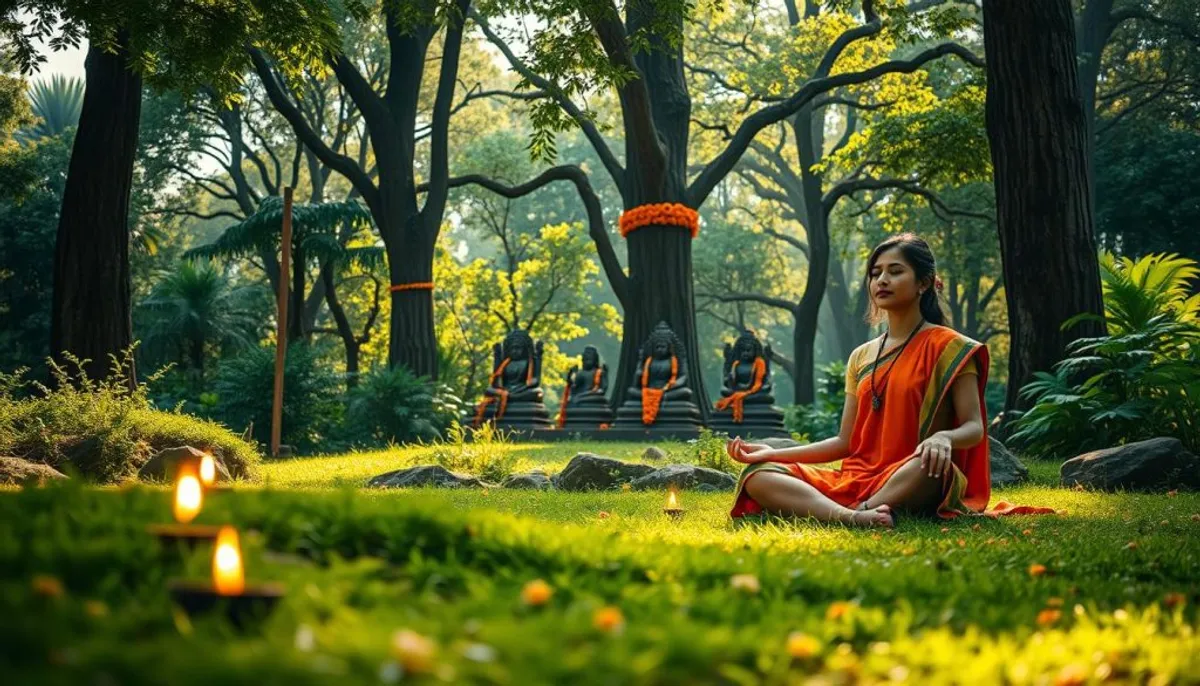
The Impact of Spiritual Practices on Daily Life
Temples and places of worship follow strict rules. Shoes are systematically removed upon entering each temple.
Respect for customs is essential. In Sikh places, one must cover their head. Leather items are prohibited in Jain temples.
These spiritual practices rhythm daily life. Morning prayers and religious festivals, such as the southern festivals, mark the annual calendar.
Traditions and Customs: A Look at Daily Life
At the heart of Indian existence, festivals and customs mark the passage of time. This vibrant land lives to the rhythm of multiple calendars that create an almost permanent festive atmosphere.
The year revolves around national celebrations like Republic Day and Independence Day. Major religious festivals also illuminate the calendar.
Rituals and Religious Festivals
Holi, the joyful festival of colors in March, sees the streets come alive with colored powders. Diwali, in October-November, transforms cities into seas of sparkling lights.
These celebrations strengthen family and community bonds. They represent privileged moments of sharing and conviviality.
Traditional cooking occupies a central place in daily life. Before each meal, washing hands is an essential practice.
The left hand is considered impure for eating or offering objects. Only the right hand is used during meals, a custom respected by all generations.
These simple yet meaningful traditions structure daily life. They testify to a living heritage that unites Indians in their diversity.
Art, Architecture, and Visual Arts
Indian artistic expression reveals a millennia-old creativity through its majestic monuments. This rich tradition harmoniously combines spirituality and aesthetics.
Temples, Monuments, and Architectural Masterpieces
The Taj Mahal in Agra represents the pinnacle of Mughal art. This white marble mausoleum embodies perfect symmetry and rare elegance.
In the south, Dravidian architecture impresses with its spectacular gopurams. The temples of this region showcase detailed sculptures.
| Architectural Style | Region | Characteristics | Famous Example |
|---|---|---|---|
| Mughal | Agra/Delhi | White marble, pietra dura | Taj Mahal |
| Dravidian | South | Monumental gopurams | Meenakshi Temple |
| Hoysala | Karnataka | Fine stone sculpture | Temples of Belur |
| Kalinga | Orissa | Curvilinear forms | Sun Temple |
Painting, Sculpture, and Traditional Craftsmanship
Mughal painting displays extreme delicacy in its miniatures. These works illustrate court life with remarkable precision.
Traditional craftsmanship perpetuates centuries-old techniques. Embroidered textiles and metalwork testify to exceptional know-how.
Each region develops its own mode of artistic expression. This diversity enriches the country's visual heritage.
Festivities and Rites of Passage in India
UNESCO has recognized several festive traditions as intangible cultural heritage of humanity. These celebrations unite the population in an exceptional atmosphere of sharing.
Each region develops its own manifestations that attract visitors from around the world. The richness of these events testifies to a living heritage.
Local Celebrations and Major Cultural Festivals
The Kumbh Mela gathers millions of pilgrims every twelve years. This immense spiritual festival occupies the banks of the Ganges.
In October, the festivals of Diwali illuminate the streets with thousands of lamps. Musical processions enliven every neighborhood.
Classical dance festivals like Khajuraho showcase the seven traditional forms. Music and movement unite in magical settings.
Rites of passage mark important stages of life, especially during the harvest season. Lavish weddings last several days with henna ceremonies.
In October, artisans showcase their craftsmanship in the streets. These celebrations preserve valuable ancestral techniques.
Indian Cuisine: Flavors and Spices
Indian gastronomy represents a true sensory journey through its regions. Each meal tells a unique story of traditions and historical influences.
Regional Specificities and Historical Influences
Indian cuisine varies significantly from north to south. In the north, the Mughal heritage brings creamy curries and soft naan breads.
The south favors a vegetarian diet with crispy dosas and coconut curries. These regional differences create an extraordinary gastronomic mosaic.
The Evolution of Cuisine Over Time
Indian spices have long been major export products to the Roman Empire. Turmeric, cumin, and cardamom form the basis of characteristic flavors.
This cuisine uses spices not only for their taste but also for their medicinal properties. The influence of advertising has also played a role in how family meal sharing remains an important moment of conviviality.
Portuguese influences introduced chilies, now indispensable. Each region has thus developed its own culinary identity over the centuries.
Understanding Indian Culture as a Whole
Contemporary Indian society navigates between millennia-old heritage and rapid transformations. This dynamic creates a fascinating social landscape where ancestral traditions and modern aspirations coexist, while integrating innovations like fpv equipment that reflect technological evolution.
Core Values and the Role of the Collective
Indians prioritize group harmony in all spheres of life. Family and community solidarity take precedence over individual accomplishment.
This collective approach even influences the professional world, particularly regarding cultural employment in Paris. Employees often view their company as a large family.
Consensus guides important decision-making. Collective success remains a fundamental value for the majority of Indians.
Modernization and Contemporary Challenges
Women perfectly illustrate this social evolution. They combine centuries-old traditions with increasing modernity.
The bindi on the forehead and sindoor in brides' hair coexist with access to higher education. Traditional clothing like the sari coexists with Western outfits in urban settings.
The caste system, abolished in 1950, persists in some social practices. However, urban youth are contesting these discriminations.
| Traditional Aspect | Modern Evolution | Social Impact |
|---|---|---|
| Arranged Marriages | Increased Personal Choice | Generational Tension |
| Caste Hierarchy | Social Mobility | Persistent Discrimination |
| Traditional Clothing | Mixed Fashion Style | Identity Expression |
| Traditional Role of Women | Access to the Labor Market | Gradual Empowerment |
The relationship with time also reflects this duality. Strict punctuality often gives way to human relationships.
Rapid urbanization and economic inequalities represent major challenges. Society must reconcile rapid growth with the preservation of social balances.
Corporate Culture and Management in India
The Indian economy is experiencing remarkable growth of 6.8% in the first quarter of 2024. This country ranks as the fifth-largest economy in the world with a GDP of 3,940 billion USD.
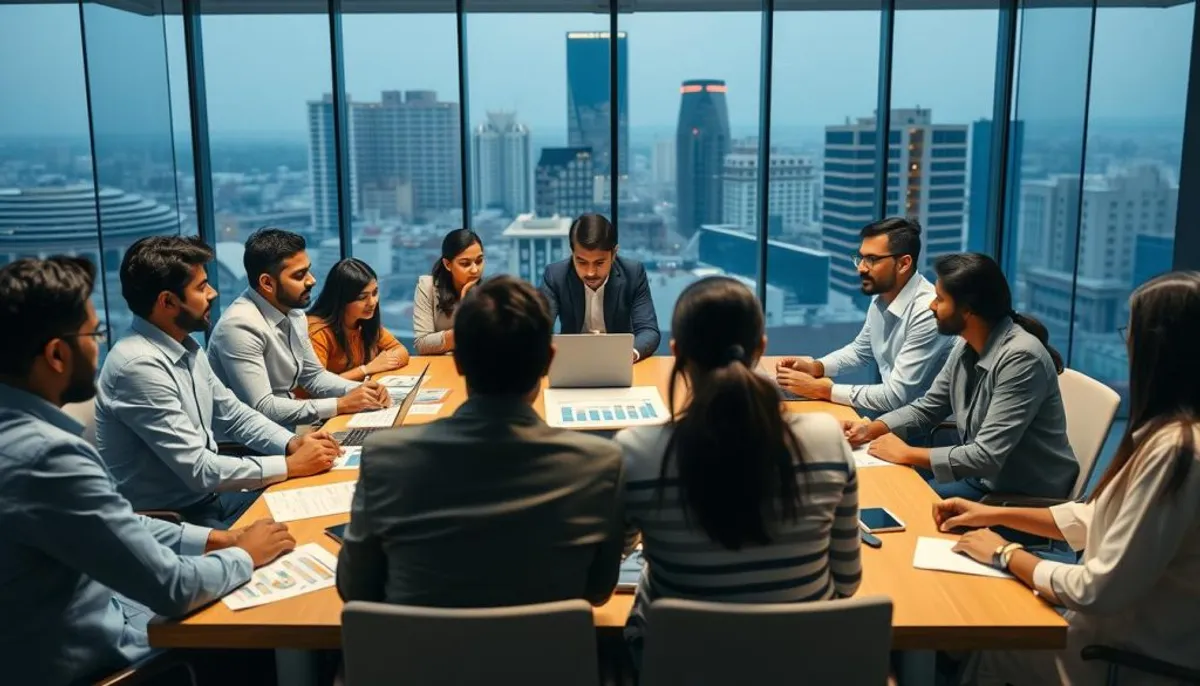
Management Specificities and Hierarchical Approach
Organizational structures present a well-defined vertical hierarchy. Power remains concentrated at the top, and the manager is considered a paternal figure.
In this case of figure, subordinates show deep respect for their leader. They benefit in return from a stable and secure framework.
The Role of Human Relationships and the Collective in Work
Indian professionals place paramount importance on interpersonal relationships. Understanding culture and the principle of Atithi Devo Bhava guide their professional interactions.
The perception of time is polychronic, with flexible deadline management. Meetings may be postponed without notice, as relationships take precedence.
| Managerial Aspect | Characteristic | Practical Impact |
|---|---|---|
| Hierarchical Structure | Centralized Power | Quick Decisions |
| Communication | Indirect Style | Requires Decoding |
| Time Management | Flexible Deadlines | Priority on Relationships |
| Innovation | Jugaad Concept | Creative Solutions |
Communication often remains implicit, with nuanced formulations. Ideas are expressed diplomatically to preserve collective harmony.
To collaborate effectively, adapt your clothing to formal contexts. Always use the right hand to exchange documents.
Innovation constitutes a solid foundation of contemporary management. Ideas often emerge during collective brainstorming sessions.
Conclusion
The Indian subcontinent represents a living mosaic of traditions and innovations. This exceptional wealth has fascinated the whole world for centuries.
From glorious empires to majestic palaces, each period has marked this country. Languages vary significantly from one region to another, creating remarkable linguistic diversity.
Spirituality guides the daily life of Indians. Removing shoes before entering, avoiding the left hand for eating, bowing the head as a sign of respect.
Women illustrate this harmony between tradition and modernity. Their mixed fashion reflects the evolution of society.
In this unique case, Indian culture continues to evolve while preserving its soul. The south of the country retains its millennia-old artistic traditions.
Whether you are passionate about art, music, or simply curious, this part of the world deserves your attention. Explore this Indian culture with respect and an open mind.
FAQ
What are the core values of society in India?
Family and respect for elders are at the heart of relationships. Spirituality influences daily life, and hospitality towards guests is very important. The concept of dharma, or moral duty, also guides behaviors.
How does religion influence lifestyle?
Practices like meditation or daily prayers structure the days. Numerous religious festivals punctuate the year and bring communities together. Temples and pilgrimage sites attract millions of devotees.
Is cuisine very different from one region to another?
Absolutely! Dishes from the north, often wheat-based, differ from those in the south, which use more rice and coconut. Spices also vary, creating an incredible diversity of flavors across the country.
What are the major festivals to know?
Diwali, the festival of lights, and Holi, the festival of colors, are among the most well-known. Each region also has its own celebrations, such as Pongal in the south or Onam in Kerala, which highlight local traditions.
Are there specific politeness rules to observe?
Yes, a few gestures are essential. People often greet by joining their hands. It is polite to remove shoes before entering a home or sacred place. Avoid touching someone's head or using your left hand to give or receive something.