
Welcome to a fascinating journey into the heart of West Africa. Togo is a true gem, a treasure of authentic traditions and diversity waiting to be discovered.
This country of 56,600 km², bordered by the Atlantic Ocean, is a geographical and human crossroads. It shares its borders with Ghana, Benin, and Burkina Faso.
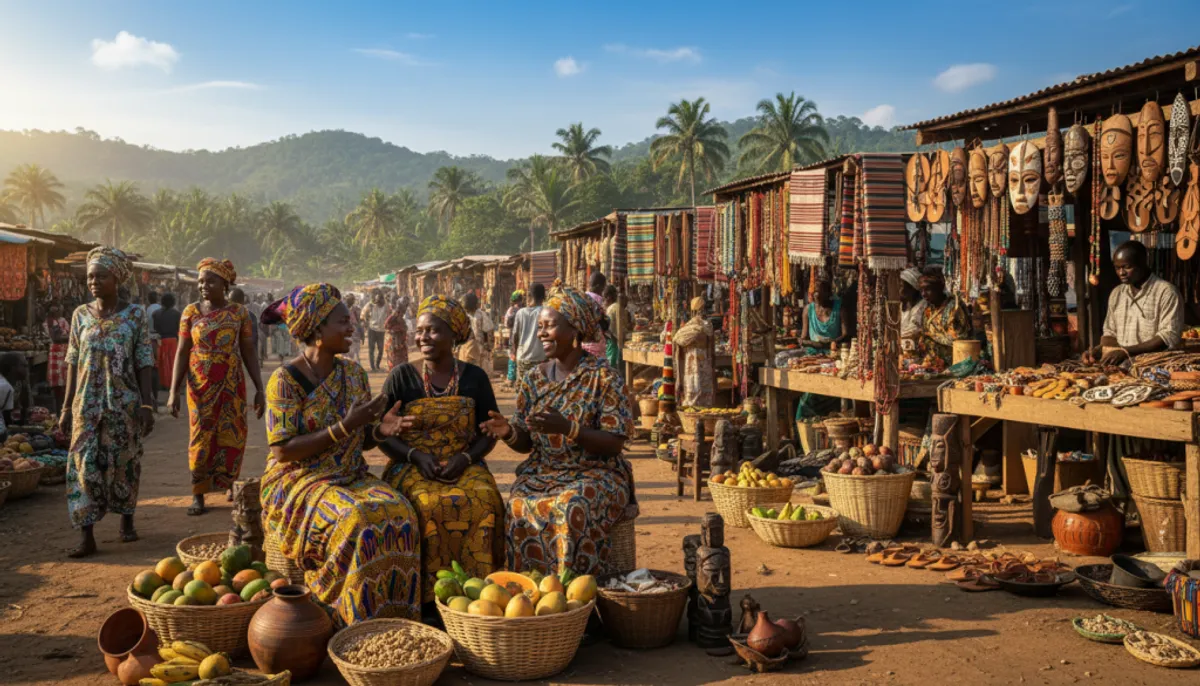
Its uniqueness? A mosaic of ethnic groups from different backgrounds. This unique blend has created a living heritage, a haven of peace and multiculturalism.
Ancestral traditions remain very much alive in the daily lives of the populations. They form a precious bridge between the past and the present.
From mesmerizing dances to colorful festivals, and delicious gastronomy, each region reveals its secrets. Prepare for an exceptional sensory and human immersion.
Key Points to Remember
- Togo is a small country in West Africa with a great cultural wealth.
- It is home to a mosaic of many different ethnic groups.
- Ancient traditions are an integral part of daily life.
- Its geographical position has made it a crossroads of cultures.
- Diversity is manifested in arts, music, dance, and cuisine.
- It is an example of harmony and peace among different communities.
- Its cultural heritage is dynamic and constantly renewed.
Introduction to Togolese Culture
Beyond political borders, Togo is primarily a meeting of peoples, languages, and traditions. This wealth draws its roots from a complex history of madagascar of migrations and exchanges.
Historical and Ethnolinguistic Context
The country is home to about forty distinct ethnic groups. The population speaks around fifty different languages.
Among the main communities are the Ewe and the Kabyè. This mosaic forms the beating heart of national identity.
Importance of Traditions in Daily Life
These heritages are not old memories. They structure social life, celebrations, and even work.
The French, as the official language, unites the country. It coexists harmoniously with the many local languages in markets and homes.
Each community thus transmits a living heritage. It is this dynamic that defines contemporary culture.
Historical and Geographical Roots of Togo
The distribution of communities across Togolese territory tells an ancient story. This narrow country, stretching from north to south, presents a human map shaped by migrations.
Influences of Peoples and Migrations
Two major demographic centers structure the country. In the south, Kwa groups like the Ewe and the Ouatchi dominate. In the north, Gur ethnicities, including the Kabyè, are in the majority.
The Tamberma, in the far north, are among the oldest populations. About forty other communities complete this mosaic.
Nearly 90% of the spoken languages belong to the Niger-Congo family. This linguistic family unites everything in rich diversity.
Diversity of Landscapes and Regional Distribution
Geography has directly influenced this distribution. The central regions, less populated, form a natural transition zone.
They separate the two main population cores. This configuration creates a space for meeting and exchange.
From the arid savannas of the north to the southern coasts, each environment has shaped distinct lifestyles. The territory thus tells the saga of its inhabitants.
The Pillars of Togolese Culture: Languages, Rites, and Customs
To understand Togolese society, one must listen to its multiple languages and observe its ancestral rites. These elements form the solid foundation of its identity.
Official and National Languages
The French is the official language. It unites administration and education. Two national languages have been protected since 1975: Ewe and Kabyè.
They represent the main groups from the south and the north. About half of the population speaks languages from the Kwa family, such as Ewe.
A third uses Gur languages, including Kabyè. In cities, dialects like Mina serve as a bridge between communities.
Traditional Rites and Their Social Impact
Rites structure life from birth to death. They mark important transitions and strengthen bonds.
These customs create strong cohesion within families and villages. They transmit shared values across generations.
This traditional system still guides behaviors and celebrations today. It is the invisible cement of collective life.
Artistic Expressions and Traditional Dances
Dive into the rhythms and colors that animate the artistic expressions of this country. These manifestations are the living language of its communities.
They tell stories and strengthen social ties. Each performance is a celebration of collective identity.
Initiatory and Festive Dances
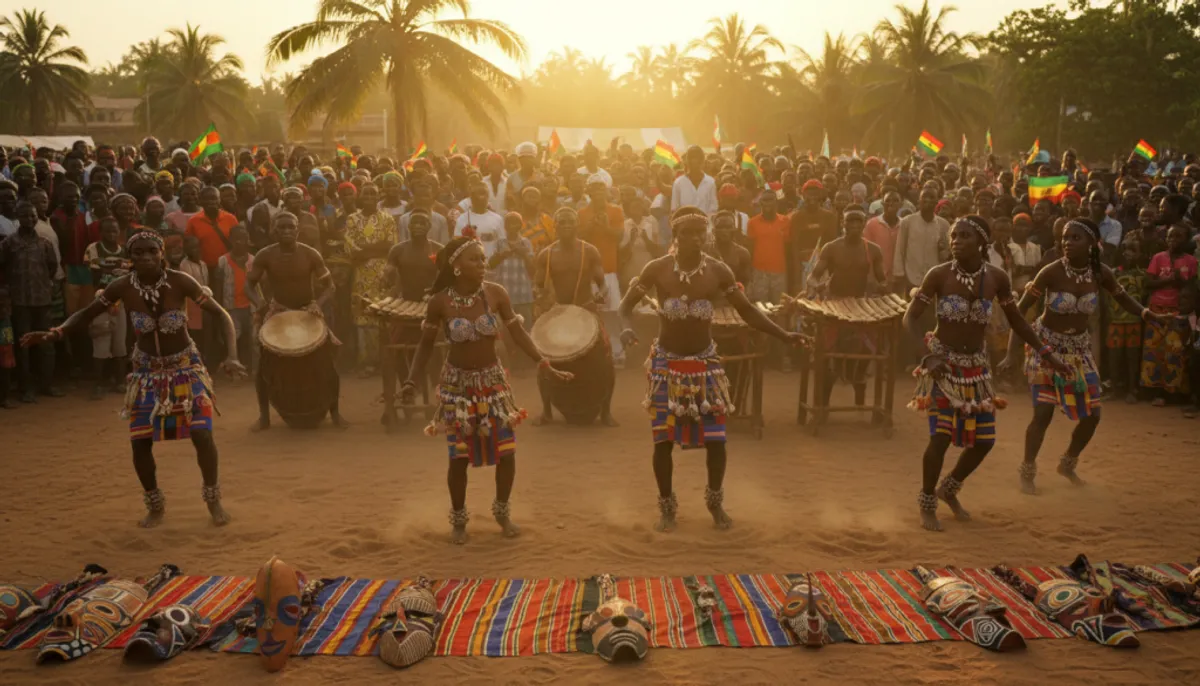
Initiatory dances possess a deep spiritual dimension. The T'Bol, or fire dance of the Bassar, is a fascinating example.
It combines physical prowess and esoteric ritual. The Evala, among the Kabyè, marks the transition to adulthood.
Festive dances, on the other hand, transform public spaces into stages. In Atakpamé, the Tchébé is performed on high stilts.
In Sokodé, the Adosa, or knife dance, fills the streets with movements and traditional music. These performances unite the entire population.
Visual Arts and Craftsmanship
Material creation is equally rich. Wood sculptures, pottery, and colorful textiles testify to ancestral know-how.
Ritual masks, used during ceremonies, are works of art in their own right. The artisan village of Lomé showcases this heritage.
Several museums, such as the National Museum in Lomé, preserve these treasures. They offer an immersion into local creative genius.
Music, with its traditional instruments, accompanies and inspires all these forms of art. It is the vital breath of these dances.
Traditional Festivals and Ceremonies of Togo
The annual calendar is a symphony of vibrant festivities. Each month brings its celebrations, rhythmically marking community life.
Major Events and Local Celebrations
Among the major events, Evala shines in July. This Kabyè initiation festival lasts a week. Young people at 18 years prove their transition to adulthood through wrestling.
Other harvest festivals punctuate the year. Ayiza in August and Kamaka in December celebrate the abundance of crops.
Seasonal and Initiatory Rituals
Rituals also mark the cycles. Agbogbo-Za in September commemorates the historical exodus of the Ewe people.
Ceremonies like Sinkaring in December or Koudapaani in January structure the transition to adulthood in different regions.
This continuous cycle, from February to April, strengthens social ties. It honors ancestors throughout the year.
Culinary Richness and Traditional Beverages
The sensory journey continues on the plate, where Togolese soil reveals its most authentic flavors. Traditional gastronomy, including laotian cuisine, perfectly reflects the cultural diversity of this country.
Dishes are prepared according to ancestral methods. These techniques are passed down from generation to generation in every home.
Iconic Dishes and Culinary Craftsmanship
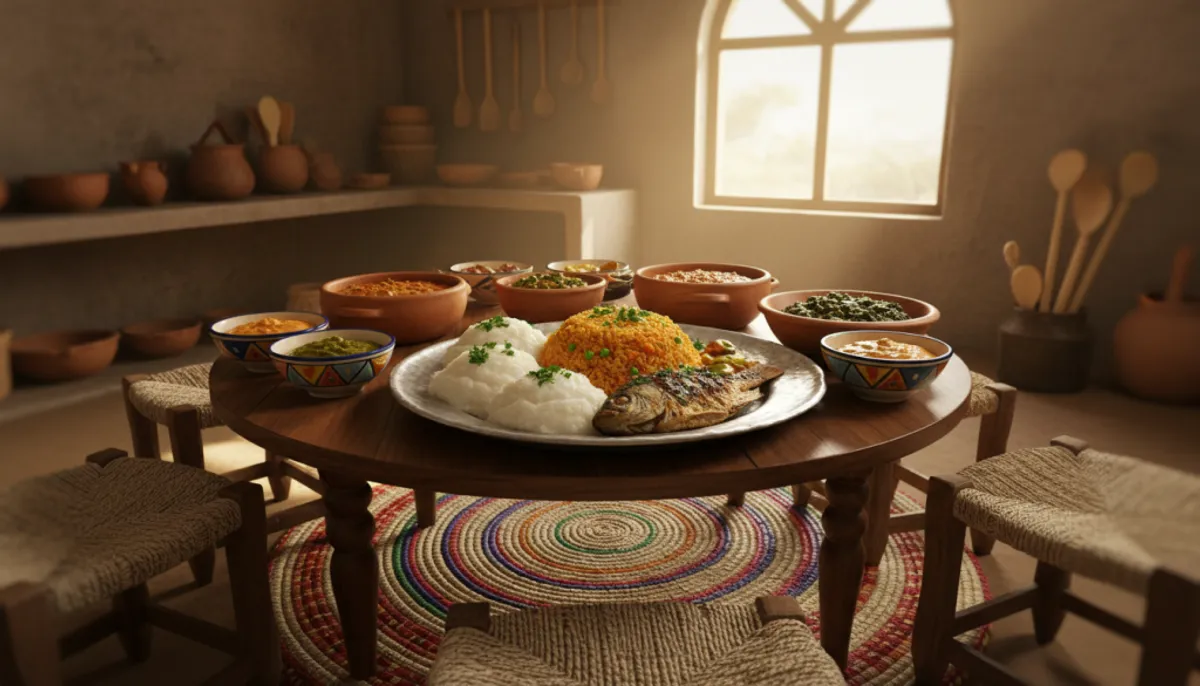
Fufu is the staple food for a large part of the population. This preparation is traditionally made from yams.
The yams are peeled, boiled, and then pounded in a mortar. A local inventor created the FoufouMix to facilitate this task.
This dish is accompanied by various sauces. Creamy sauces or those made from palm nuts can be found.
Each ethnic group has its unique artisanal know-how. Recipes vary from the south to the north.
Typical Beverages and Local Accompaniments
Traditional beverages complement this feast. Sodabi is distilled artisanally from palm wine.
Tchoukoutou and Tchapalo are local beers that accompany festivities. Freshly harvested Déha can also be found.
Modern production coexists with ancestral traditions. Artisan beers like Lossomissine coexist with local soft drinks.
This cuisine, little known internationally, testifies to the agricultural richness of the country. It offers a remarkable diversity of flavors.
Sports, Craftsmanship, and Other Cultural Expressions
Alongside festive traditions, the country displays remarkable vitality in sports arenas and artisan workshops.
Sports Events and Entertainment
Togo actively participates in major competitions for many years. Its Olympic national committee sends athletes to the Olympic Games and African Games.
Football, athletics, and cycling mobilize the population. These moments create a strong national pride.
Traditional entertainments also enliven the cities and villages. The strategy game awalé and deep-sea fishing are very popular.
Artisan Heritage and Traditional Techniques
Each region has its unique artisanal techniques. Weaving, wood carving, and pottery are the pillars.
These skills have been passed down within the family for generations. Artisans create objects that are both functional and aesthetic.
The city of Lomé is home to a famous artisan village. Other cultural sites, like the Koutamakou landscape, attract many visitors.
Music often accompanies these activities. It reinforces the sense of belonging to a dynamic culture.
Exploring these sites and regions is to discover the living argentine history of the country. It is an enriching experience until the very end of the journey.
Conclusion
Our exploration comes to a end, leaving room for profound admiration. Overall, this country reveals remarkable diversity, from north to south, where different groups live in harmony.
Traditional festivals and rites, such as those of initiation in July or the harvest festivals in August, structure each season. These celebrations, from February to April and throughout the months, strengthen ties.The French, as the official language, unites the regions. Local languages thrive in every home. Dance and other expressions evolve over the years.
These ancient traditions coexist with modernity. Each week brings its share of festivities, making this country an authentic and vibrant destination.
FAQ
What is the best time to attend major traditional festivals in Togo?
The end of the year is very lively! Many important celebrations, such as yam festivals marking the harvest, take place between July and December. The dry season, from October to April, is also conducive to major cultural events throughout the country.
Are there significant differences between the dances of the north and south of the country?
Absolutely. The diversity of populations is reflected in their artistic expressions. In the south, dances are often linked to the historical rites of coastal peoples. In the north, groups like the Kabyè practice initiatory dances and powerful rhythms during ceremonies.
Is French the only language used in everyday life?
French is the official language, used in administration and education. However, in daily life and at home, about forty national languages are spoken, such as Ewe in the south or Kabyè in the north. This linguistic richness is a pillar of Togolese identity.
What are the most important rites for local communities?
Can one visit sites dedicated to traditional craftsmanship?
Yes, many regions preserve ancestral artisanal know-how. You can discover pottery, weaving, or wood carving, often practiced in family workshops. These techniques are a vital form of cultural expression and contribute to the local economy.