
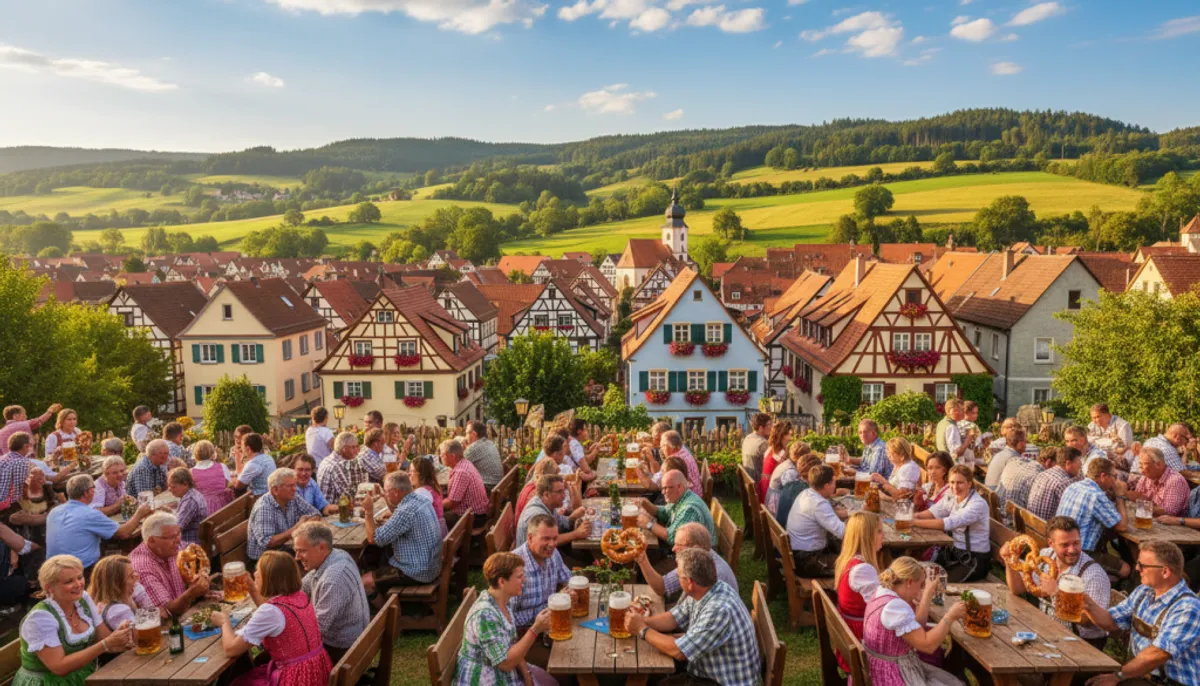
Dive into the heart of a fascinating European treasure. This heritage is rich in millennia-old traditions and contemporary innovations that shine through the entire world.
This society stands out for its astonishing regional diversity. Its influence on Western civilization is considerable, affecting millions of people beyond its borders.
German is spoken by 100 million native speakers. About 100 million others speak it as a second language, making it the most spoken language in the European Union.
The Germany, country at the center of Europe, has a unique heritage. It deserves to be discovered in all its aspects, from ancestral customs to modern artistic expressions.
Understanding this culture enriches Franco-German exchanges. In 2013, 13 million tourists from Germany visited France, illustrating these close ties.
Key Points to Remember
- German heritage is a European treasure that is both traditional and innovative.
- It exerts a major influence far beyond national borders.
- The German language is the most spoken within the European Union.
- The historical and tourist links with France are very strong.
- Exploring this diversity allows for an enriched worldview.
- This article will guide you through its traditions, arts, and modern life.
Immersion in History and Traditions
The historical evolution of this territory is a captivating tale of divisions and unifications.
From Ancient Origins to Modernity
The Germanic tribes, coming from the north, populated these lands as early as antiquity. They then extended their influence southward and founded various kingdoms in Europe.
For nearly a thousand years, the Holy Roman Empire structured political life. The unification into a modern nation-state only occurred in 1871, after the Franco-Prussian War.
Regional Legacies and the Role of Traditions
This long fragmentation has forged a rich and diverse identity. Each region has developed its own customs, including customs in austria, and dialects over the centuries.
Local traditions serve as valuable social cement. They connect the inhabitants to their past and strengthen the sense of belonging.
Understanding this complex history is essential to grasp the soul of the German people today.
Iconic Festivals and Popular Customs
The German calendar is punctuated by joyful celebrations that enliven the cities all year round. These festivals gather millions of people around vibrant and warm traditions.
Oktoberfest, Carnival, and Other Celebrations
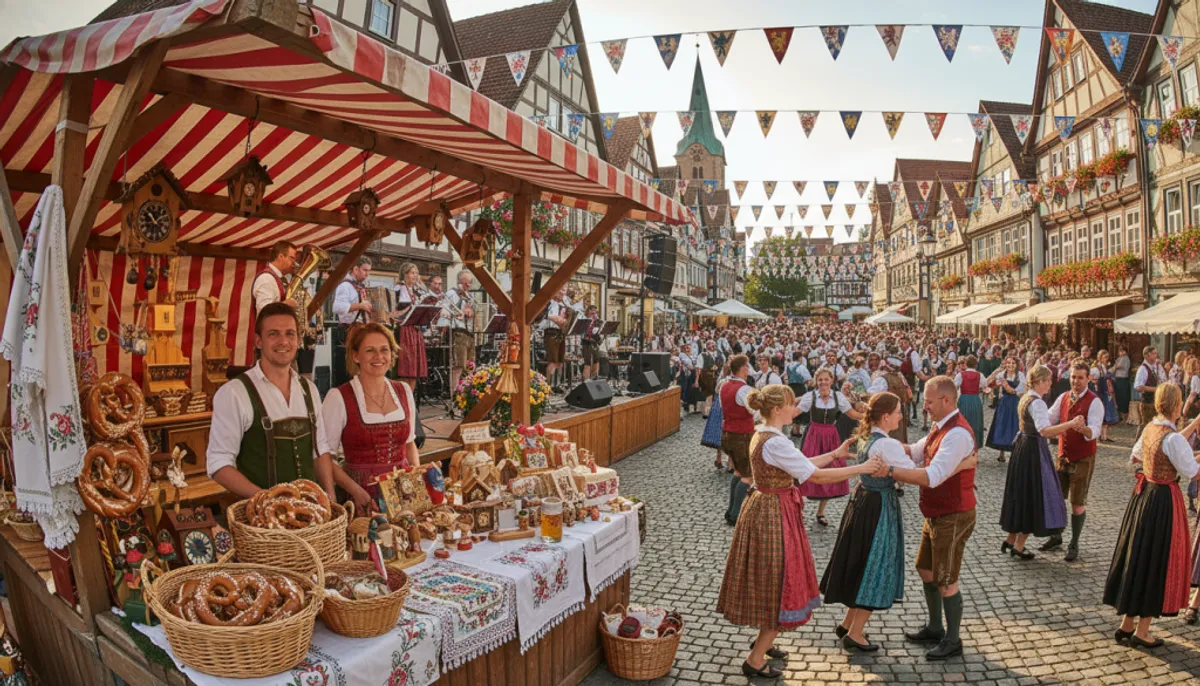
The Munich Oktoberfest begins in late September and extends into October. This grand beer festival, which started in 1810, sees visitors from around the world enjoying one-liter mugs.
The atmosphere is friendly, with pretzels and sausages. Another major festive period is Carnival.
Known as the "fifth season", it transforms cities like Cologne in February and March. Colorful parades and creative costumes reign there.
Christmas in Germany and Festive Markets
From the end of November, Christmas markets set up. There, one enjoys mulled wine and gingerbread in a magical light.
On December 6, Saint Nicholas drops surprises into children's shoes. On the evening of December 24, families gather around the decorated tree.
Sankt Martinstag and Childhood Rituals
On November 11, a beautiful custom honors Saint Martin. Children parade with lanterns they have made.
This procession is followed by the distribution of little bread shaped like a man. These simple moments strengthen the bonds between generations.
Throughout the year, these festivals offer the Germans precious opportunities for sharing and joy.
Daily Rituals and Family Traditions
Beyond the major festivals, German daily life is marked by warm family rituals. These simple habits strengthen bonds among loved ones and mark important milestones in life.
The Kaffee und Kuchen Ritual
Between 3 and 4 PM, a sacred indulgent break takes place. This tradition brings family and friends together over coffee and delicious cakes.
The famous Käsekuchen, a cheesecake, often shares the table with Black Forest cake. This moment is much more than just a meal. It is a precious time for exchange and relaxation.
The Schultüte: A Surprise-Filled School Start
On their first day of school, children receive a large colorful cone. Called Schultüte, it is filled with treats and school supplies.
This tradition from the 19th century is lovingly prepared by parents. It symbolizes a gentle entry into the world of learning. It shows the attention the family gives to this key stage.
| Traditions | Key Moment | Participants | Main Value |
|---|---|---|---|
| Kaffee und Kuchen | Afternoon break (3 PM - 4 PM) | Family and friends | Friendliness and break from activities |
| Schultüte | First day of school | Children and family | Gentle transition and encouragement |
The Influence of Arts, Music, and Theatre
From classical music to contemporary theatre, the German artistic heritage is immense. It has profoundly impacted the entire world.
The Masters of German Classical Music
Legendary composers like Bach, Beethoven, and Wagner created timeless works. Their moving compositions touch people all over the planet.
This country has also seen the birth of essential instruments. The piano and organ were perfected here in the 17th and 18th centuries.
Literature, Philosophy, and Theatrical Expression
Thinkers like Kant, Hegel, and Nietzsche transformed Western thought. Their ideas continue to influence our modern society.
| Artistic Domain | Major Figures | Main Impact |
|---|---|---|
| Classical Music | Bach, Beethoven, Brahms | Universal emotion, musical innovation |
| Philosophy | Kant, Nietzsche, Marx | Influence on political and social thought |
| Stage Expression | Playwrights, directors | Vitality of contemporary stage |
The Artistic Festivals and Contemporary Theatre
The current scene remains vibrant with over 360 theatres. They host more than 35 million spectators each year.
About 70 major festivals also attract visitors from the entire world. These events celebrate a lively and dynamic culture.
The Germans cherish this heritage while constantly innovating. Art remains a central pillar of their collective life.
Exploring German Culture: Language, Education, and Heritage
With its many dialectal nuances, this language offers a unique gateway to Germanic heritage. It unites a large number of people across Europe.
Learning German and Its Specificities
Mastering this language means joining a vast community. About 100 million native speakers and just as many second-language speakers use it. It is one of the working languages of the European Commission.
Its history is fascinating. Low German and High German differentiated as early as the 6th century. Martin Luther later favored High German with his translation of the Bible.
| Dialect | Main Region | Historical and Current Use |
|---|---|---|
| Low German (Niederdeutsch) | North of the country | Old differentiation, persistent regional use |
| High German (Hochdeutsch) | South and center | Base of standard German, popularized by Luther |
| Standard German | Everywhere | Official language since 1871, spelling fixed in 1901 |
Intergenerational Transmission and Education
The education system plays a key role. Standard German was imposed in primary schools in the 1970s. It ensures effective transmission of linguistic heritage.
Families also perpetuate this tradition. In 1980, nearly 50% of the population used a dialect daily. This practice strengthens the bonds between generations.
Franco-German Exchanges and Cultural Influences
A unique partnership unites France and Germany at the heart of contemporary Europe. Their shared history has shaped the continent.
“France and Germany are the two wings of the West. Breaking one prevents the other from flying.”
Artistic and Literary Collaborations
Mutual influences enrich both countries. Writers and artists have always crossed the border.
These creative exchanges testify to a fruitful dialogue. They blend traditions and styles.
The Impact of Tourism and Cultural Economic Exchanges
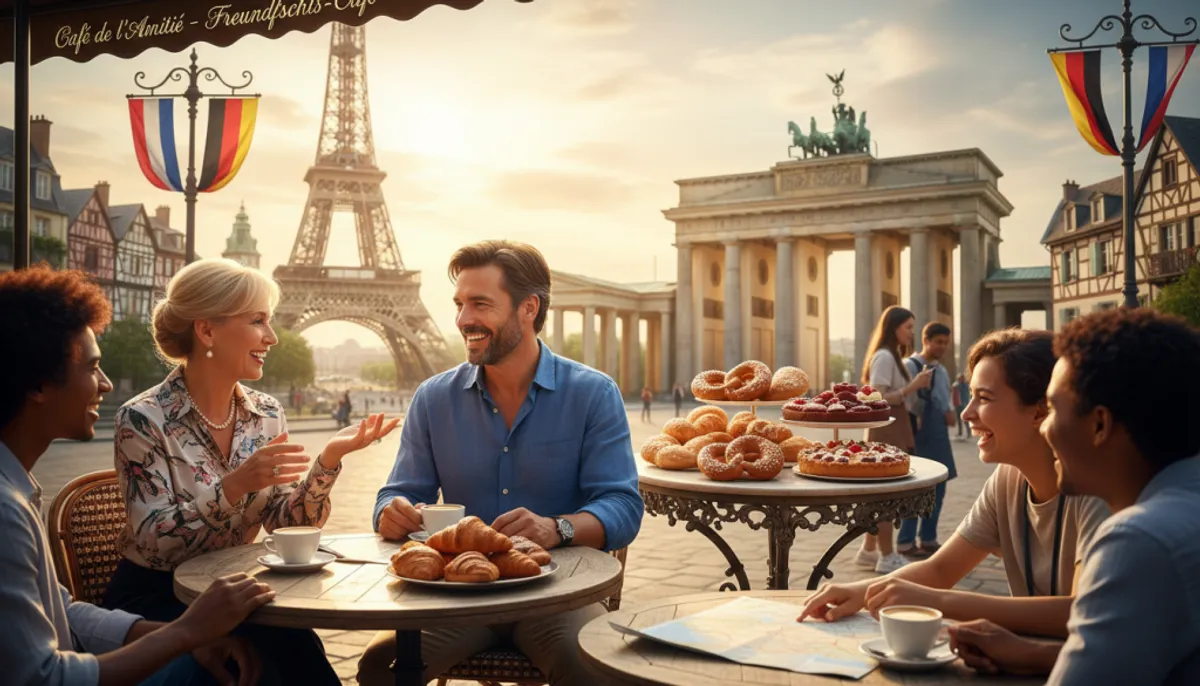
Many travelers cross the border each year. In 2013, 13 million German tourists visited France.
This cultural journey brings peoples closer together. It fosters mutual understanding.
| Type of Exchange | Historical Period | Sustainable Impact |
|---|---|---|
| Religious Migrations | 17th-18th centuries | French names in Germany |
| Cultural Tourism | Contemporary | 13 million visitors (2013) |
| Political Reconciliation | After 1945 | European partnership |
Between 1570 and 1815, many French Huguenots left. They settled in the German states.
Their descendants still bear names with a French sound. Konrad Adenauer and General De Gaulle sealed the reconciliation.
These two countries have become the pillars of Europe. They transform a conflicted history into an exemplary partnership.
Contemporary German Society: Innovations and Legacies
The Germans navigate effortlessly between ancestral customs and cultural influences and cultural innovations. This modern society integrates new forms of expression while cherishing its heritage.This adaptation gives birth to unique events. It shows how a people reinvents its social rules without forgetting its roots.
Cultural Innovations and Global Adaptation
The cuisine evolves while maintaining its specialties, including jordanian cuisine. Sausages and artisanal bread remain at the heart of convivial meals.These dishes symbolize a strong regional identity. They are served during major festivals and small family meals.
The rules of punctuality and organization structure daily life. They facilitate leisure activities and joint projects.
The Role of Modern Festivals in Social Life
The Maibaum, or May tree, is erected on May 1. This decorated trunk becomes the center of Bavarian villages.
The festivities include dancing and tasting white sausages. Silvester, the New Year's Eve celebration on December 31, animates all the cities.
There, people practice Bleigießen to predict the future. The evening often ends with a raclette meal.
Walpurgisnacht, on April 30, sees bonfires in the Harz. Erntedankfest celebrates the harvest in September or August.
These events punctuate the entire year. They strengthen community ties and give a name to each season.
This vitality proves that traditions, including somali customs and traditions, still have their place. German society knows how to breathe new life into them.
Conclusion
In conclusion, exploring this European treasure opens a window into a society that is both rooted and modern. Its heritage, traversed by centuries of history, shines with regional diversity and artistic creativity.
From popular festivals to family rituals, each custom tells a unique story. This vitality is also reflected in Franco-German exchanges, which bring peoples closer together.
We encourage you to experience this for yourself. Taste its cuisine, participate in its festivals, or listen to its music. Each discovery will enrich your worldview.
Learning this language or visiting this country are fascinating steps. These actions strengthen ties and immerse you in an authentic universe. Understanding this German culture is a valuable asset for any European.
FAQ
What are the most well-known traditions in Germany?
The country is famous for its festivals like Oktoberfest in Munich and Carnival in Cologne. Christmas markets, with their decorations and mulled wine, are also very popular. Family rituals, such as giving a Schultüte (a filled cone) for the first day of school, are part of daily life. Additionally, the traditional serbian dance showcases the rich cultural tapestry found throughout Europe.
How does history influence contemporary society?
The rich history, from ancient origins to reunification, has forged a strong regional identity. This can be seen in traditions, architecture, and even culinary specialties, such as different breads and cheeses. The transmission of this heritage is important in education and family life.
Is classical music still important today?
Absolutely! Composers like Bach and Beethoven remain pillars. Their works are played worldwide. Many festivals and theaters in Germany perpetuate this heritage, attracting millions of music lovers each year.
Are there specific rituals around meals?
Yes, the “Kaffee und Kuchen” is an important social moment in the afternoon, often shared with family or friends. The evening meal, the “Abendbrot,” is typically a cold meal with bread, cheese, and sausages. These moments strengthen bonds between people.
What is the role of exchanges with France?
The collaborations are deep, particularly in the artistic and literary fields. Exchange programs for students are very active. Tourism between the two countries also fosters mutual understanding and influences cultural activities on both sides.