
Welcome to the Dominican Republic, a Caribbean country with enchanting charm. This magnificent island is much more than just a vacation destination. It is a place where the past and present meet to create a unique experience.
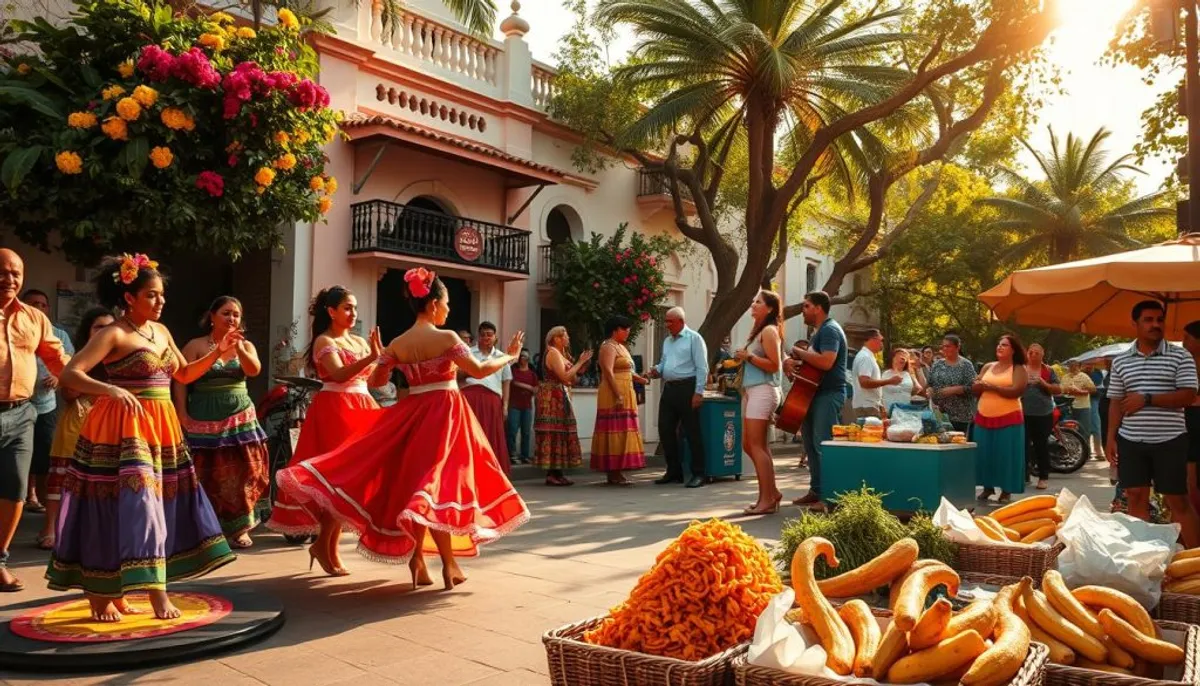
The Dominican Republic is home to a vibrant population of over 10 million inhabitants. This nation is a true mix of traditions. You will discover Latin American, African, and European influences living in perfect harmony.
Get ready to explore the three pillars of culture in the Dominican Republic. We will guide you through its fascinating history, its catchy rhythms, and its delicious cuisine. This journey will reveal the authentic soul of this welcoming land.
Key Points
- The Dominican Republic is a Caribbean island with a rich and mixed culture.
- Its population is diverse, with European, African, and Taíno origins.
- Spanish is the official language, but French is spoken in tourism.
- History, music, and gastronomy are the pillars of its identity.
- The country offers a unique blend of Latino and Creole traditions.
- The warm hospitality of the locals is an essential part of the experience.
- It is an ideal destination to discover a vibrant multicultural atmosphere.
Explore the fascinating history of the Dominican Republic
In 1492, a major event marked the fate of this island territory. Christopher Columbus discovered this land during his first voyage to the Americas. This encounter opened a new era for the region.
The colonial origins and Spanish influence
The Spaniards quickly established the first European colony in the New World. This settlement deeply influenced the development of the future republic. The language, architecture, and religious traditions still bear this imprint today.
A French colony then settled on the other part of the island. This cohabitation created a unique cultural division. In the 19th century, the two colonies evolved separately.
Struggle for independence and political evolution
In 1844, the Dominican Republic proclaimed its independence. This crucial moment marked the birth of a sovereign nation. The country then experienced various political phases before stabilizing its system.
Since 1966, this republic has functioned as a parliamentary democracy. The Spanish influence remains visible in the capital, Santo Domingo. Its colonial architecture testifies to this rich historical past.
| Period | Major Event | Lasting Impact |
|---|---|---|
| 1492 | Discovery by Christopher Columbus | Opening to European colonization |
| 16th century | Establishment of Spanish colony | Introduction of language and traditions |
| 1844 | Proclamation of independence | Birth of a sovereign nation |
| 1966 | Establishment of democracy | Stabilization of political system |
Discover the delicious cuisine of the island
Your culinary exploration begins here, at the heart of Caribbean flavors. The cuisine of the Dominican Republic represents a delightful mix of French, Spanish, and Creole influences, including the unique flavors of eritrean cuisine.
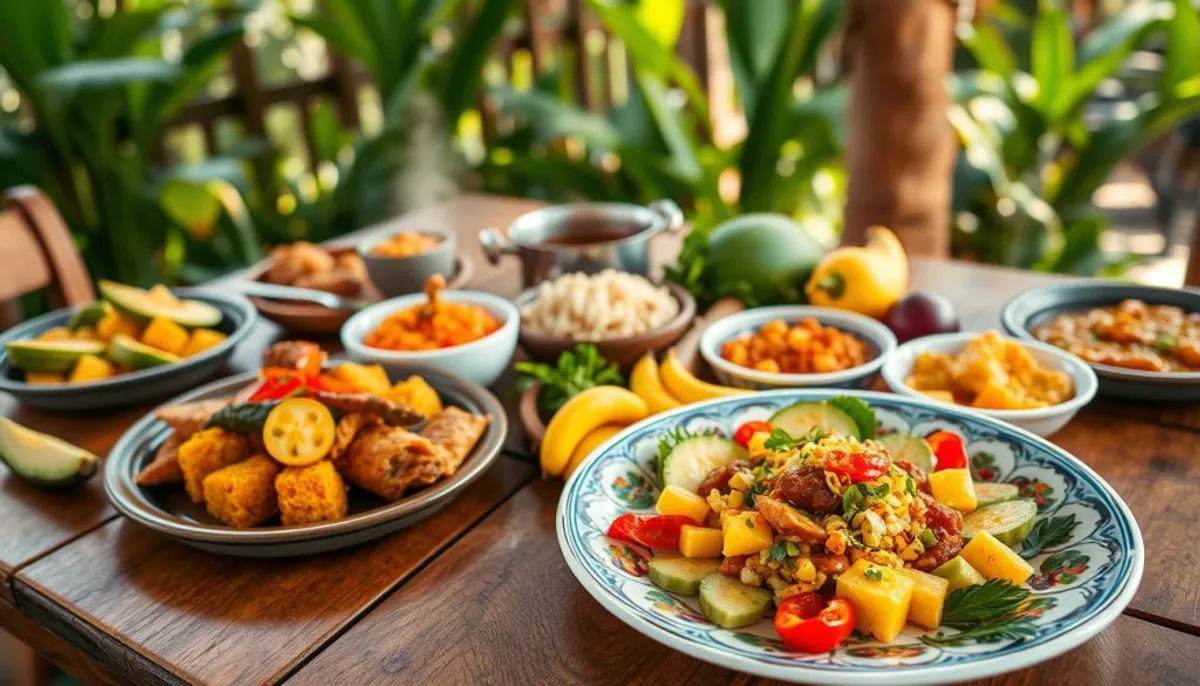
The bandera dominicana: an emblematic dish
This national dish will charm you with its balanced composition. It combines red beans, stewed chicken, and white rice.
Fresh salad and fried plantains complete this hearty meal. Interestingly, it is one of the few traditional dishes without seafood.
Tropical fruits and local spices
The island is full of natural treasures. Guavas, bananas, and mangoes grow in abundance.
Among the local products to bring back, yucca and plantains are essential. Aromatic coffee and quality cocoa are must-haves.
To accompany your meals, La Présidente beer offers a refreshing taste. This authentic cuisine perfectly reflects the soul of the Dominican Republic.
Music and dance: vibrant expressions of the Dominican soul
It is impossible to understand the soul of this territory without diving into its musical expressions. Music represents the very pulse of the Dominican Republic, rhythmically accompanying every moment of daily life.
From merengue to bachata: essential rhythms
Merengue originated in the 19th century and is a true national emblem. Of African origin, its fast pace initially surprised the upper classes.
Three instruments create its unique sound: the German accordion, the metallic güira, and the drum. Juan Luis Guerra modernized this genre by incorporating jazz and salsa influences.
Bachata emerged in the popular neighborhoods of Santo Domingo. Its languorous melodies and sentimental lyrics contrast with the energy of merengue.
This dance captivates with its fluid and intimate movements. It has become an essential part of the country's musical identity.
Carnivals and music festivals
The streets regularly transform into improvised dancing venues. More than 300 professional orchestras thrive on merengue.
Music resonates everywhere: from grocery stores to beaches and cars. Festivals celebrate this passion spectacularly.
Today, reggaeton complements this rich soundscape. Young people adopt this modern way of expressing themselves through dancing.
Cultural and religious influence on daily life
Beyond musical rhythms and culinary flavors, spirituality deeply permeates Dominican daily life. This essential dimension shapes the identity of the Dominican Republic and influences every aspect of social life, including beliefs such as rastafarianism.
Religion occupies a central place in the lives of the inhabitants. It marks celebrations and guides daily behaviors.
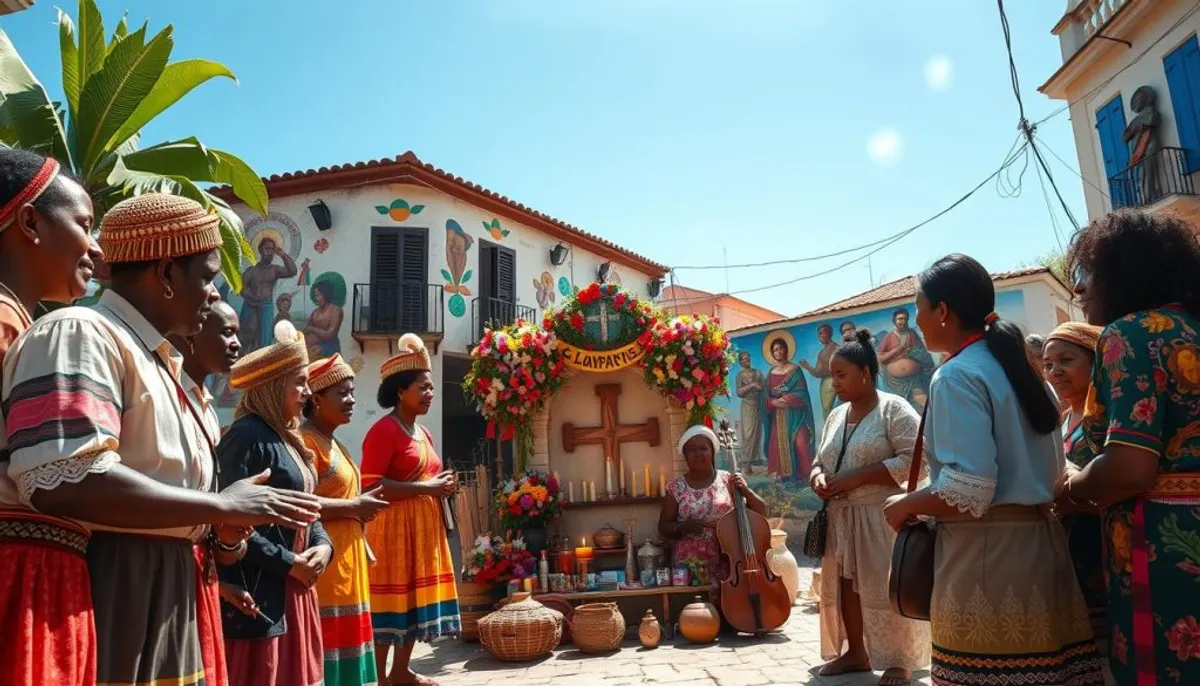
Religious traditions and popular rituals
Catholicism is the official religion of the Dominican Republic. Most Dominicans practice this faith fervently.
Some agricultural regions preserve secret voodoo rites. Magical formulas against the evil eye are part of ancestral traditions.
The artistic and folkloric heritage
Local craftsmanship showcases exceptional know-how. Basketry and amber jewelry illustrate this creative richness.
The Cocolos of San Pedro de Macoris represent a treasure of intangible heritage. This dance theater troupe dates back to the 19th century.
| Tradition | Origin | Current Influence |
|---|---|---|
| Catholicism | Spanish colonization | Majority religion |
| Voodoo rites | African culture | Regional practices |
| Amber craftsmanship | Local resources | Renowned export |
| Cocolos theater | British immigrants | UNESCO heritage |
The colonial art of Santo Domingo reveals this unique blend. The role of spirituality remains fundamental for the population.
Dominican culture in the daily life of locals
The festive energy is in full swing throughout the year in the Dominican Republic and across latin america. Festivals rhythm the existence of the inhabitants.
Festivals, carnivals, and traditional celebrations
The carnival is the most popular celebration in the country. Introduced before 1520, it enlivens the streets every February.
Two traditions coexist: the Spanish-origin Carnestolenda and the African Cimarrón. These festivals color different regions.
The carnival is not just a spectacle; it is the heartbeat of our people.
The family plays a central role in all festivities. Each event is celebrated among close ones.
| Carnival Type | Cultural Origin | Main Cities | Period |
|---|---|---|---|
| Carnestolenda | Spanish | Santo Domingo, Santiago | February and August |
| Cimarrón | African | Historical regions | Variable |
| La Vega | Cuban (20th century) | La Vega | Sundays in February |
Don't miss Holy Week when the country comes to a halt. The National Day on February 27 shows patriotic pride.
Your journey is worth coinciding with these magical moments. You will discover the authentic life of the Dominicans.
Conclusion
Our journey through the treasures of this unique destination is coming to an end. The Dominican Republic reveals an exceptional culture where colonial history, musical traditions, including traditional music of guyana, and delicious gastronomy harmoniously blend.
From the discovery by Christopher Columbus in 1492 to the modern democracy of 1966, this Caribbean island has forged a rich identity. Its mixed population, descended from Africans, Europeans, and Taínos, lives in perfect harmony.
Merengue and bachata rhythm daily life, while the bandera dominicana and tropical fruits delight the taste buds. Colorful carnivals testify to the festive character of the inhabitants.
Experience the authentic by immersing yourself in local life. Meet this welcoming population and participate in traditional celebrations. Your journey to the Dominican Republic will become an unforgettable memory.
FAQ
What is the most popular music in the Dominican Republic?
Merengue is considered the national rhythm. It is an upbeat music, perfect for dancing. Bachata, more romantic, is also very loved throughout the country and around the world.
When does the Dominican carnival take place?
The main festivities and parades take place throughout February. Each region has its own dates and unique traditions, creating vibrant celebrations.
What typical dish must you absolutely try on the island?
You must try La Bandera, the national dish. It consists of white rice, red beans, and meat (often chicken). It is a delicious mix representative of local cuisine.
How does religion influence daily life?
Religion, primarily Catholic, plays a central role. It marks important celebrations, from family gatherings to major festivals, and is an integral part of Dominican life.
What languages are spoken in the Dominican Republic?
Spanish is the official language. The country is a blend of influences, with some words of African or Taíno origin enriching the language spoken by the population.