
Dive into one of the oldest and richest heritages on our planet. This fascinating legacy has its roots in over ten millennia of history.
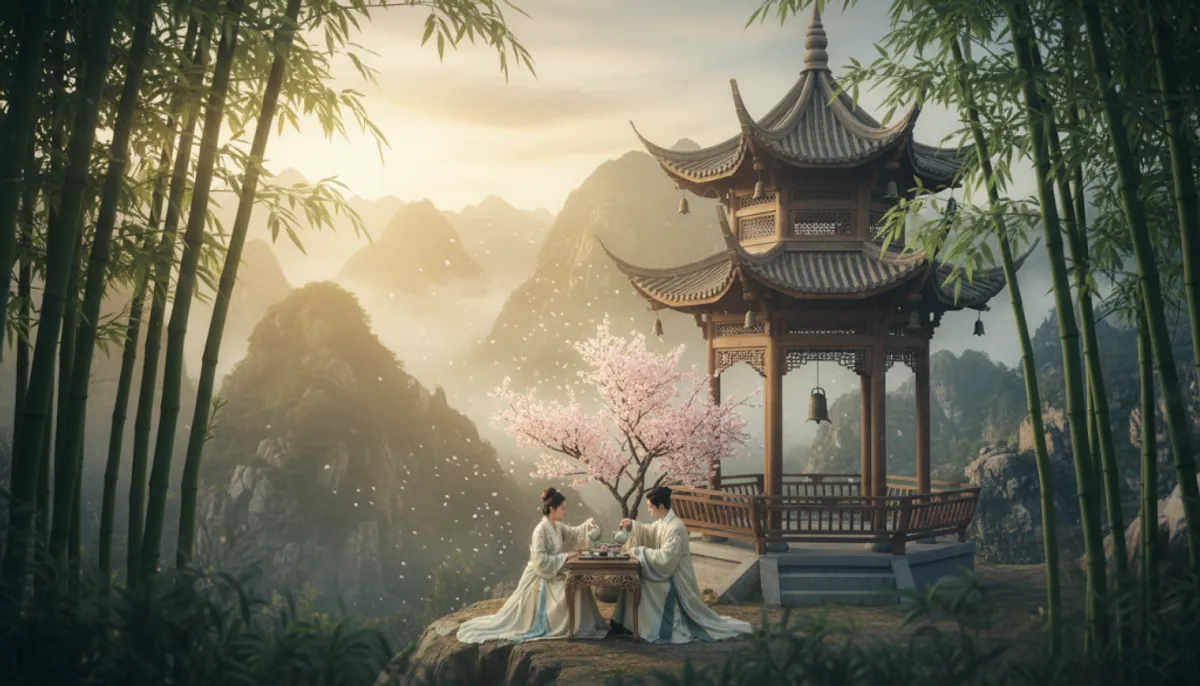
Despite the changes in dynasties and revolutions, this country has managed to preserve a unique identity. This remarkable continuity has allowed practices and concepts to traverse the centuries.
Many Westerners are captivated by its profound philosophy and refined arts. Its inventions have undoubtedly changed the course of world history.
Its diversity is exceptional. It encompasses both martial arts and traditional medicine, gastronomy and calligraphy. Each region has its specificities while sharing a common heritage.
Discovering this universe is embarking on a journey through time. It is to observe a fascinating dialogue between a glorious past and a vibrant modernity.
Key Points to Remember
- This heritage is one of the oldest in the world, with traditions dating back over 10,000 years.
- China has preserved its unique identity through historical upheavals and globalization.
- Its philosophy, arts, and inventions continue to fascinate and influence the entire world.
- The heritage is of great diversity, covering areas as varied as gastronomy, medicine, and martial arts.
- It represents a permanent dialogue between ancestral traditions and contemporary society.
- Discovering it is to travel through the eras and regions of a country with many facets.
Introduction to Chinese Culture
The Chinese territory, vast and diverse, has shaped a unique cultural mosaic in the world. This country rests on a history that has continued for several millennia.
Historical and Geographical Context
From the early dynasties to the modern era, the continuity is striking. This long history has forged a solid identity.
Geography plays a key role. It stretches from the Tibetan highlands to the vast coastal plains.
These differences create varied traditions according to the regions. Yet, a common heritage unites all these people.
Wealth and Diversity of Heritage
Officially, fifty-six ethnic groups make up this country. These minorities each bring their languages and customs.
This diversity greatly enriches the national heritage. Standard Mandarin serves as a unifying language.
Other languages such as Cantonese or Wu are also spoken. Imperial prestige has spread this culture throughout Asia.
The table below illustrates the main linguistic diversity:
| Language Family | Main Languages | Main Regions | Speakers (approx.) |
|---|---|---|---|
| Chinese Languages | Mandarin, Cantonese, Wu | North, Southeast, Shanghai | 1.3 billion |
| Tibeto-Burman Languages | Tibetan, Yi | Tibet, Sichuan, Yunnan | 50 million |
| Tai-Kadai Languages | Zhuang | Guangxi | 20 million |
| Mongolic Languages | Mongolian | Inner Mongolia | 6 million |
Understanding this complexity is essential. It explains the unique place of this country through the centuries.
The Historical and Spiritual Foundations of China
Understanding this country means tracing back through the dynasties and deciphering the lasting influence of Confucianism, Taoism, and Buddhism. These pillars have shaped a unique identity through the centuries.
Dynasties, Empires, and Ancestral Heritage
The history of this territory is a succession of empires. From the Shang dynasty to the Qing era, each period has left an indelible mark, including numerous historical sites that reflect this rich heritage.
This evolution over thousands of years has forged solid institutions. It has also created an immense artistic and architectural heritage.
Traditional Religions and Philosophies
Three major spiritual currents dominate. Confucianism has structured society around harmony and hierarchical respect.
Taoism, on the other hand, advocates balance with nature. It has influenced medicine and martial arts for ages.
Arriving from the west via the Silk Road, Buddhism developed a local branch, Chan. Its magnificent temples testify to this.
Other religions, such as Islam and Christianity, also have a historical presence. This plurality shows a remarkable capacity for integration.
These philosophies form a syncretic tradition. They still guide contemporary thought and current social values.
Cultural Traditions and Practices
At the heart of society, traditional festivals and family rites perpetuate a millennial heritage. These traditional festivals and family moments punctuate the year and strengthen community ties.Customs, Festivals, and Family Rites
The New Year is the most important celebration. Dancing dragons, firecrackers, and red envelopes symbolize prosperity.
Other major festivals follow this calendar. The Mid-Autumn Festival with its mooncakes or the spectacular Dragon Boat Festival are examples.
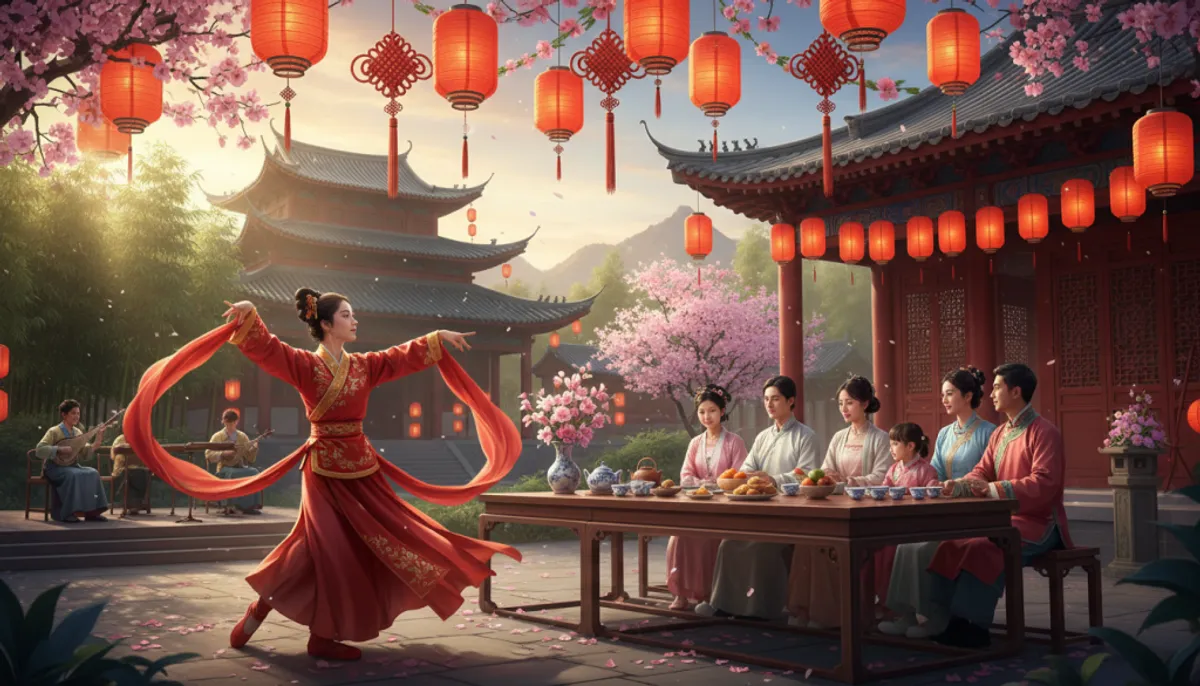
Family rites remain central. The respect for ancestors and filial piety structure relationships between generations.
Marriages and births are accompanied by symbolic gestures. Each object used has a profound meaning.
The Impact of Confucianism and Taoism
Confucianism has deeply marked social codes. Table etiquette and hierarchical respect aim for group harmony.
The system of names and honorific titles directly stems from this. It creates a very structured framework of mutual respect.
Taoism influences daily practices such as Feng Shui. This search for balance with natural forces guides space arrangement.
These traditions remain alive today. They resist rapid urbanization and external influences.
Chinese Culture in Daily Life
A cup of tea is never trivial. It opens the door to a universe of codes and mutual respect that structures life.
Everyday Rituals and Social Values
The art of Chinese tea, or gong fu cha, is a social ceremony. It promotes contemplation and exchanges through precise gestures.
Two concepts guide interactions. Mianzi (saving face) protects social dignity. Guanxi (network of relationships) is crucial in professional life.
These principles are based on fundamental values.
- Collective harmony takes precedence over individualism.
- Respect for hierarchy is observed.
- Modesty and the importance of education are central.
These values give a place and meaning to every action. Even everyday objects, like teapots, carry a profound symbolic dimension.
Art and Traditional Crafts
The mastery of brushes and fire has given birth to artistic treasures admired throughout the world. These creations tell a story of refinement and ancestral know-how.
Painting, Calligraphy, and Poetry
The art of calligraphy is much more than mere written words. Each brushstroke reveals the artist's state of mind, transforming characters into unique works.
Traditional painting uses ink washes on paper or silk. Painters captured the essence of nature, creating landscapes imbued with poetry.
The literary tradition is equally rich. Classical poems exploit the beauty of ideograms for deep semantic play.
Ceramics, Porcelain, Silk, and Embroidery
Fine porcelain, discovered nearly 2000 years ago, was nicknamed white gold. Europe took centuries to uncover its secret.
The luxurious silk fabric was initially reserved for the emperor. Its production was a closely guarded secret along the Silk Road.
Jade is carved with extraordinary precision. This stone symbolizes virtue and immortality.
Arts such as fine embroidery are now threatened. Efforts are needed to preserve these unique skills for future generations.
Martial Arts, Music, and Chinese Cinema
Wushu and the soundtracks of iconic films have become universal ambassadors. These dynamic expressions captivate the entire world.
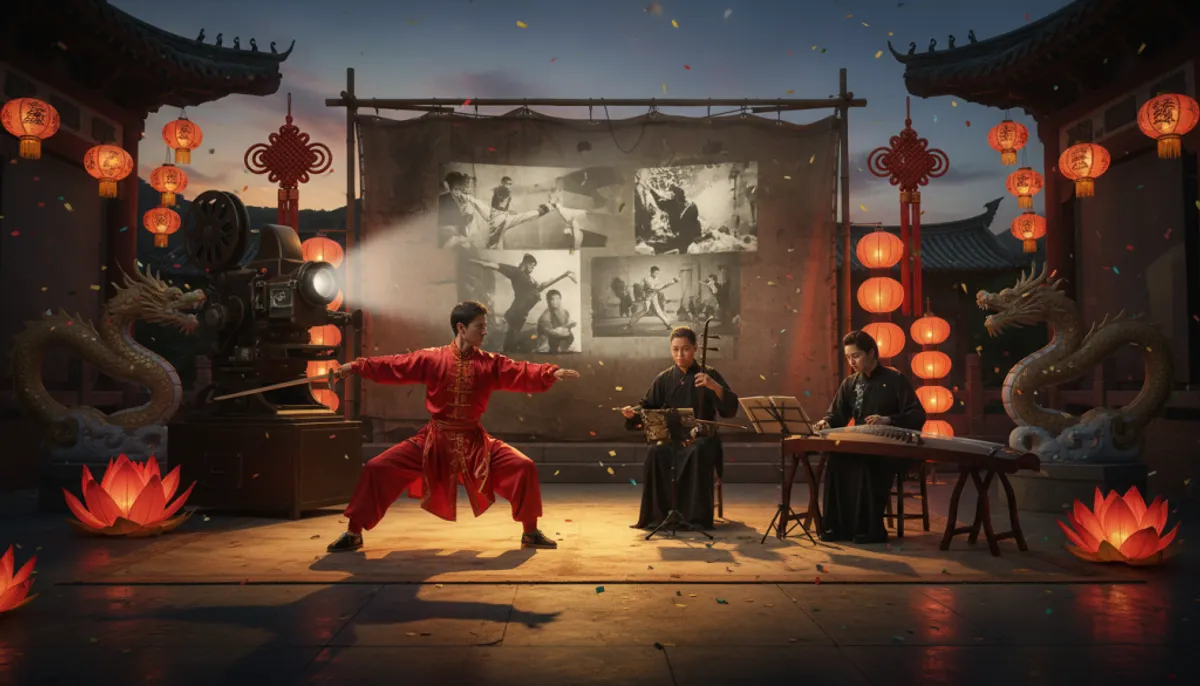
The Tradition of Martial Arts and Wushu
Martial arts encompass hundreds of styles. From spectacular kung fu to meditative tai chi, each school has its philosophy.
These practices combine physical development and mental discipline. They draw from ancient arts like Shaolin or Wudang.
| Main Style | Characteristic | Approach |
|---|---|---|
| Shaolin | Dynamic, external | Power and speed |
| Wudang | Fluid, internal | Harmony and energy |
| Tai Chi | Slow, meditative | Control and serenity |
In the 20th century, modern wushu was born. It transforms these traditions into an international competitive sport.
Influence of Music and Cinema in Popular Culture
Traditional music uses unique instruments. The guzheng, erhu, and pipa create poetic sounds.
These melodies still influence contemporary music. They evoke landscapes and deep emotions.
Cinema has conquered global screens. Bruce Lee and Jackie Chan's kung fu films are legendary.
The wuxia genre, with its chivalrous heroes, has shaped the imagination. Directors like Zhang Yimou win international awards.
Today, cinema is experiencing a renaissance. It combines modern technologies with traditional narratives to compete with Hollywood.
Innovations, Science, and Traditional Medicine
Behind every major innovation often lies an unknown heritage. This country has been a remarkable laboratory of ideas that have changed the world.
Its technical genius and holistic view of health form a fascinating duo. They illustrate a unique approach to progress.
Great Inventions and Technological Advances
The four legendary inventions are paper, printing, the compass, and gunpowder. They revolutionized communication, navigation, and warfare.
The invention of paper allowed for massive dissemination of knowledge. Woodblock printing produced illustrated books long before Europe.
Under the Song dynasty, advances were spectacular. The first compasses recognized magnetic declination.
Boats with paddle wheels equipped with trebuchets demonstrated an advanced naval industry. Cartography was also ahead by several years.
Chinese Medicine and Practices like Feng Shui
Traditional medicine adopts a holistic approach. Diagnosis is made through pulse reading and observation of complexion.
Its specialties include acupuncture, herbal decoctions, and massage. It encourages active patient participation.
Feng Shui is an ancient art over 6000 years old. It aims to harmonize environmental energy according to Taoist principles.
Even the consumption of tea is part of a preventive philosophy. This drink, like Qigong, helps maintain vital balance.
Mathematical contributions, such as Pascal's Triangle, were known here long before the West. This civilization was at the forefront of scientific innovation for centuries.
International Influence and Cultural Exchanges
From the Silk Road to modern screens, Chinese influence has crossed continents. This heritage has profoundly marked its neighbors, including the rich traditions of yemeni customs, and continues to spread throughout the world.
Impact on Japan, Korea, and Vietnam
Japan drew inspiration during the golden age of the Tang dynasty. It adopted kanji characters, artistic techniques, and Buddhist architecture.
Korea integrated the three philosophical pillars. Confucianism, Taoism, and Buddhism have shaped its social structure for a millennium.
North Vietnam was marked by an occupation of over a thousand years. The Confucian system and writing left a lasting imprint there.
The Global Dissemination of Arts and Literature
The Silk Road exported ideas to the west. It allowed the circulation of innovations and arts far beyond Southeast Asia.
Today, this popular culture is spreading globally. Confucius Institutes teach the language, while tai chi classes are popular in the West.
Contemporary cinema and literature are winning international audiences. Award-winning films and translated books create a new dialogue across the world.
Traveling in China: Tips and Cultural Discoveries
Preparing for a trip to China is embarking on an adventure that is both modern and millennial. To make the most of it, good organization is essential.
Must-See Itineraries and Historical Sites
Start with legendary monuments. The Great Wall, the Forbidden City, and the Terracotta Army in Xi'an are classics.
Then explore varied regions. Opt for a spiritual circuit visiting Buddhist temples. Or a culinary tour tasting local specialties.
For an authentic experience, meet the ethnic minorities. Also discover markets where jade and crafts are traded.
Practical Tips for Discovering China Differently
Before departure, set up a VPN and payment apps like WeChat Pay. A few Mandarin phrases are very useful.
On-site, respect local etiquette to avoid faux pas. Be wary of common scams in highly touristy areas.
Here’s a list of essential tips for a smooth stay:
- Learn basic phrases in Chinese or take an express course.
- Compare prices and negotiate politely in markets.
- Use high-speed trains to connect regions quickly.
- Plan your trip outside major local holidays.
Conclusion
In the face of global upheavals, a unique heritage shows remarkable adaptability. This millennial civilization fascinates the entire world with its philosophical depth and artistic refinement.
It preserves its essence while integrating contemporary realities. Its influence crosses borders, constantly enriching global dialogue.
Ancestral traditions, such as fine embroidery, require urgent safeguarding. Young generations are now acting to protect this precious heritage.
Continue this discovery with an immersive trip or learning Mandarin. Understanding this Chinese culture broadens our view of life and human diversity.
FAQ
What are the most influential philosophies in China?
Taoism and Confucianism have profoundly shaped society. They influence family values, work ethics, and even practices like Feng Shui. Buddhism, which arrived later, has also marked art and spirituality.
How are calligraphy and poetry related?
These two arts are considered supreme expressions of the spirit. Mastery of the brush and characters is essential. Poets like Li Bai have elevated writing to an unparalleled level, making each work an object of great beauty.
What do Chinese martial arts represent?
Much more than combat, wushu (like at the Shaolin temple) is a discipline that unites body and mind. It embodies philosophical principles and is a living heritage, famous worldwide thanks to cinema.
What artisanal objects are emblematic?
What traditional festivals should one know?
The Lunar New Year is the most important, with family meals and lanterns. The Mid-Autumn Festival, centered around the moon and mooncakes, is also significant. These celebrations punctuate life and strengthen social ties.
How is traditional medicine practiced?
It aims to restore the body's energy balance. It uses herbs, acupuncture, and exercises like Tai Chi. This holistic approach remains very popular, complementing modern science.
Where to travel to discover this heritage?
The Great Wall and the Forbidden City in Beijing are must-sees. For arts, the landscapes of Guilin and the ancient temples of Xi'an offer a unique journey. Exploring the regions of minorities like Yunnan also allows for deep immersion.
What is the impact of Chinese cinema today?
It has a growing global influence. Directors like Zhang Yimou and big-budget films blend historical narratives, martial arts, and visual innovations, actively participating in international cultural exchanges.